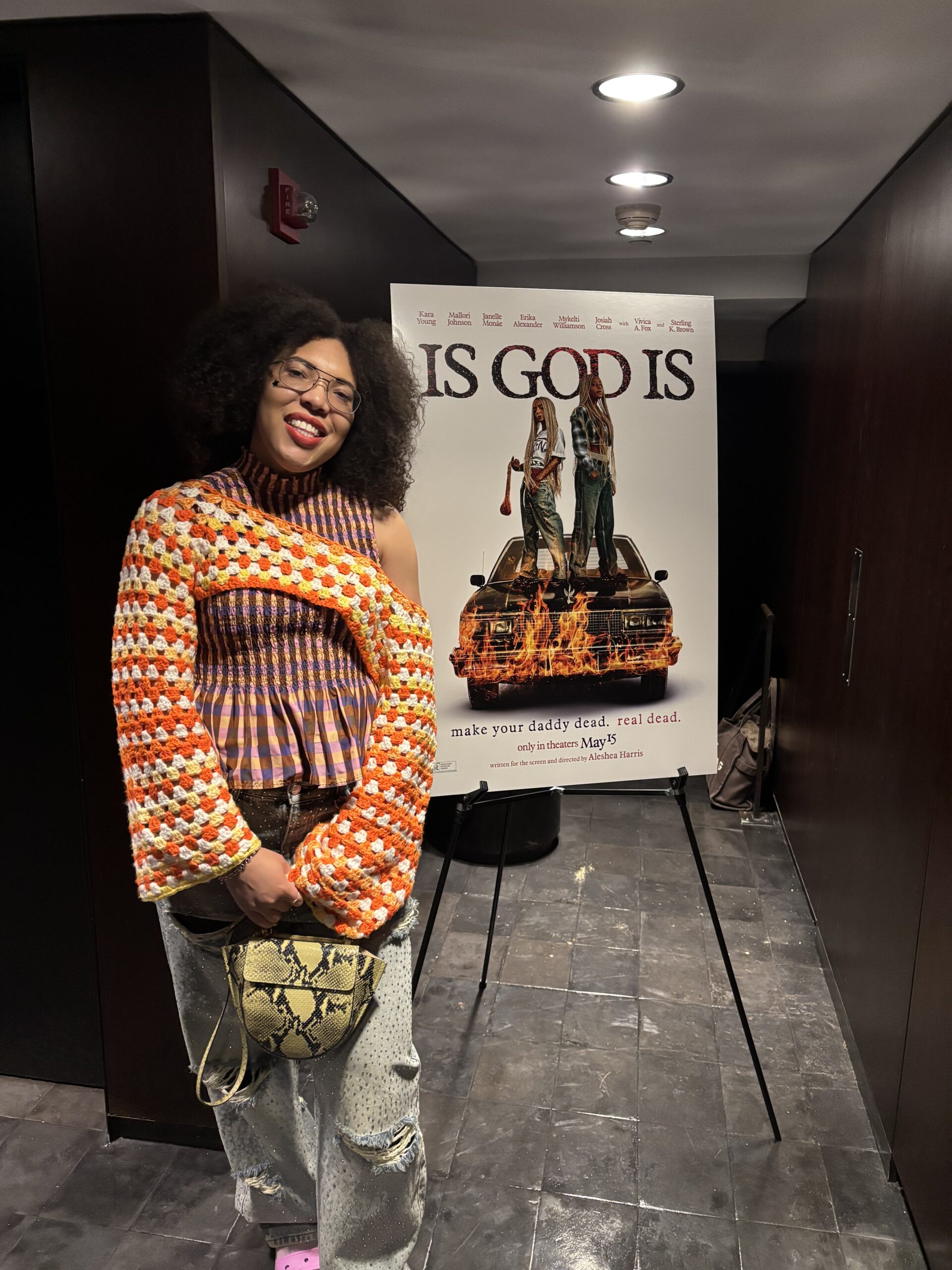

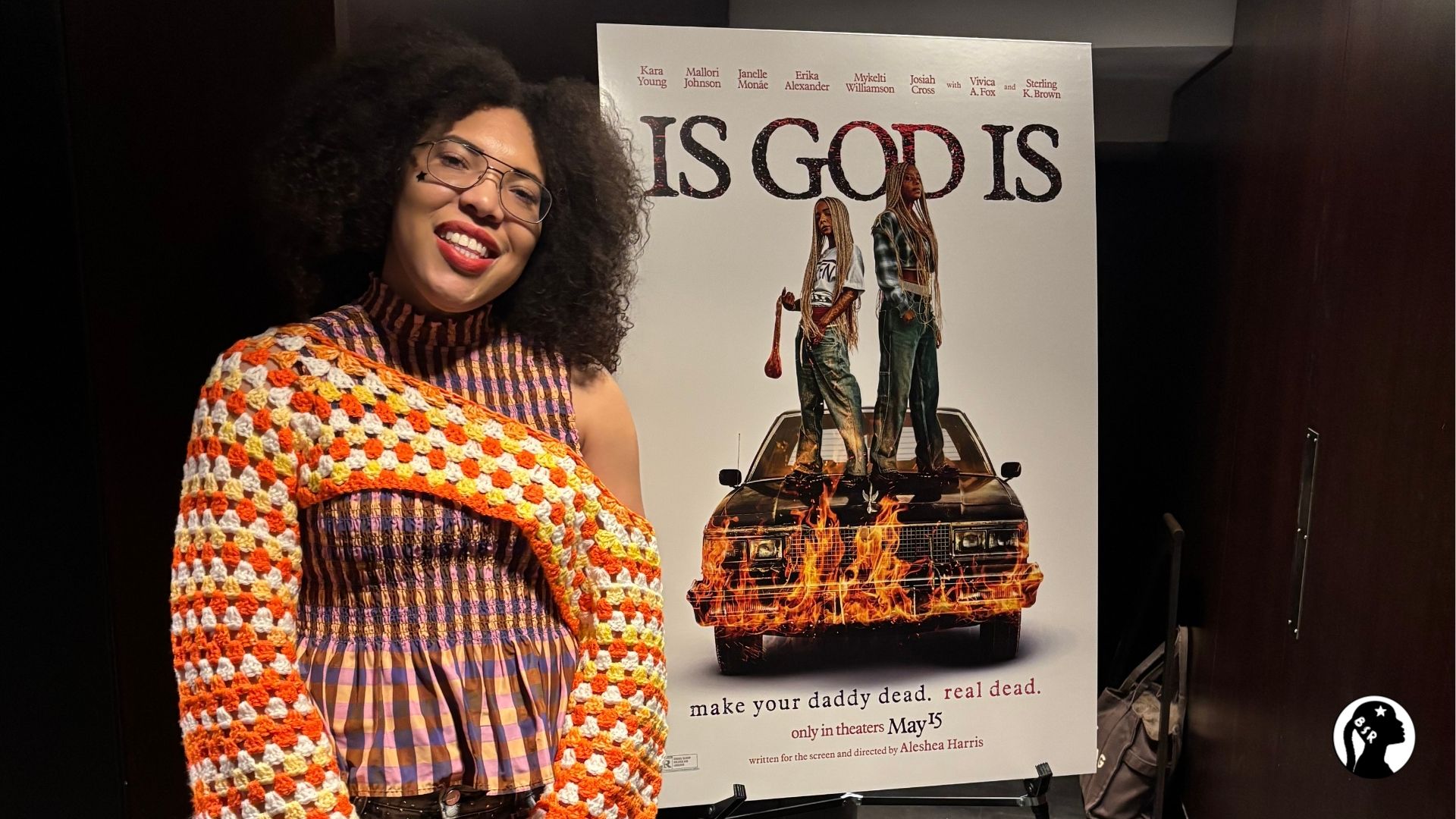
Aleshea Harris’s ‘Is God Is’
Theatre stars shine on the silver screen in the film adaptation of Aleshea Harris’s 2018 play
When Sinners premiered around this time last year, audiences left the theater wanting more. Not only did people see the film a second, third, or even fourth time (I admit I saw it twice), they lobbied Ryan Coogler to build out the Sinners ‘universe’ Marvel-style to include backstories on Annie’s Hoodoo apothecary, the Indigenous band of vampire hunters, or Smoke and Stack taking on Chicago. In the meantime, folks exchanged recommendations of books, movies, and music within the film’s aesthetic niche: Black Southern Gothic thriller. This year, another film has joined the chat.
For anyone who saw Sinners and thought I wish this movie had more women’s rights (and wrongs), Is God Is will more than satisfy. However, any overlap between the two stories is coincidental since Is God Is was a play long before Sinners was a movie; it premiered in 2018 at Soho Rep (The Great Privation…, The Fires). Sadly, I did not get to see it on stage, but by translating her stage play into a screenplay and directing this film, Aleshea Harris has made sure time and place won’t keep you from this story.
The film follows grown twins, Racine the Rough One (Kara Young) and Anaia the Quiet One (Mallori Johnson), in a time that could be now or maybe 10 years ago. The two do everything together. We see them communicating telepathically while brushing their teeth over a single sink, sleeping nearly side-by-side in twin beds, their last day of work cleaning a corporate high-rise after hours (the girls are fired after Racine accosts an officeworker). They take turns icing each other’s burns: Anaia’s face, Racine’s arm. They have a rhythm and a system. Racine does all the talking, Anaia stays in the back, and if things start to get unruly Racine solves things with violence.
This rhythm continues when the two are summoned down South by a mother they can barely remember. While Anaia is hesitant, Racine insists that they make the trip to meet the woman who made them, the woman she thinks of as God. Their mother, played by Vivica A. Fox in biting staccato, is bed-ridden. She was burned on the bottom half of her body in the same fire that disfigured the girls. While we don’t see her burns, her daughters do. In a flashback, we see what happened: a scorned husband, accelerant, and a match. God gives them a mission — “make your daddy dead, real dead” — not only for what he did to her, but for bringing the girls into the room to watch and leaving all 3 of them for dead.
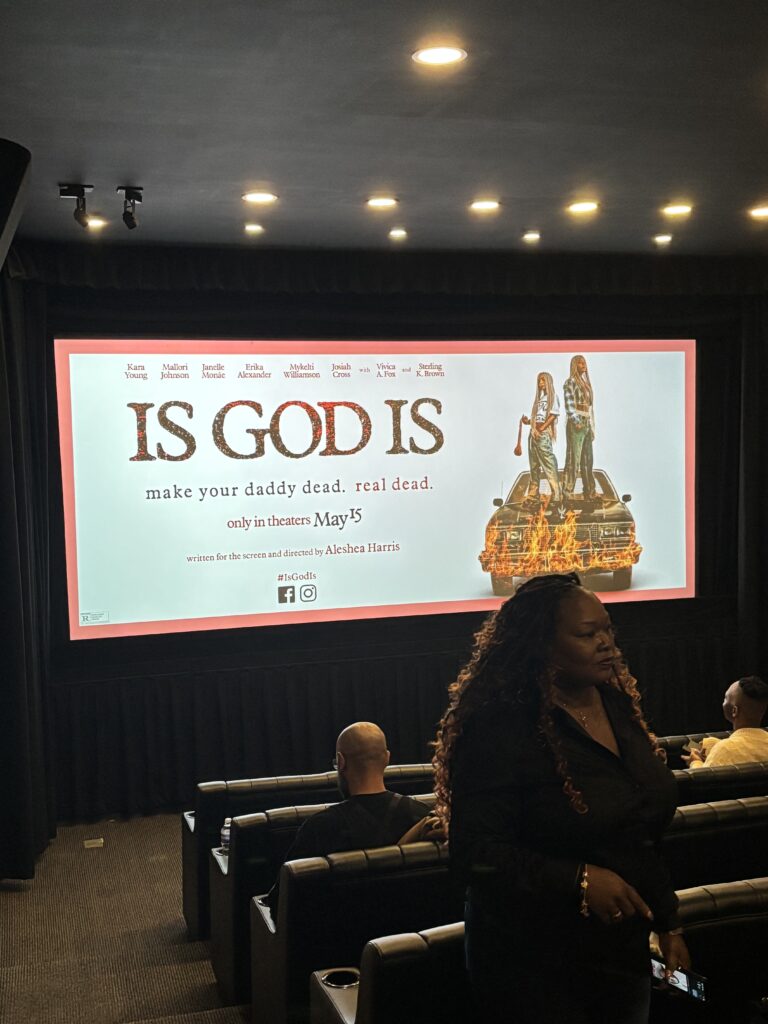
The screening room at the Bryant Park Hotel
Racine doesn’t need any more convincing to unleash her violent wrath and huntress instinct on her father and drags Anaia along on the chase. As if in a fable, everyone the girls meet along the way has a story that should serve as a stark deterrent. First, they meet a woman preacher (Erika Alexander), who keeps a shrine of the trivialities their father left behind (cologne, hairbrush) when he impregnated and abandoned her. Next, the girls meet the lawyer (Mykelti Williamson) who helped their father beat his arson case. He’s tongueless and communicates with a little white board. His first message is to forget about their father altogether, but after a negotiation with Racine he offers an address. The last person standing between the girls and their fatal goal is their father’s new wife (Janelle Monáe). She may not be burned, but she’s just as scarred as their mother is by the monster Racine has sworn she’ll slay.
Racine’s dedication to neutralizing anyone in her way, to say nothing of the background violence, is likely to polarize audiences. There’s blood on the leaves, on the ground, on the twins’ unlaundered tank tops. Beatings are delivered with a rock in a sock, swung with no mercy; a character describes themselves as “burnt up like an alligator” which I took to mean that her legs are crackly and fused together; characters wrap their hands around each other’s throats and smile as their victims beg for their lives; teenage boys leer and then mock strippers dancing at a house party; the camera never shies from Racine and Anaia’s burns. The casting and marketing of the film is likely to draw Black women to theaters, we’ll find out if they’re ready to see themselves as transgressors when we’re so often — in real life and in performance — the transgressed, the forgotten, the supportive lover, or the plucky best friend. As for what other groups, like Black men, white people, and everybody else, think about our rage and rampage: I couldn’t give a damn. You’ve had your turn and now it’s ours.
The story is over-the-top and the film is a relentless bloodbath, but I still found myself rooting for the girls to stay the course on their killing spree. The top boss is misogyny incarnate and I wanted to see him bleed. At first, we only see their father in angles, his clean shaven lips and chin, his relaxed silhouette leaning in a door frame, his narrowed eyes in a rearview mirror. When we finally see all of him at once, he seems innocent enough in khaki pants and Yeezy slides, but he’s every bit a demon. He’s played by Sterling K. Brown and the slow creep of his wicked nature is muddled by your own disbelief that the actor who’s long played the hero is taking a dark turn. Each role is filled with someone familiar doing something unexpected: Erika Alexander goes tongue-in-cheek, the ever-iridescent Janelle Monáe is a sniveling mess, Vivica A. Fox is the quietest and angriest I’ve ever seen her. Seeing Kara Young (Purpose, Table 17) on the big screen for the first time makes me wonder how many of her micro-expressions I’ve been missing from my seat in the orchestra. Right before Racine kills, her eyes twitch and her face contorts. My blood ran cold when she looked into the camera. Mallori Johnson’s performance starts out as sideways glances and silent reactions until Anaia finds her power. Then, Johnson’s riveting portrayal of a cornered woman at her breaking point explodes the frame.

Mallori Johnson and Kara Young, stars of ‘Is God Is’ pose for a photo at the reception
Recently, the Internet’s been chattering about the responsibility of Black audiences to support Black films. The same talking points I’ve heard for years have resurfaced, “If we don’t go see this one, we may not get another.” Word on the street is that if we don’t go see You, Me, and Tuscany, Black rom-coms will die. I’m sure there’s a lot riding on Is God Is as well, it’s a film based on a play (not a musical!), written and directed by a Black woman, starring a whole lot of Black women but there’s no need to push a scarcity mindset, or the promise of some next hypothetical film, to move tickets.
On its own merits, Is God Is is a magnificent picture and an original story of two women using the little they’ve got to bring down the justice they feel they deserve. When the wind flows through their matching gold braids on the drive down South, they’re free, they’re divine. I could watch it all day and still want more.
blacklove 🖤 and starlight 🌟
Is God Is is written and directed by Aleshea Harris. The Amazon MGM Orion Pictures production will premiere in theaters on May 15, 2026. I attended a tastemaker screening at the Bryant Park Hotel with a reception at Talea courtesy of Irene Gandy and Black Girls Do Theater on April 6, 2026.
-

- Actors Mallori Johnson, Kara Young, and Tessa Thompson pose for a photo at the reception