

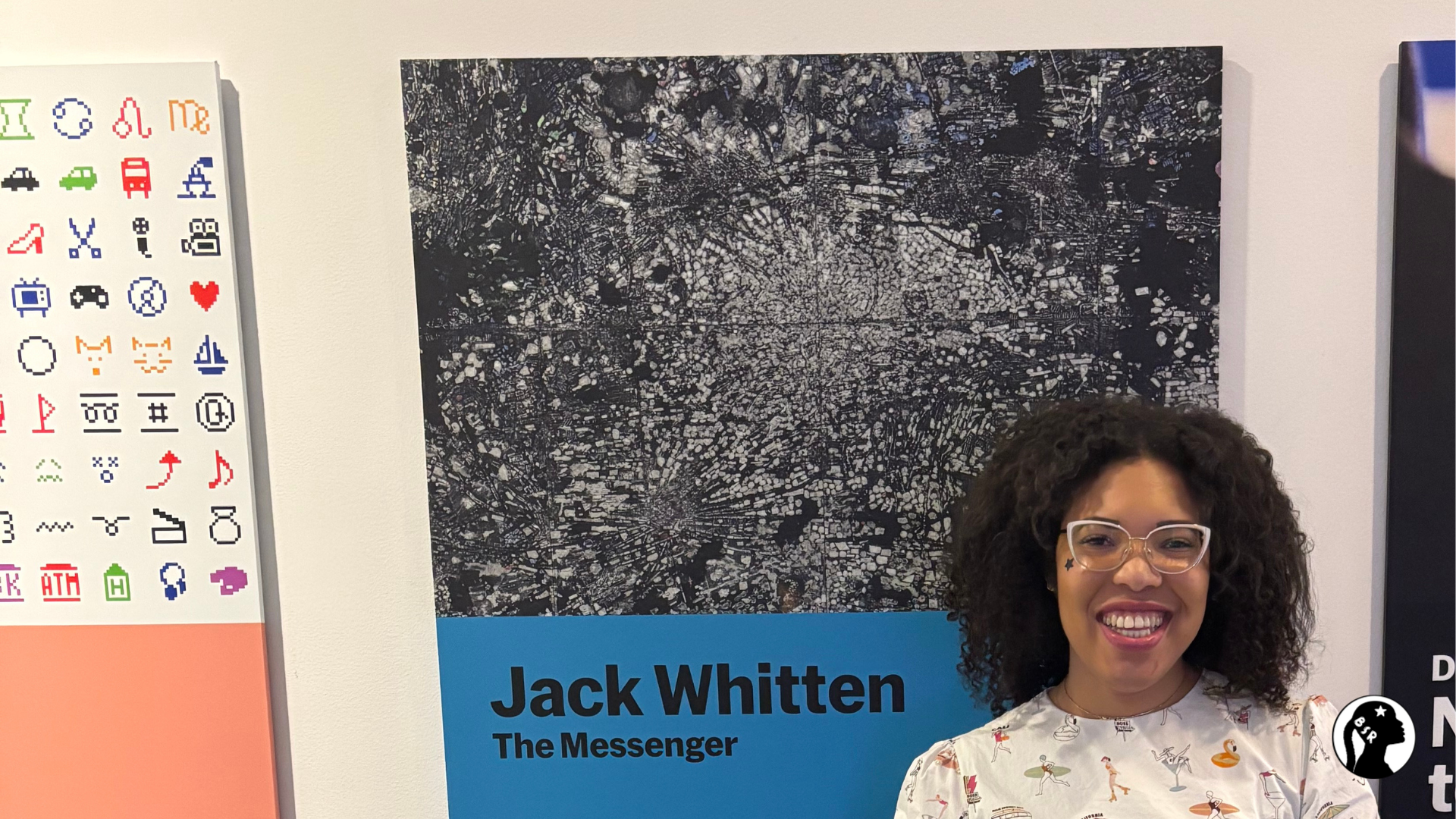
‘Jack Whitten: The Messenger’ at MoMA
HAPPENING MONDAY: Karen Bernod at City Winery, Chelsea Piers
Karen Bernod, acclaimed background singer for Chaka Khan, Erykah Badu, and Luther Vandross, is celebrating the 25th anniversary of her debut album Some Othaness For U with a live performance at City Winery. One night only on Monday, June 30 at 7:30pm. Tickets are $35.
Though Whitten’s work is abstract, the message is clear.
The young man at the ticket counter, the one with the locs, was so certain he knew where I was going that before I opened my mouth he asked and answered his own question in the same breath.
“WhereyougoingJackWhitten?”
When I asked what had tipped him off, he used one finger to rub the black side of his hand and then pointed me toward the elevators with a smile.
I hadn’t been to the MoMA since LaToya Ruby Frazier: Monuments of Solidarity last fall because as far as I can tell — besides Marlon Mullen’s ‘Projects’ and the general collection — there hadn’t been any exhibitions that fit my niche. Thus, no draw.
This feels bold to publish and it may be an unfair generalization, but: when I’m standing in front of artwork, I can usually tell whether or not the artist is Black.
Generally speaking, if there’s a Black subject, the artist is also Black. But sometimes, when the Black subject looks a bit hollow behind the eyes, seems to be overly stereotyped, or appears contorted into the frame, a quick Internet search of the artist’s name will confirm the disconnection between the painter and the painted. It’s sort of like how a store bought pound cake will never compare to the kind you grew up eating, Kroger is missing the key ingredient: love.
But not all Black artists depict figures. There’s no reason we can’t paint landscapes or still life or even abstraction. Further, there’s no reason why landscapes, still life, or abstract art can’t convey a determination about society or lived experience. Jack Whitten exists where these two ideas intersect.
As an abstract painter, sculptor, and mosaicist, Jack Whitten’s work offers a close investigation of a question that likes to follow me around. I wondered — as I usually do when I’m viewing abstract art — if I hadn’t done my research before coming what, if anything, would I have been able to intuit about the artist’s identity by only viewing their art? (An irresistible and only semi-related follow-up question is If identity exists in a space that is separate from output, is there a case to be made about separating art from artists like R. Kelly, and recently, P. Diddy?)
Even if there were not a doorway-sized photo of Mr. Whitten on the wall next to the elevators and Coltrane was not sliding out of the speakers, I think there are other clues. At the very least, the truth peeks out from the work titles. Black Monolith II (Homage to Ralph Ellison The Invisible Man), Flying High for Betty Carter, The Blacks. As the MoMA exhibition title implies, Whitten cast himself as a messenger who saw “his art [as] a way of sending messages out into the world.” Though his work is abstract, you can hear him loud and clear.
-
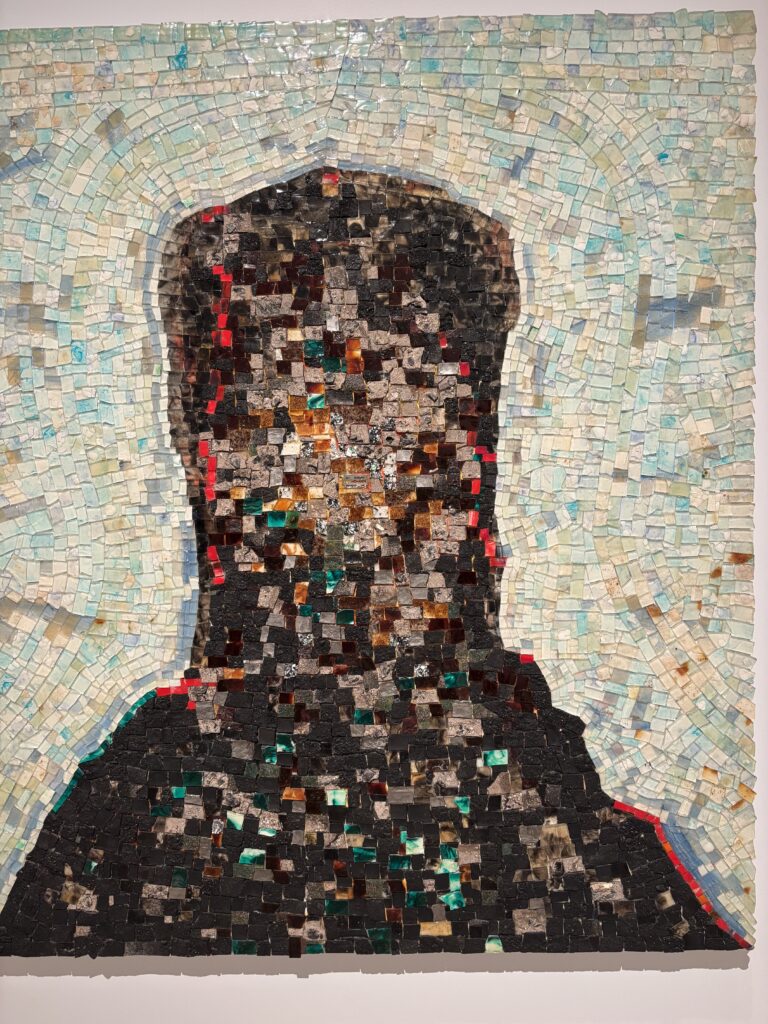
- “Black Monolith II (Homage to Ralph Ellison The Invisible Man)” (1994) by Jack Whitten

-
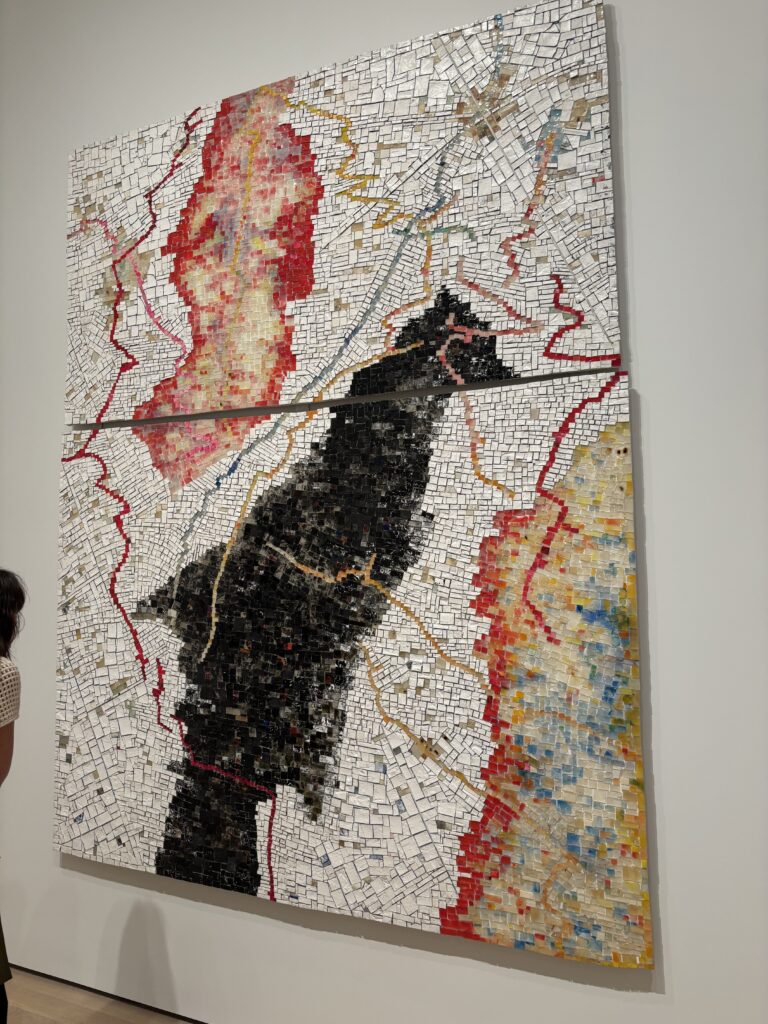
- “Flying High for Betty Carter” (1998) by Jack Whitten

In response to the pressure he felt to stay committed to his work in the Civil Rights Movement, he pursued activism in his own way as he combined and cycled through techniques. At the MoMA, we see the results of his experimentation with tiles, sculpture, and the slab paintings for which he’s most well-known. The work spans six decades, made all the more impressive by Whitten’s shock that he lived to see the other side of 30.
The slab paintings are serene and deceiving like a perfectly placid, but bottomless lake. If it hadn’t been for the photos of Whitten at work it would’ve been difficult to make sense of how much effort, equanimity, and supplies they required. Once he began a slab painting he had limited control of how it turned out and rarely had a vision for the end product when he began.
Through a partnership with a paint supplier, Whitten was able to acquire vast amounts of paint to layer onto wall-sized canvases. Then, he’d pull the ‘Developer’, a large, rake-like device, along the canvas to press together and reveal the combined hues. “Testing (Slab)” with it’s striations and cratered air bubbles reminds me of a cross section of the Grand Canyon or the images of Jupiter they showed us in grade school swirling, rich, and warm.
-
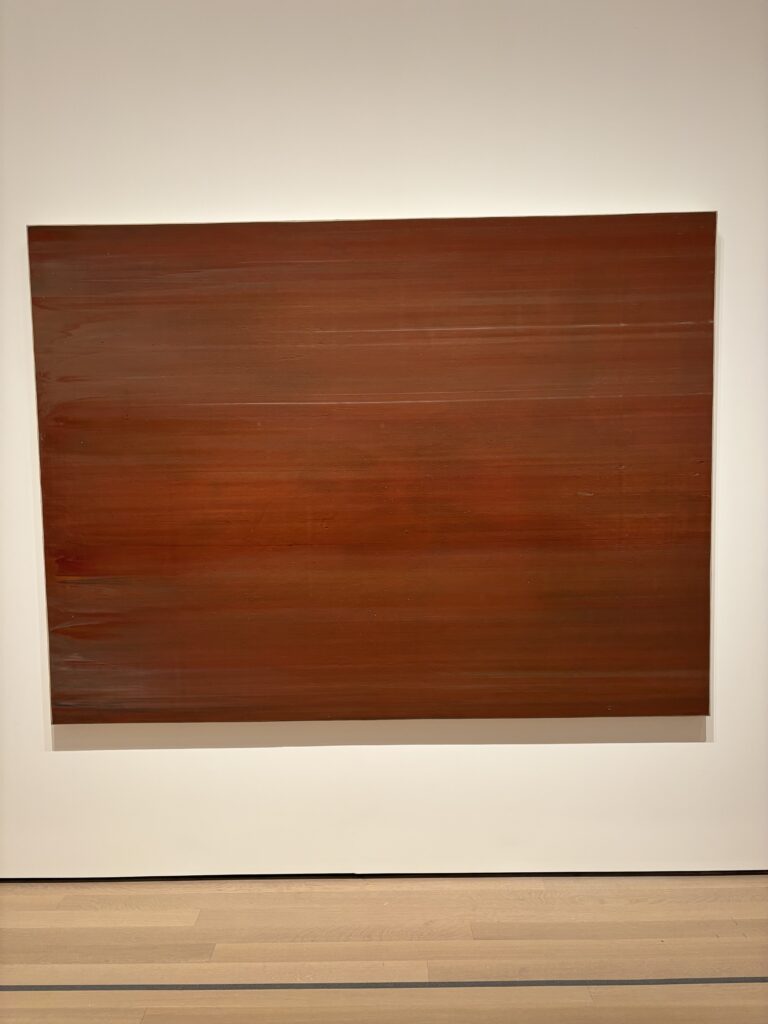
- “Testing (Slab)” (1972) by Jack Whitten

-
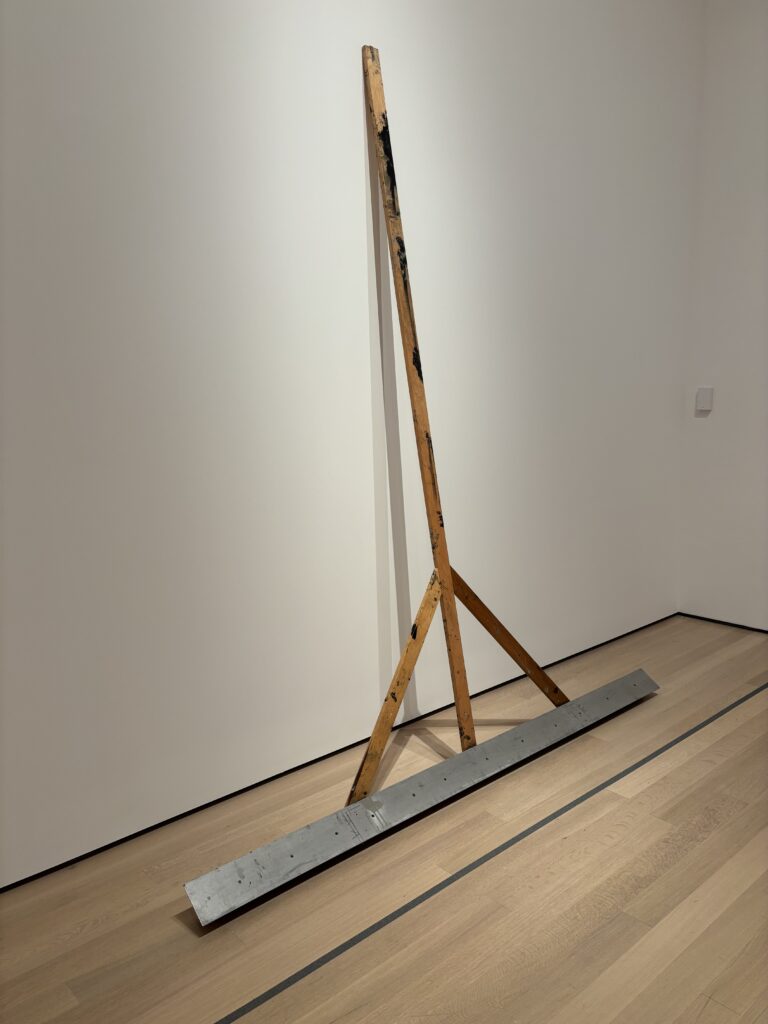
- Whitten’s Developer, crafted in 1970

He was inspired by jazz, both the genre’s musicians and its theory, especially improvisation. To remove even more control of the outcome, Whitten used what he called ‘disruptors’ on some slabs. These elements were added onto the canvas to disrupt the paint as he developed it. In “Sorcerer’s Apprentice”, his nod to Miles Davis, a string zig zags through the orange and brown stripes. In “King’s Way II” he digs into the paint with an afro pick to “rake light” onto the canvas echoing Dr. King’s organizing ethos.
-

- [detail] “Sorcerer’s Apprentice” (1974) by Jack Whitten

-
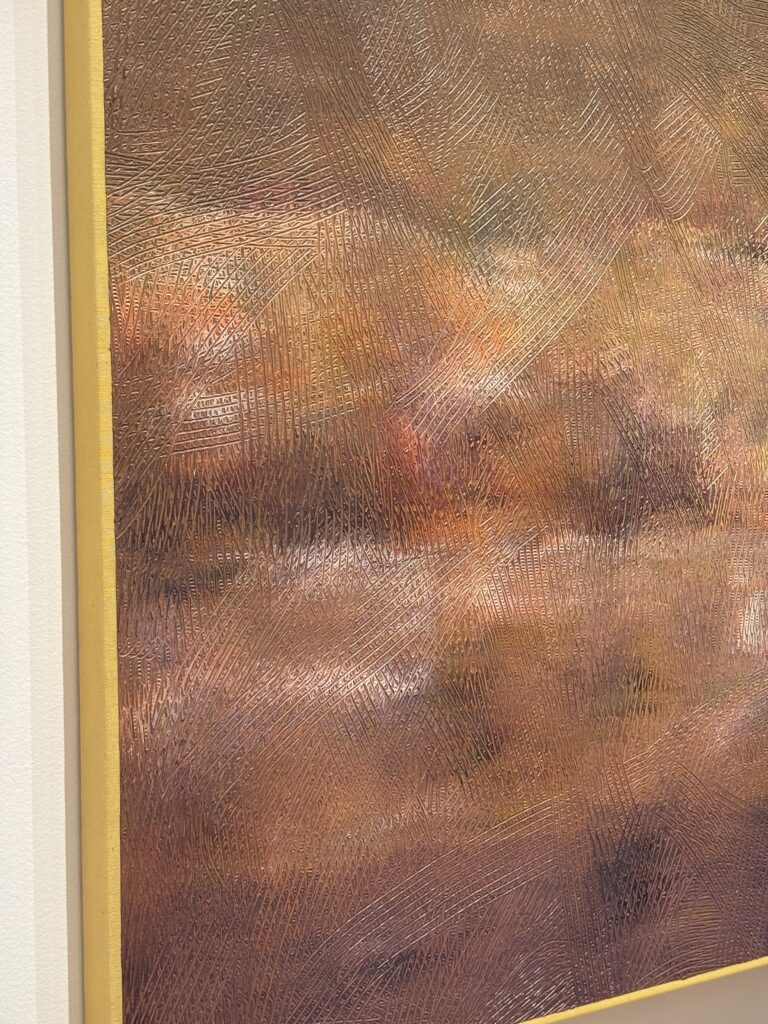
- [detail] “King’s Way II” (1971) by Jack Whitten

While I found the technique behind the slab paintings interesting, I preferred the works from the next phase of his practice, when he began to produce what look like (but are not!) tile mosaics. In actuality, the tiles are made from sheets of hardened acrylic paint that he cut, carved, or broke into smaller pieces and painstakingly placed. These works bridge the look of ancient Greek mosaics (his wife was Greek and they spent summers there) with abstract terrazzo and the titles become even more pointed.
For the aforementioned “Flying High for Betty Carter”, Whitten used black, white, and red paint tiles to represent the brawn of Carter’s voice with the sort of jet plane that can pierce the sound barrier.
Like me, Whitten was a NYC transplant. He was born to a coal miner in Bessemer, Alabama and attended Tuskegee Institute, but moved here to pursue art. From his studio space downtown, he watched as the World Trade Center’s Twin Towers started going up in the late 60s, and he was there in 2001 when the towers were destroyed.
He spent five years making sense of what he’d witnessed and debuted a 10 foot by 20 foot painting made of pixelated tiles. “9.11.01” uses paint, ash, blood, hair, and mixed media to commemorate the loss adding a literal meaning to his belief that the “memory is in the material”. He didn’t feel the need to depict faces and figures, his images hold more than that.

“9.11.01” (2006) by Jack Whitten
Across all of Whitten’s work it’s clear how the violence of existence — wars, terrorism, racism — weighed on him so I can only imagine how much distress he’d be experiencing if he were still with us now. He saw enough in his time, living through the extermination of Black leaders Malcom X and Dr. Martin Luther King, Jr. in 1965 and 1968, respectively. He died in 2018 which means he lived long enough to see a Black president as well as the rollbacks that came after.
The tile paintings, even more so than the slab paintings, are mesmerizing. On the wall introducing his series of Black Monoliths is a quote, “I come from a people whose culture was totally cut off. The prize is to reconstruct the culture.” While there are photos of Whitten at work with the Developer, I would have loved to see him in the studio with the tiles. I imagine him carving and selecting the shards, setting each one in place, so zoomed-in to that day’s section that he may not yet see the full image — literally building and rebuilding a legacy of brilliance, reconstructing our myths and delivering the message of what Black art can be.
blacklove 🖤 and starlight 🌟
Jack Whitten: The Messenger is on view at the Museum of Modern Art (MoMA) until August 2nd, 2025. The museum is open 7 days a week from 10:30am-5:30pm and admission is $30 from adults. On Fridays, the museum is open until 8:30pm and admission is free with an advance registration.
Upcoming shows of interest at the MoMA include a Ruth Asawa retrospective in October, Arthur Jafa’s “Less in Morbid” in November, and Ideas of Africa in December.
-
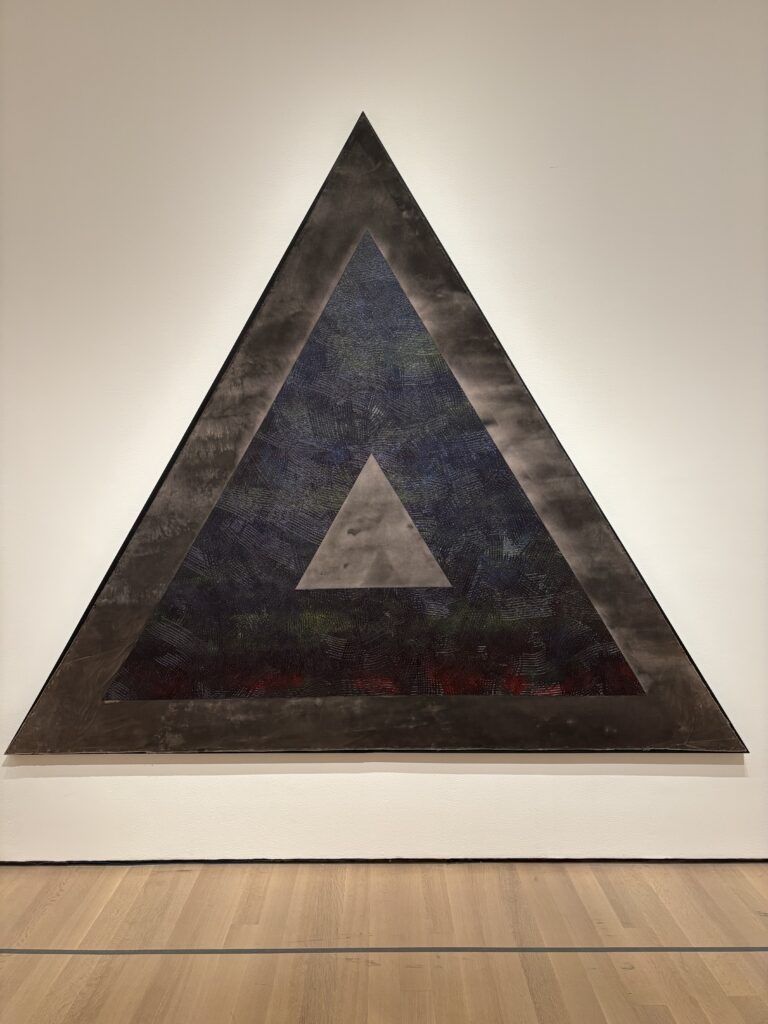
- “Homage to Malcolm” (1970) by Jack Whitten

-
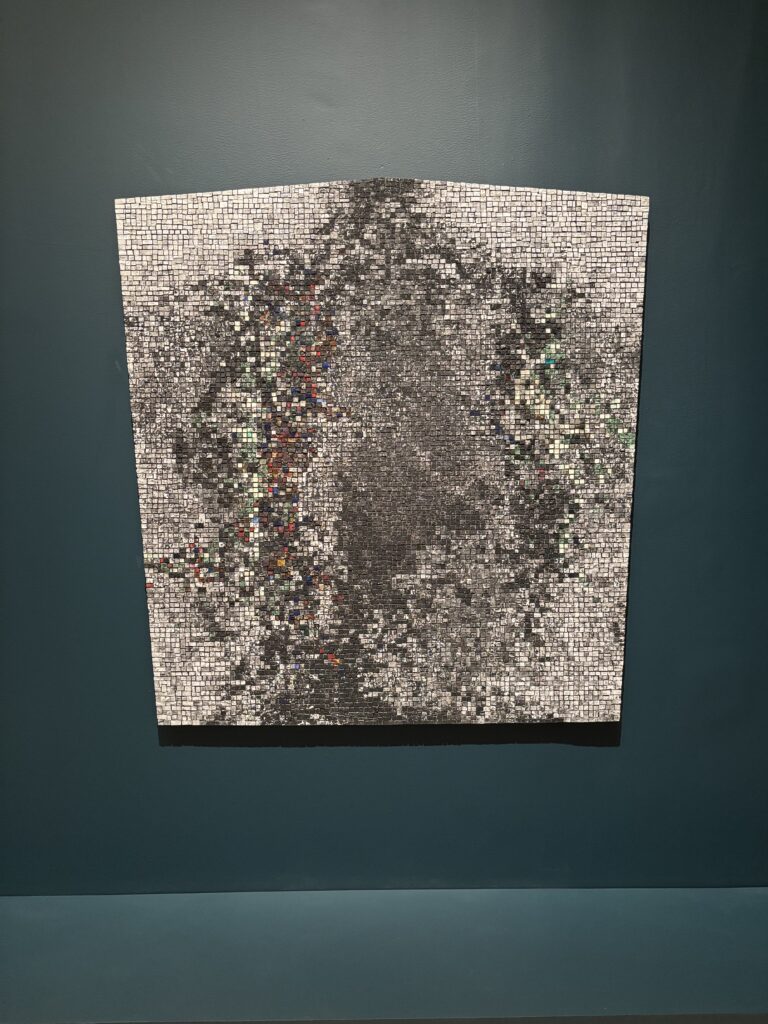
- “Black Monolith III (For Barbara Jordan)” (1998) by Jack Whitten

-
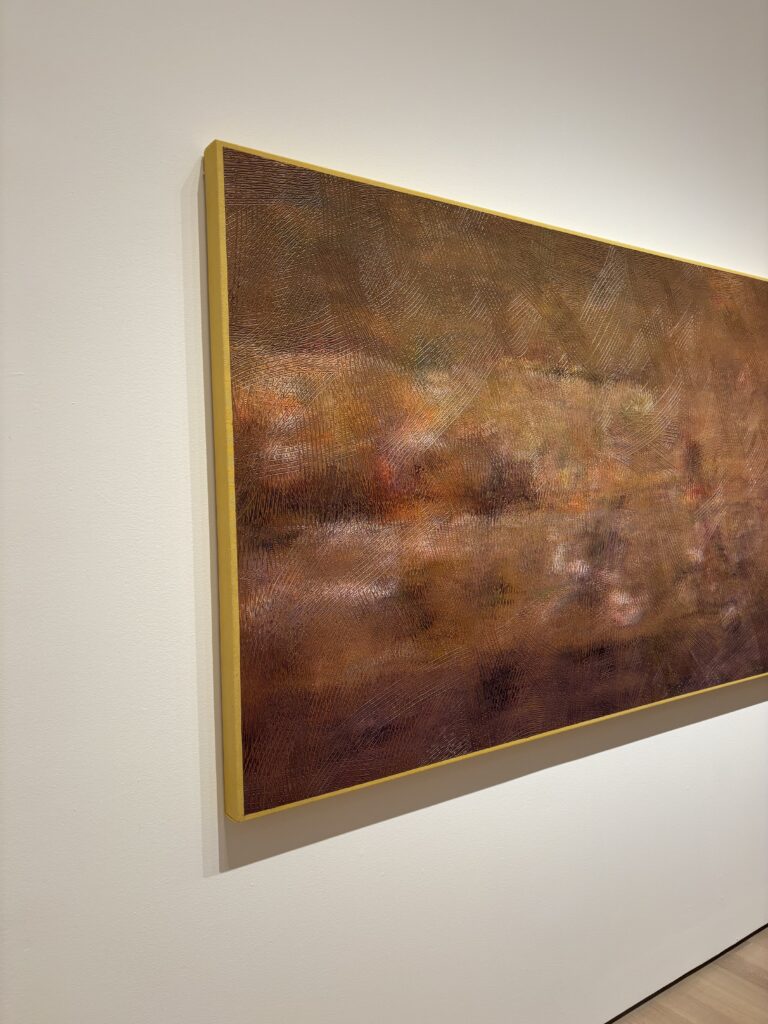
- “King’s Way II” (1971) by Jack Whitten

-
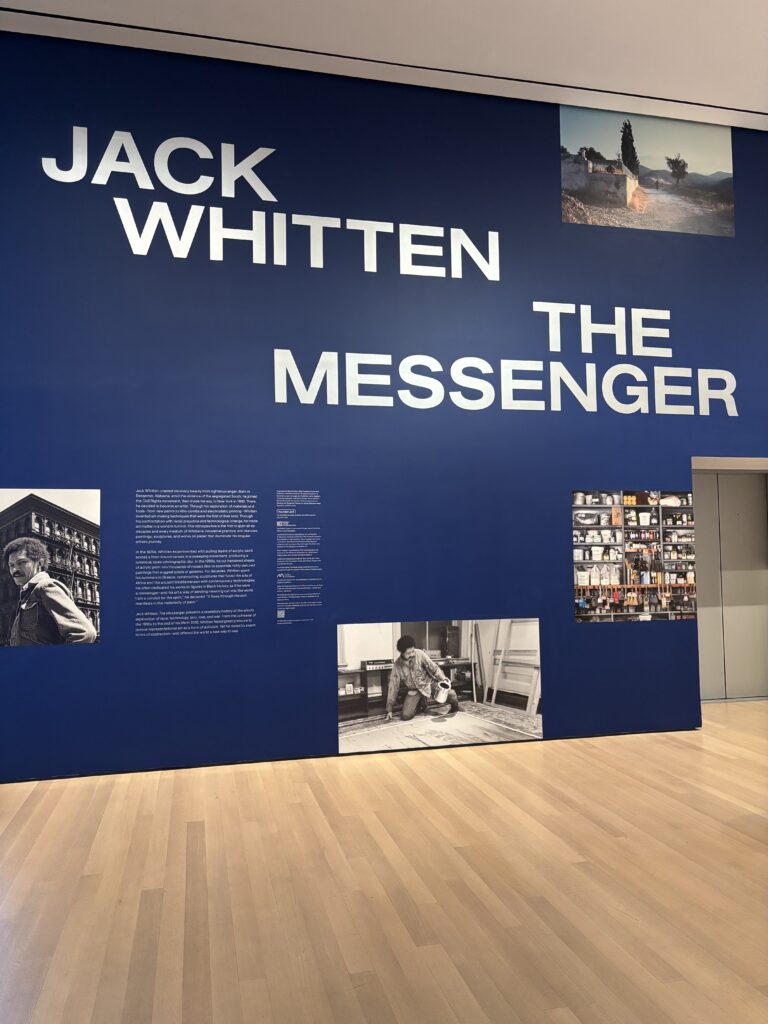
- entrance to gallery

-
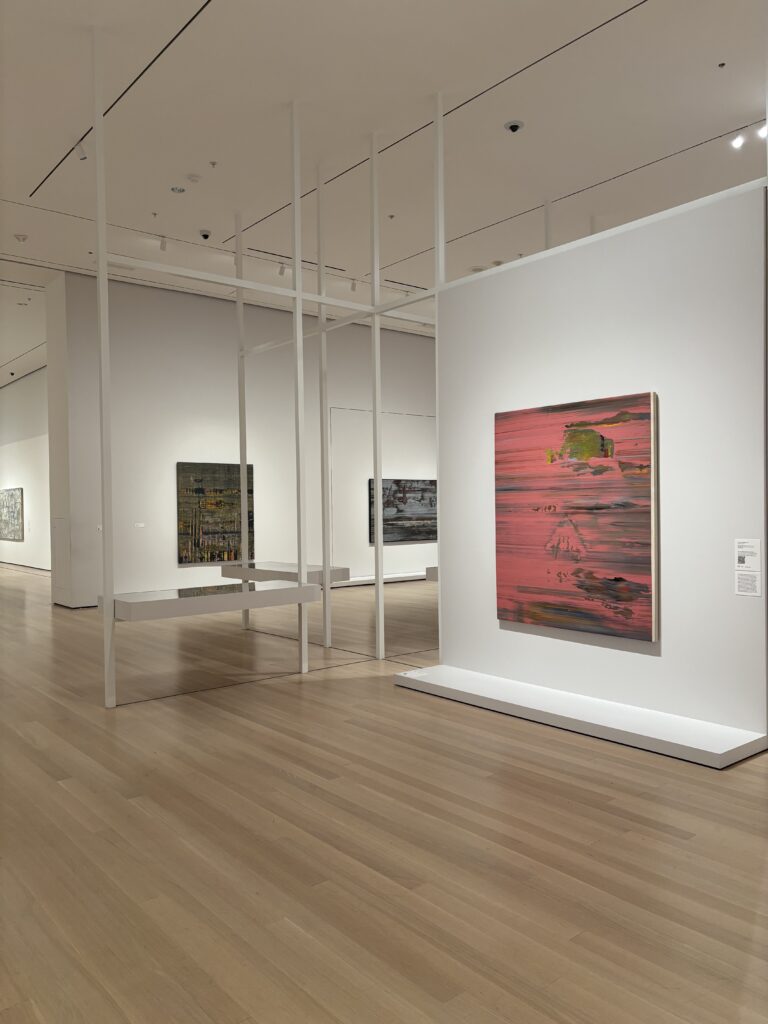
- view of gallery

-
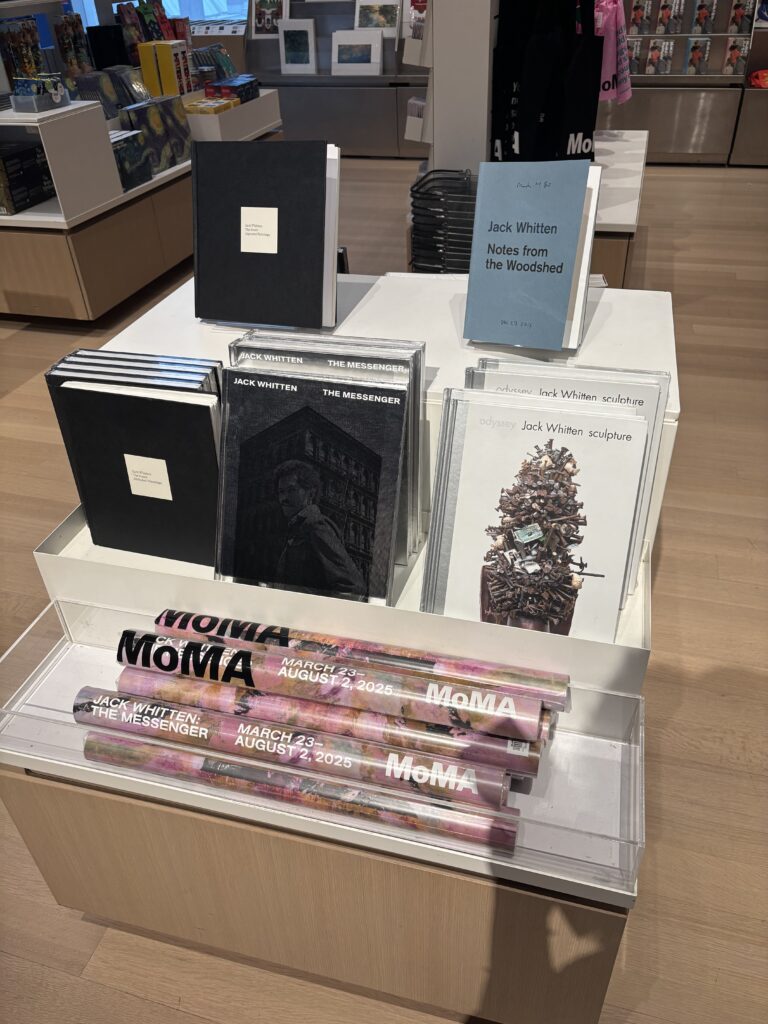
- gift shop

