The Art of Khari Turner in ‘We The Music’
The waters we crossed to get here take shape on Khari Turner’s canvas
Before he published his first book Humans Who Teach, Shamari Reid spent hours in conversation on tape (his podcast was called Water For Teachers) and on the page nurturing the seed of an idea from which the book would one day grow. I have him to thank for passing on Toni Morrison’s words on water.
“…[T]he act of imagination is bound up with memory. You know, they straightened out the Mississippi River in places, to make room for houses and livable acreage. Occasionally the river floods these places. ‘Floods’ is the word they use, but in fact it is not flooding; it is remembering. Remembering where it used to be. All water has a perfect memory and is forever trying to get back to where it was.”
– from Toni Morrison’s essay “The Site of Memory”
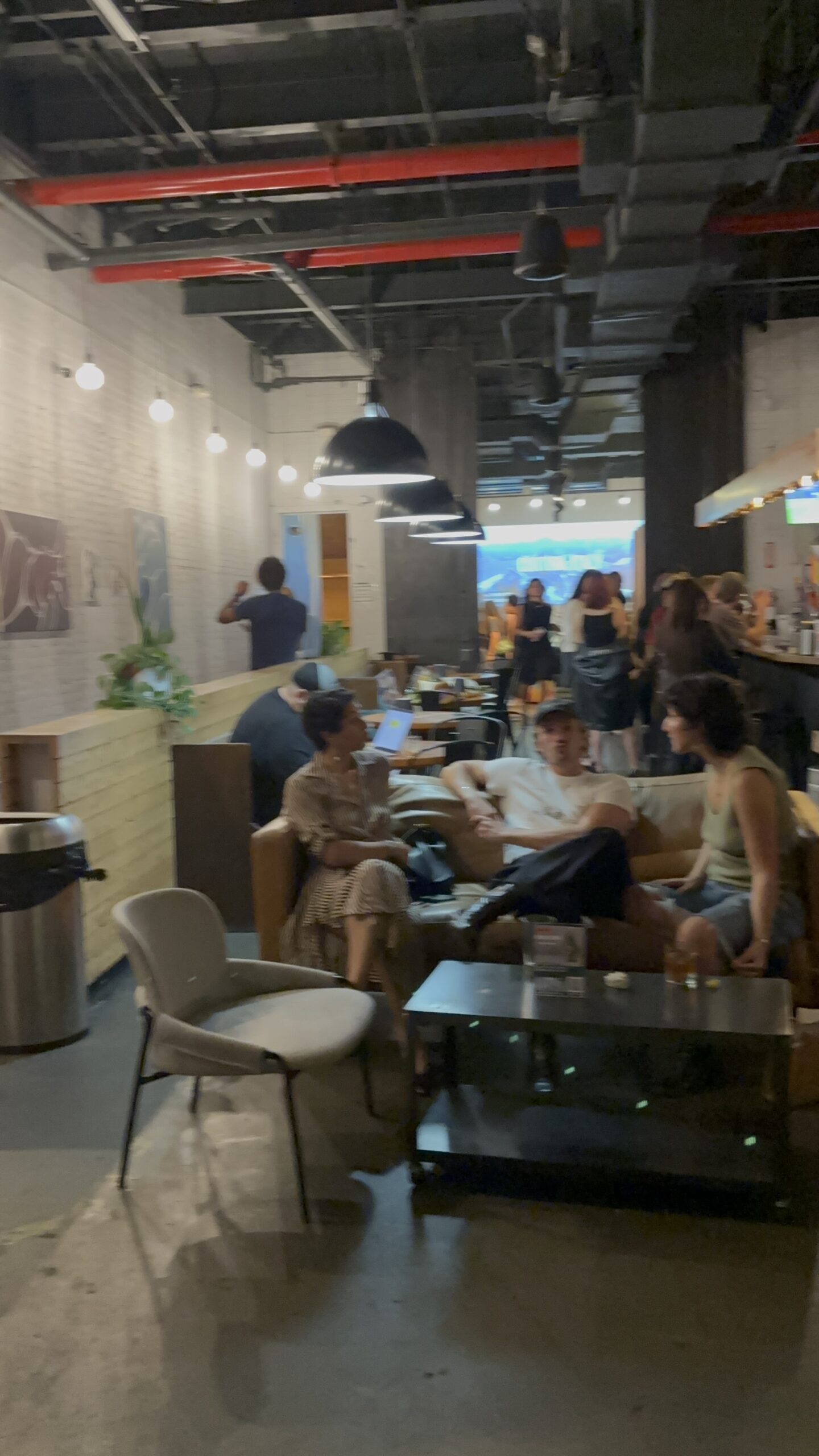
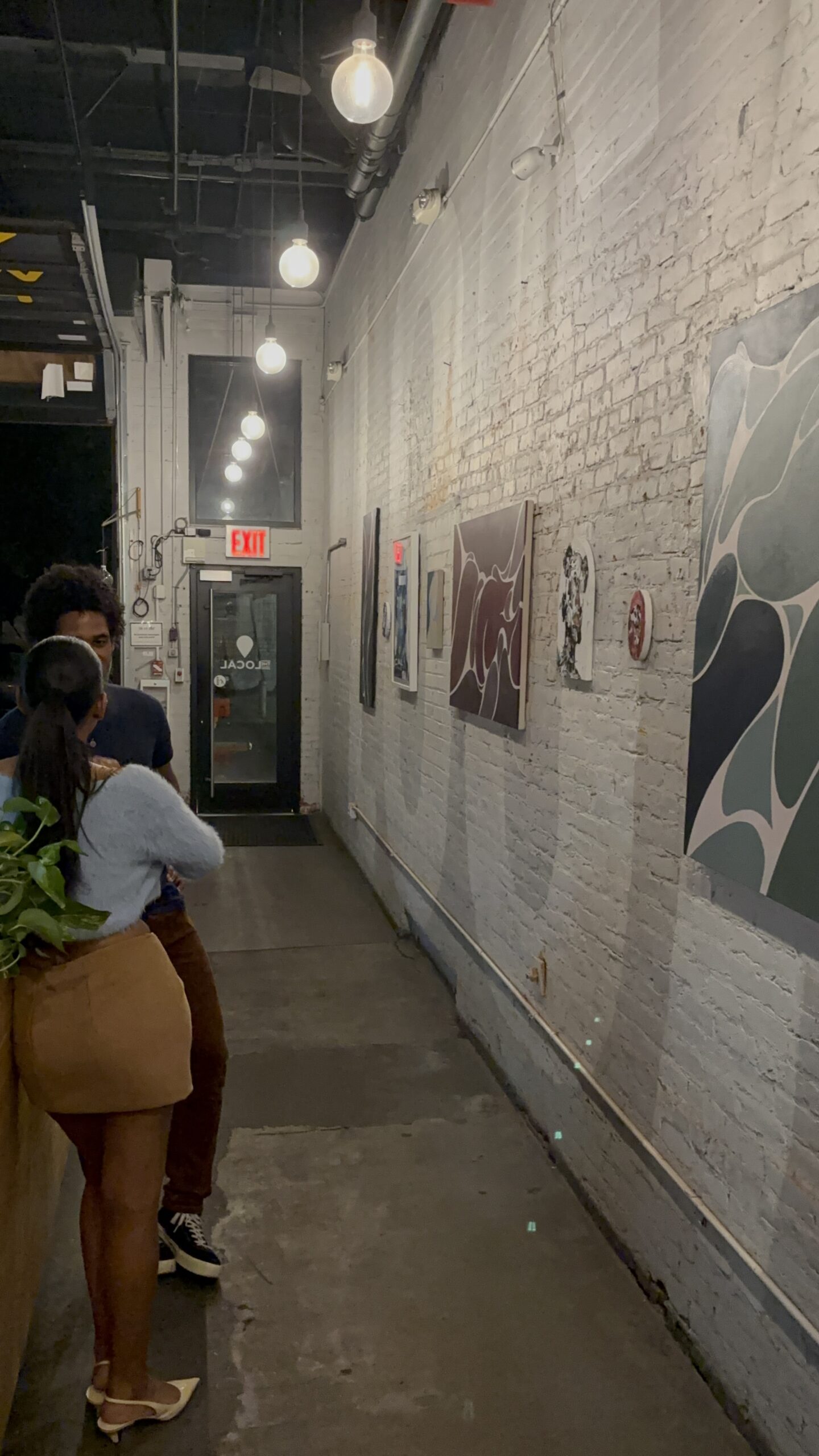
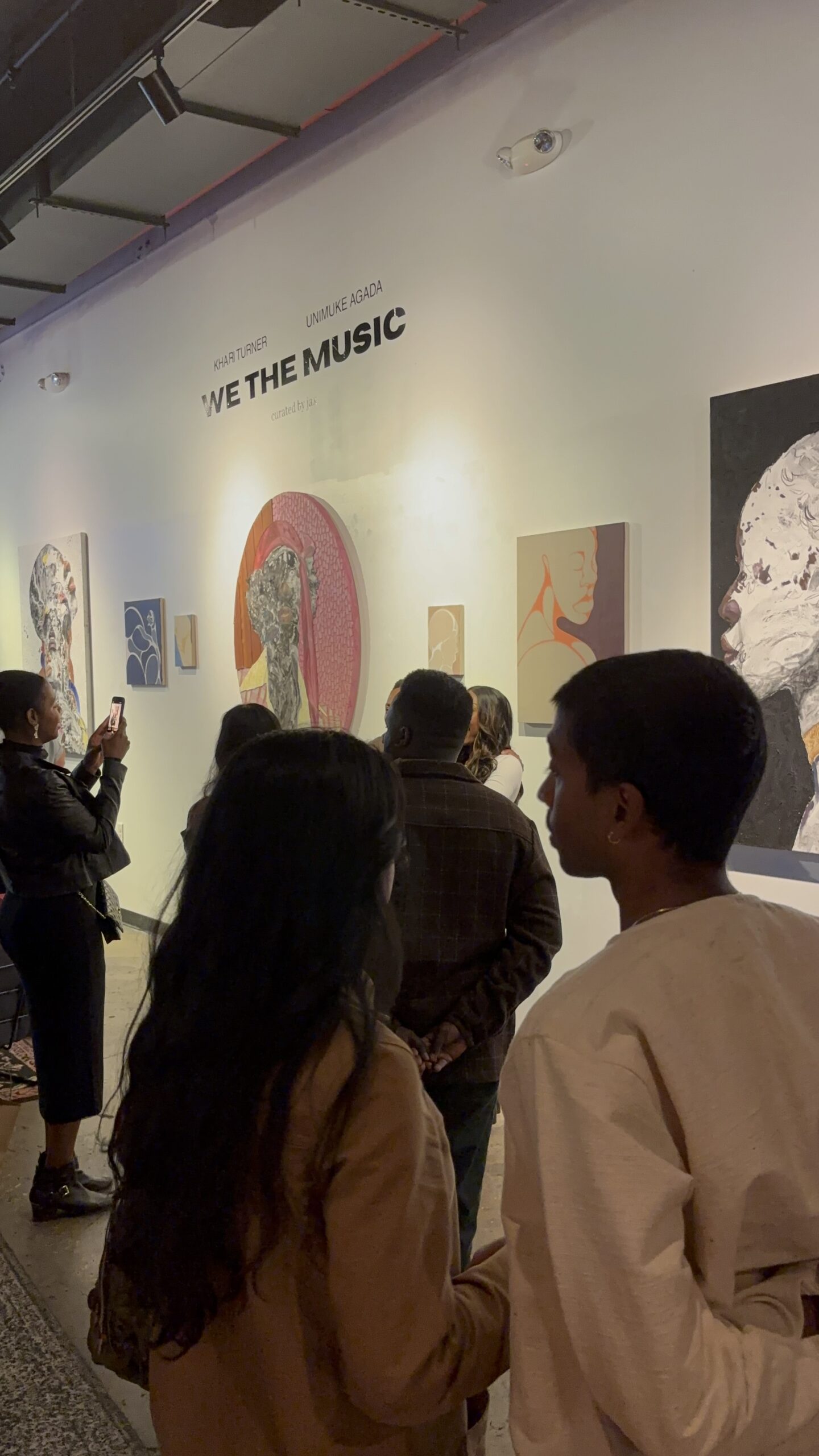
Khari Turner, a Milwaukee-born now NYC-based painter, has consulted water’s memory on to create figural abstractions of Black figures on canvas, paper, and wood. I spoke with Mr. Turner at the opening reception for We The Music, a group show featuring works by Unimuke Agada and Mr. Turner and curated by Jax. The works hung in the pseudo-industrial common area of The Local, an urbane hostel in Long Island City with room rates starting at $37 a night. The garage style doors were wide open to make the most of an unseasonably warm October night. Conscientious travelers and art enthusiasts milled about, stopping to linger in the breeze of a high-velocity fan or in contemplation of the exhibition.
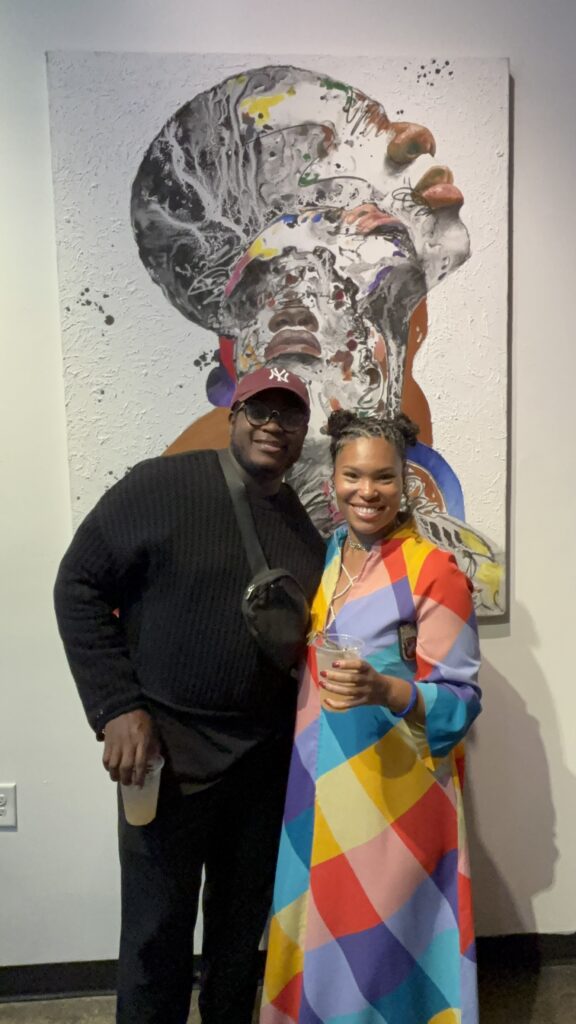
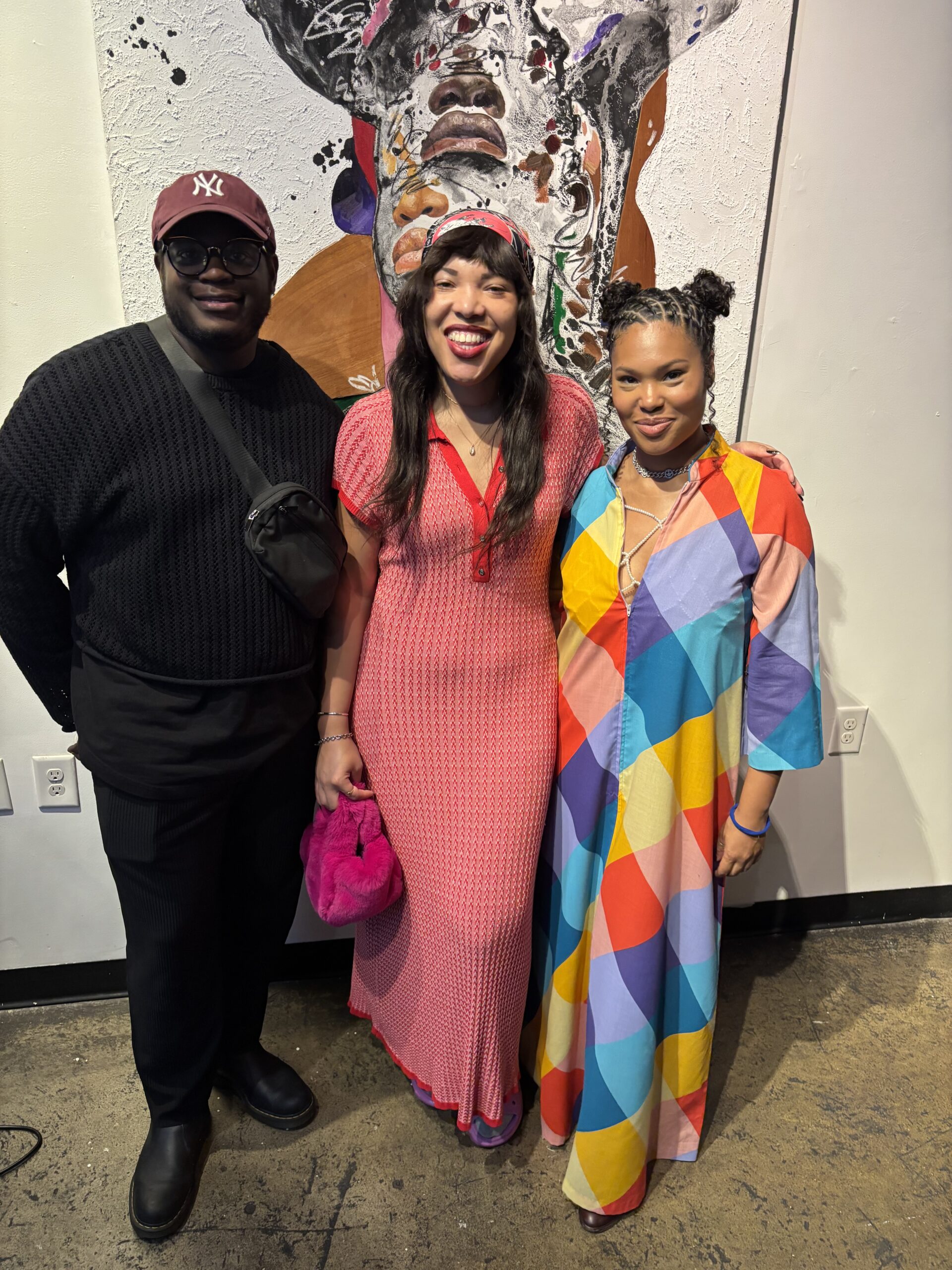
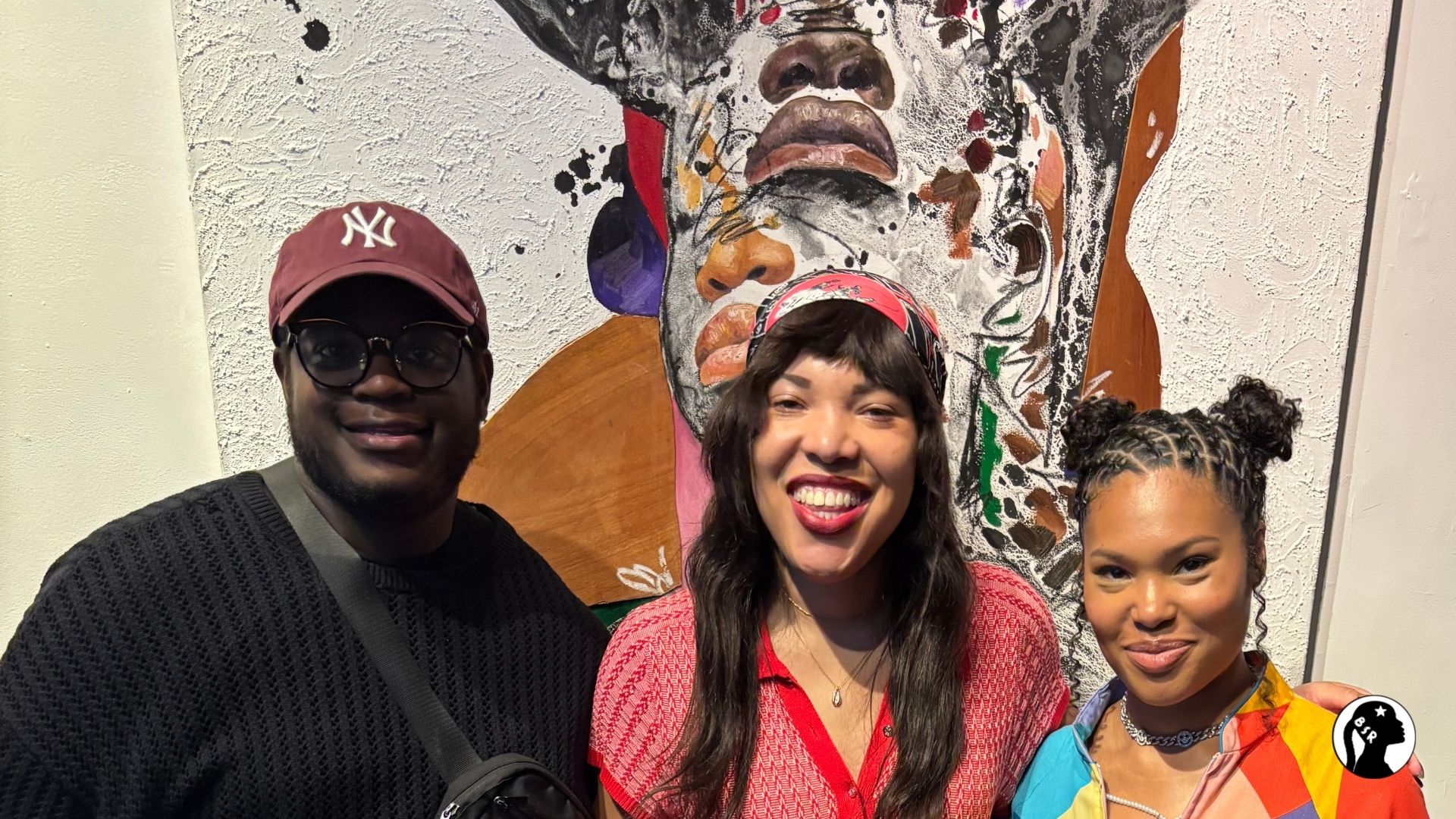
Artist Khari Turner (L) and Curator Jax (R) in front of Khari’s painting “In The Game” (2021)
Mr. Turner and I stood, fan-adjacent, in front of his 2021 work “In The Game”, an abstract 48’’ x 60’’ painting of three faces (or at least, three sets of nostrils and lips) tilted skyward in aspiration. Taken cumulatively, with its amoebic dabs of elementary hues and its weighty charcoal scribbles, it could have been the cover of a bestselling Black coming-of-age novel or the poster for an Afro-futurist adventure film. He leaned over and explained that his process begins with collection.
First, Khari collects water from oceans, lakes, and rivers with historical (the Atlantic Ocean) or personal significance (Milwaukee has an eponymous river and borders Lake Michigan). He’s not precious about the vessel, a plastic jug will do just fine. Each source is distinct; sometimes the water contains sediment, has a recognizable scent (he has described the Hudson’s smell as ‘decomposing’), or a tinge of color. Back at the studio, he mixes the water with ink and pours it onto the canvas. He made a point of explaining that he does not “push” the water around the canvas as a previous interviewer wrote; the water carves its own way across the plane. Irregular shapes remain. In some, there are large blotches of ink like a hastily painted watercolor. In others, there are fine veins and tributaries tracing through the sand like the Mississippi Delta seen from above.
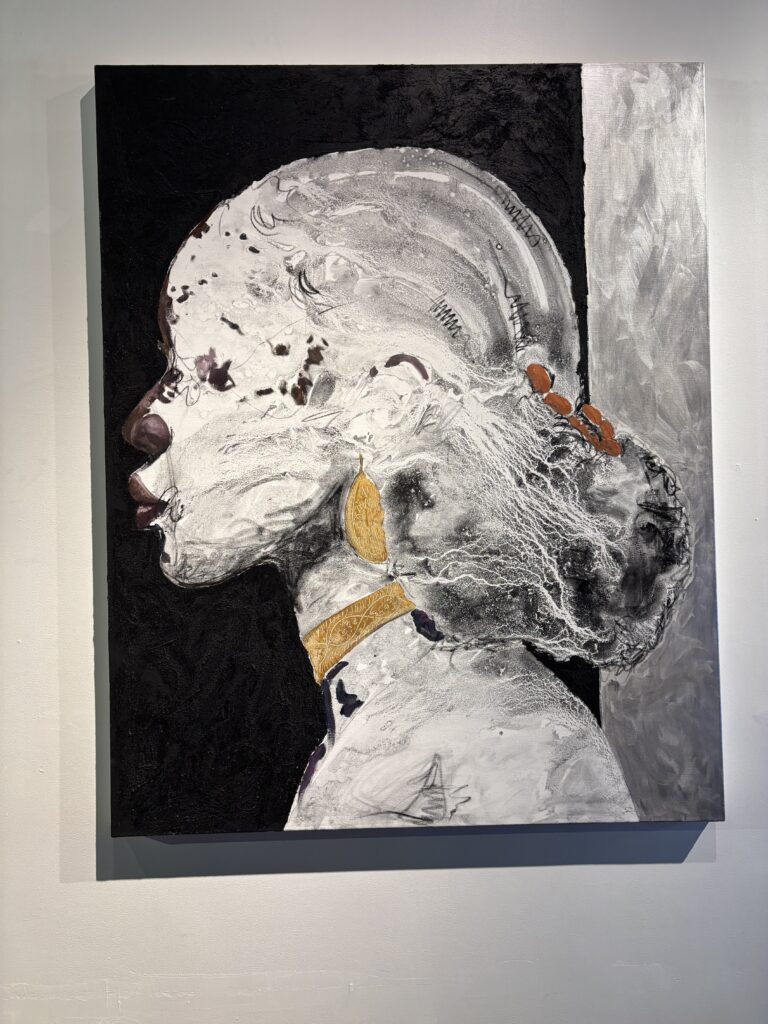
“Copper beads” (2021) by Khari Turner
Once the water has dried into its self-determined final form, Khari begins to paint around it in oil or acrylic. A rounded nose, plush lips, or a vaulted cheekbone may emerge. There may also be a durag, or bantu knots, or cornrows. There is no doubt that the figures are Black. Each of the faces are open-ended enough for you to fill them in with your own familiar. The final product, the versions that hung in front of us, evoke a permanent state of process with no end or beginning. In the white spaces — made blank by the water and left untouched by Khari — you write your own story. The canvas is completely incomplete; the viewer must imprint on the work to make meaning.
Contradictions like these — completely incomplete, figural abstraction, literal and conceptual — are radical, they sprout from the root: Khari set out to engage and sublime a gruesome and destructive history. When he collects water from Senegal in West Africa, which was once home to storied pre-colonial civilizations like the Ghana and Jolof Empires; or from Jamestown, where the first documented enslaved Africans, Antoney and Isabella (not their birth names), arrived in this country; or the Hudson River, which snakes its way around the former slave trading post now known as Wall Street, Khari creates resonance out of a discordant past.
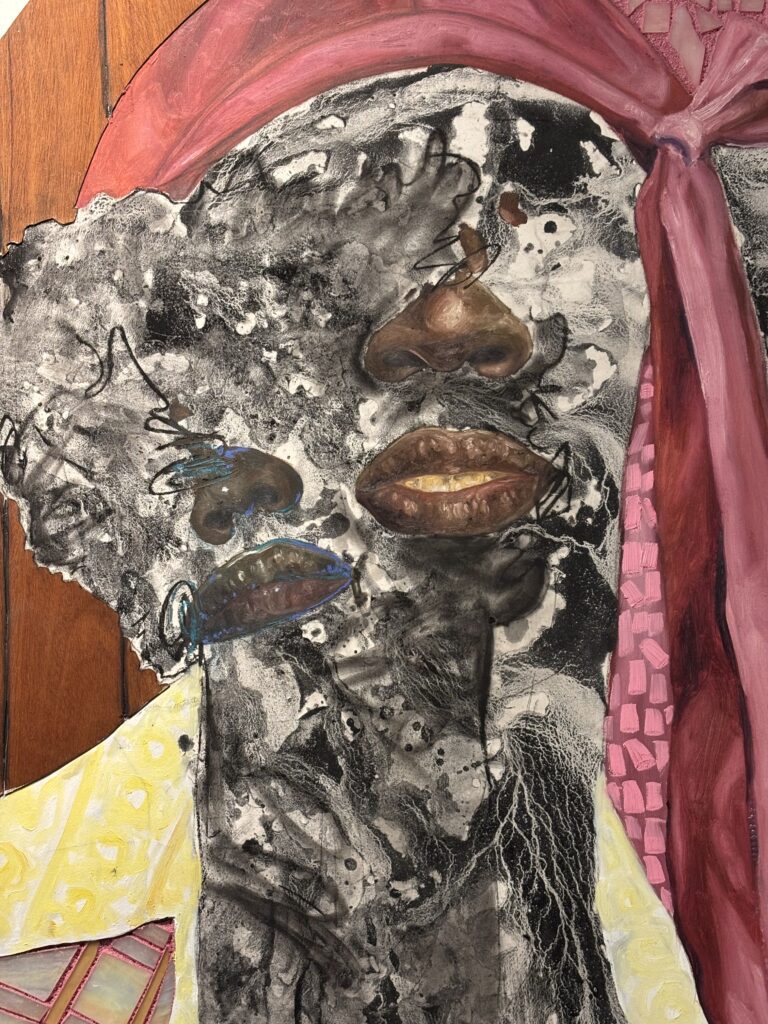
“Pictures at Grandma House” [detail] (2024) by Khari Turner
The resonance attracts wide interest. He has appeared on the Kelly Clarkson Show and filmed a studio visit with UK-based auction house Christie’s. In both, he offers a ‘way in’ to all viewers with the reminder that each of us is a body of water but he doesn’t stop there. In every appearance I watched on YouTube Khari’s message about his intentions remained undiluted: “They brought slaves to this continent and this country, and so I used that water thinking about all of the things that could’ve happened in that water and at that water.” Kelly Clarkson’s sponsor, the G2 Pilot Pen, wrote Khari a $1,000 check for being an “unstoppable person bringing beauty and meaning into the world” and his works on Artsy sell for $4,000 or more. Khari seems to have found the impossibly narrow ledge where unapologetically Black art garners mass appeal.
While the water’s memory is long, Khari’s own memories are at play in his work as well. After our discussion of his process, he described his grandmother’s influence on his career as an artist. Her house was filled with Black art, African art, and family photos (referenced in the work titled “Pictures at Grandma House”). “[My grandmother’s] collection of African masks referenced a part of my identity that I could not access,” he explained. This drove him toward a historical curiosity that he and I share. For both of us, there is a missing link between Black identity and African heritage. We know that our ancestors are from the African continent, but the violent imposition of slavery meant we did not inherit the traditions, customs, languages, recipes, or folktales that would grant us fluency in our ancestral cultures. I can cook black-eyed peas from memory, but if I were to hang an African mask on my wall I’d have to research to be certain of its meaning. Khari’s incorporation of water is a means of reconnection across continents, oceans, brutality, and the muddiness of time. Even when we don’t remember, the water does.
blacklove 🖤 and starlight 🌟
We The Music was an exhibition of work by Khari Turner and Unimuke Agada, curated by Jax. It was on view at The Local from October 4 – 30, 2025.
-
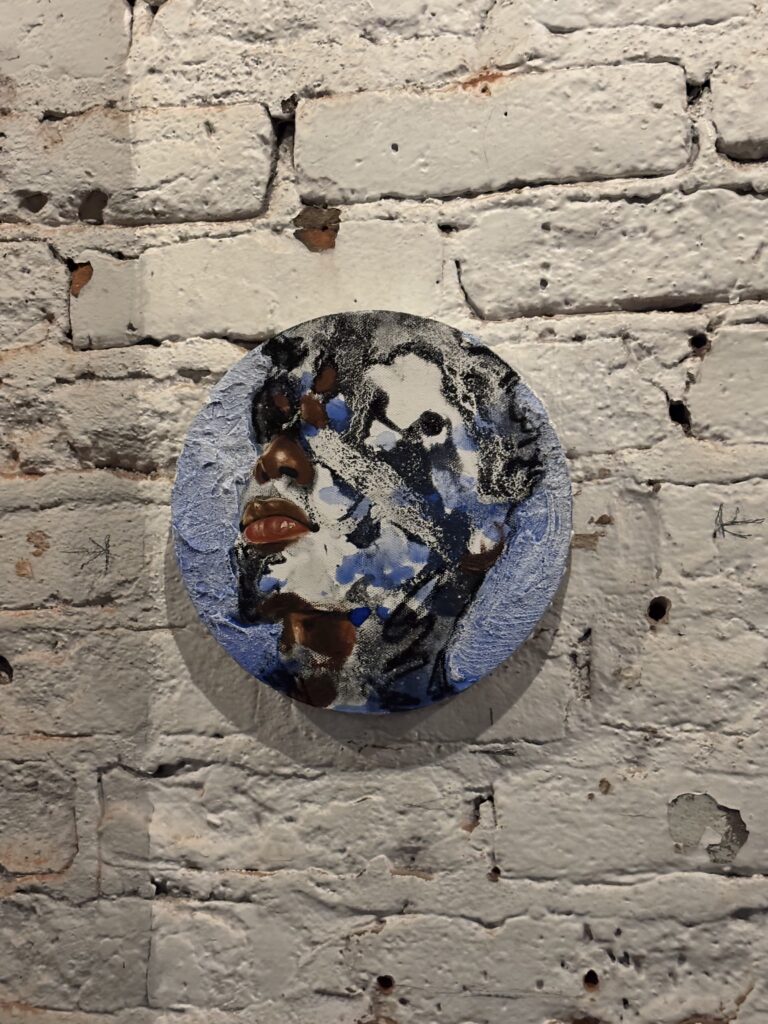
- “Catalyst” (2025) by Khari Turner
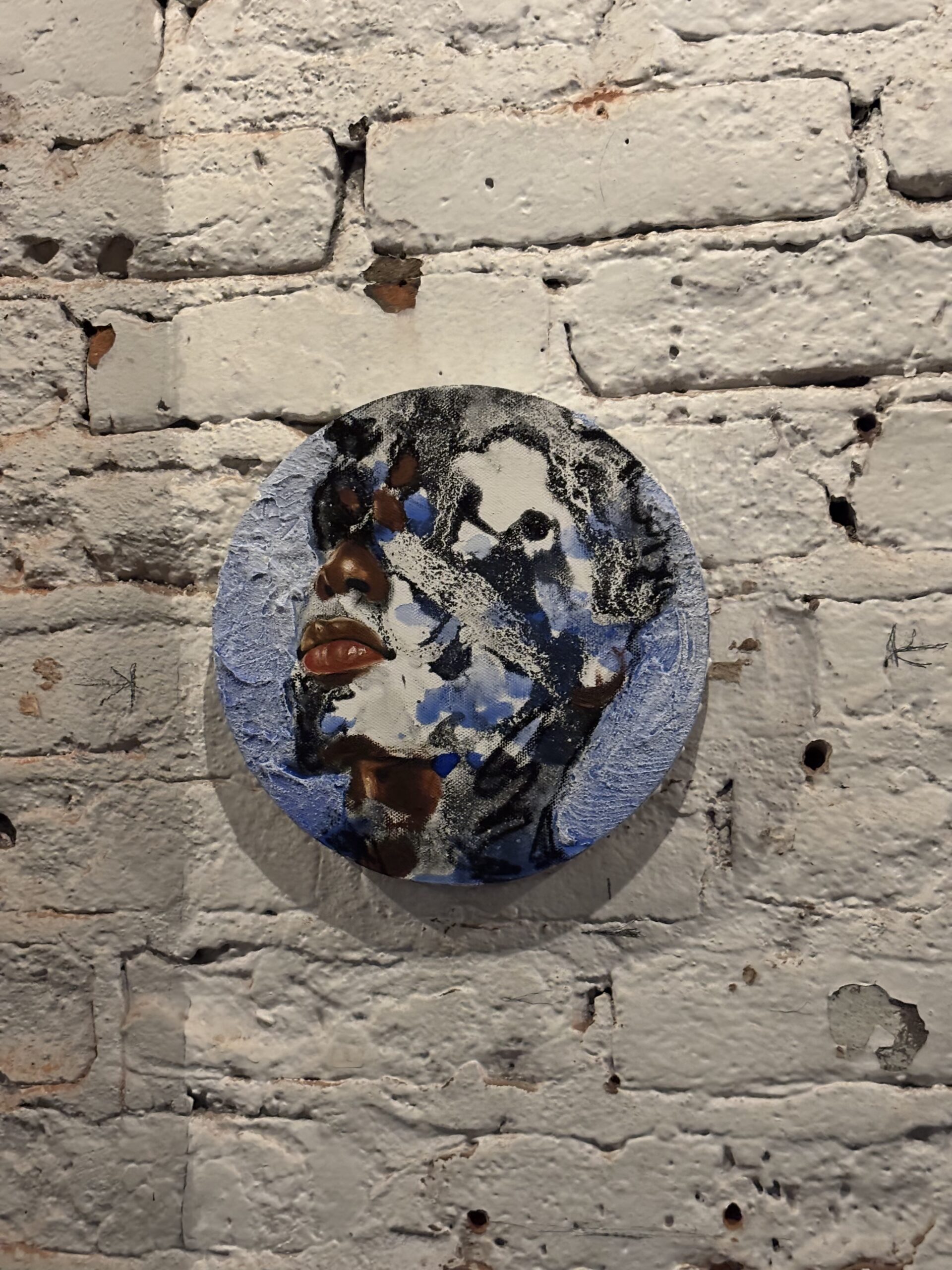
-
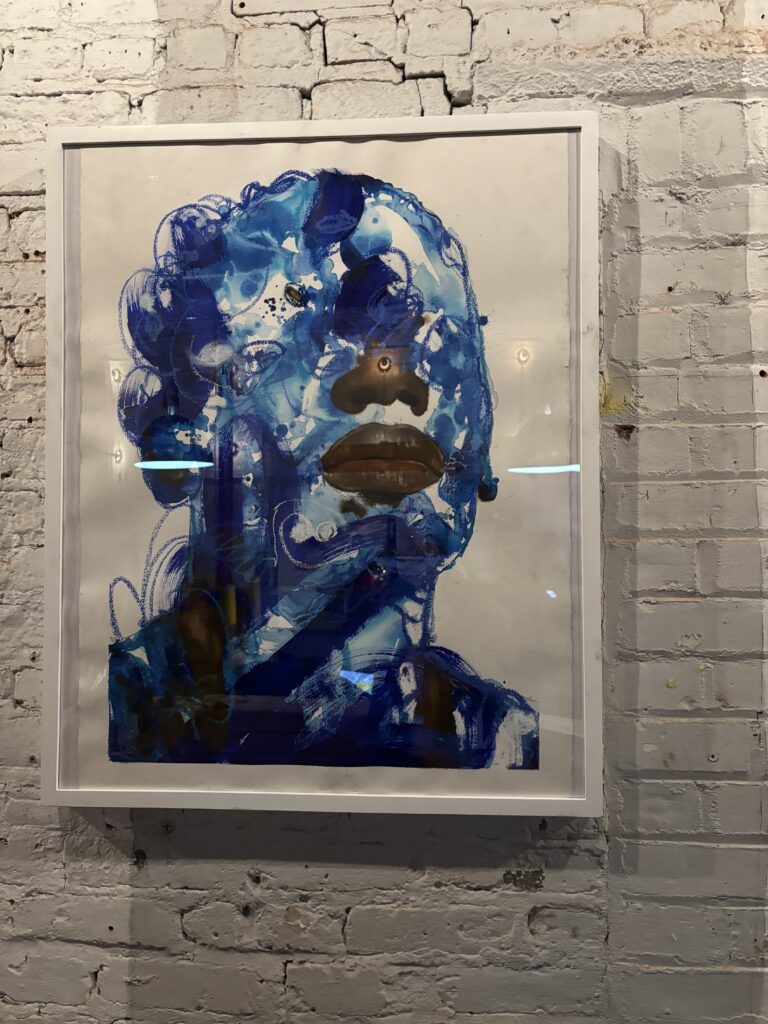
- “Blue” (2025) by Khari Turner
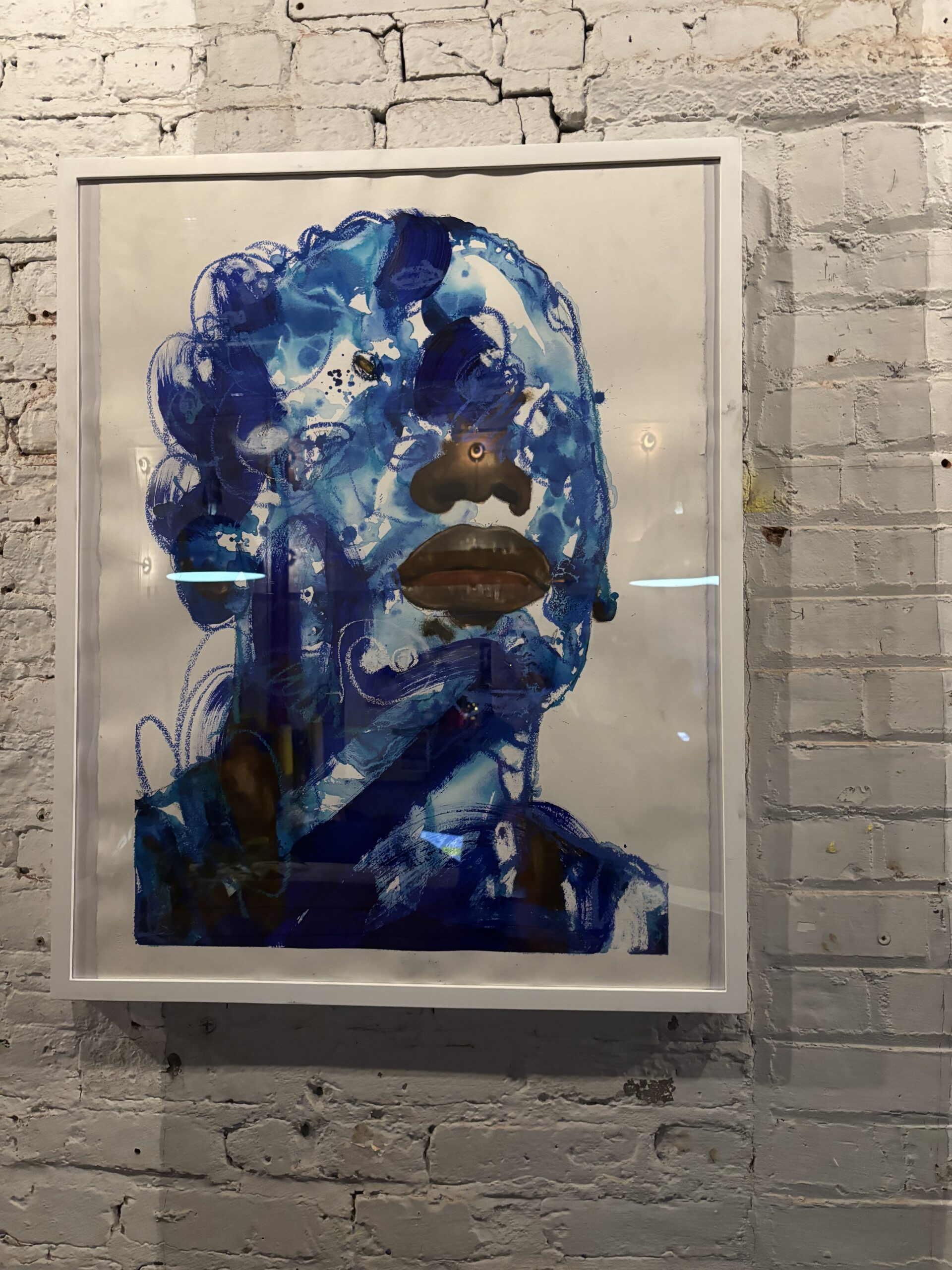
-
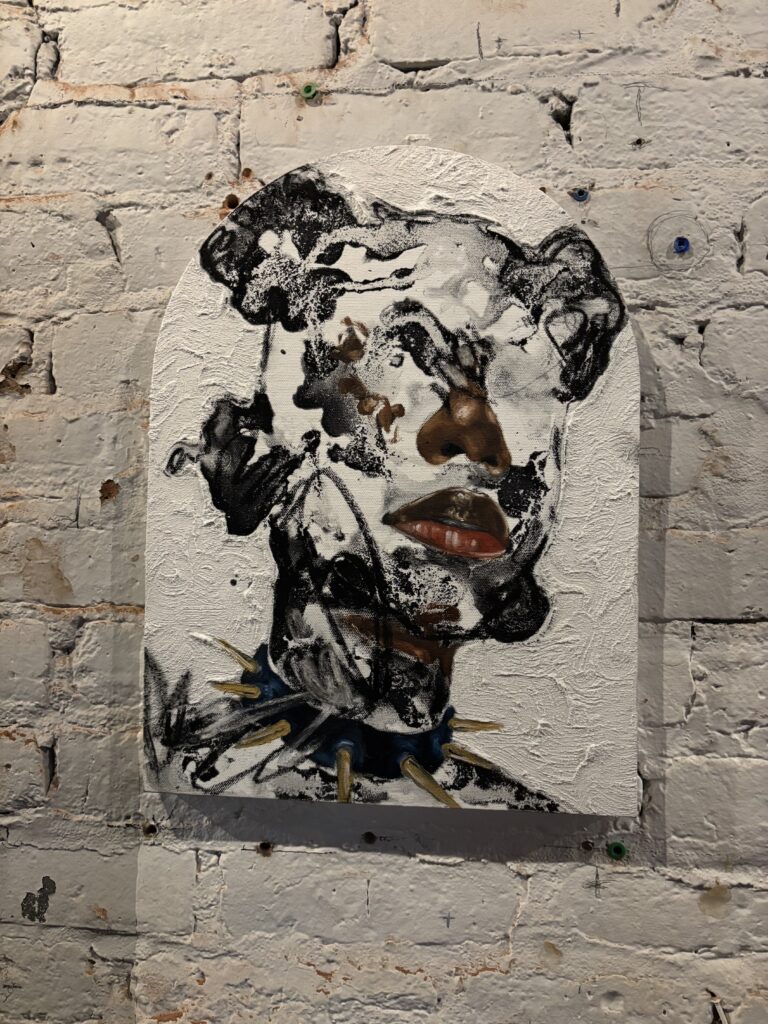
- “Black Alt 3” (2025) by Khari Turner
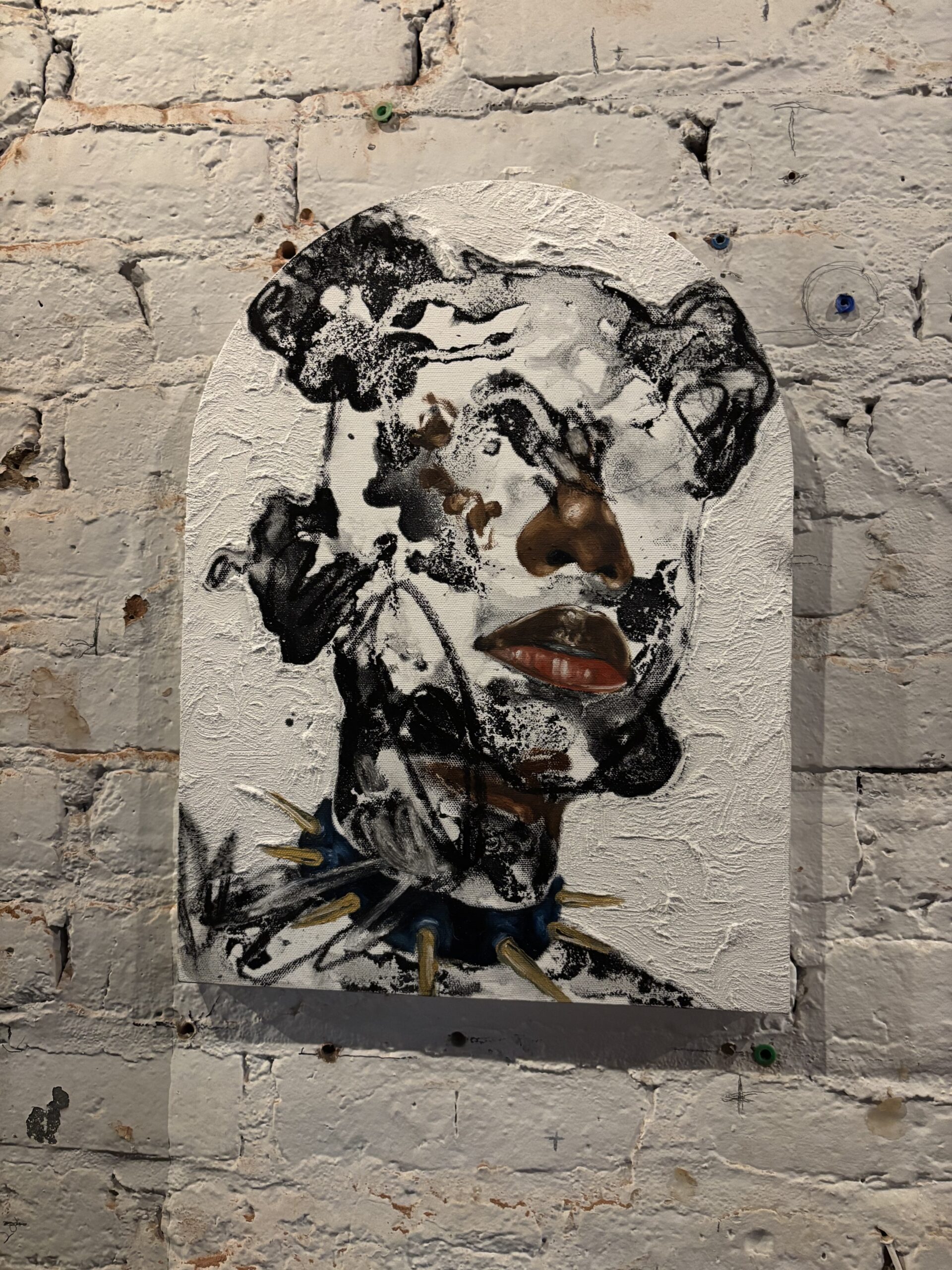
-
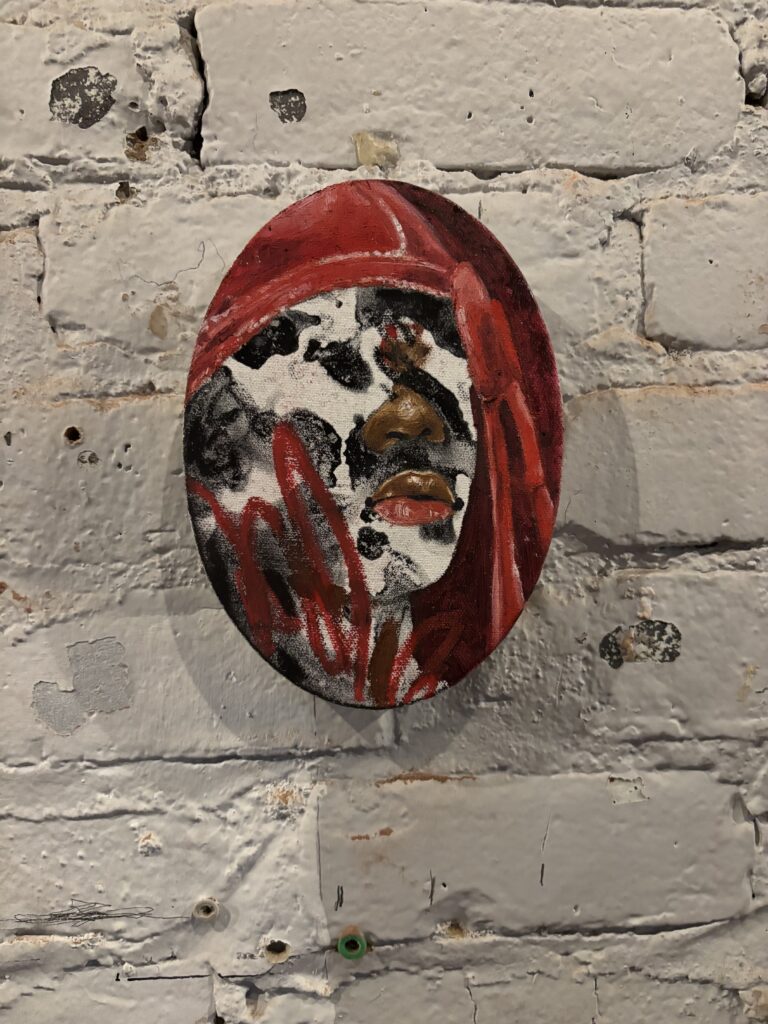
- “The roots of a system” (2025) by Khari Turner
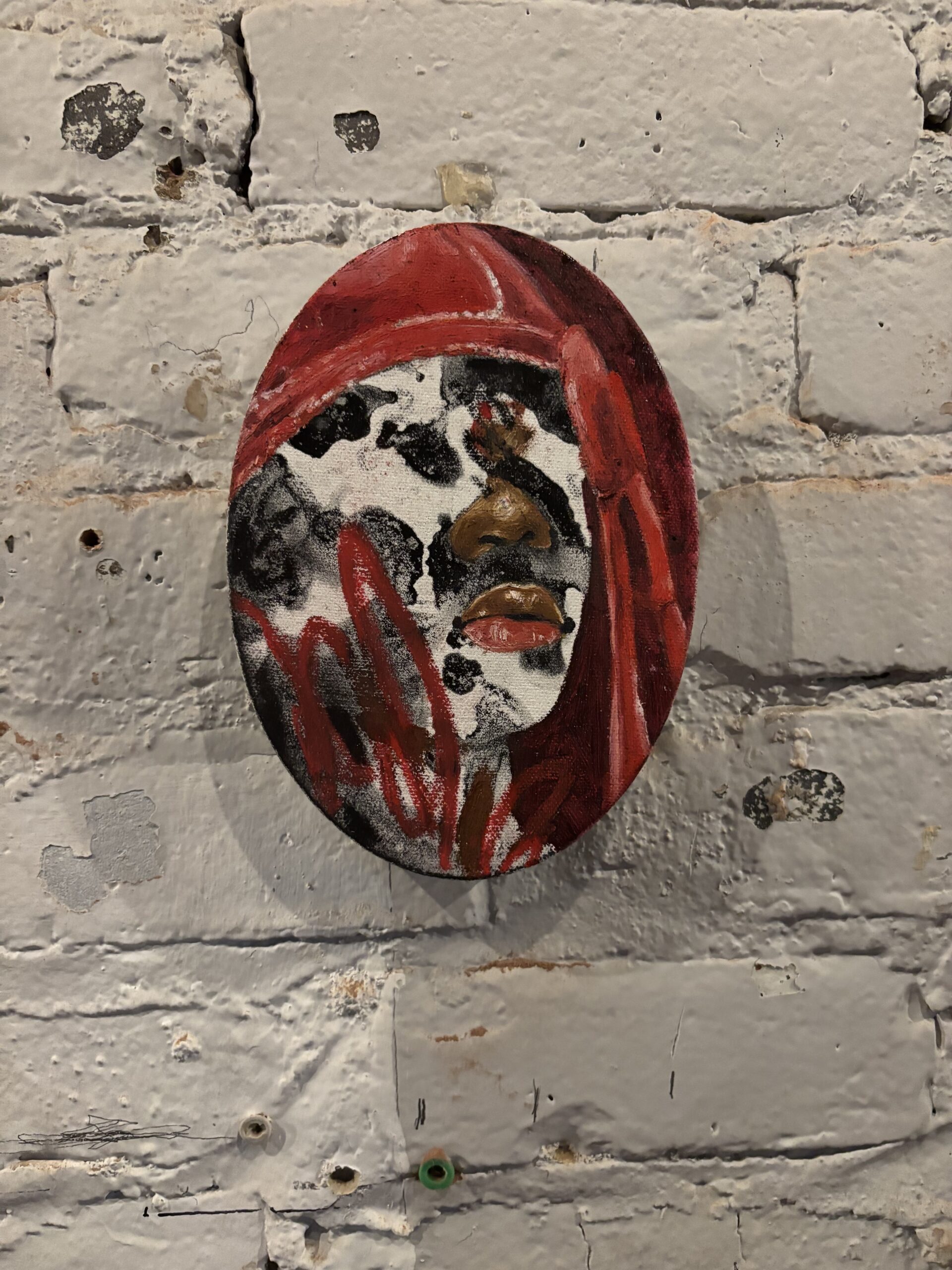
-
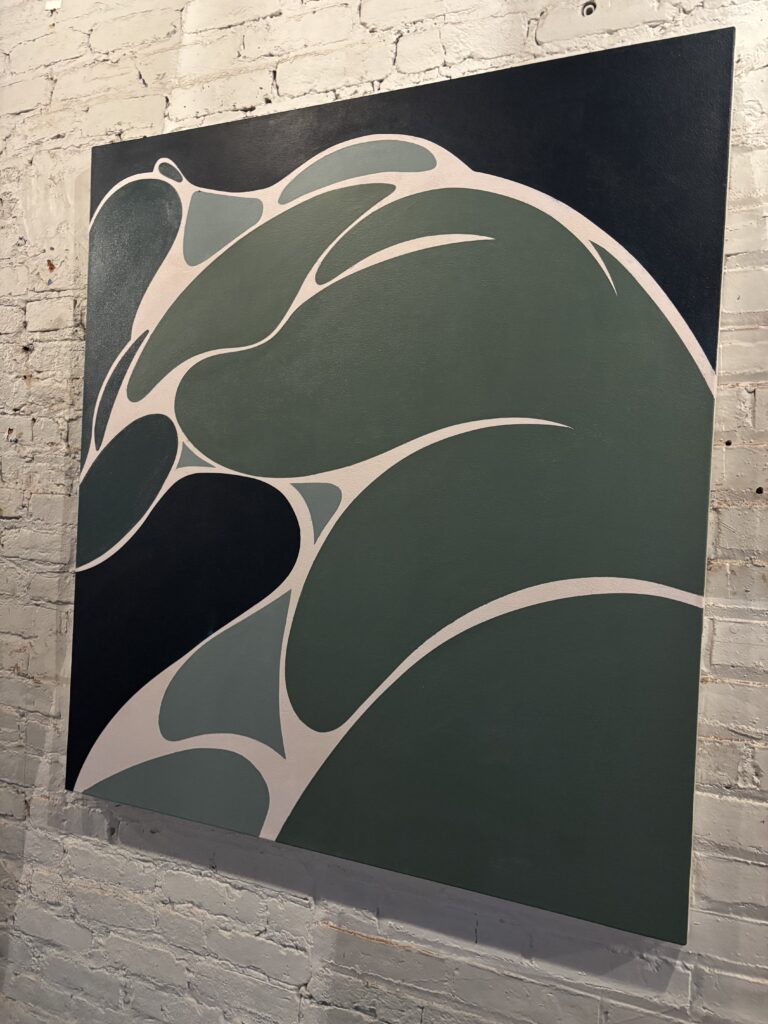
- “Untitled” (2024) by Unimuke Agada
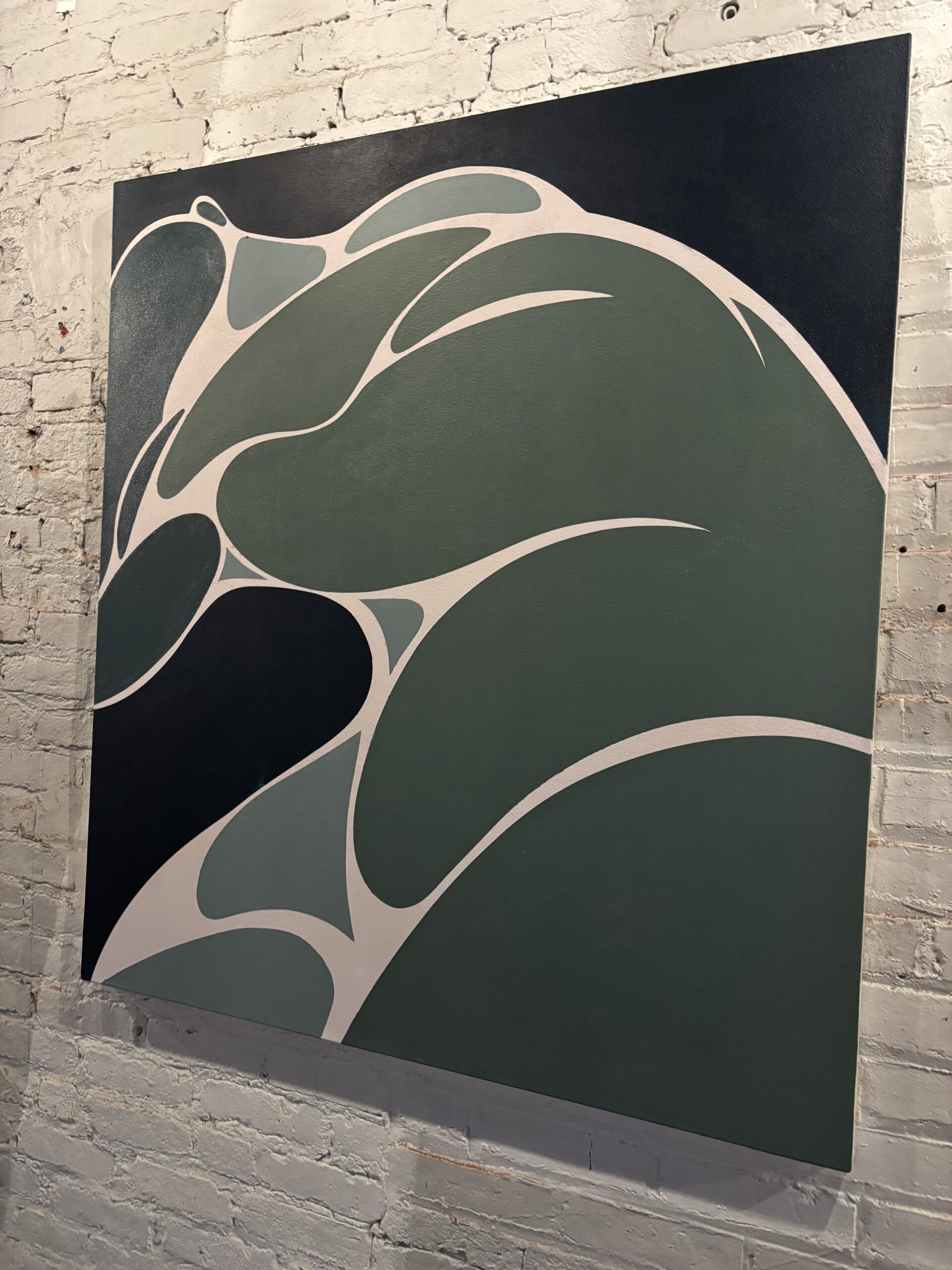
-
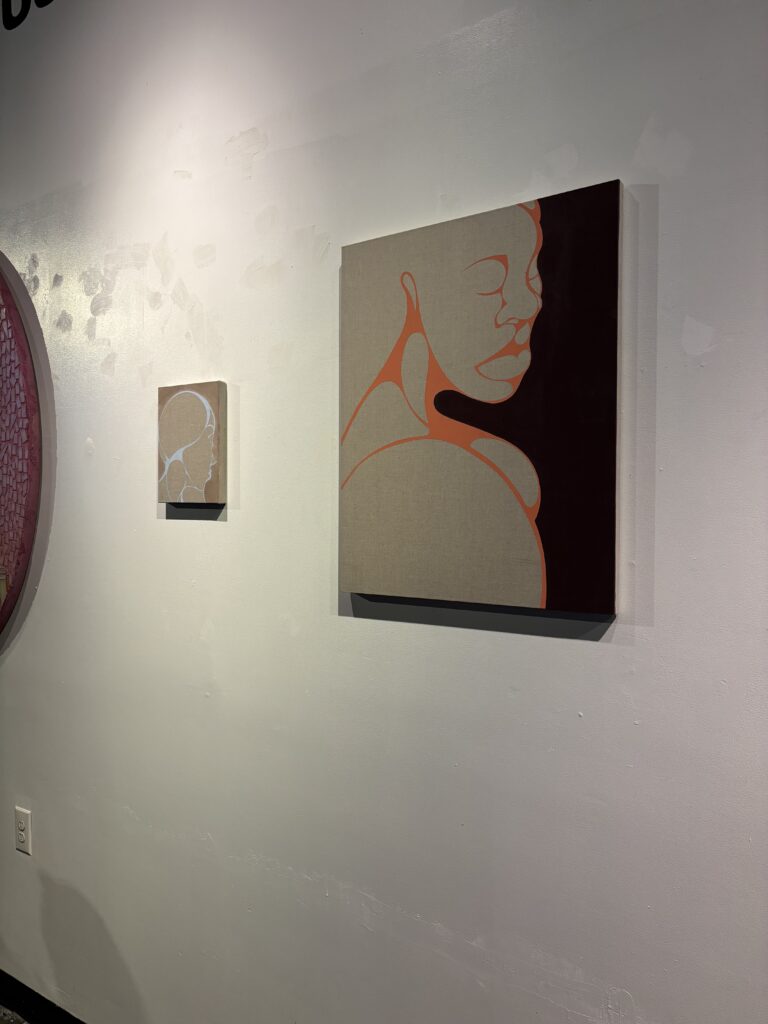
- “Untitled” (2024) by Unimuke Agada
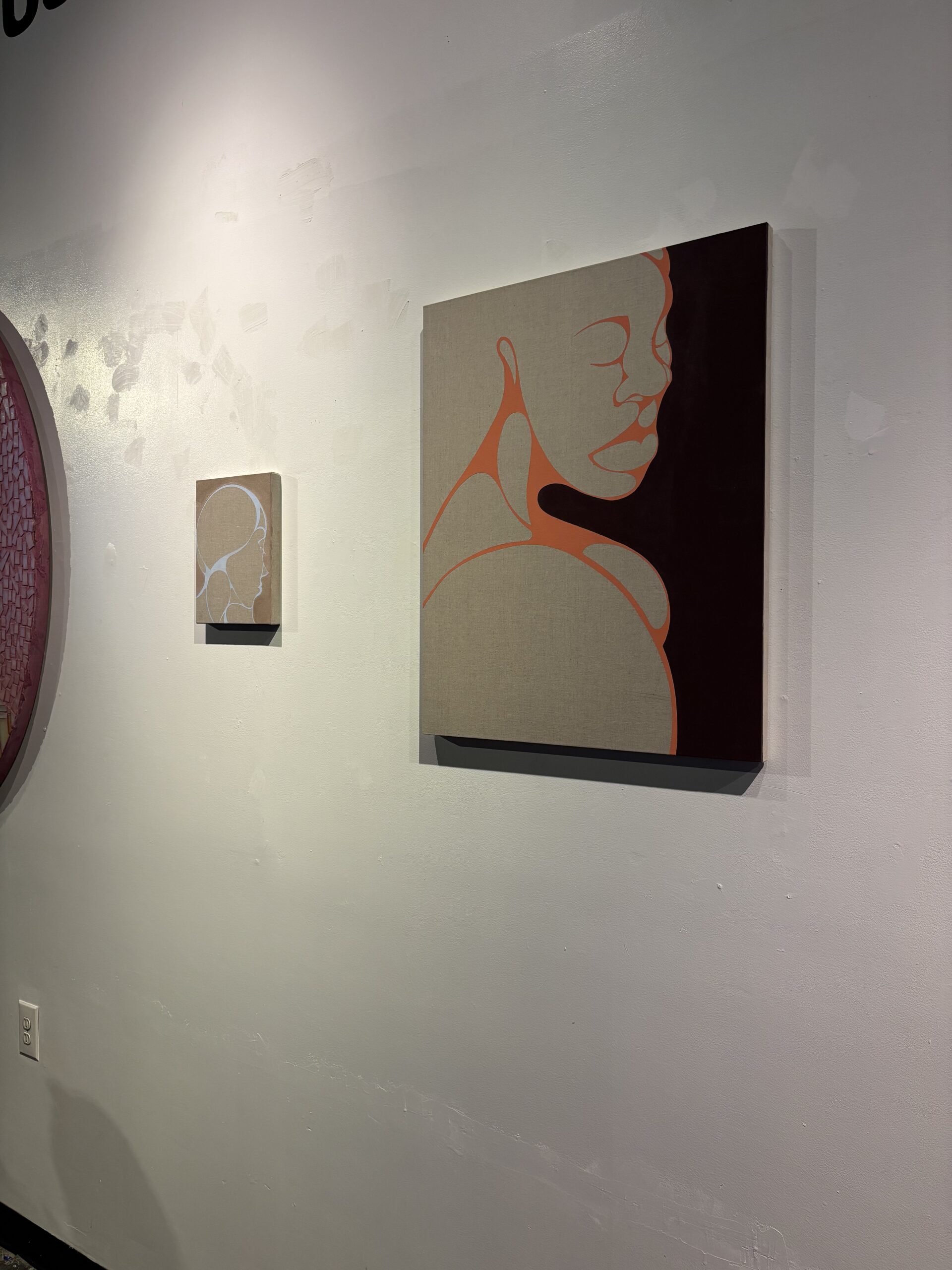
-
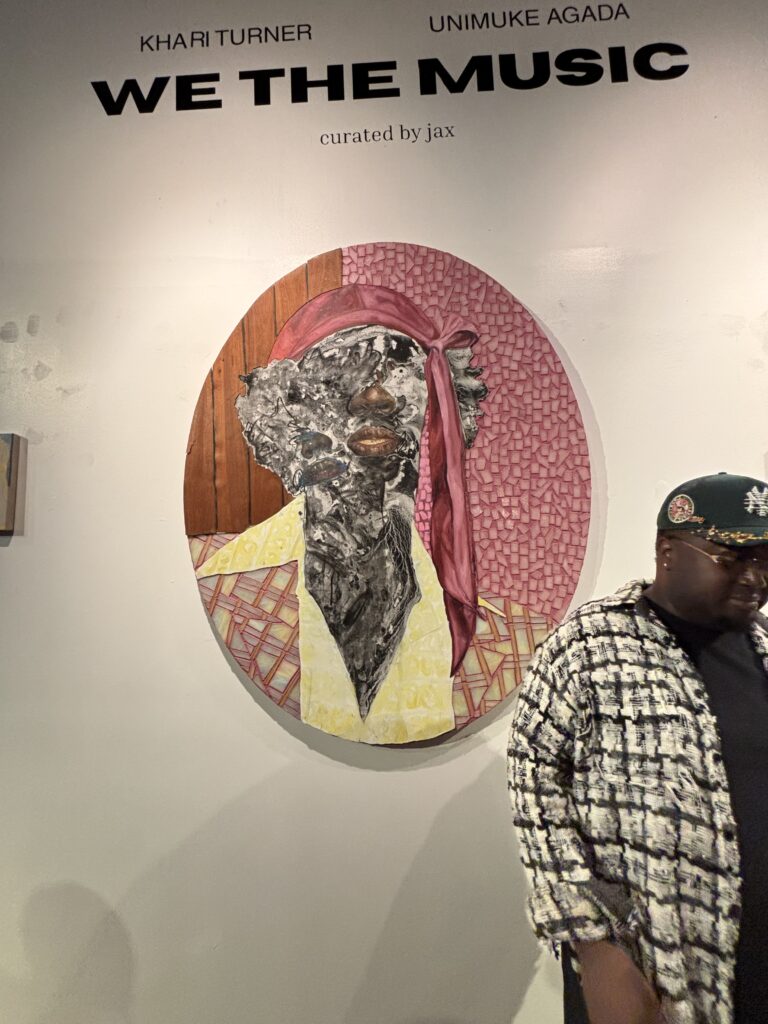
- Donavan in the foreground of Khari’s painting “Pictures at Grandma House” (2024)
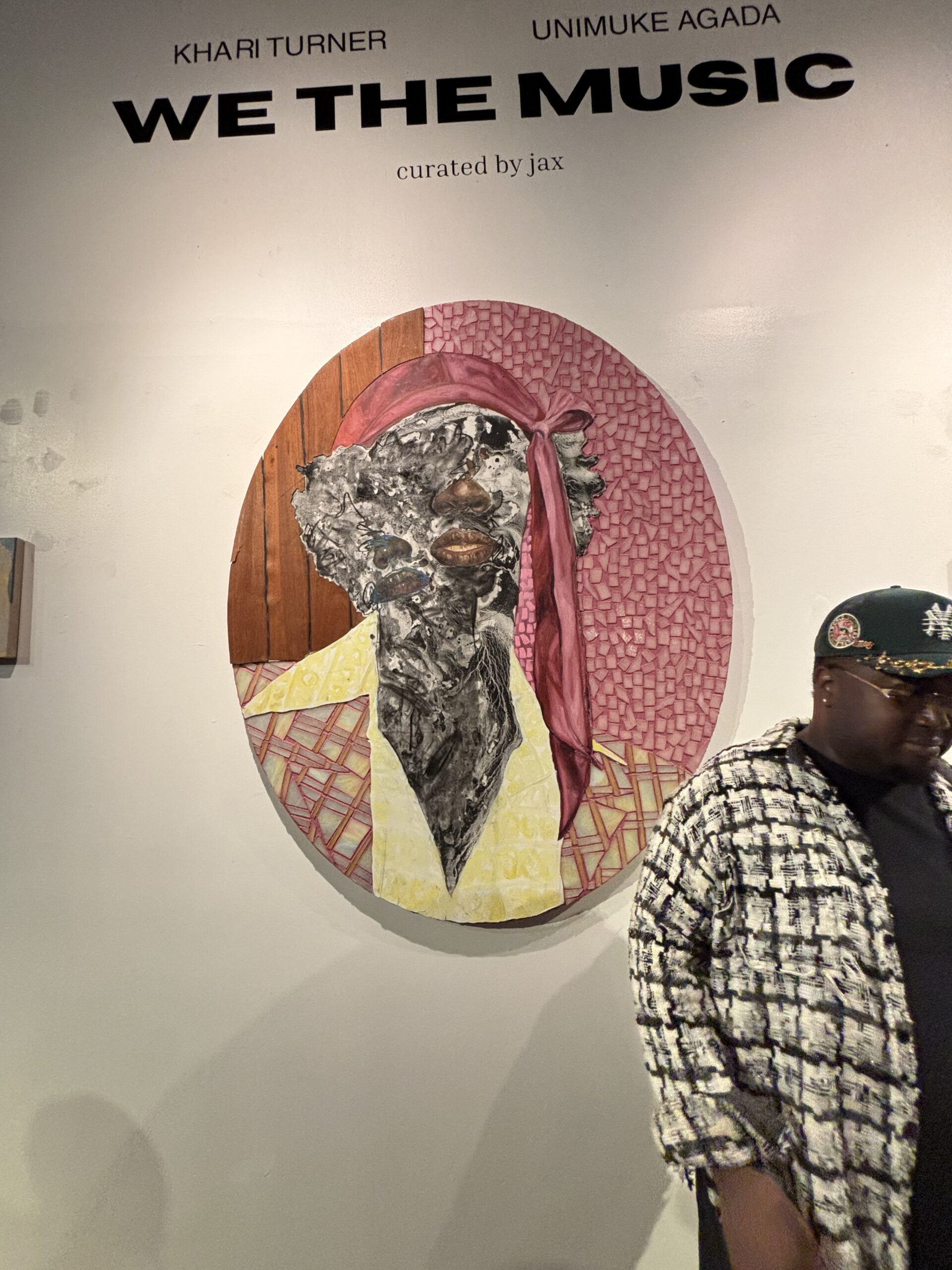
-
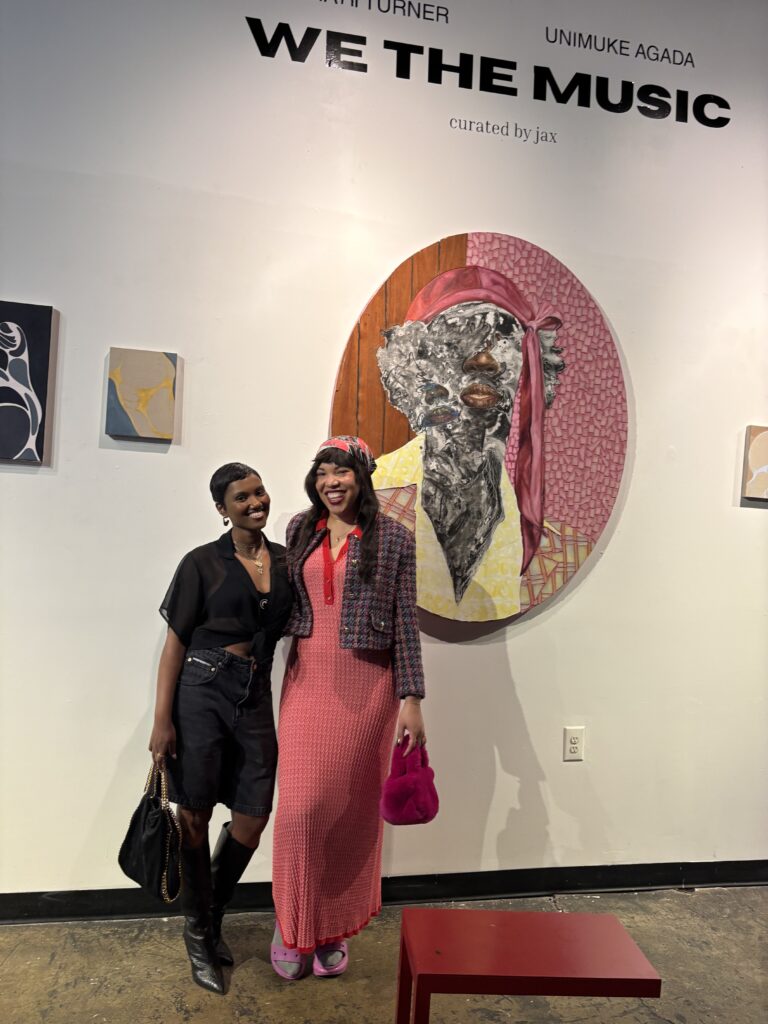
- with Bianca Jean-Pierre of SHEER Worldwide in front of Khari’s painting “Pictures at Grandma House” (2024)
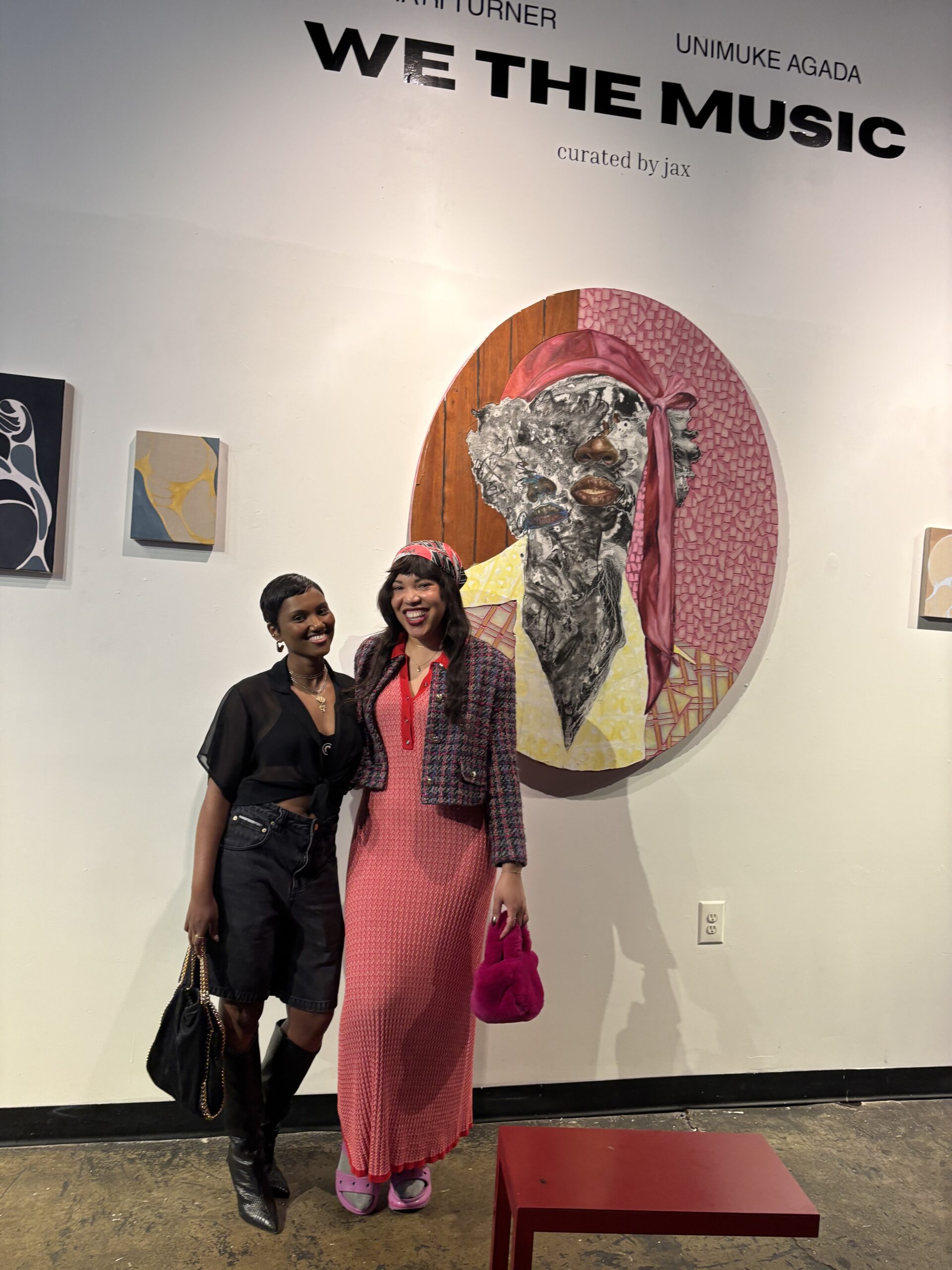
-
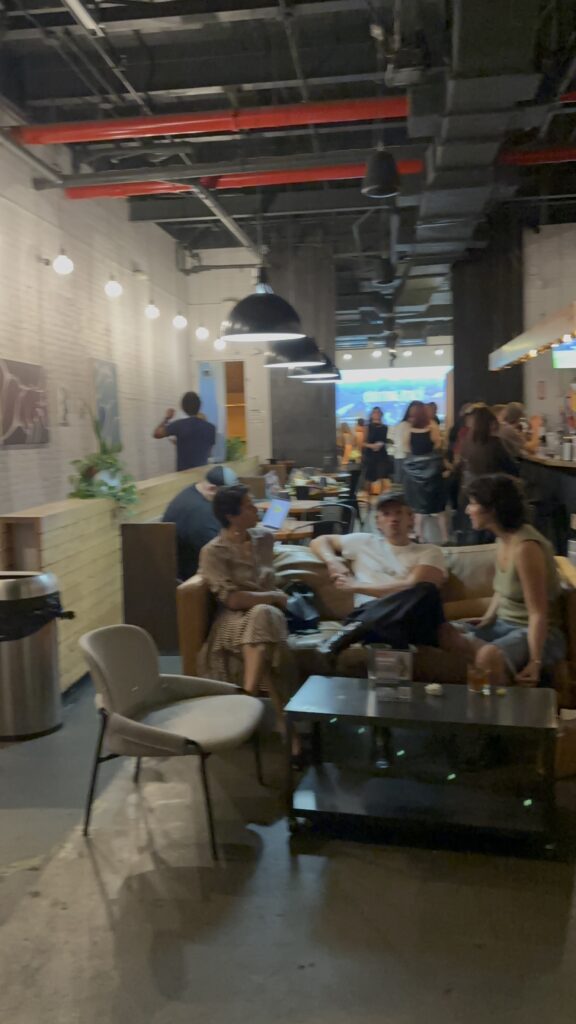
- Gallery View of “We The Music”
-
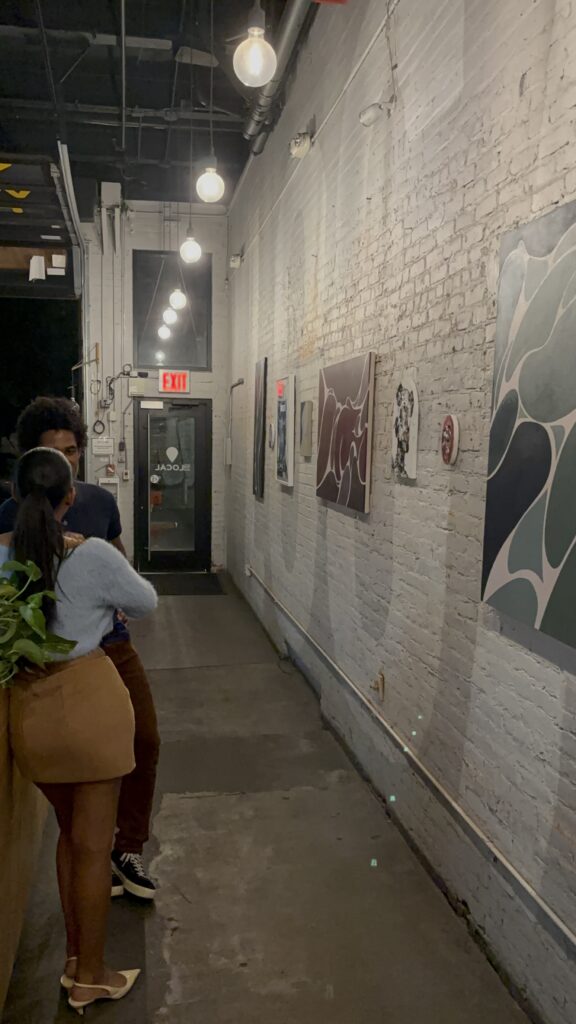
- Gallery View of “We The Music”
-
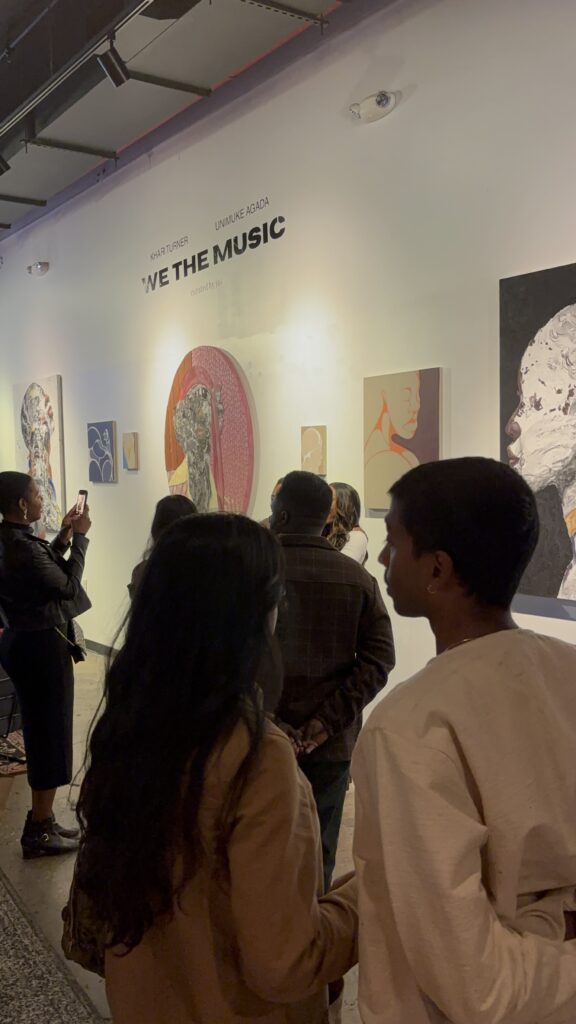
- Gallery View of “We The Music”
-
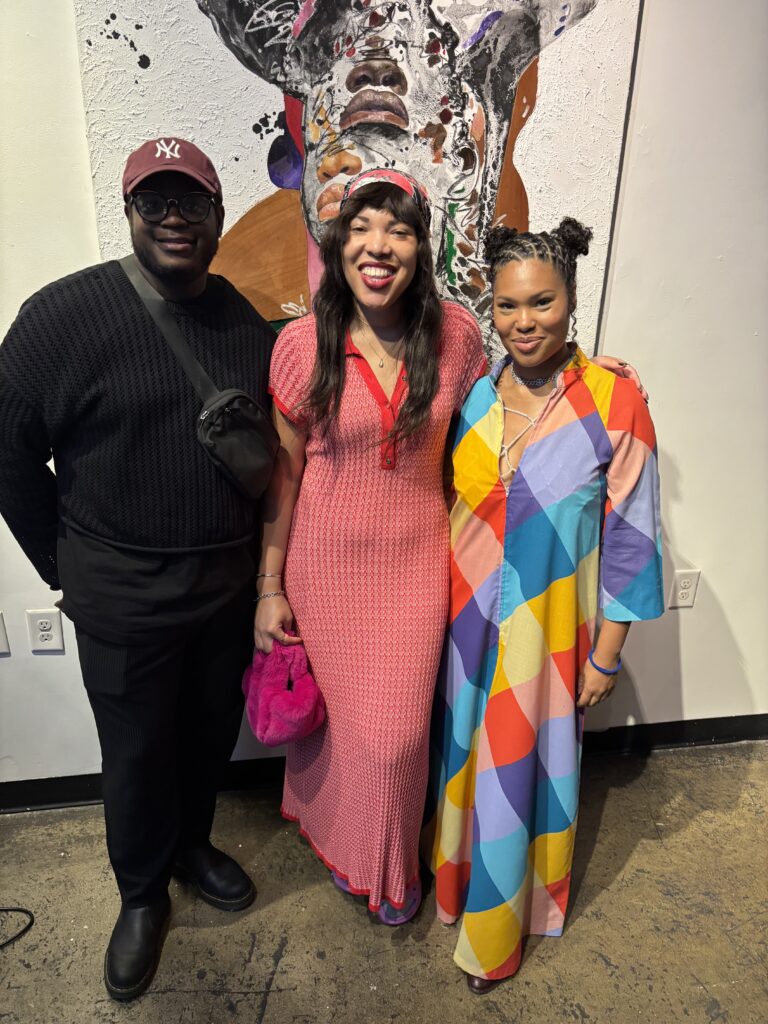
- Artist Khari Turner (L), me (C) and Curator Jax (R) in front of Khari’s painting “In The Game” (2021)