
“Goddess” Review: Public Theater Premiere
Goddess is a genre-bending journey to the heart of the music that moves us.
Move over, Athena. Have a seat, Oshun. It’s time for Marimba’s star turn.
There seems to come a time in the life of almost every supreme being that they deign to run amok with us lowly humans here on Earth. Whether it’s a long trip or a short one, they usually come bearing gifts: death (Papa Ge), wisdom (Kulkulcan), fire (Prometheus). In Goddess, a musical that opened this evening at the Public, audiences learn the story of Marimba, who gave us music and the first instrument. For once, humanity repays the favor. Here on Earth the goddess Marimba experiences love. While I imagine there are many upsides to being a divine entity, apparently romantic encounters are not included.
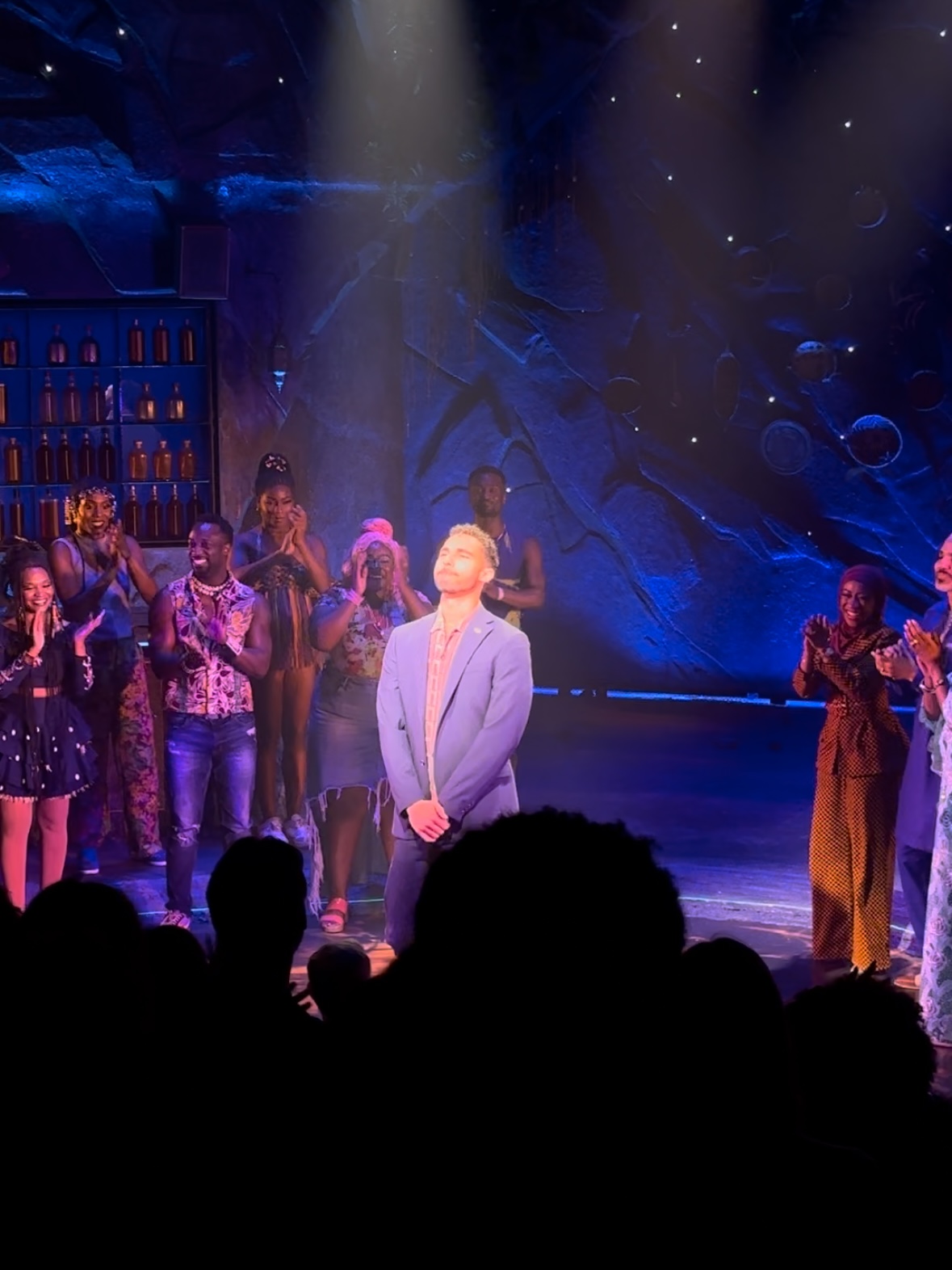
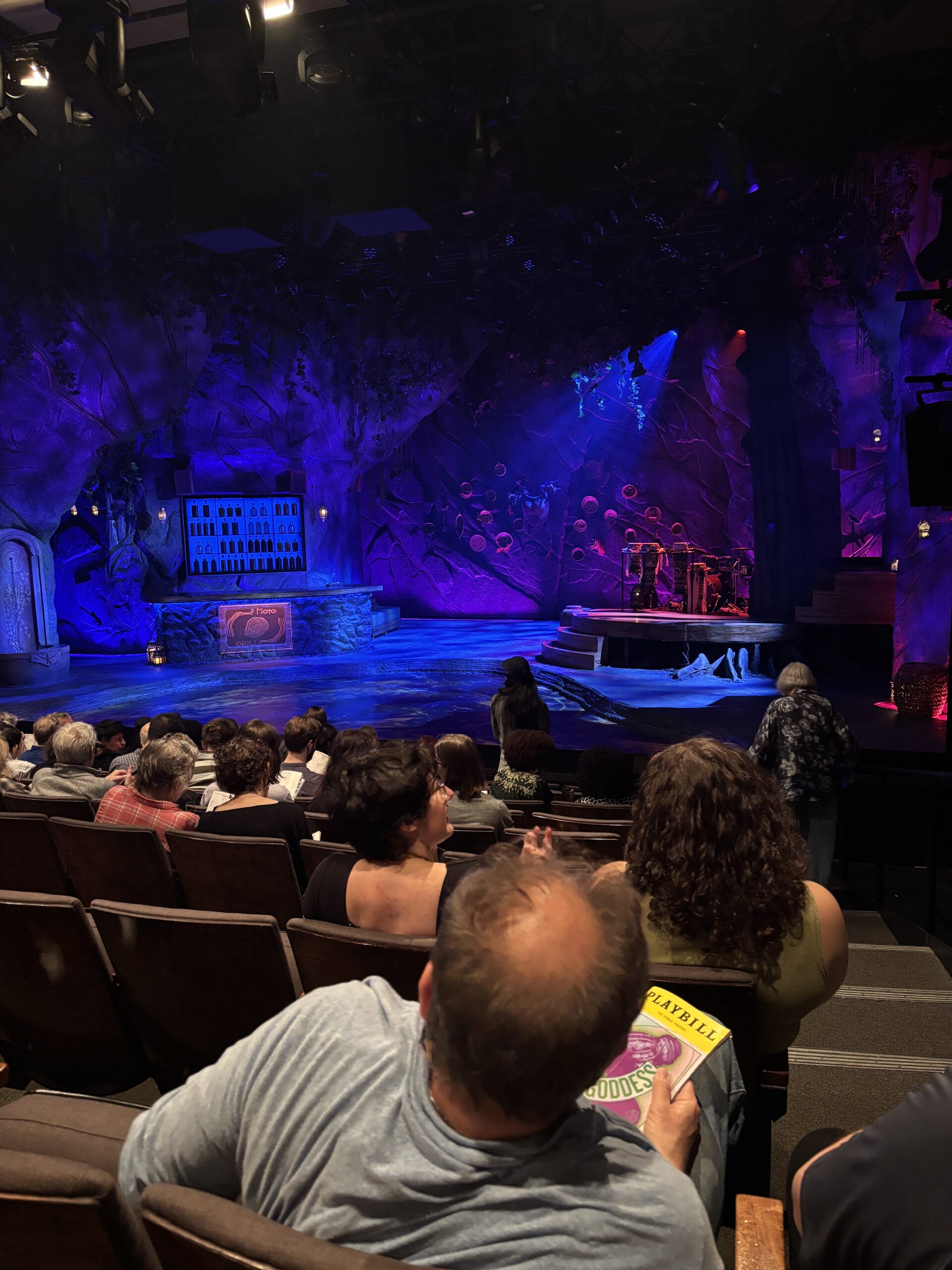
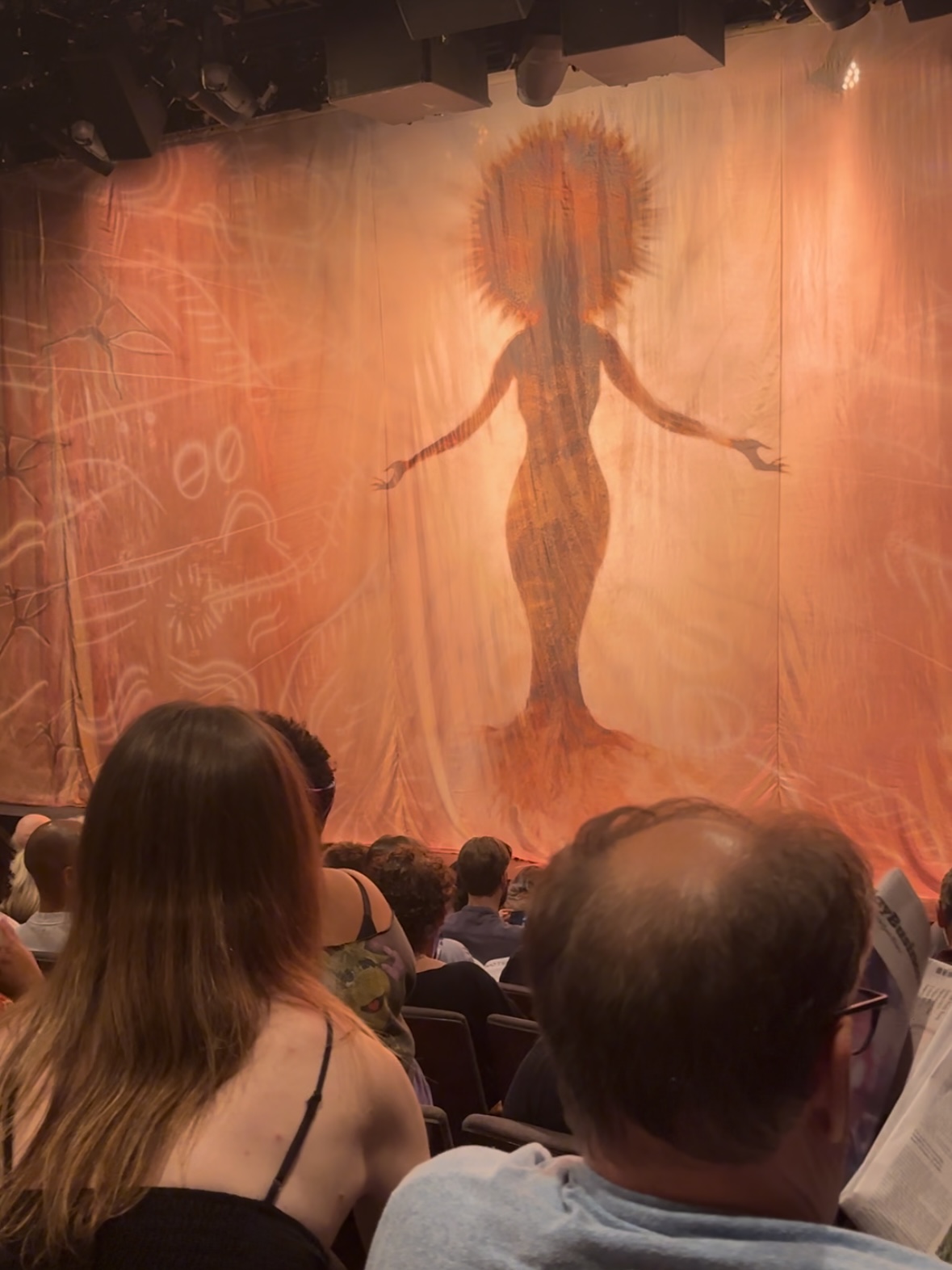
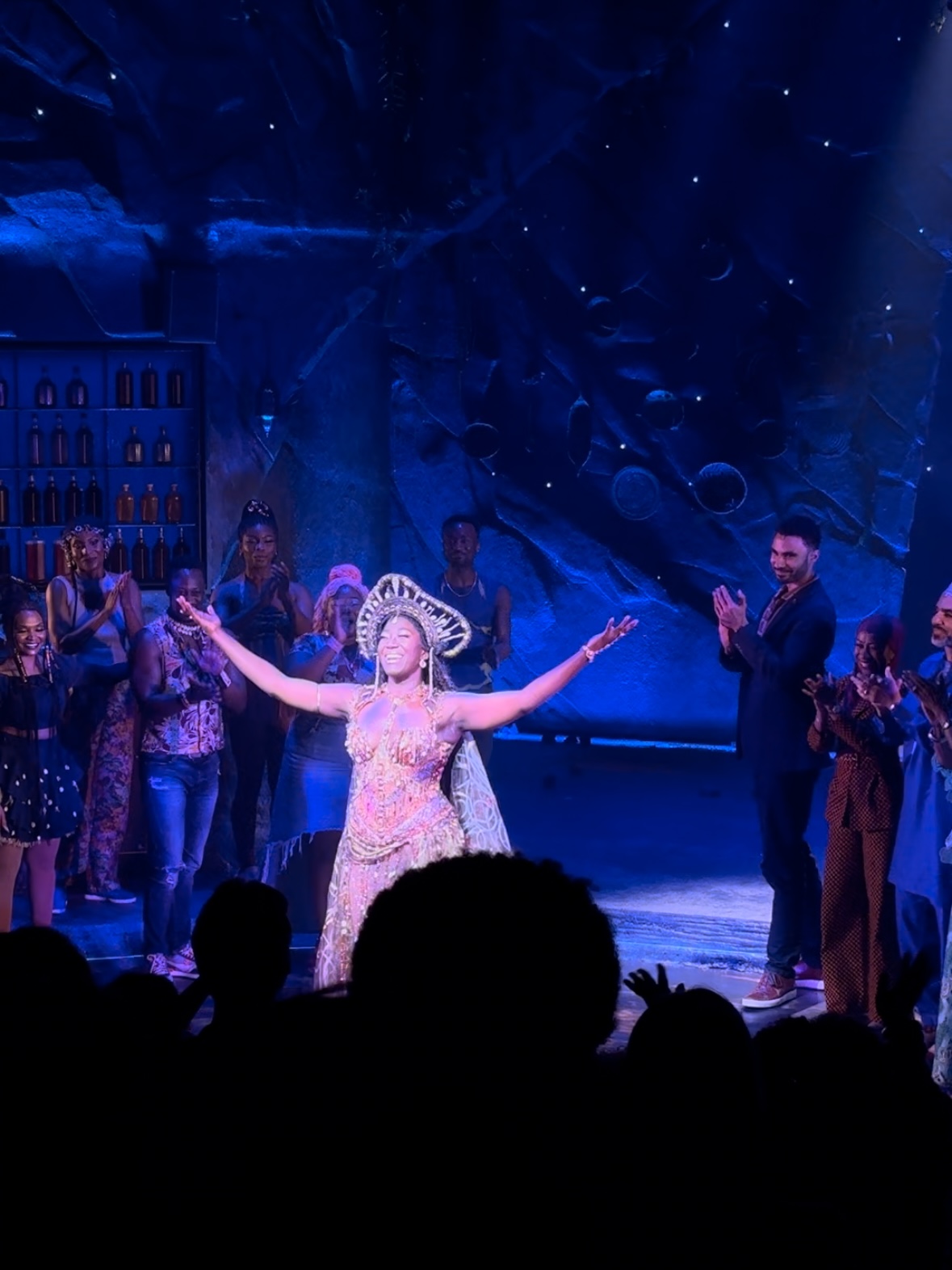
Marimba, masterfully inhabited by Amber Iman, touches down in Mombasa, Kenya disguised as Nadira. She’s described as a most beautiful woman with a most enchanting voice and Iman, with her stately presence, lustrous complexion, and velvety vocals, fits the bill many times over. (Iman is inside of a needless spotlight for most of her musical numbers; her voice and regal demeanor guarantee you won’t look away.) Nadira sings (and lives) at the nightclub Moto Moto which, according to the city’s conservative Muslim governor and his high society contemporaries, is a blight on the community. Upper echelon Mombasans want it shuttered.
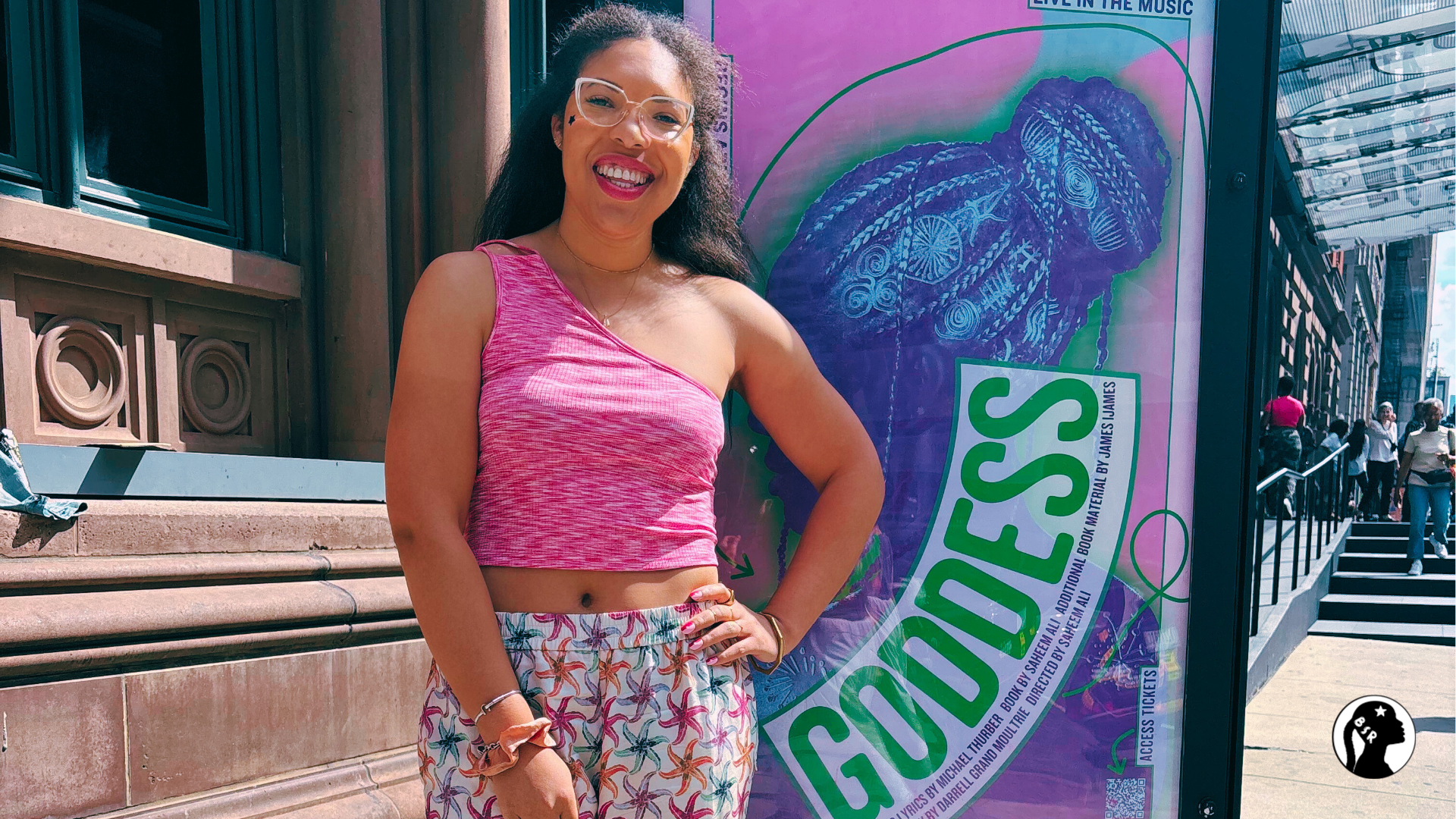
Every night at Moto Moto is a street-fashion sweat fest and Darrell Grand Moultrie’s neoteric choreography more than keeps up with Michael Thurber’s pulsing compositions. From the promotional posters urging audiences to “live in the music” to the story-propelling Griotrio (three women who narrate the show’s transitions through song – reminiscent of the Muses in Hercules), it’s clear that music was at the forefront of the creative team’s hive mind. There are musicals that insert tunes to drive the story, there are musicals that use songs you’ll actually want to sing after the show lets out, and then there are shows like Goddess that do both. The soundtrack is a power walk through the diaspora combining the foreseeable — percussive Afrobeats, sultry R&B, and high-spirited soca/calypso — with operatic flourishes and musical references to nasheeds, a type of Islamic song.
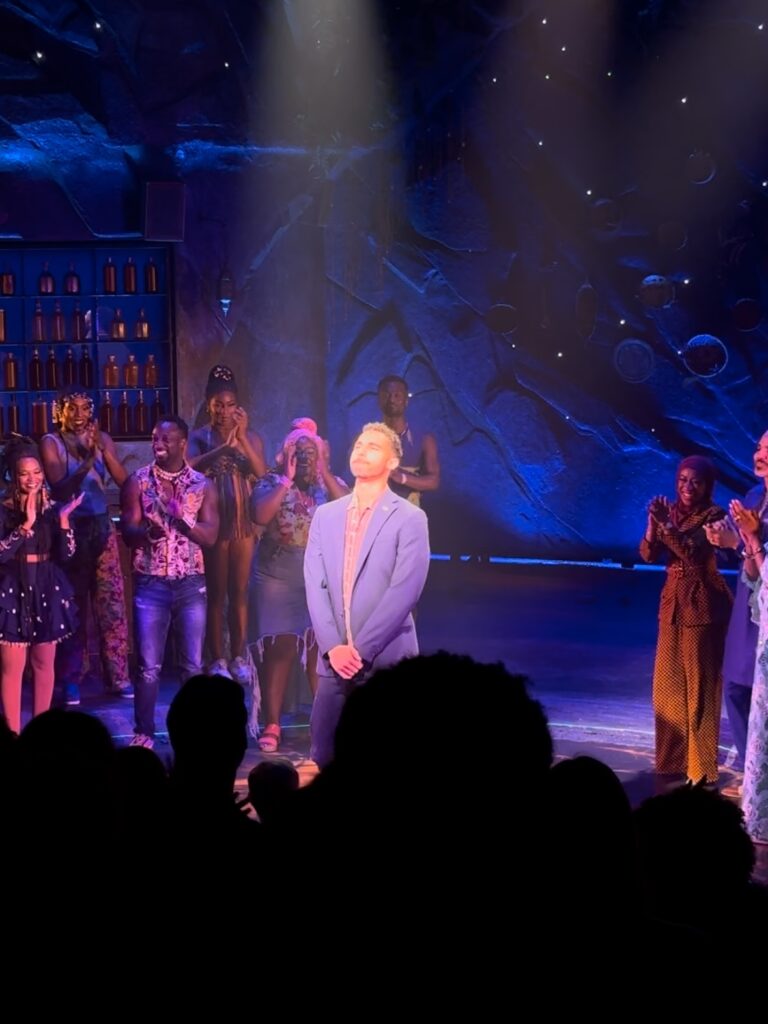
Presumably, Nadira and the Moto Moto crowd would’ve partied until the end of forever if it hadn’t been for the return of Omari, who’s come home from graduate school in New York to take up the family mantle and take over his father’s campaign for governor. There’s one big problem with the future his family has carefully laid out for him: Omari is an excellent saxophone player and the music he makes with Nadira at Moto Moto, a place he’s not even supposed to be, sets his soul aflame. (There’s a fun joke in the show about sax-playing politicians that I won’t ruin for you.)
Austin Scott’s portrayal of Omari was aphroditic, the goddess of love herself would’ve been wooed. This is the light-skinned smooth operator Tyler Perry has written into nearly every work in his canon, but Saheem Ali, the writer and director, has actually done the archetype justice by working in emotional growth and vulnerability. In the heat of the moment, Omari declares “You’ve exposed me,” only to interrupt himself with, “No, let me be exposed.” Swoon! I wasn’t a fan of the dubbed trumpet in the Louis Armstrong musical A Wonderful World, but here I couldn’t care less whether Scott was playing the sax himself or not. It was a joy to watch him get free.
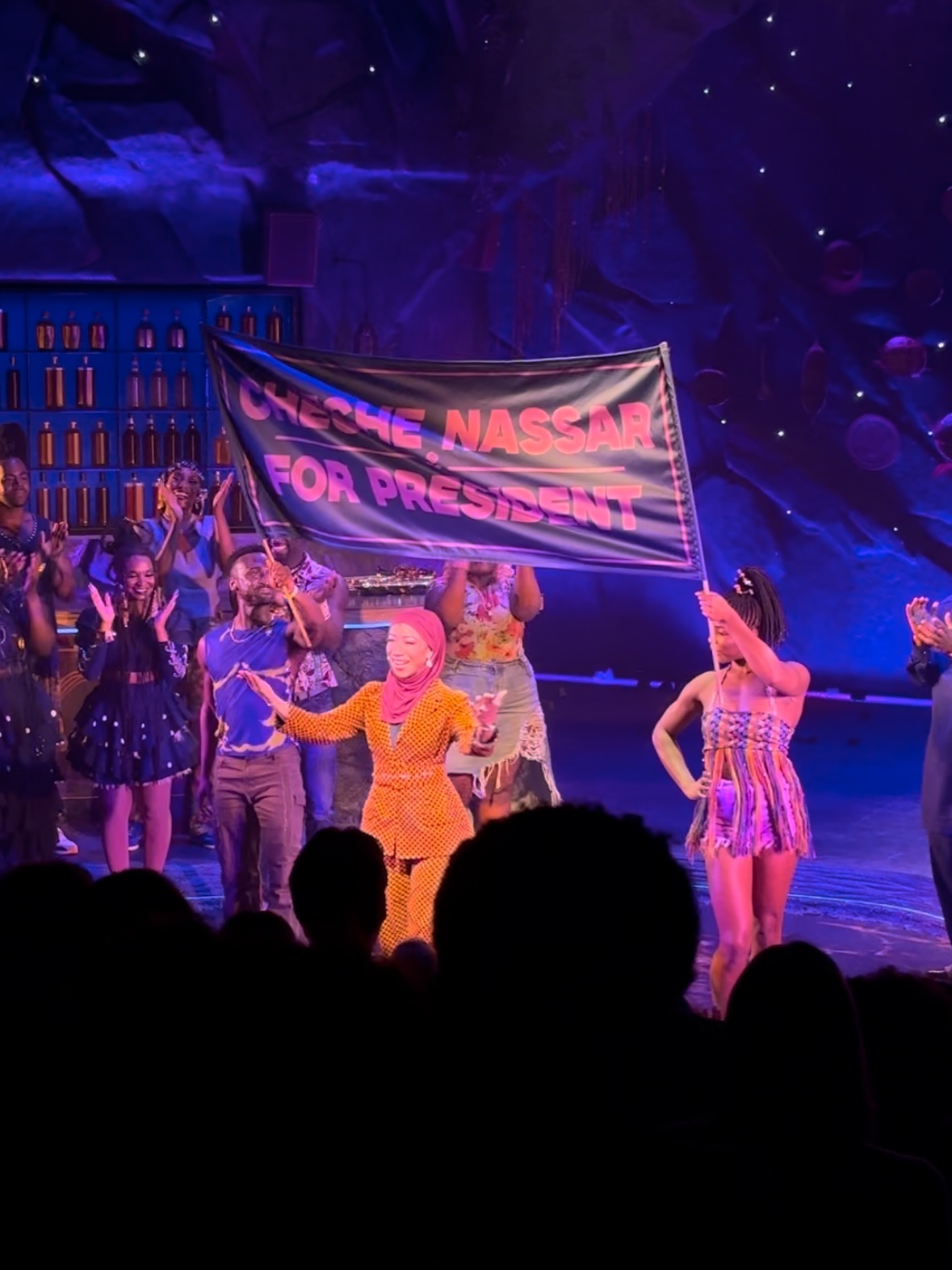
While Omari and Nadira are the focal point, the music keeps the show compelling when neither of them is on stage. Each of the supporting characters was easy to love and a real toe-tap to listen to. I’m ‘shipping’ Rashida (Arica Jackson) and Ahmed (Nick Rashad Burroughs). Their playfully sexy duet “It’s A Date” is most definitely karaoke ready. The talented Destinee Rea, who plays Omari’s girlfriend Cheche, fully comes into her own with an soaring ballad in the second act and Ayana George Jackson, who plays Omari’s mother, delivers a solo performance of “Baobab Roots” that poetically connects the majestic tree and family legacy. Jackson has both the pipes and the gravitas to pull it off; she marks a moment in the show where the pace changes and the forces blocking our protagonist reveal their full motives.
To be fair, there are parts of the show that feel extraneous. For example, “Fate of Madongo” is a fun number but Madongo’s arc doesn’t have much impact on the story. In fact, the character creates some on-stage tension that may need to be prefaced with a trigger warning for dating violence. The number is catchy and the choreography is jocose, but I’m not sure it was worth the rise in my blood pressure when the confrontation danced on the edge. At first listen, I thought “Near You” was a little horizontal and lacked the dynamics to set a meaningful backdrop for the climax, but then I decided that it was probably intentional. “Near You” is a love song but Goddess isn’t a love story (unless you count the love of music!).
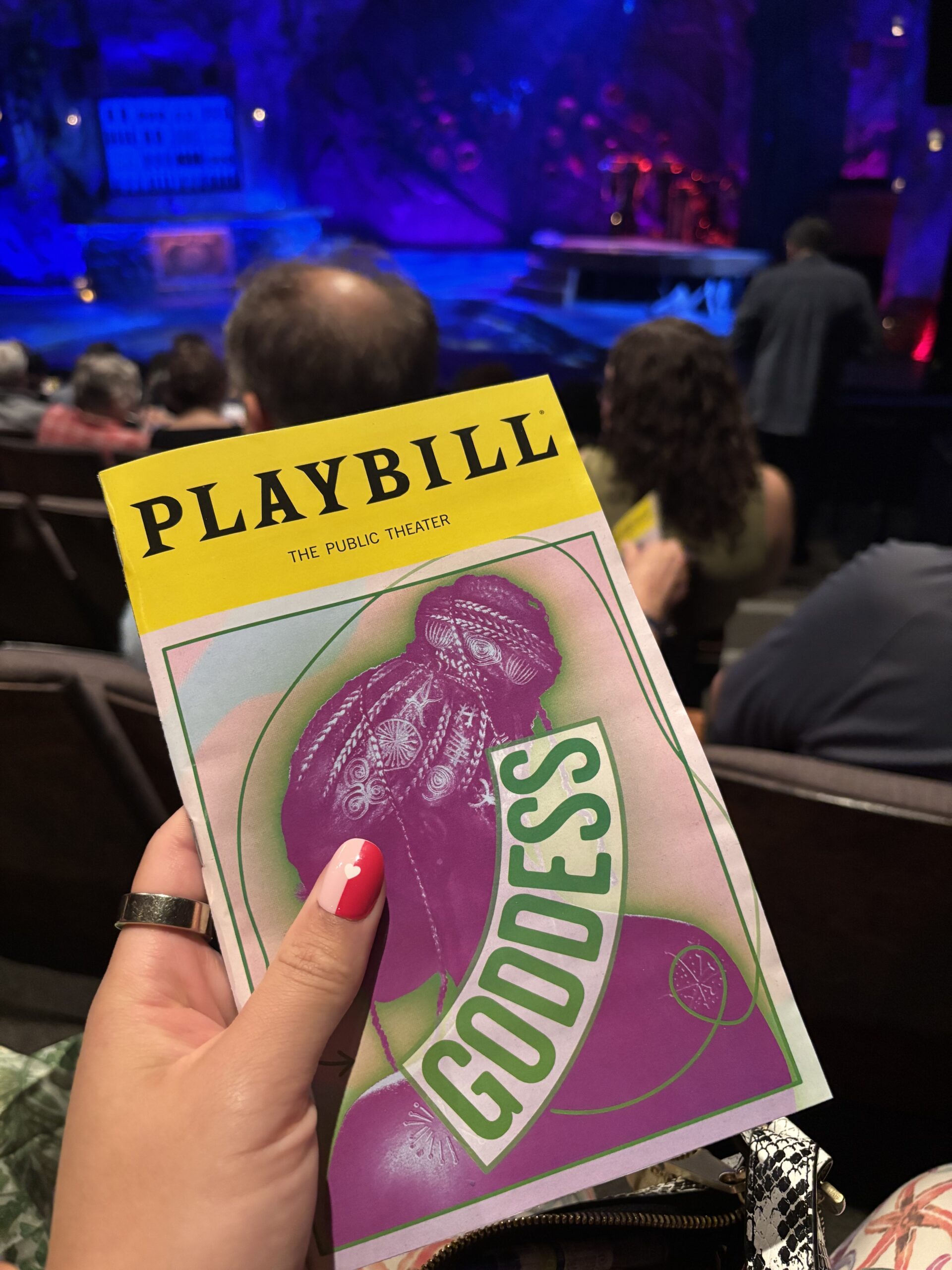
Our heroes’ highest action isn’t to fall in love, but to find their own way forward even if it means going against your family or taking a risk. Though I’d never heard the legend of Marimba before, the theme felt familiar. Many of the stories I grew up on as a Disney kid in the 90s were about self-definition and Goddess fits that mold. I also got the feeling that I was watching a version of someone’s real-life story. There were a number of specific details that tipped me off that Goddess was personal for Saheem Ali, and then the article in the Playbill “The Power of Music” confirmed my suspicion.
Even if there had been major flaws, the music paints a layer of grace over the entire show. Before we even reached intermission, I was planning to grab a copy of the cast recording and book a flight to Mombasa. I would see it again if only to listen to the music. Watching Goddess felt much like the first time I saw Once On This Island or Jelly’s Last Jam — and not because of the obvious racial similarities. Each of these shows used music I, A) liked, and B) hadn’t heard before. While I realize that Jelly’s Last Jam reprises Jelly Roll Morton’s real music, I wasn’t familiar with his work in the way I am with Michael Jackson or Alicia Keys, both of which currently have shows on Broadway set to their discography. The more Golden Age musicals I see (recently: Gypsy and Wonderful Town) the deeper my appreciation for shows draw from genres of music we haven’t yet heard or heard enough of on theatrical stages.
Much like the mythical Marimba withdrew the warrior’s bow and granted us a stringed instrument, Goddess is heaven-sent withdrawing the contemporary musical and offering magic we haven’t seen or heard before. The spirit of the show is moving, we need only spread the gospel.
blacklove 🖤 and starlight 🌟
Goddess was written and directed by Saheem Ali with additional book material by James Ijames. The production had its New York premiere at the Public Theater on May 20 and will continue until June 8, 2025. General admission tickets are $113. I received a comp ticket for this performance and attended the show on May 17.
-
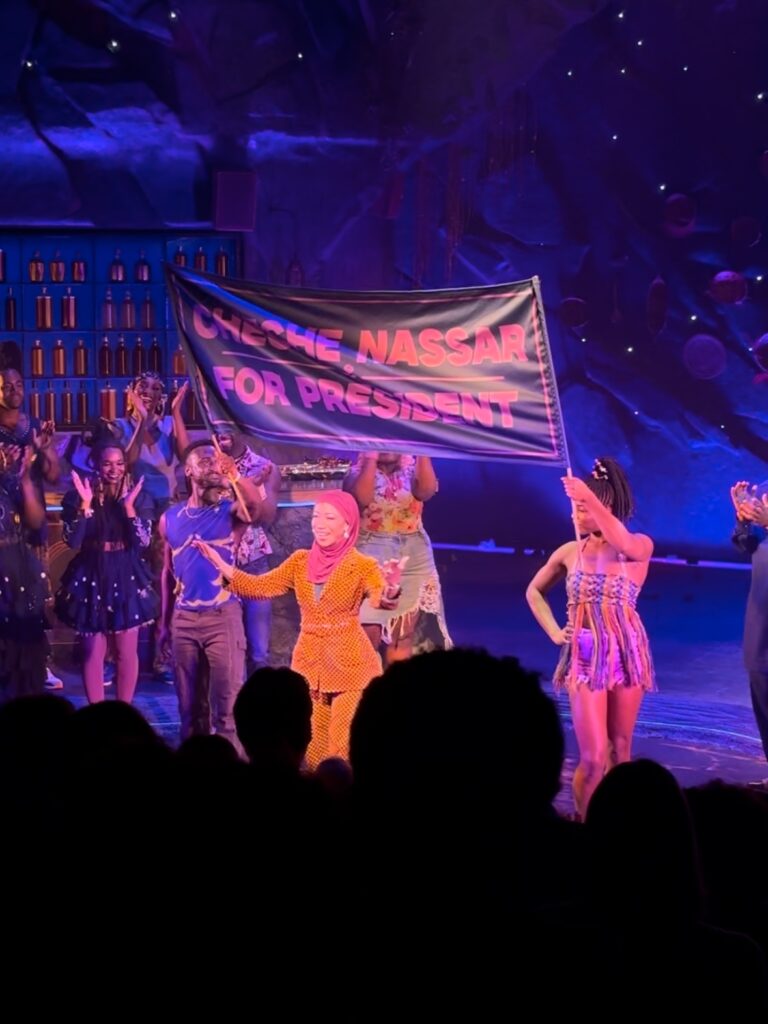
- Desiree Rea plays Cheche
-
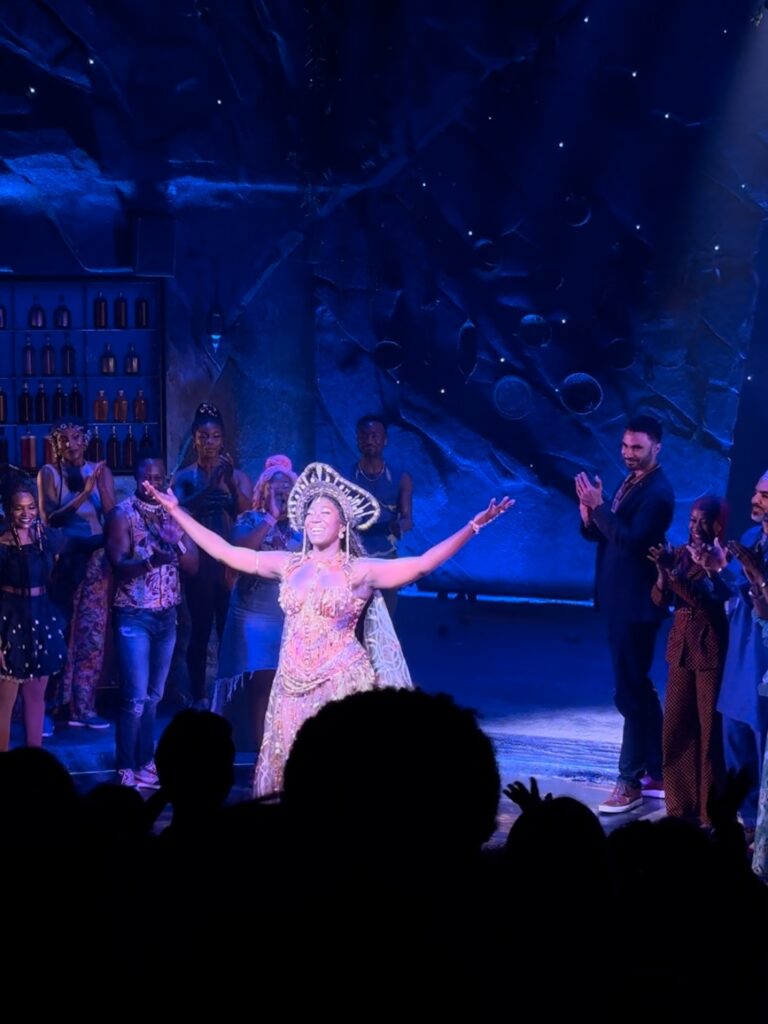
- Amber Iman plays Nadira
-
- Austin Scott plays Omari