Planet Word Museum in DC
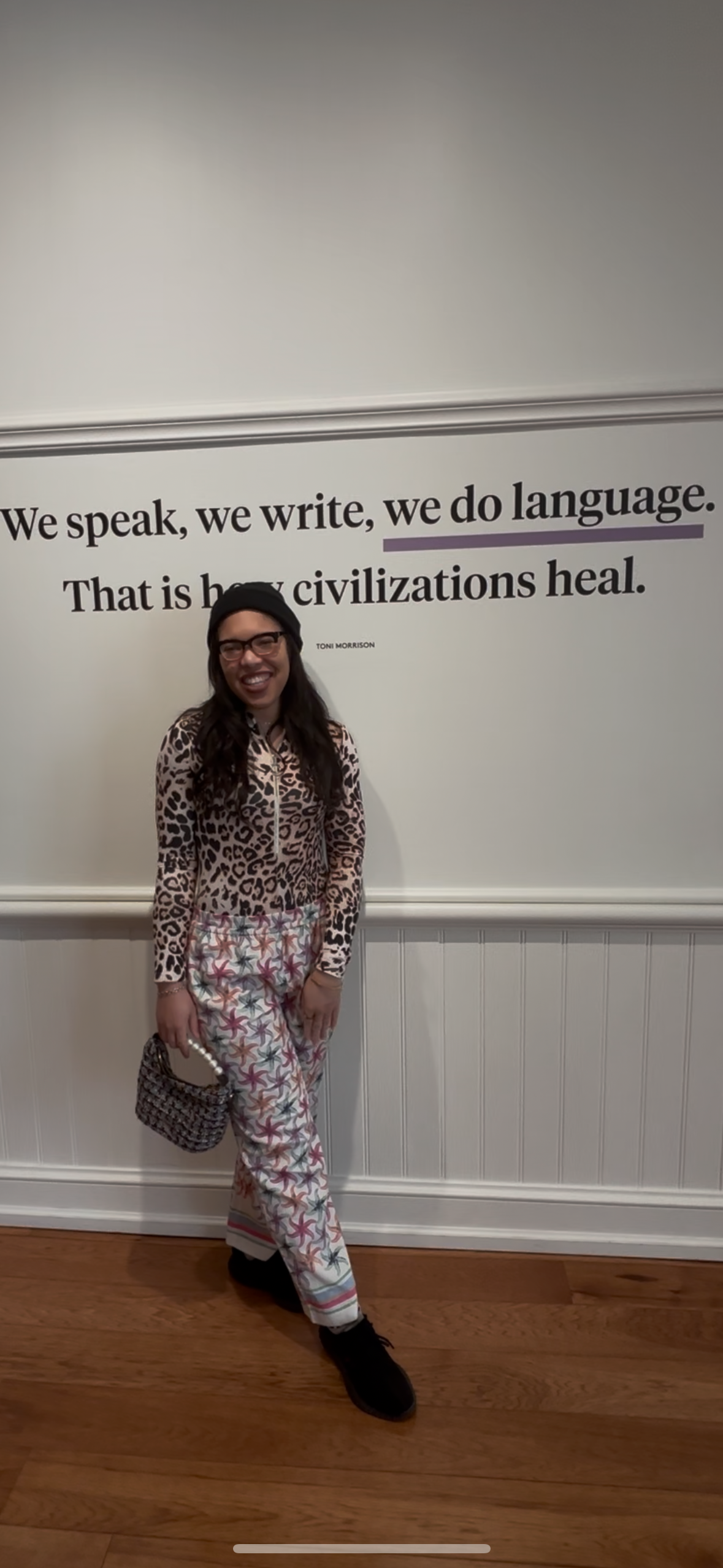
“This is what I get for bringing a writer to a words museum.” Ashley intended this to sound like a complaint after I’d peppered the staff at the front desk with questions about Black representation and the order of the exhibits, but I know her well enough to know that bringing me on this field trip was her speaking in her love language, like a poem she’d written just for me.
Since words are the focus of this museum, language arts (the LA in ELA!) finally gets it’s time to shine. It can be tricky — as a writer who writes about art — to figure out where I fit in. I wonder if the artists I interview see me as an artistic peer, or just a ‘creative professional’. If I can be uppity for a moment, I hate the idea of being in the same box as the graphic designers at Google, or the producers of Amazon’s AWS podcast (a real podcast with weekly episodes about cloud storage and security). My work doesn’t hang on walls or have a price tag, but I’d like to think my approach is more artistic than that of the content created for Big Tech’s bloated bottom line.
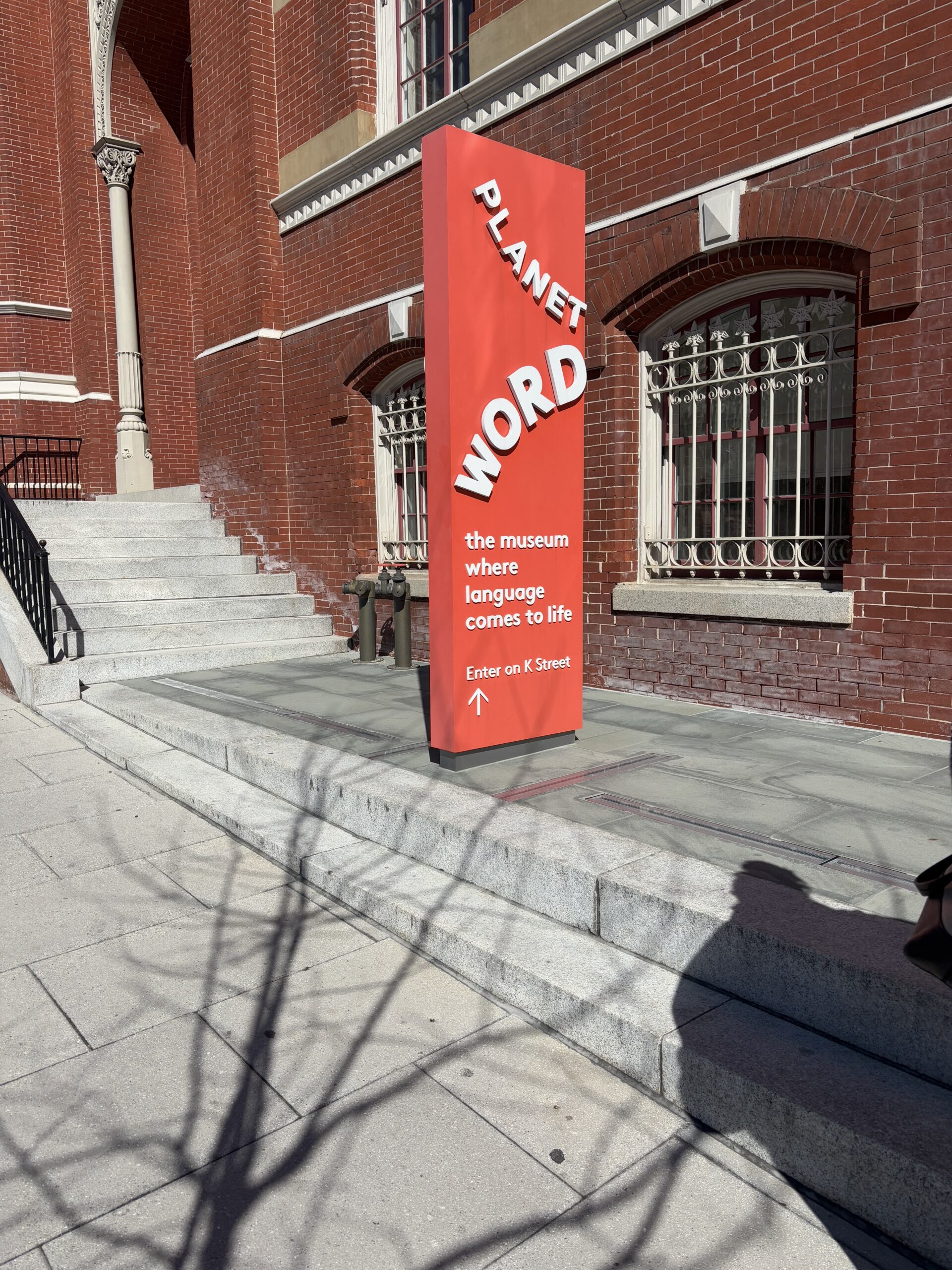
Planet Word, a private non-government museum in a city of 17 Smithsonian institutions, remixes the idea that words are best expressed on the page and can’t hang on walls. It’s the world’s first voice-activated museum and brings together speaking, listening, reading, writing and even singing as various expressions of the same art form: language.
When I pointed out a “no protesting” rule from a list of guidelines outside, Ashley and I were both incredulous but for different reasons. My reaction: What museums allow protest? Her reaction: What would people even protest here….WORDS?! BOOKS?! As far as we could tell, the key demographic for staging protests against the contents (read: not the Board or the budget) of Planet Word would be people who don’t like nice things aka anti-intellectualists.
Your visit begins in front of words jutting out from a wall the size of a movie-screen. As a voice begins to speak, words are highlighted by a projector to illuminate terms we’ve inherited from Latin, Greek, French, German, and Italian, draw connections between words with similar starts (splash, splunk, splosh, splat all describe sounds), and point out portmanteaus (like breakfast + lunch = brunch). Millenials raised on Blue’s Clues and Dora the Explorer will have no problem using the rainbow microphones to answer when the narrator asks a question, and (unlike Steve and Dora who couldn’t actually hear you) your answers influence the examples that the narrator selects. The emphasis in this space is on English, but the room next door features interactive screens with native speakers of languages across the globe. I swiped through, stopping on anybody brown, to practice the languages of Ethiopia, Swahili, and (Aboriginal) Australia.
Just like in a child’s natural language development where speaking leads to reading, the museum graduates you from oral exchange into a room of printed texts. I have an affinity toward libraries that rivals Disney princess and fictional brunette icon Belle, but this library is especially enchanting. Like Mrs. Potts and Chip from Beauty and the Beast, things can move and speak and come to life in here. If you speak the magic words into any of the darkened glass boxes on the shelves, a miniature replica from classic literature with light up from within to reveal a Polly Pocket style recreation of a scene from Dickens or Alice in Wonderland. If you pick up any book from the shelf and place it on a book rest, a projection of images will spill from the pages, and the book will read itself to you. You will feel – for the first time in a very very long time – the same way you felt as a child choosing a bedtime story. Can you read this one? Oh, do this one? Can we please read one more? Ashley and I brought title after title to the book rest, just to watch books we remember from our childhood spring to life: Roll of Thunder Hear My Cry, The Watsons Go To Birmingham, and The Joy Luck Club. In the video she took of me, my cheeks are rounded into a grin, my eyes are wide with joy. My inner child, the girl who never left the library and never wanted to turn the lamplight off at bedtime, had returned for storytime.
We were jaunty on our way through the rest of the museum, only picking up the pace when we started hearing announcements for closing time. In the karaoke room, we sang Beyonce’s “Single Ladies” and “Hey Ya” by OutKast to examine their unique rhyming structures. (By our assessment, the playlist is missing R&B, Blues, Gospel, and Latin/Spanish songs. We’d suggest John Legend and Shakira as solid places to start.) We told each other terribly corny wordplay jokes and tried not laugh. We took a quiz on language in advertising and answered dialect questions to find out (after more than 12 years of friendship!) that she and I say ‘pen’ differently. The museum confirms that my way is superior and that she’s putting too much emphasis on the /e/ sound (do not ask Ashley to confirm this!) If they hadn’t kicked us out for the evening, we might’ve done a second lap of the whole building. We left with a short story printed like a receipt from a kiosk on the way out, and 5×7 photobooth pictures of us acting out SAT words (indefatigable, whew!)
Often, language is the vehicle for conveying the better details of more conventional art forms. People like me write summaries of what we witness on stage and craft narratives based on what we intuit about the order of the paintings in a museum exhibition. Is my work less artistic than recreating a photograph through a collage (Nia Winslow) or a quilt (Bisa Butler)? Is it less creative than the work of the actor, who adopts a fictional identity (from a text!) and revisits it each night? Are we all artists working in right relationship or am I simply art-adjacent, a hanger-on? The answers to my questions were here at 13th and K Streets. The writing was on the wall and not on the shelves. Prose hung in the frame; there were books behind glass. Bookstores and libraries are transactional; they say take me. This place urged you to experience; it said feel me. In this building — brimming with magic books, talking word walls, and interactive storytelling — language was the art form.
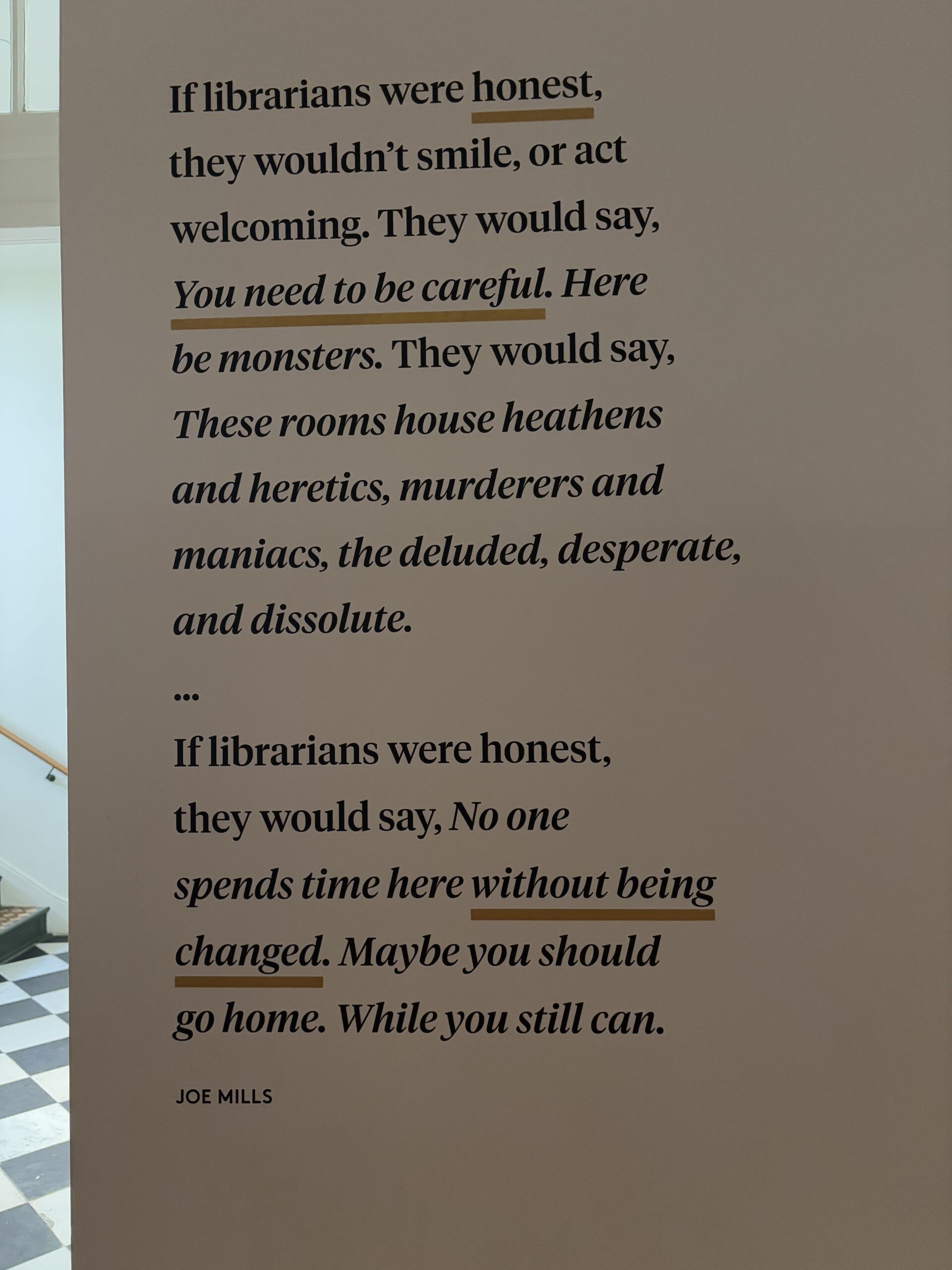
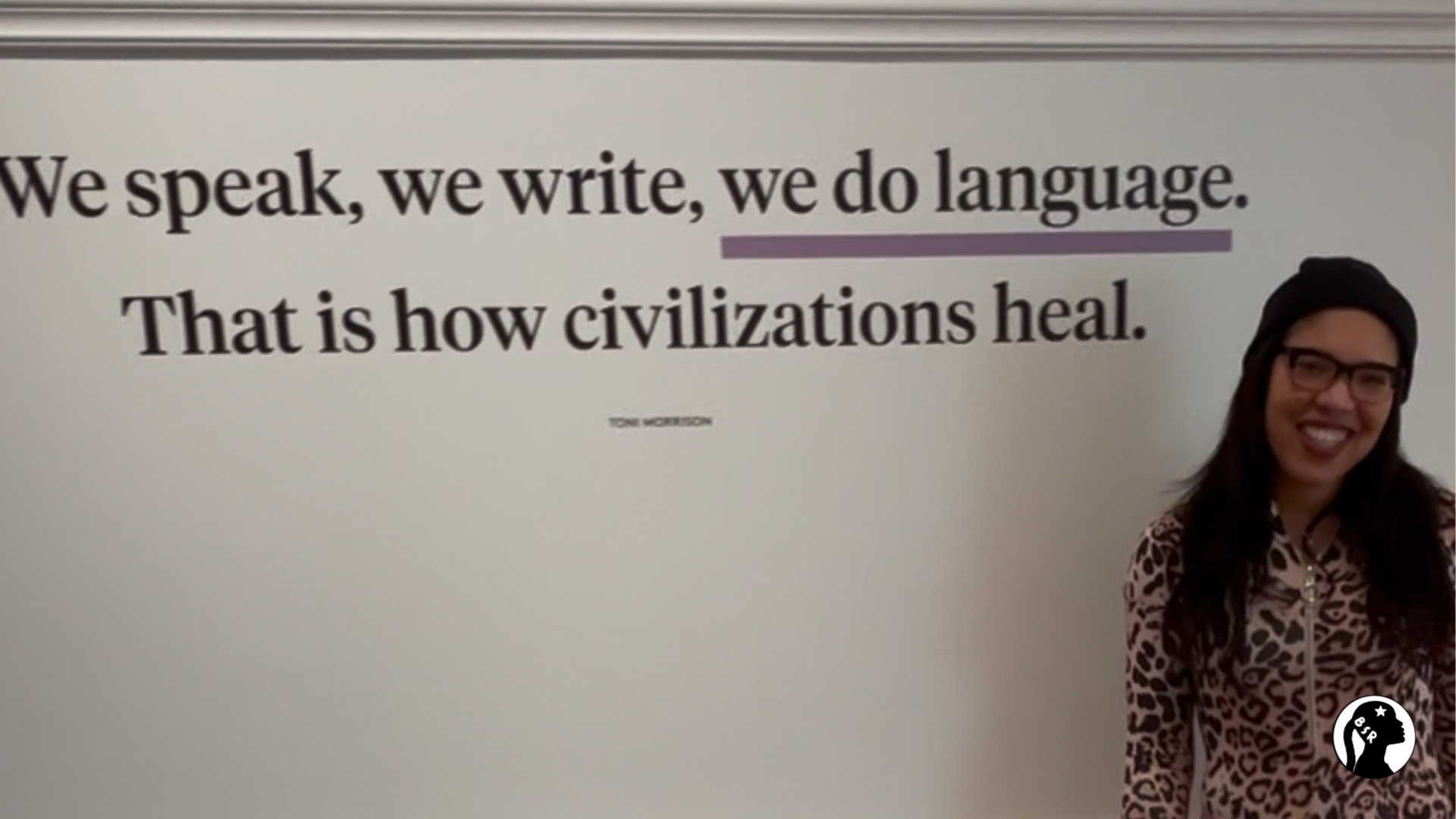
I believe that art makes you feel something. We label something as ‘good’ art when it evokes an emotion. I love a play that makes me cry. I love a painting that makes me skeptical. I love a book that reaffirms the joy of romance, an essay that nudges my point of view toward more just humanity, a memoir that sparks a sweeping dream. Here on Planet Word, wrapped in quotes by Toni Morrison, Jacqueline Woodson, Gwendolyn Brooks, Maya Angelou, Octavia Butler, Alice Walker (and so many more), I was a writer in a words museum, a child entranced by story, and an artist in my own right.
Planet Word is located in Downtown Washington D.C. and open everyday except Tuesday. Reserved passes are available by day and time for a suggested (but optional) donation.
Soon, you’ll be able to watch a highlight video of this visit on TikTok.