Zoraobi Studios Grand Opening
A new woman-owned studio space in Newark offers and invites diasporic community at an atypical house warming
There’s a contemporary Internet meme, like a disillusioned before and after, called “what she wanted vs what she got”. The format is as follows: the first frame shows an ideal and the second shows the reality. Examples: 1) a luxe knit sweater swaddles a model on Temu; the delivered sweater is only big enough to fit a lap dog, 2) a online dating profile shows a muscular man, his head flush with gleaming waves; the same man sits across the table on a first date but the tide seems to have gone out, 3) a woman with a bushel of braids smiles in front of a verdant grass wall; another woman has about half as many braids surrounding her sour expression.
The meme is a never-ending scroll of crowdsourced examples in support of the pre-digital adage that “if something sounds too good to be true, it probably is.” The adage is worth keeping in mind now that nearly everything on the Internet is intended to advertise. With the advent of algorithms that work like a personalized QVC, our desires are dangled just beyond arms’ reach but there are no plans for delivery.
The invitation for the Studio Opening, written by founder and first-generation Nigerian American Stephanie Obiarah, promised that “Zoraobi is more than an art studio. It’s my love letter to community, imagination, and protection; especially for Black children, artists, and dreamers.” We were offered “[a] series that honors home and self, free entry, and complimentary wine and light snacks.”
Refreshing. Like a sweet tea on the sun porch, the event was exactly as described.
Nestled in a corridor of office suites in downtown Newark was Zoraobi Studio and before you could read the lettering on the plate glass door, you could see the guests spilling out and milling about. There were young people at the welcome desk selling branded t-shirts and tote bags next to a table of fried dough and savory pastries in foil pans. My memories of the event are set to music, but there were too many voices for me to be sure. Inside the suite, people and objects were arranged in concentric circles — from the perimeter to the core: art, people, and a couch that held mostly no one, since sitting down would mean slipping below the action.
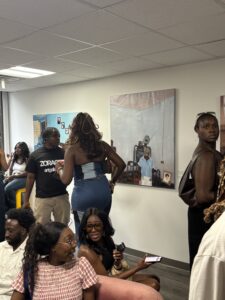
We were told there would be wine and there was, along with The Anambra, a cocktail the color of communion wine named after a Nigerian state. The base was Zobo — sister to Jamaican sorrel, Mexican agua de jamaica, and hibiscus tea — and the spirit was spiced rum. If Reggie and I had not swigged the last splash of Zobo on our first serving, I would’ve gone back for more.
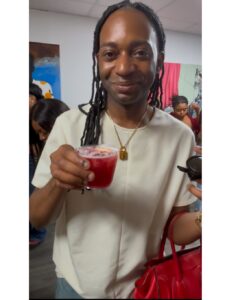
toasting Reggie with The Anambra
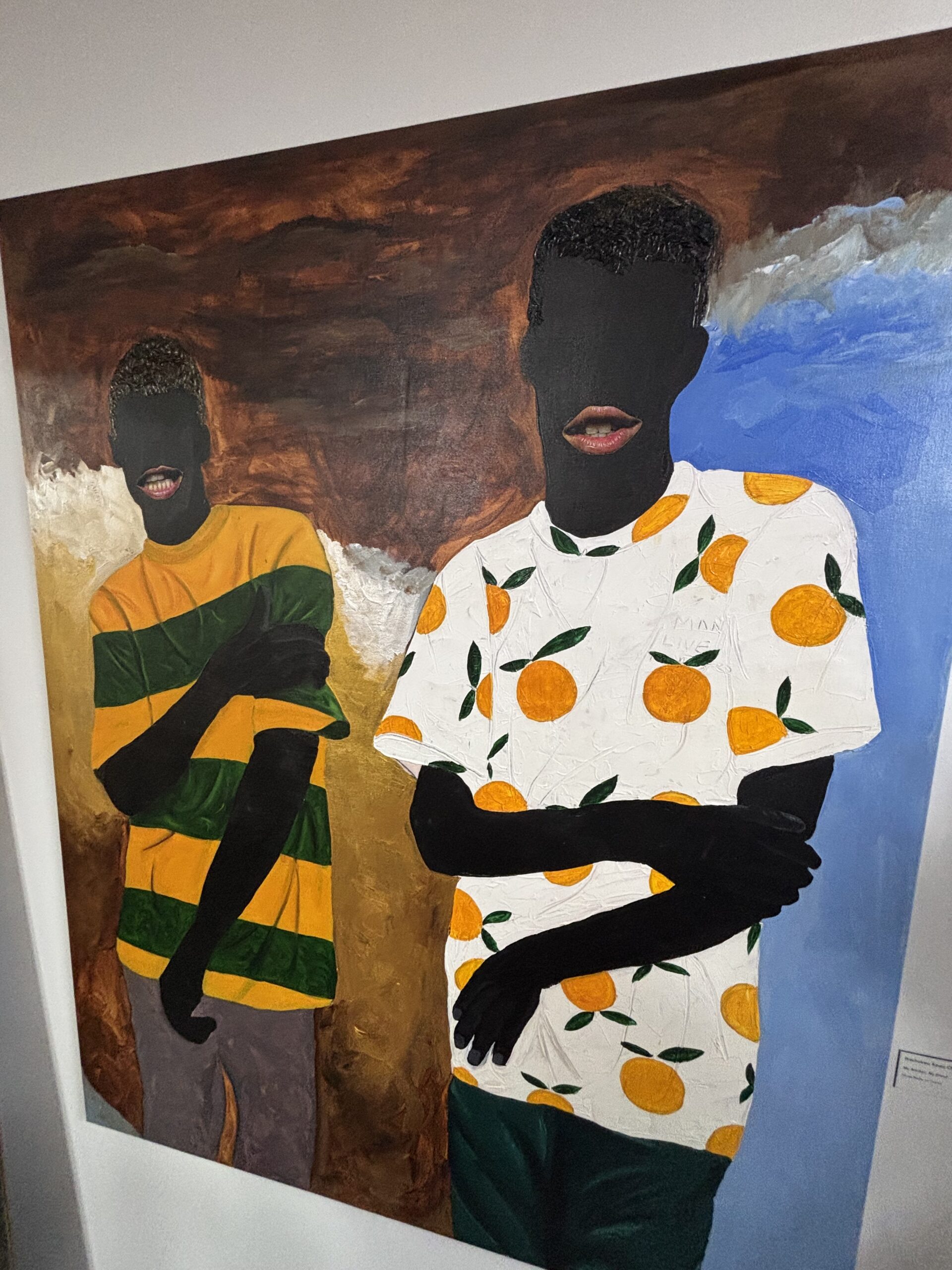
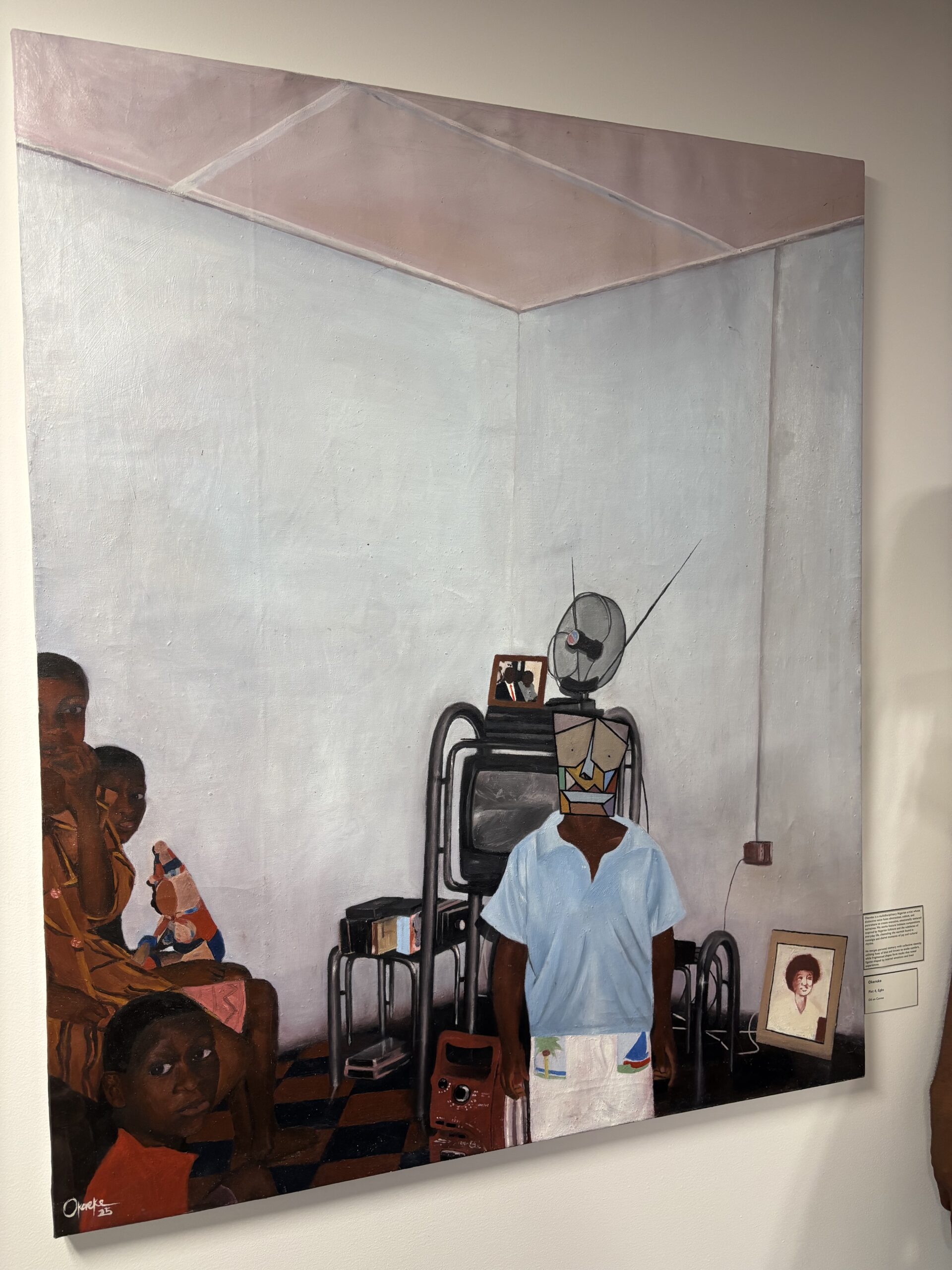
We were told there would be art and there was. On one side hung a wall of works by Kelechi Emeka-Okereke, which faced works by Ikechukwu Amos Christian. The paintings were tied together by the exhibition title Ụlọ — an Igbo word which “[represents] a physical place of shelter, and a spiritual place found within” — and co-curated by Stephanie Obiarah, who opened another exhibit this February in Montclair, NJ, and Daijia Canton, who first made an appearance in our review of the 2025 Black Zine Fair.
Okereke’s acrylic and oil paintings “Sincerely Speaking” and “Plot 4, Egbu” depict literal home scenes. In the first, three people sit on a sagging brown couch beneath a descending trio of wedding photos. The man in the middle of the couch holds a bowl of something that makes me hungry for Jollof (but when am I not hungry for rice?) while the two on either side of him have geometric prisms where their faces should be, like a colorized remix of an African mask. The scene seems casual and cozy, like an extended family gathering, and though the subjects are holding stoneware bowls and metal utensils it’s not unlike my paper plate summer reunions on the Gulf Coast.
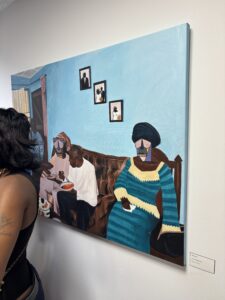
“Sincerely Speaking” (n.d.) by Okereke
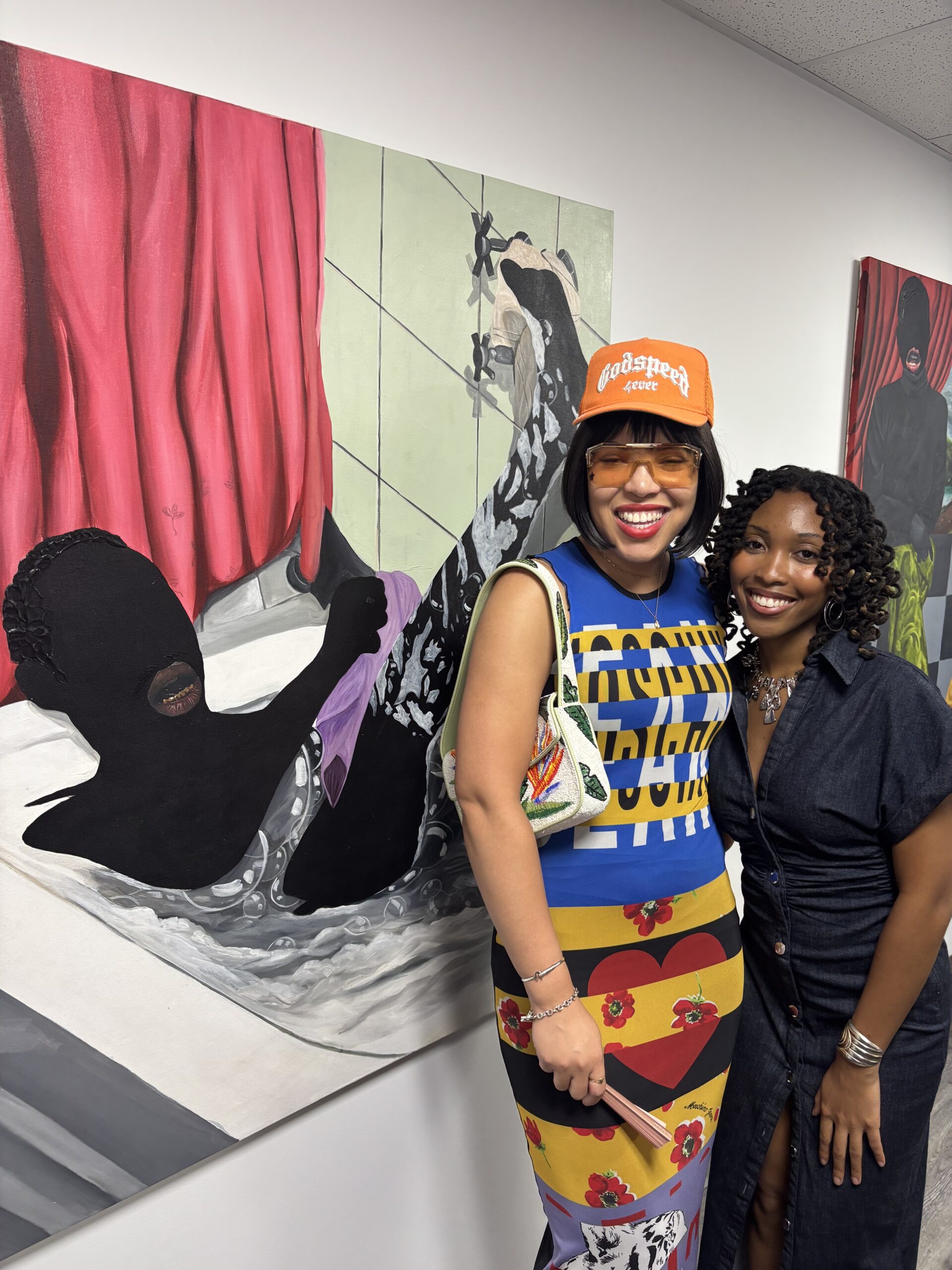
Christian’s mixed media works explore the intimate side of home. In “Preparation of Life” a man extends a sudsy leg from the bathtub. The leg is black like tar, the suds are soap white, and the bathwater is a grayish blend, which draws the eye toward the lilac washcloth and coral-colored shower curtain until you notice the mouth. Everything appears to be painted except the mouth, pasted on in an approximation since the flat darkness of the skin offers no other features or dimension. This mouth has dark textured lips and reveals a golden grill on the bottom row of teeth, a fly but glitzy piece of jewelry for bath time. In each of Christian’s works the mouths are unique — there are crooked or missing teeth, peachy lips — but the oral appliqué over people who look like living shadows tie all of his works together.
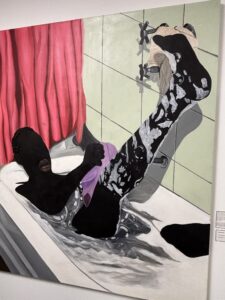
“Preparation of Life” (n.d.) by Ikechukwu Amos Christian
As the drinks flowed and the figures on the wall began to blur with the ones in the room, it was evident that Ms. Obiarah had succeeded in not only evoking, but creating a home and she extended a kindness by welcoming us in. There was a genuine connection between the people in the space, one part Baptist church meet-and-greet and one part Brooklyn block party. Zoraobi Studios, flying high above the distraction of a digital bait and switch, affirms that there are still real people doing real things in real life. Sometimes, things are exactly as we’d hoped.
blacklove 🖤 and starlight 🌟
Zoraobi Studio is located at 60 Park Place in Newark, New Jersey. The opening reception took place on July 26, 2025. Learn more about upcoming events at the studio by visiting zoraobi.com and @zoraobistudio on Instagram.
-
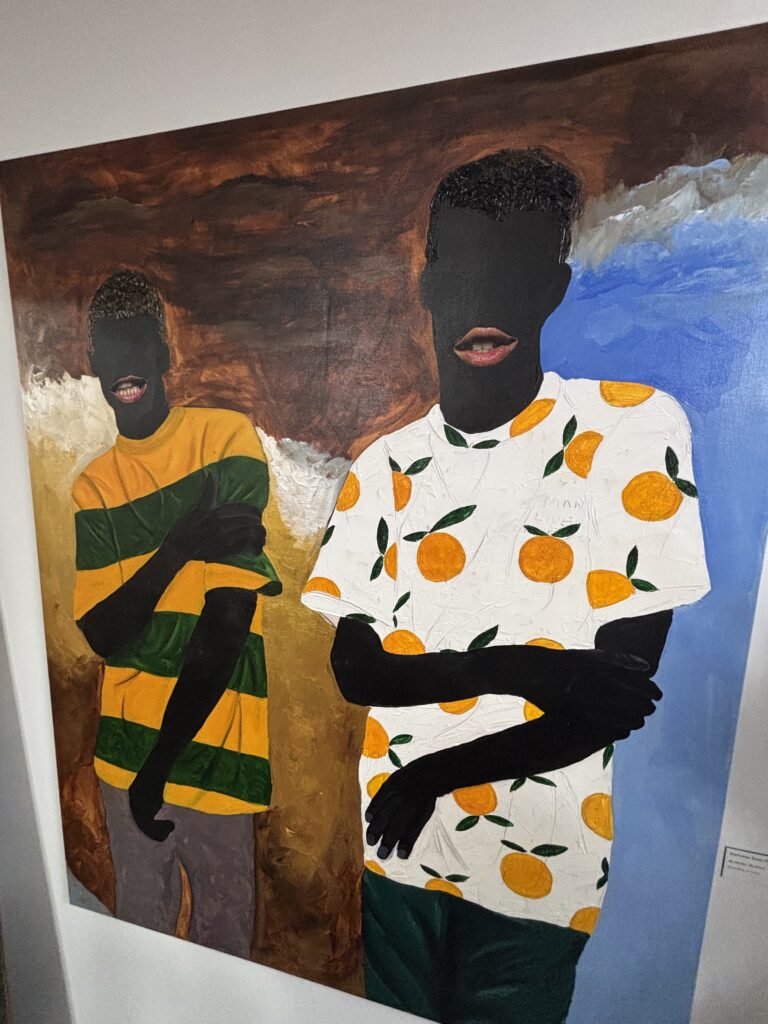
- “My Brother, My friend” (n.d.) by Ikechukwu Amos Christian
-
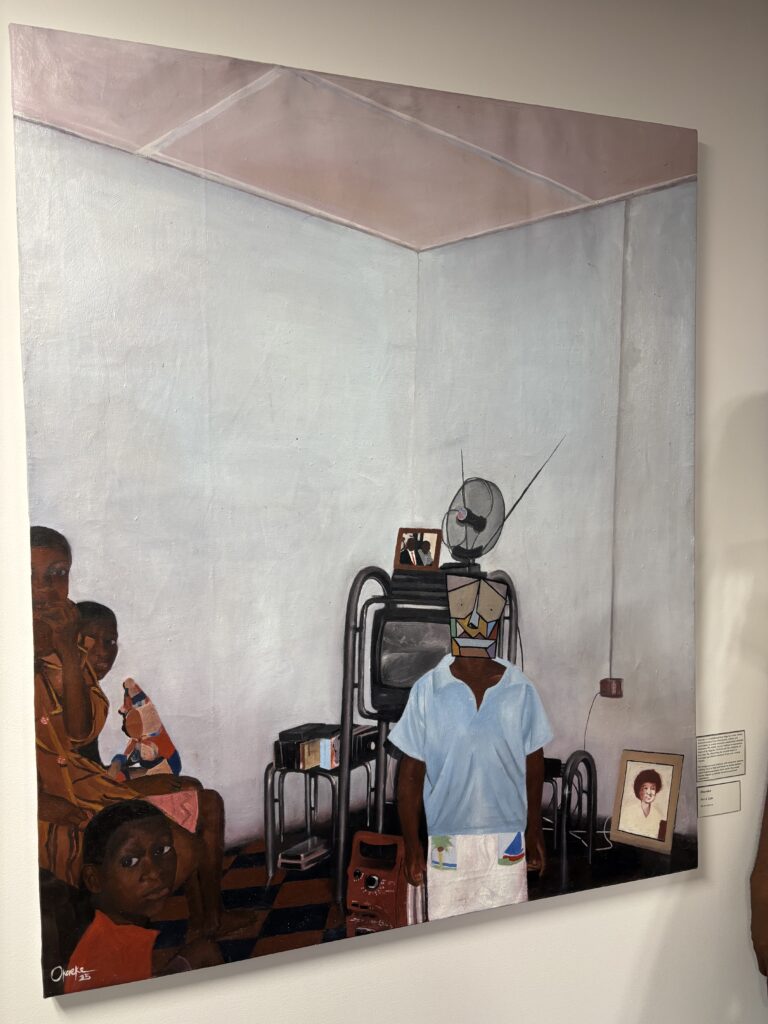
- “Plot 4, Egbu” (n.d.) by Okereke
-
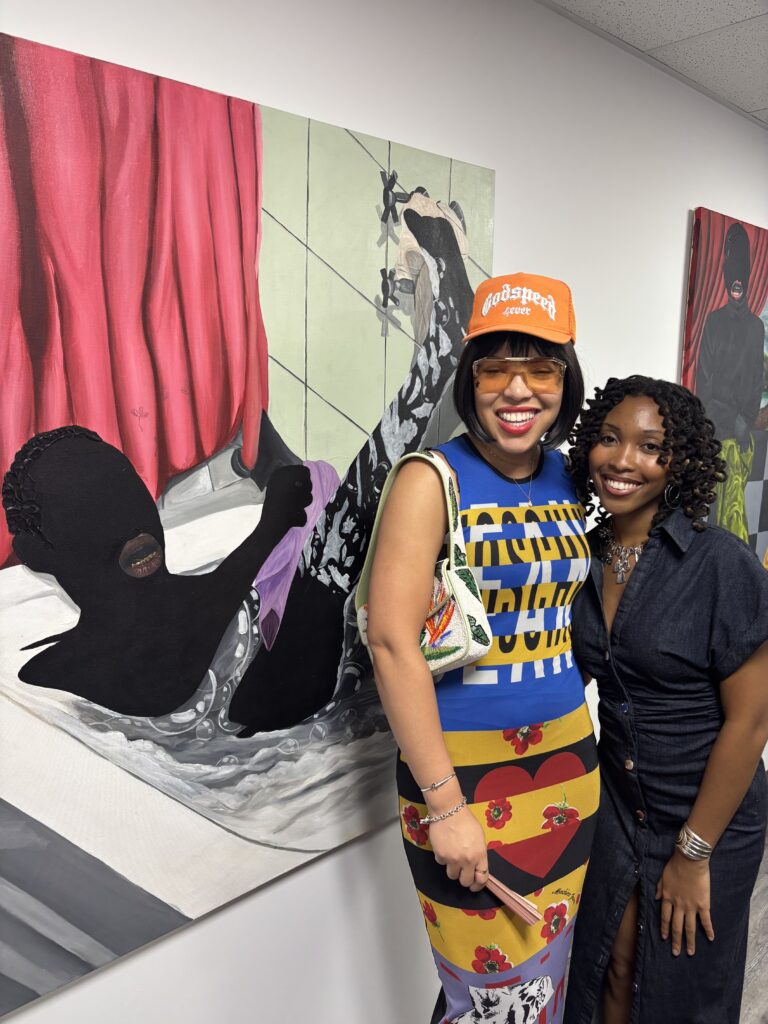
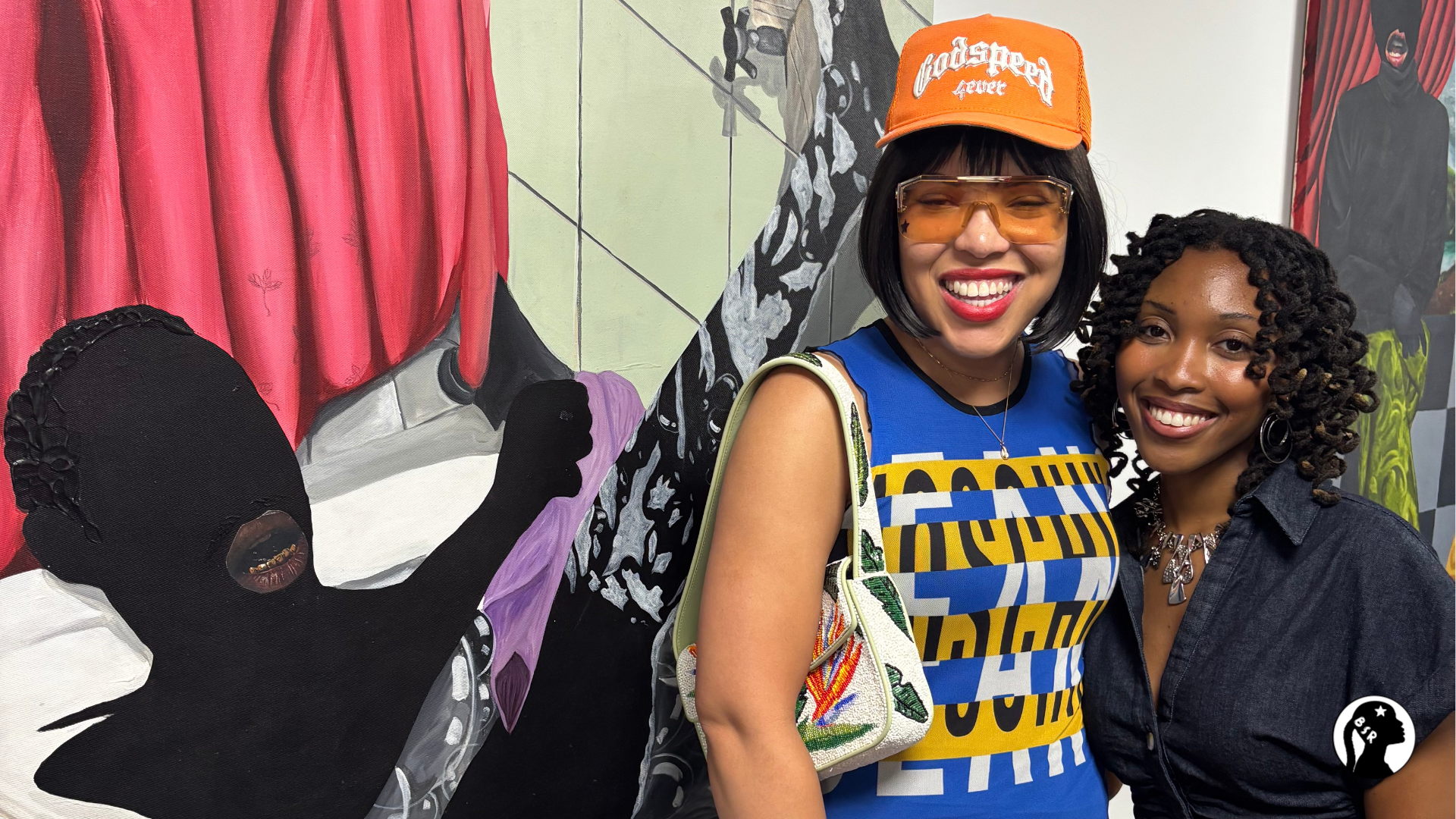
- with Daijia Canton, co-curator of Ulo