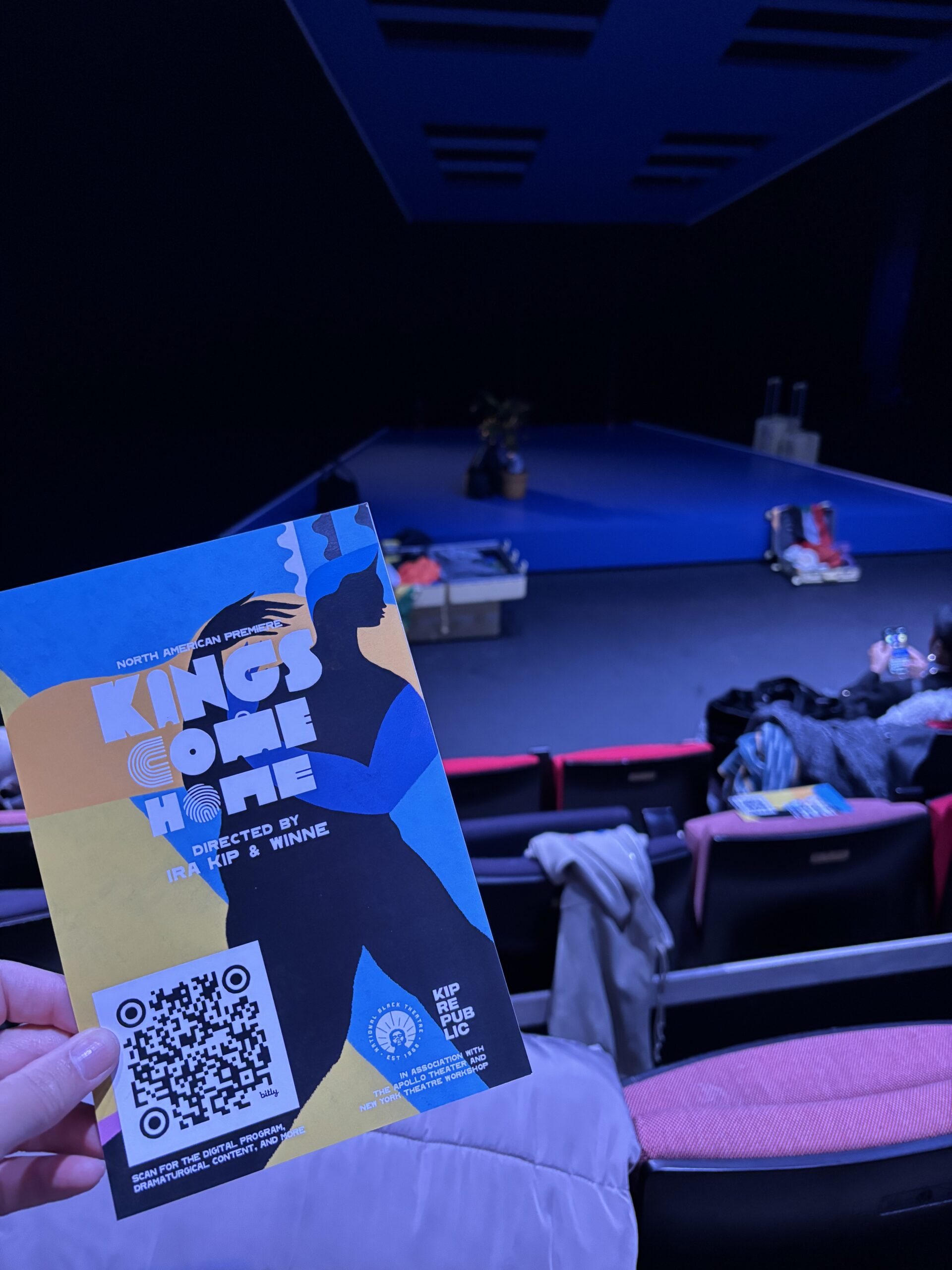
Kings…Come Home: North American Premiere
In the days after the 2024 election — when it became clear that there would be no inauguration for President Harris the following year — I asked my parents, both Black and in their 60s, what it would take for them to leave this country. Though I had separate conversations with each one, their answers were identical. This country is home. I’m the first generation of my family to be born outside of Mississippi; you can see us in the census decade before decade even as scores of our neighbors moved north in the Great Migration. Before Mississippi, we have “no” history – but from the time we arrived here, we grew.
I was present and accounted for when National Black Theatre launched their 24/25 season “The Pilgrimage: The Journey Back Home.” With a procession conceived by Ebony Noelle Golden and her team at Jupiter Performance Studio, our spirited band hopscotched across Harlem’s community gardens in the haze of the late summer sun. The procession and the show that followed, The Divining: Ceremonies from in the name of the m/other tree, tugged tight the ties between soul and soil. We – living things – long to be in community. We yearn to be rooted, to return to the land.
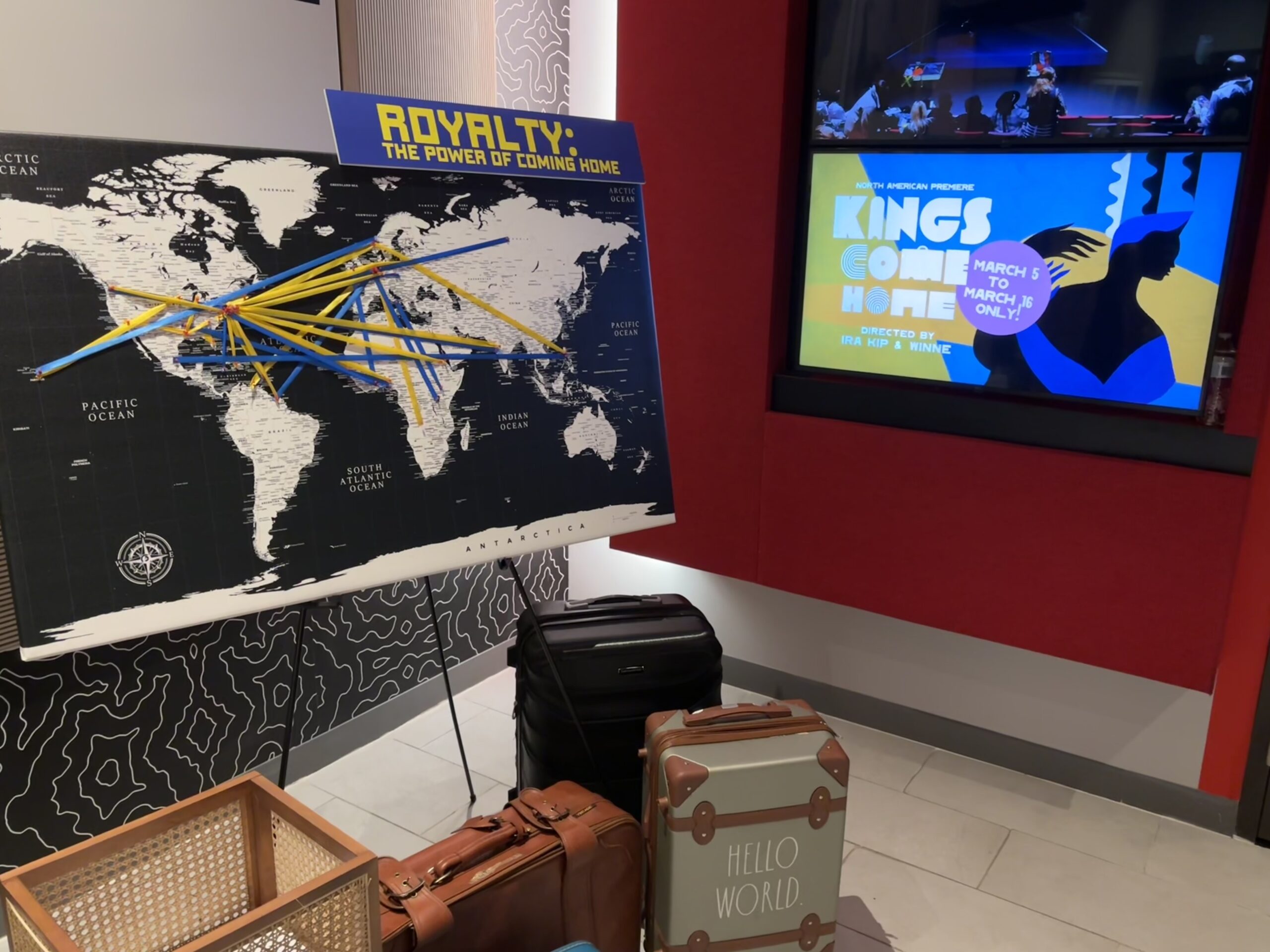
The latest show in NBT’s season, Kings…Come Home, was conceived by Ira Kip, who was “born and raised in Amsterdam with Caribbean roots” and builds on the dual themes of roots and return by adding complexity. What if you cannot go (home)? What if you do not know (home)? Where would you go if you could uproot/reroot (home)? Diasporically speaking, few of us are where we belong. My heart longs for the shade of the magnolia tree, but surely my soul seeks something even further back — in the motherland.
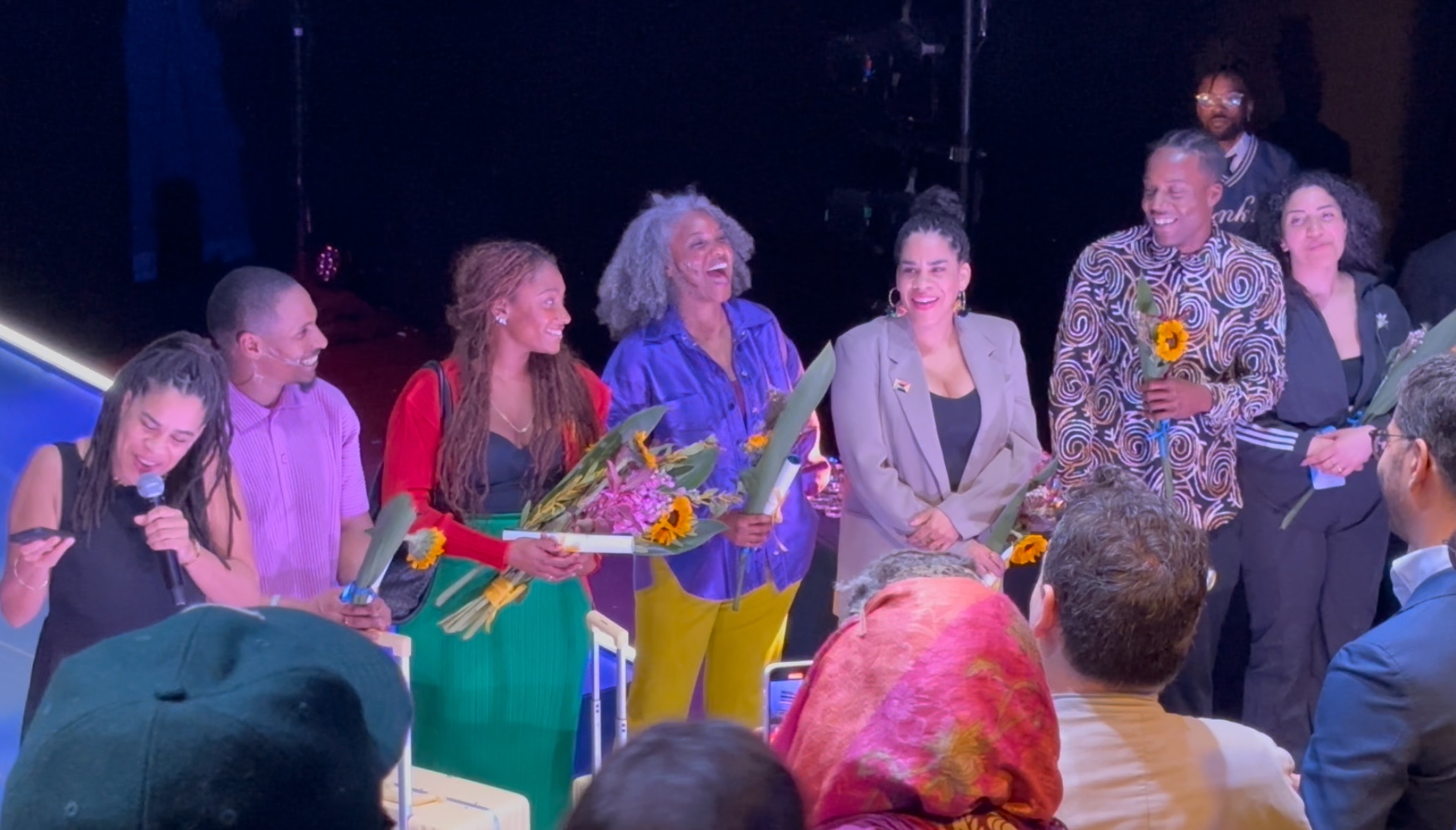
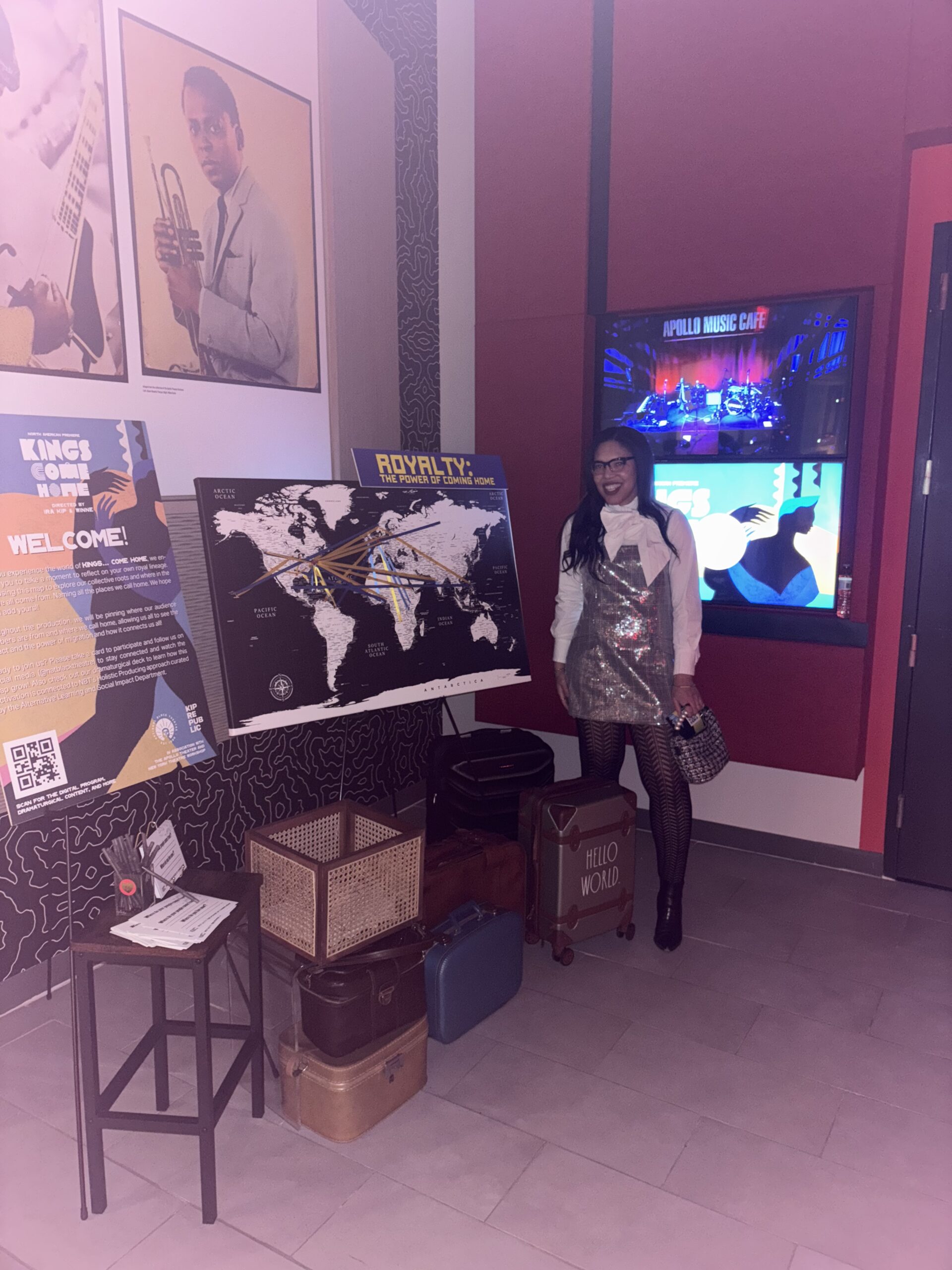
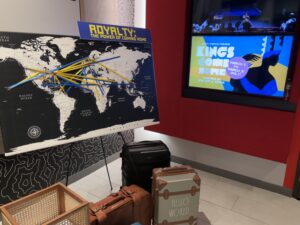
Kip’s vision begins with a collective breath. There are seven performers — Rubiën Vent, Ayesha Jordan, Daniël Pando, Revé Terborg, Melvin Aroma, Saron Tesfahuney, and Giovanni Pisas — each dressed in tropical colors, think ‘vacation ready airport drip’. The spotlight illuminates the group with each inhale and with each exhale they disappear into darkness. Breathing slides into syncopation, then into beatboxing, then into a song that tells us that this group will fly tomorrow. They pack a parade of diasporic flags into their glossy hardshell roller bags, yellow like sticks of salted butter.
As they close the latches on their luggage, the audience begins to unpack the characters’ relationships to each other. All of them are going home in different directions, except one man headed for someplace new. They accost him over this. What’s in Tokyo? Not our roots. There are two other men: one is returning to his birthplace, Curaçao, for the first time in 25 years, the other is heading to Angola to see his grandmother.
There are four women: one thinks it may be time to leave the United States, one has been waiting for it to be safe to return to Eritrea, one appears to be in charge, and one insists on traveling with a toddler-height potted plant (anyone who’s cleared US Customs can predict how her journey will turn out).
It’s disappointing that there’s not space enough to tell each story in full and that each vignette has so little stage time. In that sense, it’s helpful to think of Kings…Come Home as a choreopoem. The brightly colored costumes, inspired choreography, and the formations of the performers on stage felt like an homage to Ntozake Shange’s For Colored Girls Who Have Considered Suicide / When the Rainbow is Enuf. In Colored Girls as in Kings, we don’t know the characters’ names or the depth of their connections, dance is used both to communicate and punctuate, and no single vignette is more important than the others. There is no main character (neither the energy nor the entity).
I went into the show knowing only one thing really: it had had a sold-out run in the Netherlands. (Minimal background is my preferred level of preparedness for new theatre.) As the play unfolded, I wondered about Dutch audiences and how many languages they speak. While a significant portion of the play was in English, at least a third was in another tongue and I (admittedly) know so very little about world languages I couldn’t tell you how many additional ones were included. (My guess is that Dutch, Portuguese, Spanish, and Amharic (Ethiopia) were in the show – at minimum!) Maybe subtitles for at-home viewing have spoiled me, but I longed to know what the actors were saying in the cultural tongues. So many of the lines delivered in English were poetic, I feel like I missed out on the poetry in the lines I could’t understand. On the other hand, the disorientation is likely intentional, at the very least it emulates the experience of traveling to a new linguistic region without fluency. (Plus, it provides expanded representation of languages in American theater similar to Dominique Morisseau’s incorporation of the Haitian language in Bad Kreyòl and it highlights the existence of ethnic diversity within a racial group.)
Language was not the only barrier standing between me and the story in Kings. Over a lifetime of international travel, I believe I’ve filed for 2 visas: Cuba and Ghana. Given our political history, I expected the paperwork for Cuba but Ghana surprised me. I had to submit a photo, and a fee, and wait to hear back from the embassy. For nearly every other country I’ve visited, I just walked right in. The door had been opened by diplomacy (aka international relations aka imperialism aka colonialism etc. etc.) My visa for Ghana was approved and issued within a month. I was reminded that this is a unique privilege during a scene where Saron Tesfahuney attempts to return to her home in East Africa. She has a visa in her passport, but the border agents tell her it is invalid. Her religion, her marital status, and her last name all raise red flags. She cannot come in. Her castmates hold her back as she asks, as politely as she can muster through her rage, how can you keep me from my mother land? From my mother’s mother land? From my mother’s mother’s mother land? I may not be able to connect with the experience of being denied entry to my own home, but there is familiarity in the disconnection of it all. Where is the place where I am loved?
The show asks, “Would we even stay here, if none of us stayed here?” My answer is no; Us is the thing keeping me here. This is my home; we are my home. As the characters tell their Tokyo-bound brother, “our answers are not on the other side of the world.” He is determined to do his soul-searching elsewhere to bring new things into the family but they’re certain he needs community in order to find what he’s looking for and history is on their side. There are reminders of what we can conjure when we work together towards liberation. Near the middle of the show, the characters are looking up at a departures board and calling out times. Ghana 19:57, Haiti 18:04, Nigeria 19:60. As they continue, the audience realizes these aren’t departure times, they’re the years of independence. When they call the last place, Palestina, their voices trail off, independence deferred, departure delayed. None of us are free until all of us are free.
Language barriers and gaps in lived experience meant I wasn’t catching every word but the American woman character seemed to be speaking my mind out loud on stage. In the wake of a failing nation, I wonder where to go next. A place inside myself? She never seems to settle on her next location. She spirals when she’s asked to decide whether she’s ready to give up her mother’s pineapple upside down cake to make home in a new place. Circles, spirals and rotations are a motif here. Often, the performers are walking or dancing around the stage to convey movement and the narrative is non-linear. They begin a journey only to end up in the same place they started.
The morning after the show I saw an article explaining the end of temporary protected status (TPS) for more than 500,000 Haitians in the United States, 160,000 of which are here in NYC. For many, the end of the TPS program will mean ending up in the same place they started and leaving behind the home they’ve cultivated in the US — the houses they’ve bought, the churches they’ve built, the communities they’ve forged. Kings…Come Home ends with the cast at center stage; they’ve spent the whole show traveling and there’s still more journey up ahead. They stand expectantly with their suitcases, unified for the moment before they go their separate ways. Wherever they arrive, they will grow.
Thank you to National Black Theatre, the Apollo Theater, and The Chamber Group for the invitation to attend Opening Night of the North American premiere of Kings…Come Home. Tickets start at $50 with talkbacks after selected performances. The show will run through March 16, 2025 at the Apollo Stages at the Victoria Theater.
-

- “Kings…Come Home” North American Premiere
-
- “Kings…Come Home” North American Premiere
-
- “Kings…Come Home” North American Premiere
-
- “Kings…Come Home” North American Premiere
-
- “Kings…Come Home” North American Premiere
-
- “Kings…Come Home” North American Premiere