
‘Black History Is For Everyone’ by Brian Jones
The latest book by former teacher Brian Jones details a history that’s holistic, hopeful, and honest about how racial politics have shaped our world
My second favorite thing about the Schomburg Center is how close it is to my house. My first favorite thing is that I’ve never left at peace. After attending any exhibit or discussion, I always step onto Lenox Avenue feeling like a more enlightened version of myself. I pulled on a scrunchie and a pair of camo cargos and headed over for a little Tuesday evening transformation in the form of a book talk. The Center didn’t disappoint and never does.
Two things had happened earlier in the month that shaped the version of me that went into the auditorium. Both surrounded public discussions on recent deaths. Vanity Fair published Ta-Nehisi Coates essay “Charlie Kirk, Redeemed: A Political Class Finds Its Lost Cause” which was a response to New York Times columnist Ezra Klein. Days earlier, Klein had asserted that Charlie Kirk “was practicing politics in exactly the right way” made evident by his ability to build a winning coalition around MAGA and the Trump campaign. When Coates rebuttal quickly gained traction, Klein, who considers Coates a close friend, invited him onto his NYT podcast to discuss. Coates obliged, deftly navigated Klein’s ignorance, and — however unintentionally — made it clear to Black people that this so-called close friendship is a figment of Klein’s imagination. Klein is white and Coates is no friendlier to him than you are to your colleagues. (Chances are strong that Klein invites Coates into the minutiae of his life, while Coates keeps Klein at an arm’s length with vague recaps of his weekend.) A week or so later, Assata Shakur’s passing was her first time back in the headlines since she escaped federal prison and headed for Cuba. Black Leftists argued that no one who had voted for Kamala Harris had a right to mourn Assata’s death. I had begun re-reading her memoir to understand all the pushback, so I was hopped up on Black Nationalism before the program even started.
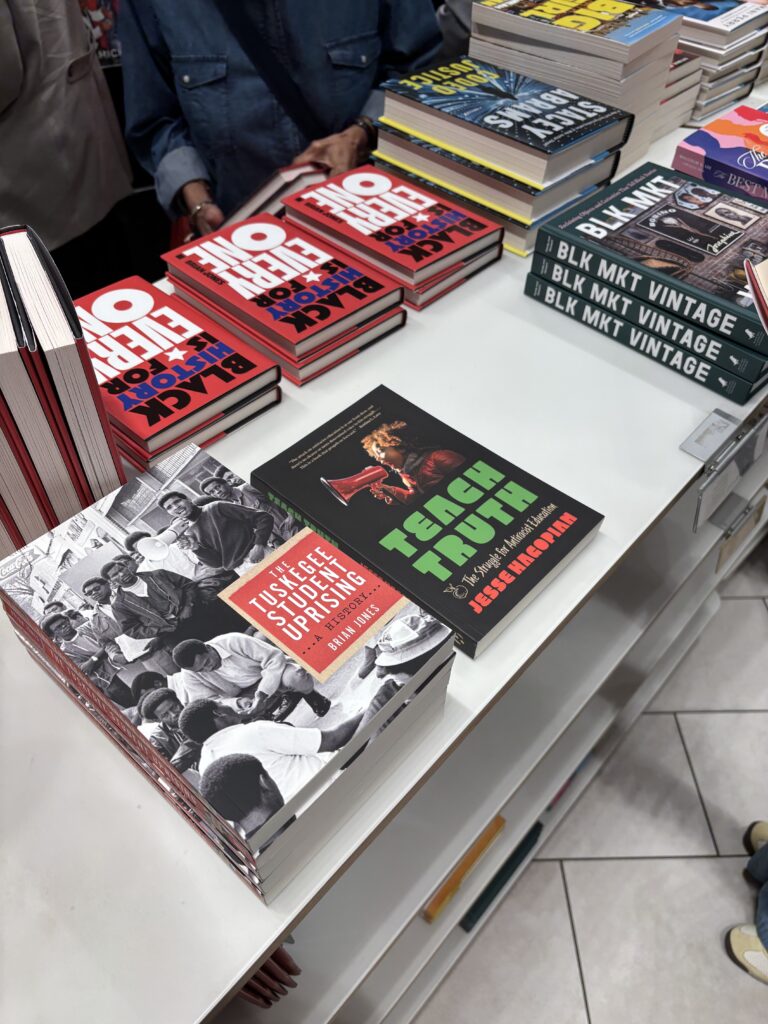
Copies of Brian Jones’s book ‘Black History Is For Everyone’ (red cover) on display in the Schomburg bookstore
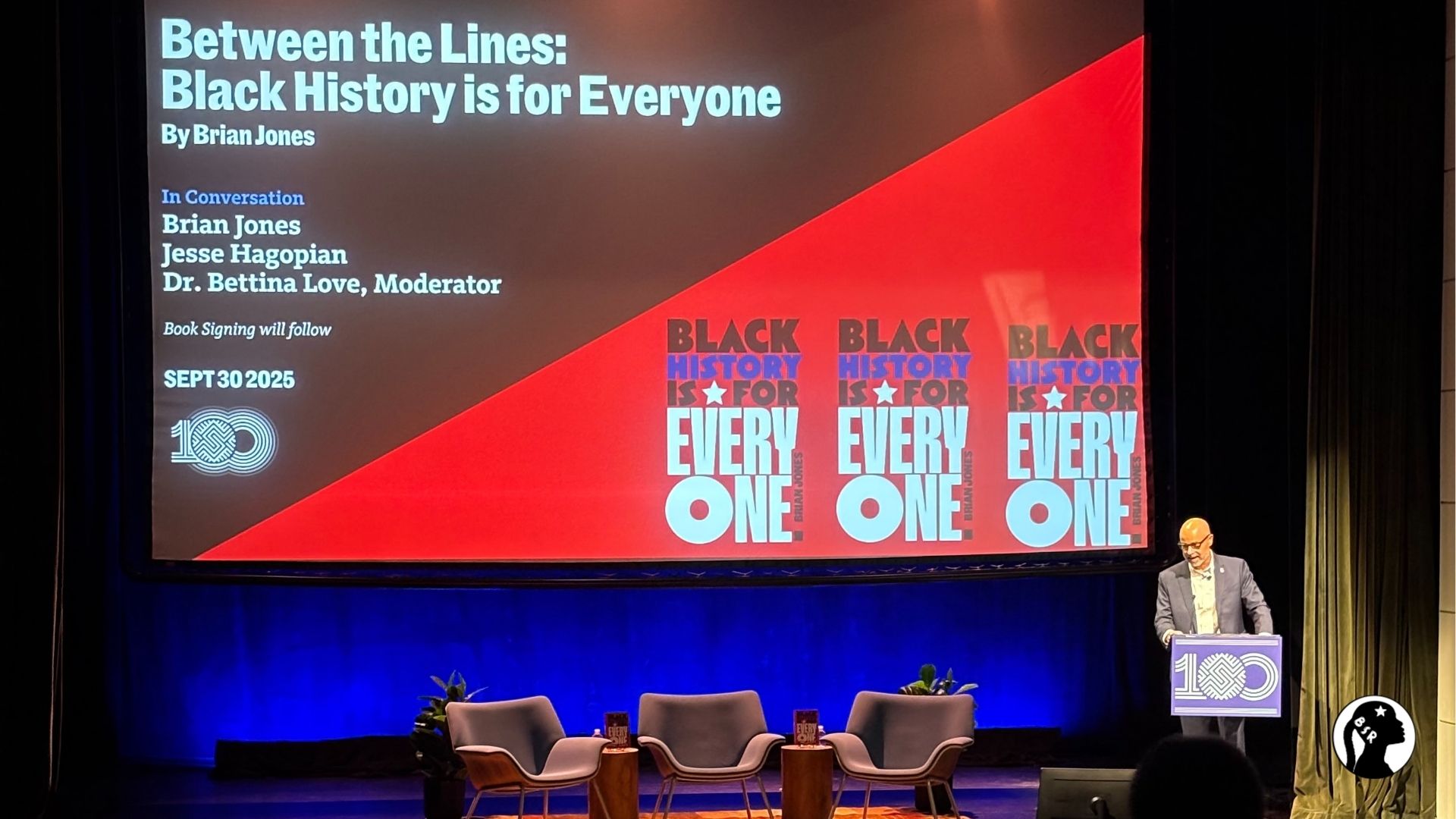
Brian Jones, a former NYC public school teacher who was dressed for the part in black leather contrast sneakers, a gray suit jacket with a gold lapel pin, and black acetate frames, was joined by two fellow Black educators, Bettina Love and Jesse Hagopian. Jones was back at his old job — he’d once been the associate director of education at the Schomburg — to talk about his new book which he’d titled Black History Is For Everyone. He’d split his book into four main parts: Race, Nation, Revolution, and Education. He argued that “race does not create racism, but that racism creates race” citing the ways American laws have changed to single out Black people. A trip through the archives shows that “before we called them white, before we called them European…we called them Christian” and that for many years religion was the defining feature of someone’s identity. Whiteness only came to be defined when Blackness did, which was after Bacon’s Rebellion. There were no race-specific laws in 1619 when Black people arrived in this country. Statutes prohibiting Black people from voting were not enacted until 1723.
In the section on Nation, Jones discussed the nationalist project of Social Studies with special attention to how we teach history in our country’s schools. As a former teacher in New York, I can attest that the required standards tell the story of America as a series of highlights, dwelling only briefly on the idea that people make, influence, and shape history — that it doesn’t just happen to us. The limits of nation and patriotism are part of the reason why Black heroes are erased from the dominant narrative. “When we use patriotism as a thematic starting point,” Jones said, “they exist beyond the border. When we take that patriotic turn, we lose Malcolm.” There is little to no space in American history for dissenters, only for freedom fighters whose wins uphold the American project. Malcolm fought for a freedom the US never granted; he is forgotten. Dr. King’s fight culminated in the Civil Rights Act, which our history books view as righting the wrongs of slavery, Jim Crow, segregation, redlining and random acts of racial violence all in one. If Dr. King had been unsuccessful he, too, would’ve been cast out of the American story as a distraction from our “freest country in the world” narrative arc.
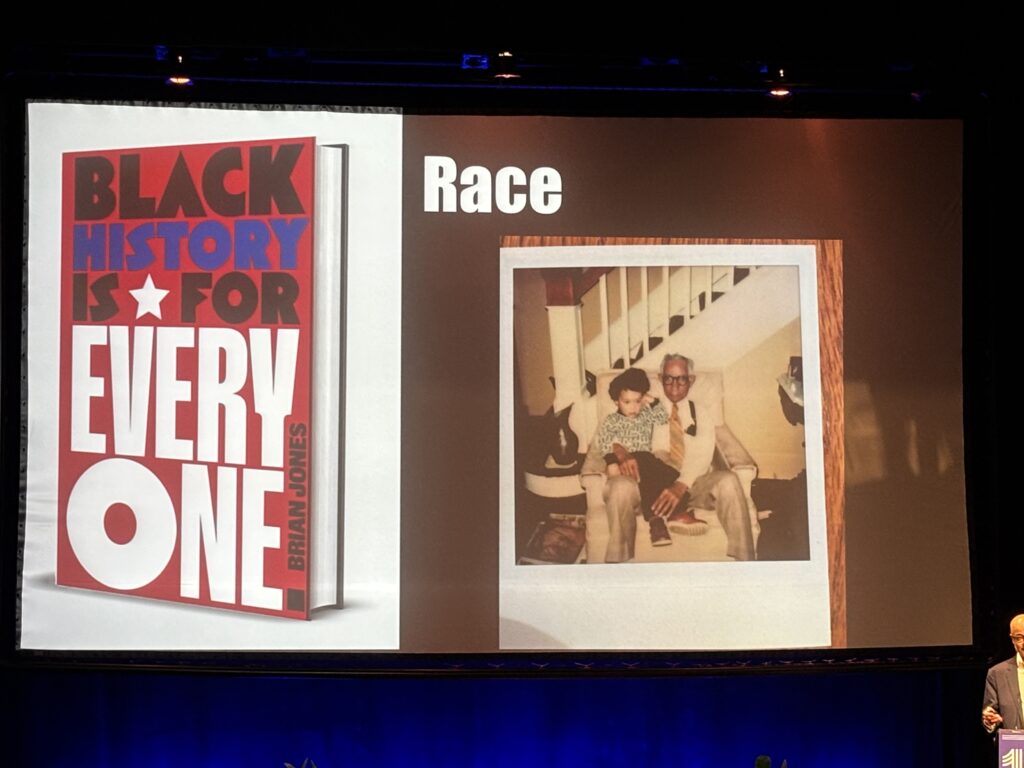
Brian Jones with his grandfather in the home that his grandfather built in North Carolina
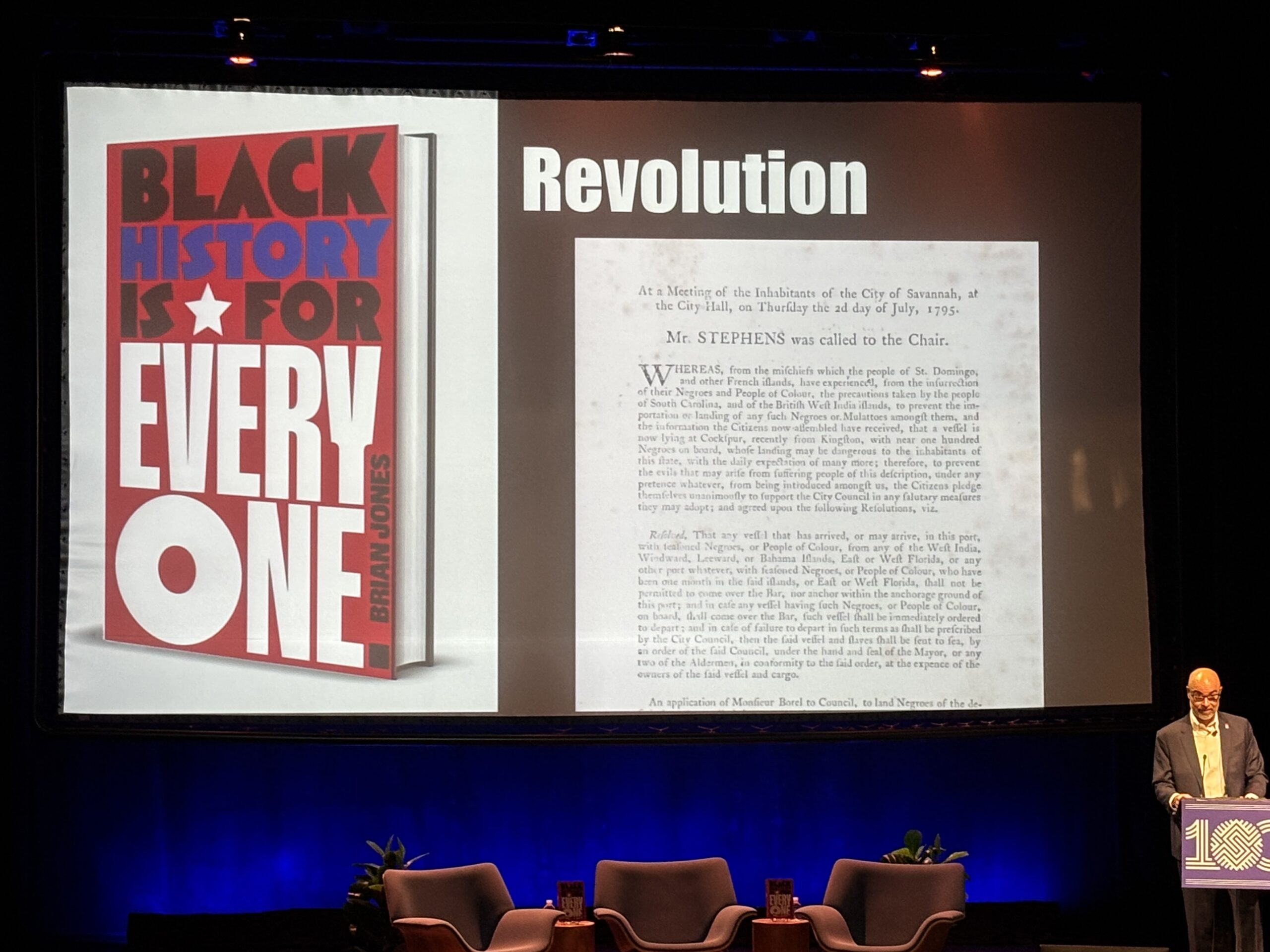
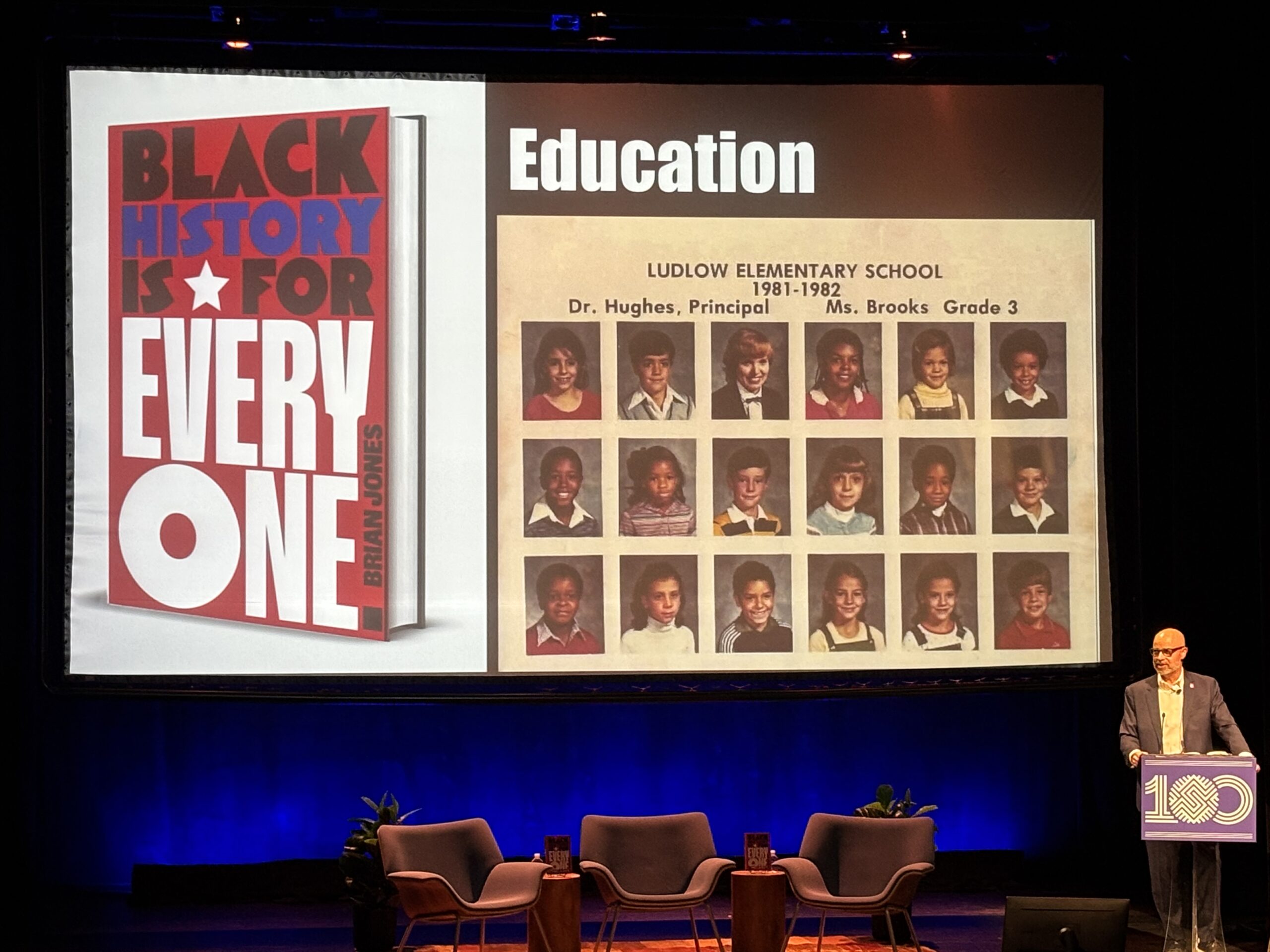
The section on Revolution centered the Haitian Revolution which “embarrasses the American Revolution” and examined why, despite its undeniable impact on global history, it is left out of the colonial history of the New World. Jones shared that unlike those people enslaved in the Thirteen Colonies, Haitian revolutionaries had not lived through generations of slavery and still remembered their home in present-day Congo. They remembered what it was like to be sovereign and were prepared to choose death over captivity en masse. In the Revolution section, as well as in Nation, Jones underscored a recurring sentiment that the powers that be “do not want children to learn how people really get free”. All revolutions are violent and bloody affairs. Schools teach that change comes incrementally, through peaceful protest and navigating the appropriate channels of government; meanwhile, BLM protestors are vilified and the Jan. 6 mob is hailed as a patriotic act. Should the children believe what we say or what we do? In the book’s final section, Jones chronicles American schools and traces the origins of public education to the radical reconstruction era. Before schools were created as part of the Emancipation project, only wealthy, white children had access to education through private, live-in tutors. The establishment of schools for newly freed people opened the benefit of public education to all.
When the floor opened for questions, I made my way to the microphone. (It was at this point that I regretted my outfit.) “I was listening to the Ezra Klein Ta-Nehisi Coates conversation,” I started and Jones nodded knowingly. “Ezra Klein asked Ta-Nehisi Coates where can we find hope. Coates answered that we’ve got it in Black History, that when you zoom out that is where you find hope for resistance. And Ezra Klein responds and says, I think that’s kind of fatalistic. So I’m wondering, if you had been in the room when that was said, what might you have responded with and what do you say to people who look at all of Black history, diasporically, and say that it’s a story of struggle, pain, and that it’s a fatalistic position?”
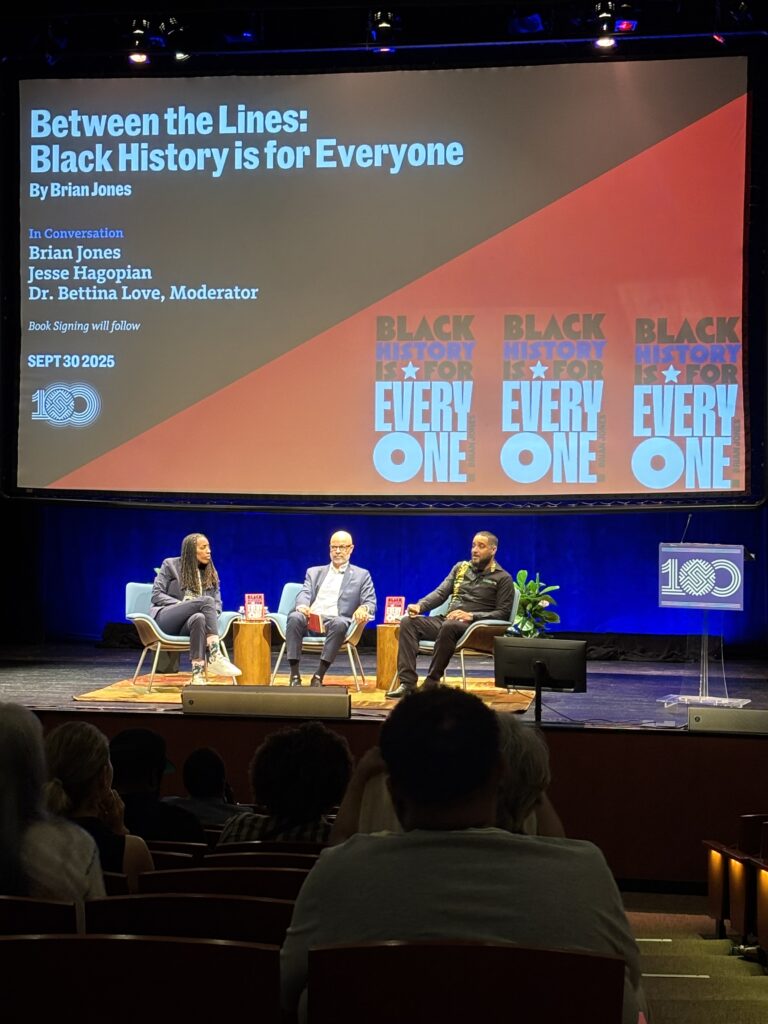
(L-R) Bettina Love, Brian Jones, and Jesse Hagopian on stage in the auditorium at the Schomburg Center
Bettina Love responded first with biting wit, “that’s why we don’t trust y’all.” She went on, “King… Malcolm warned us about the white liberal… They have little understanding of how race and racism impact America.” She commended Coates for being gracious, noting that Klein didn’t deserve Coates’ time, grace or patience.
Mr. Jones answered the question as well, “Once you understand that everything about our society is made and contested, then you see that beauty in struggle everywhere and you see the victories and the defeats differently. And so it’s not just that Ezra Klein is reading it through a lens of electoral politics and winning and losing in that arena and not understanding what it takes to change a society more fundamentally and the work that people have to do that is not always registered in the polls. Sometime we have to take positions and stand for things that are unpopular. SNCC was the first civil rights organization to come out against the war in Vietnam when that was not a popular position. Martin Luther King came out against the war in Vietnam, a year later, and it was still not a popular position. Not everything we do should be about winning an election but we had to stand for principles and bring people along and there are certain things about which you are not going to compromise. And that’s what I liked in the interview [Coates] said he’s not going to compromise away his neighbors humanity. It’s not up for negotiation.”
While I didn’t stay for the book signing since I plan to grab my copy from the library, I think that Jones is on to something that Klein and white liberals like him could find paradigm-shifting. Just like the Olympics, presidential elections are a once-every-four-years occurrence but that’s not the only time meaningful work happens. Olympic athletes train years in advance to prepare for what will eventually be a blip in their lives. The values we fight towards every day, the setbacks we overcome, and the stories we tell each other about what we can do when we believe in the dignity of all people are more important than the ballots we slide into a box. That is the root of our hope and maybe Klein would understand this if he took a more holistic view of our national myth. American history tells a story that satisfies the winners; Black history tells a story that’s for everyone.
blacklove 🖤 and starlight 🌟
“Between The Lines: Black History is For Everyone by Brian Jones” was a panel discussion at the Schomburg Center for Research in Black Culture on September 30, 2025 featuring Brian Jones, Bettina Love, and Jesse Hagopian. You can watch a livestream of this event on YouTube (I ask my question at 1:18:00). Mr. Jones’s book Black History Is For Everyone (Haymarket) is available wherever books are sold. Please consider borrowing the book from your local library or purchasing a copy from an independent bookstore. Signed copies may be available at The Schomburg Center bookstore.
-
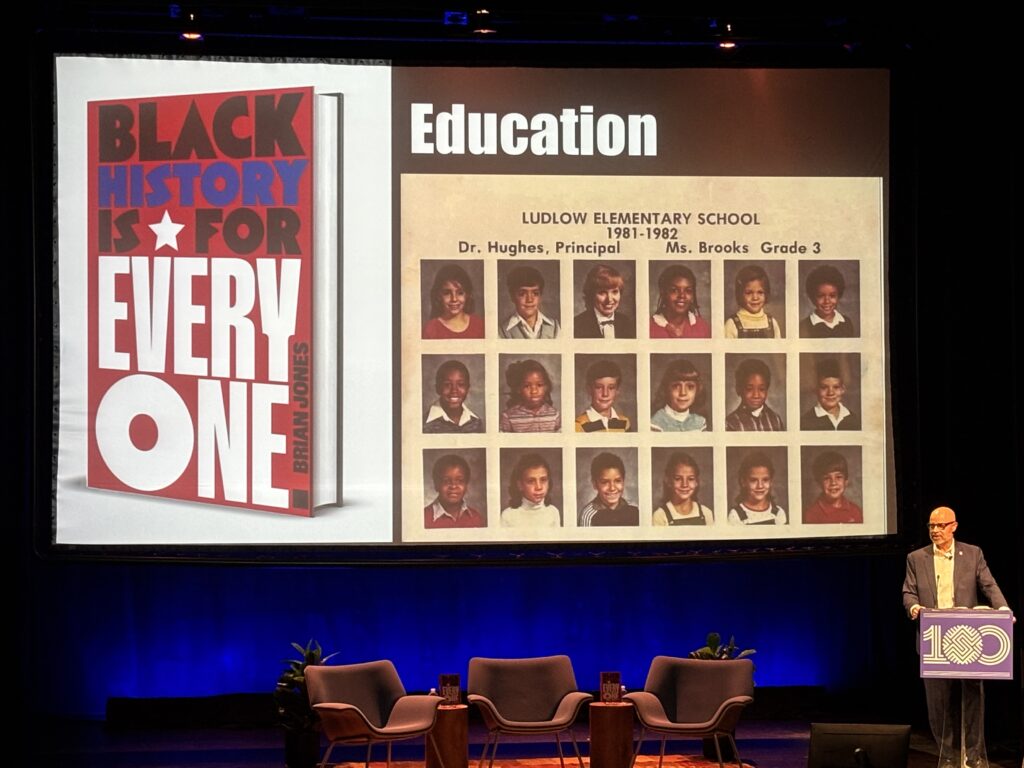
- Ms. Brooks, Brian Jones’s 3rd Grade Teacher in 1981-1982, was Black.
-
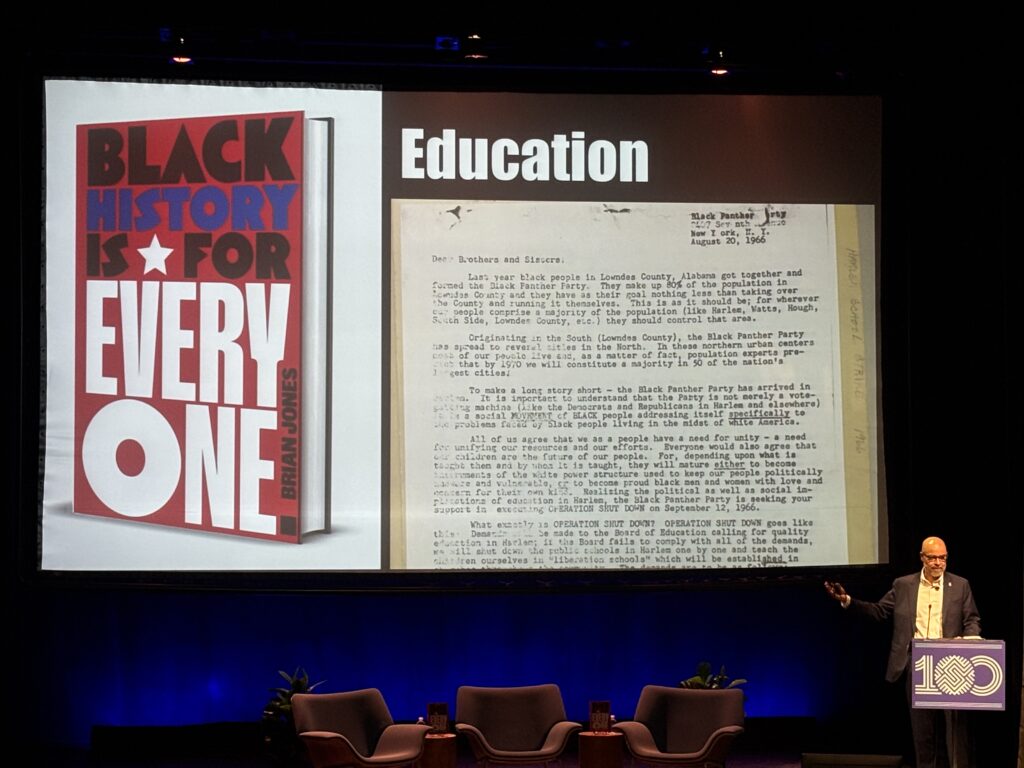
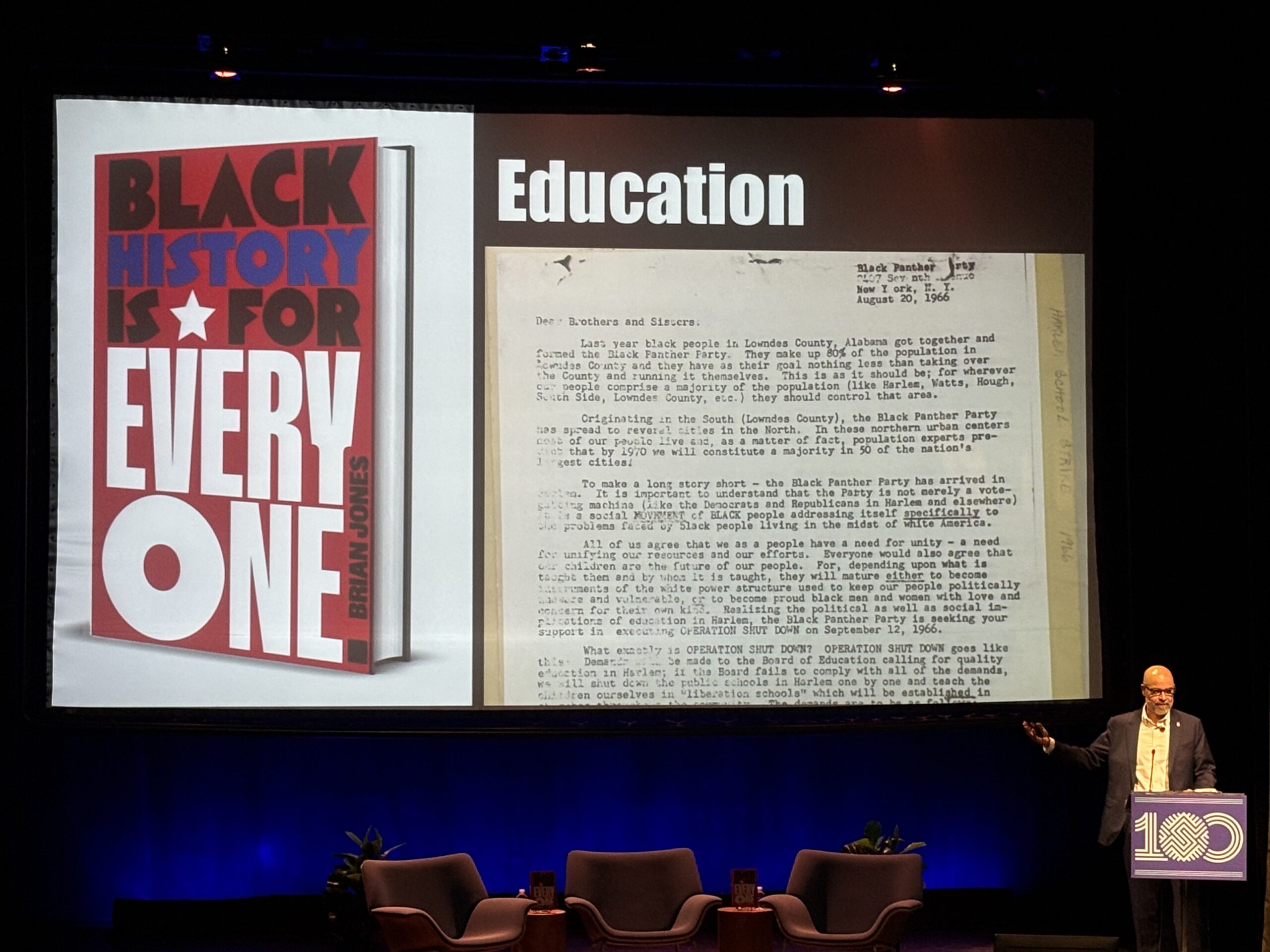
- The Black Panther Party of New York wrote a letter requesting support for OPERATION SHUT DOWN dated August 20, 1966 which pre-dates Bobby Seale and the establishment of the California Panthers.
-
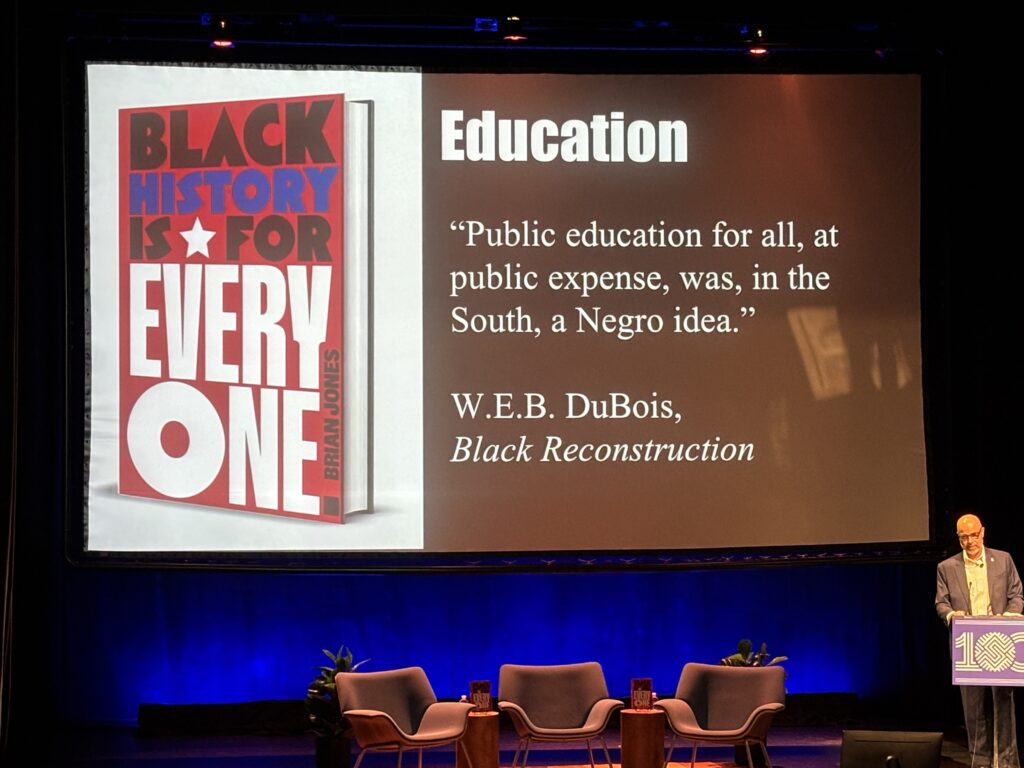
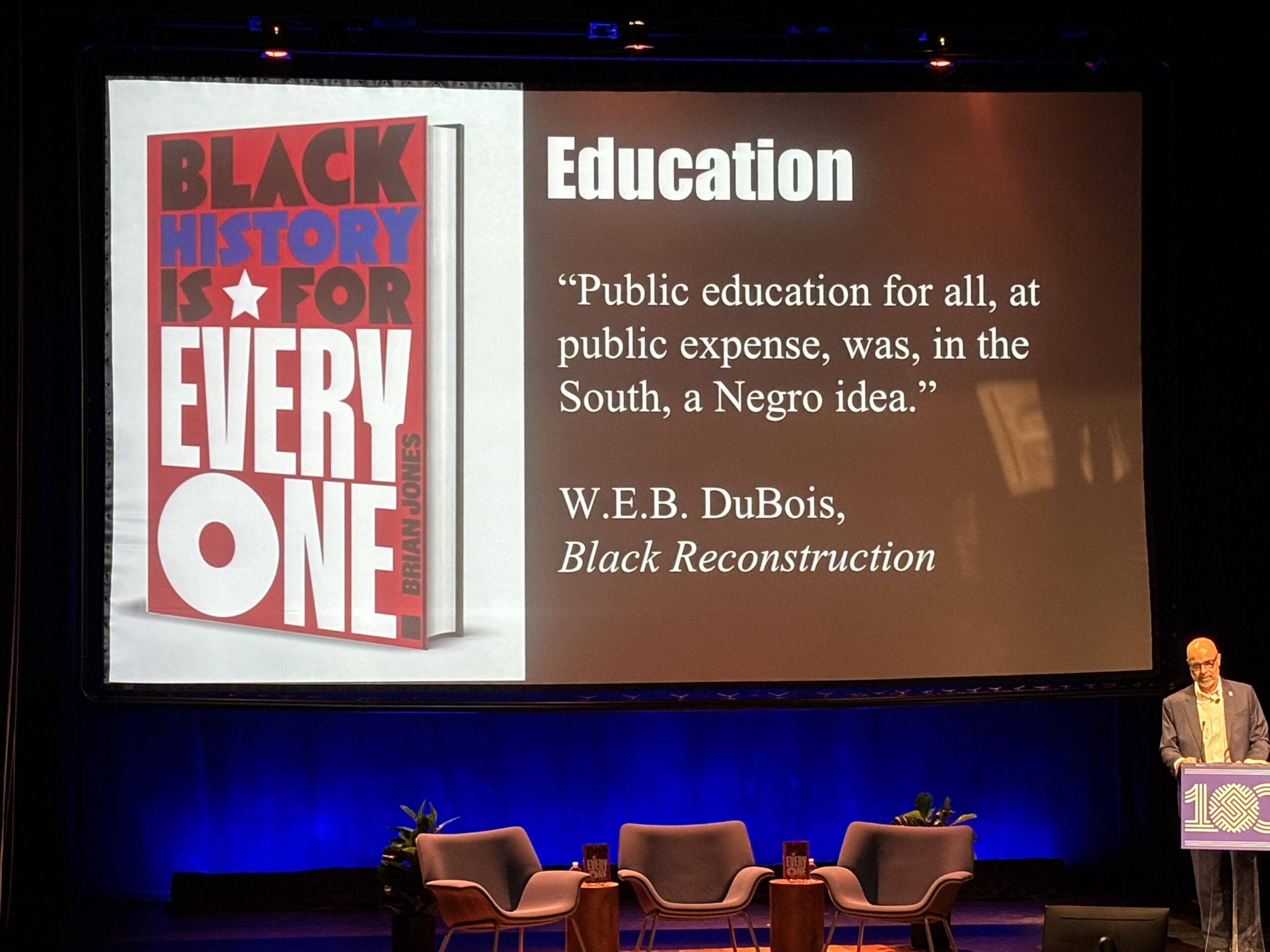
- A quote by W.E.B. Dubois in ‘Black Reconstruction’ that reads, “Public education for all, at public expense, was, in the South, a Negro idea.”
-
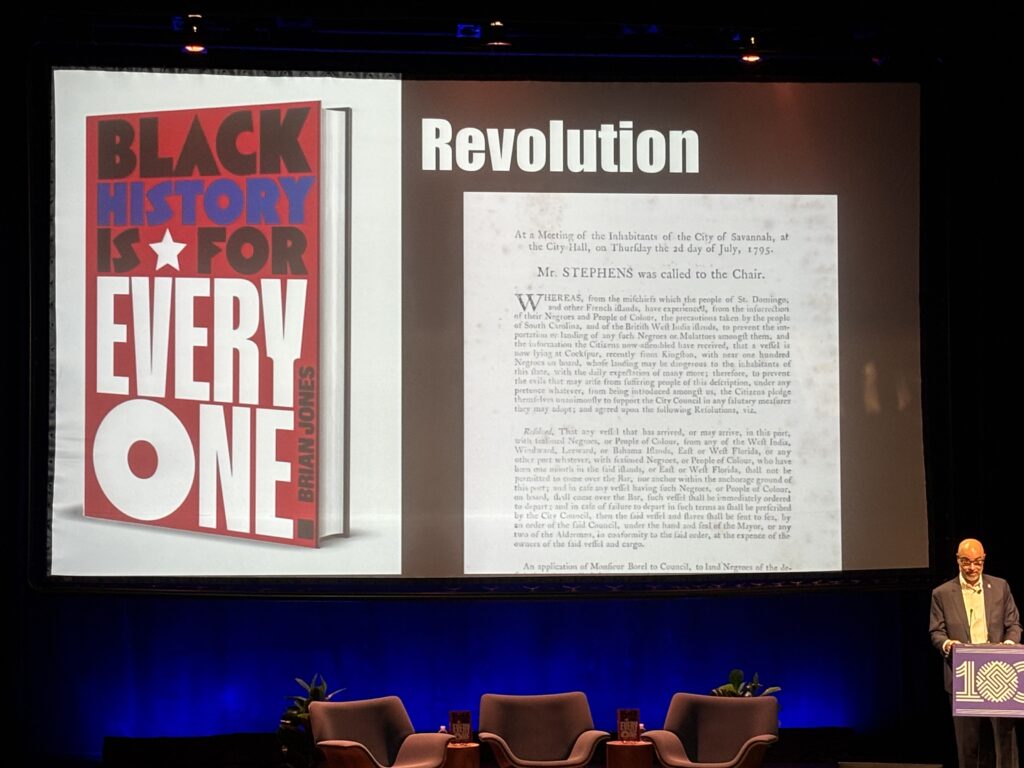
- “White people’s documents can reveal even more about Black history. A document from the time says no more ships from Haiti because they cannot bring freedom and liberty here.” – Brian Jones