

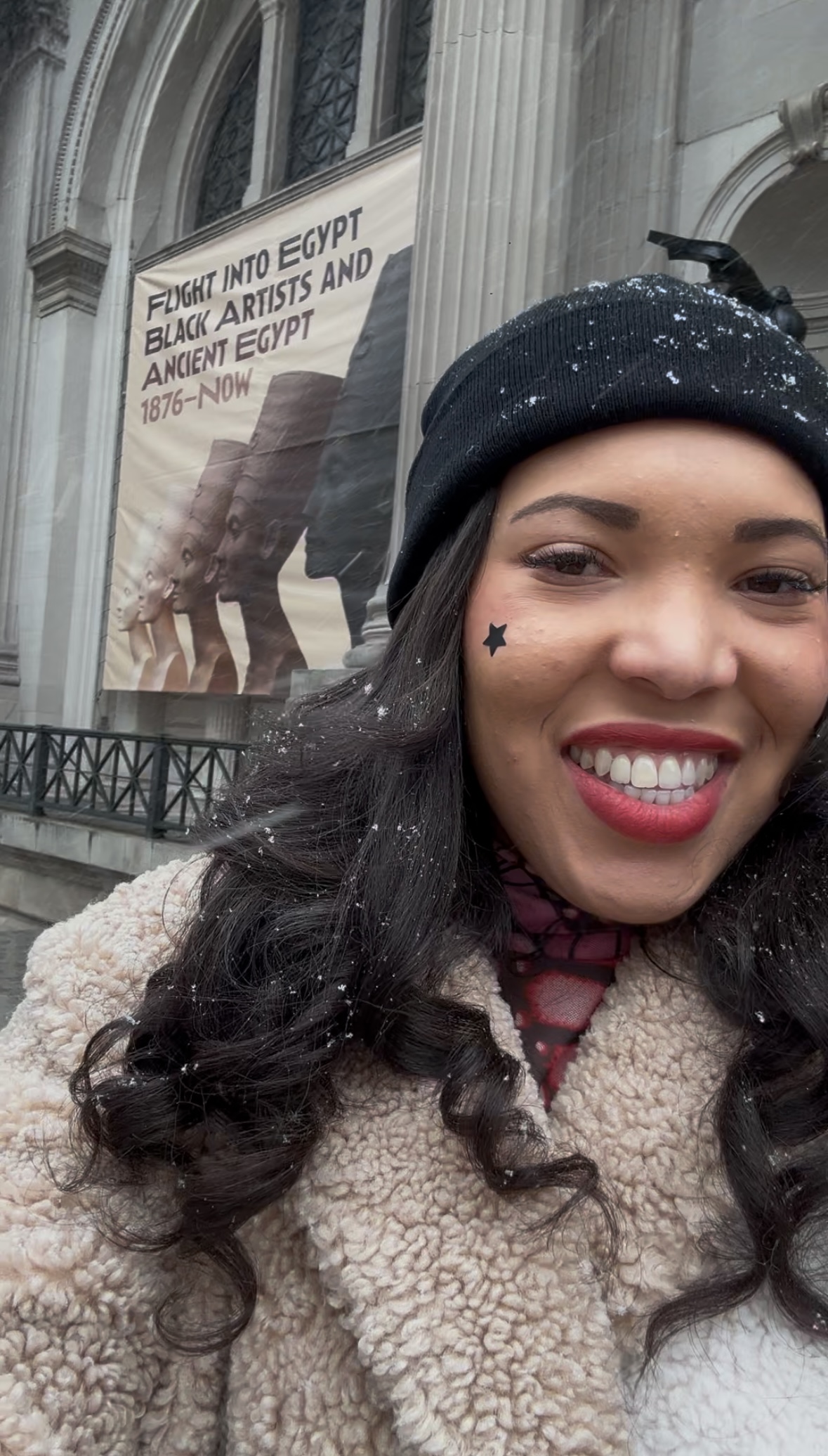
Flight Into Egypt: Black Artists and Ancient Egypt 1876-Now
An underappreciated show at The Met makes sense of the Black fascination with Egypt aesthetic and examines our right to lay claim
After years of watching The Prince of Egypt (1998) for Easter, I took a chance on The Book of Clarence (2023) knowing that its cheeky take on imitating Jesus would border on sacrilegious. My choice paid off in laughter and a handful of probing questions about the Easter story, and I have begun to understand why Jeymes Samuel who wrote, directed, produced, and scored the film is regarded as a cinematic savant despite his relatively low number of feature-length films. He’s only made two, The Book of Clarence and the 2021 Black western The Harder They Fall, but both display an attention to detail that seems to be dying in the streaming era’s churn and burn cycle.
In The Book of Clarence, Clarence (LaKeith Stanfield) is having a night out with his disciples. With its choreographed boy-girl dance battle, it resembles a 2000’s music video but oversize FUBU jerseys are replaced with robes and disco balls are replaced by wall sconces with open flames. The early A.D. partygoers dance to “Nights Over Egypt” a 1981 soul track by The Jones Girls. (You can watch the scene on YouTube.) I haven’t been able to get the song out of my head ever since.
“Nights Over Egypt”, Michael Jackson’s “Remember The Time” music video, and more recently, Beyonce’s costuming for her 2018 Coachella performance highlighted in her Emmy-nominated documentary film Homecoming are all evidence of a tightly wound connection between Black culture and so-called Egyptian aesthetic that pre-date the Motown era. The Met’s exhibition Flight Into Egypt: Black Artists and Ancient Egypt 1876-Now starts its story during America’s post-slavery Reconstruction and presents the question: “Who gets to claim an ancient culture with a heralded history?”
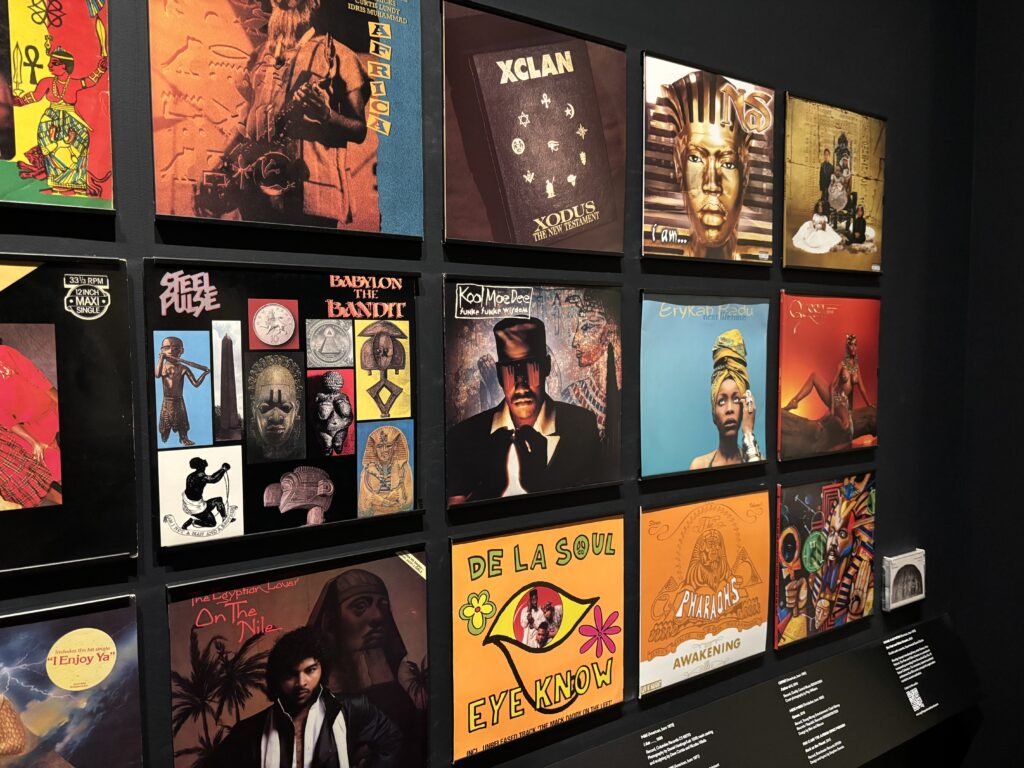
[photo] Wall of album covers by R&B, Pop, and Soul artists that employ elements of Egyptian aesthetic
Every year around Halloween, when discussion about costumes and cultural appropriate abound, Cleopatra is back in the spotlight. Black people tend to believe that she, as well as another Egyptian ruler Nefertiti, was Black. The people who find this hardest to believe are not defined by their skin color as much as they are by their disposition toward Black people. The question can serve as a litmus test: it does not really matter whether these women were Black, and there’s little we can do to prove it one way or the other which means that any one who’d argue these women’s whiteness are not innocent history buffs, they’re present day racists. Frederick Douglass clocked this behavior in 1887, not just about Cleopatra and Nefertiti, but about all Egyptians. The exhibition quotes him as saying, “It has been the fashion of American writers, to deny that the Egyptians were Negroes and claim that they are of the same race as themselves. This has, I have no doubt, been largely due to a wish to deprive the Negro of the moral support of Ancient Greatness and to appropriate the same to the white race.”
The exhibition doesn’t waste its time with computer generated renderings like the ones that grotesquely reanimate mummy skeletons with flesh and fat and skin, or catalog the decades of letters exchanged between historians and archaeologists that aim to contort a distant past into a contemporary racial frame. It acknowledges the ways Black people lay perpetual claim on this ancient culture through art.
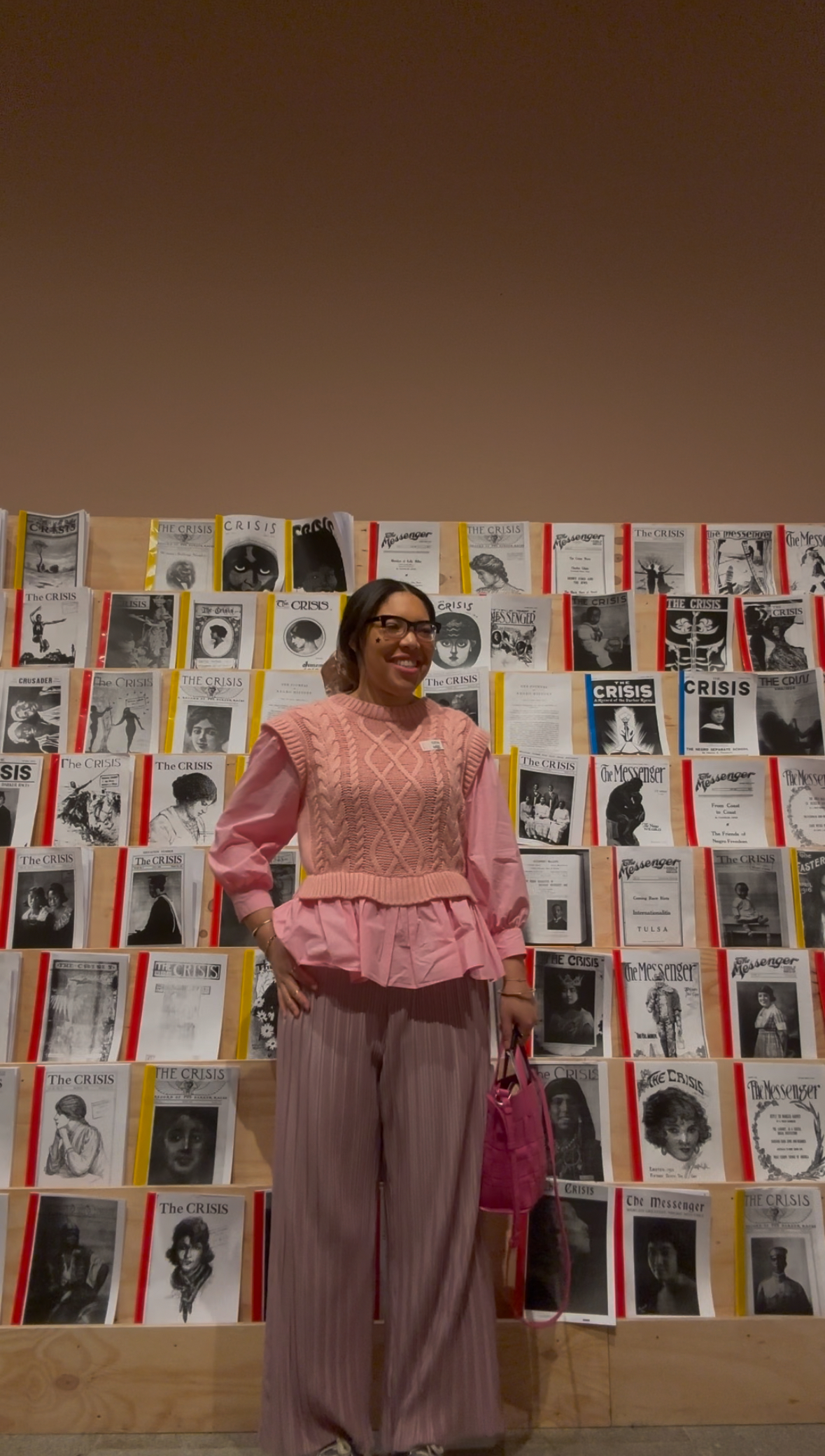
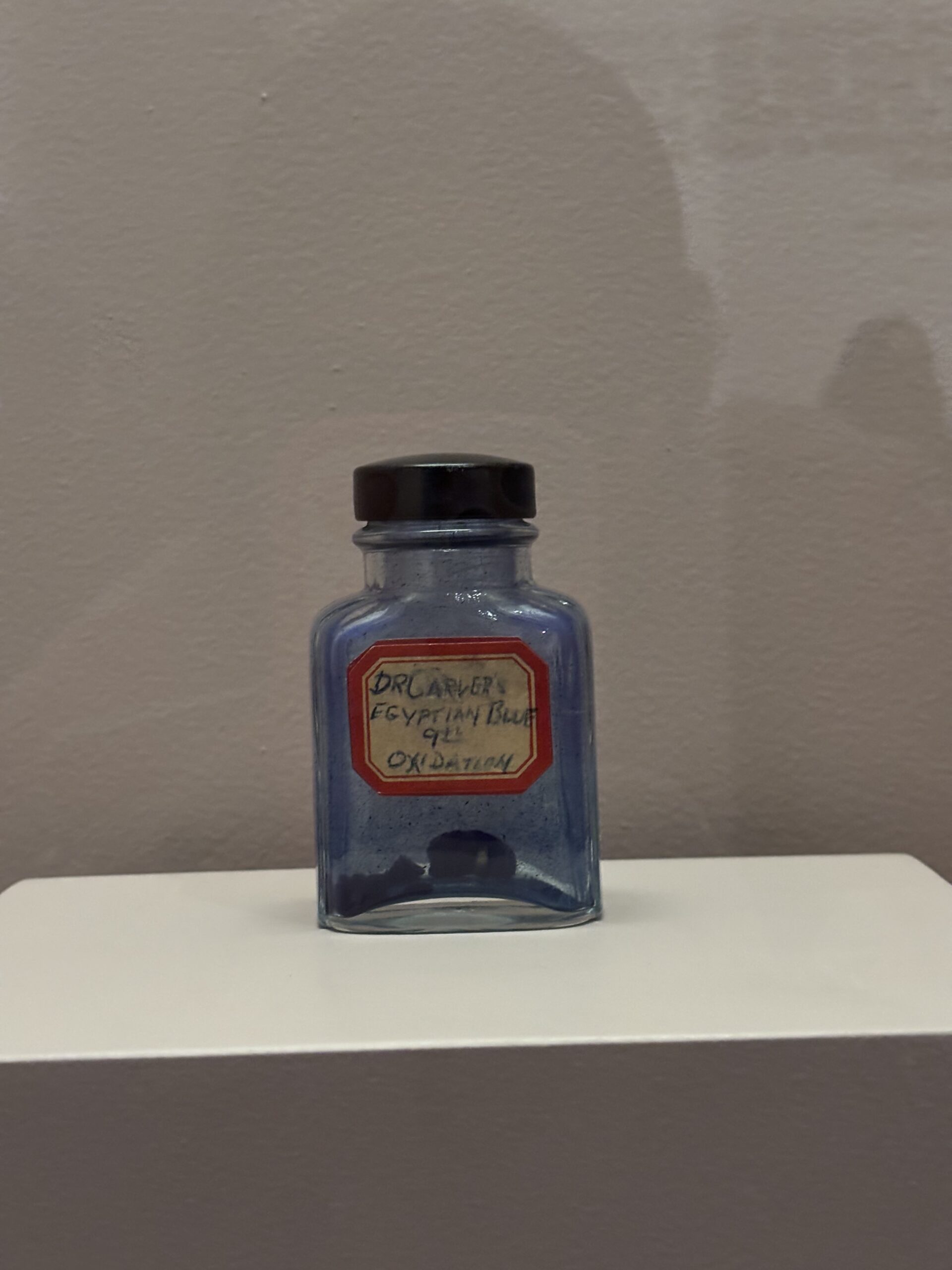
We’ve grasped onto the Ancient Greatness and we won’t let go. George Washington Carver, famous for peanuts and not famous enough for everything else, created a dye he named “Egyptian Blue”. My favorite spot was the reading room stocked with photocopies of independent Black newspapers from the early 1900s. W.E.B. DuBois’s The Crisis, the magazine he founded for the NAACP features a “pharaonic masthead” and surely reported on the work of Black archaeologists like William Leo Hansberry, the Howard University professor who specialized in ancient Nile Valley cultures. (Fun fact: Gloster, Mississippi-born William Leo Hansberry was the uncle of Lorraine Hansberry, the Tony-nominated playwright who wrote A Raisin In The Sun.)
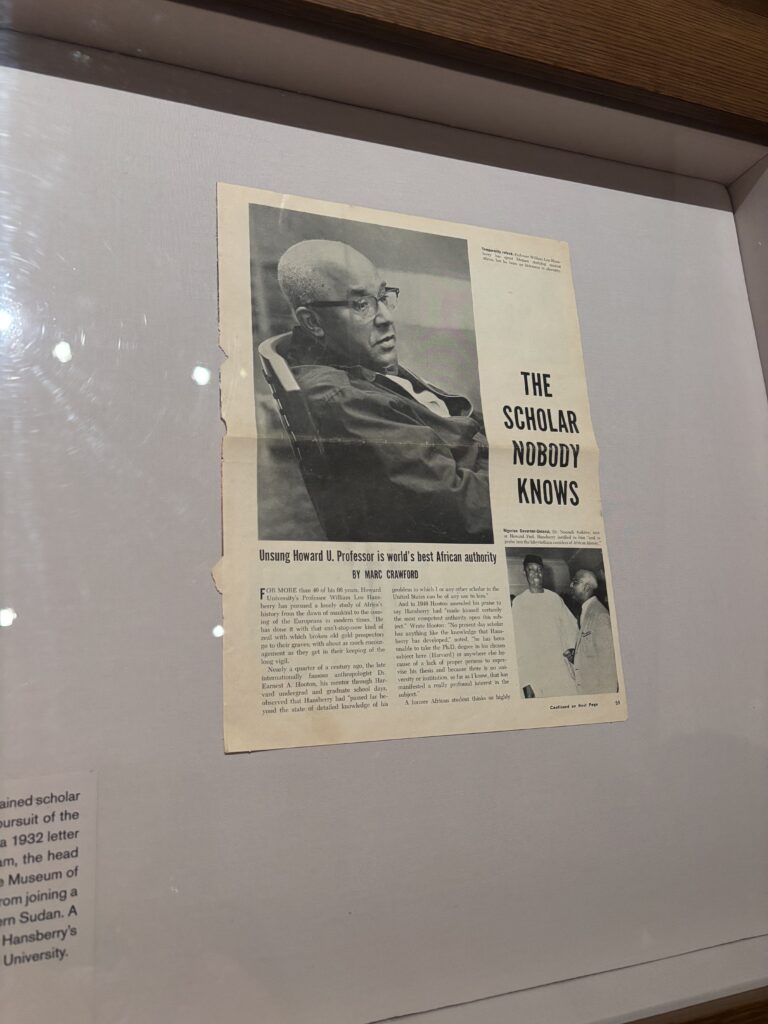
[photo] “The Scholar Nobody Knows: Unsung Howard U. Professor Is World’s Best African Authority,” in Ebony, February 1961
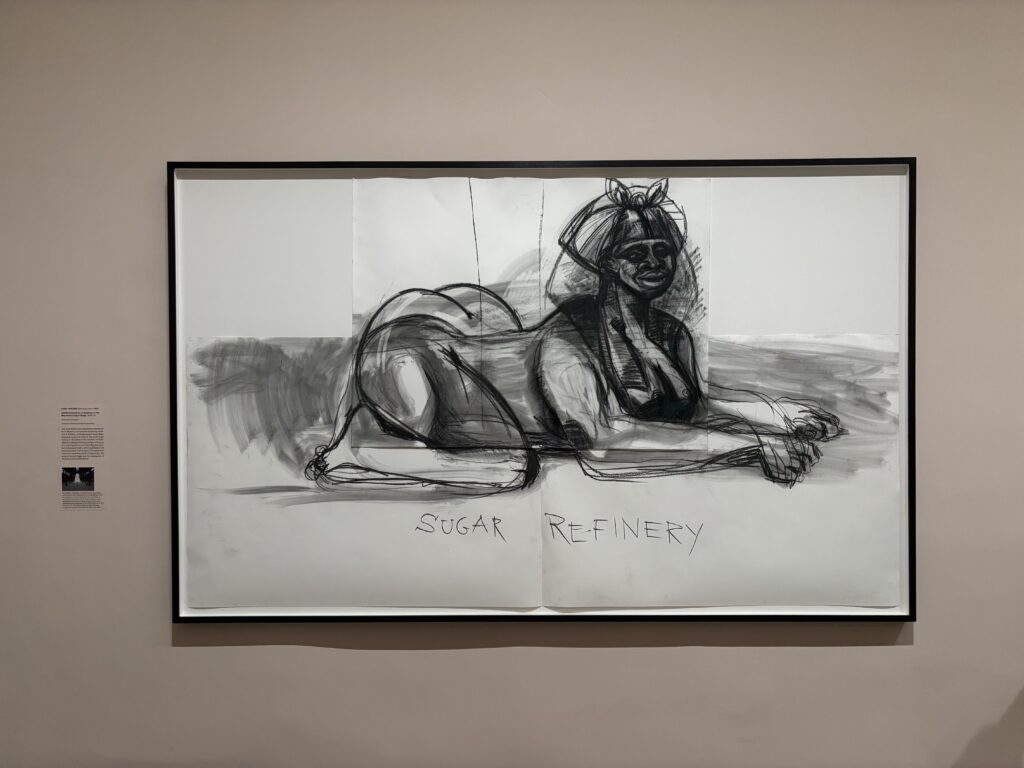
[photo] “Untitled (Study for A Subtlety, or the Marvelous Sugar Baby)” (2013-2014) by Kara Walker
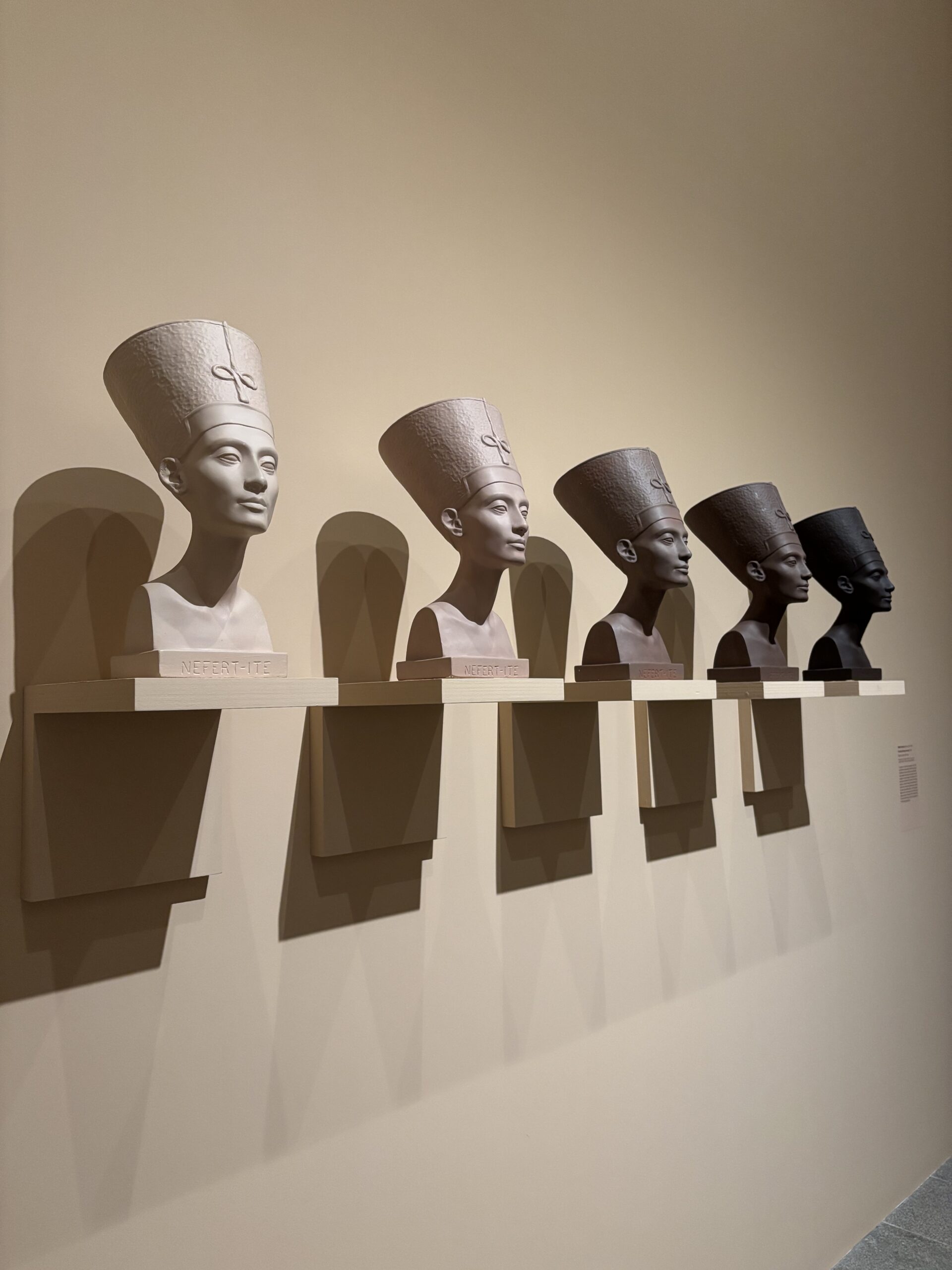
Evidence of Egyptian inspiration continues into our modern era. Fred Wilson created five busts of Nefertiti arranged in an ombre fashion from Lena Horne’s complexion to Senegalese model Khoudia Diop’s and presented them in Cairo in 1992 with the provocative title “Grey Area (Brown Version”. A sketch of Kara Walker’s “sugar sphinx” sculpture which spent a summer on display in Brooklyn’s Domino Sugar Factory (before they converted the industrial space into pricey lofts) overlays a Black woman’s curves and lips over a hazy sphinx silhouette. There’s a listening room that plays clips of musical performances by Black pop superstars; the walls are lined with Egypt-inspired album covers by Black musical artists — Earth, Wind, and Fire appears more than once. Sun-Ra’s Space Is The Place film and afro-futurist imagination signal that you’ve reached an end, or maybe a beginning. Egypt has been a pre-eminent fascination for Black artists and people and there’s no reason to believe we’re losing interest in the aesthetic.
Since I’d attended during the exhibit’s last 3 days, everything in the gift shop was on sale. I bought a Denim Tears t-shirt for 50% from a capsule collection they’d entitled Knowbody Nose. It looks like a scene out of Star Wars in the Tatooine desert, a team of robed Black men with grisly beards poking out of beige keffiyehs drag away a gigantic nose while a nose-less sphinx looks on from the background. It toys with the myth that ancient Greeks and Romans removed the Sphinx’s nose to keep it from looking recognizably Black, but I don’t think a rounded nose would’ve eased any contention in the debate about the Ancient Egyptian’s Blackness. We don’t need the nose to prove our point. The Met’s exhibition, which deserved more press and fanfare, asked and answered its own question: we get to claim this ancient culture and its heralded history because we wear it best.
blacklove 🖤 and starlight 🌟
February 14, 2025: Full write-up to come. In the meantime, here are my five favorite works from Flight Into Egypt at the Met (in no particular order and subject to change.)
-
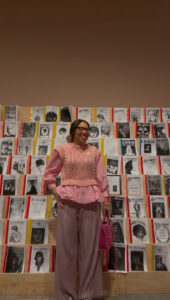
- Alpha’s Bet Is Not Over Yet, 2025 by Stefan Jemison and Jamal Cyrus
-
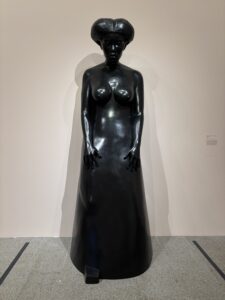
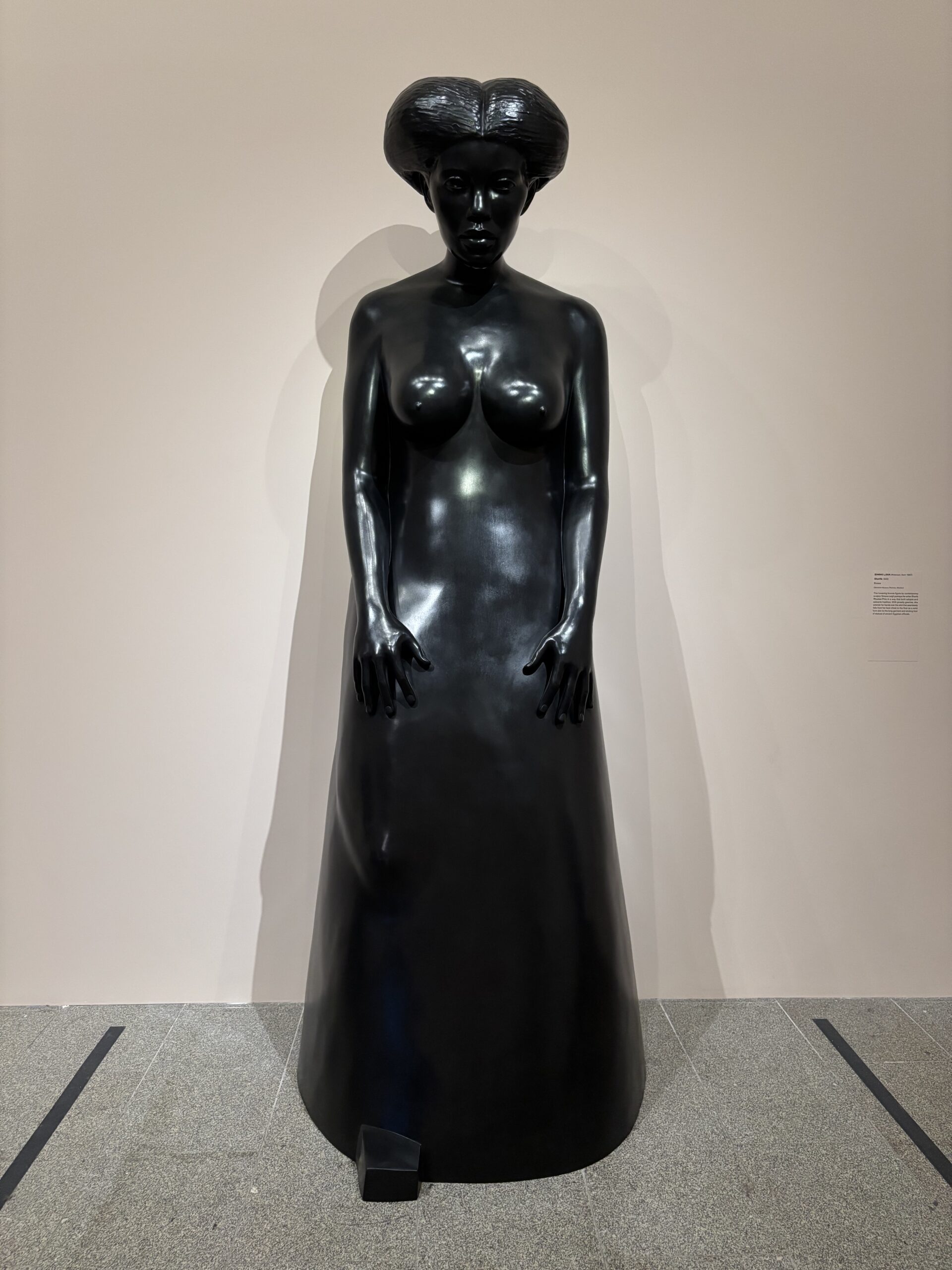
- Sharifa, 2022 by Simone Yvette Leigh
-
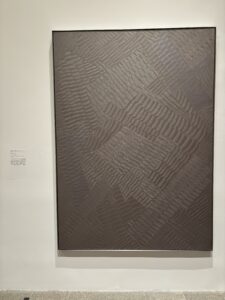
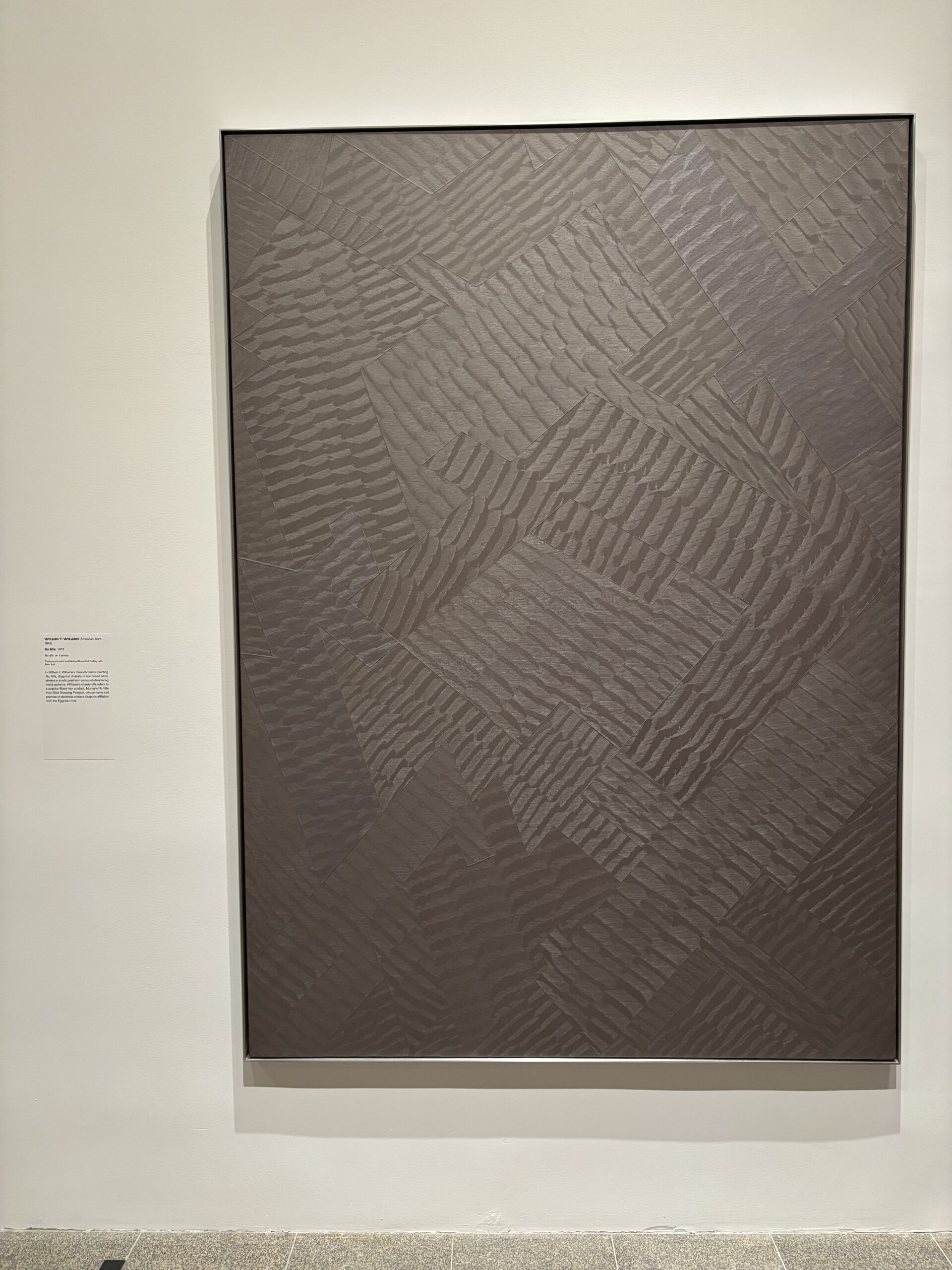
- Nu Nile, 1973 by William T. Willams
-
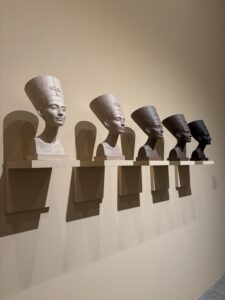
- Gray Area (Brown Version), 1993 by Fred Wilson
-
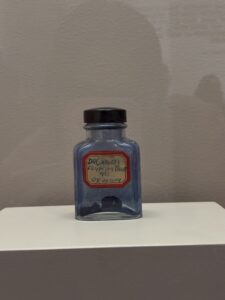
- George Washington Carver’s Egyptian Blue, 9th Oxidation (1930s)
Flight Into Egypt: Black Artists and Ancient Egypt 1876-Now was on view at The Metropolitan Museum of Art from November 17, 2024 to February 17, 2025.
