“Act Black: Posters from Black American Stage & Screen”
We Were There: Archival theater and film posters affirm Black performances from silent films, the Golden Age of Hollywood, and early Broadway
Our 3rd Grade class earned a movie party once we finally mastered our multiplication tables, but our teacher, the one who undoubtedly shaped the outcome of my life, didn’t let us choose the movie. She handed out popcorn in tiny paper cups that dentists use for mouthwash, turned out the lights, and announced that we’d be watching The Wiz.
It didn’t take long for us to figure out that The Wiz was not just shorthand for The Wizard of Oz, it was its own thing entirely. There was no black and white, no Judy Garland, no green-skinned witches. Improbably, the movie begins with Diana Ross, who I’d only seen on CD covers in the ornately carved entertainment center my parents purchased overseas. As if that wasn’t reason enough to lean in, there was Michael Jackson, who I’d only seen as a brown child or a pale man, but here he was, somewhere in between, talking back to crows who were just as large as he was. Before they ever eased on down a single yellow brick, I was determined to follow but at the end of our party, there was still more movie to go.
This was decades before you could type a film name into a search bar and be presented with clickable options for “How To Watch” so for months I had no idea how the movie ended. Even if there had been a Blockbuster on an Air Force base in the middle of the Atlantic Ocean, the movie was too old to be on the shelf. It would be months before my mom would order a VHS copy of The Wiz on Amazon and place it, wrapped, under the tree with a cryptic note to throw me off her trail. Out of all the movie’s many magical moments, I was dumbstruck at the sight of a seasoned, organza-draped witch belting “Believe” as she floated like a star in a black sky of twinkling diamonds. I read every line of the credits until I found her name: Lena Horne. Her 3 minute appearance in the final moments of The Wiz was her last film performance (not counting archival footage) and marked exactly 40 years since her top-billing debut in 1938’s The Duke Is Tops. When Duke was re-released in 1944, the new poster had Lena front, center, and labeled The Bronze Venus.
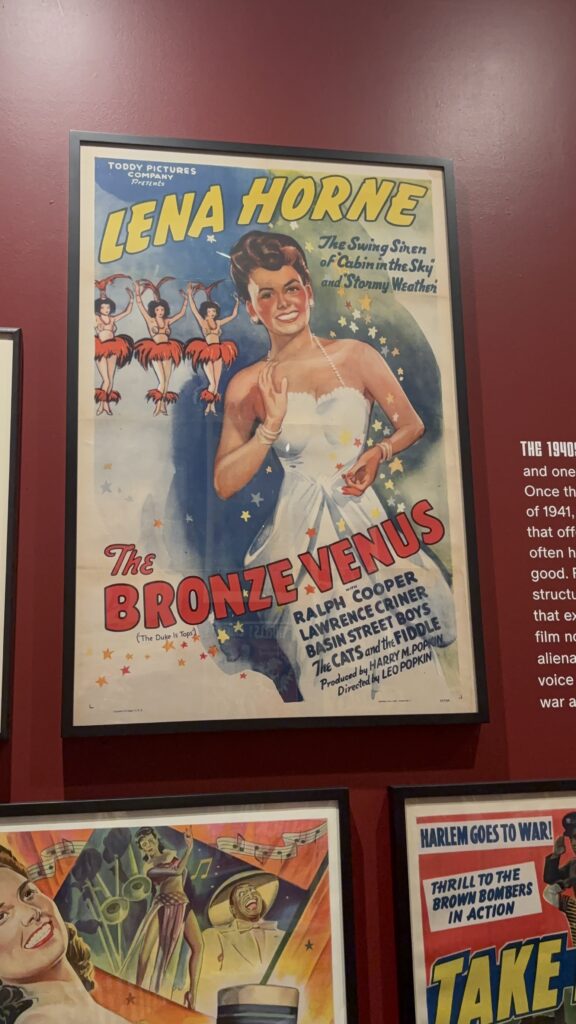
Poster for “The Bronze Venus” • Million Dollar Productions, 1944 (originally released as “The Duke Is Tops” in 1938)
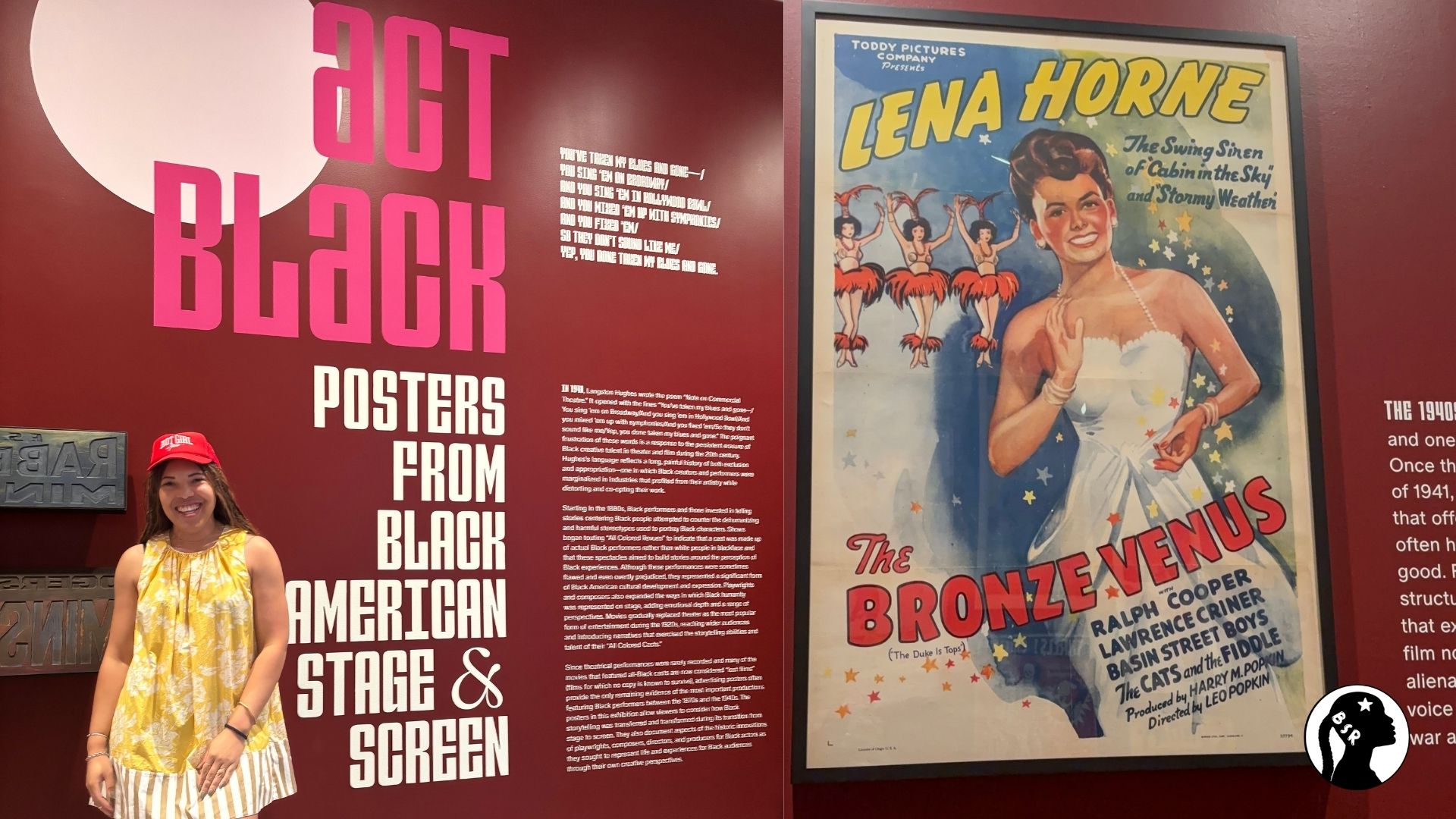
That poster (as well as ones for Stormy Weather and Cabin In the Sky which all feature Ms. Horne’s name) is currently on display at Poster House, an 11-year-old non-profit museum in Flatiron. The exhibition, entitled “Act Black: Posters from Black American Stage & Screen,” is curated by Es-pranza Humphrey and includes posters of film and theatre productions stretching as far back as 1870. For many of these productions, a “How To Watch” button would be a dead end — since recordings were rare and preserved recordings are rarer still.
On the night I visited, Ms. Humphrey was hosting a panel on Black Chorus Girls with Dr. Jonathan Michael Square of Fashioning The Self and Chicava HoneyChild, a burlesque performer and researcher. Each panelist shared their point of view on the positioning of Black young women in entertainment in an era where color lines were not to be crossed. Dr. Square, with a well-worn and colorfully tabbed copy of Uncle Tom’s Cabin, credited Beecher Stowe’s “Topsy” character as a foundation of the American trickster archetype and touched on her reclamation through the artistic work of Alison Saar. Ms. HoneyChild discussed the tension (and overlap) between chorus girls and burlesque performance, noting that Katherine Dunham and Josephine Baker would’ve felt the ‘burlesque’ label too base and undistinguished to encapsulate their work as choreographers and “real” dancers. Ms. Humphrey filled in the social context of the chorus girls, how they marked the beginning of lithe bodies as a sign of protection, the exorbitant cost of their intricate costumes ($250,000+ in today’s dollars), and the sheer power of their influence. Florence Mills, a former chorus girl who was elevated to superstar status, had a stocking color named for her brown skintone.
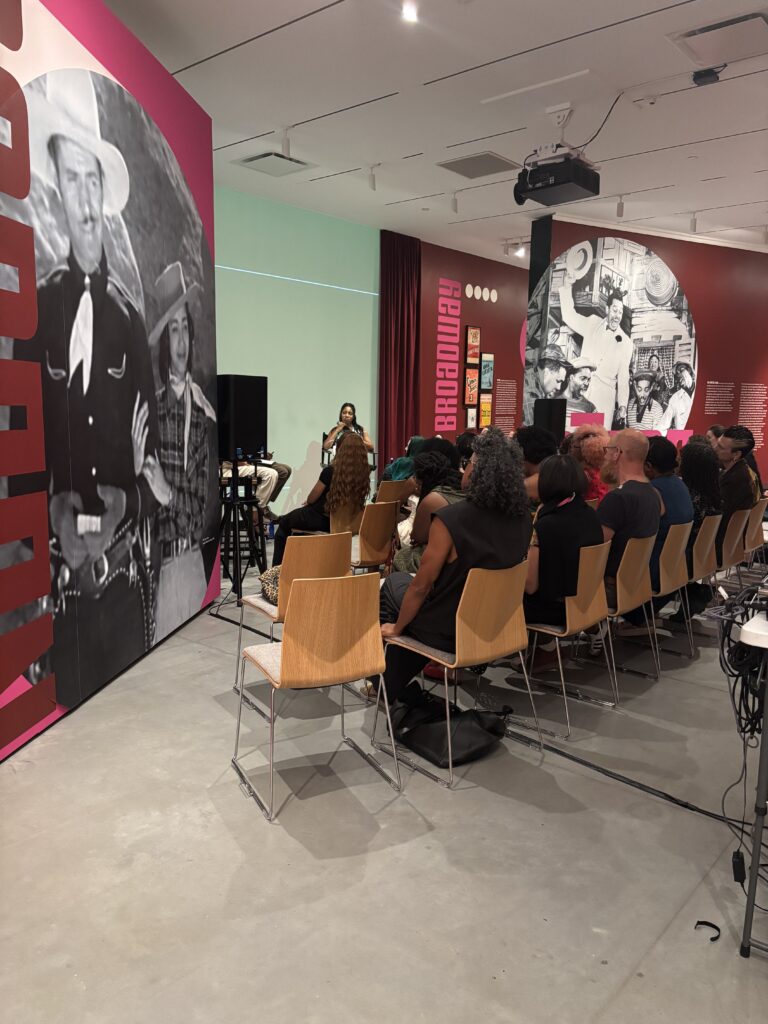
View of the panel discussion inside of the exhibit
Women of the era many of whom had been elevated from chorus girl status — Florence Mills, Josephine Baker, Bessie Smith, Nina Mae McKinney, Mamie Smith, Edna Mae Harris, Ethel Waters, and more — feature prominently on the posters around the room along with their swoon worthy counterparts — Paul Robeson and Cab Calloway. Harlem appears almost nearly as often: Harlem after Midnight, Harlem on the Prairie, Murder in Harlem, Take My Life (Harlem Goes To War!), Harlem is Heaven! (Chicago is mentioned a handful of times as well.) The uptown New York neighborhood was not the only place these films were recorded. Before the movie-making industry moved west and added sound, there was a collection of motion picture production companies in Jacksonville, Florida attracted by the warm weather and lush landscapes. Metro Pictures, which would eventually become the first M in MGM after being purchased and merged by Marcus Loew (of Loew’s Theaters) was one of 30 silent film studios in Jacksonville, along with Norman Studios, the foremost producer of silent films with all-Black casts in the 1920s. Posters from Norman Studios films, The Green Eyed Monster, Black Gold, Regeneration, and The Crimson Skull are some of the only remaining artifacts from these films, since all but The Flying Ace, which is maintained in the Library of Congress, are “lost films”. Narrowly saved from demolition, Norman Studios has since become a museum for the silent movie era.
While some of these stories and performances have been lost to time, racism, and run-of-the-mill accidents, others continue to proliferate. This fall, The Shed in Hudson Yards will stage the world premiere of Imitation of Life. Though the story originated as a novel in 1933, and formed the basis for films in 1934 and 1959, the newest iteration will take the stage for the first time as a musical with original compositions by John Legend. The Shed production’s key art has yet to be revealed, but a poster for the 1934 film Imitation of Life featuring Claudette Colbert and Louise Beavers hangs near the end of the Poster House film timeline. “I WANT TO BE WHITE LIKE I LOOK,” it proclaims, “Live a white girl’s life.” In the background there’s a hand-drawn illustration of a Black woman with a worried expression. It remains to be seen how closely the new musical will hew to its many predecessors, how the theatrical poster might echo ones from the archives, and how a story based on “passing” will land with contemporary, hyper-racial audiences.
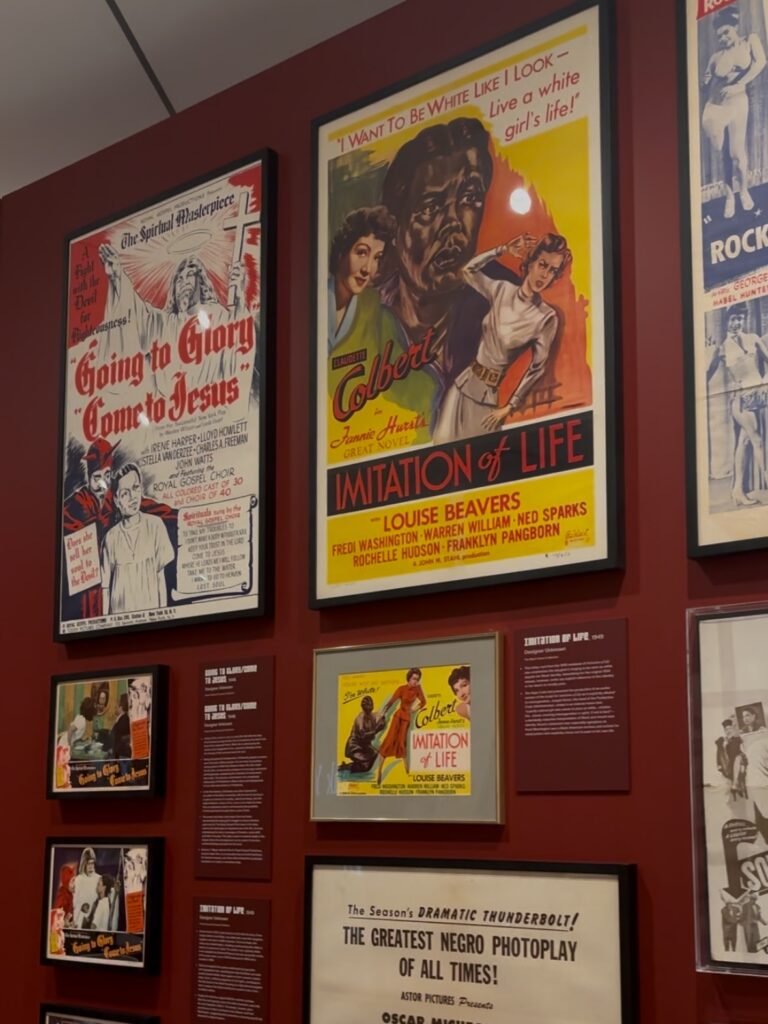
Posters for “Going To Glory Come To Jesus” and “Imitation of Life”
While I enjoyed the Poster House exhibit as an archive on display, I found myself wanting the same thing I always want to know when I see old items. What was it like to have been there? What would it feel like to be a chorus girl, new to Harlem, hours before her stage debut? What would it be like to go to the theater to see a silent film and see, for the first time, an all colored cast? What was the reaction in the audience when Laurence Criner took Kathryn Boyd in his arms and kissed her in Black Gold? I’m grateful to see the artifacts that remain, but what are we to make of this art without hearing from the audience?
When I think back to my first encounter with Ms. Horne, short enough as to be a blip in her filmography, I remember the awe she impressed upon me with her powerful voice, her poise, and a complexion that reminded me of my own. While the posters on their own can’t embody the stories they advertise, they draw us into a history where we’ve always been stars on silver screens, where we’re better able to shape the stories, where believed in ourselves right from the start.
blacklove 🖤 and starlight 🌟
“Act Black: Posters from Black American Stage & Screen” opened at Poster House on March 13, 2026 and will run through September 6, 2026. Admission to Poster House is $15 for adults with discounts for students, educators, veterans, visitors with disabilities, seniors, and kids. Free admission is available to all every Friday and on third Sundays. The museum is open from Thursday to Sunday. I attended Black Chorus Girls: A Panel Conversation on July 25. I purchased my own ticket to the panel.
-
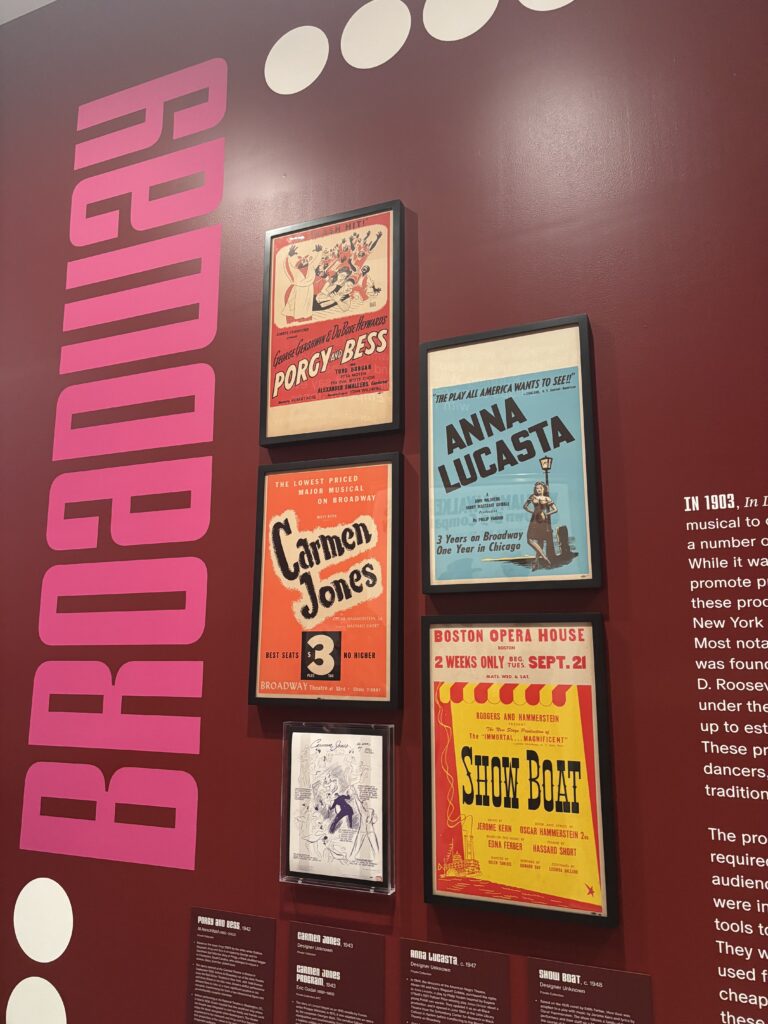
- Posters for early Broadway shows Anna Lucasta, Carmen Jones, Porgy & Bess, and Show Boat
-
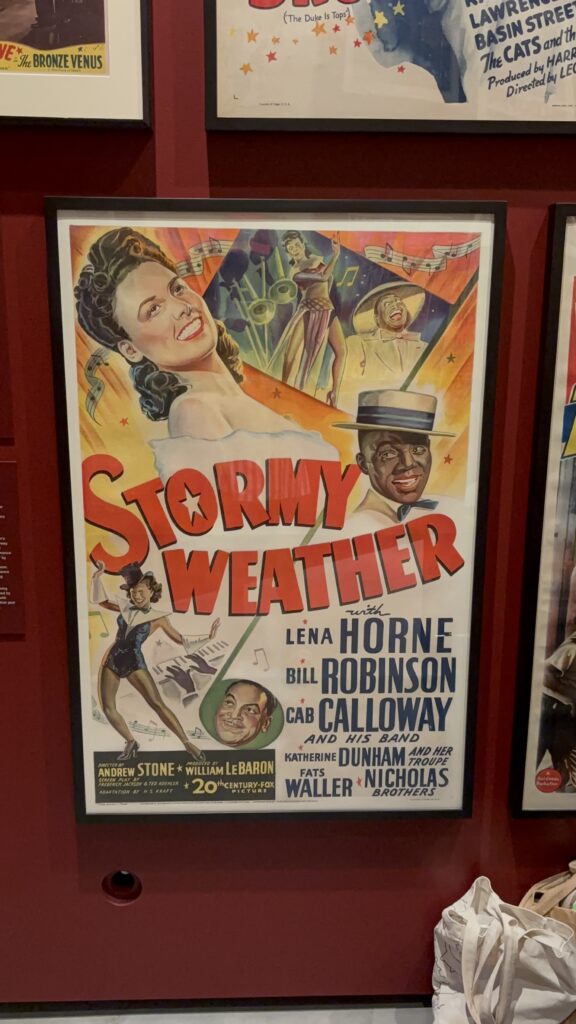
- Poster for “Stormy Weather” • 20th Century Fox, 1943
-
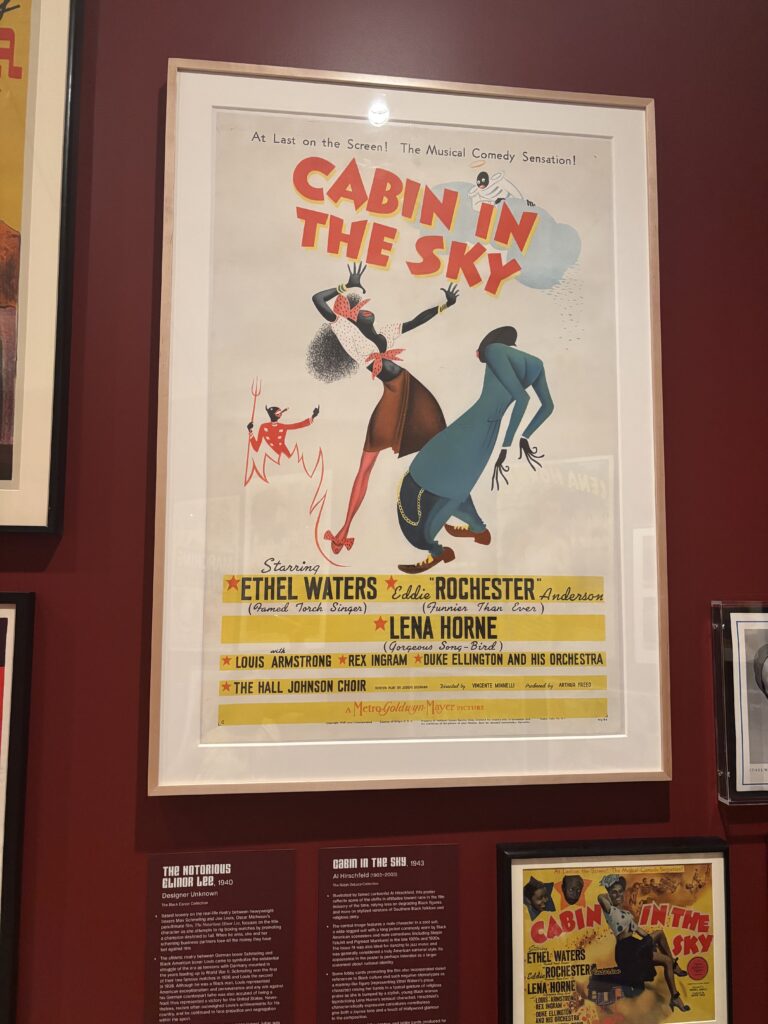
- Poster for “Cabin In The Sky” • MGM Studios, 1943
-
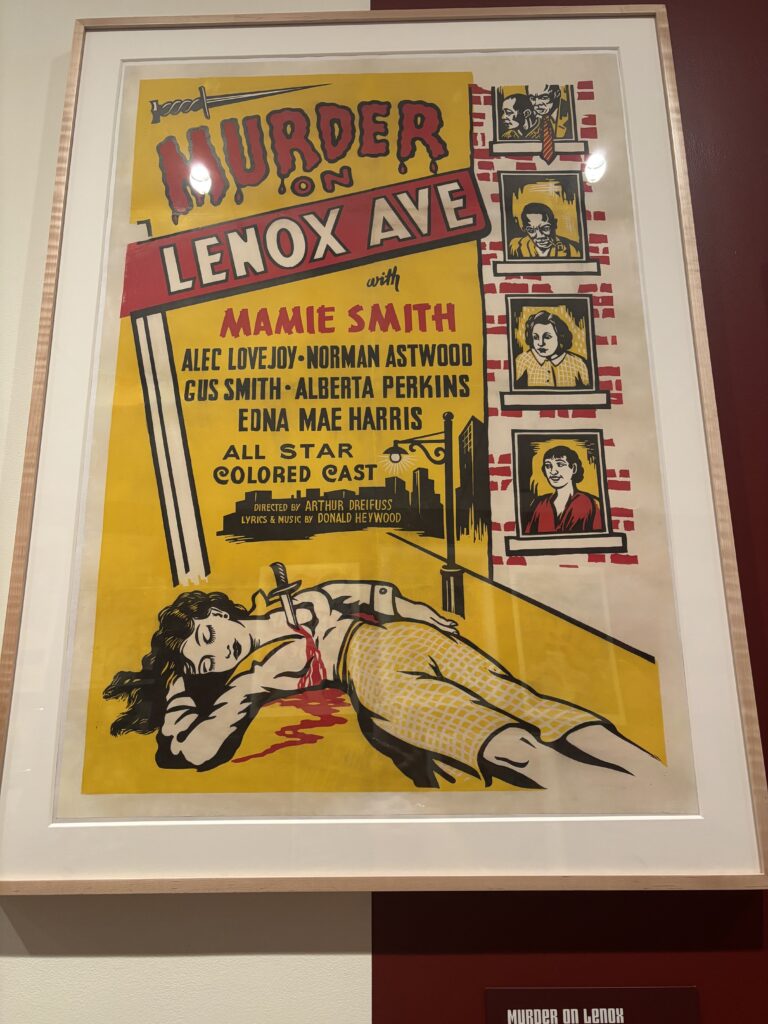
- Poster for “Murder on Lenox Avenue” • 1941
-
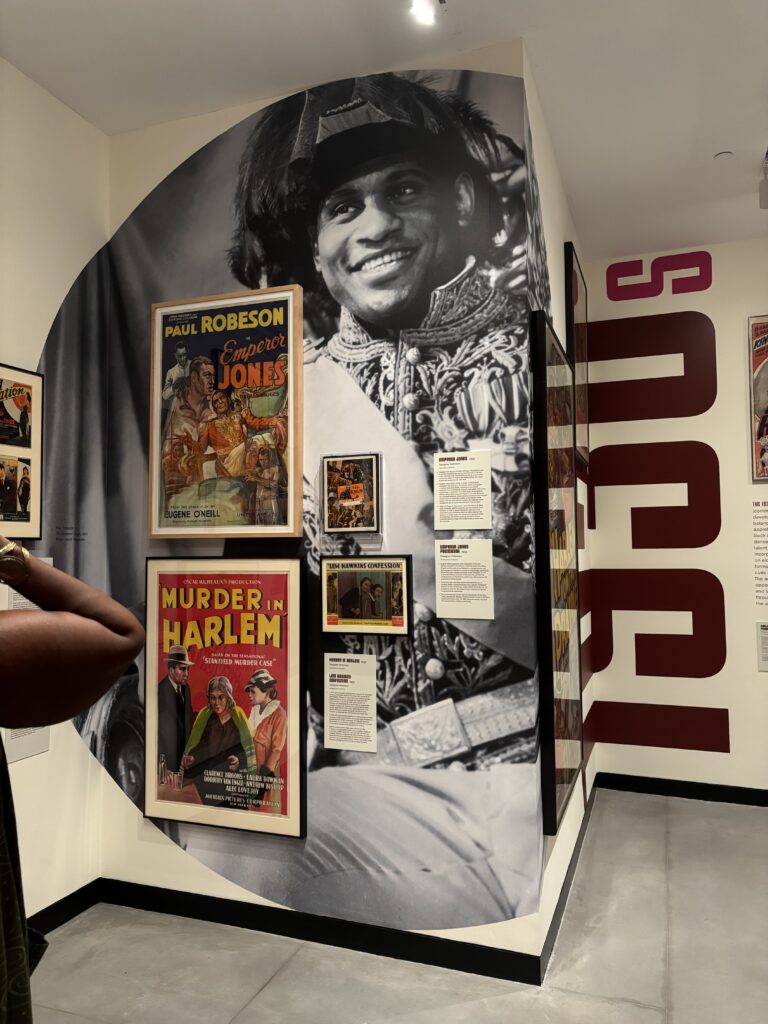
- Movie Posters featuring Paul Robeson
-
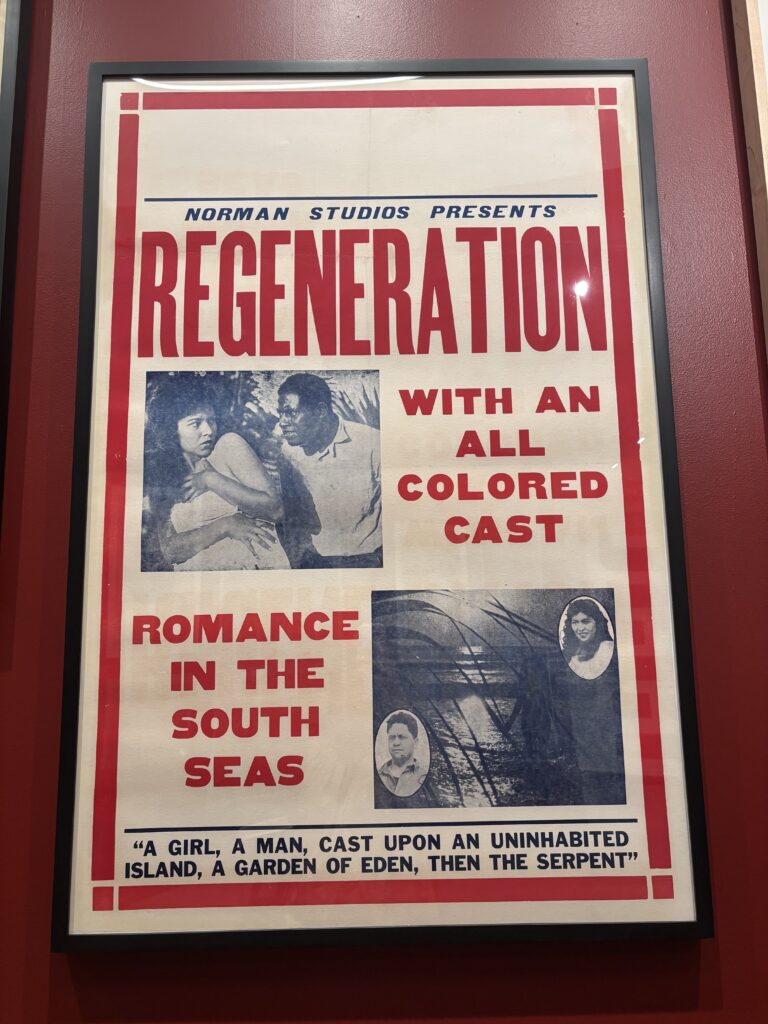
- Poster for “Regeneration” • Norman Studios, 1923
