
Review: ‘Saturday Church’ at NYTW
This musical adaptation by an all-star creative team opens the doors of the church — and God’s love — to everyone, and slays-the-house-down-boots with a joyful noise
At a summery rooftop party in Brooklyn last weekend, one partygoer asked about the difference between ‘going dancing’, which she had never done, and ‘going out’ with the understanding that dancing might happen if the vibes are right. TV writer Ira Madison III offers an explanation in his Harper’s Bazaar essay entitled “What I Found On the Dance Floor”. He describes a sweaty path to self-love and -acceptance in pitch black warehouses. As Ira writes, “after I’d had a taste of a world where people could dance all night, getting out of their heads, I wanted more.” ‘Going out’ concerns itself with seeing and being seen, ‘going dancing’ is about disappearing entirely.
I share Madison’s sentiment that it “feels like home”. Growing up in Black church, I saw women in demure, pastel skirt suits catch the spirit, footworking and high stepping until they fell out in the aisle. For privacy, an usher would lay a blanket over the afflicted until the spirit passed, rendering them unseen, free from perception. I’ve never fallen out — at church or at a rave — but when the room is so dark you don’t have to close your eyes to disappear, and the music is so loud you can feel it as much as you hear it, and the DJ loops a cut from a gospel song you sang in children’s choir, it is a spiritual experience. Some source is moving my hands, hips, and feet, I’m free. I’ve finally gotten out of my head, watching gleefully from above.
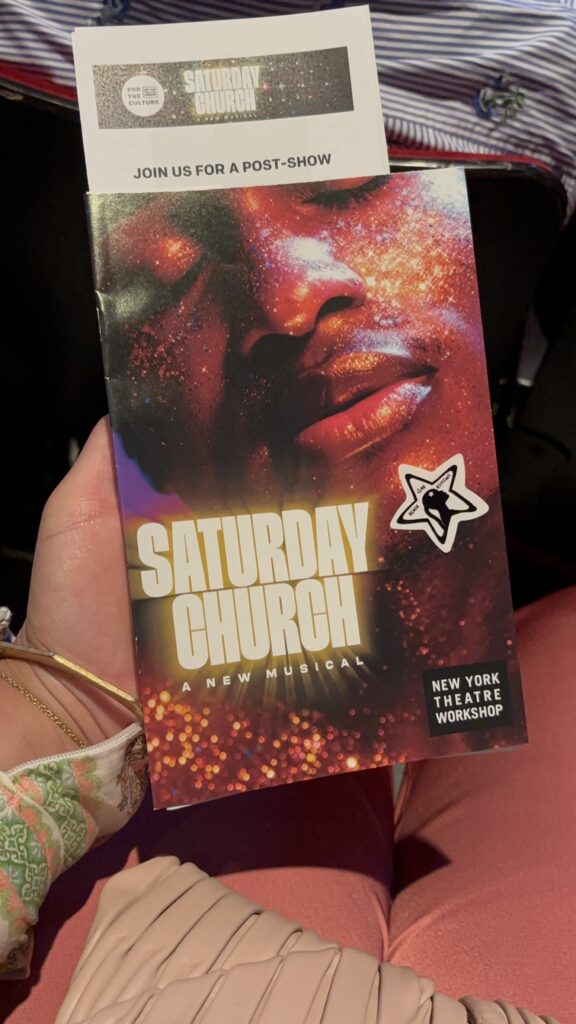
photo: Saturday Church x Black Star Reviews
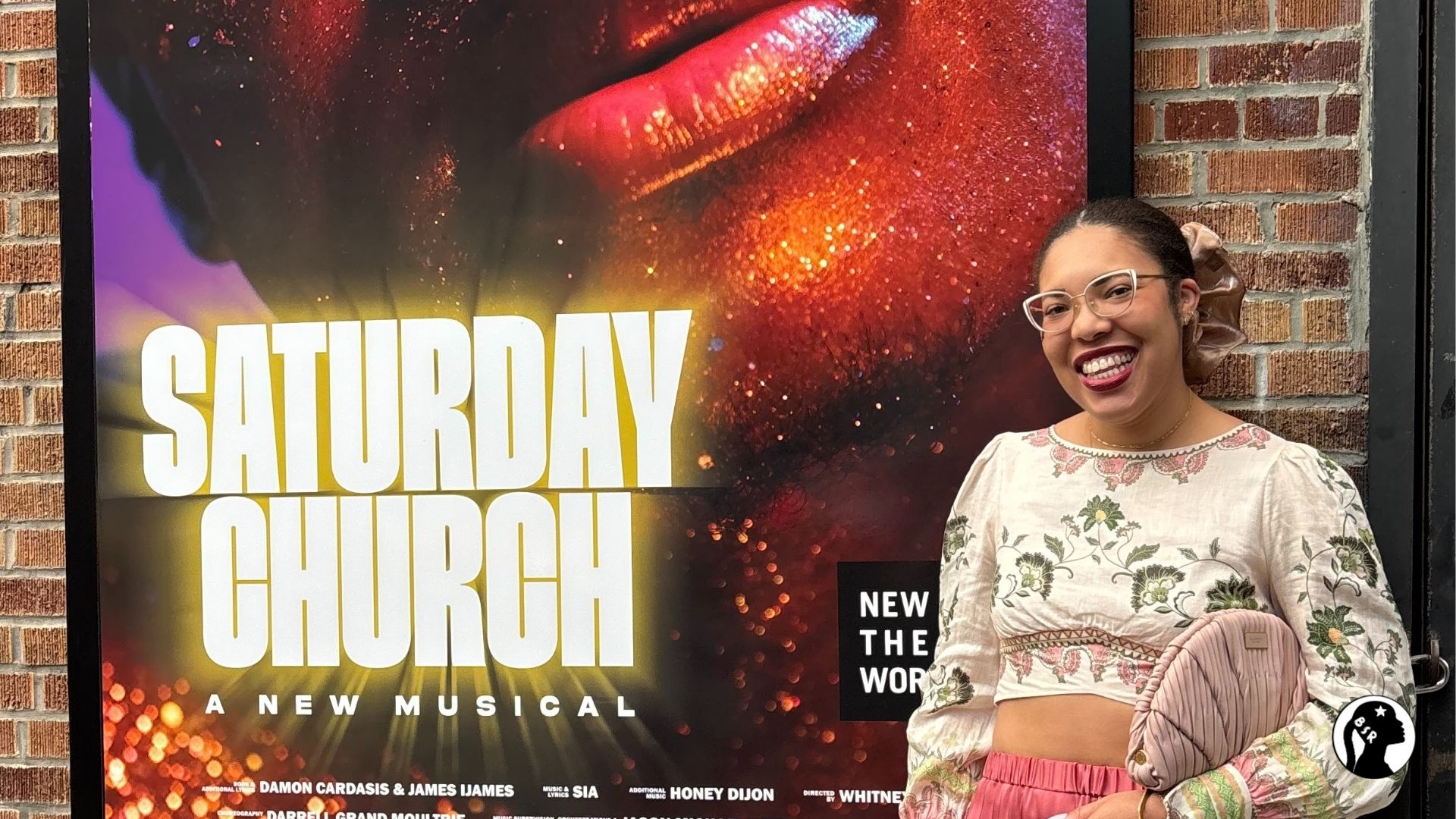
That the spirit can find you anywhere, inside of or miles away from the tabernacle — that God will come to you in the form that works for you — is at the heart of Saturday Church, which kicks off the 2025-2026 season at New York Theatre Workshop. (Lights Out: Nat “King” Cole closed NYTW’s previous year.) The opening moments of Saturday Church welcome us to “a story of collective love, joy, and healing”. The musical is an adaptation of Damon Cardasis’s 2018 film by the same name, and Cardasis partners with James Ijames (of both Fat Ham and Good Bones) to write the book for the musical. With “Chandelier”-style ballads by Sia, hip-popping beats by Honey Dijon, back-breaking choreography by Darrell Grand Moultrie, and liberated direction by Whitney White, the show’s creative team is polished and stacked like a patent leather platform pump (size 17).
★ Watch my TikTok Review of Saturday Church ★
There’s a lot packed into the plot, maybe even too much, but the story is mostly about Ulysses, a Black teenage Brooklynite who’s having a rough go. His dad died and his mom is mostly absent; she’s picking up extra hospital shifts to make ends meet and to avoid the emotional weight of losing her husband. Ulysses is often at church with his choir director aunt, watching and singing along with rehearsal from the wings. Aunt Rose knows he’s dying to put on a robe and join in making a joyful noise. But Ulysses’s mannerisms — the way he talks, sings, and gesticulates — are off-putting to other churchgoers and a source of embarrassment for his aunt. The thinly, if at all, veiled subtext of the parishioners’ snide feedback is “you’re acting gay, stop it” and comes with advice: man up, tone it down, do the right thing.
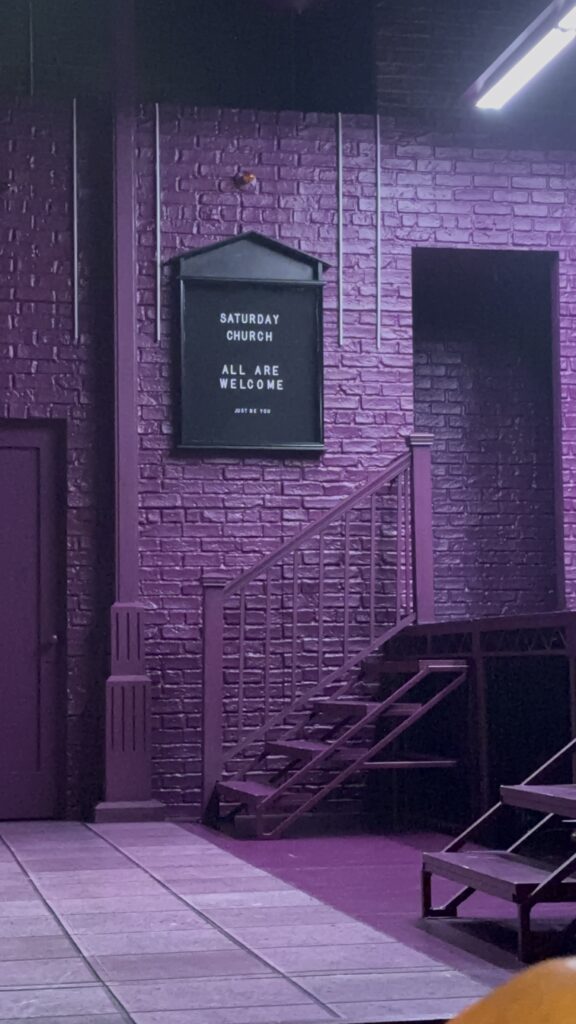
photo: Scenic design by David Zinn includes a small marquee that reads “Saturday Church All Are Welcome”
When Ulysses sincerely questions what the right thing is, with a curiosity so child-like you wonder if he’s ever felt a sexual urge, his pastor tells him to pray about it. Obedient Ulysses seeks God and Black Jesus appears, offering love and acceptance with the timbre of the judges’ panel of the reality TV show RuPaul’s Drag Race. (When Ulysses stammers an admission, “I think I’m gay,” Black Jesus responds, “YASSSSS, child!” then doubles back with, “Oh, are you just figuring this out?”) Ulysses’s home church nudges him to be invisible and inauthentic, but a chance occurrence with a handsome stranger on the subway presents an invitation to be his fullest self. Saturday Church, a gathering hosted by matriarchal transwomen of color in the basement of St. Luke’s, offers legendary macaroni and cheese, community, and wide-open arms that embrace him the way he is and the way he wants to be seen. It’s not the kind of church he’s used to; it might be better.
Ulysses experiences the “joy of being in the house of the Lord” at Sunday and Saturday Church, but he’s hiding his Saturday night activities to make Sundays work. His double life is suspicious to his Sunday family and upsetting to his Saturday family, who tut-tut at self-denial. Black Jesus warns him that he won’t be able to hide in the shadows forever. Later, when Aunt Rose demands answers about a high-heeled shoe in his backpack, Ulysses crumbles right along with the barrier between his double lives. Saturday Church peaks in tension when Ulysses goes missing and neither of his families, Saturday nor Sunday, has seen or heard from him. Both groups know the dangers that lurk for a young, Black, queer boy on his own.
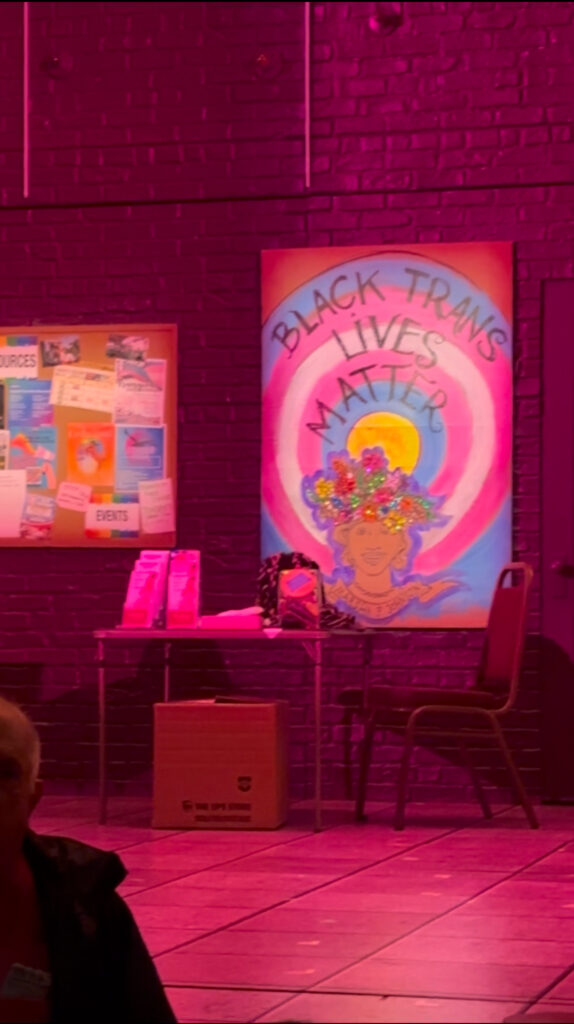
photo: Scenic design by David Zinn features a bulletin board at Saturday Church, and a poster that reads “Black Trans Lives Matter” above an illustration of Marsha P. Johnson, an LGBTQ pioneer and activist
The show has its dark moments, refusing to shield audiences from the frank realities of life for trans and queer people of color: Ulysses is beaten by roughnecks on the train, he’s coerced by an older man, though the stage goes dark before we know what happens. Other characters, too, are open about the perforce reality of sex work for survival. The call to action here is support: the ease with which one can come out and come into their own often depends on family acceptance and access to resources.
But the glitter of the production’s lightest moments outshine the darkness. For every blow from the subway assailants and degrading remark made by church folk, there are countless moments of joy. I left singing “S-A-T-U-R-D-A-Y church! It’s a Queen Thing!” down East 4th Street. (Speaking of shine, the flashing white lights that punctuate many of the dance scenes warrant an epilepsy warning; they’re blinding enough to completely wipe your memory Men In Black-style.)
★ Watch my TikTok Review of Saturday Church ★
The show delivers The Word as well, reminding self-identified Christians of God’s dicta — where the Spirit of the Lord is, there is liberty (2 Corinthians 3:17) and they will know you by how you love each other (John 13:35) — and lets the scriptures speak for themselves. Saturday Church doesn’t over explain or justify queer people’s humanity, nor should it. As Toni Morrison warns, “the very serious function of racism is distraction… It keeps you explaining, over and over again, your reason for being,” and her warning applies to all forms of bigotry. The way forward is with love; tolerance and vilification don’t pass muster. By the end, even the “villains” have a happy ending — those who’d judged Ulysses come around to support him and, tellingly, rekindle relationships with queer people they’d ousted from their lives decades earlier.
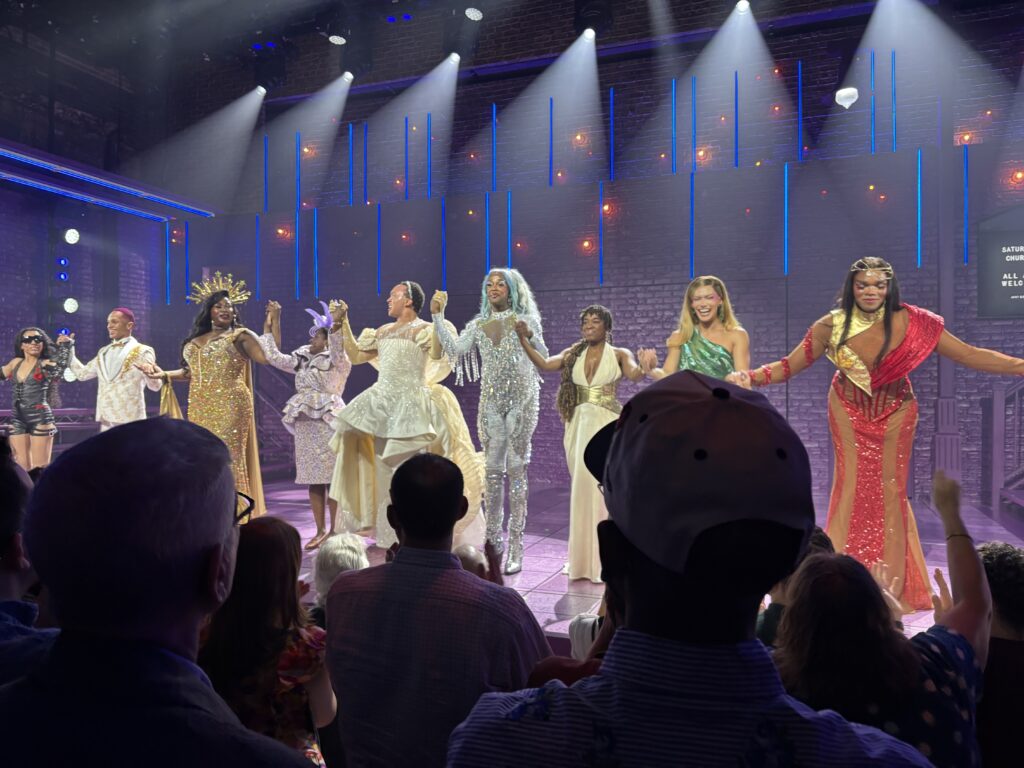
photo: The cast of Saturday Church takes a bow in costumes by Qween Jean
Though every ensemble member and the girls Heaven (Anania), Dijon (Caleb Quezon), and Ebony (B Noel Thomas) light up the stage like flashbulbs, two performers in the production are almost too-good-to-be-true — textbook examples of “if made for the role was a person”. Bryson Battle portrays Ulysses with earnest adorability and belts like British vocalist Sam Smith, but without auto-tune. The songs Sia’s composed for this musical are no walk in the park, they’re triathlons. Battle’s vocals climb uphill both ways, cycle through runs, and swim over choppy beats that would drown a less capable singer. J. Harrison Ghee, of Kinky Boots and Tony Award-winning fame in Some Like It Hot, is working double-time, appearing as Pastor Lewis, in a charcoal three-piece suit toting the Good Book, and Black Jesus, who materializes in increasingly cunty outfits, finger-length lashes, a perfectly melted bust-down, and a full face beat. Ghee, whose real father is a Baptist preacher and Bible college professor, was just as endearing as a reverend taking accountability for shunning LGBTQ+ family members as they were in a glittery catsuit and blue pigtails taking their final bow. As far as I’m concerned, there is nothing Ghee can’t do and no high note that Battle can’t hit.
By the end of Madison’s essay, he’s emboldened by the confidence of fellow queer party goers and lifts his sweat-drenched Janet Jackson t-shirt over his head, peeling off the belief that his figure is imperfect and undesirable. In its benediction Saturday Church sends us out with similar conviction. We are all God’s children, beautiful and perfect, seeking to be reborn in love. I watched from the audience like Ulysses waiting in the wings, I’d caught the spirit from my seat and longed to join in with the glittery horde on the dance floor who’d found their way to liberty.
blacklove 🖤 and starlight 🌟
Saturday Church is produced by New York Theater Workshop, directed by Whitney White, written by Damon Cardasis and James Ijames, with music by Sia and additional music by Honey Dijon. The show began previews on August 27. Due to popular demand, the run has been extended twice but must close by October 24, 2025. Tickets are $39 and up. Thank you to Ms. Psacoya Guinn at NYTW for coordinating my attendance.
★ Watch my TikTok Review of Saturday Church ★
-
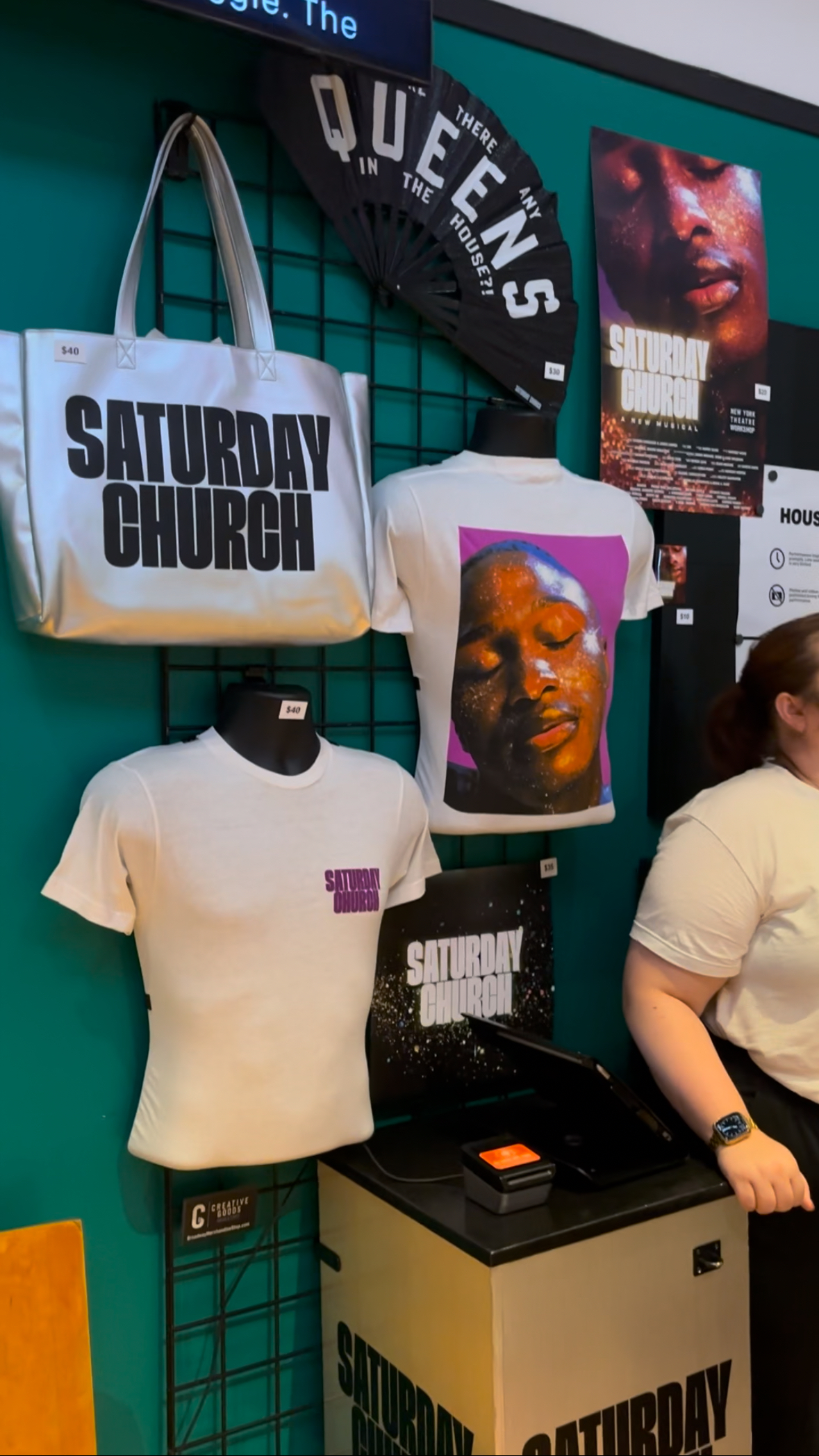
- photo: Available merch at Saturday Church include a silver tote bag, a black fan, and branded apparel
-
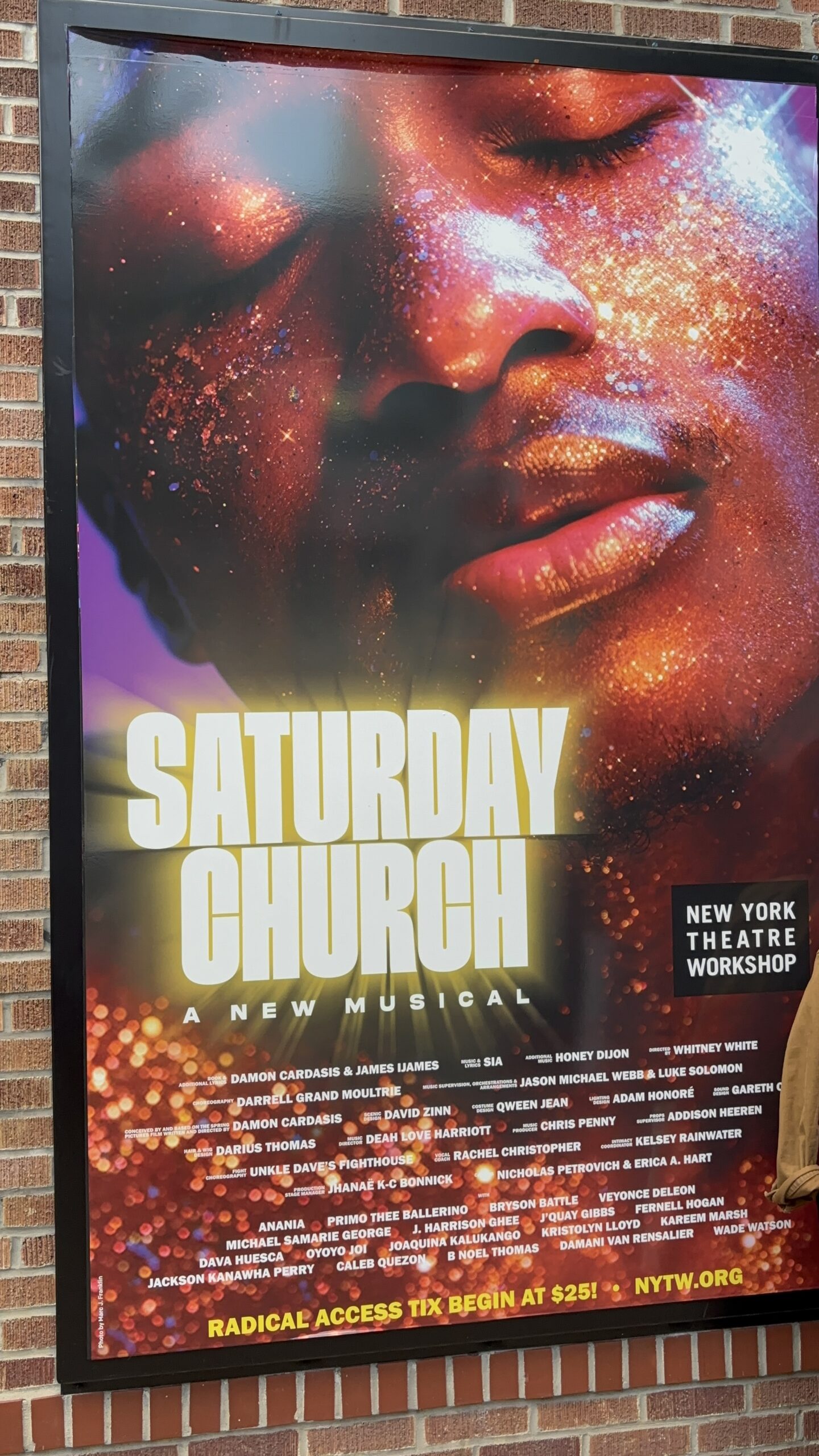
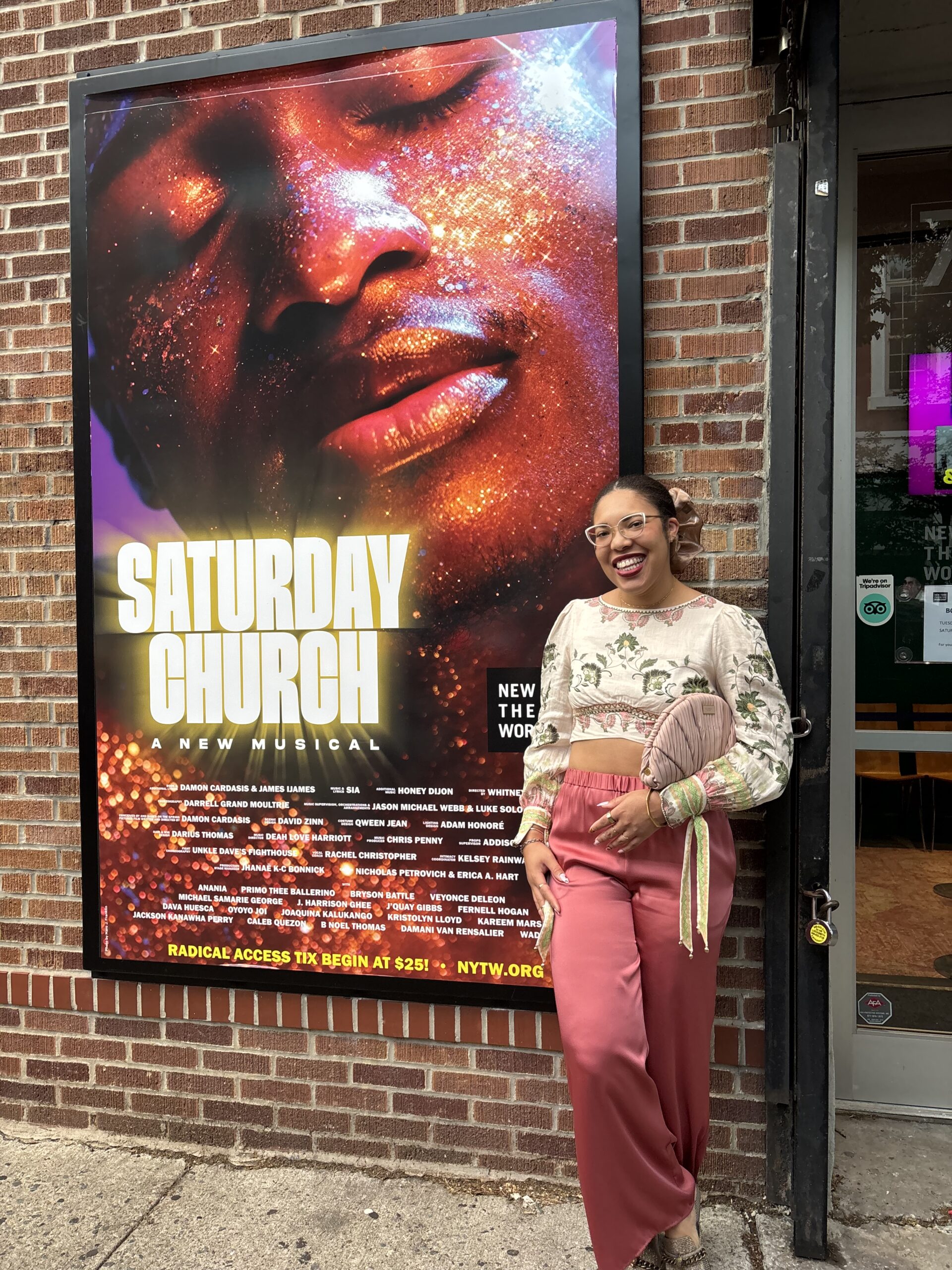
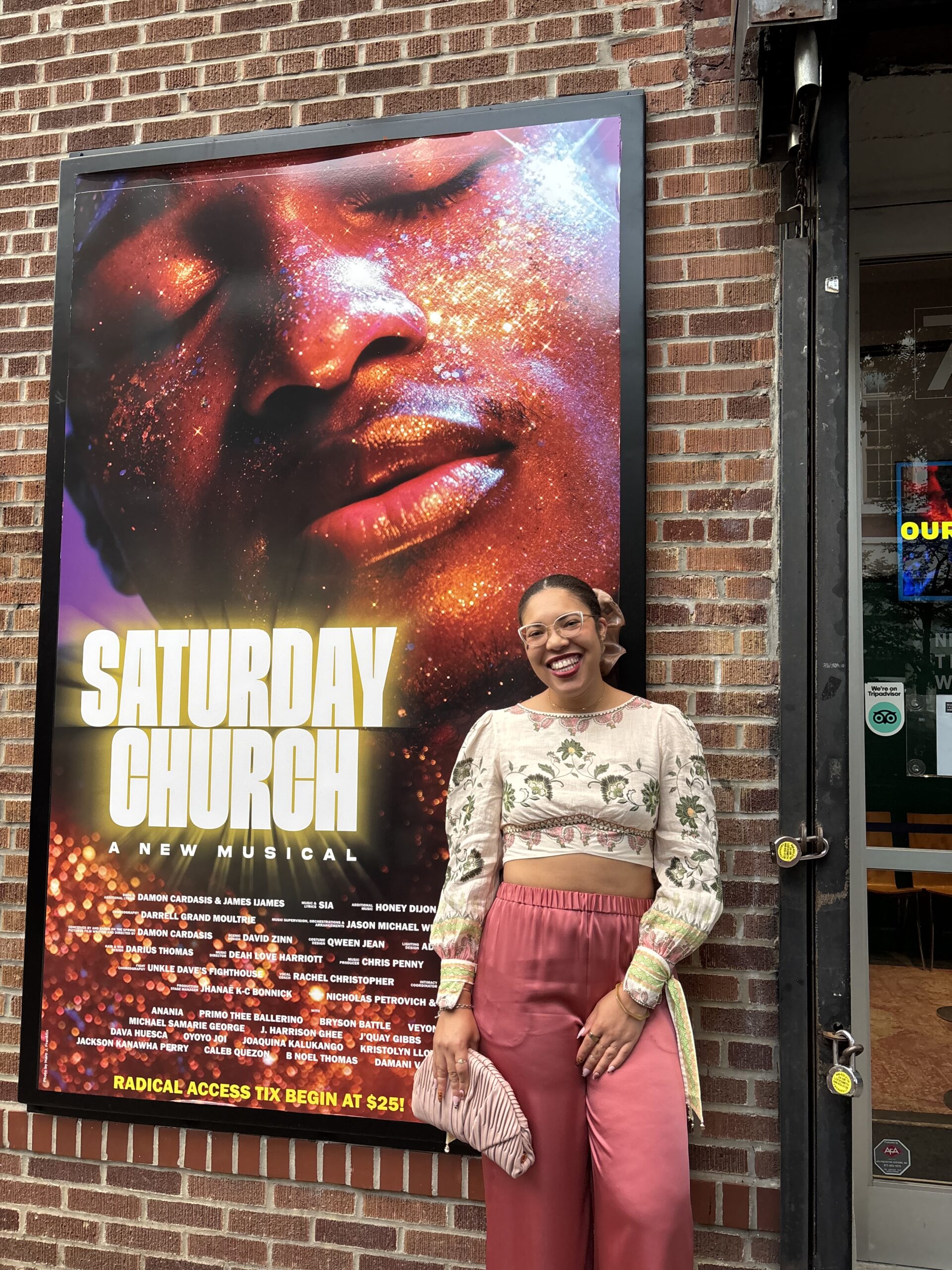
- photo: the poster for Saturday Church
-
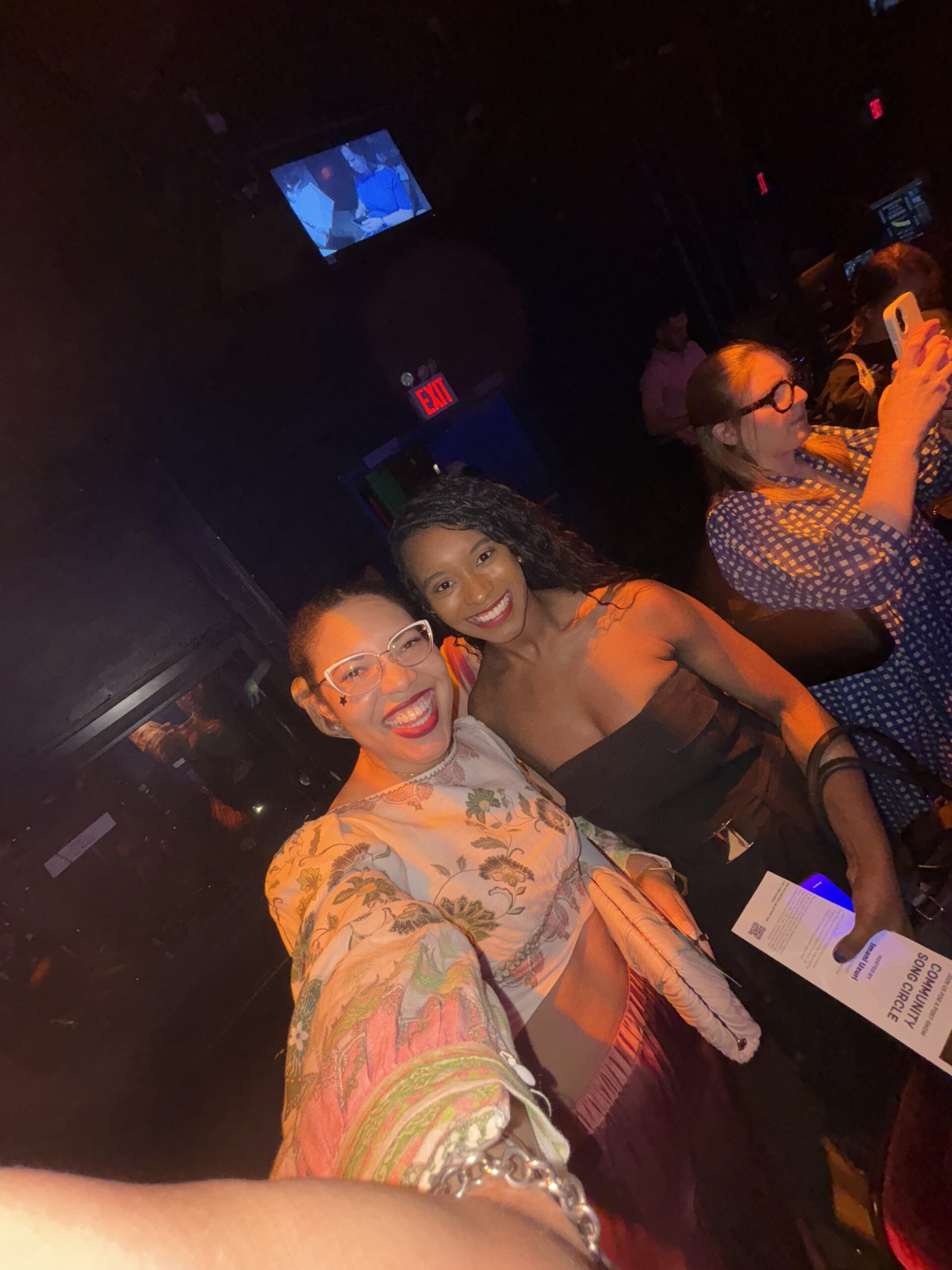
- photo: Sending thanks to Psacoya
