Review: ‘The Festival In Da Back’
Brian Egland writes his way home to Breaux Bridge, Louisiana
I’ve long been grateful to American writers who are from or embrace the South: Toni Morrison, Zora Neale Hurston — even native New Yorker James Baldwin who, for his part, acknowledged Harlem’s tangled roots below the Mason Dixon line. This bias is a shortcut to my heart and highest esteem. Any work of art that makes me feel homesick, for places in as much as the feeling of the South, is likely to make me cry.
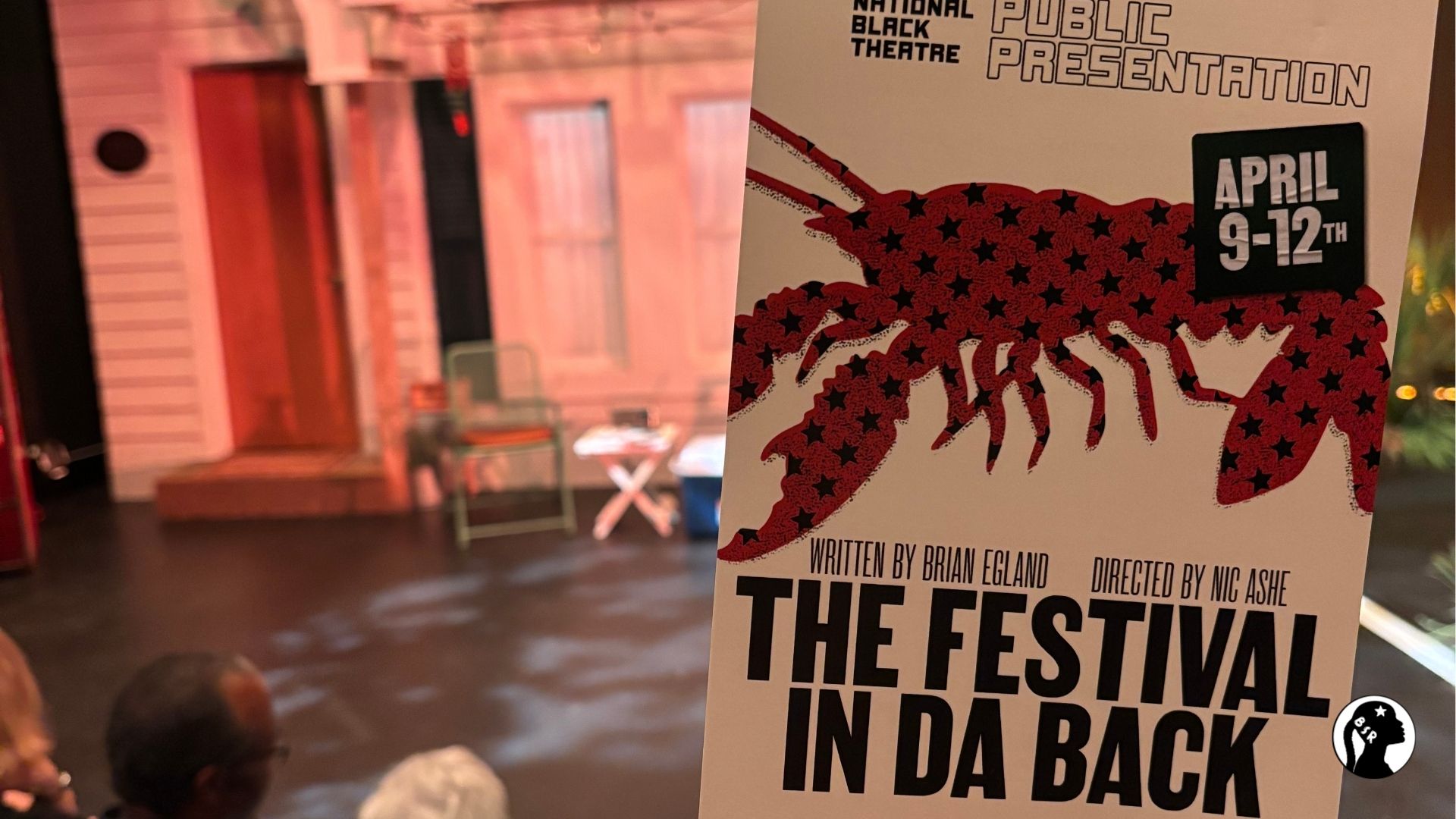
Brian Egland’s The Festival In Da Back was a roundtrip ticket in 75 minutes. Egland’s play, commissioned by National Black Theatre as part of their I Am SOUL Playwright Residency, is set in his hometown of Breaux Bridge, Louisiana which is home to the Crawfish Festival that takes place annually in the first weekend of May (by the curtain call, you’ll know this info by heart). Before seeing the show I struggled to correctly write the title (which article was ‘the,’ which one was ‘da,’ or was it both?), but the actors make sense of the distinction early on. The writing intimates that there are two self-segregated festivals and gives you enough hints to fill in the blanks about who goes where. Da Back is where it’s at. There, crawfish, Black pageant girls crowned Crustacea Queen, and zydeco music abounds.
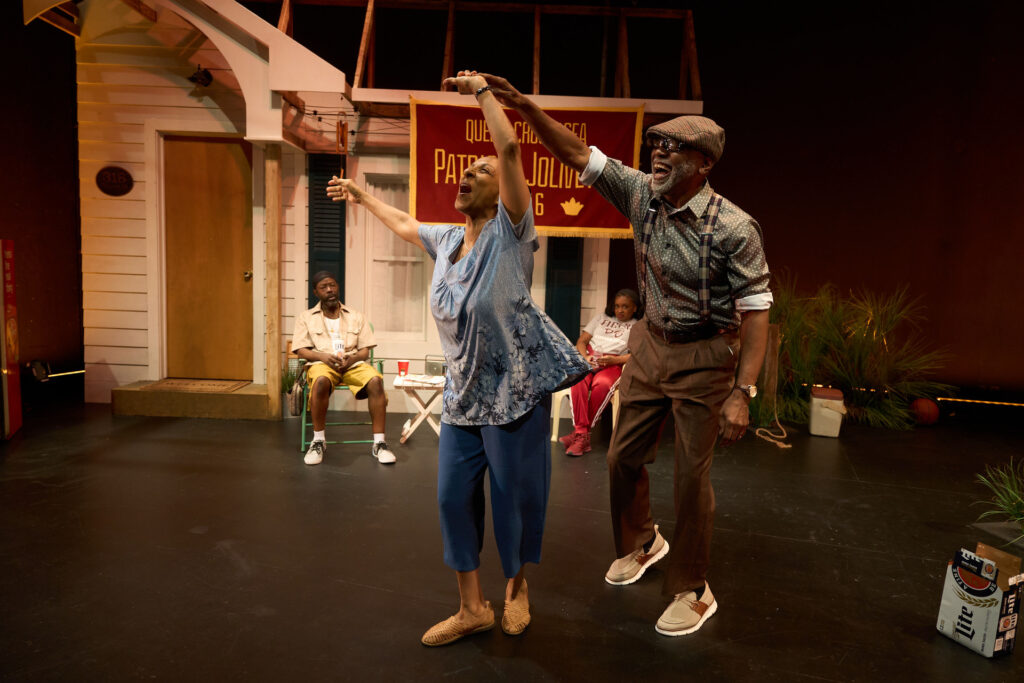
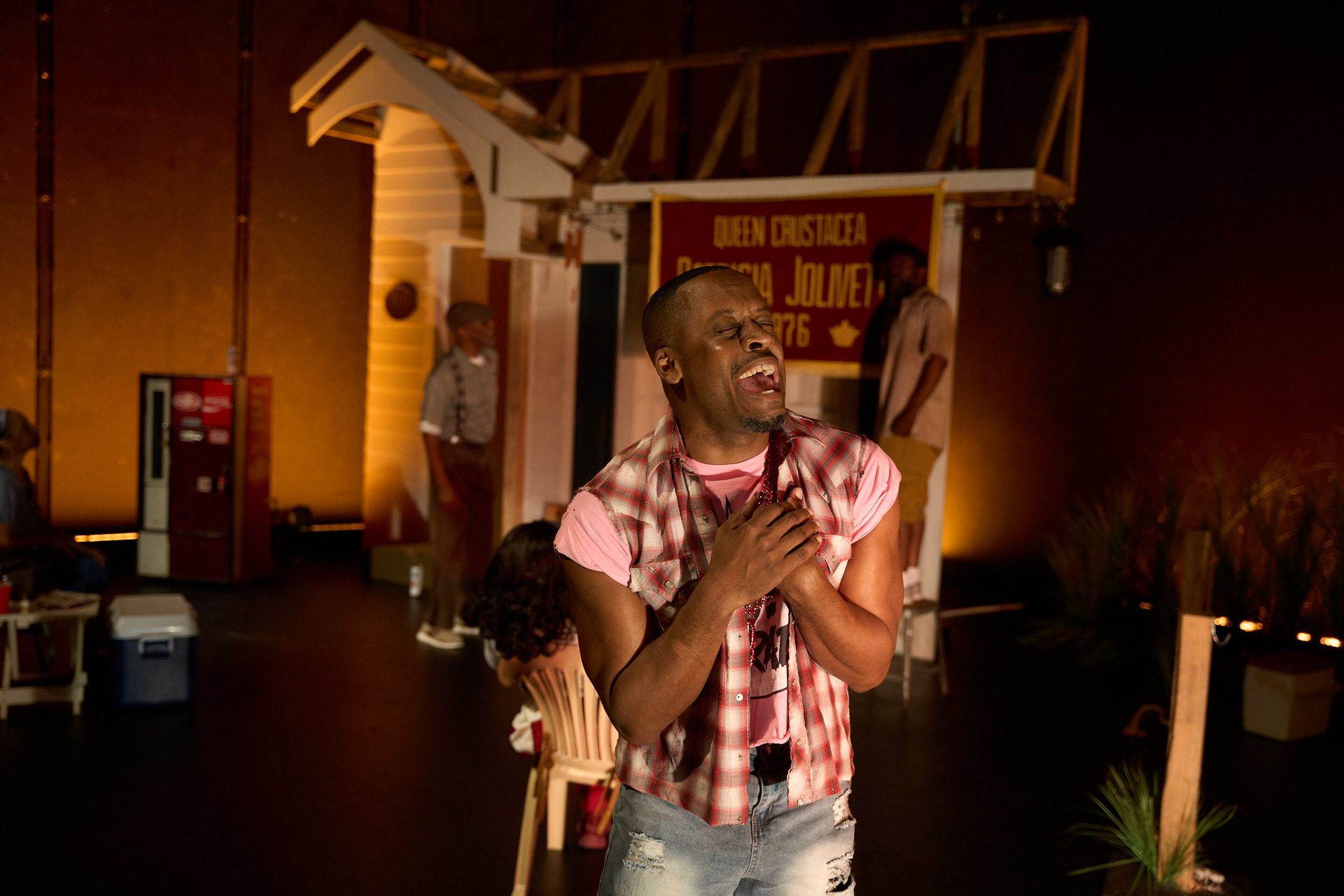
[foreground] Nora Cole as Joie and Charles E. Wallace as Oswald in ‘The Festival In Da Back’ • Production Photo courtesy of NBT (April 2026)
The audience never makes it to Da Back, we only hear about it from the residents and visitors at a little white clapboard house at 318 Dorset Street. It’s 1997. The residents of 318 Dorset watch the festival-goers pass by, and the audience watches the house like a neighbor from across the street. We meet Joie and Oswald Jolivette (played by Nora Cole and Charles E. Wallace), owners of the house and parents to three adult children, T-Cho (Charlie Hudson, III), Della (Ebony Marshall-Oliver), and Pat. Just as we never see the festival but it’s all people talk about, Pat’s nowhere to be found even as her reputation stifles the family’s dynamic. Meanwhile, another unseen force, one that pushes wind chimes, flickers porch lights, and plays with the radio haunts T-Cho, newly free from house arrest, in between sips from a tall can of beer. He ignores the warnings (“You can’t drink no spirit to drown no spirit”), offers of help, and any dreams he had as a younger man.
The family Jolivette doesn’t like to talk about their business — why Pat didn’t ride in the parade with the other former Crustacea Queens, why Della’s husband is always offshore and never around, why T-Cho ended up on house arrest in the first place, and whether Joie or Oswald is head of household — but we get the scoop from Fuzzy (Reginald L. Barnes) a neighbor passing by to collect cans for recycling. I’ve got a cousin like Fuzzy, observant, repetitive, and with a memory longer than a water hose — in 1997 we just called him touched. Touch points like these are where Egland’s story shimmers like oil in the pot right before you add the trinity. Nic Ashe, the director, knows precisely when to turn up the heat or let things rest. With the creative team working in tandem, a cast that’s dialed in to time and place, and a sprinkle of magic from props and set design, The Festival has the right cooks in the kitchen.
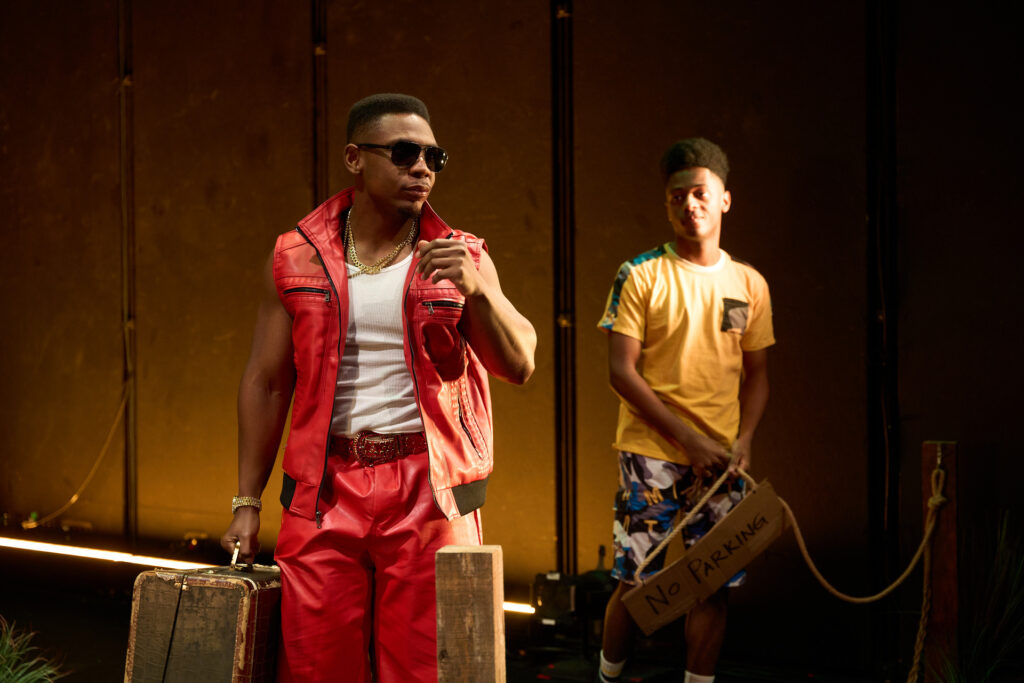
Elijah Jones as Phèno and Joshua Hendricks as Ola in ‘The Festival In Da Back’ • Production Photo courtesy of NBT (April 2026)
After Fuzzy fills in the quiet parts of the Jolivettes’ story, another man arrives with an accordion and a pistol to turn things up. Phèno (Elijah Jones) is a Breaux Bridge native that’s moved to Houston. With his red leather vest and shorts, blinged-out belt buckle, and brand-new accent (think Paul Wall and Bun B, mayne) — he’s everything Breaux Bridge is not. Ola (Joshua Hendricks), Della’s awkward teenage son who would rather befriend crawfish than eat them, is Breaux Bridge’s number one hater and Phèno’s newest fan. Phèno preaches the importance of family and the power of music to lil angsty Ola, until he ends up in a beef that costs him his accordion and he starts reaching for his hammer. To save Phèno, T-Cho must face who and what he’s been avoiding. In the process, he frees himself, Phèno, Ola, and the spirit they all have in common.
Something was set free in me, too, when Phèno and T-Cho sang zydeco together, when Della finally had her turn as Crustacea Queen, and at the end when the family gathers around a newspaper-covered table piled high with crawfish, corn, and potatoes. The props were plastic, but I could see the steam and smell the seasoned butter like I was back Down South. In a monologue T-Cho delivers shortly before the climax of the play, he tells Della what he sees in the parade of festival goers in cars on the way to Da Back. “It’s a parade of pride…of the possibilities of their pain.” No matter how far people have gone from Breaux Bridge they make the trip back once a year to show that they’ve ‘made it’, to see their people, to come home. There’s a privilege in being from somewhere and in being able to return. You don’t have to be from Breaux Bridge to have marched to the beat of that sentiment.
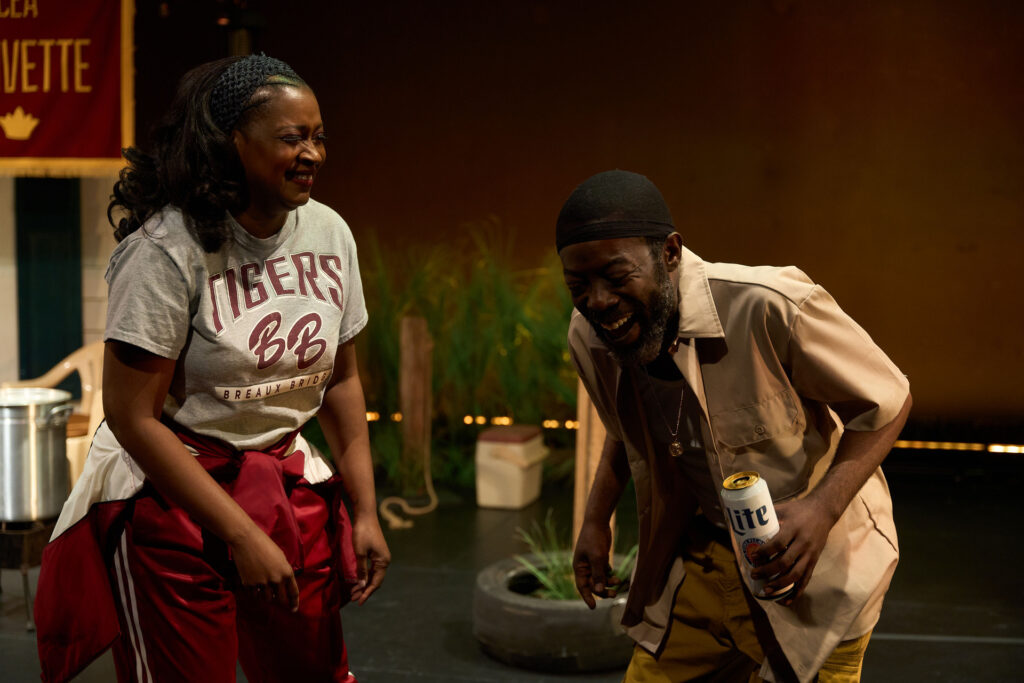
Ebony Marshall Oliver as Della and Charlie Hudson, III as T-Cho in ‘The Festival In Da Back’ • Production Photo courtesy of NBT (April 2026)
There are times the play ventured too far into the surreal without throwing audiences a rope. In one scene where Ola plays alone, he acts out a fight with his uncle T-Cho, ninja style. Later, Ola has a sentimental exchange with a live crawfish he hopes will be his friend. The crawfish is embodied by a silent Phèno then exchanged for a small plastic model that Oswald tosses into a tall silver pot. In both of these moments, I wondered if Ola had a little bit of what Fuzzy has since fourteen seemed too old to be playing make-believe and speaking in earnest to inanimate objects. Unbridled surrealism circles back once more when the family members briefly act as crawfish boiling to death. None of these moments seemed to complement the brightest flavors in the story — family, masculinity, taking pride in where you come from — and could be removed without any impact to the plot.
On the day I saw the show, the playwright was in the audience, just down the row from me. It’s nosy of me, but every so often, I’d glance over to see his expression and look for any clues about whether he felt his vision was being fully realized. Every time, and I do mean every time I looked, he was grinning, teeth white as accordion keys, eyes a-twinkle, and pitched forward in his seat like he wanted to step into the story. The Festival in Da Back in Breaux Bridge doesn’t happen anymore and hasn’t since 2005, but for a single weekend in April, in a small theatre in Tribeca, Mr. Egland got to go and feel at home. It was kind of him to take us along, too.
blacklove 🖤 and starlight 🌟
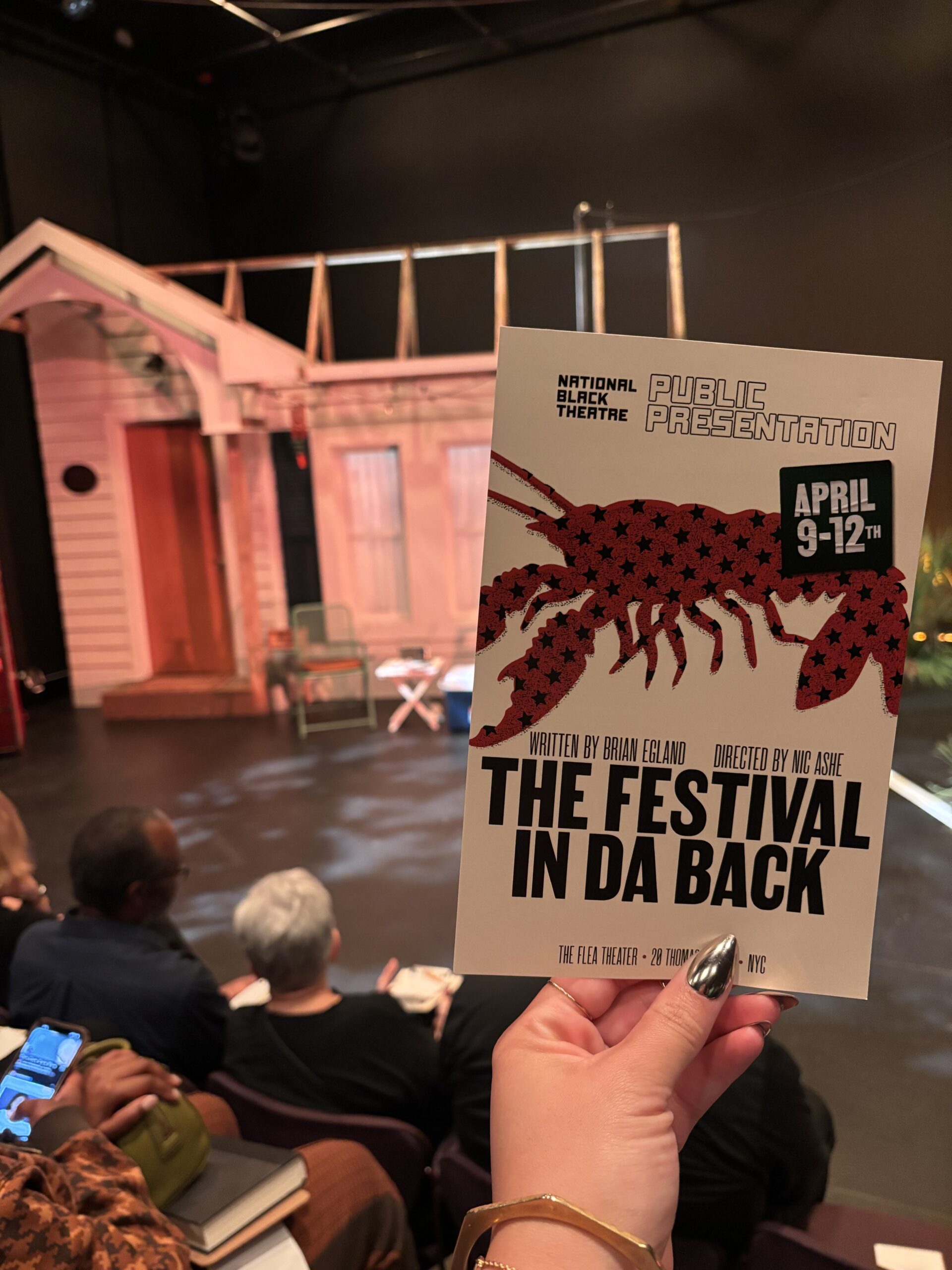
The public presentation of The Festival In Da Back ran at The Flea Theater in Tribeca from April 9-12, 2026. The play was written by Brian Egland, directed by Nic Ashe, and produced by National Black Theatre as part of NBT’s I Am SOUL Playwright Residency. I purchased my own ticket to this performance.
Note: This review was updated on April 15 at 9:30am to include a stronger critique. Thanks to Black Star Reviews reader, Y. Piña, for noting the previous omission.
-
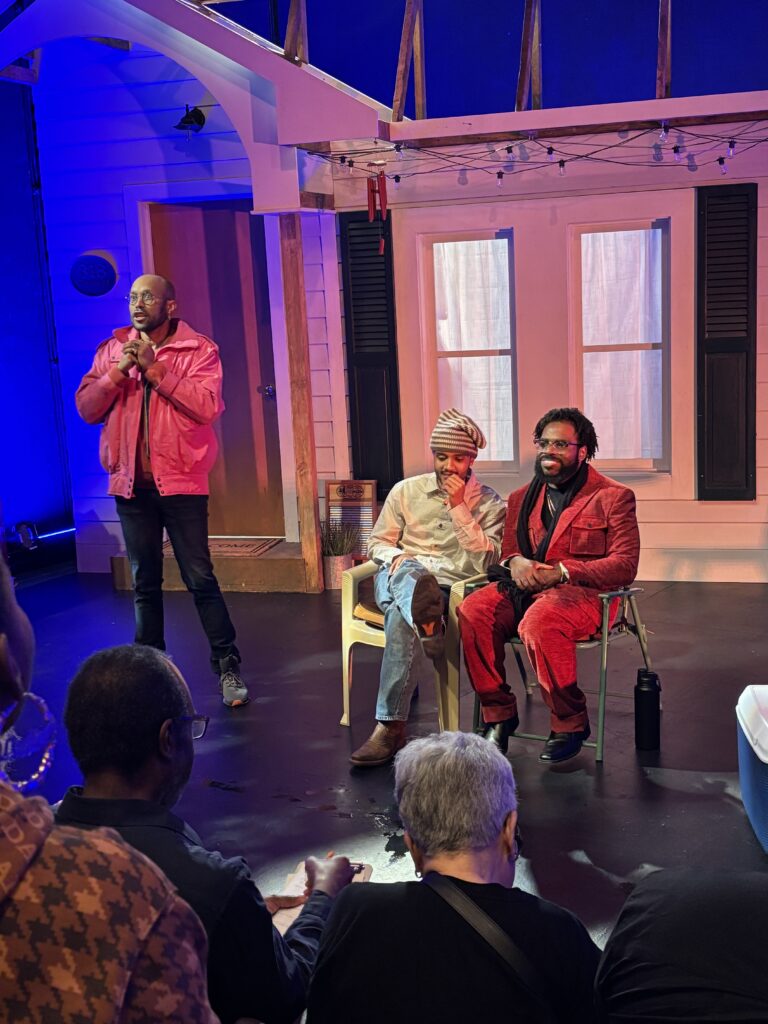
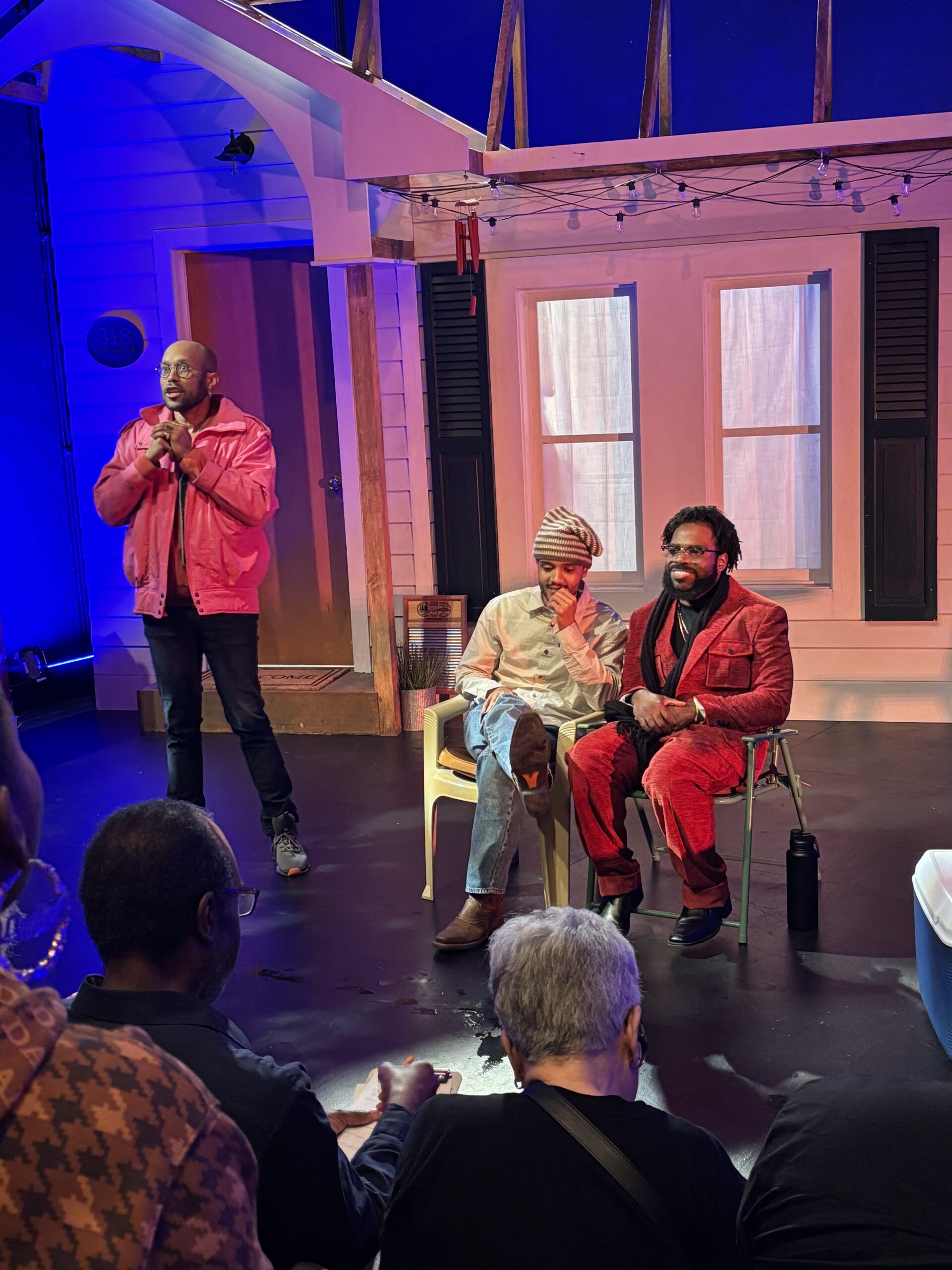
- (L-R) NBT Executive Artistic Director Jonathan McCrory, Director Nic Ashe, Playwright Brian Egland
-
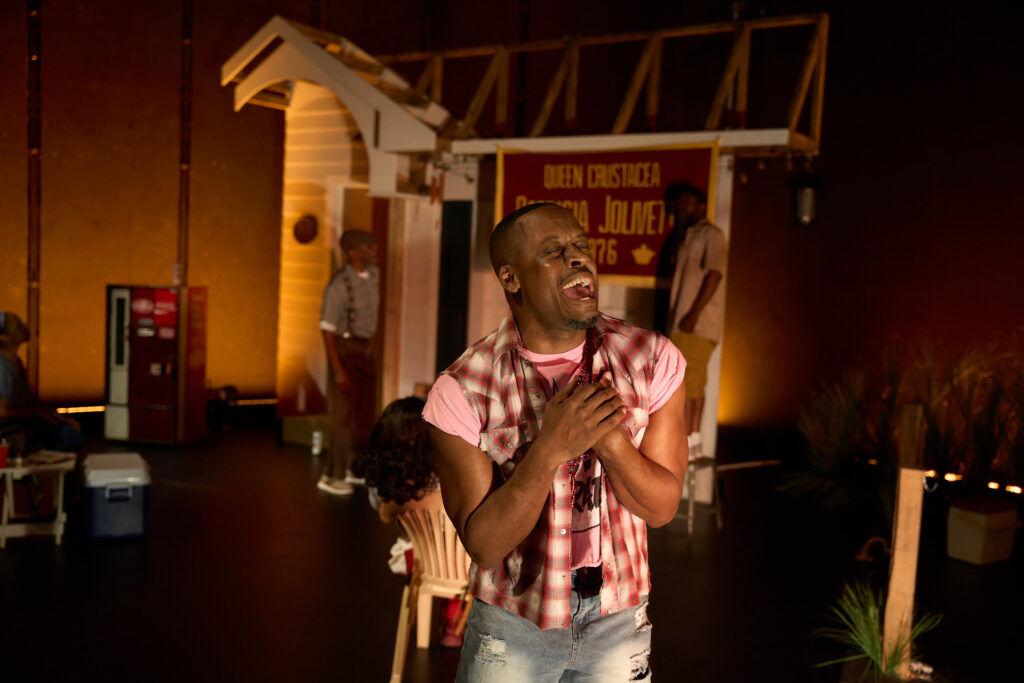
- Reginald L. Barnes as Fuzzy in ‘The Festival In Da Back’ • Production Photo courtesy of NBT (April 2026)