

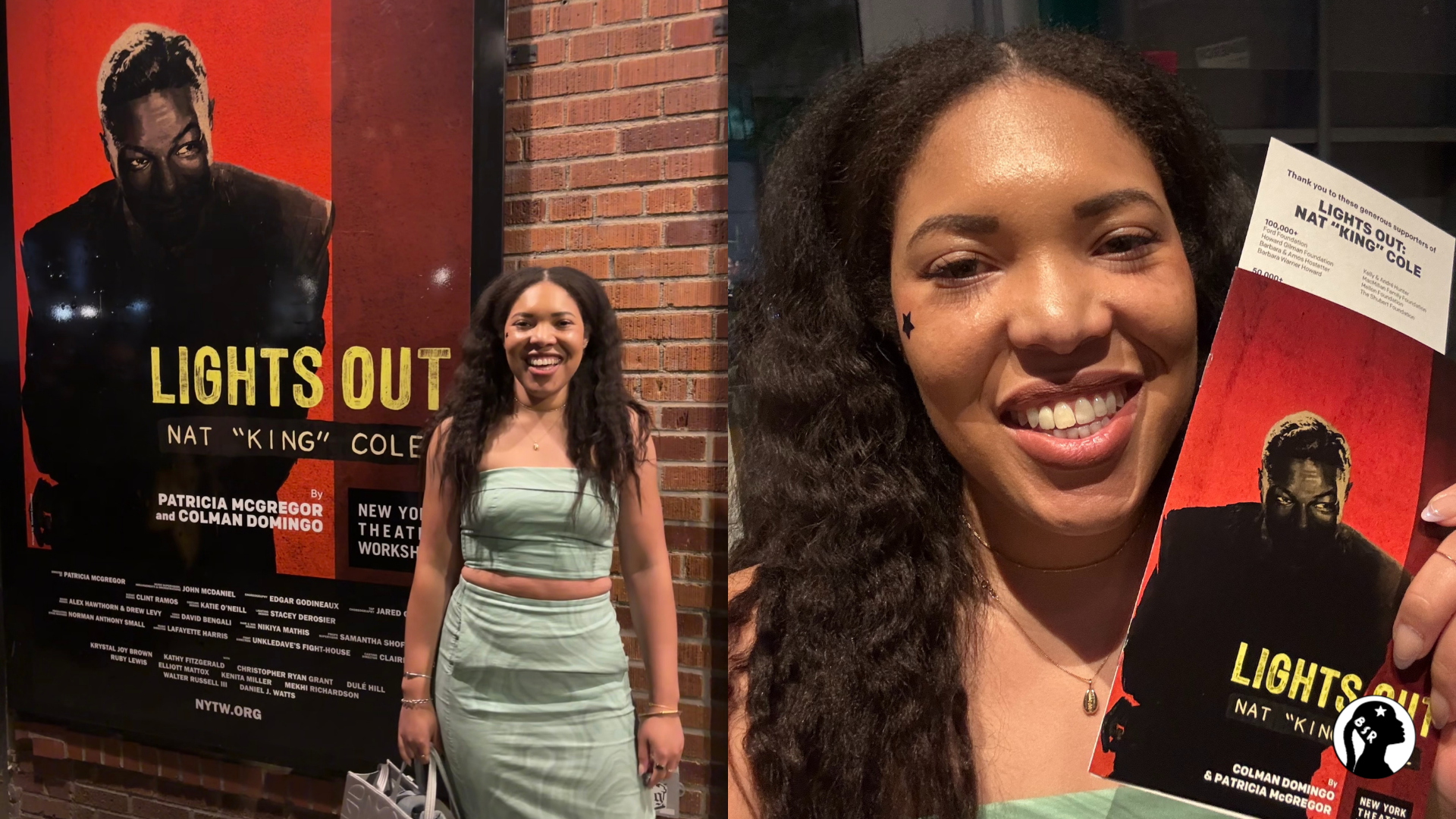
‘Lights Out: Nat “King” Cole’ at New York Theatre Workshop
The play puts the famed performer on a familiar tightrope for entertainers, balancing white expectations with Black authenticity.
Nat King Cole’s Christmas CD was the one I always skipped as a kid. Toe to toe with Vanessa Williams, Donald Lawrence, Destiny’s Child, Motown, Stevie Wonder, or even the Vince Guaraldi Trio, he didn’t stand a chance of cracking my top six holiday albums, which meant there was no room for him in our 6 CD changer. I couldn’t have put my finger on it at the time, but I always thought he sounded kind of white. I put his CD with Bing Crosby’s in the back corner of the media cabinet and shimmied under the stockings to Eartha Kitt’s “Santa Baby”.
Lights Out: Nat “King” Cole brought me face to face with my oversimplified critique. The show confronts how hard Mr. Cole had to work to maintain mass appeal on and off stage and it makes assertions about what it might’ve cost him when the spotlights dimmed and the curtains closed. Lights Out takes place at the final taping of NBC’s ‘The Nat “King” Cole Show’ on December 17th, 1957. Despite the program’s positive reception and Nat’s worldwide renown, there were no sponsors willing to keep the show on air. Straightaway, the mid-December taping becomes a Christmas special, a farewell episode, and, if he wants it, a chance to take a stand.
The New York Theatre Workshop production of Lights Out features Dulé Hill in the starring role. Dulé, who you probably know from television shows like West Wing or Psych, is a theater kid at heart. His tap dancing and singing skills featured repeatedly on Psych (remember Blackapella/Quarterblack?) and he performed on Broadway in The Tap Dance Kid (1984) and Bring In ‘da Noise, Bring In ‘da Funk (1995). In other words, there was no reason for me to be shocked by Mr. Hill’s tap dancing talent but there I was: slack-jawed in the second row and, at times, holding back tears. Mr. Hill’s ability to tap out rhythm and emotion, speaks with just as much volume as his earnest performance of a man who, in trying to be everything to everybody, risks self-obliteration. The only moments in the show more powerful than Mr. Hill’s tap solos are the times he taps with a shadow.
Daniel J. Watts, in the role of Sammy Davis, Jr., is a fellow tap tour-de-force and the voice of Nat’s lesser angel. Davis shows up to push, challenge, and provoke Cole to make his last show something he can be proud of. Sammy stands in the wings while Nat takes terribly microagressive notes from white producers. When Davis shares his two cents, hottakes, and comebacks, it’s reminiscent of Key and Peele’s “Obama Anger Translator” sketches. Davis says and does the things that Cole can’t (or at least thinks he can’t) until Davis reveals the truth: the ratings, to which Cole has shackled himself and his sense of success, are just a tool for control.
The trouble with being a trail-blazer is that there are no footsteps in which to follow. In place of a clearly marked path, there’s just a dizzying decision tree where all roads seem to lead to a blinking question mark. Cole’s first mind is to go out peacefully, to wrap the viewers at home in the warm comfort of a predictable good bye and tuck them in with a non-threatening grin. His second mind, which conjures his deceased mother and other uncanny guests, reminds him that “they’re still out there digging Emmett Till’s grave and you’re out here planting roses”. Eartha Kitt — bombshell, firebrand, and original baddie — tries to help him see the undeniability of his talent. He’s not Bob Hope, the show isn’t Amos and Andy, and he shouldn’t have to wear face powder to put audiences at ease. Worse still, regardless of whether he takes a stand, there are countless talented young colored men waiting to take his spot and willing to do as they’re told.
The play, which was written by the multi-hyphenate actor-fashionista-producer Colman Domingo in partnership with multi-hyphenate writer-director-NYTW artistic director Patricia McGregor, limits itself to this one moment in Cole’s life and resists the urge to stretch into a biopic-style musical a la Jelly’s Last Jam, which tells the story of jazz pioneer Jelly Roll Morton whom Cole counts among his inspirations.
This keeps the show focused while also shrinking the schema of what Cole might be going through. Audience members under the age of 50 are likely to have little personal connection to Nat King Cole, Sammy Davis, Jr. and other icons of the time period. You could argue it’s the responsibility of robust public education and not the work of the playwrights to help viewers seat themselves in the context of a 1950s America, but that won’t change the fact that the nuances of the setting could be floating, like music notes, right over the audience’s heads and interrupting the ways in which they make sense of the story.
In addition to the limited scope, I’m curious about the liberties the writers took in expressing Nat King Cole’s deepest truths. He wrote no memoirs before he passed away from lung cancer in 1965, and all of his biographies were posthumous, some with and some without the cooperation of his family estate. In my own cursory efforts to pinpoint the lines between reality, intuition, and artistic inference, I kept finding uncorroborated quotes like this one from the Jim Crow Museum at Ferris State University:
“It could be a turning point,” [Cole] realized, “so that Negroes may be featured regularly on television.” Cole realized the stakes were high, and said, “If I try to make a big thing out of being the first and stir up a lot of talk, it might work adversely.”
As with A Wonderful World: The Louis Armstrong Musical, I suspended the expectation that musicals about famous people stick solely to the facts because, in the end, I did learn something. I may never know whether Nat “King” Cole had alternate musical arrangements for “A Christmas Song” (specifically ones that had a little more spice and flavor!) but the part he played and the way he played it made way for new renditions and more Black faces on television. I hope, in a moment when the political stakes once-again feel historically high, that today’s Black television hosts will build on Mr. Cole’s legacy and walk along the trail he blazed by using every episode as a chance to change hearts and minds before the lights go out.
blacklove 🖤 and starlight 🌟
The New York premiere of Lights Out: Nat “King” Cole was produced by New York Theater Workshop on the Lower East Side. This production opened on April 30th and will run through June 29th, 2025. The play was written by Colman Domingo and Patricia McGregor, directed by Patricia McGregor, and stars Dulé Hill and Daniel J. Watts. I purchased my own ticket and attended the evening performance on May 3rd. Ticket prices start at $59.
-
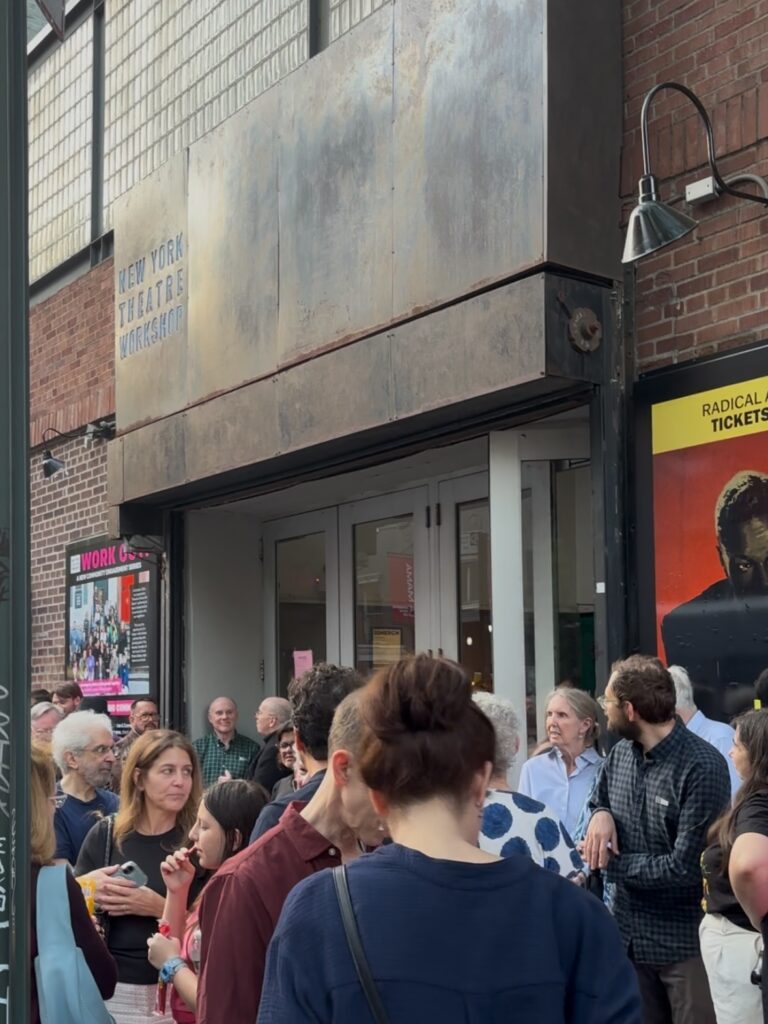
- On the day I attended, the start was delayed due to technical difficulty. We waited in anticipation on the sidewalk.

-
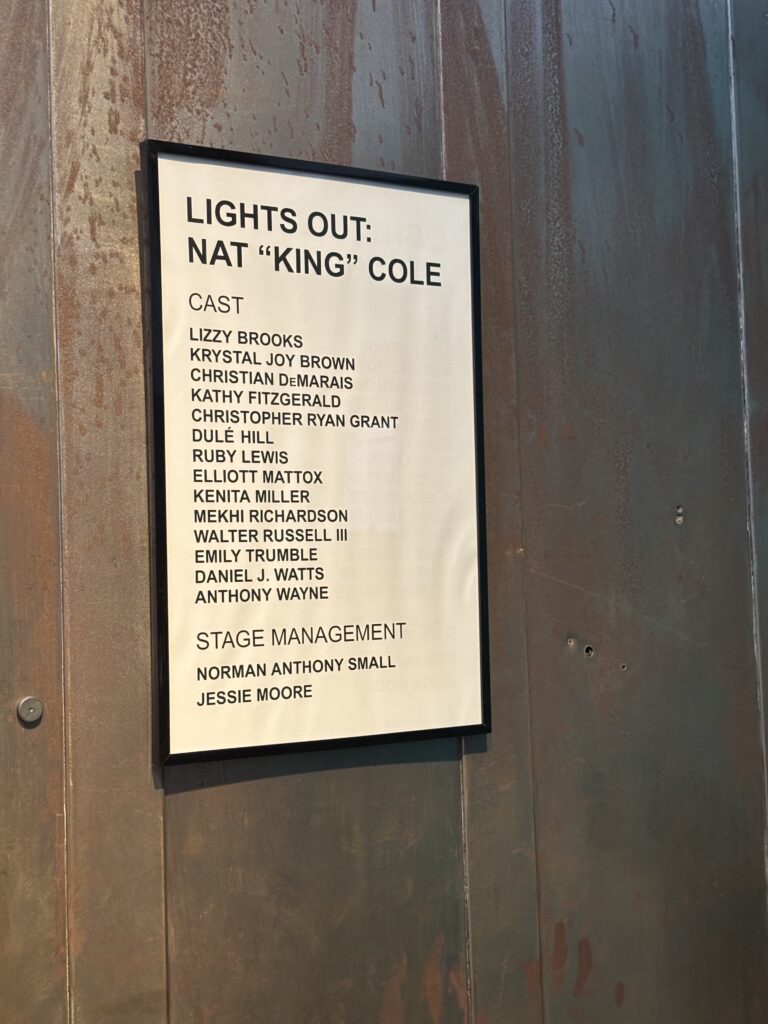
- The full cast list for ‘Lights Out’

-
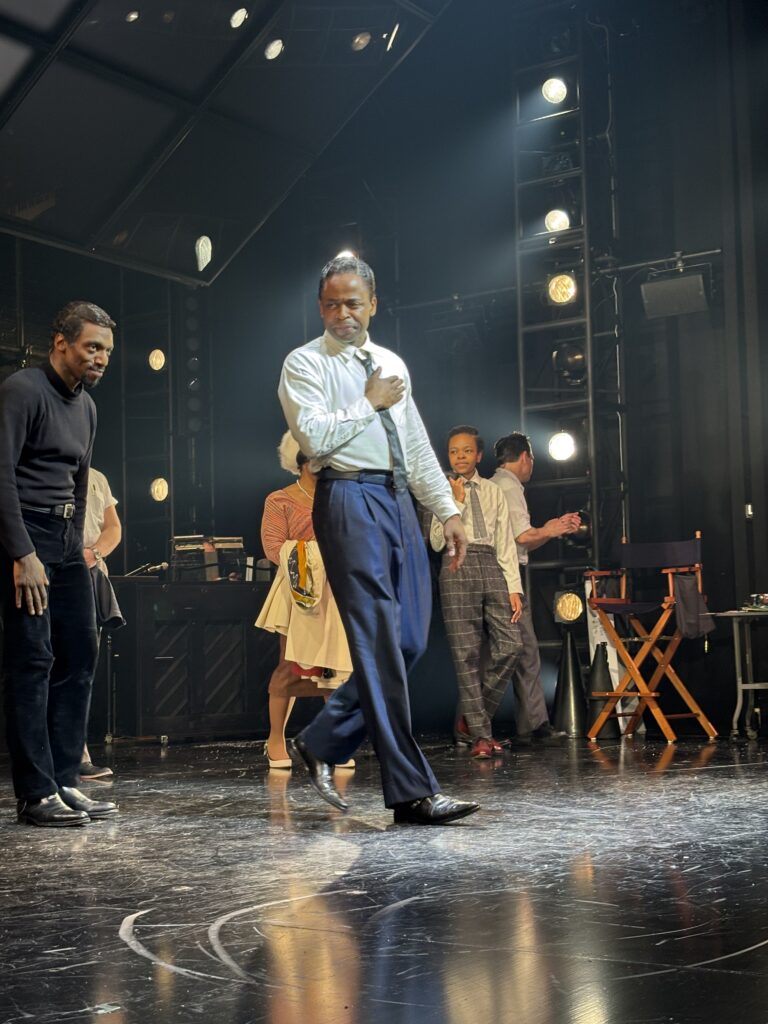
- Dulé Hill takes a bow after his performance as Nat King Cole. Daniel J. Watts stands behind him in a black turtleneck.

-
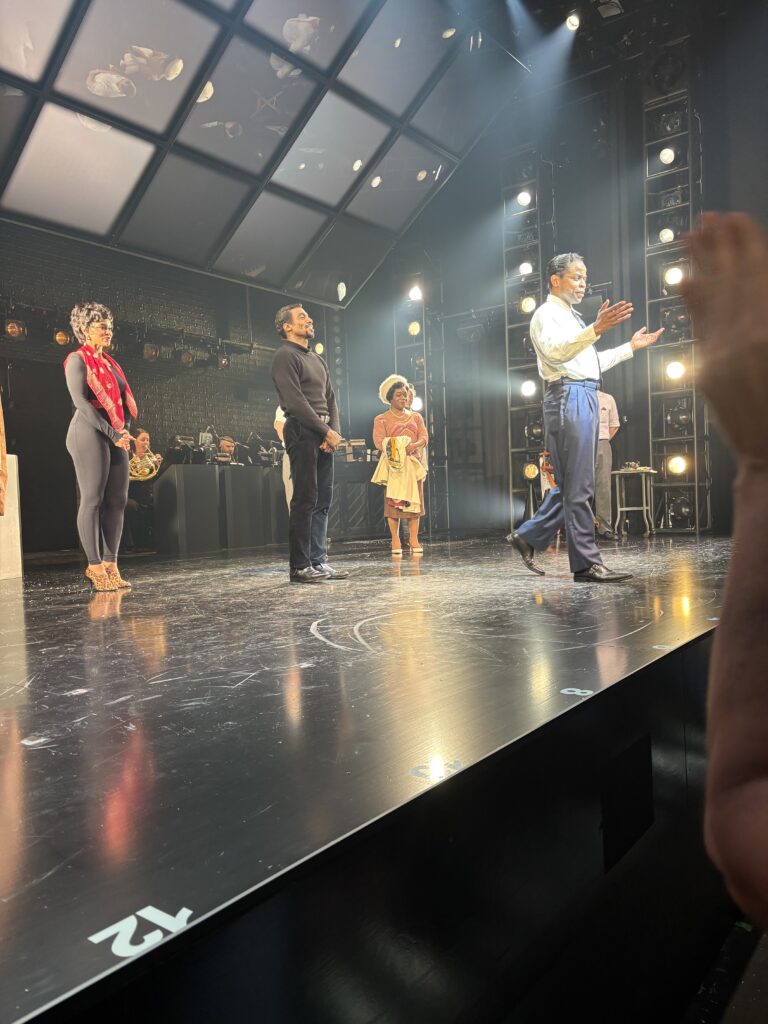
- Members of the cast take a bow after the show

-
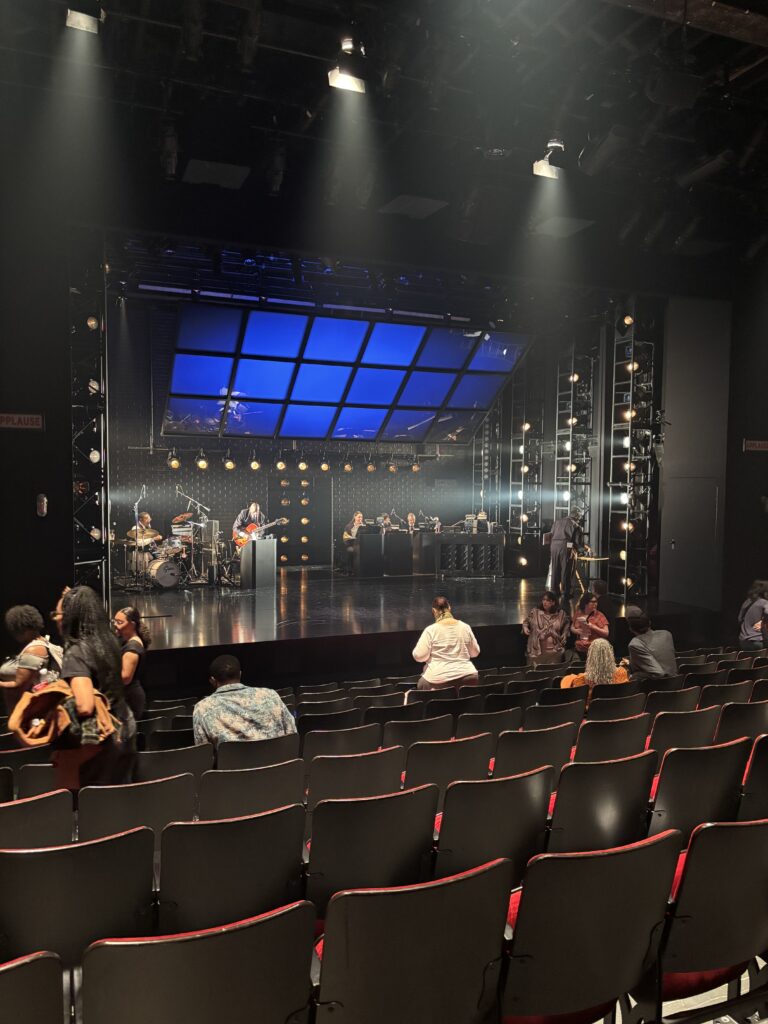
- The set included room for the band and a ‘television’ screen. (The woman with the gray braids is Phylicia Rashad!)

-
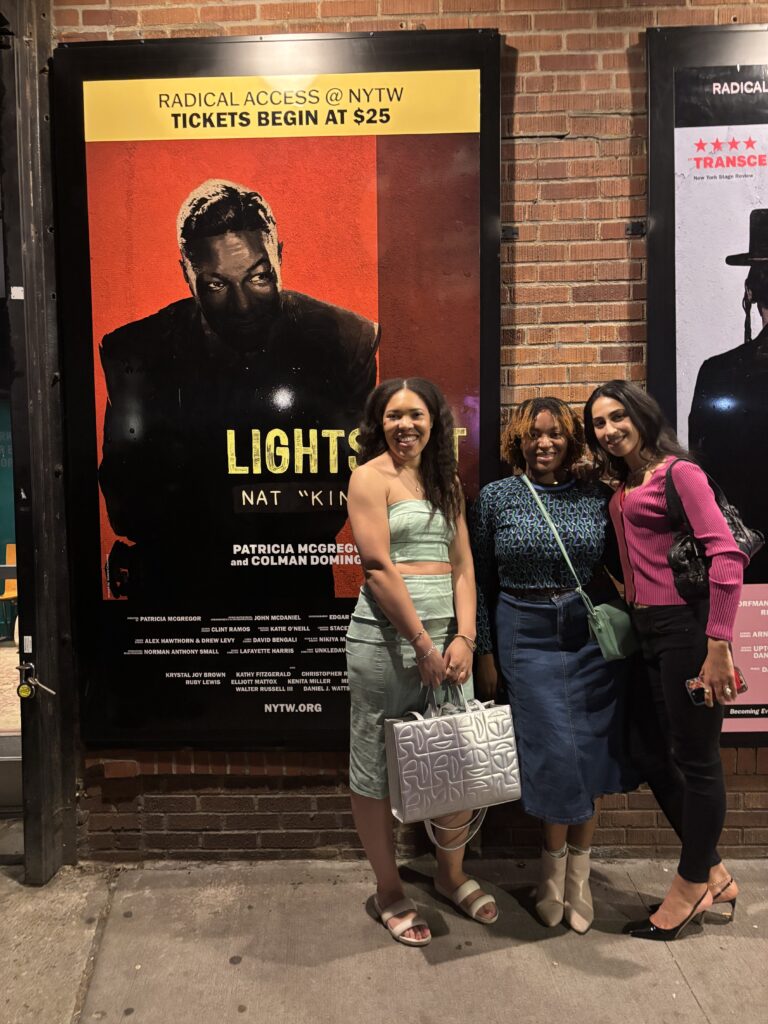
- It was a surprise to run into friends at the show!

