57th Annual African American Day Parade
The African American Day Parade marches on!
Nestled within the row houses on 138th Street between 7th and 8th Avenues are wrought-iron gates with hand-painted numbers that cordon off the back alleys where past residents could stable their horses and current neighbors can park their cars. This block, as well as its parallel, on 139th Street are known as Striver’s Row. Initially, the development was intended for white families, but the one-two punch of the 1895 depression and white flight left the buildings empty until Black buyers were given the opportunity to purchase. Well-to-do Blacks like pioneering movie star Stepin Fetchit, first Black congressman Adam Clayton Powell, Jr., and record label head Harry Pace all had an address on Striver’s Row. The bricks on that block hold so much history, the trees have heard and seen so many things, even the gates have age-old stories to tell.
The patterns on the decorative wrought-iron gates of Striver’s Row will look familiar to anyone who’s spent time in Harlem, Brooklyn, South Carolina, Georgia, New Orleans, or any other place where Black blacksmiths once worked. The popular design of a curled heart with small curled feet is an Adinkra symbol created by the Akan people from Ghana. It’s such a common sight now that it’s easy to forget (or never even learn) that this aesthetic is a tradition that traces back across the triangular trade. The curly-hearted symbol in the gates is Sankofa, which can also be depicted as a bird, and represents the idea of “looking to the past to inform the future”.
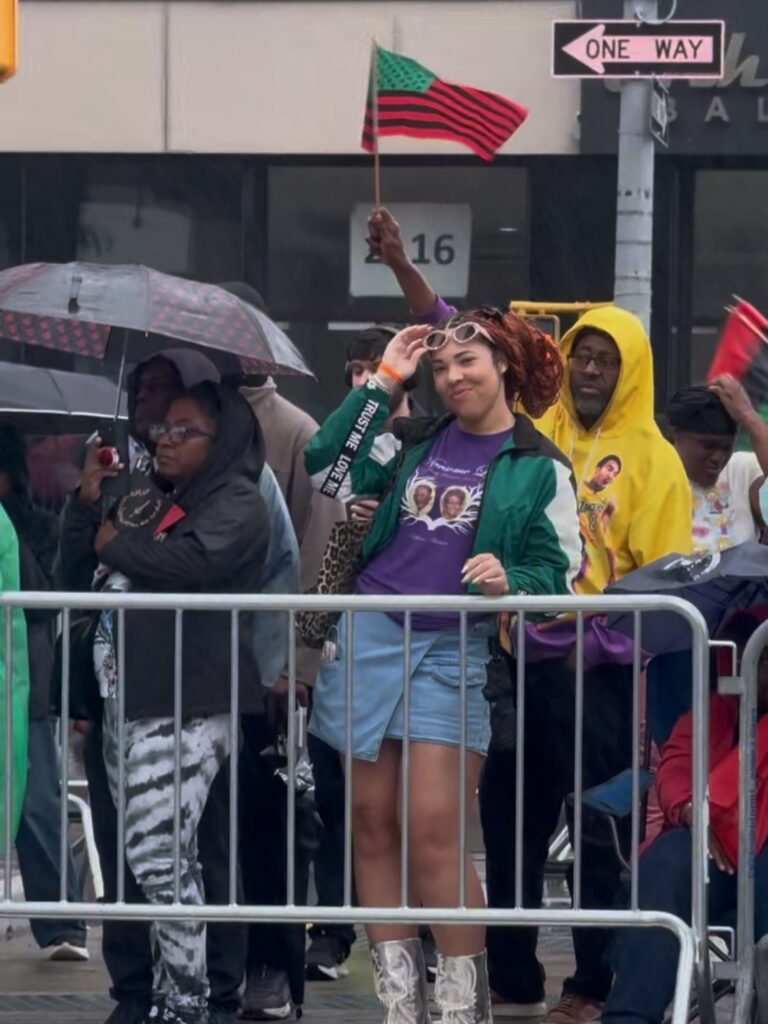
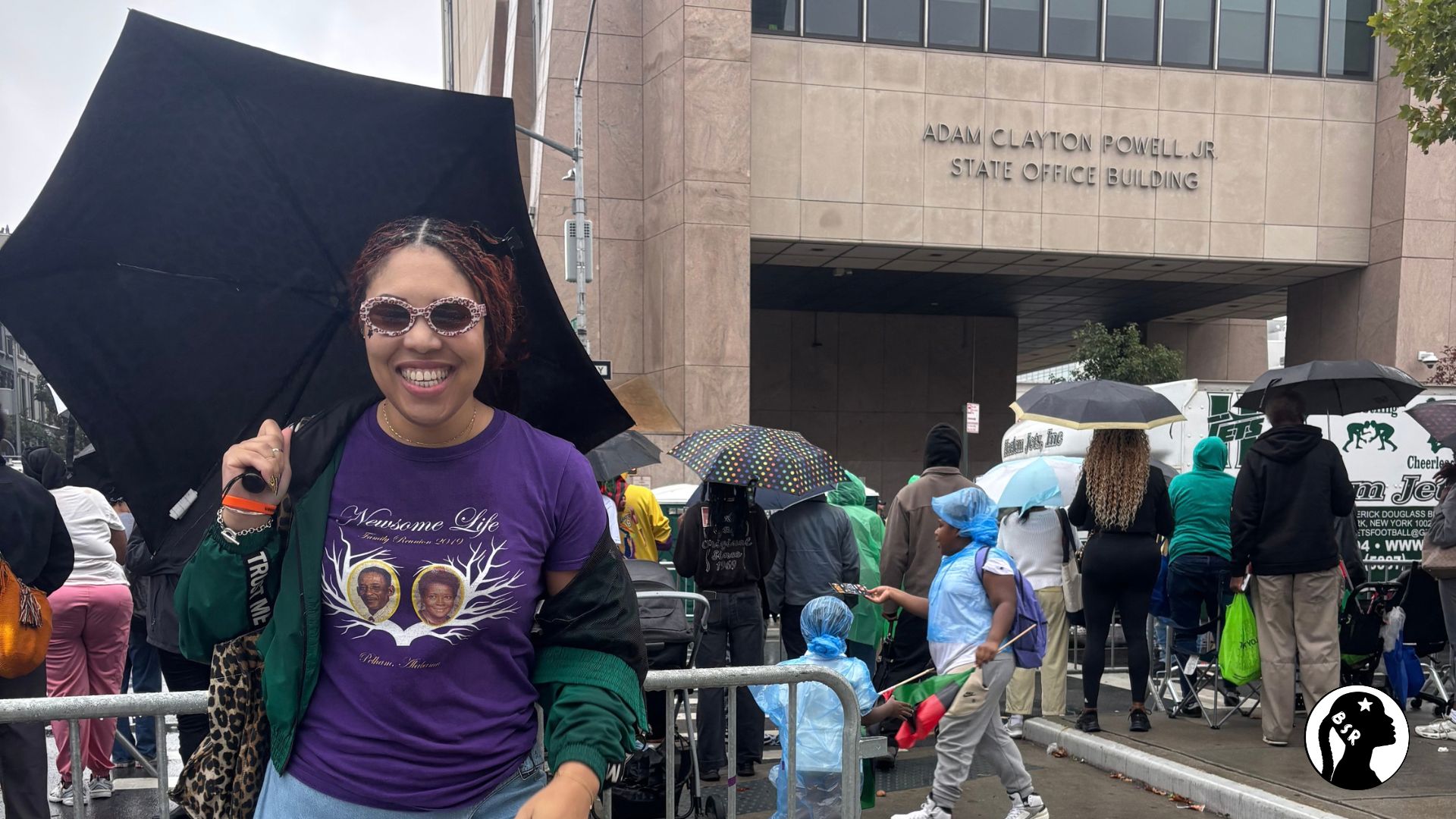
Revelers with umbrellas and ponchos watched from the sides
Last Sunday less than two blocks away from Striver’s Row, the past and future met in the present as Harlem continued the 57-year old tradition of the African American Day Parade (AADP). Black cowboys, Black marching bands, Black Greek letter organizations, and regiments of Black employees from all manner of city agencies marched up 7th Avenue, now named for Adam Clayton Powell, Jr., from 111th to 136th Street. The parade has taken place on the 3rd Sunday of September since September 21, 1969; the inaugural theme was “Africa’s Gift to America”. The AADP is one of the largest parades celebrating Black culture and history, but there’s a cadre of online voices eager to tell you that the parade is failing, under attended, and incorrectly named. It is unclear how many of these detractors have ever (or will ever) attend the parade themselves, but I was there.
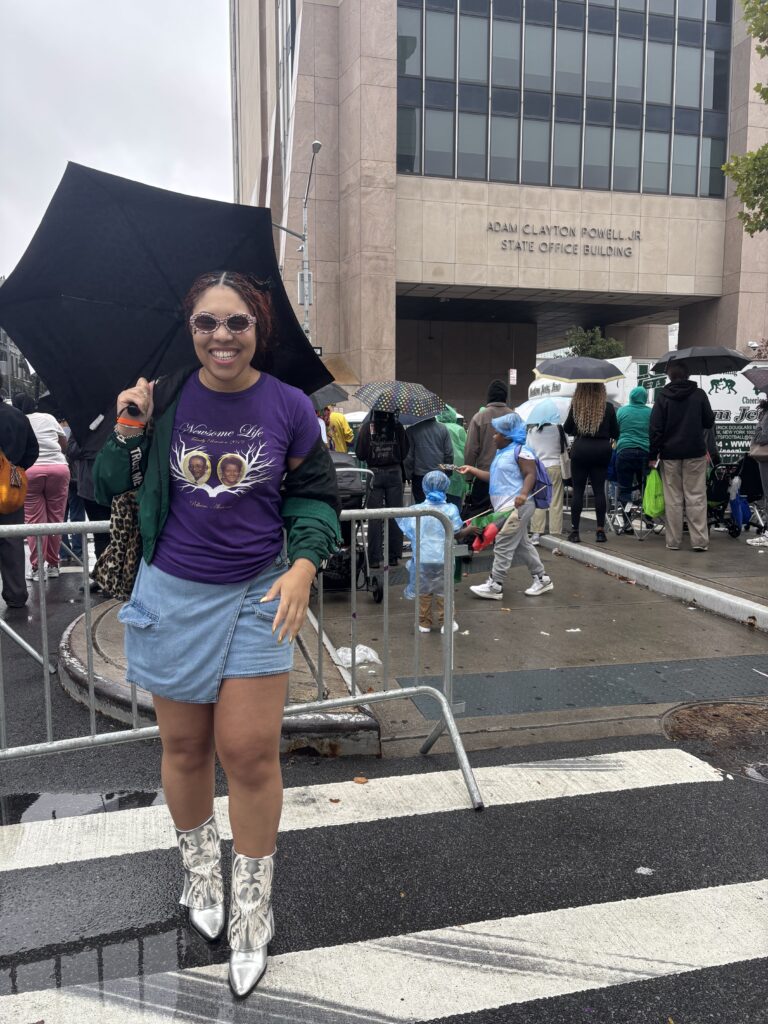
I was there leaning on a barricade at the corner of 126th and 7th, getting wetter by the droplet, out in the rain with hundreds of my neighbors and those were just the ones I could see at my intersection. That anyone came out in the rain at all felt like a testimony. That the young women of Grambling’s Orchesis Dance Team could keep their hair from reverting as they whipped their manes around felt like sorcery. For a parade that’s run by volunteers — free to attend, free to participate — it’s impressive that it’s stayed strong for more than 50 years. When I looked around at the huddled horde of ponchos in the stands below the Harlem State Office Building, I didn’t see a “failing” parade.
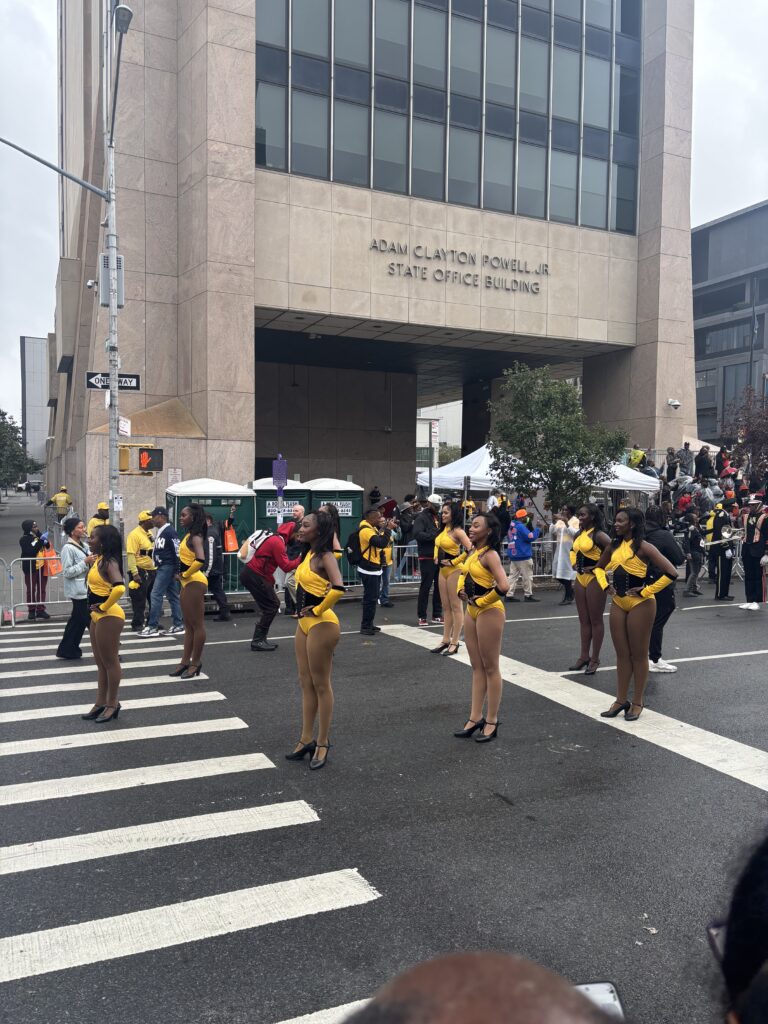
Grambling’s Orchesis Dance Team slayed in the rain
The floats passed by for hours. The Federation of Black Cowboys led the way, followed by Grambling State University’s Marching Tiger Band, which came all the way up from Louisiana to celebrate its centennial anniversary. This year’s Grand Marshals were chosen in keeping with the 2026 theme of “Good Businesses Sustain Our Future”: J. Alexander Martin, co-founder of FUBU; Cheryl McKissack Daniel, civil engineer and third-generation CEO of the oldest Black-owned construction company in the U.S., McKissack & McKissack; Chef Charles Gabriel, the mastermind behind Harlem-favorite Charles’ Pan-Fried Chicken; and Michael Preston, the co-founder of Paradise Express Ferry which is the only Black-owned maritime corporation in New York City. Though the AADP is classified as a national parade, this year’s marshals all represent locally-based businesses during a moment where NYC’s Black population is on the decline and access to the American Dream seems to be dissolving. While the existence of Black-owned businesses doesn’t represent true liberation, maintaining profitable livelihoods could at least help us stay a little longer in a city we’ve helped to build and define.
Following the marshals were a variety of floats and banners on behalf of elected officials. Mayor Mamdani, who could not attend the parade due to diplomatic duties at the UN General Assembly, sent representatives from his office with a banner, as did Public Advocate Jumaane Williams and City Comptroller Mark Levine. State Attorney General Letitia James attended in person, walking with State Senator Cordell Cleare, and Bronx District Attorney Darcel D. Clark rolled by in a dark blue Plymouth Prowler, waving a black, green, and red flag, and making the Wakanda Forever symbol in a denim jacket with kente cloth patches. City Council Speaker Julie Menin sent a truck and a banner on the council’s behalf but our Councilmember did not join that cohort nor ride with Community Board 10, choosing instead to ride with Assemblymember Jordan Wright and his father Hon. Keith Wright on the float for the elder Wright’s Parade Breakfast which is held the day before.
Between city agencies and what seemed like every NYC hospital system were memorable appearances and surprises. The Apollo, recognized this year with the AADP’s inaugural Community Institution Award, brought out “The Executioner”. He’s the successor to the theater’s legendary Sandman only he was dressed as Michael Jackson with white face paint, a blue sequined jacket, and a jet black, wet and wavy, shake-n-go wig. He hopped off the Apollo float and moonwalked down the street holding up a peace sign to crowds shrieking in both fright and delight. GO Donuts, a Black-owned donut shop in East Harlem, had a pink and white float with a DJ, an emcee, and a dancer in a 3-piece suit Harlem Shaking to Doug E. Fresh. Fur Heroes and the dog they’d dyed pink upset the man next to me, who I hadn’t pegged as an animal lover, until the owner explained that their dye is animal safe, vegan, and part of their offerings as a mobile dog grooming service. Unicyclists rolled alongside Ms. Harlem Shake in a red vintage Mercedes-Benz convertible, waving from beneath her umbrella.
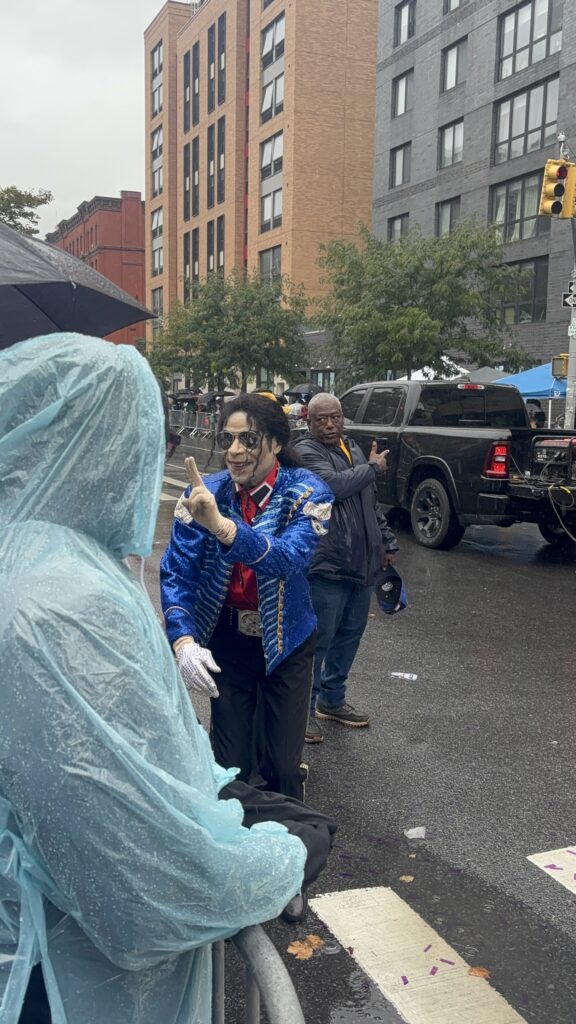
The Apollo Theater’s “Executioner” dressed as Michael Jackson and moonwalked in the parade
There were dancers of all ages and styles. Adolescent girls in raffia skirts danced to drum beats with flexed feet and upturned hands. Baton twirlers in candy-colored ponchos and silver shorts sashayed down the avenue. The Prissy Divas, dressed in blue and orange like tiny Knicks, stole the show with their drill team choreography and endless energy. Anybody with a uniform made an appearance: probation officers, sanitation workers, firefighters, parks employees (I didn’t even know they had uniforms!), state troopers, correctional officers, bus drivers, transit workers, Freemasons, Eastern Stars, Elks, and of course hundreds of uniformed members from the NYPD (inexplicably followed by an empty large white school bus I associate with prison transport).
Plenty of groups were there to promote causes. In full commitment to their slogan “feeding our neighbors” Catholic Charities threw snack sized bags of Cheez-Its into the crowd though a bit too forcefully. A group in Black t-shirts with white Xs chanted their message, “They stole us. They sold us. They owe us. Reparations now.” Passionate women in purple shirts that read “love doesn’t hurt” warned against domestic violence and handed out resource pamphlets. Representatives from Iesha Sekou’s Street Corner Resources, the most visible non-profit organization in Harlem, promoted opportunities for “young people boxing, making music, going back to school, putting that gun down” while said young people waved from the float. Foundational Black Americans carrying American flags, gold-sabered Black American heritage flags, and blue and red Juneteenth flags carried a banner for the Freedmen Project, while a woman handed out flyers encouraging us to trace our ancestry and assured us that “F.B.A. is not a hate group, F.B.A. is a lineage”.
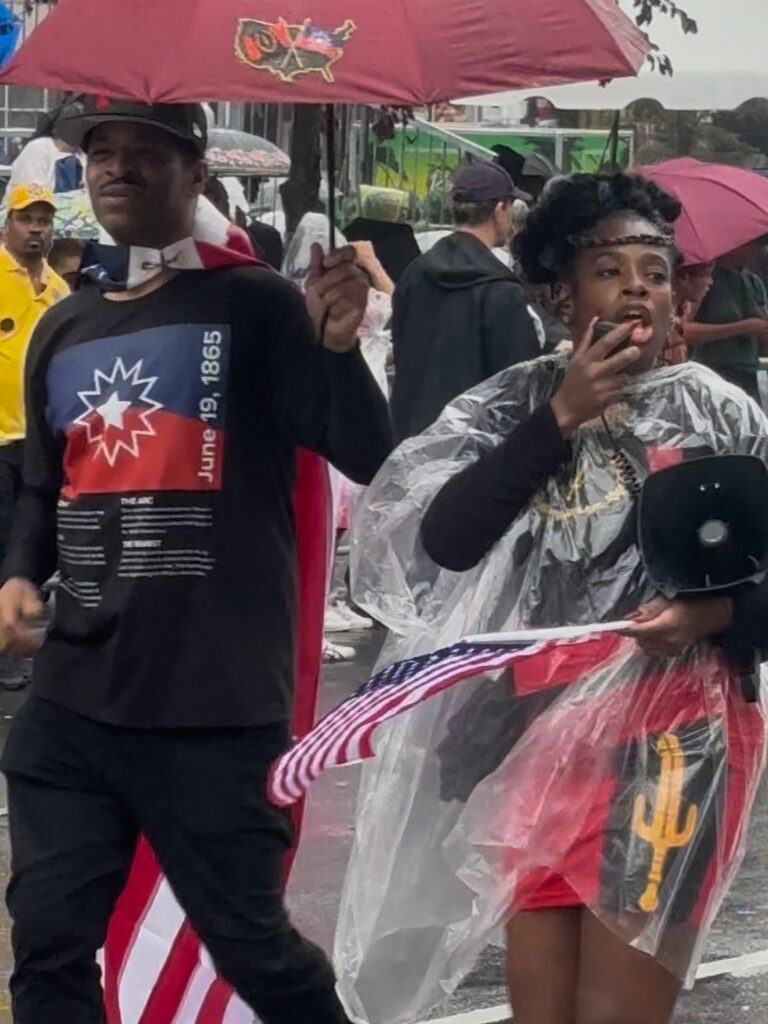
The F.B.A. group wore multiple flags and distributed literature
At times, the floats sent contradictory messages often one behind another. The National Alumni Association of the Black Panther Party called for all power to the people and freedom for all political prisoners and prisoners of war, while a man pumped a statue of a black panther up and down above his head. As I tried to photograph the Black Liberation Struggle Continues poster on the rear of their float, Amazon’s Black Employee Network rolled into the frame.
If you’ve ever tried to organize a family reunion, a church picnic, or even a birthday party, you’ll have an appreciation for the coordination it requires to create and maintain a tradition that involves so many moving parts. Since the AADP collects no money from ticket sales success isn’t measured in profit, but it can be measured in community benefit: there were no reported incidents of violence on Sunday; enterprising vendors sold plates, handmade jewelry, self-published books, and commemorative t-shirts; I saw more than one school-aged child wearing the beaded necklaces that Grambling tossed Mardi Gras-style into the crowd; a roller-skating woman with an Afro made it to the main feed of national Black publication The Grio, helping spread Harlem’s legacy even further.
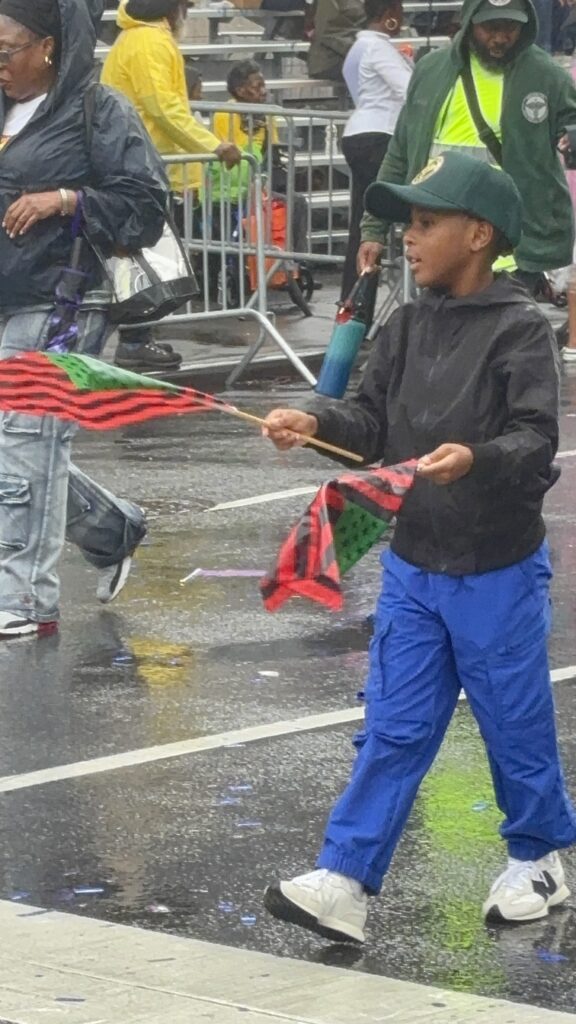
A boy waves the African-American flag which is a green, red, and black rendering of the official stars and stripes version.
Though I enjoyed myself on parade day, it saddens me that the loudest opponents online probably haven’t experienced the parade for themselves. There was enough space to be any kind of Black you wanted to be and as I saw with the F.B.A. float, there’s nothing to stop a group from linking up and participating. It saddens me further that some Black people don’t see themselves in Africa or Africa in themselves. “Delineating” calls us to separate from a diaspora that courses through our veins, that carries the beat of our music, that braids and beads our kinks and coils. The history is so very clear. All around us, even on the gates in our neighborhood, are reminders of where we’ve come from and who we are.
We are in a moment of budding confusion about which of us deserve collective embrace and feeling downtrodden by how long its taken to meet justice — we have been here before. The inaugural parade happened a little more than a year after we lost Dr. King, and just a few months after James Brown released “Say It Loud”. In that moment, the parade’s 13 founders felt it important to anchor in something larger than Harlem, something larger than the Civil Rights and Black Power Movements, and the prescient African-American Day Parade was born. Our best way forward is to forge something that, like our Sankofa gates, combines the tools we have with the lessons we’ve learned, and stays standing for generations to come.
blacklove 🖤 and starlight 🌟
The 57th Annual African American Day Parade took place on Sunday, September 20th in Harlem, New York, USA. Next year’s parade is scheduled for Sunday, September 19th, 2027.
-
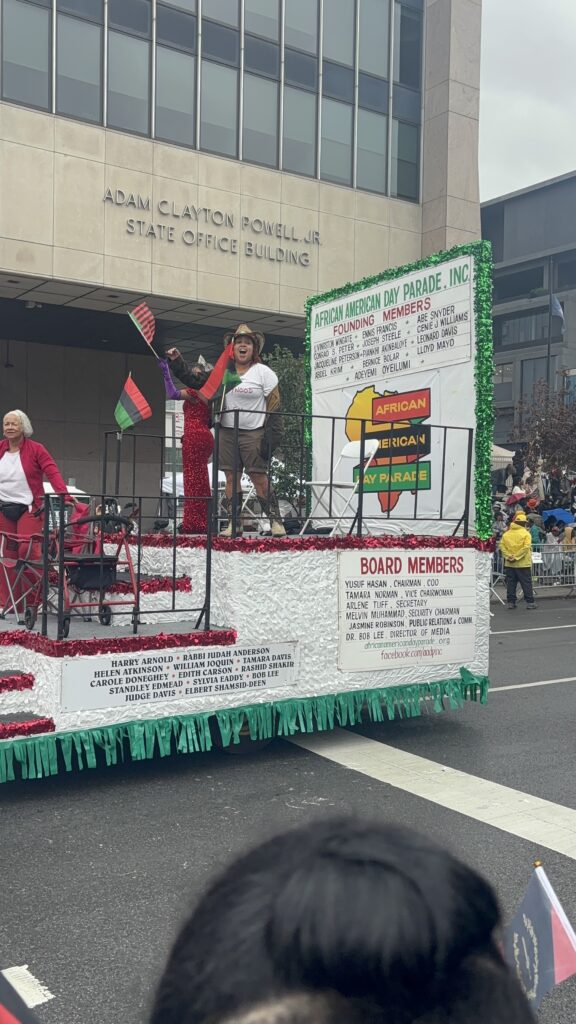
- The lead float lists the names of the founders and displays the parade’s African continent logo
-
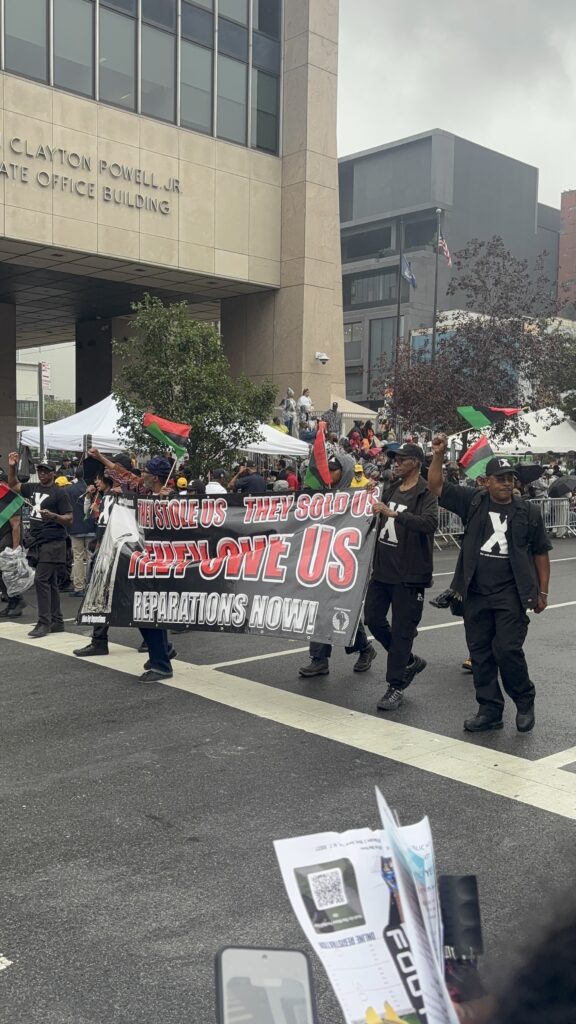
- Marchers called for reparations now
-
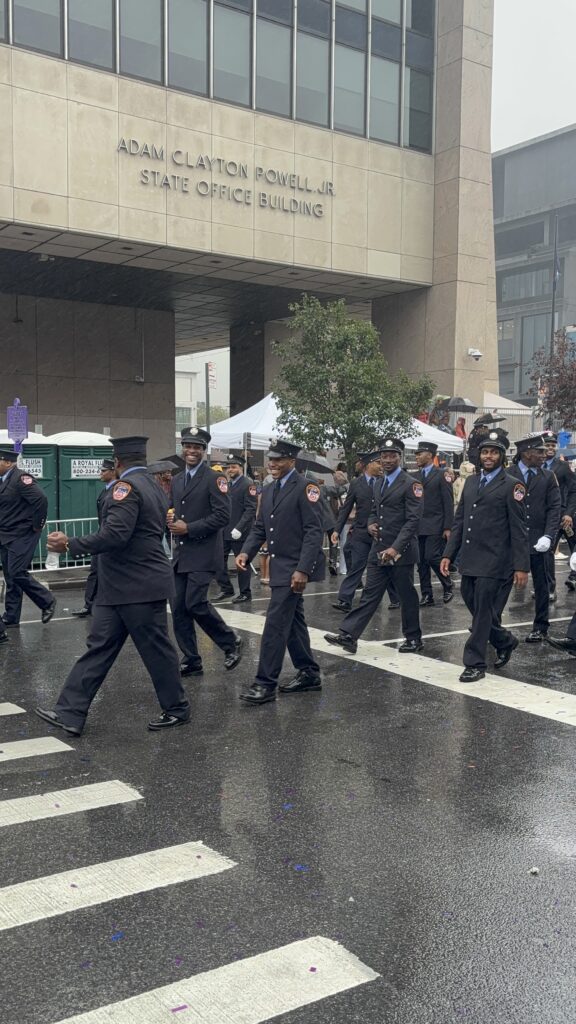
- Black firefighters stride up 7th Avenue
-
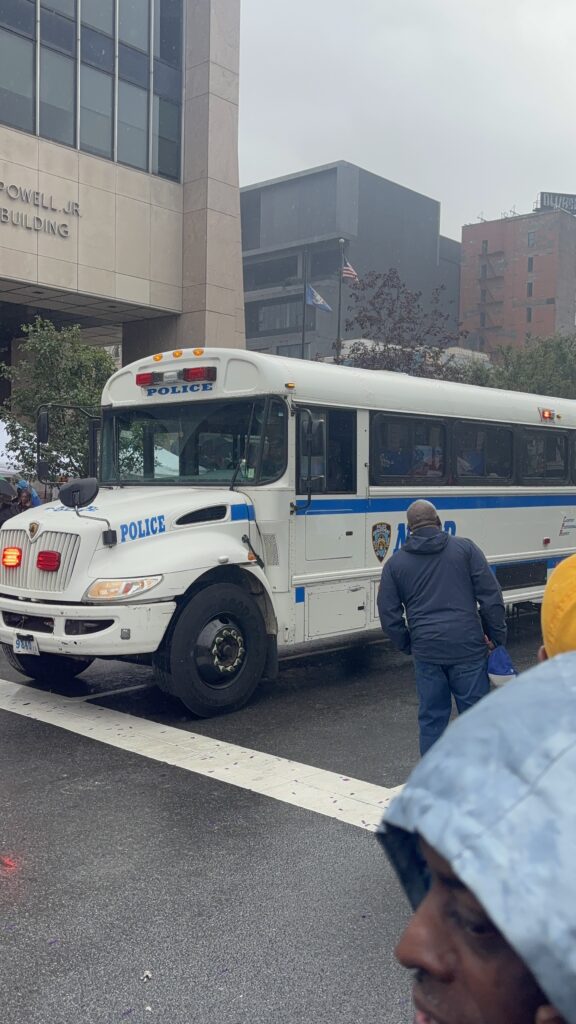
- The NYPD drove an empty prisoner transport bus in the parade
-
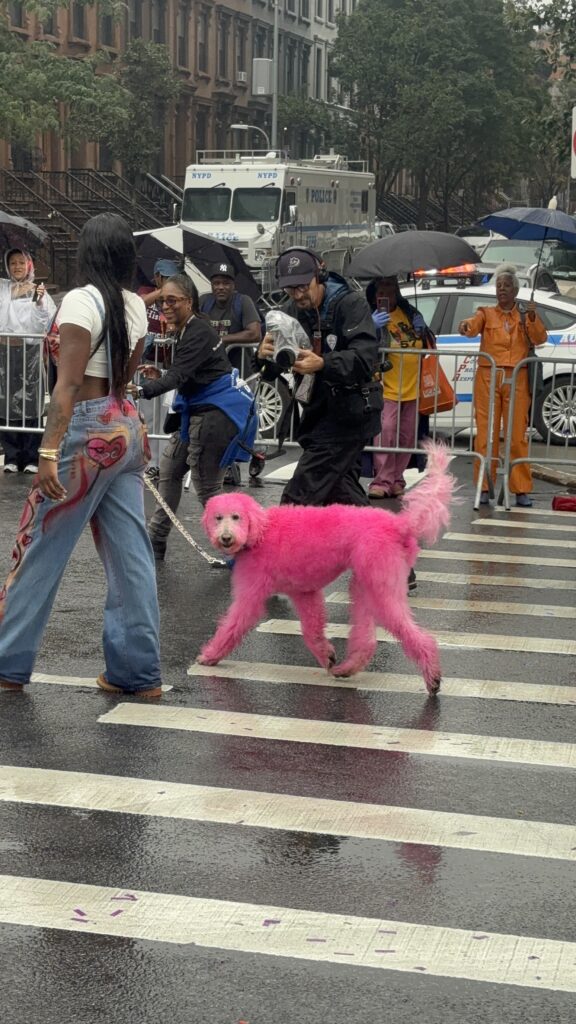
- A pink dog steals the show
-
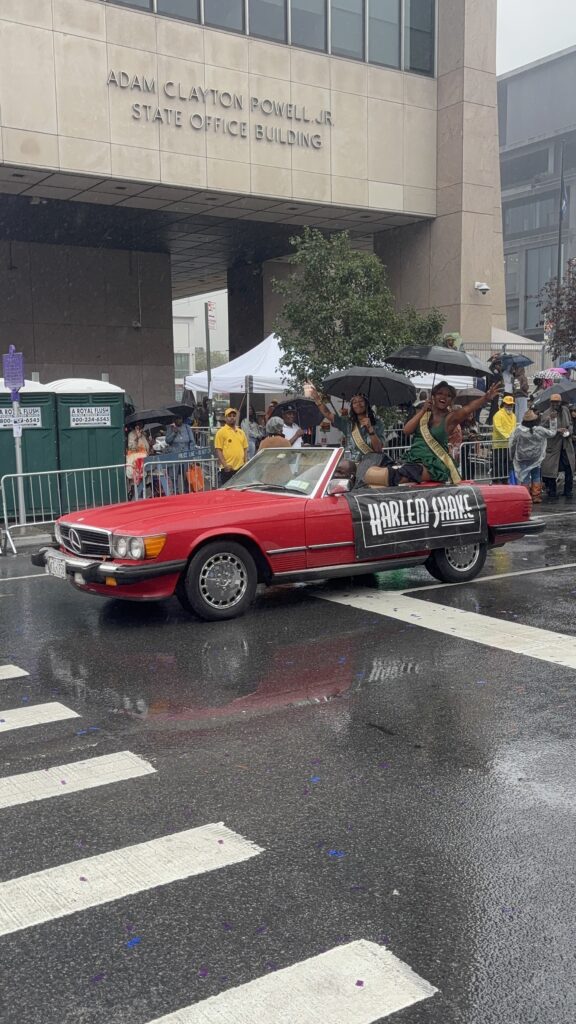
- Ms. Harlem Shake 2026 waves from a red convertible
-
- The F.B.A. group wore multiple flags and distributed literature