
Gaza Biennale – New York Pavilion
This diasporic art exhibition in Brooklyn offers an urgent view into the genocide Palestinians face in Gaza
The blackest intellectuals you know have charted the same course. Eldridge Cleaver and Huey P. Newton of the Black Panther Party made the trip. June Jordan, Alice Walker, and Angela Davis did it, too. Malcom X gets credit for doing it first in 1964 and Ta-Nehisi Coates, who went for ten days in the summer of 2023, is one of the latest in a lineage of Black thinkers to make a pilgrimage to, or on behalf of, the people of Palestine. Upon their return, each describes the indelible mark of the experience.
For Coates, the trip inspired the closing chapter of The Message, his most recent work which is a memoir and journalistic travelogue of his trips to Dakar, Senegal; Columbia, South Carolina; and the West Bank. June Jordan’s trips to Palestine and Lebanon in 1982 and 1996 continued to shape her poetry and essays until her death in 2002. She begins her poem “Intifada Incantation: Poem #8 for b.b.L.” with the capitalized declaration, “I SAID I LOVED YOU AND I WANTED/ GENOCIDE TO STOP”.
Despite the dismissive assertions that the Israeli-Palestinian conflict is a complicated cross-generational feud that we’d be best served by avoiding, each of the Black writers, thinkers and leaders listed above returned stateside in solidarity with the Palestinian people in their fight against dehumanization, extermination, and oppression. But this fall, you won’t have to cross an ocean or personally dodge air raids to bear witness to the tragedy of injustice in Gaza — it will come to you.
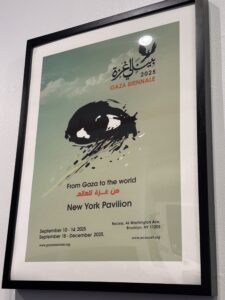
photo: The poster for the Biennale
In contrast to other biennales (like that of Venice, which will happen in…Venice) the Gaza Biennale is worldwide and “reflects the condition of displacement” Gazans face as their homes are ruthlessly destroyed. Istanbul, Greece, Ireland, Spain and the US (Brooklyn) have or will host pavilions in 2025; France, Denmark, and Scotland all participated in 2024.
At the opening reception in Brooklyn, guests moved somberly through the room holding small paper cups of hot tea and napkins filled with ghraybeh, bite-sized shortbread cookies adorned with single pistachios that came from a round, metal tin. We were worlds away from the boozy, high-spirited openings sure to be happening at the same time in Chelsea. The subject matter here required a different approach. “This is not a cultural event,” writes Fatema Abu Owda, an artist whose work is included in the New York pavilion, “It is the cry of a soul that survived. And a final call…before the coffins close on all that remains.”
Observing the work and reading the labels is a small violence compared to what the artists face. A video projected on a white pedestal behind a dark curtain showed a tool sculpting every feature, every strand of hair into blocks of paprika-colored clay until faces and figures emerged. The video cuts to a clay girl and boy holding suitcases on a sandy beach. Each incoming wave of water brings damage to the sculptures: the boy falls into the sand, a limb washes away, the two are separated. The video loops and the artist is back in the studio, sculpting again.
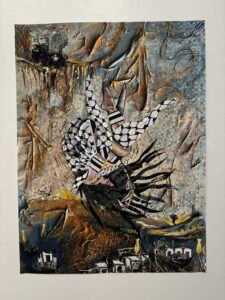
photo: “Safety (Upside Down)” (2024) by Maysaa Yousef
In the mixed media collage Upside Down (2024), a young woman wrapped in a Palestinian keffiyeh floats with her feet toward the sky against a muddled background. The artist Maysaa Yousef writes, “Chaos reigns, as if the earth has opened its mouth to swallow all that was once beautiful…I no longer know where to go or how to face this sudden transformation…It serves as a reminder that safety is fragile, and that life can be turned upside down in an instant.”
Using his finger as a pencil on his phone screen, Osama Husein Al Naqqa made eight black and white drawings in his garage. Some of the drawings look photorealistic, like the father holding his dying son in White Embrace (2025). Other works by Al Naqqa are reminiscent of Roman Catholic iconography. The round, pale face, folded limbs, and pierced skin in Embrace (2024) are not unlike images of Jesus bleeding on the cross. Al Naqqa writes, “Bullets scattered in a wounded body represent the lasting impact of violence…The tension between…endurance and irreversible scars.”
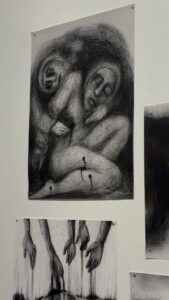
photo: “Embrace” (2024) by Osama Husein Al Naqqa
Even for the works that the viewer may think they understand, there’s connection to be gained in reading the artists’ own descriptions of their work. The exhibition labels are not curatorial statements about technique, pedigree, or inspiration; each is a quote from the artist explaining exactly what they wish to convey. There’s no room for misinterpretation. The violence is not allegorical, death is not invoked here as a symbol. Artist names are written in both English and Arabic. Multiple pieces by the same artist are listed from right to left — the direction in which Arabic is read. Birth years are noted next to names. Osama Husein Al Naqqa was born in Gaza in 1996; he’s 3 years younger than my brother. Maysaa Yousef was born in a refugee camp in 1984; she’s witnessed significantly more violence in her life than I have in mine and it’s not solely because she had a seven-year head start.
These connections — through age, through reading 25 artists’ first-hand accounts — muddy the dissonance we use to distance ourselves from global violence. Most Americans alive today, myself included, cannot fathom bombs falling out of the sky or finding food when there are no grocery stores. A striking postcard illustrates the ignorance of our privilege. At first glance, reds, yellows, and oranges resemble a beautiful sunset and the white cursive label of Gaza looks like any souvenir you’d find in a gift shop abroad, but this is no travel-inspo vista. The warm colors seep out of a fiery cloud that billows behind a burned-out building.
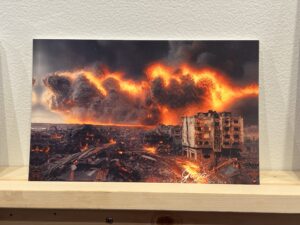
photo: Postcards with selected artworks were available to purchase; proceeds benefit the artists.
The opening reception was on September 11th and it’s been 24 years since the Twin Towers fell burying Lower Manhattan in ash, steel beams, and rubble. The Gaza Strip is six times the size of Manhattan, much of it is decimated — we cannot fathom that much destruction, we don’t even try. “The American sense of reality,” said James Baldwin in 1979 after multiple visits to the region, “is dictated by what Americans are trying to avoid.” (This quote was in reference to American slavery, but he wrote extensively about the through lines he saw between Black and Arab experiences.)
There is a chance here at the Gaza Biennale to dip into the same waters that granted countless thinkers — Coates, Jordan, Baldwin, and more — a global sense of reality, courage to speak up, and urgency to act “before the coffins close”.
blacklove 🖤 and starlight 🌟
Gaza Biennale is a “decentralized exhibition taking place in cities around the world”. An abbreviated version of the New York Pavilion is open between 12pm and 5pm on Thursdays, Fridays, and Saturdays from September 18 to December 20, 2025. The exhibition is hosted by Recess at 46 Washington Avenue in Brooklyn Navy Yard. Admission to the gallery is free.
-
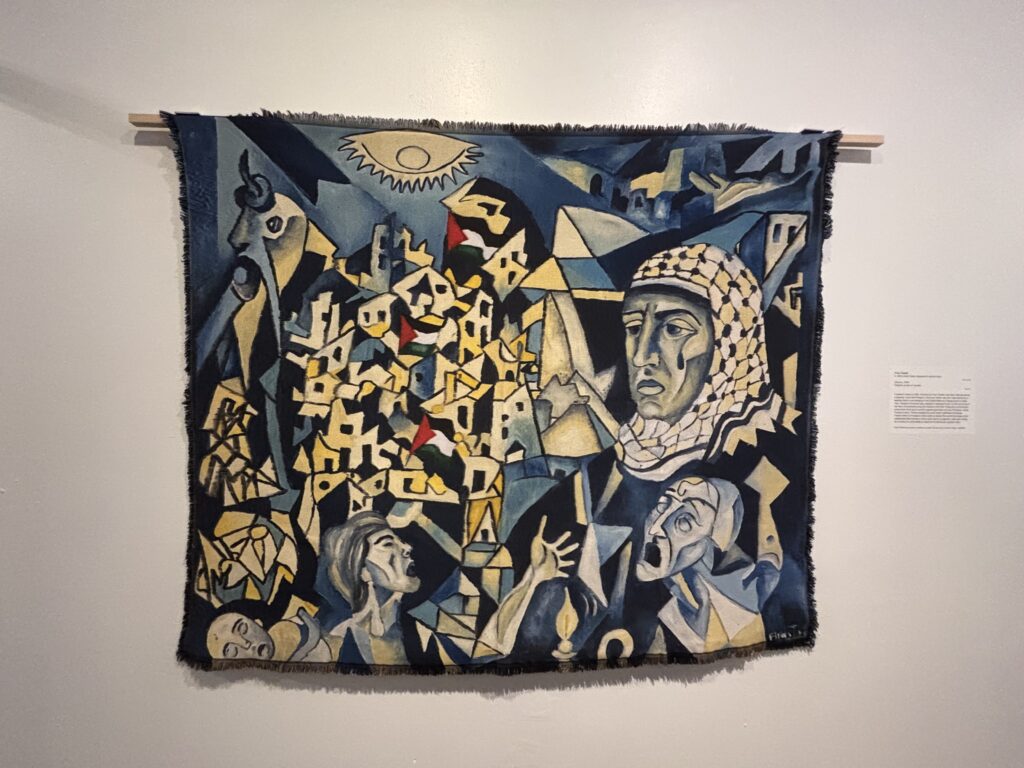
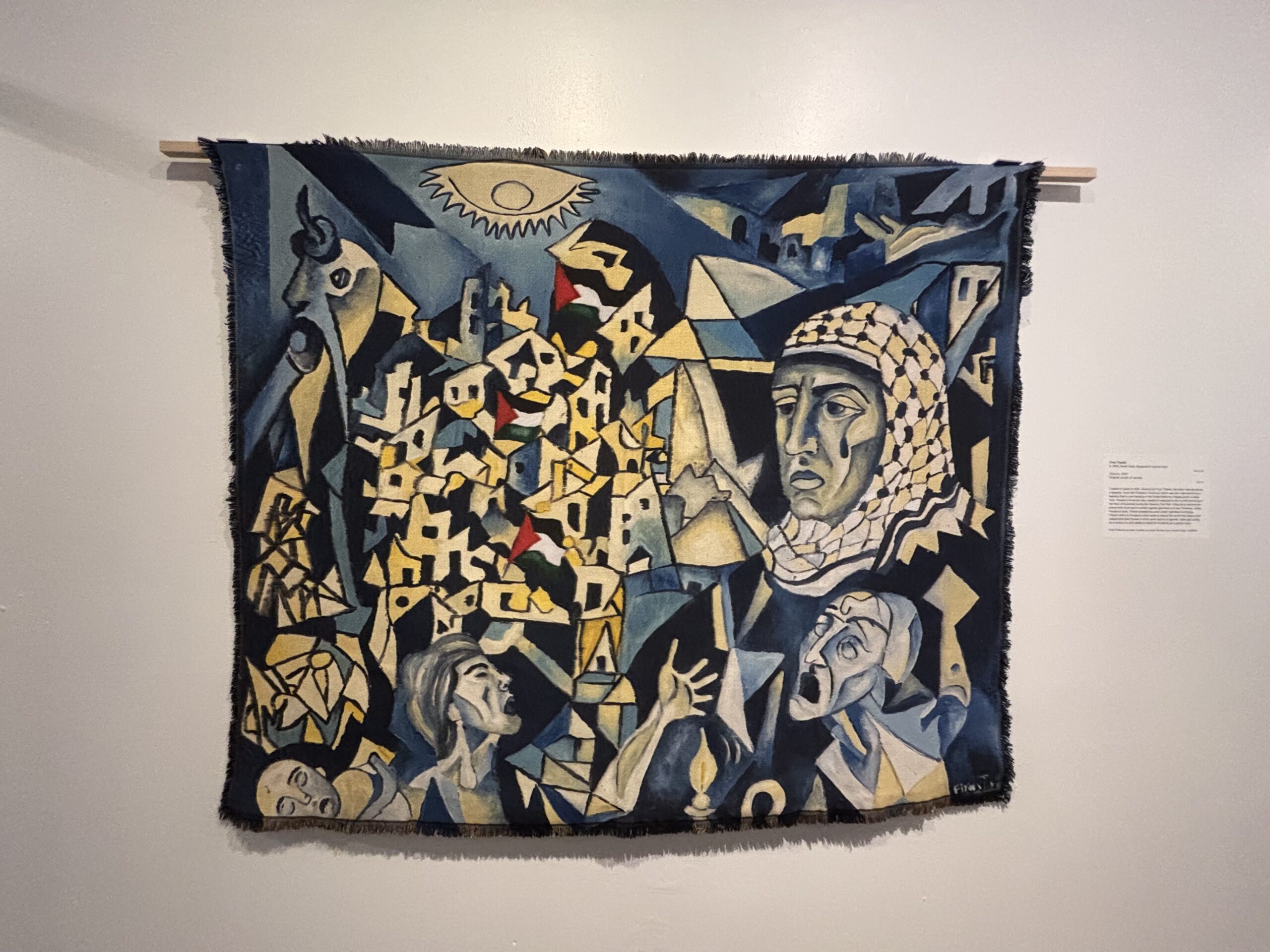
- photo: “Gaznica” (2025) by Firas Thabet
-
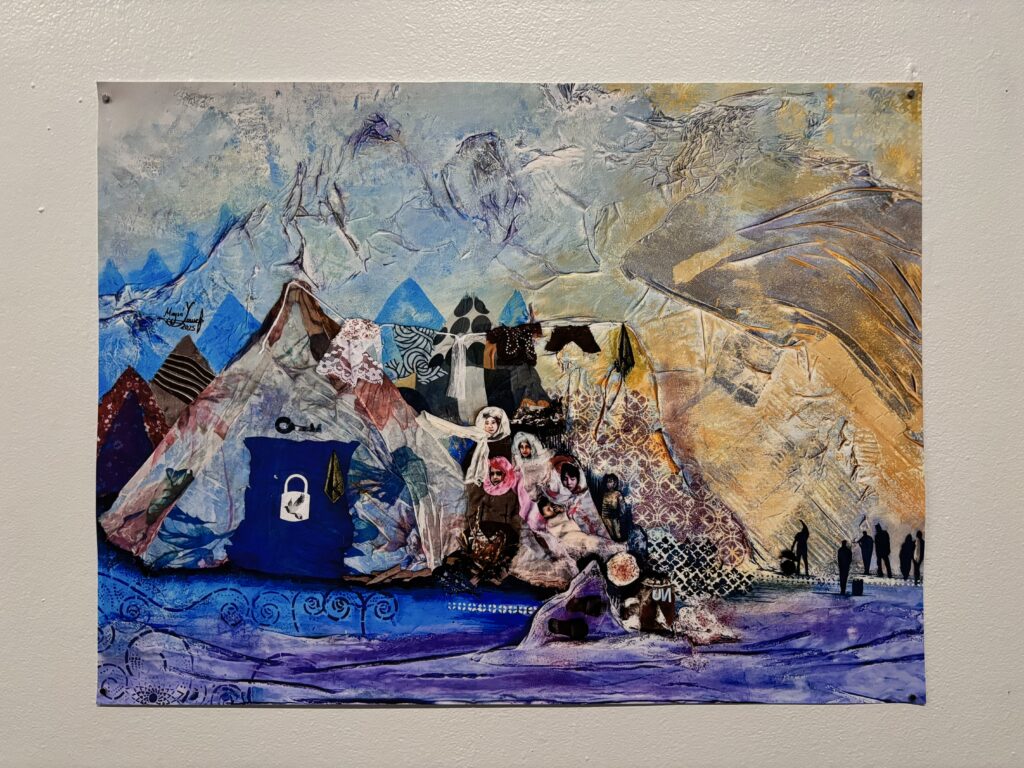
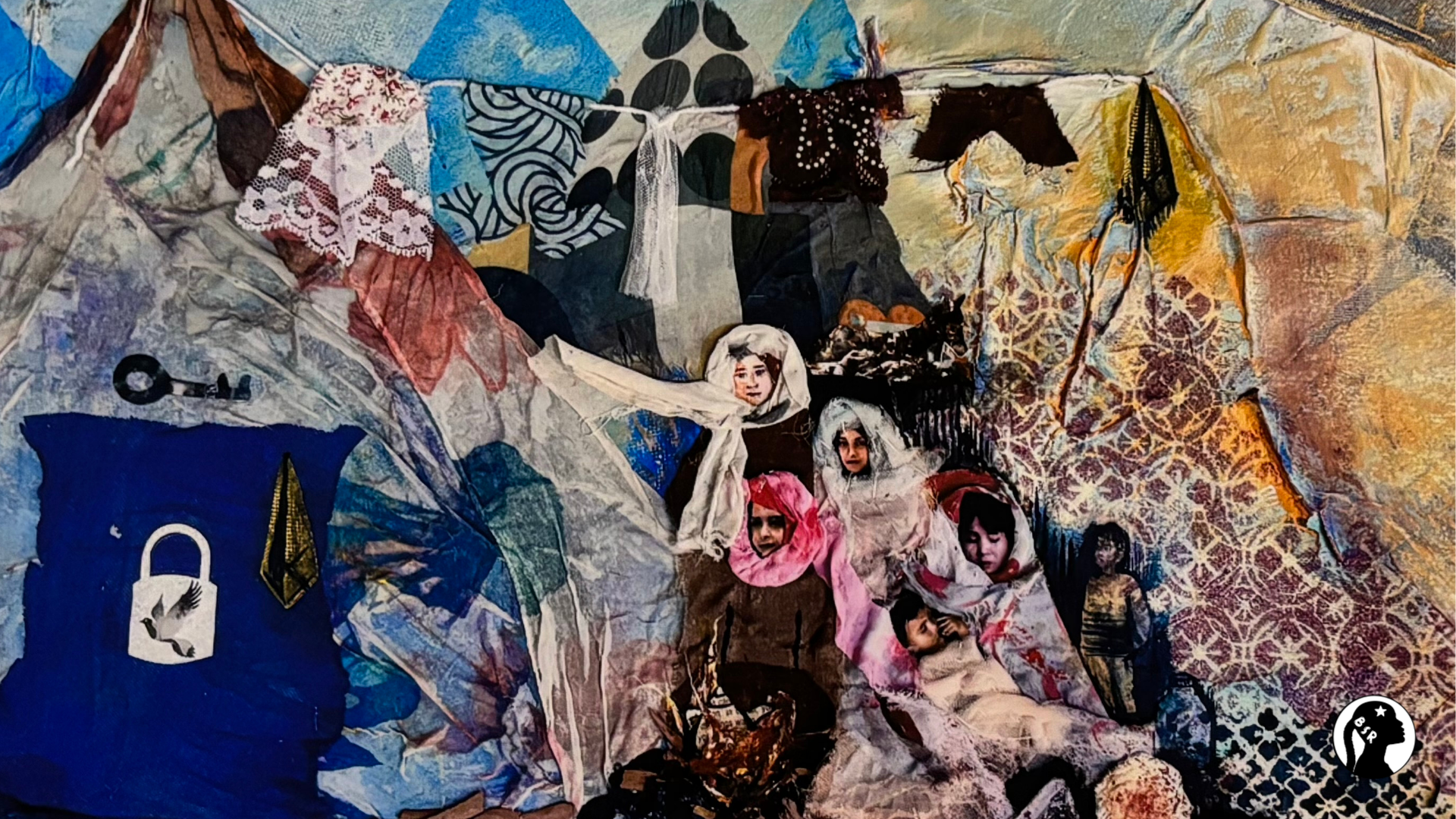
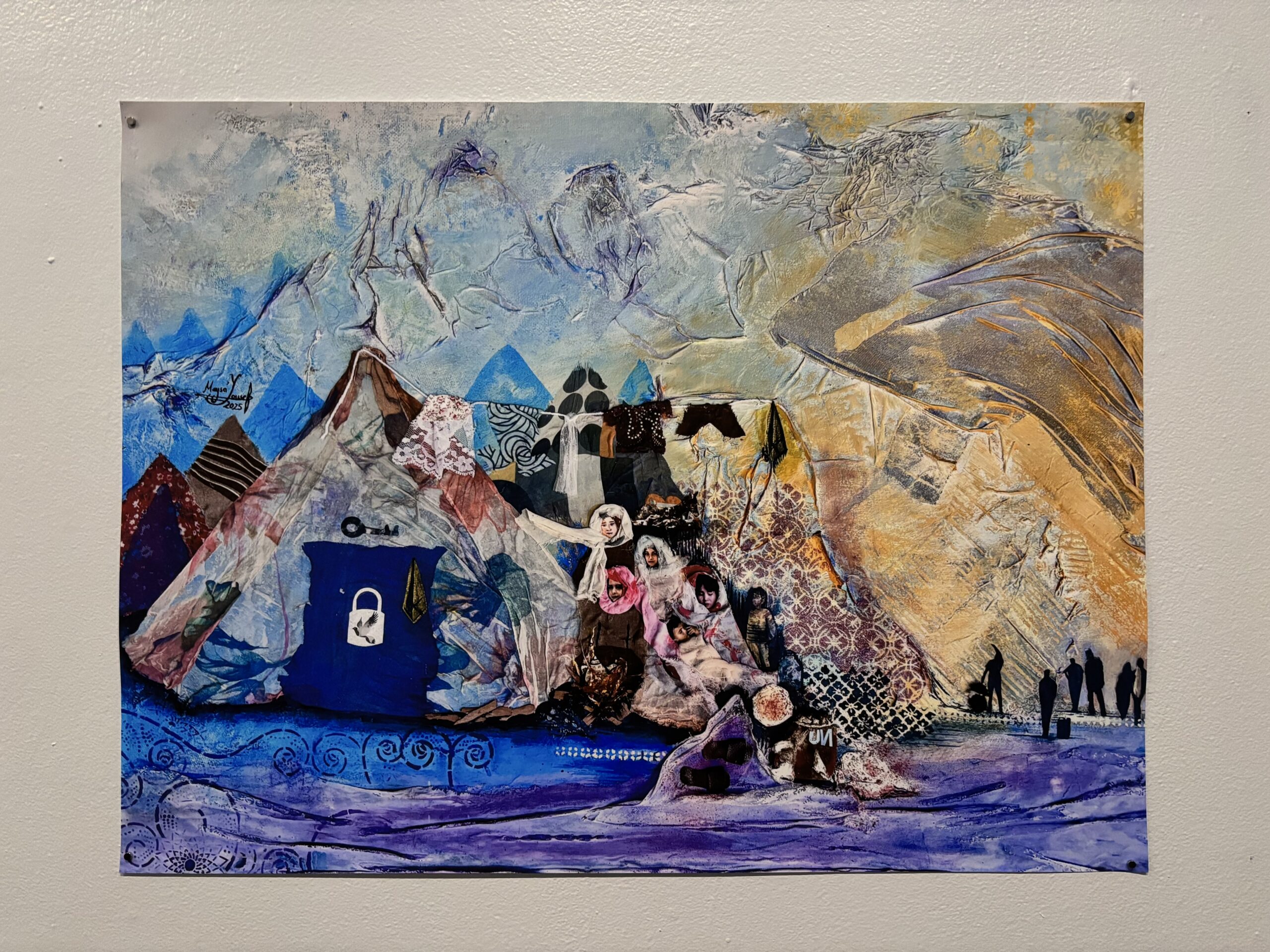
- photo: “Safety (Tent on the Road)” (2024) by Maysaa Yousef
-
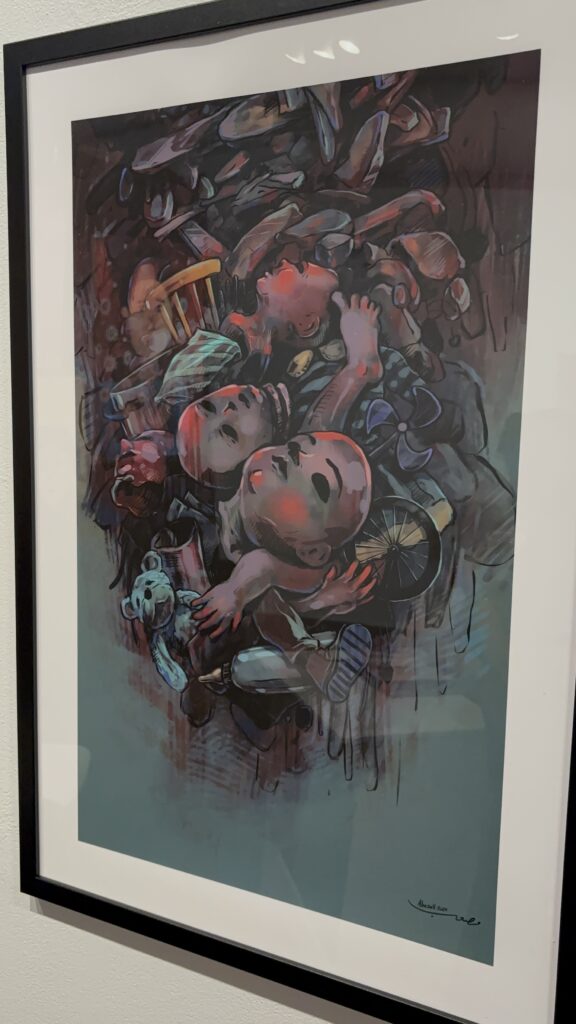
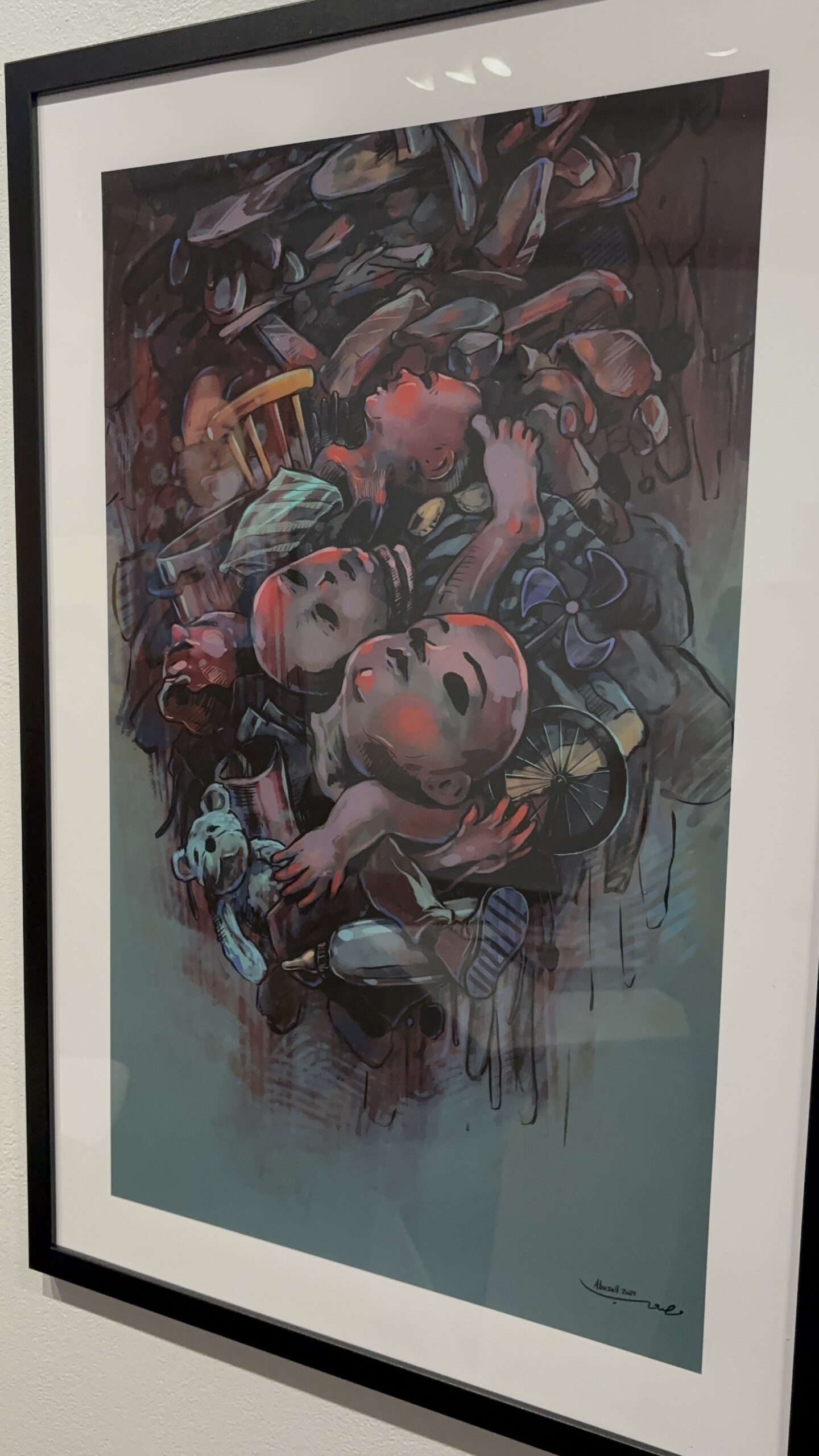
- photo: “Nothing Survived My Room” (2025) by Mosaab Abusail
-
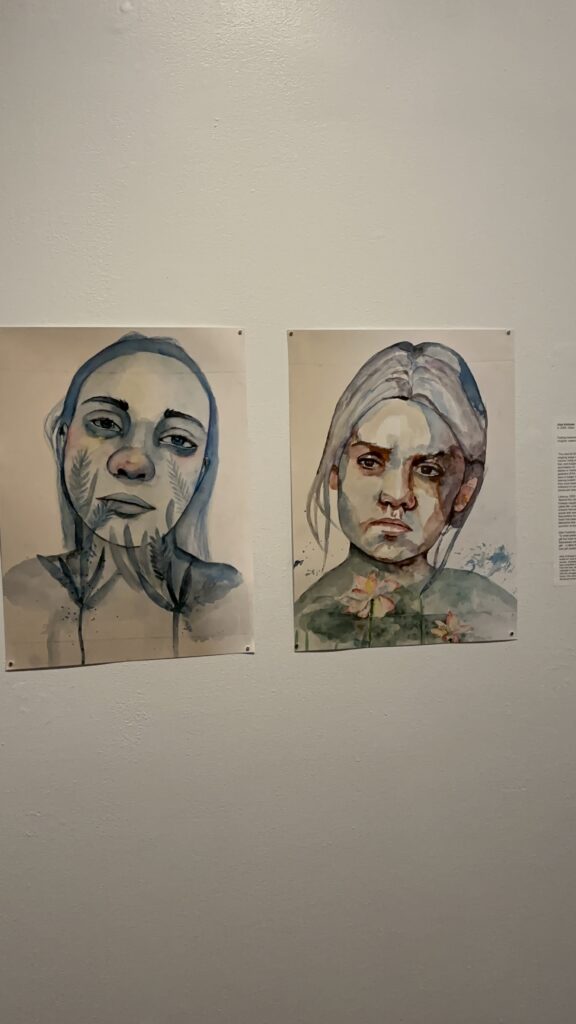
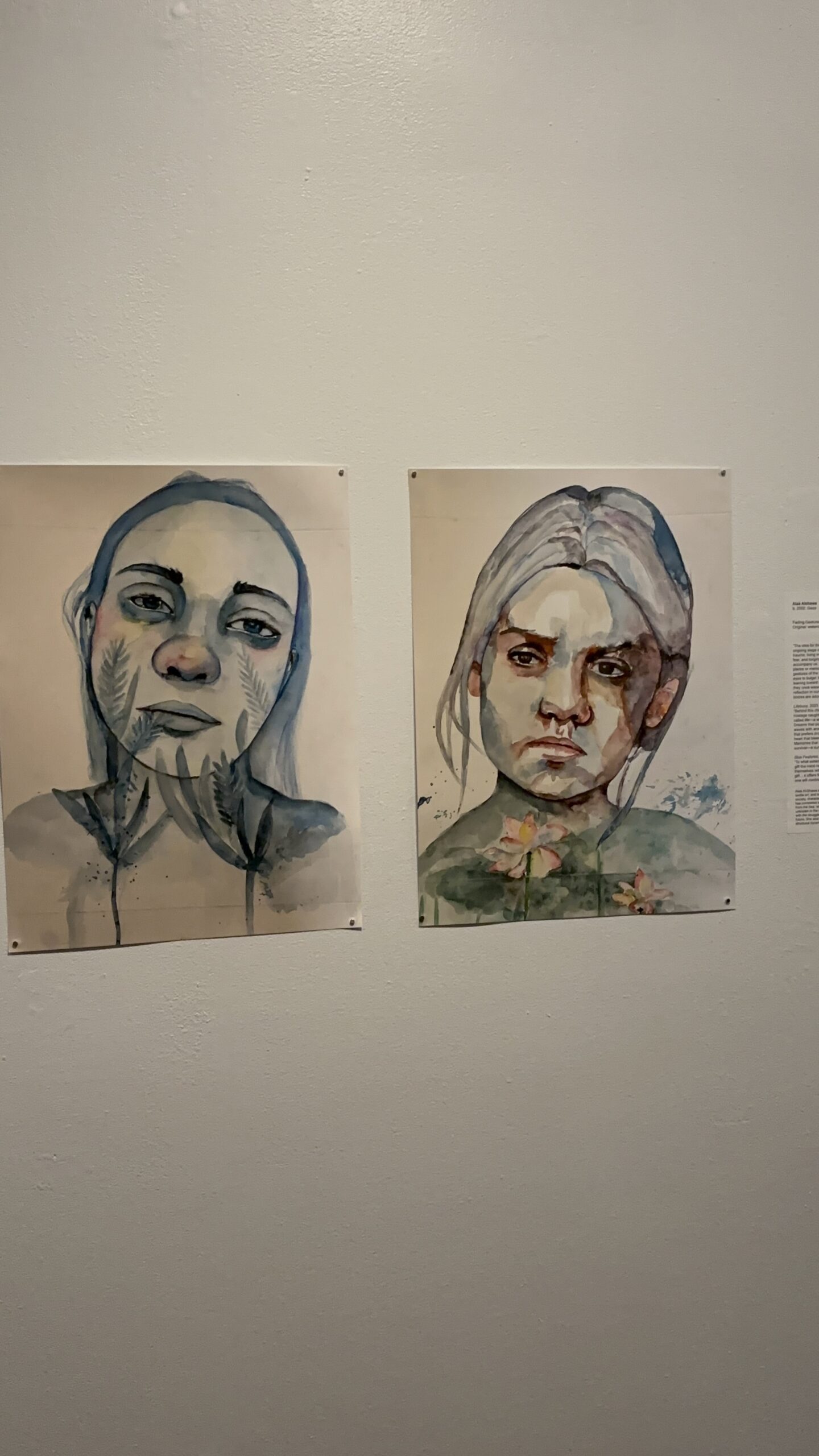
- photo: (R) “Lifebuoy” (2025) and (L) “Blue Features” (2025) both by Alaà Alshawa
-
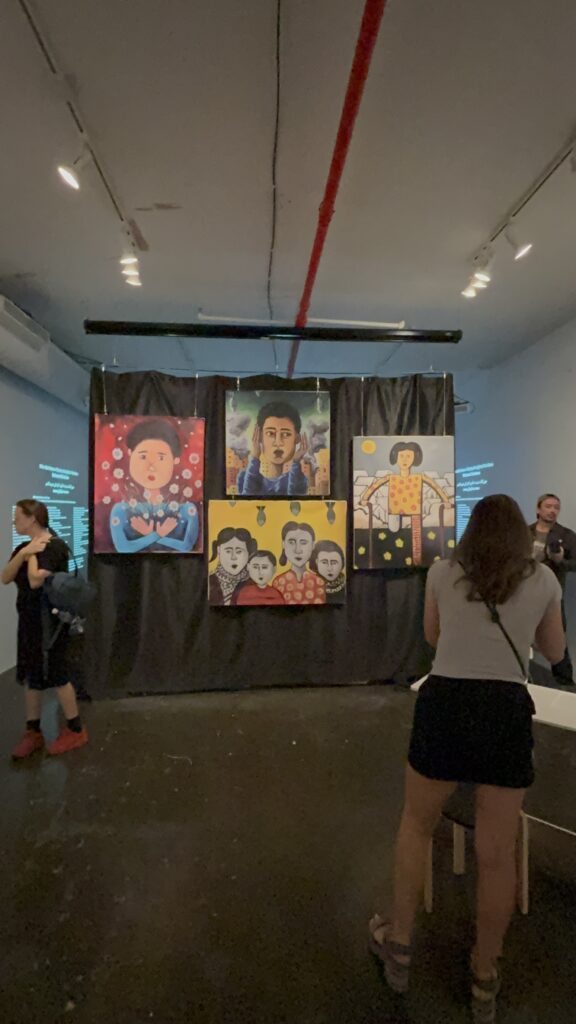
- photo: gallery view
-
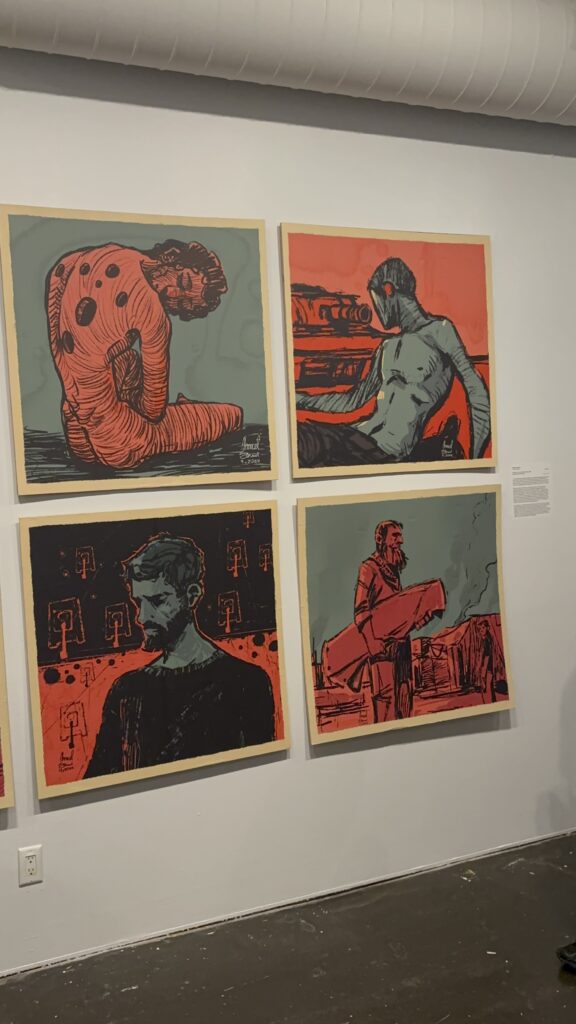
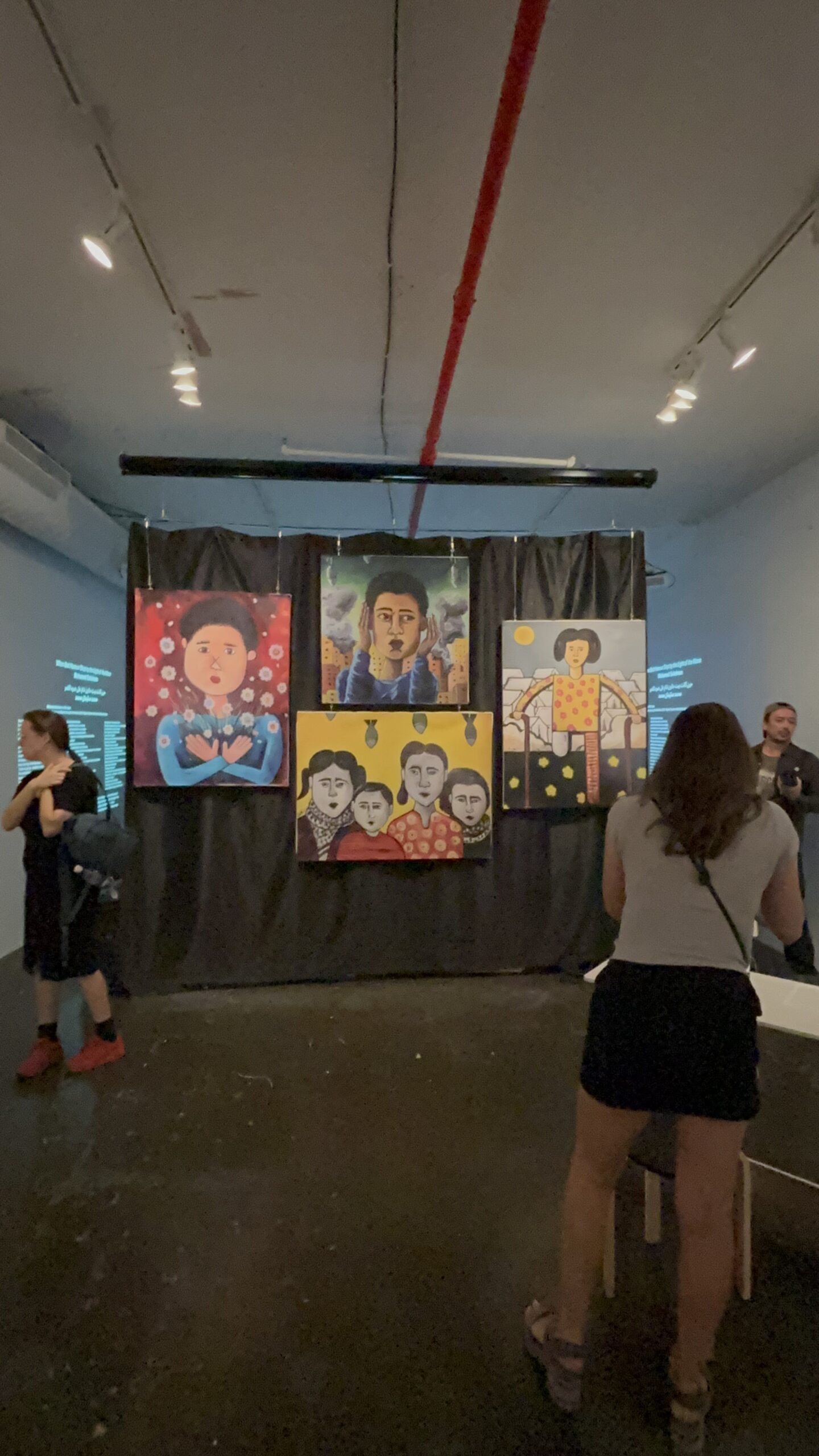
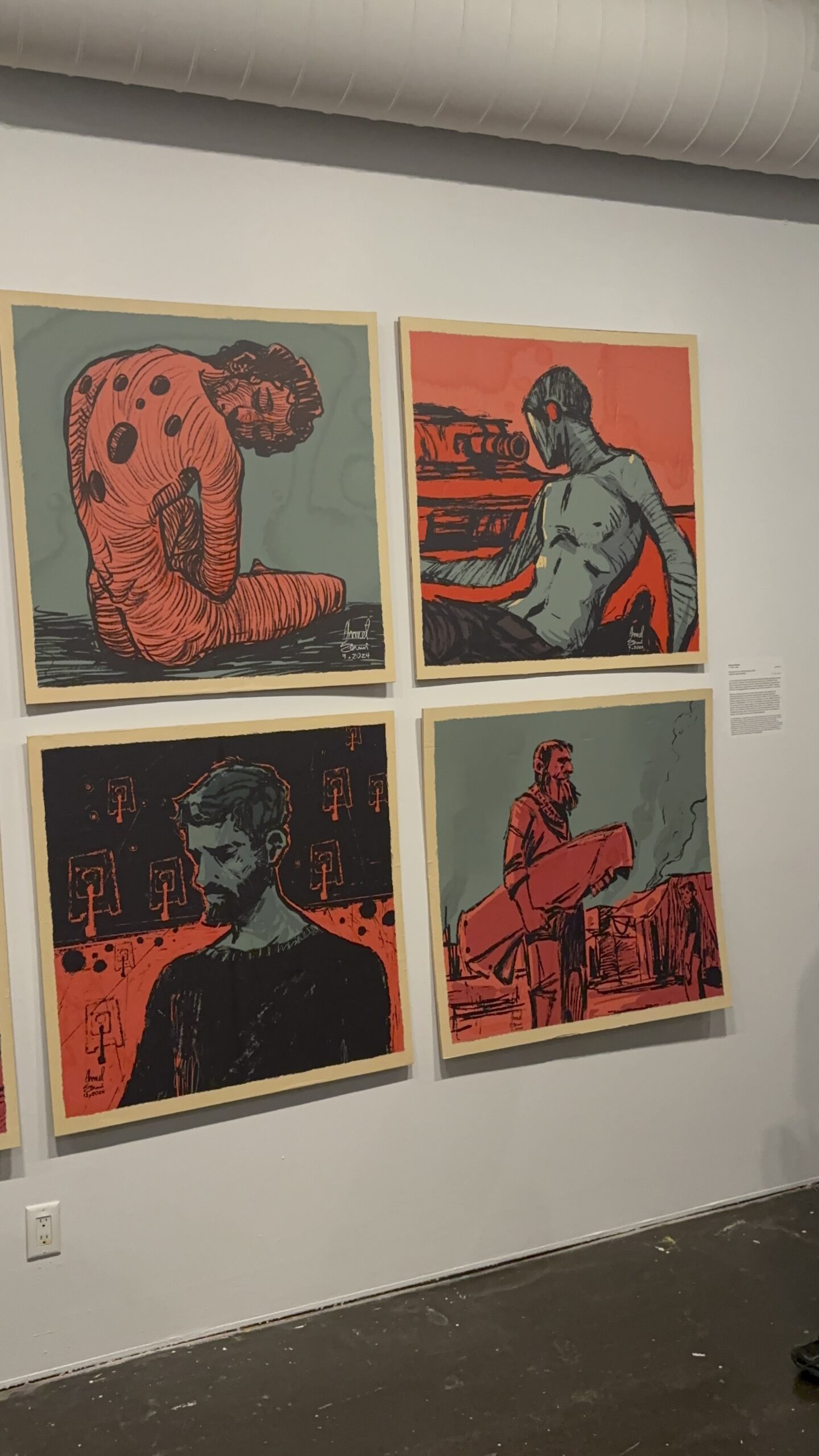
- photo: gallery view
-
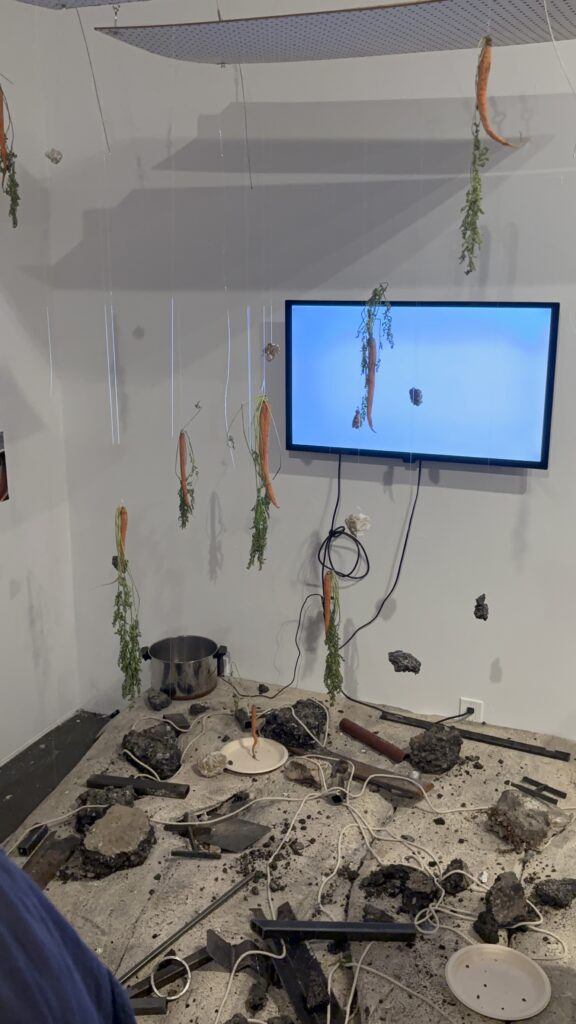
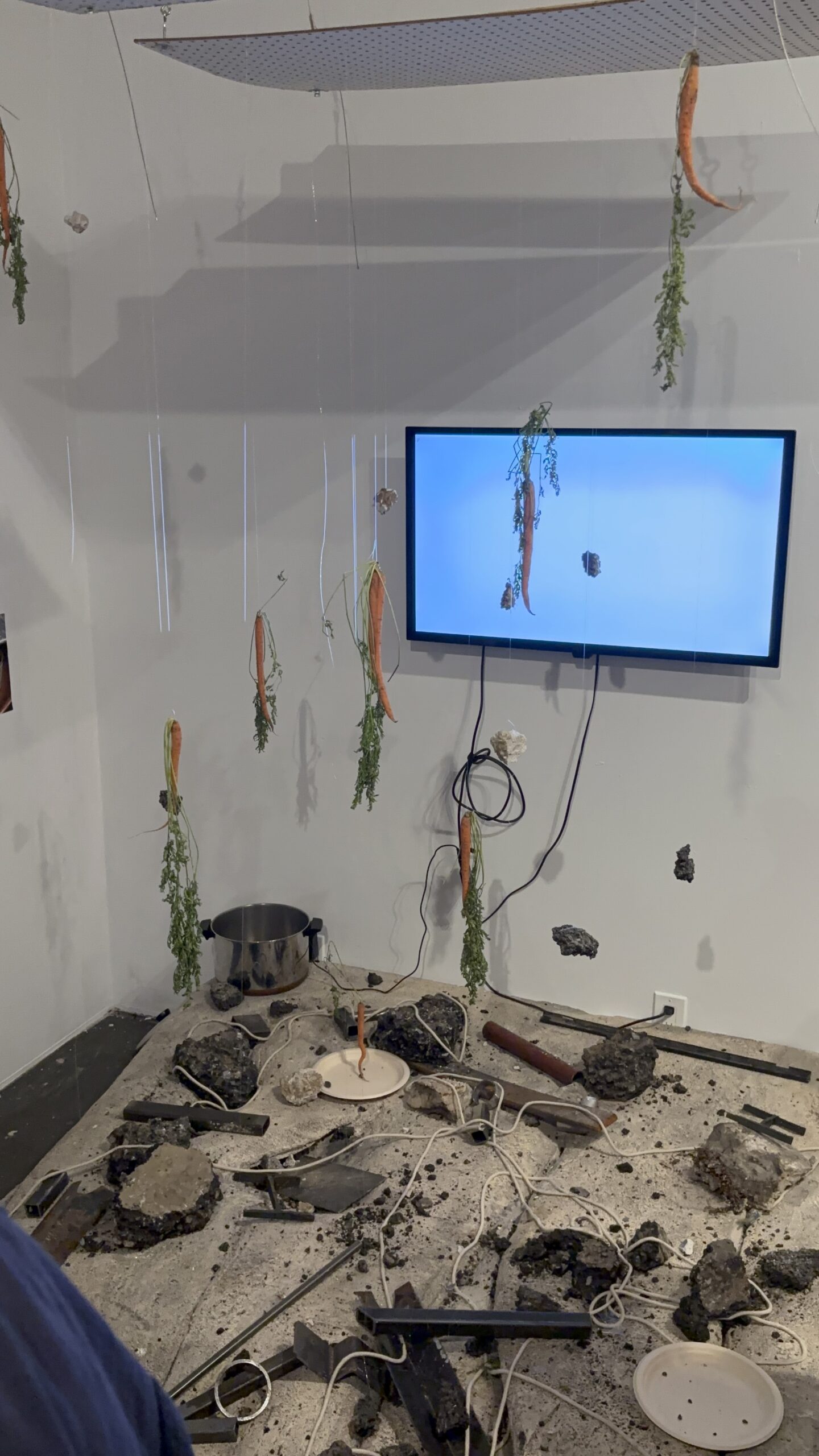
- photo: “The Rocket and the Carrot” (2025) by Ghanem Alden
-
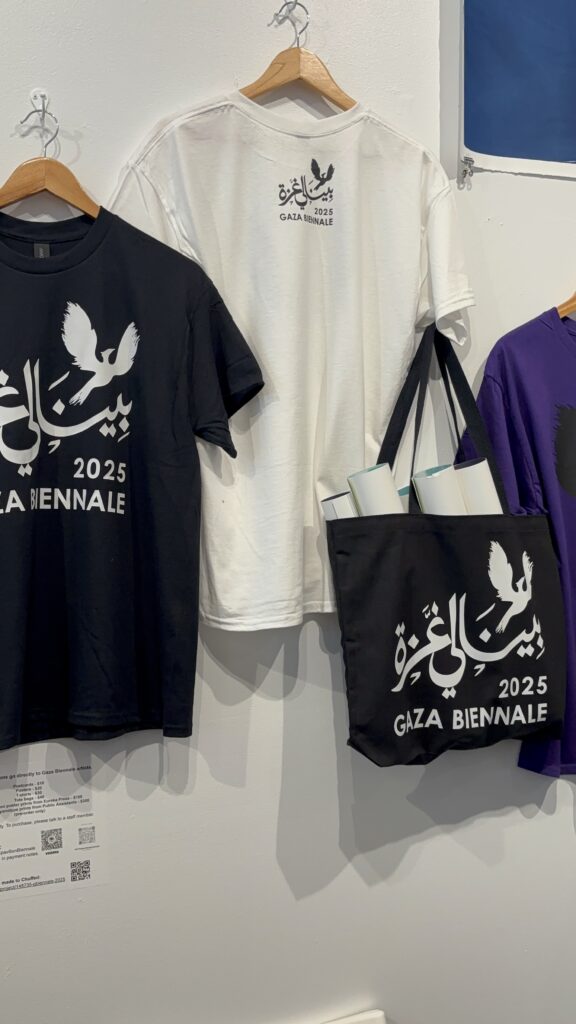
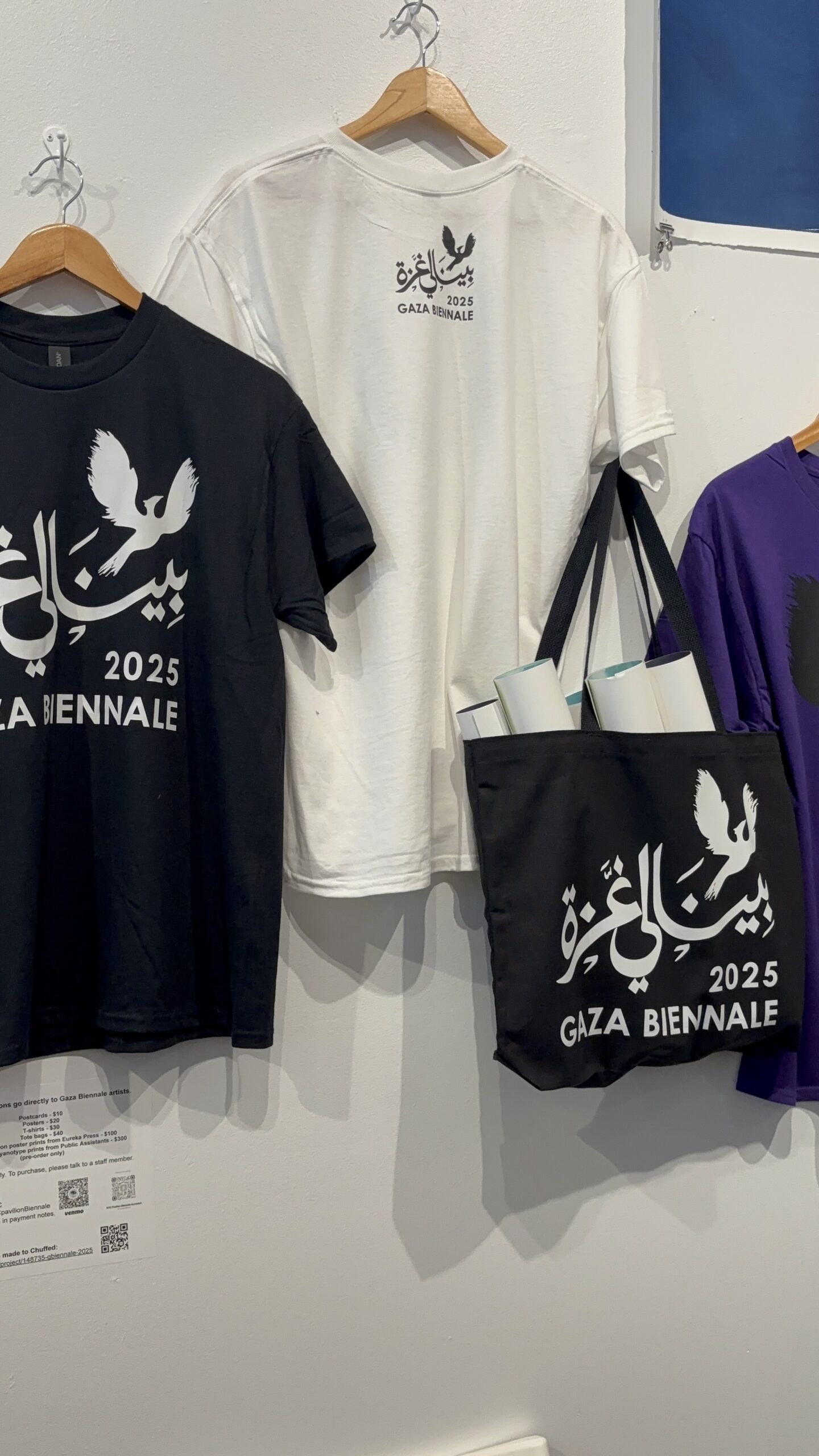
- photo: T-shirts, tote bags and posters were available to purchase; proceeds benefit the artists.