
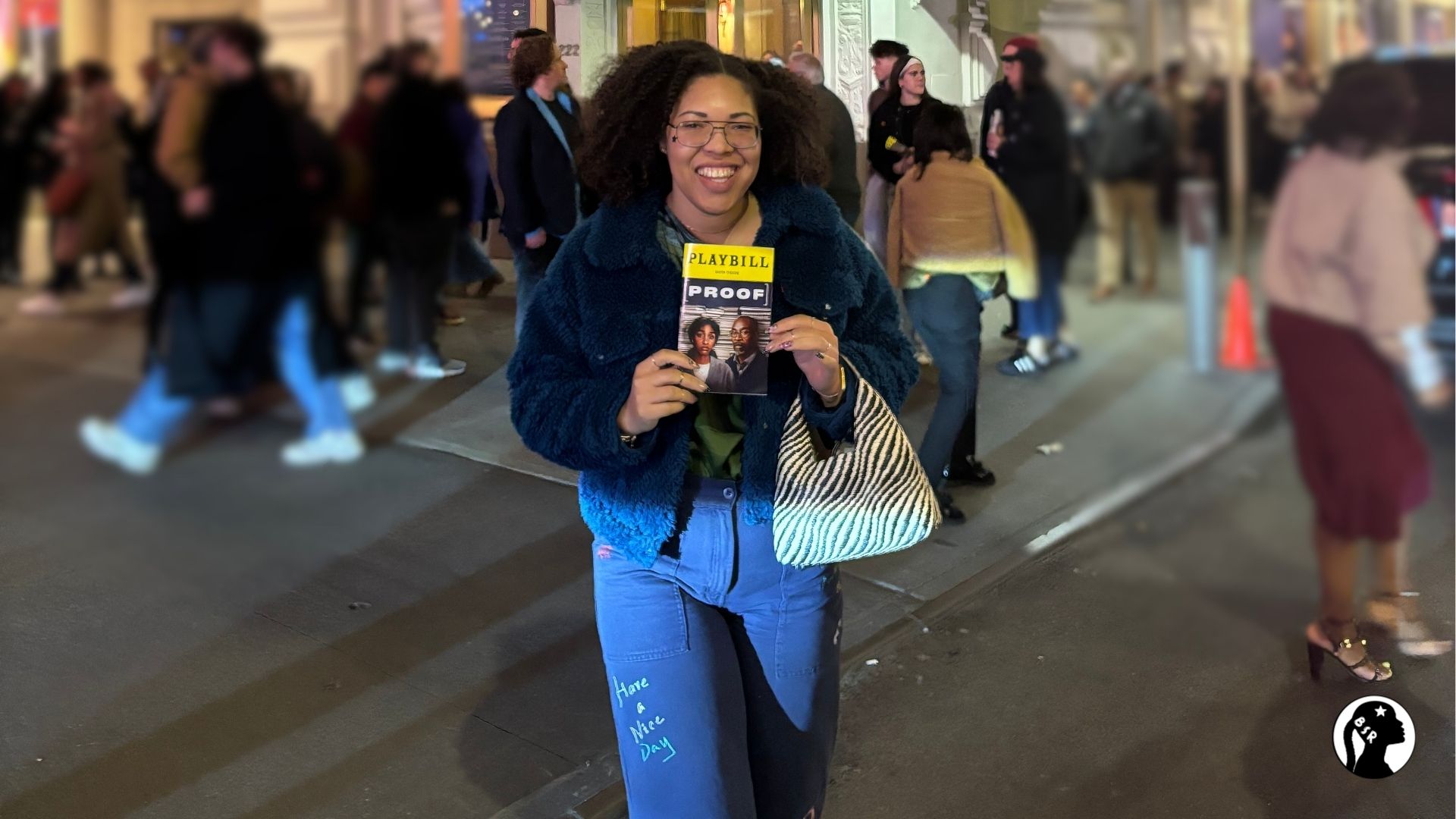
‘Proof’ on Broadway with Ayo Edebiri and Don Cheadle
The Tony-winning play has aged gracefully even when the actors miscalculate
Around this time last year, on what happened to be Norm Lewis’s birthday, I saw him perform in Ceremonies in Dark Old Men at the Theatre at St. Clements. The play is about a past-his-prime tap dancer who’s about to lose his family home in a get-rich-quick scheme, his sons who egg him on, and his daughter, Adele, who is the only person in the whole show with any sense. It felt impossible to avoid drawing connections between my self and the stage.
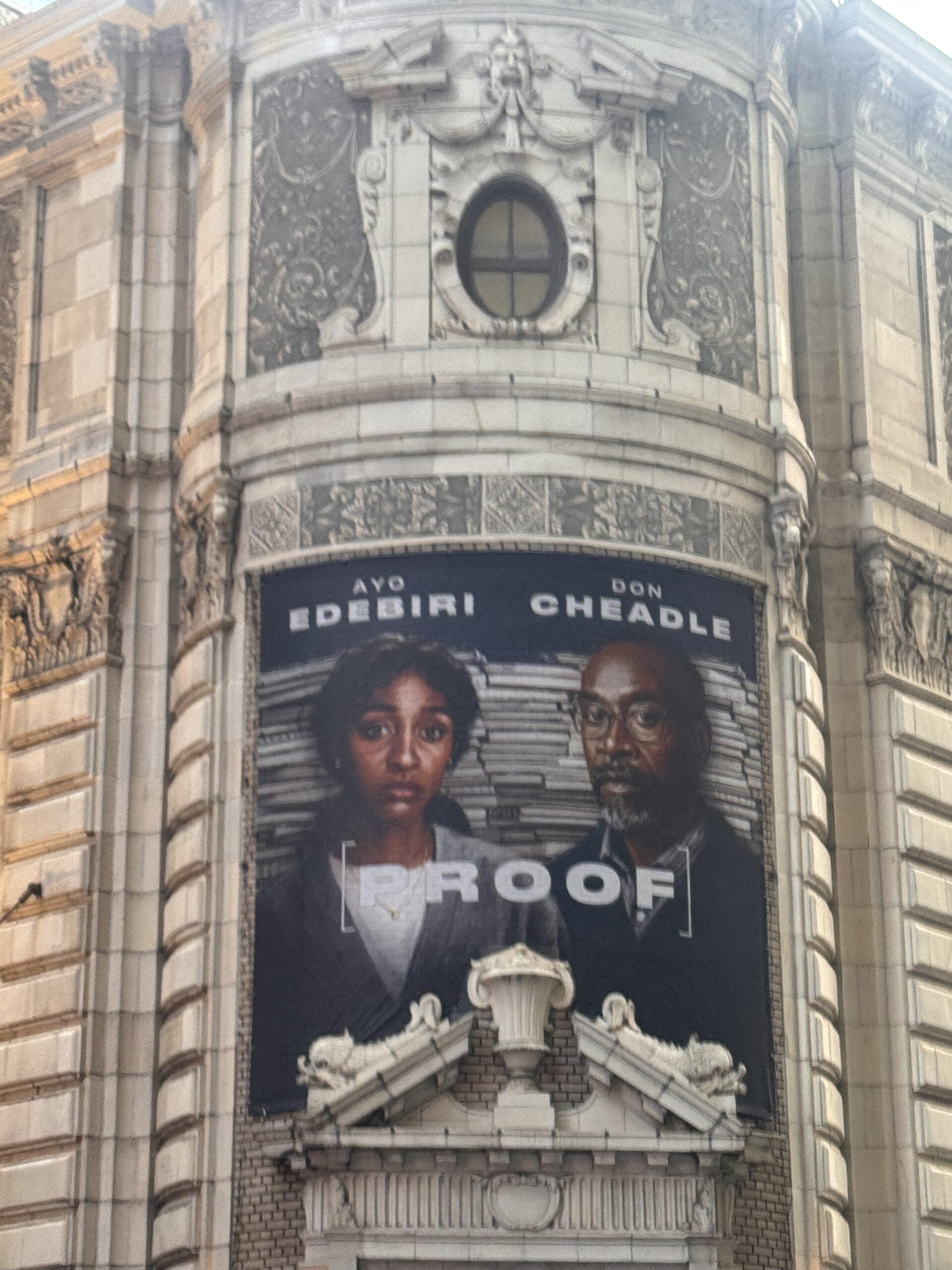
This year, in the cool dark of Proof, which opened last week at the Booth Theatre, there’s a new young woman who’s given up everything for her father. Catherine, played by Ayo Edebiri, lives with her father, Robert, in an outdated house near the University of Chicago campus where her father was a mathematics professor for many years. Robert, played by Don Cheadle, is revered by fellow math geeks like his protege Hal (Jin Ha), though Robert’s best work is behind him. His genius turned to madness after his intellectual prime (which mathematicians believe is somewhere around age 23) and when things got really bad, like compulsive writing and lining the attic with towers of library books bad, Catherine quit college to take care of him full-time. Claire (Kara Young) describes her sister Catherine as having gotten Dad’s “talent and his tendency toward instability.” Even after her father dies, Catherine is stuck in limbo. She seems to think that pursuing her full potential in the field of mathematics is a waste, since her mind will eventually go the way of her father’s.
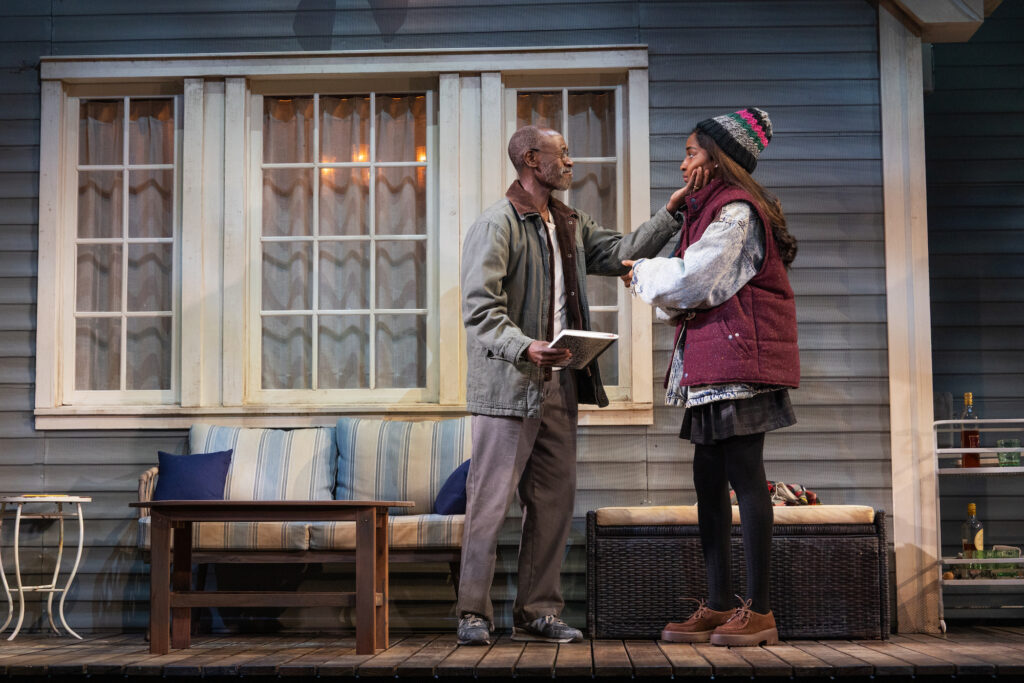
Don Cheadle as ‘Robert’ and Ayo Edebiri as ‘ Catherine’ in PROOF on Broadway. Photo by Matthew Murphy
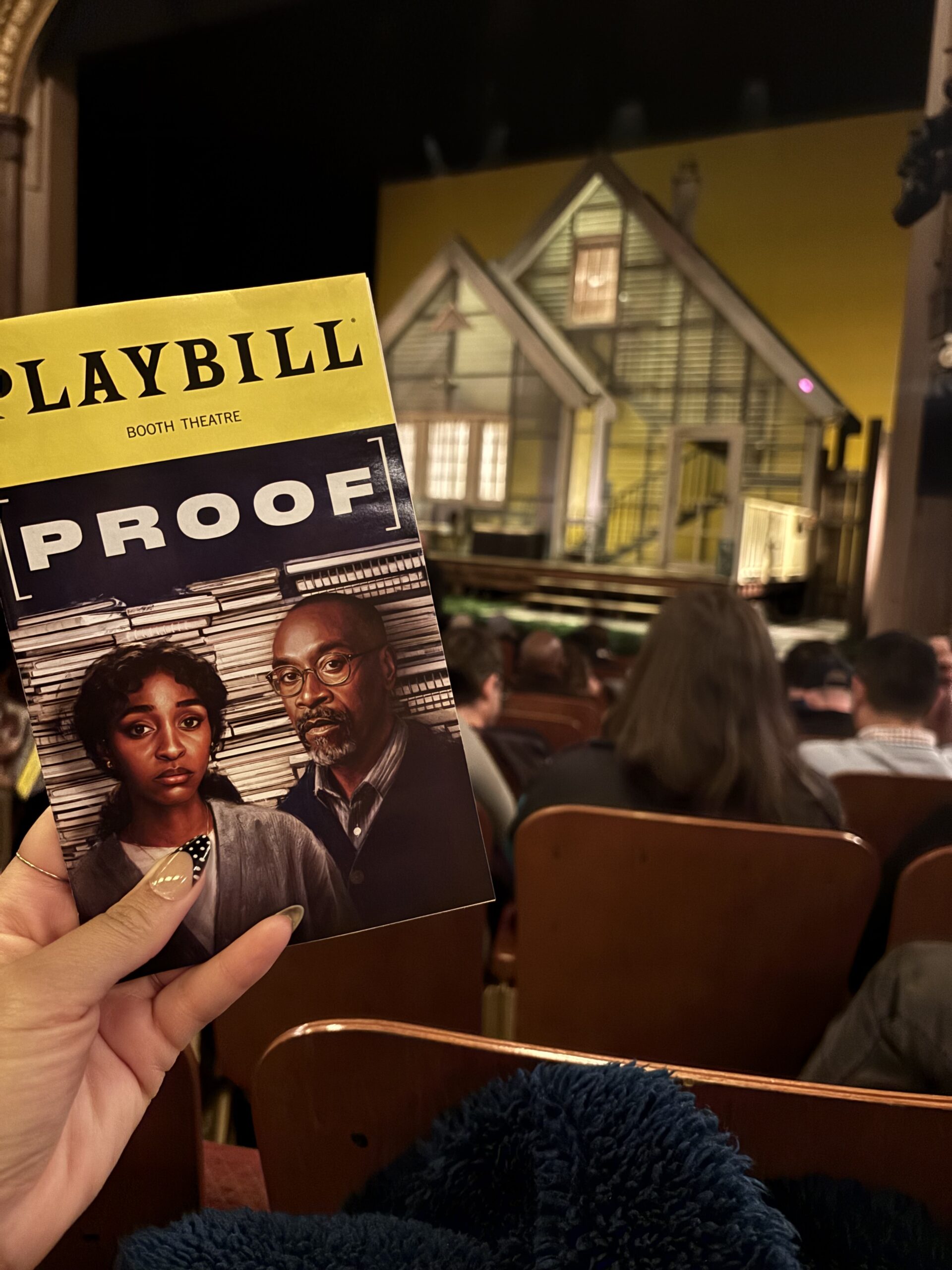
There aren’t many spoilers to be ruined in Proof and there isn’t much suspense in Act I, Act II, or even the intermission in-between. At the end of Act I, Claire and Hal argue over the authorship of an “astonishing” proof Catherine produces from her father’s office. The audience is inclined to believe Catherine’s claim that she wrote it on her own, but we spend Act II waiting for lesser minds Claire and Hal to admit they were wrong. It was clever, so I won’t ruin it for you, but the biggest twist comes in the opening exchange when we learn why Claire is visiting from New York in the first place. The show is steady and rational. The set never changes. Strip lights lined the windows and eaves of the back porch. Between scenes, a few tones of music played and the lights zipped around to frame the family’s little off-campus house. After the bustle of rushing to the theatre, it was pleasant to drop in and be present with a story that was determined to move at it’s own meander-y pace.
However, I do wish I could’ve dropped in deeper.
As the show plodded along, I found myself thinking about my own father, my own tug-of-war with moving home. When I caught myself wandering and aimed my focus back to the story, it was like I hadn’t missed anything at all. I couldn’t feel the characters in the ways I’d hoped. Despite his nervous self-promotion for his band and his longing stares, Hal’s feelings for Catherine still seemed to be ones of convenience. Kara Young’s signature vocal timbre (believe me: you’ll know it when you hear it) felt uncalled for as Catherine’s type-A currency analyst sister from New York with a capital-B blunt cut bob. Ayo, whose character was most often on stage, relied on two methods of delivery: sarcastic and stilted. This limited range made it difficult to convey sadness, devastation, frustration, hopefulness, attraction, or vindication — all of which Catherine cycles through during the show. Don Cheadle, who I’ve always wanted to see without a screen between us, was flawless as Robert. His monologue about bookstores filled with browsing students in the fall was so vivid I could feel the crunch of leaves beneath my boots. Even later when he was losing his mind, he still had me fooled. Unfortunately for all of us, Ms. Edebiri was at her most awkward in her scenes with Mr. Cheadle, and we see even less of Robert when he dies.
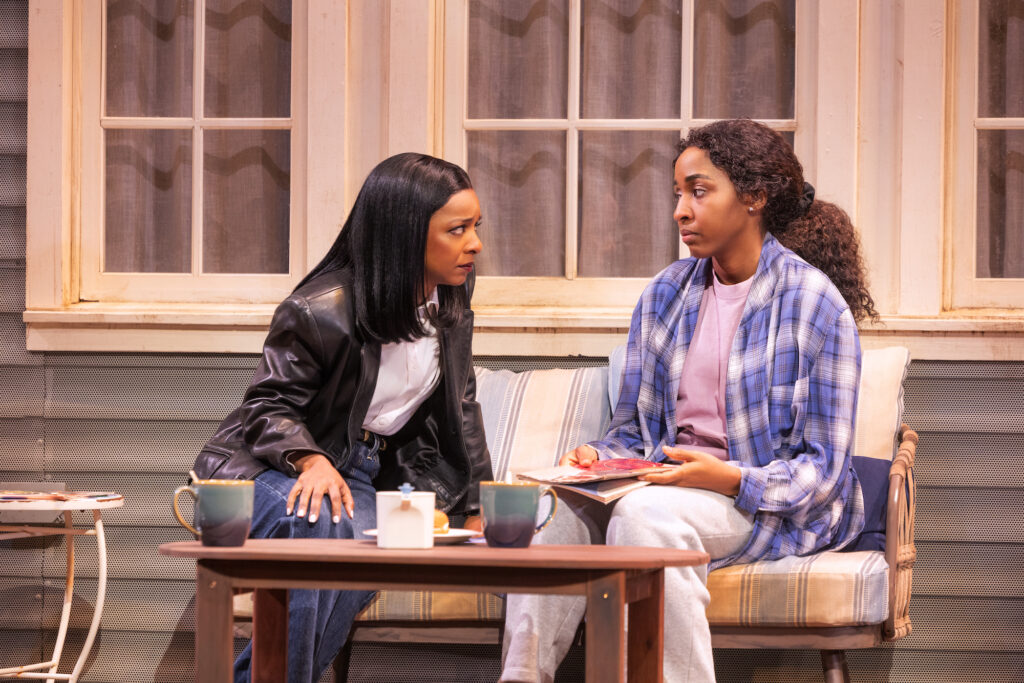
Kara Young as ‘Claire’ and Ayo Edebiri as ‘Catherine’ in PROOF on Broadway. Photo by Matthew Murphy
In the original production, everyone in the show was white. The revival depicts a black family, Ayo, Kara, and Don, and Jin Ha’s Hal is Korean-American. Any handwringing about the impropriety of the Asian mathlete stereotype is offset by the statistically unlikely interracial romantic storyline. (Studies show that in their gender groups Black women and Asian men consistently rank as least desirable.) And it’s nice to see new faces on stage in these American family stories.
Proof won the Tony for Best Play and a Pulitzer Prize in 2001. When I wasn’t thinking about my father, I was thinking about the state of the world when Proof was new. The Tonys were awarded on June 3, 2001 only 3 months before New York City and the world were disfigured by 9/11. Its fellow nominees in the Best Play category were The Invention of Love, The Tale of the Allergist’s Wife, King Hedley II (four years before the playwright August Wilson passed away). The big moment in Proof comes when we learn that Catherine, and not her father, has written that “astonishing” proof. Was there an audible gasp at the premiere? Was girls doing math a groundbreaking idea for theatre? In 2001, we were 7 years away from electing a Black president and more than 10 years away from having a woman at the top of the ticket. Reshma Saujani’s Girls Who Code was not a thing, Sheryl Sandberg had not yet ascended to tell us to “lean in”, and Beyoncé was still in her girl group, Destiny’s Child.
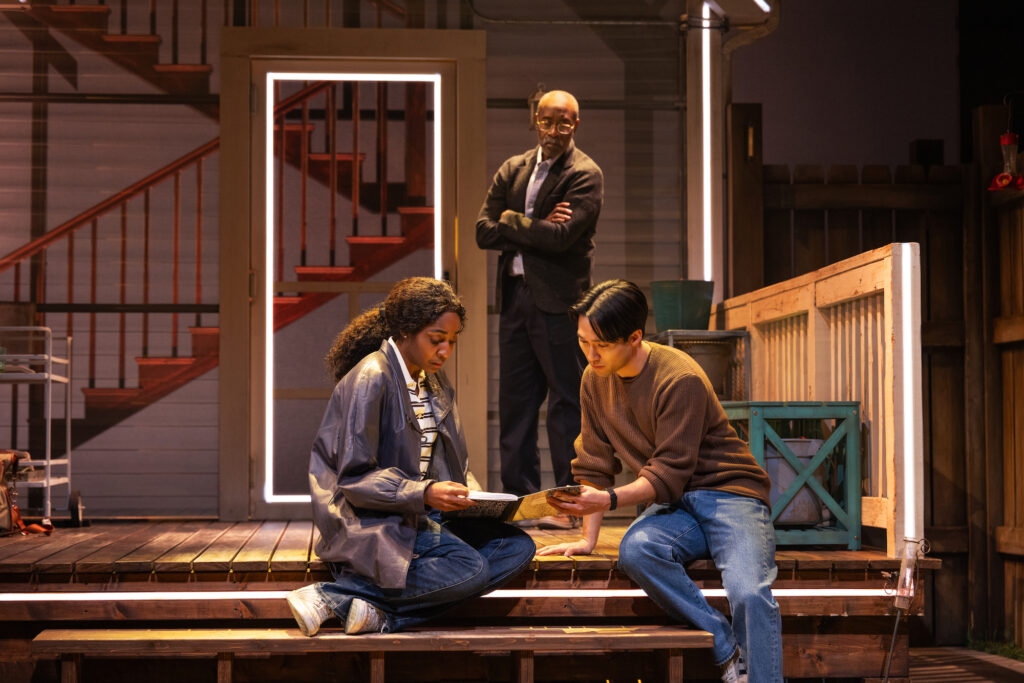
(L to R): Don Cheadle as ‘Robert,’ Ayo Edebiri as ‘ Catherine,’ and Jin Ha as ‘Hal’ in PROOF on Broadway. Photo by Matthew Murphy
Twenty-five years later, the ‘girls can’ theme feels ordinary (because of course we can!); it’s the father-daughter dynamic that feels ripe and current. As if my dad could sense me thinking about him, I had a missed call when I checked my phone after the show. Hollis, who accompanied me to the performance, was reflecting on the time she’d gone no contact with her father and ultimately caved. My friend La Erica says she’s been waiting for her dad to return either of her two voicemails. None of us know if we, or they, are doing this “right”.
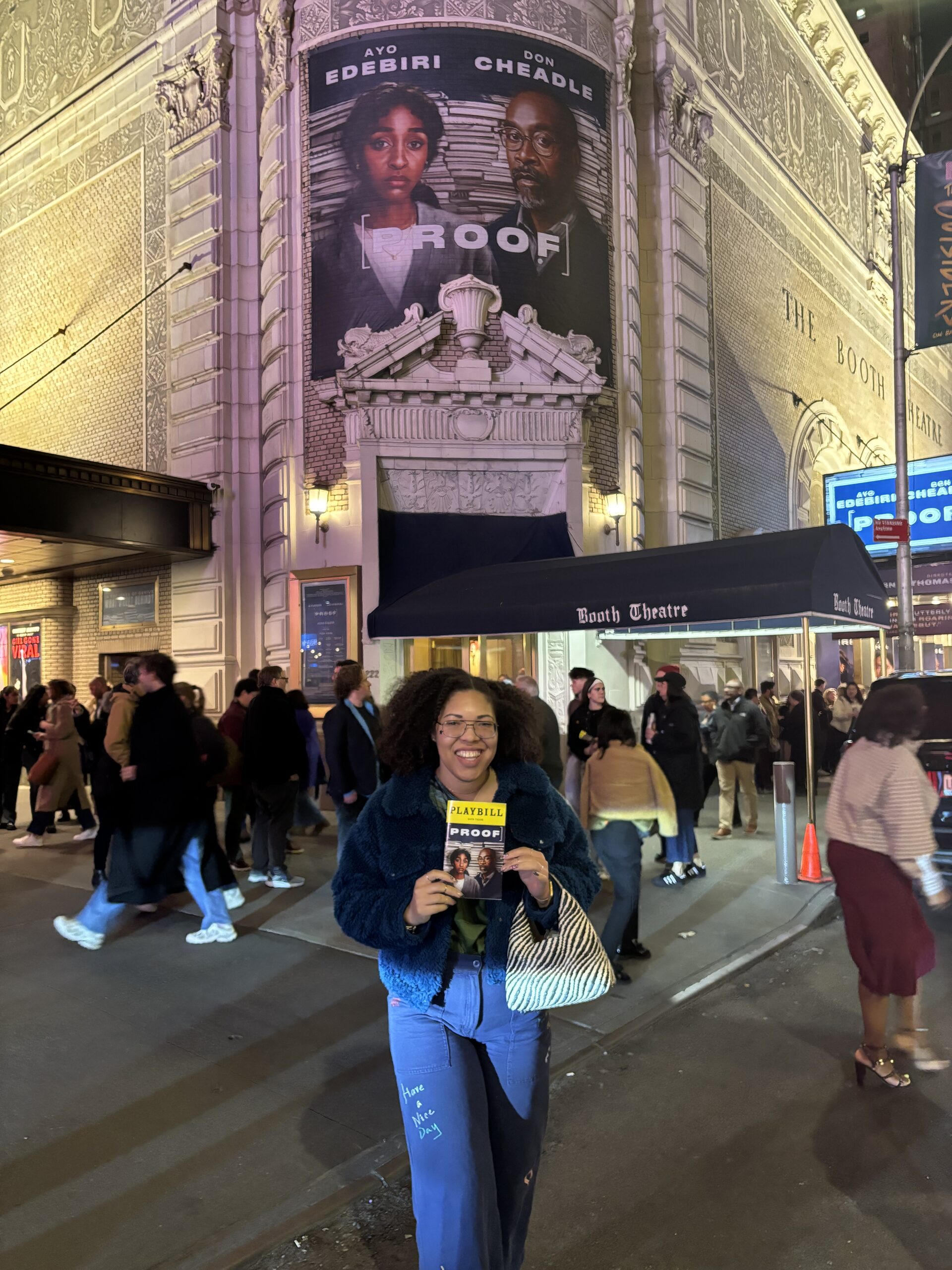
While the performances did not move me, the story did. I returned my father’s call on my walk home from the train. He talked for 11 minutes about making dinner in his crockpot, an unidentified person on his morning walk, and selecting carpet samples at Home Depot without any questions about what I’d seen or done or was feeling. Black fathers: we love them. The ways they love us back require some figuring.
blacklove 🖤 and starlight 🌟
The 2026 revival of Proof opened on April 16, 2026 at the Booth Theater. The production was directed by Thomas Kail and stars Ayo Edebiri, Don Cheadle, Jin Ha, and Kara Young (Is God Is, Purpose). This play was written by David Auburn and premiered in 2001. I received a press ticket for this performance and offer my thanks to DKC/O&M.
The strictly limited engagement will run through July 19, 2026. Tickets for evening shows are $114 and up.