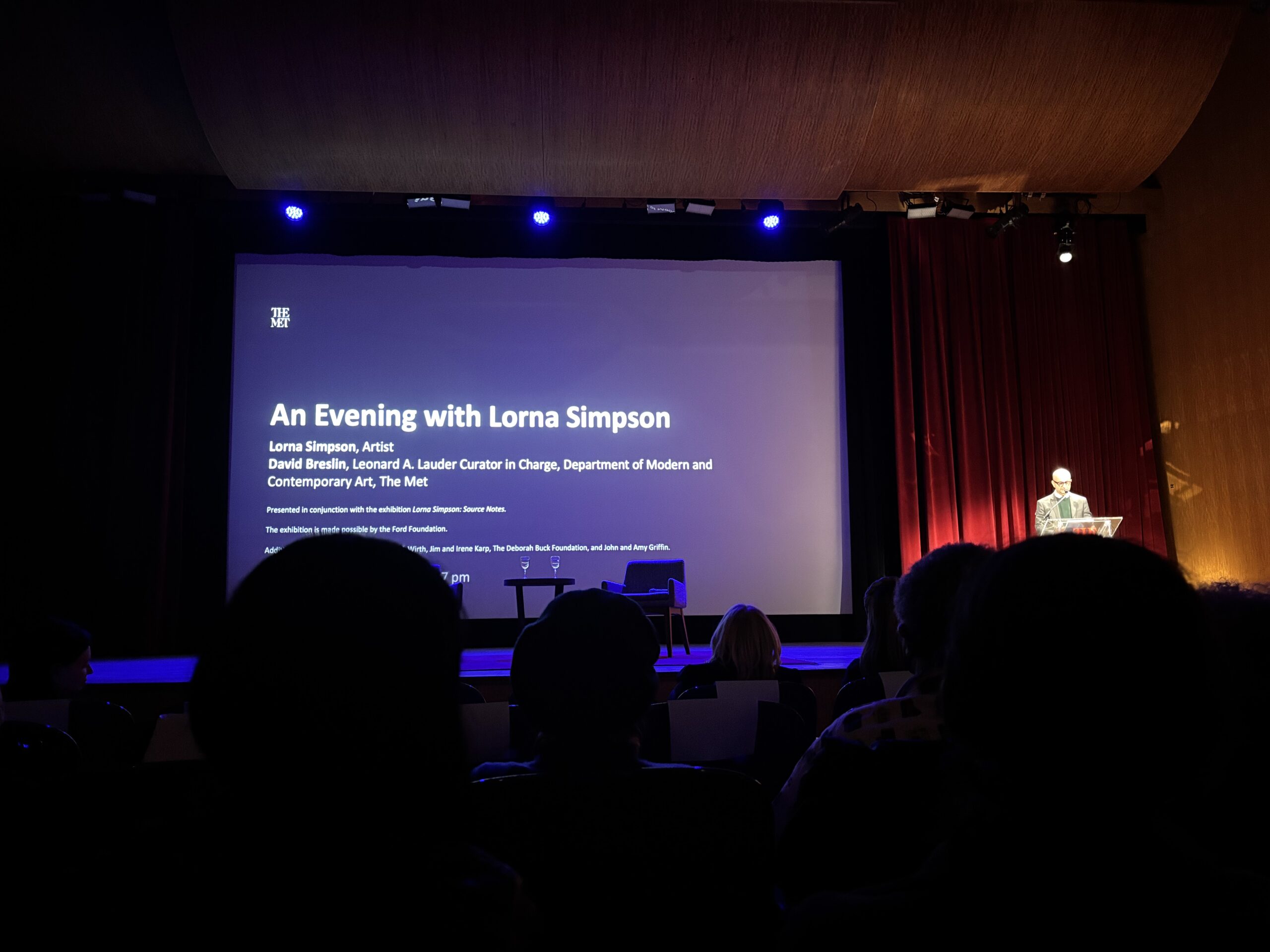
An Evening With Lorna Simpson
Lorna Simpson gets the last word on her ‘Source Notes’ show at the Met as she shares her “less precious” approach to ideas, mediums, and life
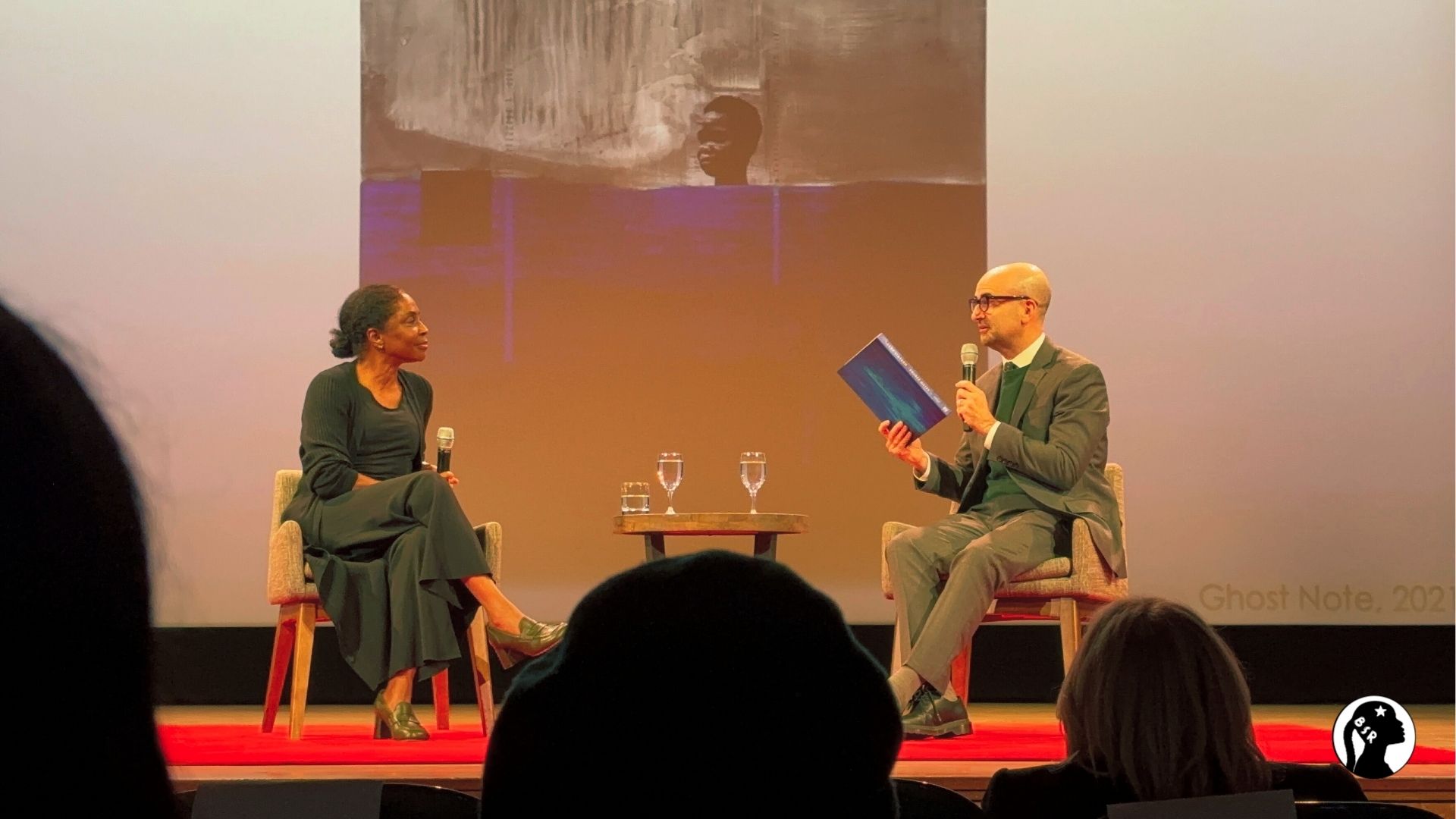
“What do you think it means,” the interviewer asked, “to work in a medium like painting, that refuses language?”
Ms. Simpson bristled and then paused to choose her words. “No, I wouldn’t say painting refuses language. It does it differently.”
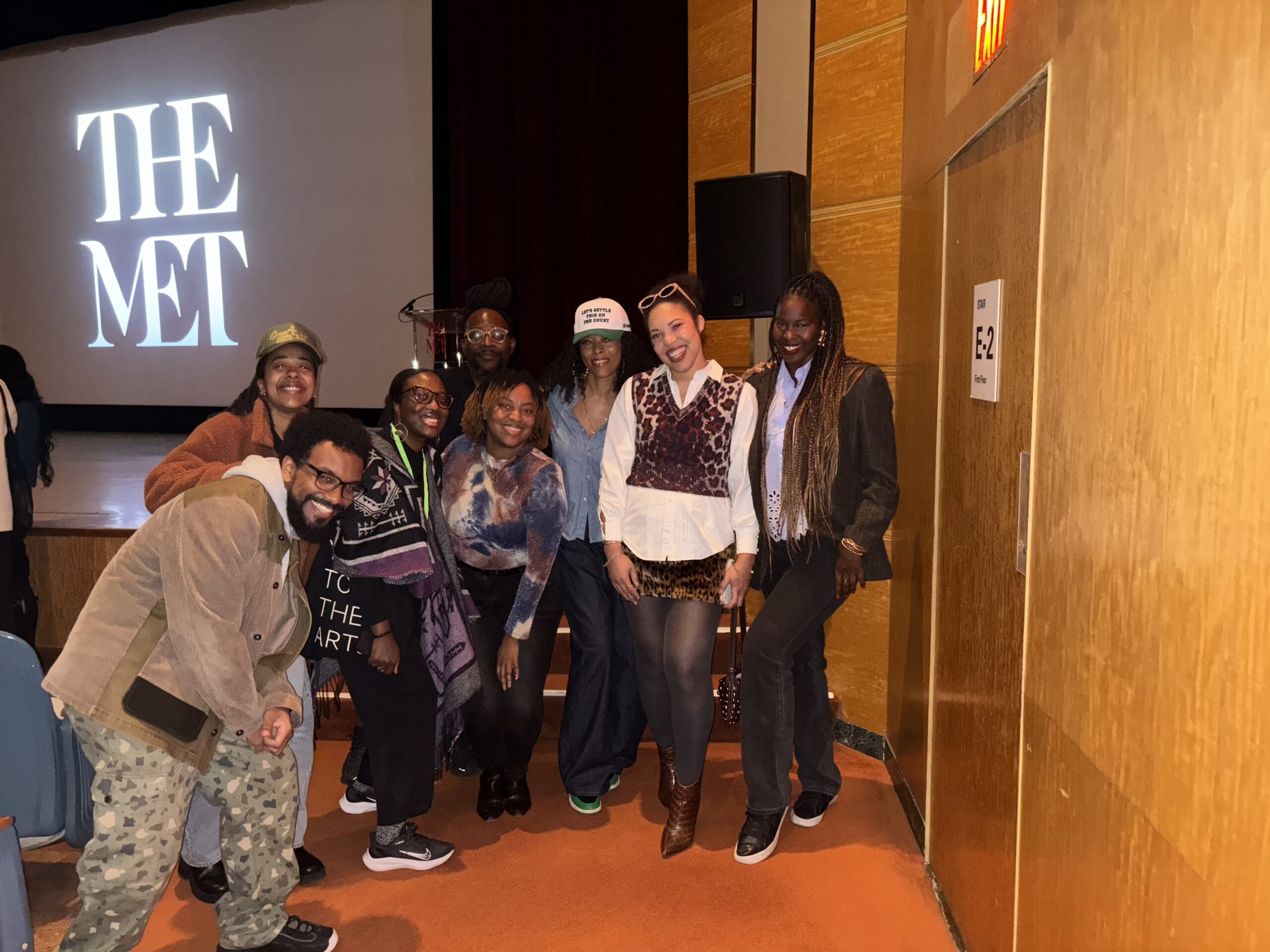
For an artist who finds it “challenging” to talk about her work in public, Lorna Simpson, a Black woman artist with a solo exhibition at the Met this year articulated herself with clarity and punctuated her remarks with gems that had me scribbling furiously in my notebook and had Hollis and Natali typing non-stop in their Notes apps.
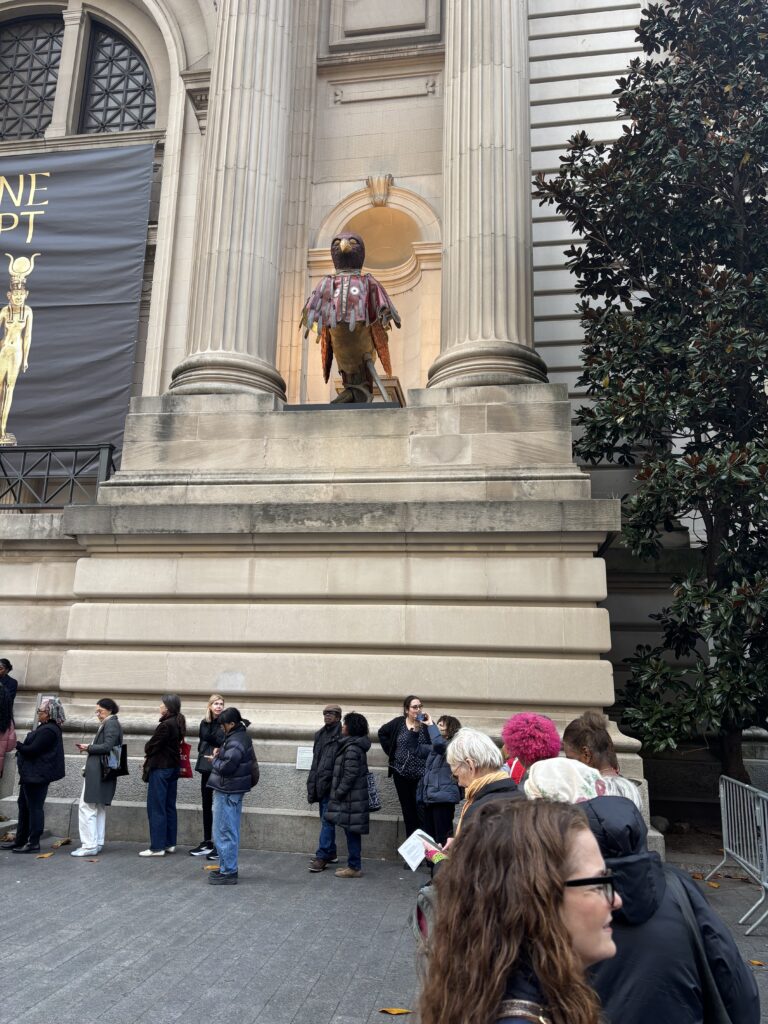
There was a line to enter the event. Seating was first come, first served.
Previous to this most recent collection of works, Simpson was labeled a conceptual photographer and known for her photographs of Black women, usually depicted from behind, from their shoulders up. Simpson would impose a label on the image, often a single word. When the images hang behind glass in a museum, I like to get as close as I’m allowed and take a selfie in the reflection. The resulting image sandwiches me into the work — I am the woman in the image, she is me, we are both labeled with ‘identity’. Maybe it’s my own attempt at conceptual.
Now, Lorna has revealed a new label for herself: consummate painter. She explained that 20 years ago she wouldn’t have imagined herself painting, but the switch was borne from an affinity for risk and challenge. Much like my crude attempts at conceptual photography were inspired by her, she was inspired by her many painter friends. “I would see their work and say, ‘Oh, I want to try that.’” Her original goal was not to show her paintings, but just to “see where it goes”. She added, with what sounded like regret, that at her level she gets to keep very little of her work to herself. When others saw the paintings in her studio, the outline of an exhibition began to form, first at Hauser & Wirth and then at the Met.
She admitted to her obsession with repetition and how she sees her work as an artist to involve “telling the same story over and over”. When I saw her Met show “Source Notes” in August, I could sense the stories emerging through the work. In her glacier scenes (a result of her obsession with austere environments), she drew a connection to Matthew Henson, a Black explorer who was vital to early expeditions in the Arctic. In “Ghost Note”, a child’s head floats just above the water line while his eyes glare at the viewer. Between the double entendre of the work’s title and the boy’s expression alone, the potential for story abounds. In another work, she’d been inspired by an anecdote she’d come across in her studio, about a Black man in Baldwyn, Mississippi named Ed Bush. He’d witnessed a meteorite careen to the ground, but it was 1922 and he was a tenant farmer so the once-heavenly body was commandeered by the white man who owned the land, Judge Allen Cox. The way that Ms. Simpson finds inspiration in clippings of Black experiences, reminds me of the news story that inspired Toni Morrison’s 1987 novel Beloved. The case against Margaret Garner for murdering her own children to protect them from enslavement made headlines in 1856.
At the same time, Lorna is rewriting her own story. She’s giving up on being “precious”, on being so careful about so many things. This is an outcome of two events that shook up her life in short order. She retold her story of being interviewed by The New Yorker’s Hilton Als in Sonoma after she had survived a divorce that shook up her life figuratively and an earthquake that shook things in the literal sense. She decided, “Fuck it. What am I being precious about?” The Met audience fell silent at the sound of the F word. We all seemed nervous that she had broken some unspoken rule about profanity in public programs. I held my breath for a repercussion or “kind reminder” from the interviewer, but none came. She’d tossed out the rulebook and let us do the same.
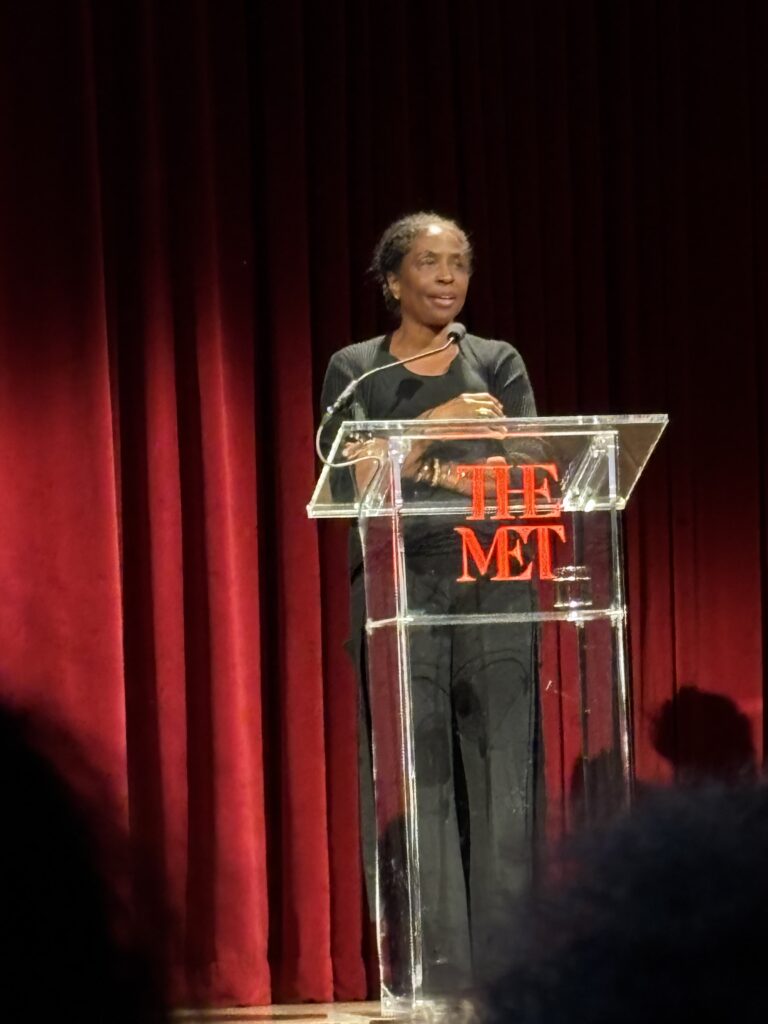
Artist Lorna Simpson talks about her show “Source Notes”
On the state of the country, she says she saw the backlash coming as far back as 2009. In September of that year, President Barack Obama’s televised address to Congress about healthcare reform was interrupted by South Carolina Republican Joe Wilson when Wilson spoke out of turn to yell “You lie!” and point an angry finger at the President. This was a major news item when it happened, but reporters skirted the opportunity to call the outburst racist and instead focused on how the event represented a distasteful decline in decorum.
Ms. Simpson’s assertion is right on several fronts: this was an early sign of the coming backlash against perceived racial progress, a harbinger of how the media would fail to take responsibility as a moral authority, and it was a preview of the ill-mannered, inappropriate brain rot behavior that’s been spewing out of the Capitol ever since. You can draw a direct line from “You lie!” 2009 to the January 6th insurrection of 2021 (and I’m sure someone else has already done so).
This evening with Lorna was an inside look at the mind of an esteemed artist and akin to dinner with a parasocial mentor. Lorna Simpson does not know me personally, nor I her, but when she described the political climate and epiphanies she’s experienced, coupled with her identity as a middle-aged Black woman from Brooklyn, I felt like there were life lessons in there, too.
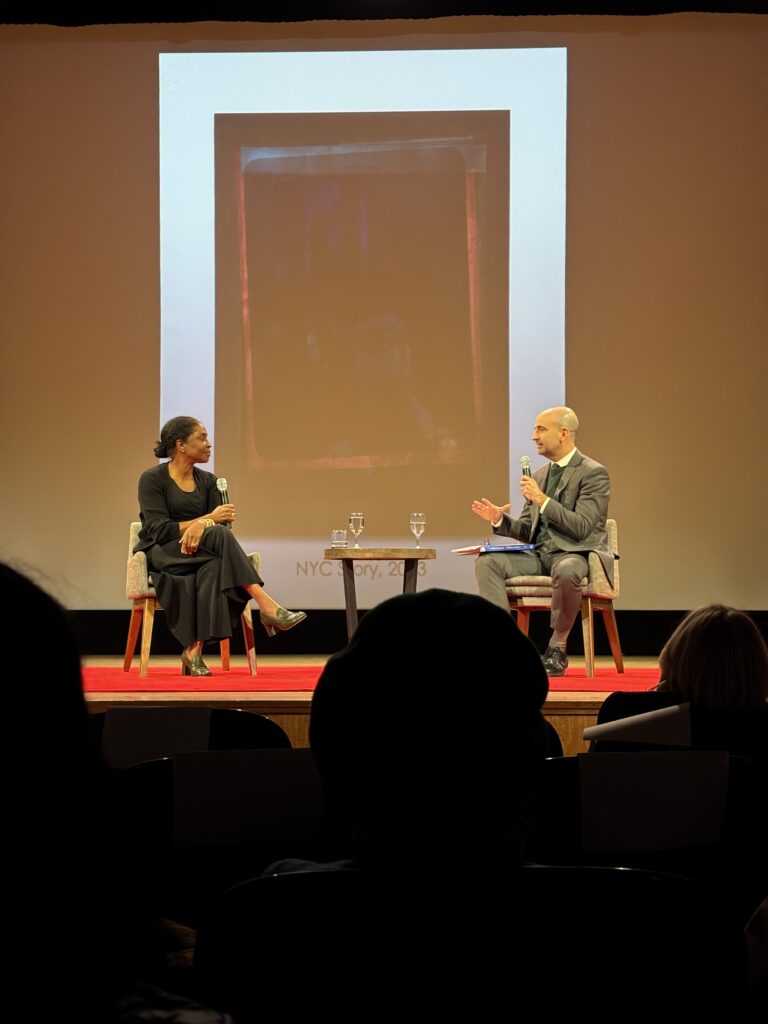
Lorna Simpson (L) and David Breslin (R)
“Don’t always assume what you don’t do, it’s the ideas that shape the practice.” A statement on both her repertoire as an artist, and the comfortable ruts one may fall into over the course of one’s life.
“I never try to assume about my audience because people see a lot more than I even see. It’s enough to manage my [own] imagination.” A tip for both releasing interpretation over to the audience, and surrendering to the fact that you cannot control how other people see you.
Near the end, she quoted the British writer Zadie Smith to share another maxim that serves in art as in life, “To be a writer or maker, you have to be optimistic.” On the mic and on the canvas, both with and without language, Ms. Simpson has consistently articulated the hidden perspective, the untold story, and the optimistic upside.
blacklove 🖤 and starlight 🌟
“An Evening with Lorna Simpson” took place at the Metropolitan Museum of Art on October 28, 2025 and featured the artist in conversation with David Breslin, Leonard A. Lauder Curator in Charge, Department of Modern and Contemporary Art. The event was free with RSVP and open to the public. The exhibition “Lorna Simpson: Source Notes” closed on November 2nd, 2025 but you can read about my visit. Thank you to Hollis Heath and Natali Rivers for the invitation.