
we come to collect: a flirtation, with capitalism
This must-see Off-Broadway treat lightens the mood and the socio-political load of time, money, work, and traditional audience etiquette
Six months ago, the working title for my memoir was Don’t Wear Heels to a Date at the Whitney (And Other Things I Wish I Hadn’t Learned The Hard Way). The title was one of many contenders; I liked that it hinted at earned knowledge but I anticipated fielding complaints about the length. It’s a mouthful. To be clear, I haven’t written a single page of text yet because my favorite part of working on my memoir is dreaming up titles. These days there’s a new front-runner: Living On the Edge at the End of an Empire. This one is less Sex and the City and more The Last Of Us. But what sense does it make to be working on (or even dreaming about working on) a memoir in an apocalypse, political or otherwise?
An even better question is: what sense does it make to be working at all? This question is the pearl in the proverbial oyster of we come to collect: a flirtation, with capitalism a world premiere production at The Flea Theater in TriBeCa, which also produced Chiaroscuro in May. The show agitates around the rigid absurdity of capitalism and how it contrasts to the organic miracle of you. It circles around the gritty discomfort of spending our time “earning a living” and presents us with iridescent notions of what we might enjoy more. Seeing this show might make you quit your job; if you’ve already quit or been laid off, then it may nudge you towards long-term thumb twiddling.
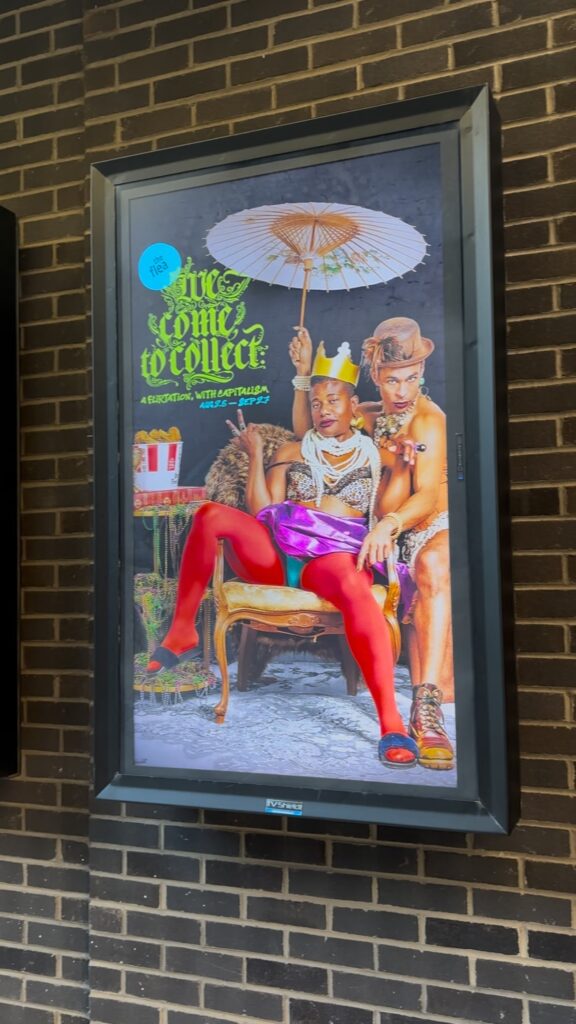
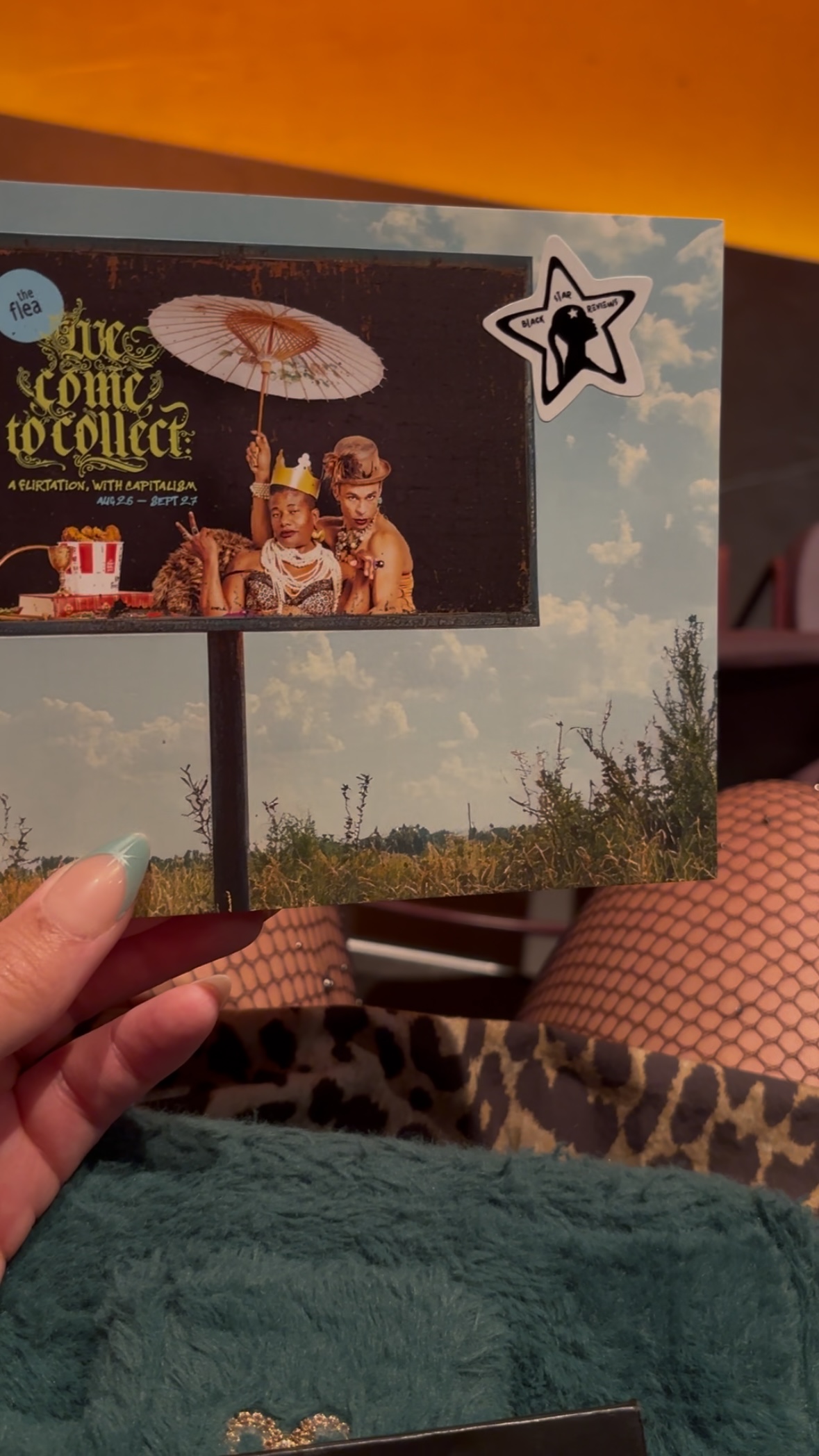
photo: Outside, the promotional poster pokes fun at perceived luxury and opulence
we come to collect suggests it’s long past time that you follow your dreams. Not the dreams that require you to put in hours of practice to become a high-rolling professional athlete, or the kind that finds you slaving in kitchens to open an itinerant cupcake truck. Those dreams are all shaped by conventional notions of success. The dreams that writer, co-director, and performer Jenn Kidwell wants you to follow are the amorphous, non-linear dreams that come to you during a fine night’s rest.
Depending on where you sit in the audience, she may ask you to tell the room about a dream you’ve had. On the night I attended, she dozed off while an internet-averse news writer described his difficulty with finding work. She locked in with full eye contact and encouraging ad-libs when he told us about his dream of running into his ex-girlfriend from the 80s at a dry cleaners in the East Village. We were all much more invested in the context of his romantic subconscious than we were about the slog of his employment experiences (though as a fellow writer, I wanted to know more about how he managed to stay offline).
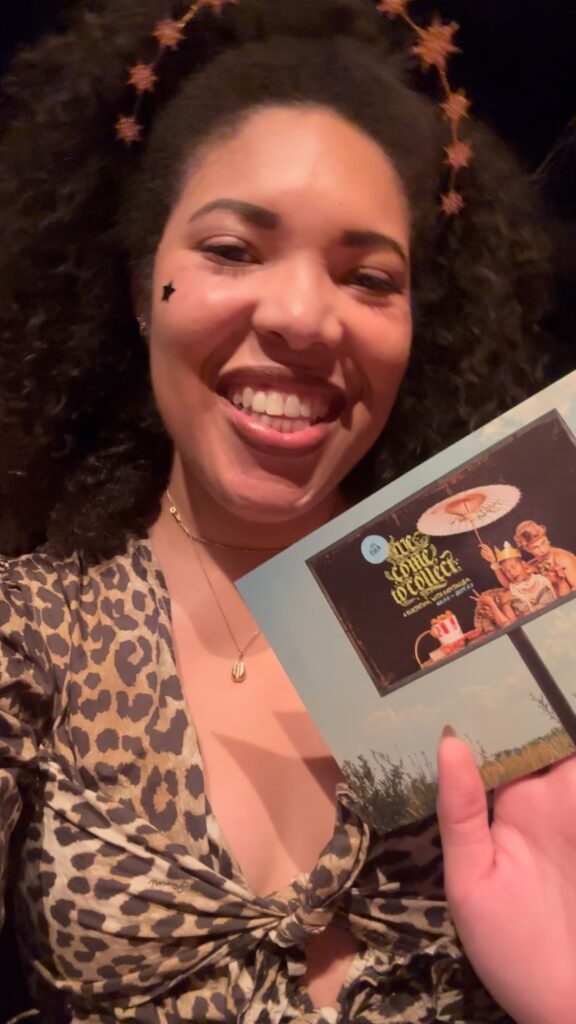
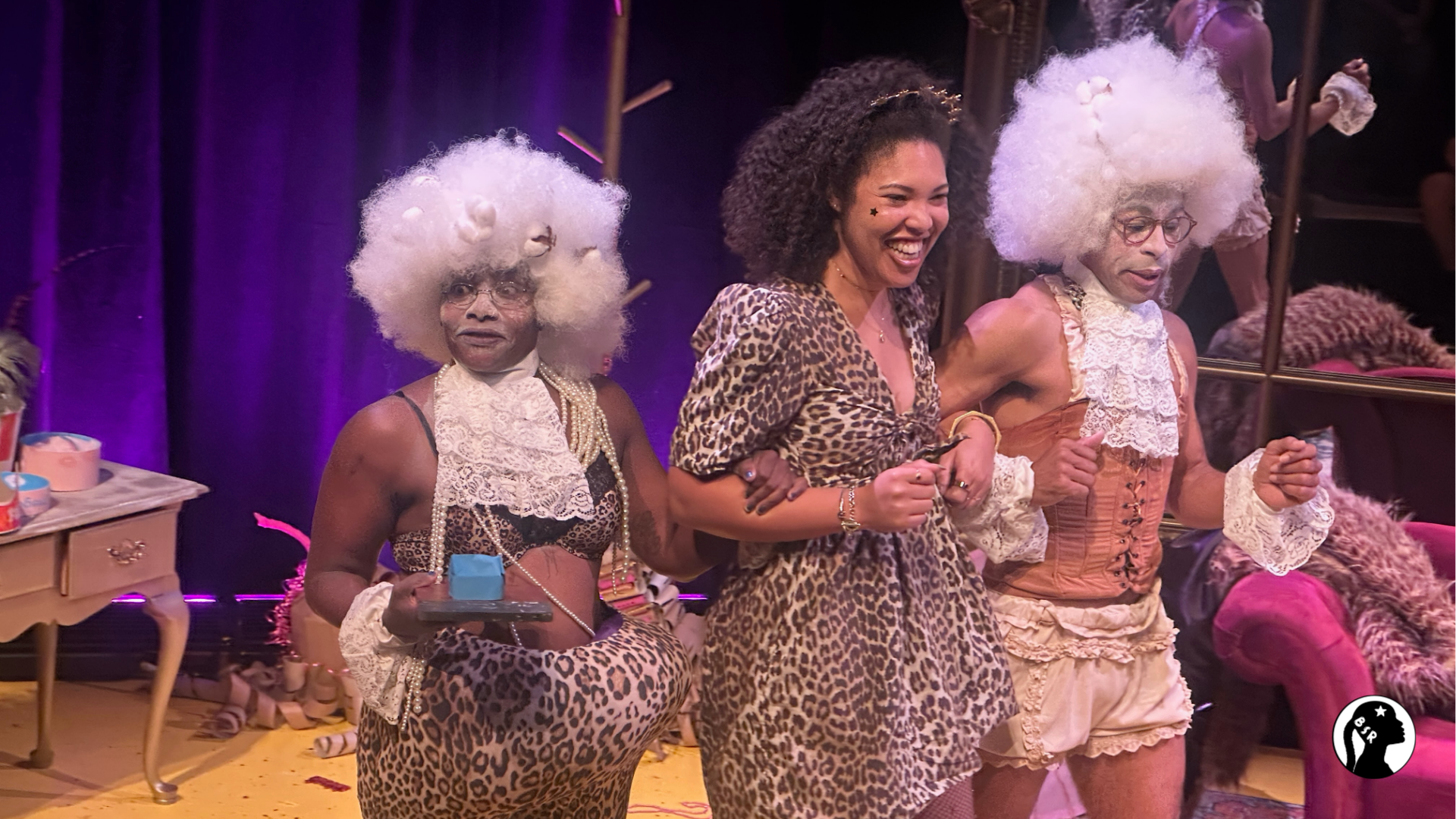
photo: The show delivered a much-needed laugh and jaw-aching smiles
Jenn is joined by Brandon Kazen-Maddox, an ASL artist who signs Jenn’s lines, while also performing in their own right. And then there’s the audience. The writer who shared his dream was not an audience plant, but an unsuspecting ticket-holder who chose a seat in the front row. You’ll be at the show as much as you are in the show, which makes for a rotating cast of characters. You can see yourself (and your fellow attendees) in the mirror that runs the width of the stage. When Jenn and Brandon ask questions, they make it clear that they expect you to answer — out loud and without hesitation. What does it mean to be an American? (My answer: embarrassed) What came first: work or time? (My answer:…time?) Can I sit on your lap? (My answer: yes) Shortly after that last one I ended up on stage, which — if you’re nervous like I was about being put on the spot — only enhanced my experience.
Like the dreams we’re urged to follow, we come to collect is deranged and pivots quickly. It’s all made up, but so are most of the difficulties we accept to participate in society. Race, gender, work, time, money, power — all of these are social constructs made real by everyone’s adherence to and belief in shared norms. Kidwell lures us toward our own drawn boundaries and hands us a pencil, eraser-first, with a twinkle in her eye.
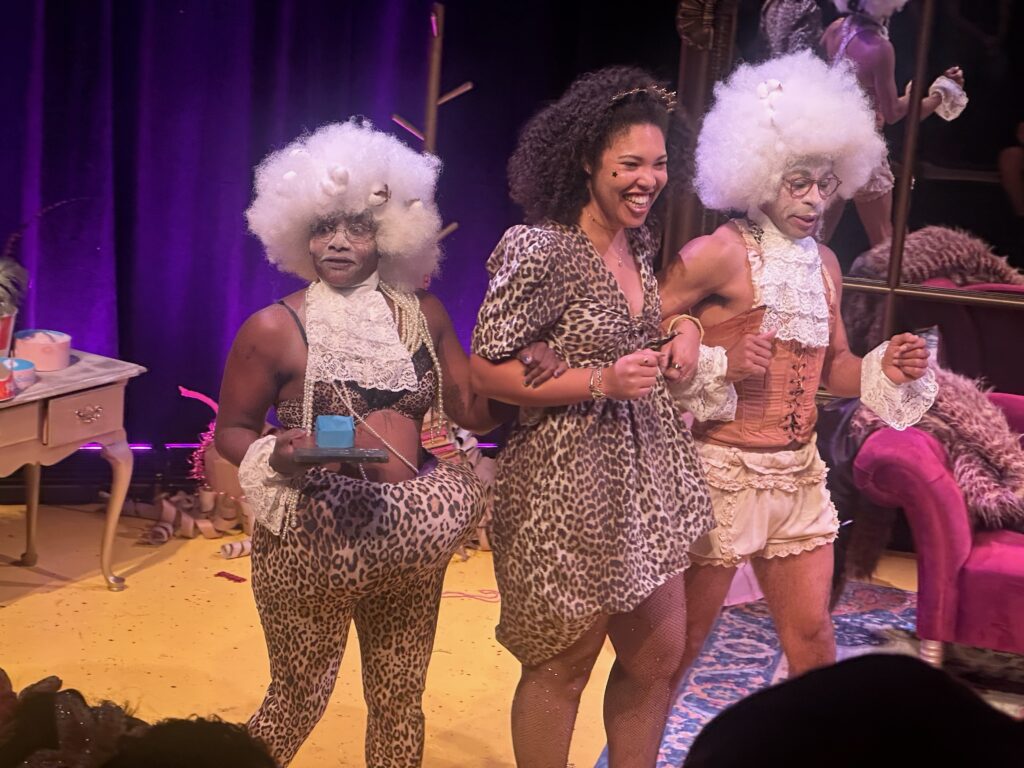
photo: Unplanned outfit twinning with Jennifer Kidwell (L) and Brandon Kazen-Maddox (R) during my brief moment on stage
Sometime after Ms. Kidwell had removed her brassiere (the show contains brief nudity), I realized I had seen her somewhere before. The digital playbill held the answer. In 2017, she won an Obie Award for a show called Underground Railroad Game. I have a hazy memory of sitting in a hard plastic chair in a nondescript room on the far West side of Manhattan in utter disbelief. I can’t be sure because I didn’t keep records back then, but I think it was one of my first Off-Broadway experiences. I was scandalized by the premise, horrified by the execution, and exhilarated by the “should I be watching this?” feelings it ginned up. Underground Railroad Game poked at race, teaching slavery in schools, and the complexities of interracial congress. we come to collect takes the same aggressive tongue-in-cheek approach to capitalism, a flawed system that’s managed to go decades without a thorough performance review. It’s working for some, but not all.
Ms. Kidwell repeatedly admits that she “neither trusts nor believes in the nobility of an honest day’s work” and I whole-heartedly agree (though I didn’t take much convincing). But remember, even as she reads work for filth she appears to be working. We have paid to see her do a show on a stage; we are participating in a transaction. Does making art — writing, directing, or performing in this show — count as work to her? She tells us that the ‘probability of her’, of you, or of anyone is 1 in 400 trillion. Her work doesn’t justify her existence (and neither does yours!), but if she never wrote another word, her 1 in 400 trillion perspective would be missed. Each of us has something to offer, something to add to the collection plate of life and each of us deserves rest whether we do an honest day’s work, write a magnum opus, or just laze about. I’d guess that we come to collect is her way of following her dreams, the ones that take shape when her head touches the pillow. To sleep, perchance to fever dream. For in that sleep of rest, what scripts may come.
blacklove 🖤 and starlight 🌟
we come to collect is a world premiere production at The Flea Theater written by Jennifer Kidwell, co-directed by Jennifer Kidwell and Adam Lazarus, and performed by Jennifer Kidwell and Brandon Kazen-Maddox. The show began previews on August 26 and will run until September 27, 2025. The Flea’s mission is to “support and invest in experimental art by Black, brown, and queer artists.” Tickets are $48, with limited availability of $25 tickets on select dates. ASL interpretation is available at select performances. I purchased my own ticket for the performance and attended the show on August 27th.
-
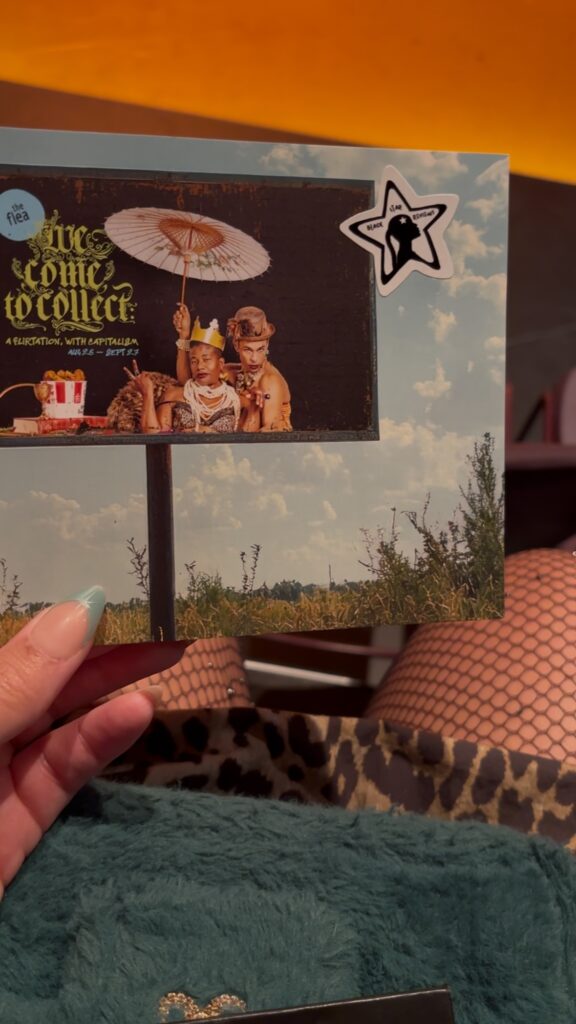
- photo: The graphics for the show poke fun at perceived luxury and opulence
-
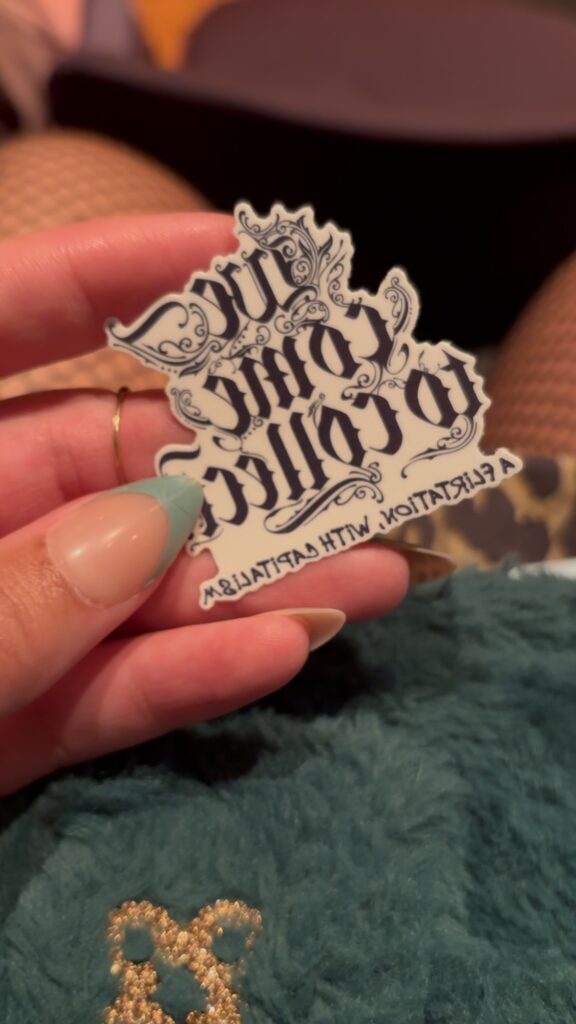
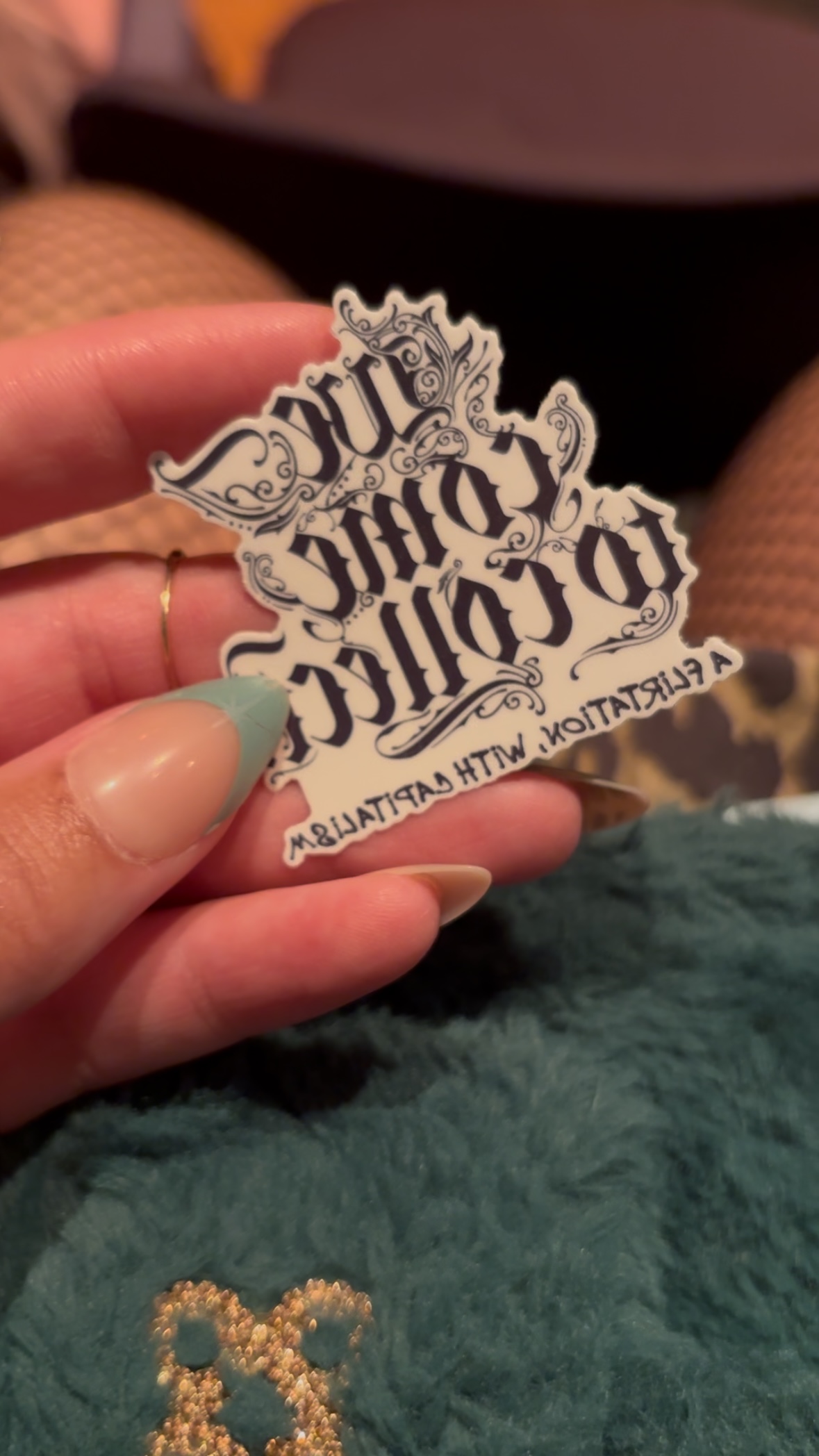
- photo: There were temporary tattoos with the show title
-
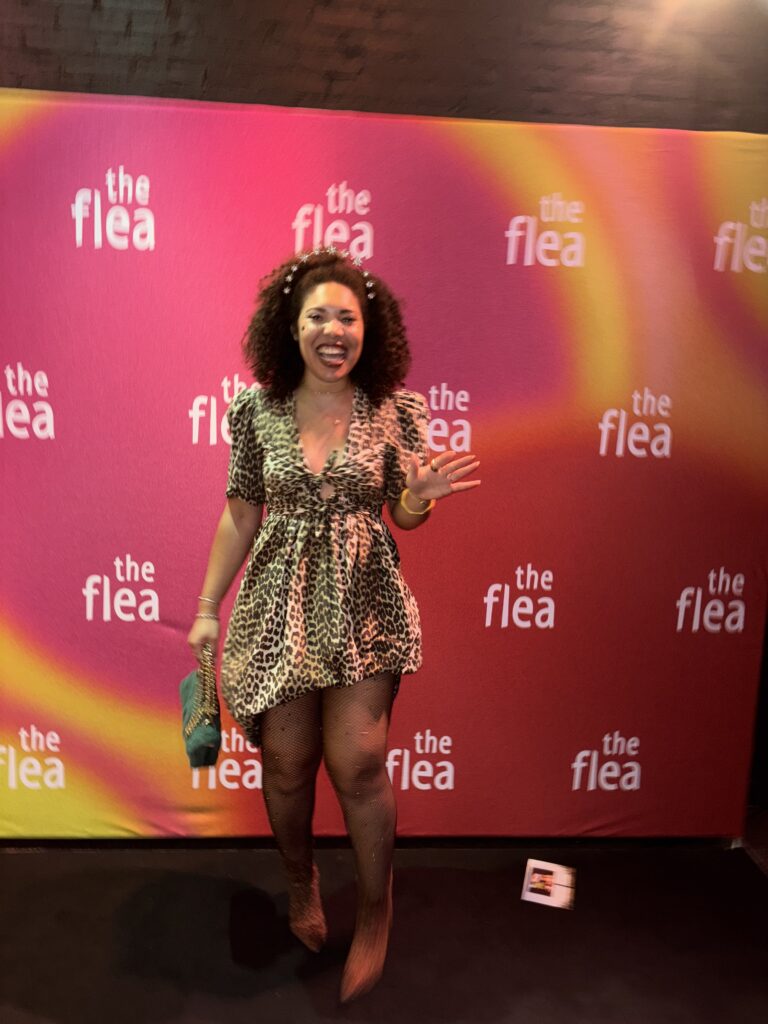
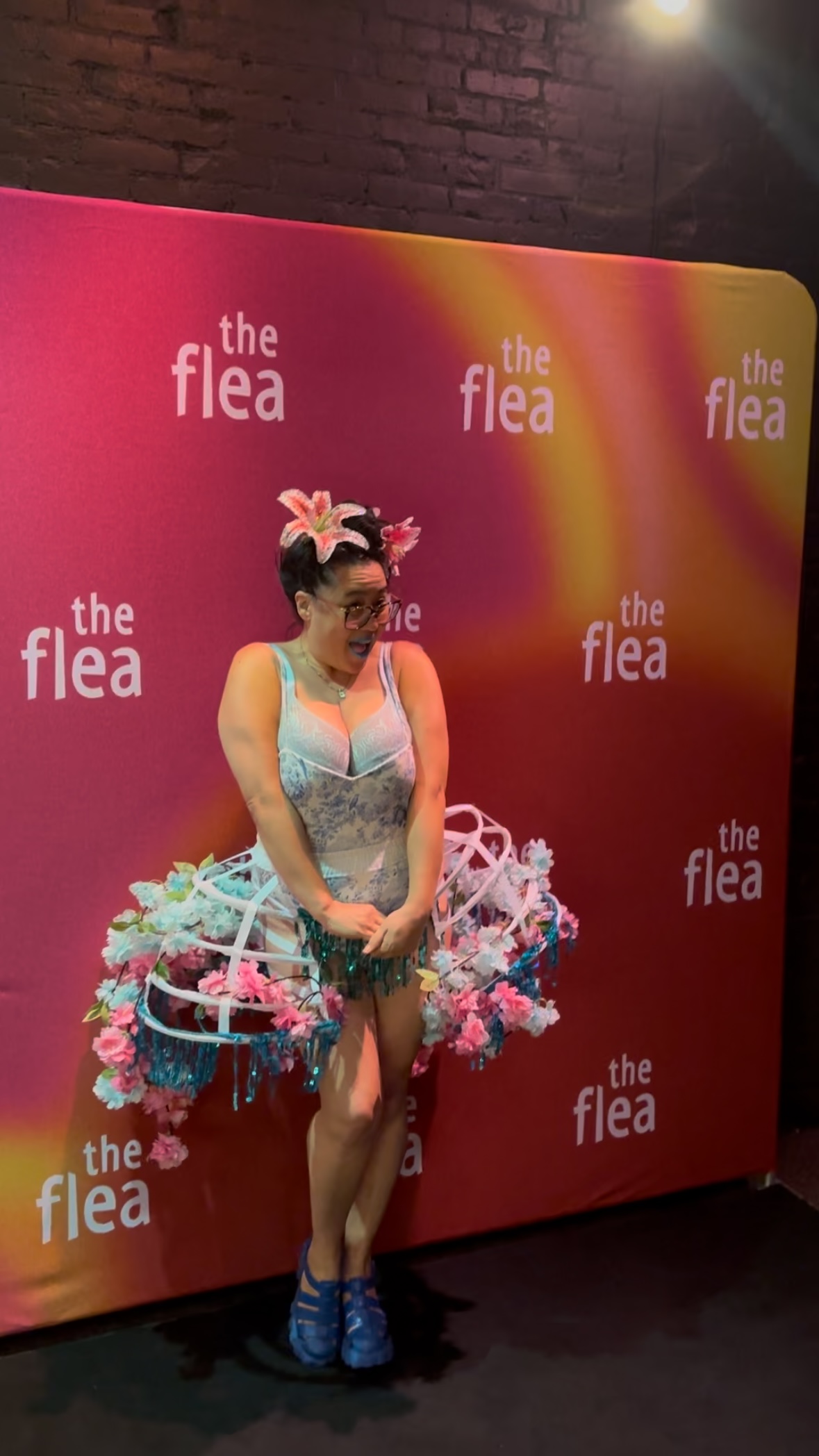
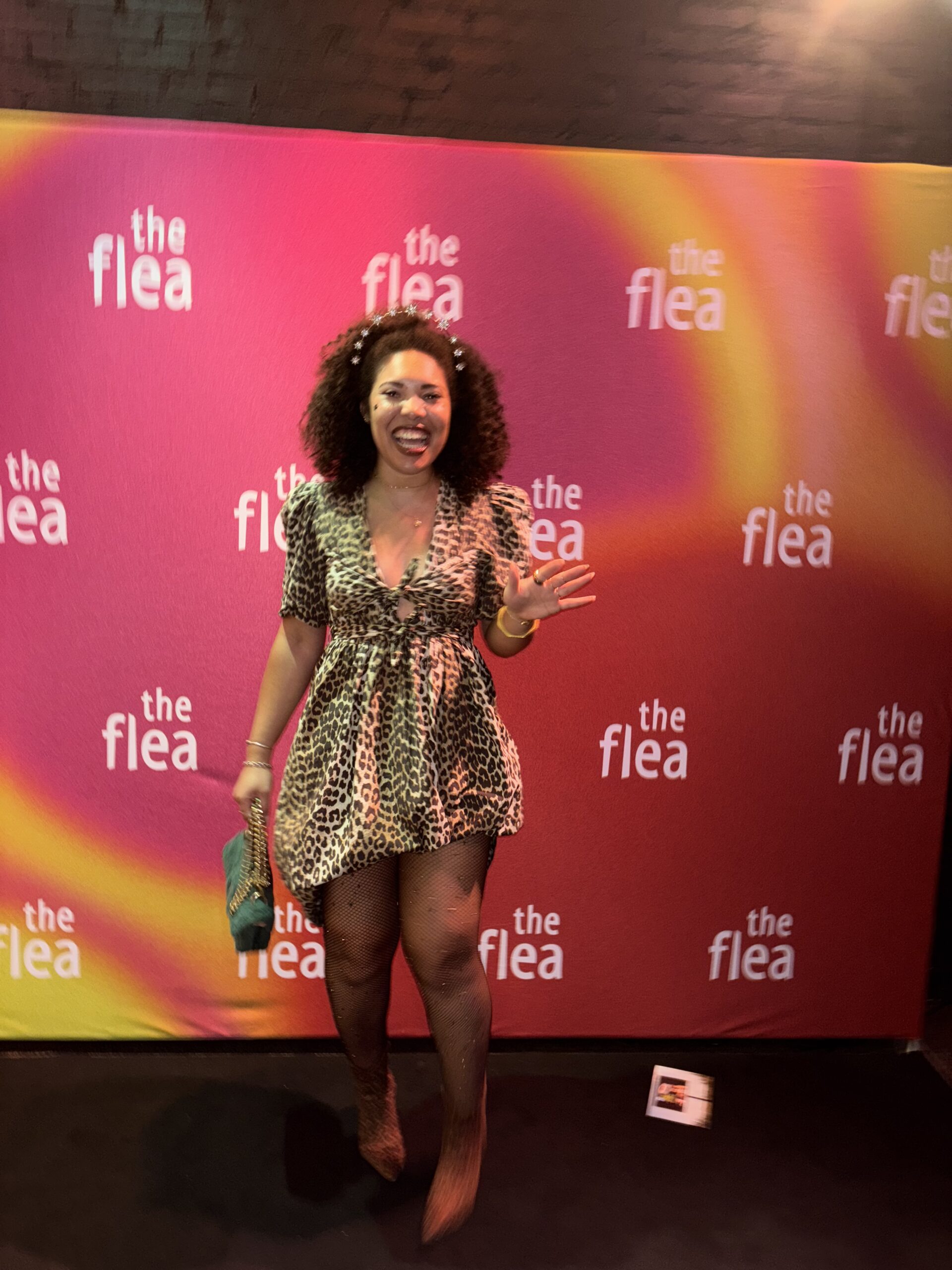
- photo: I attended on a themed night during the “Week of Pageantry”. That night the theme was ‘let them eat cake’. I gave my best regal look on short notice.
-
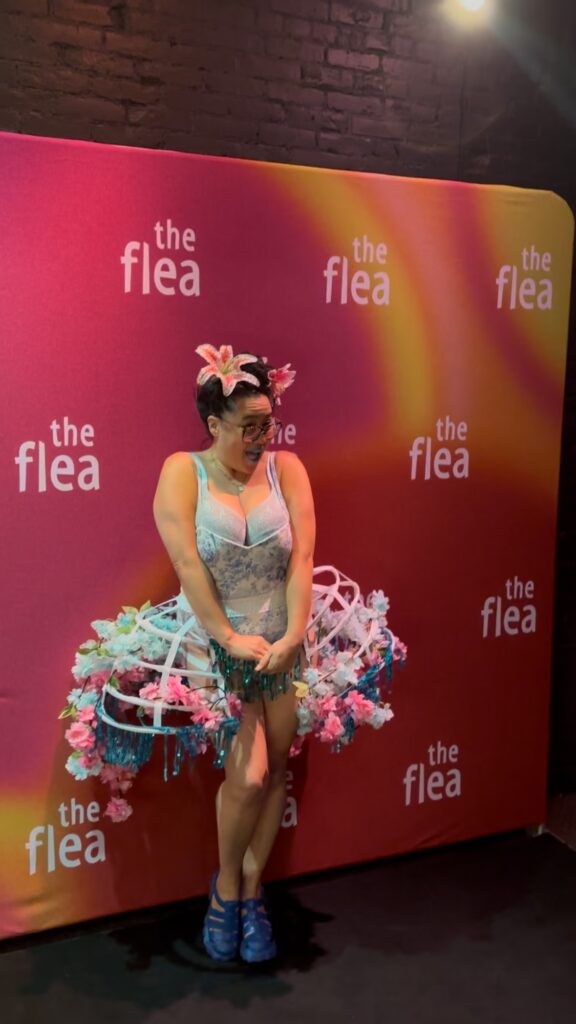
- photo: Another attendee’s take on ‘let them eat cake’ during the “Week of Pageantry”. See more attendee look’s on The Flea’s Instagram page.