
‘Windfall’ at Steppenwolf
In his latest world premiere, a nonpareil playwright adds up the aftermath of city-sanctioned injustice
There were a few must-dos on my list for Chicago. I wanted to eat me a chicken leg from Harold’s, dance to Chicago house music, and find Bud Billiken. But I really hoped to leave Chicago with a better sense of the city’s history. After I got about halfway through Ken Burns’ “Jazz” docu-series, I realized that what I knew about Chicago paled in comparison to that of New York and New Orleans — all three are featured prominently in the genre’s story. In the Chicago History Museum, there were exhibits on railway expansion, the fire, race riots, stockyards and the meat industry, plus its hallowed sports teams.
It made me think about what could’ve been. If my family hadn’t stayed in Mississippi after Emancipation, they might’ve ended up in Chicago working as strike breakers on meat packing lines or Pullman porters. Plenty of other families made the trip, stretching their blood ties across miles and giving the city a taste for catfish.
To stay close-knit after the Great Migration, Black families sent carfuls of Black children back down south for the summer. In the children’s novel The Watsons Go to Birmingham the family makes the trip from Alabama to Flint, Michigan, just like kids from Chicago would head to Mississippi. One of those children, Emmett Till, would return to Chicago lifeless and unrecognizable. Because of his mother’s determination for justice, his new face would horrify on magazine covers and newsreels. There’s an exhibit on Till in the Chicago History Museum titled “Injustice: The Trial For The Murder of Emmett Till”. Despite eyewitness testimony, the grand jury declined to indict two grown white men for kidnapping and torturing a young Black boy.
These days, justice is still hard to come by. Murderers, civilian or police, pay no penalties for the deaths they cause, but the city or state usually offers an amount large enough to grab a headline once the body is in the ground. Michael Brown, $1.5 million. Sandra Bland, $1.9 million. Breonna Taylor, $12 million.
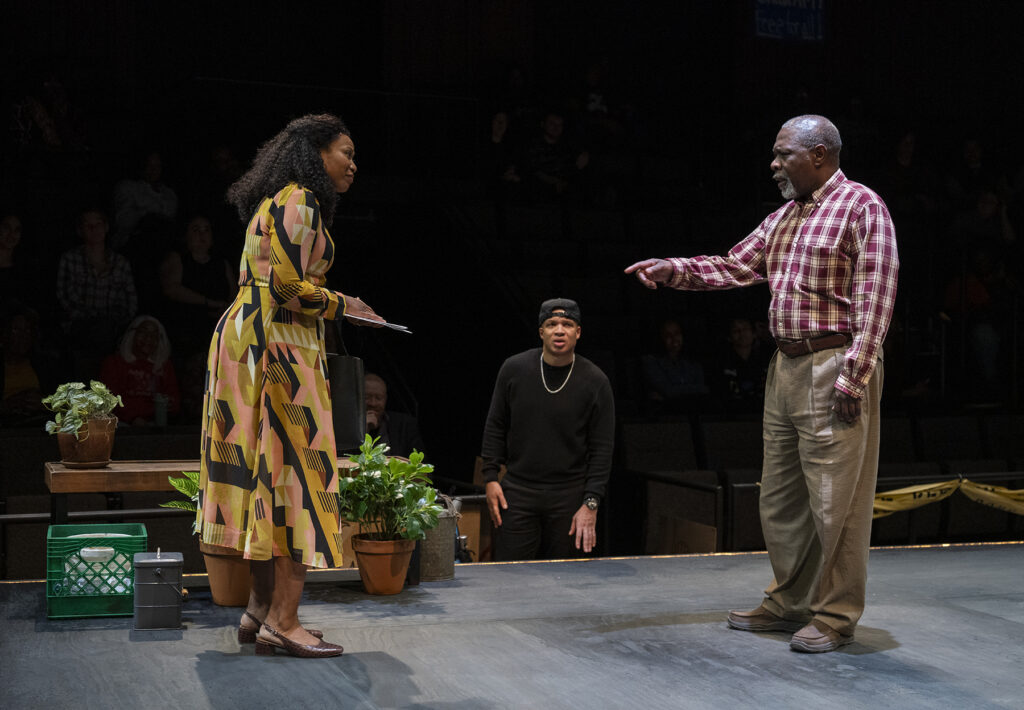
(left to right) Ensemble members Alana Arenas and Glenn Davis with Michael Potts in Steppenwolf Theatre Company’s world premiere of Windfall. Photo by Michael Brosilow.
In Tarrell Alvin McCraney’s (The Brothers Size, Moonlight) newest play, a father is offered a 7-figure check for the loss of his child. The play is called Windfall, which is more commonly used to describe a pleasant surprise of winnings than it is for blood money, an amount meant to equal a life lived and lost.
All money is blood money, argues Marcus (Glenn Davis), as he tries to convince his father, Mr. Tamaño, to take the cash and make peace. A fat settlement could help him pay the back taxes on his house, live comfortably, and try to move on from the tragic loss. But Henri Tamaño, who goes by Mano, is trying to understand why his child doesn’t feel gone. He describes the viscerality of losing Marcus, how he knew it in his bones before anyone ever told him so. Mano is far less worried about money than he is about understanding why: why doesn’t he feel Eli’s absence, why couldn’t he have been more supportive of Eli’s non-binary identity, why couldn’t he acquiesce Eli’s urging that he release the idea of his daughter Elizabeth? Why was he, as a father of two, the last one standing?
When Mr. Mano ignores letters from the city notifying him that Eli was fatally shot by the police, the house calls begin. Like Ebenezer Scrooge in Dickens’ Christmas Carol, Mr. Mano is visited three times by government representatives each with their own flair and leverage. The initial requests cite a mutual benefit — Mr. Mano gets the money, the city gets to do the right thing. But when he rejects those offers, the city shifts to hostile threats. If Mr. Mano doesn’t take the deal, the city will take his house away. Whether he’s immobilized by grief or just too prideful to be intimidated, Mr. Mano plays a moping trickster each time the doorbell rings. The story follows Mr. Mano’s decision whether to accept the payment and his inability to accept the loss of his last living child.
Despite the weight of the subject matter — police killings, ‘acceptable losses’, and strong armed tax liens — the show picks up speed once you endure its two beginnings. In the first, which I found folksy and difficult to watch, Eli speaks directly to the audience and then takes a bullet. In the second, Mr. Mano discusses Eli’s death with Marcus, who is already dead but makes a point to tell the audience that “nobody killed me”. Mr. McCraney is hard at work creating a tiered reality on stage. The dead are in play with the living. We flashback to the past without leaving the present. Any confusion is dispensed intentionally. The play is performed in the round and sounds like McCraney running circles around Shakespeare: Marcus is our semi-reliable narrator, Eli’s two-man chorus echoes when they address the masses, and language is used so specifically you’ll wish you could read along. I hear you, but hear me…The national, international, preternatural guard…Not wanted, or missing, but needed…Listen at me.
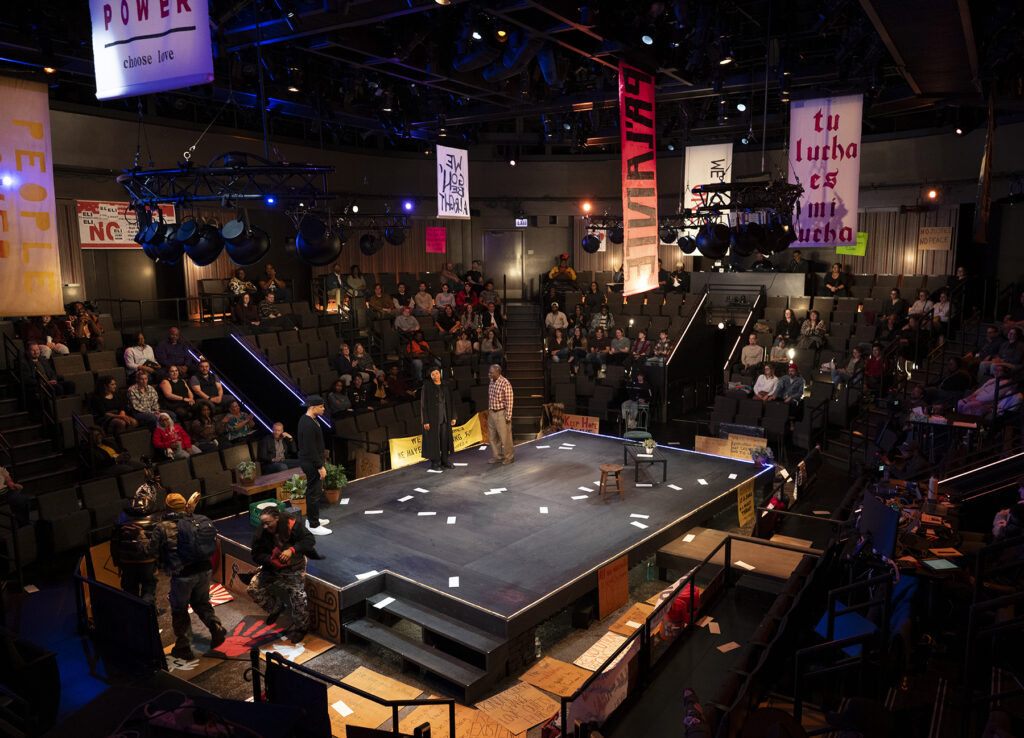
(pictured) The cast of Steppenwolf Theatre Company’s world premiere of Windfall. Photo by Michael Brosilow.
By the intermission, I had the distinct feeling of having glimpsed genius. By the time the show had resolved, I was certain. This show works because McCraney is a world-builder. (In the post-show talkback, audience members wondered if Marcus was the titular character from another McCraney play The Secret of Sweet, and if the name Tamaño was a reference to The Brothers Size.) It helps that the director Awoye Timpo is comfortable with both fantasy and reality. (In 2025, Timpo directed the world-premiere production of Wole Soyinka’s The Swamp Dwellers more than 60 years after it was written. It has elements of fable and allegory that are echoed in Windfall.) And it certainly doesn’t hurt that half the cast — Alana Arenas, Glenn Davis, and Jon Michael Hill — are Steppenwolf company members from last year’s Tony-award winning production of Purpose. That the play resists tipping into an overwrought tragedy, deals with life as much as death, and doesn’t leave us impatient with Mr. Mano’s ultimate decision is no small miracle.
I’m happy to have seen the show before its inevitable arrival on Broadway, since anything this strong will surely grow legs. But there’s one change I’m hoping to see before the Windy City blows this story East. Eli aligns too closely with our instinct to martyrize and project a God-like missive on people who are gone too soon. Eli’s departure from home and concise responses echo Jesus’s 40 days in the wilderness and tendency to speak in parables. Their use of collective pronouns (they/them) make one person sound like a whole team (example: they killed them). Their fervent dedication to community, at great personal risk, reads as a person who was born to die which isn’t helped by Jouléy’s unfazed, borderline apathetic demeanor. While it’s a relief not to see another Black mother cry as she holds her dying son, Eli seemed to be a stand-in for the movement and not a real person. Shamefully, Eli is defined by their death and not by their life.
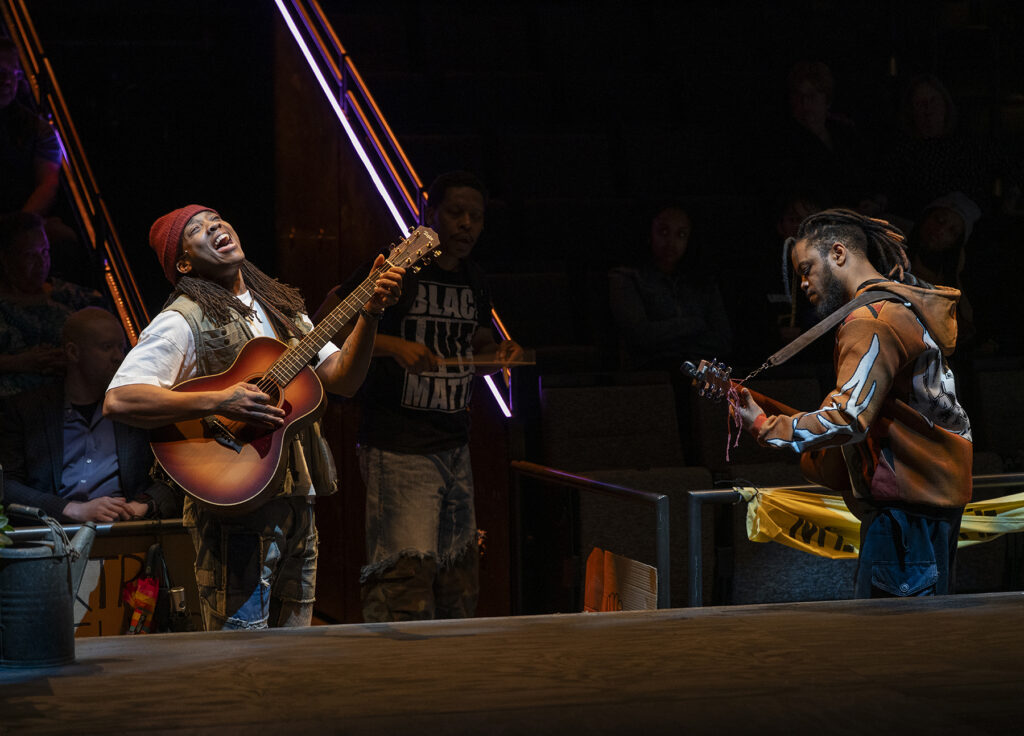
(left to right) Esco Jouléy with ensemble members Namir Smallwood and Jon Michael Hill in Steppenwolf Theatre Company’s world premiere of Windfall. Photo by Michael Brosilow.
We make this mistake too often with our lost ones. When their lives are cut short by violence we pen them into iconography. We reuse the same photos on shirts and social media until their face is a likeness, no longer a life.
My whole lifetime I’d only ever seen two photos of Emmett Till — smiling in a bow-tie and lifeless in a casket — and I understood both as poignant shorthand for racism. In the “Injustice” exhibit, I saw another image. Till was standing with his cousin and their bikes in the street, in a white shirt and overalls, smiling on a summer day. Here, Emmett was a child, not yet a symbol, ignorant to how little time he had and what his death would mean for the still-living. What Mr. Tamaño grapples with that Eli can’t is that life, this semi-precious gift, can’t be narrowed to a mission, an image, or a payout, no matter how many zeros.
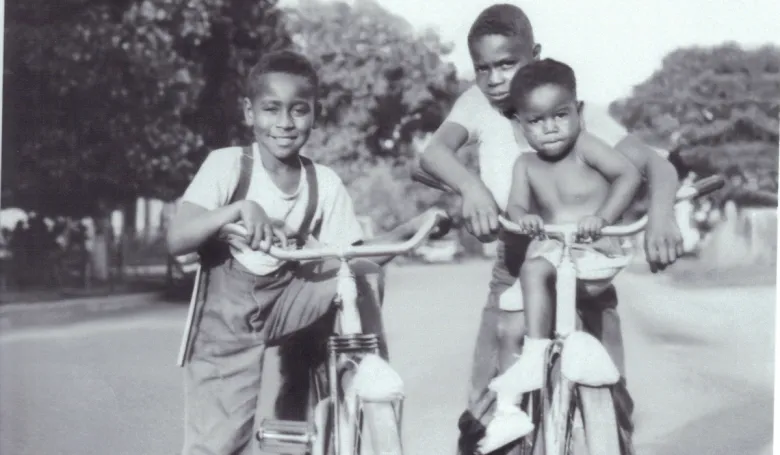
From the Mississippi Free Press: Cousins Emmett Till (left) and Wheeler Parker (back right) wheel around Argo-Summit, Ill., with family friend Joe B. Williams (front right). Parker said this photo was taken some time between 1949-1950. Photo courtesy Wheeler Parker Jr.
blacklove 🖤 and starlight 🌟
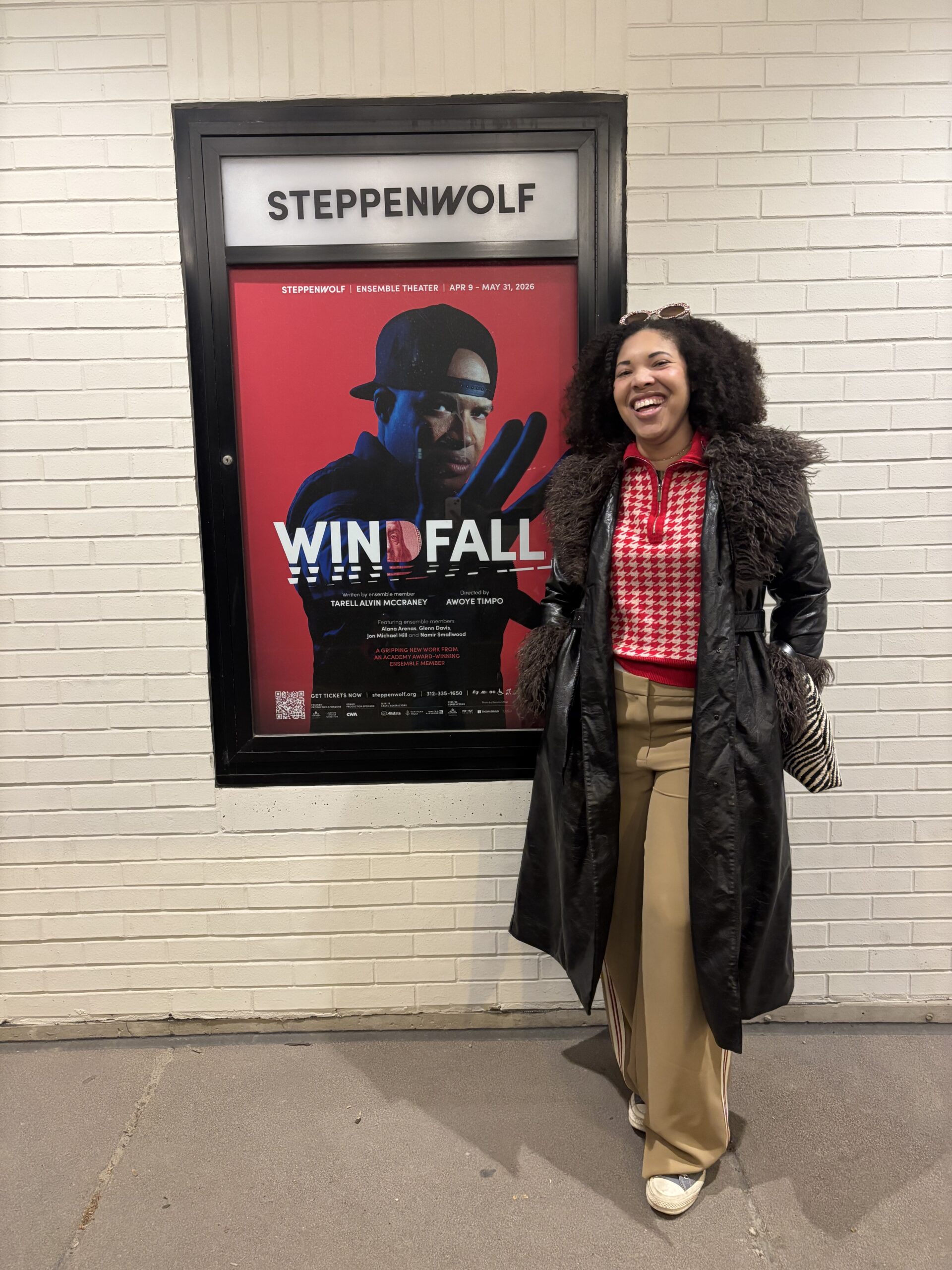
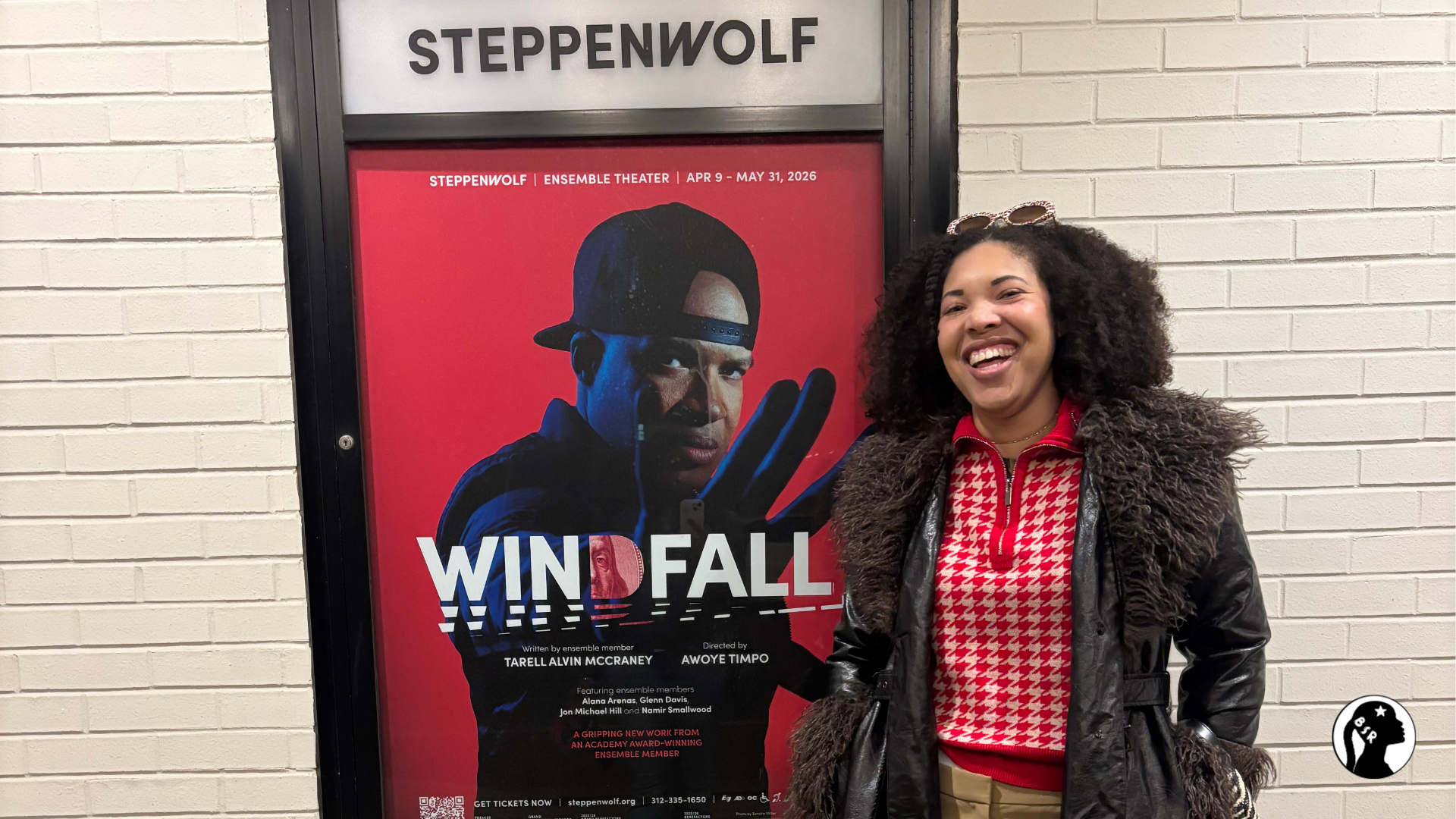
The world premiere production of Windfall opened at Chicago’s Steppenwolf Theatre in April 2026. The play was written by Tarell Alvin McCraney, directed by Awoye Timpo, and stars Alana Arenas, Glenn Davis, Jon Michael Hill, Esco Jouléy, Michael Potts, and Namir Smallwood. I received a press ticket for the performance on April 25 and offer my thanks to Steppenwolf.
The production will run from April 9 to May 31, 2026. Tickets for evening shows are $103 and up.