
Thomas J. Price ‘Resilience of Scale’
The biggest, the largest: Price’s statues represent us as monuments
We were on the phone discussing the mayoral election and the way it invokes discussions of crime. Crime, it seems, is always up. They say, crime is headed right to our doorsteps if we vote the wrong way. I’ve been looking over my shoulder and sometimes yelping at my own shadow, trying to spot the crime before it reaches me because they say that vigilance is key.
Sometime around the start of Eric Adams’ term, aka the re-inauguration of swag, the city installed more vigilance. I started seeing cops on the train, on the platforms, and waiting in corners for fare-beaters because today’s turnstile-hoppers are tomorrow’s stone cold killers. If you don’t see any crime anywhere, they say, then the strategy of posting cops everywhere is working.
I won’t argue with hammers about nails, and I can’t argue about crime I can’t see. But I know that cops don’t make me feel as safe as she does. She’s there on the nights when I could/should spring for an Uber, but I don’t want to spend the money. When it’s late at night and the riders are sparse, I look for her. I spot her in a train car — older than me, looking like she’s had a long day, looking like she doesn’t put up with any mess — and we ride to Harlem, invisibly and unbothered, together.
Thomas J. Price knows this woman, like I do, and he knows she’s not really invisible. You just usually only see her when you want to. But here he’s taken that choice away through super-visibility.
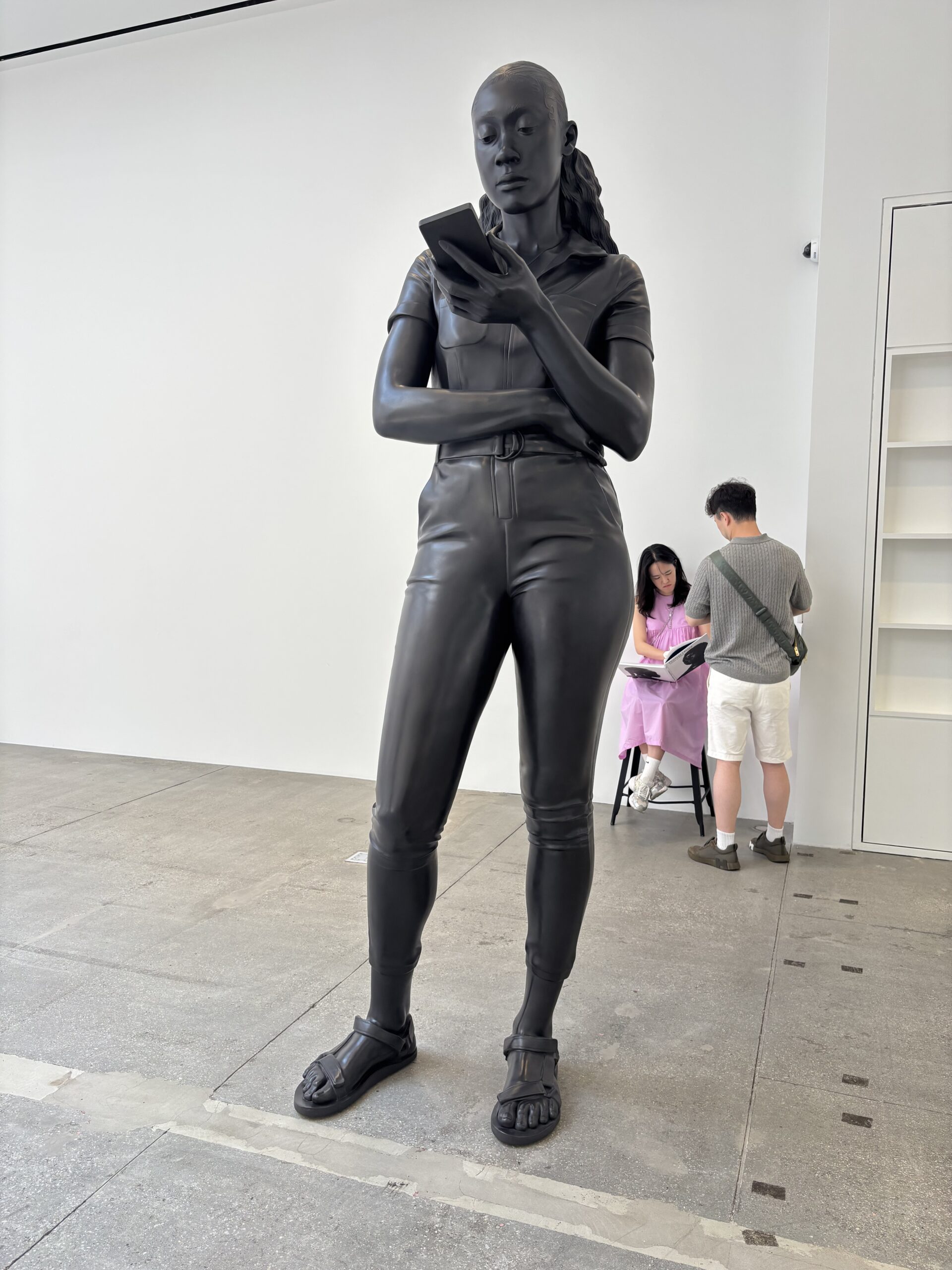
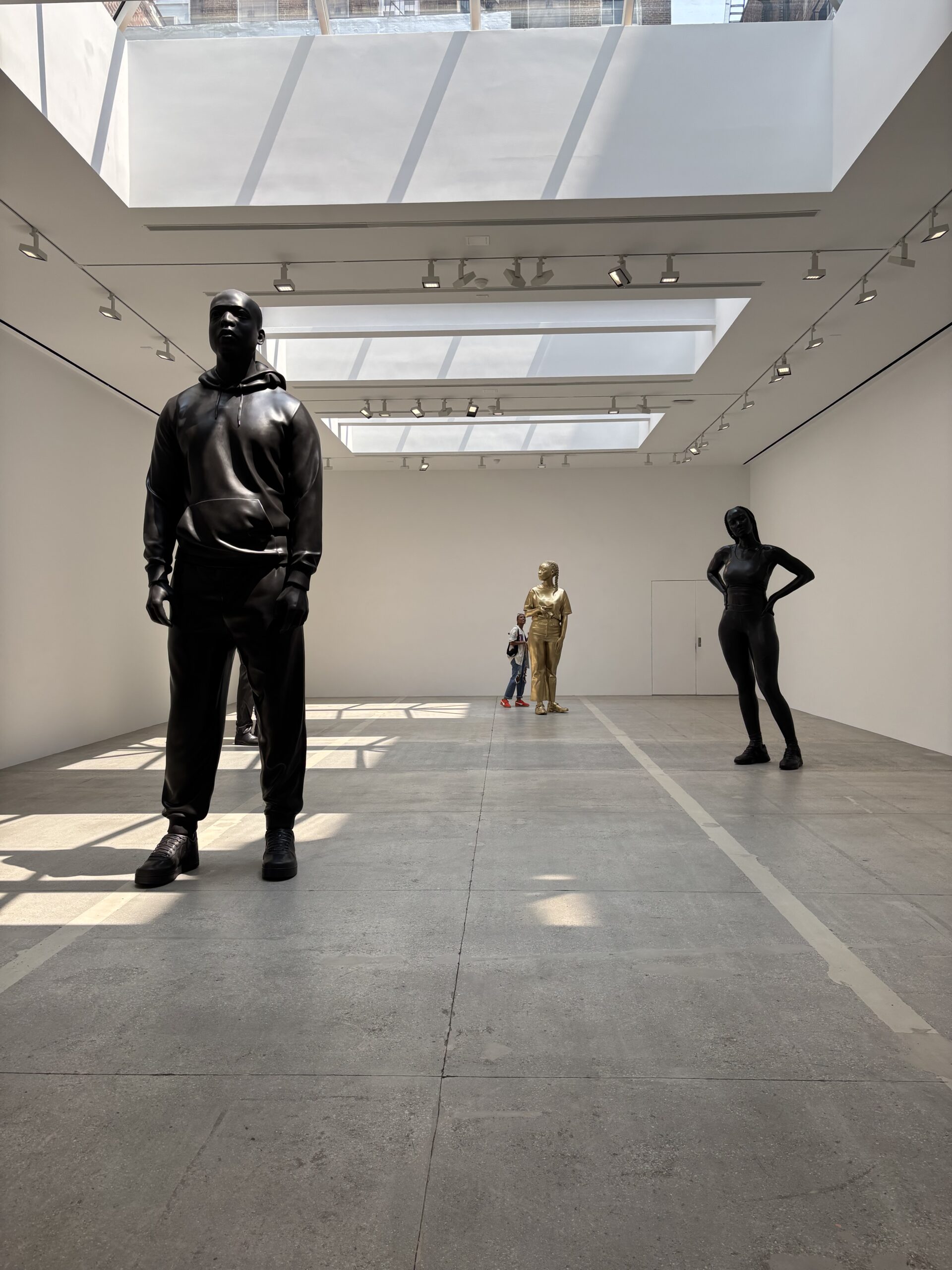
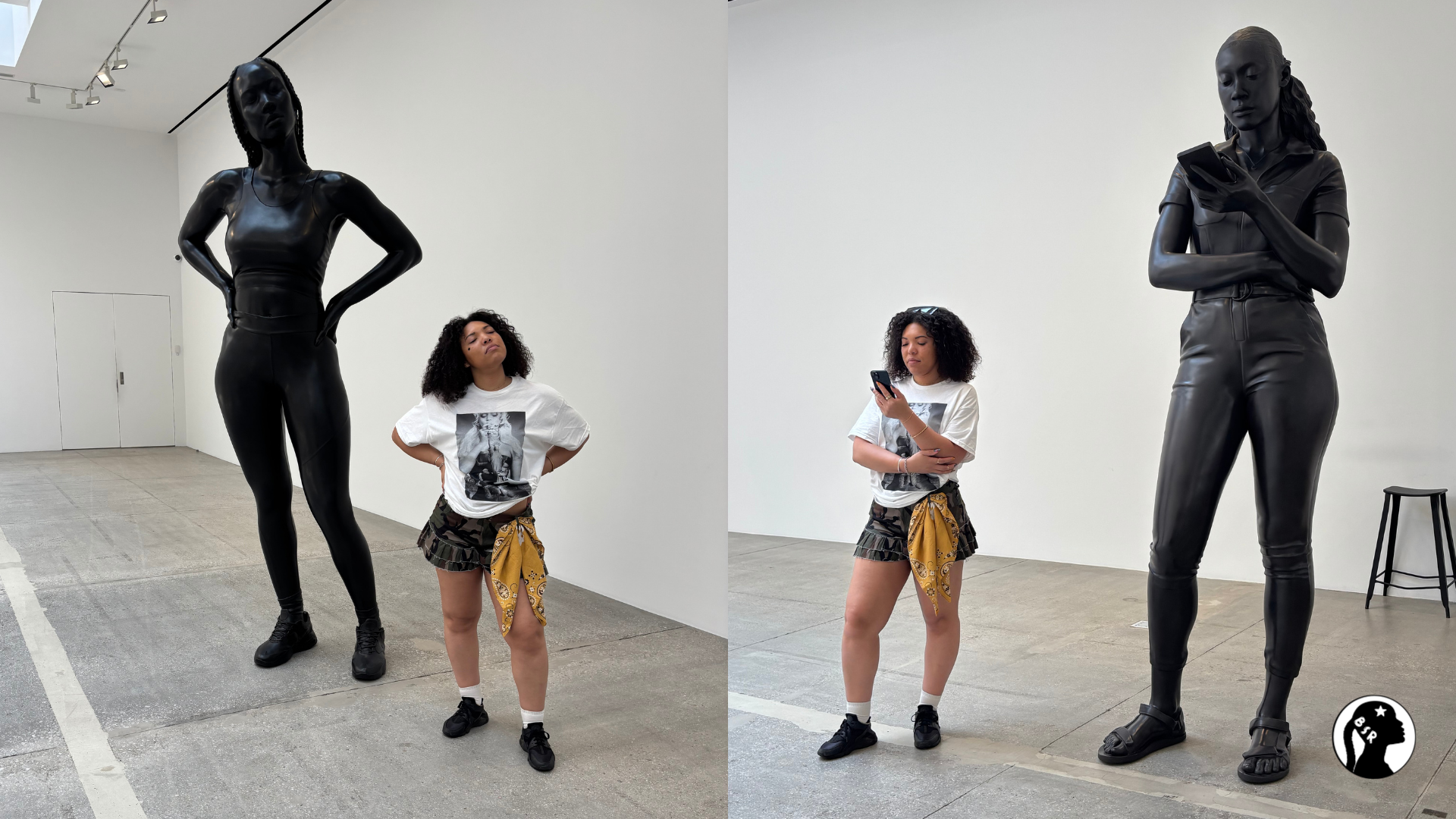
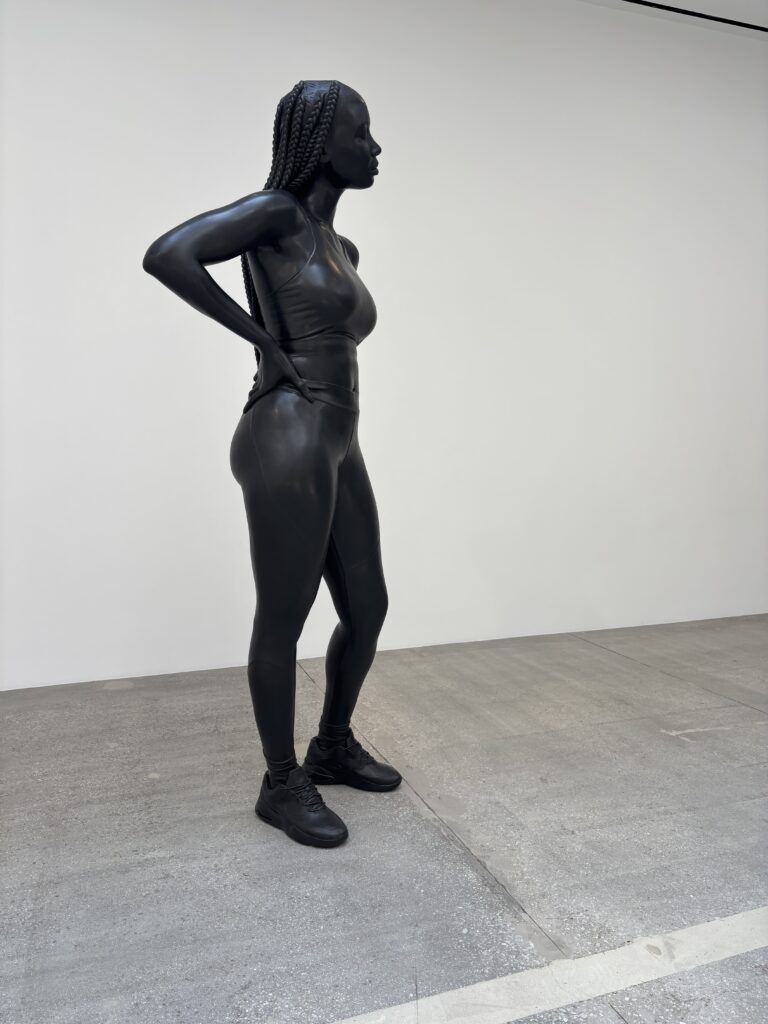
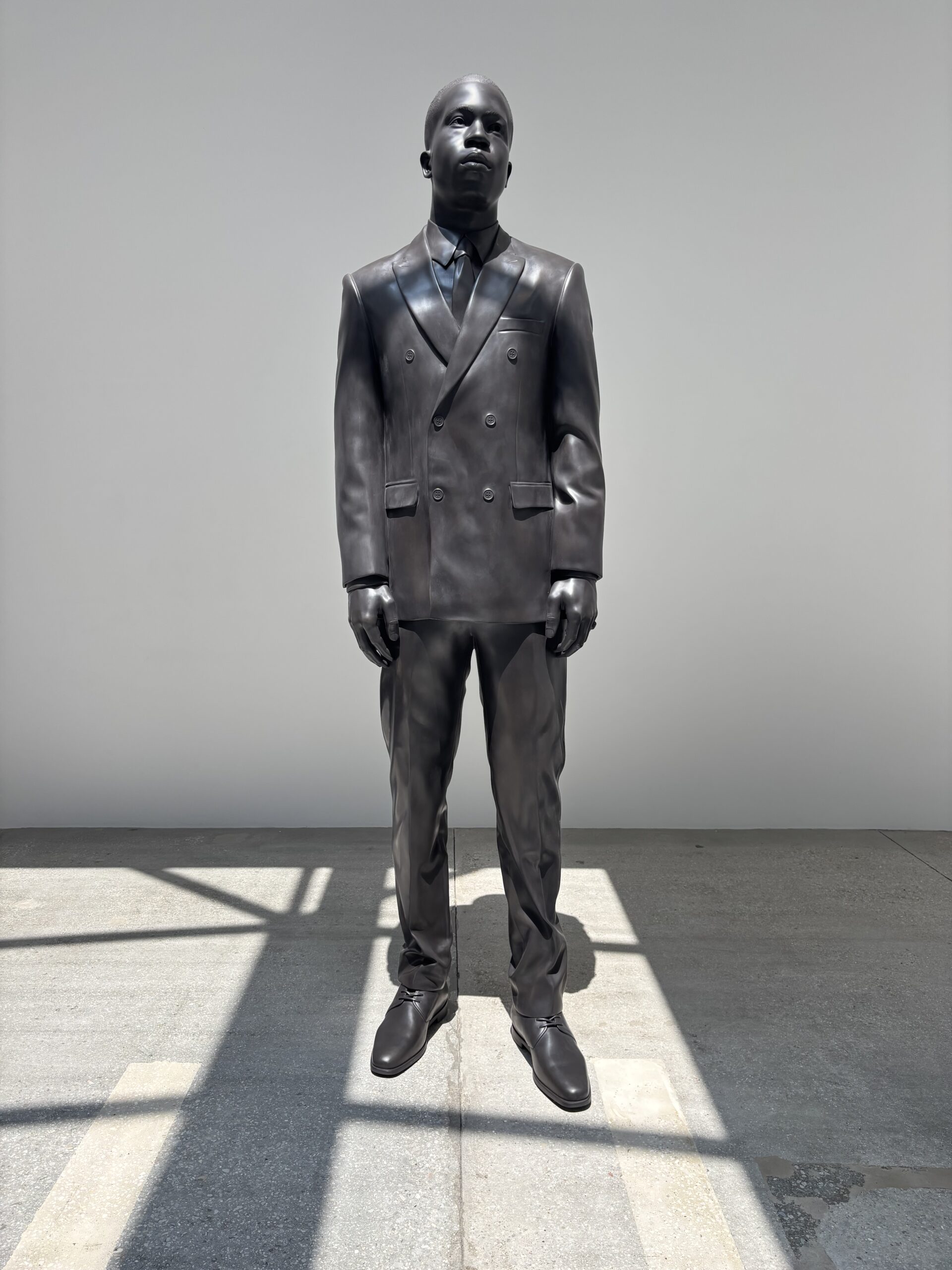
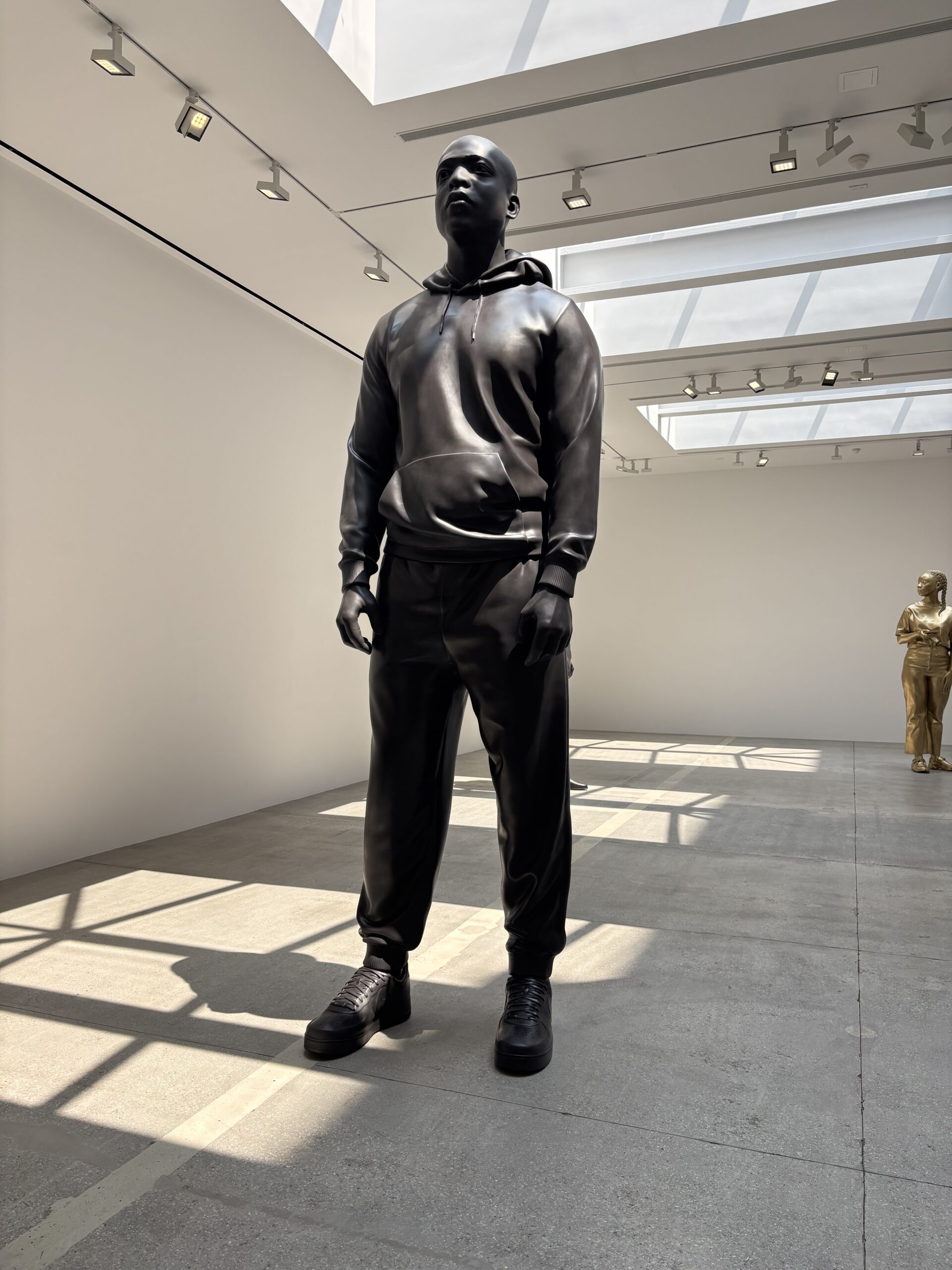
At this size, there’s really no way to overstate how impossible they are to ignore. You could see Price’s bronze statues in Seussical-type conditions. You could see them from a plane, you could see them from a train. You could see them in a crowd, you could see them through a cloud. Both hyper-realistic and larger than life, they make you feel like an ant among giants.
Hauser & Wirth describes the works as “towering bronze figures that amplify traditionally marginalized bodies” but simply put, Mr. Price has taken everyday Black people and made them staggeringly large. It’s a play on our hyper visibility. We’re everywhere whether you see us or not. Delivering your groceries or shopping alongside you. Teaching your yoga class or using the adjacent cubby in the locker room. We’re picking your kids up from school or calling you from the Principal’s Office.
That anyone can brush by us without seeing us, can live next to us without knowing us, or work with us without trusting us is a choice to move through life blindly and hatefully. We are so visible, in fact, that it’s hard to remember that we’re only a sliver of the nation’s populace. Black people make up 14% of the US and 22% of NYC. Even if we vote as a bloc, we don’t have the numbers to elect a president or a mayor on our own, yet people continue to look to our sliver for national and global solutions.
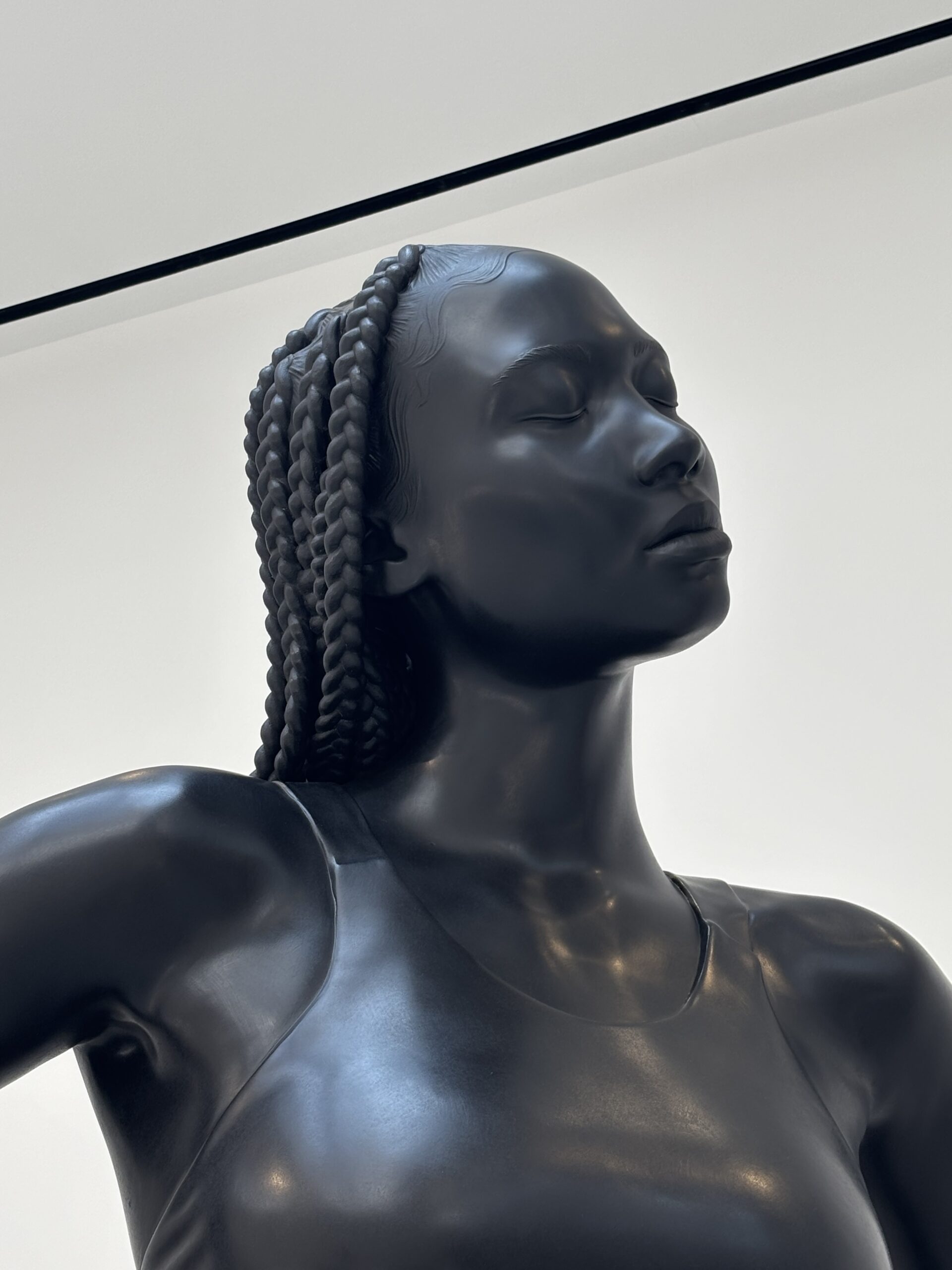
Within our slice of the pie, we have varying opinions, priorities, and ways to cook rice. The identities that set us apart are like the details in the statues that begin to reveal the figures’ personalities. Two of the women hold their phones, one closes her eyes with her chin tilted toward the sky, the tallest most handsome figure stands calmly, and a smaller man is stoic in dress shoes and a suit. My guess was that the figures are to scale and the smaller man is a child, but Natali peeped his pinky ring and told me she wasn’t so sure.
-
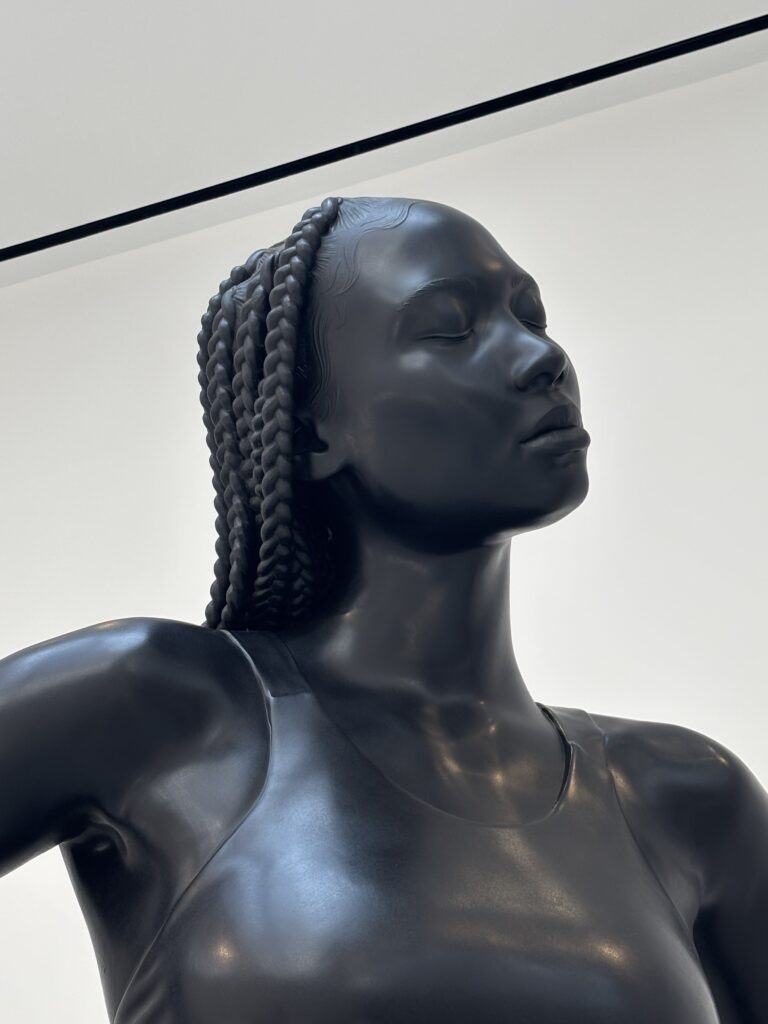
- [detail] “As Sounds Turn to Noise” (2023) by Thomas J. Price
-
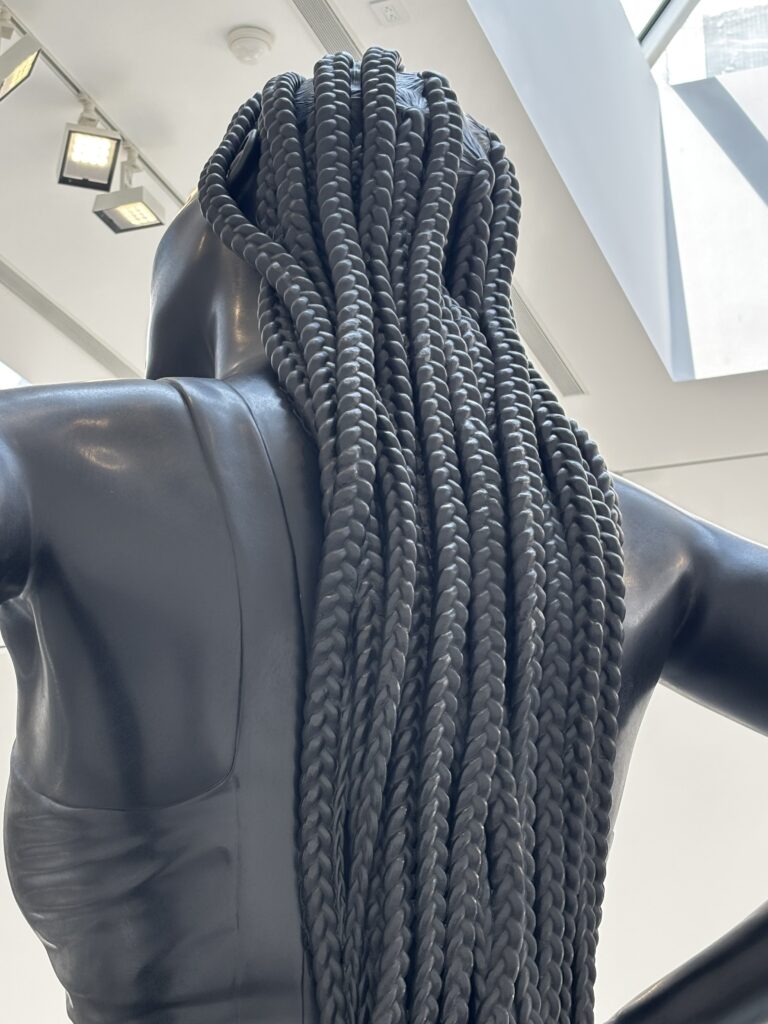
- [detail] “As Sounds Turn to Noise” (2023) by Thomas J. Price
-
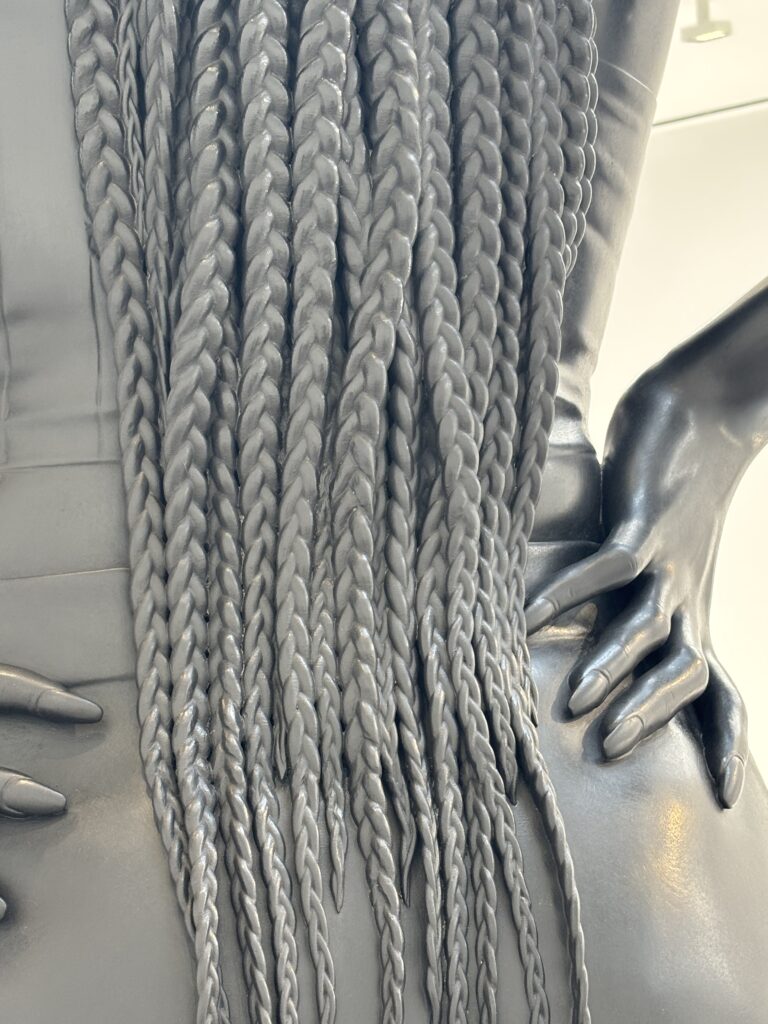
- [detail] “As Sounds Turn to Noise” (2023) by Thomas J. Price
-
- [detail] “As Sounds Turn to Noise” (2023) by Thomas J. Price
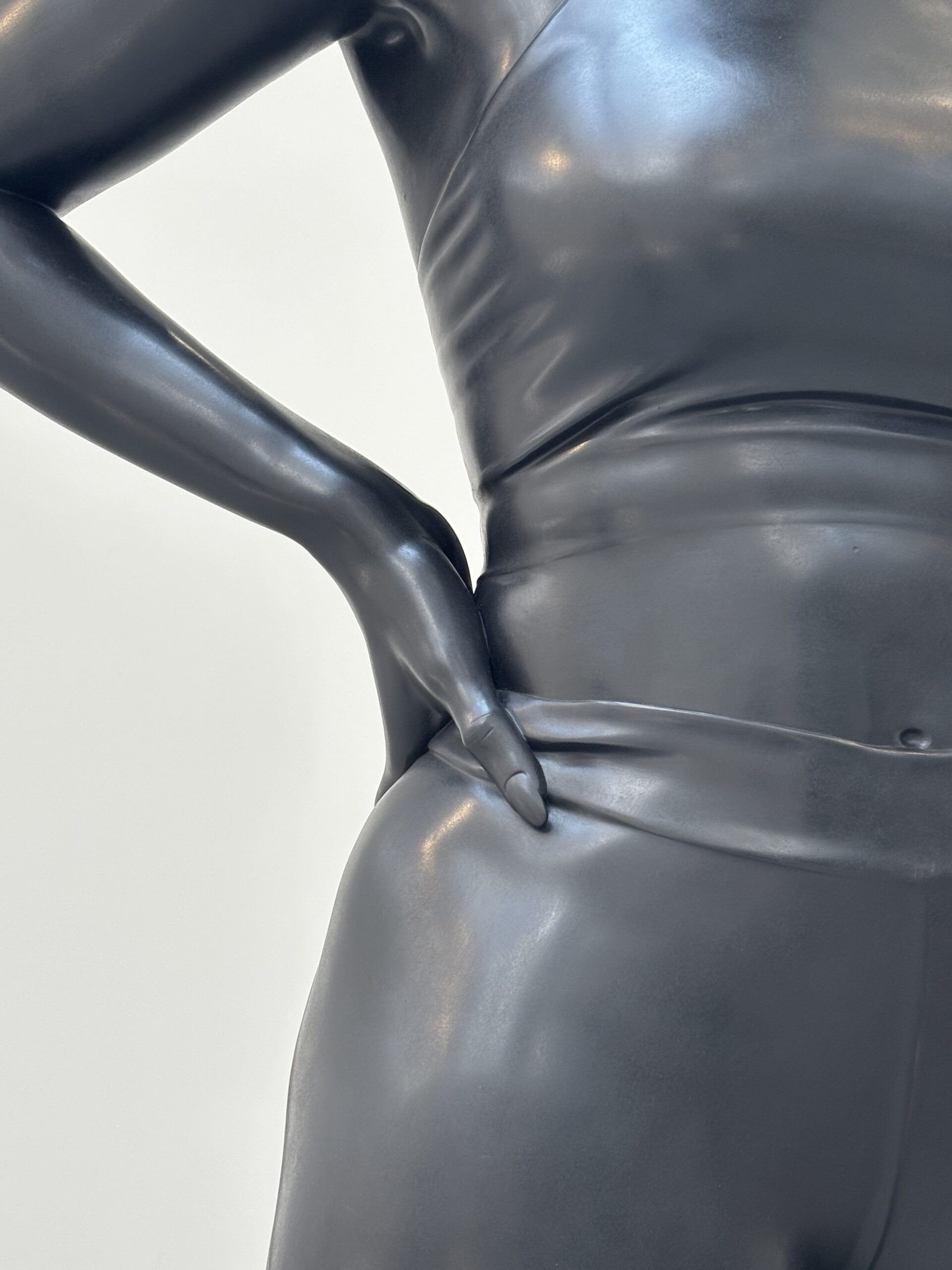
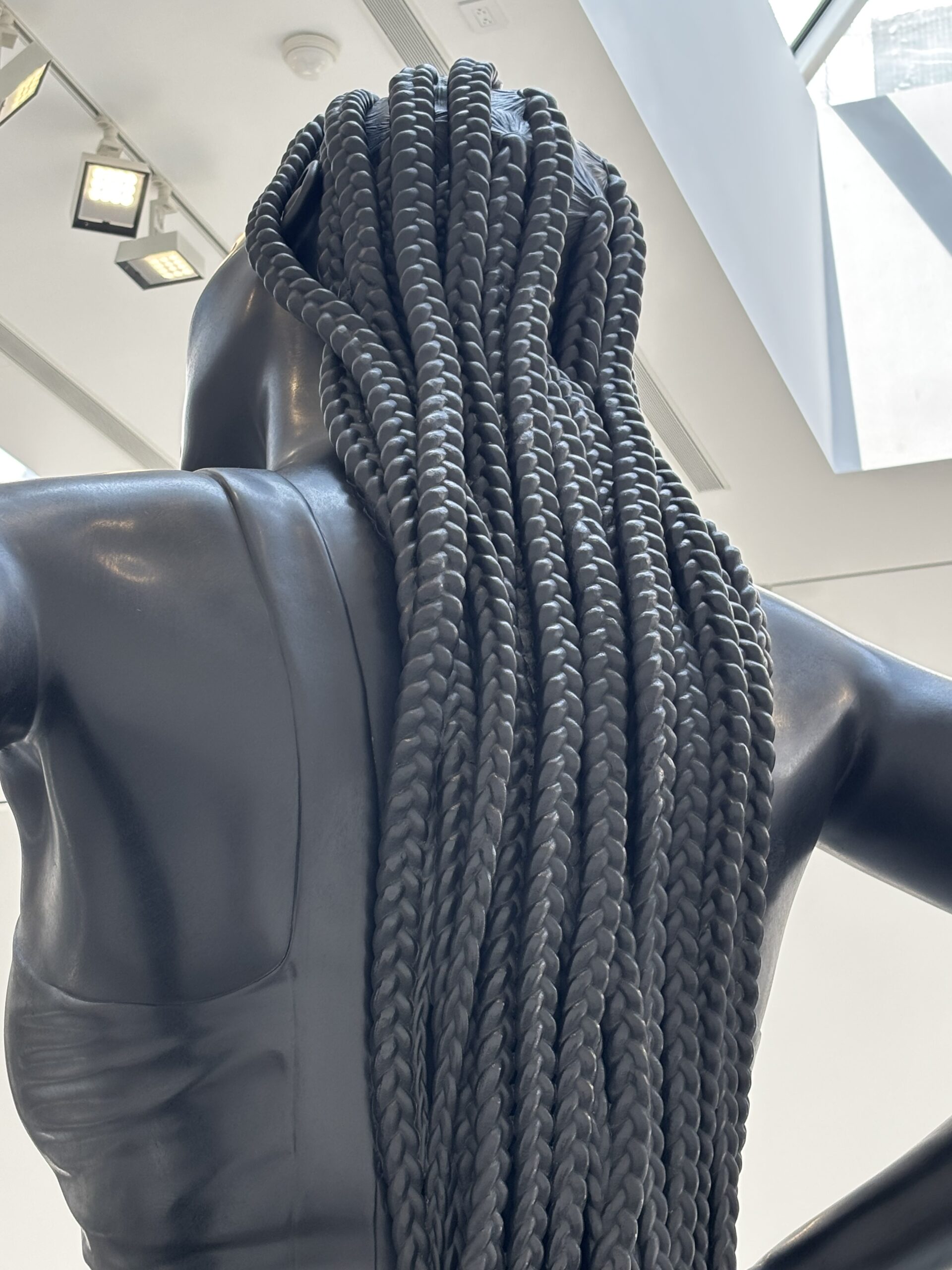
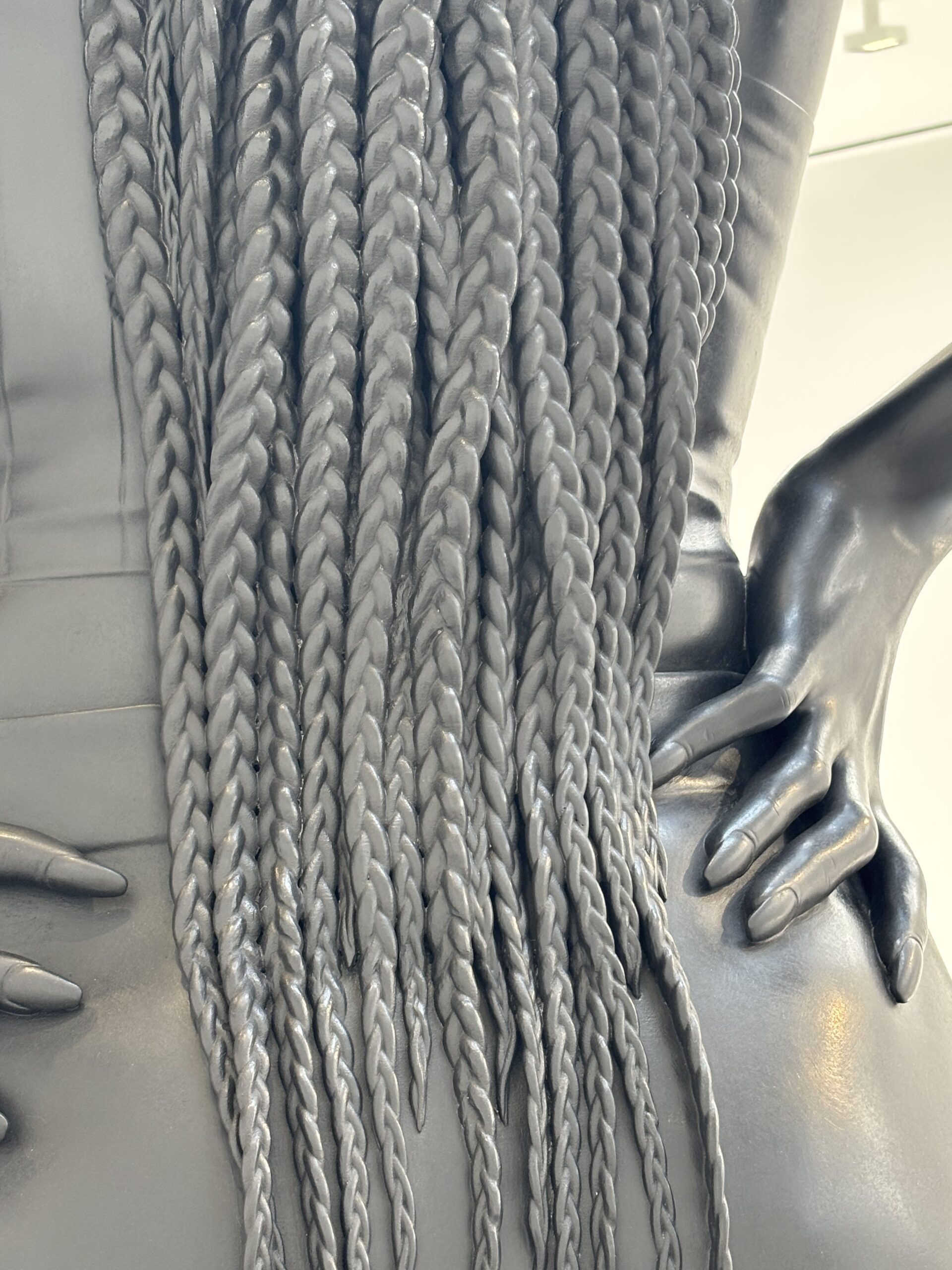
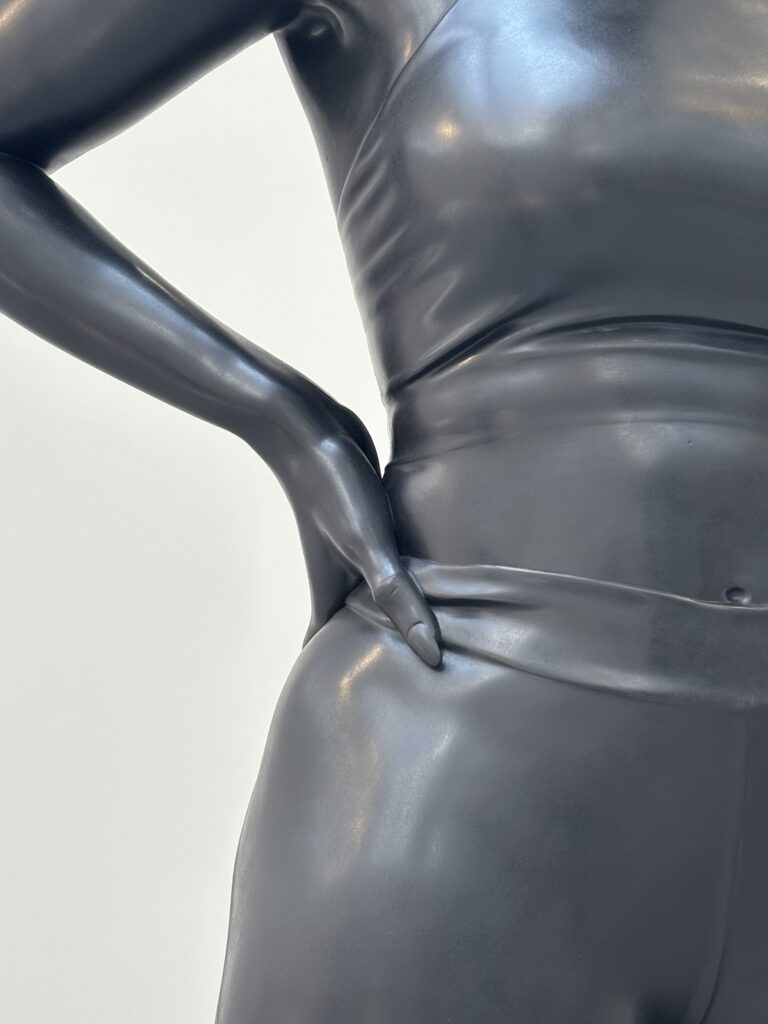
While I was taken by the scale of the figures, Natali zoomed in on other pinky-ring size details. She noted the uneven ends of the braids and how they looked freshly dipped in boiling water, the baby hair slicked around the hairline, the twisted waist band of her workout pants, and a slightly crooked toe. The toe, which might make you wrinkle your nose if it were flesh and bone, was endearing at this scale. At this size, the flaws we’d be likely to hide felt divine and intentional.
In their casual positions, the statues seem like sleeping giants. Like if crime walked through the door, they’d yawn, stretch, and close in to protect me. Often, when I hear people talk about art that reflects their identity, they celebrate feeling seen. Here, I was too small to feel seen, and instead I felt safe.
The answer to chaos is knowing whom you can count on for protection. Some people count on badges and weapons. One day when I’m older and perhaps a little heftier, I’ll be the woman I’ve been turning to for safety. They’ll see me, reading a book, on my phone, or closing my eyes. They’ll see in my face all I’ve been through and survived and they’ll sit nearby. They’ll recognize parts of me in them and we’ll both be guarded by something bigger.
blacklove 🖤 and starlight 🌟
Thomas J. Price ‘Resilience of Scale’ is a collection of bronze sculptures at Hauser + Wirth in Soho at 134 Wooster Street. It is on view from April 24th until June 14th, 2025. The gallery is open Tuesday through Saturday from 10am-6pm. Entry to the gallery is free.
-
- “As Sounds Turn to Noise” (2023) by Thomas J. Price
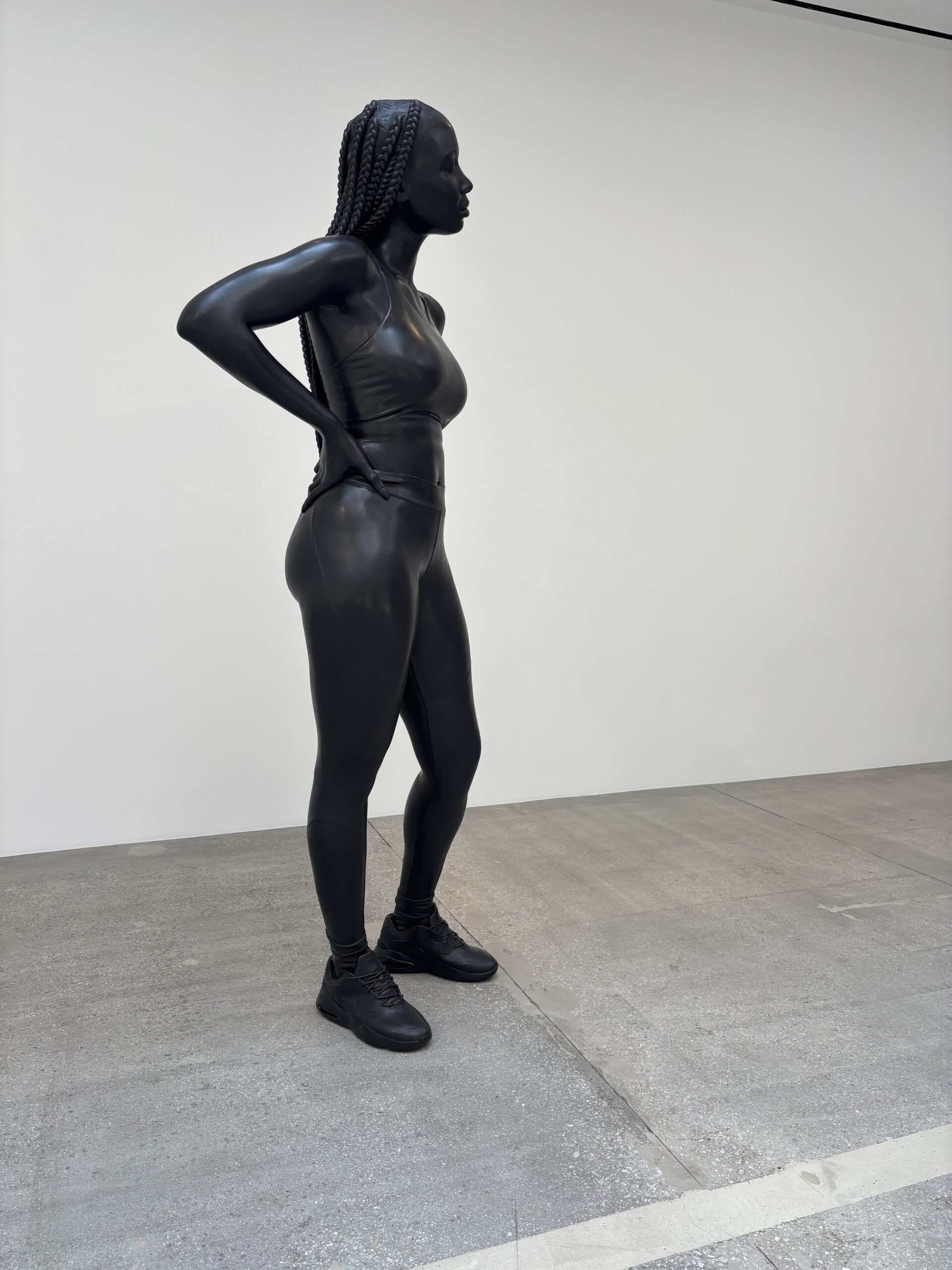
-
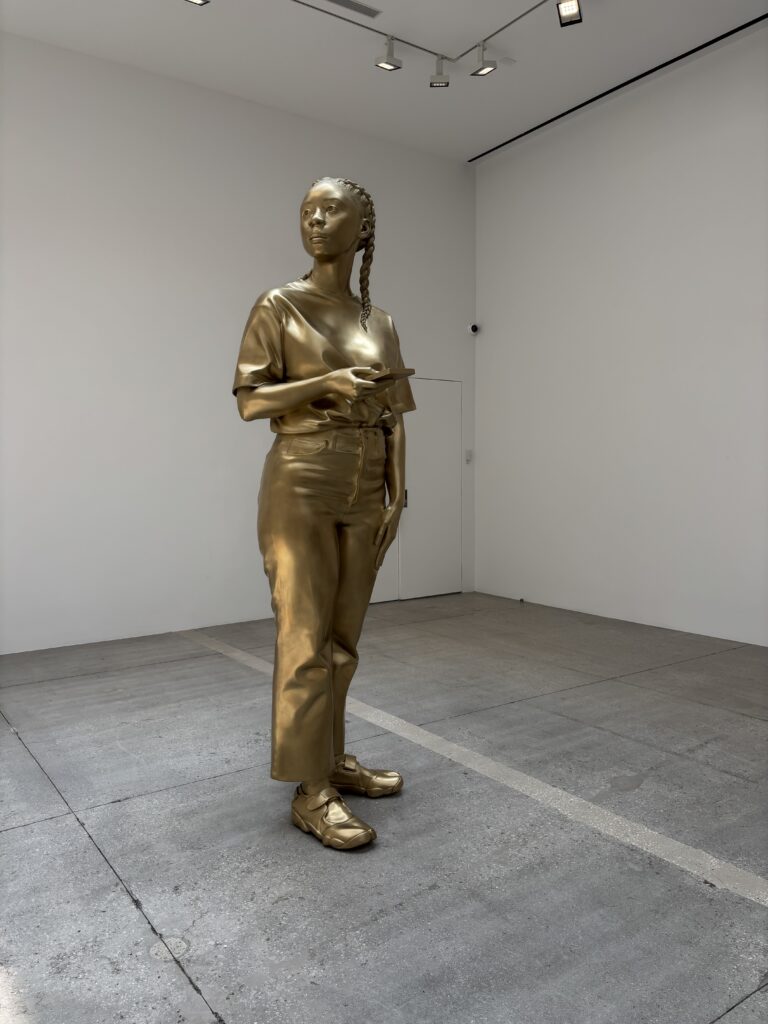
- “A Place Beyond” (2023) by Thomas J. Price
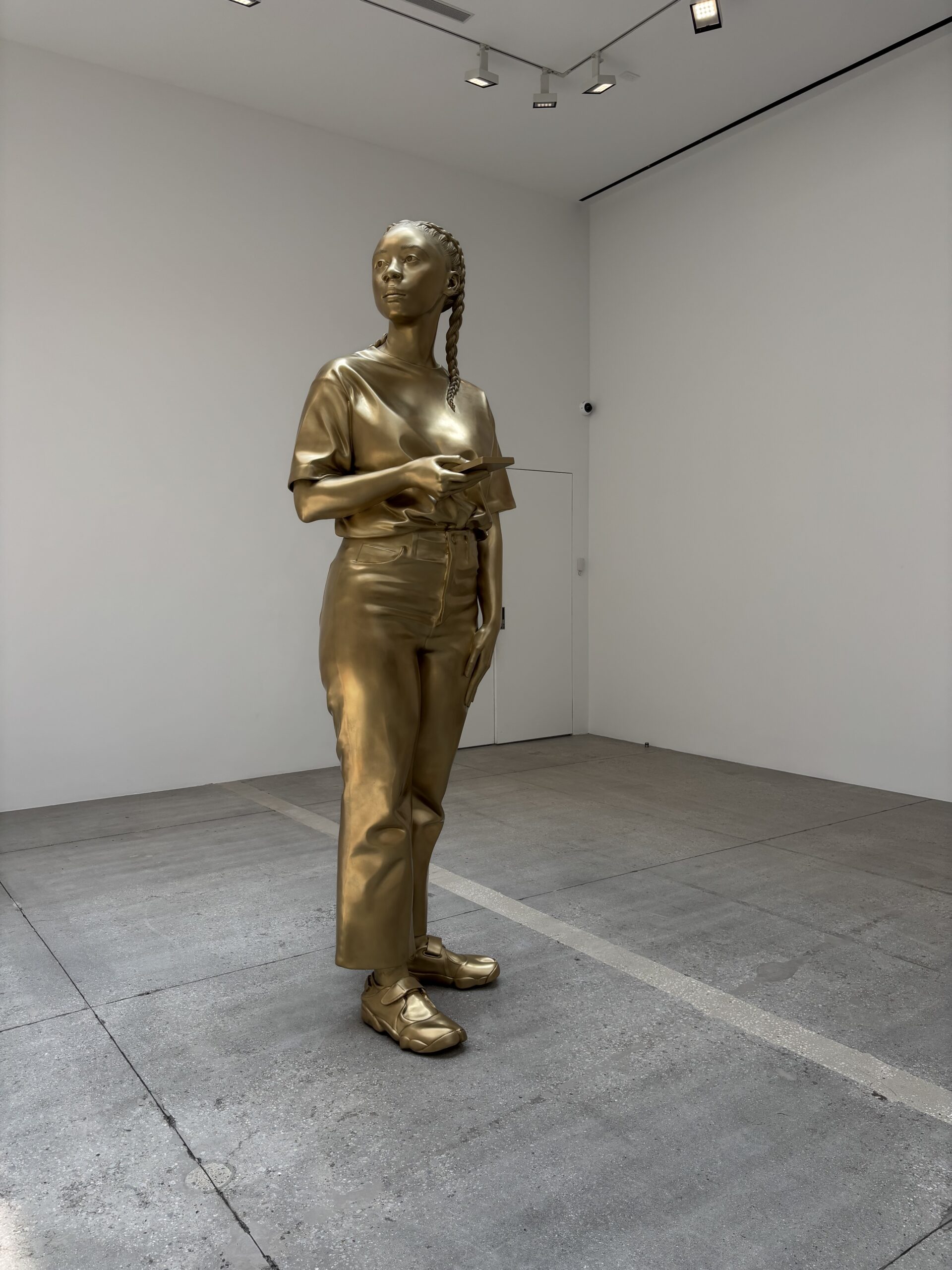
-
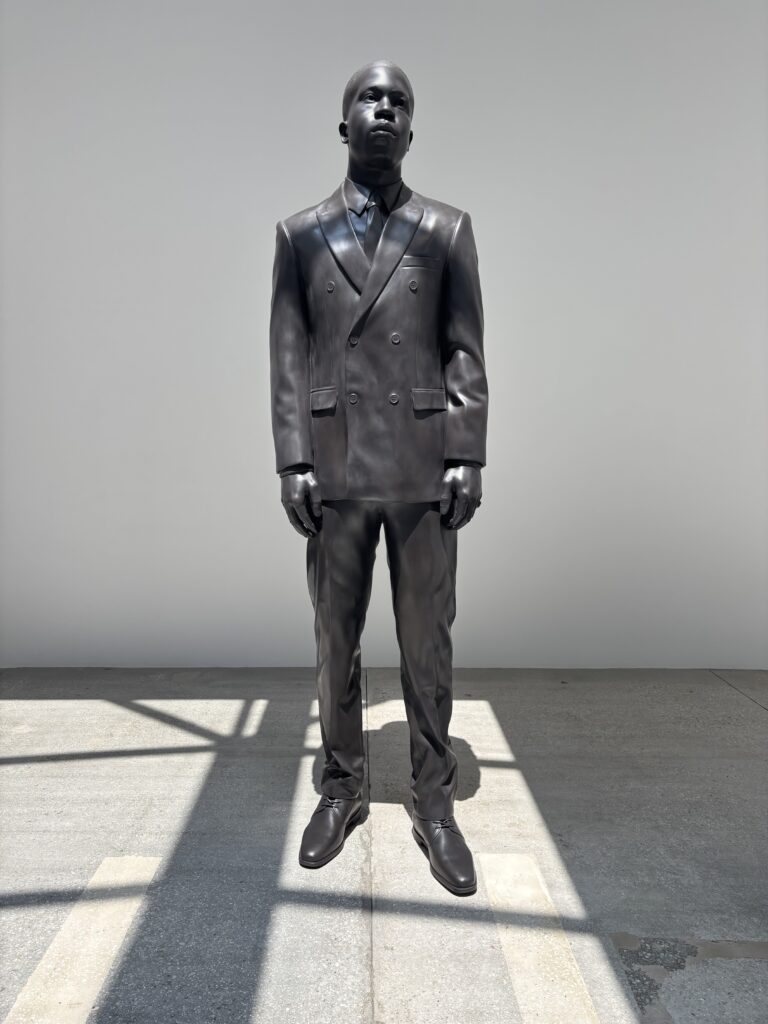
- “A Kind of Confidence” (2023) by Thomas J. Price
-
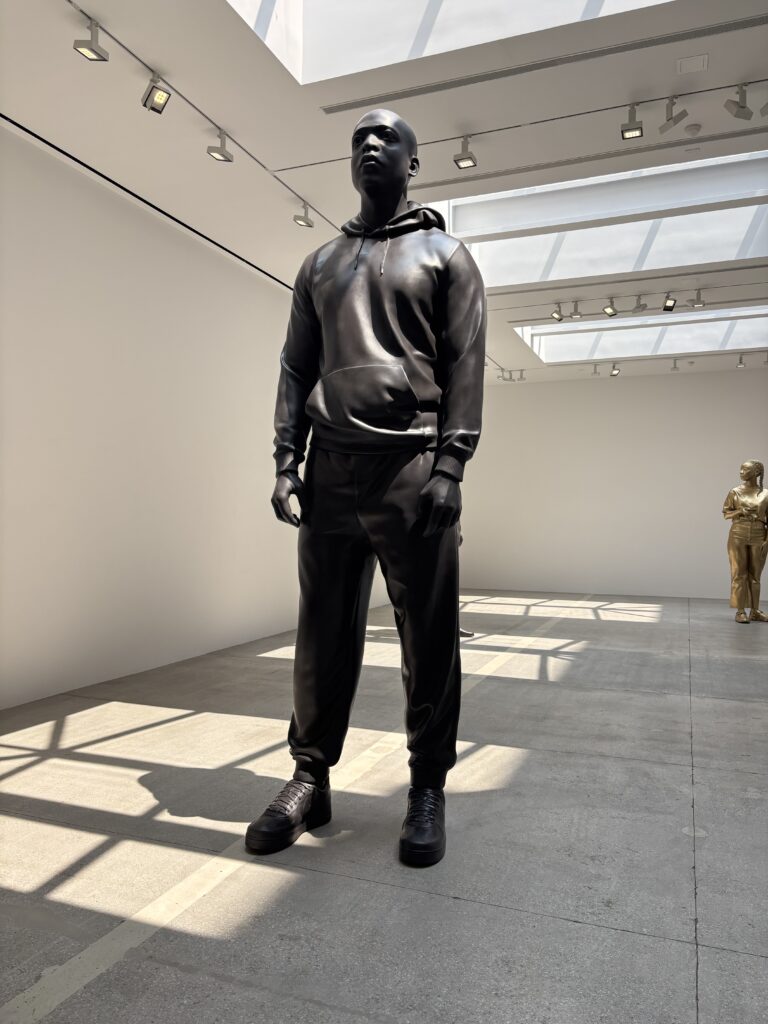
- “Within the Folds (Dialogue 1)” (2025) by Thomas J. Price
-
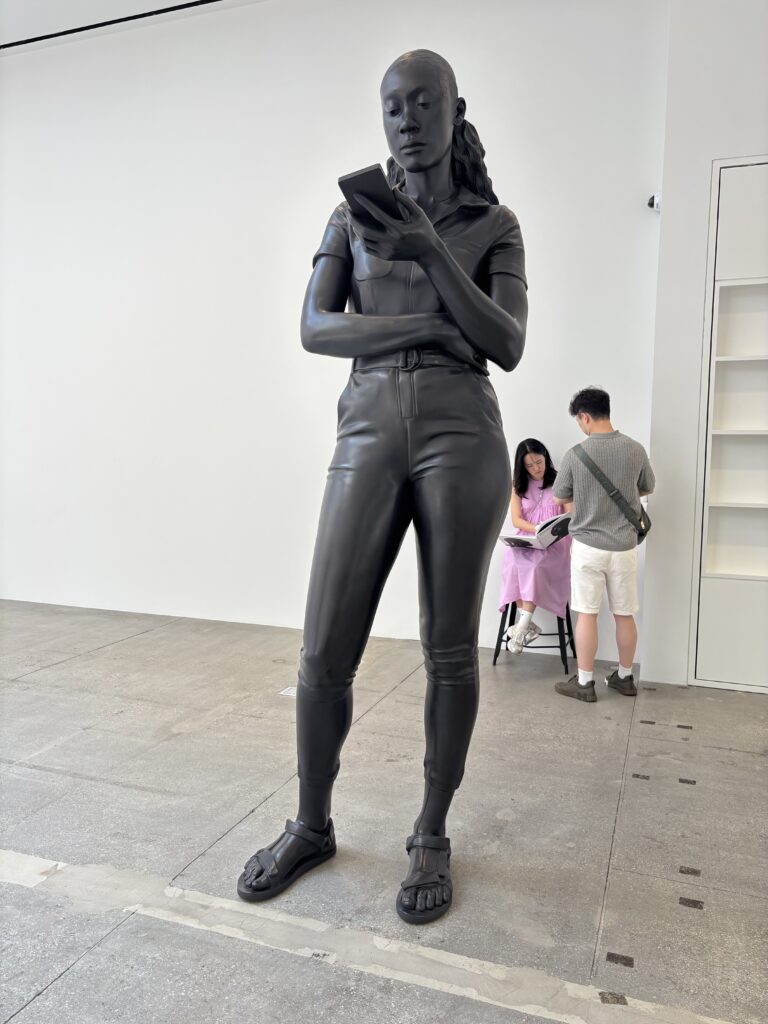
- “Time Unfolding” (2023) by Thomas J. Price