
Toyin Ojih Odutola: ‘Ilé Oriaku’ at Jack Shainman Gallery
The star artist invites us to peer beyond this plane to commune with the spirits of her ancestors and consider our histories and imaginations.
I have never been married, nor worn a wedding dress but I will tell you, with the confidence of a bridal expert, that the veil is the centerpiece of the marital ensemble. I find it disappointing for a well-tailored gown, snug in all the right places, hand-beaded from collarbone to ankle to be revealed all at once. Weddings, which are, at heart, ceremonial performances of love, deserve a little drama and there’s nothing more dramatic than a reveal. We should blame reality TV shows like Love at First Sight and Love is Blind for the prevalence of tiny hair comb veils that cover the brides’ backs but keep their faces wholly visible. This way, it’s easier for audiences to inspect micro facial expressions: is she striding to her destiny…or her doom?
Weddings aside, veils serve a symbolic purpose: a separation between what you can see and what you can access. At the times of year when the “veil is thin”, there are global observations of moments when we can reach out and touch our ancestors, those spirits beyond the veil. Día de los Muertos, All Saints’ Day, Halloween, Samhain, Pitru Paksha, Ghost Festival, each of these is an invitation to incant with those who have gone and remember that we too, one day, will join them. Toyin Ojih Odutola’s Ilé Oriaku hems us in to that reminder, surrounding us with the illustrated spirits of the artist’s forebears. Here, in the gallery, the veils are visible and, in some cases, partially removed.
Ms. Odutola, a Nigerian-born, Alabama-raised artist whose style casual observers may recognize from posters for Giants at the Brooklyn Museum, has created works that are the crown jewel of various collections, such as the Birmingham Museum of Art and the Alicia Keys and Swizz Beatz Dean Collection. (Semi-related: On my way into Shainman Gallery to see this show, Swizz greeted me warmly with “Peace, Sister” and took my hand in his. He was on his way out and he either mistook me for someone he knew or is naturally outgoing.) The ads for Giants, which were totally unavoidable on subways and sidewalks last spring, showcased Ms. Odutola’s “Paris Apartment” which is a striking portrait of an ebony-skinned woman with a close-cropped hair cut. While there are a number of high-profile artists — Barkley Hendricks, Kehinde Wiley, Lynette Yiadom-Boakye — who represent brown and black skin tones in regal and realistic ways on the canvas, Toyin’s work stands out to me for the way it portrays sheen. The waves of light lend a dynamic effect when viewed from a distance, and a depth that’s lush and dizzying when you’re less than a footstep away.
You can get close to the works in this show at at Jack Shainman, if you want to feel small. There are triptychs and diptychs hinged together on standing wooden frames that could fill my living room, though at this price point the typical buyer’s living room is ten times the size of mine. The title of the show reveals Ms. Odutola’s intentions — Ilé is Yoruba for ‘home’ and Oriaku is her grandmother’s Igbo name — she’s created a house of her ancestors and invited you in. An inscription reads, “On moonlit nights…Mbari restless spirits perform theatre productions…This gallery is also a portal. All who enter must do so with reverence.”
-
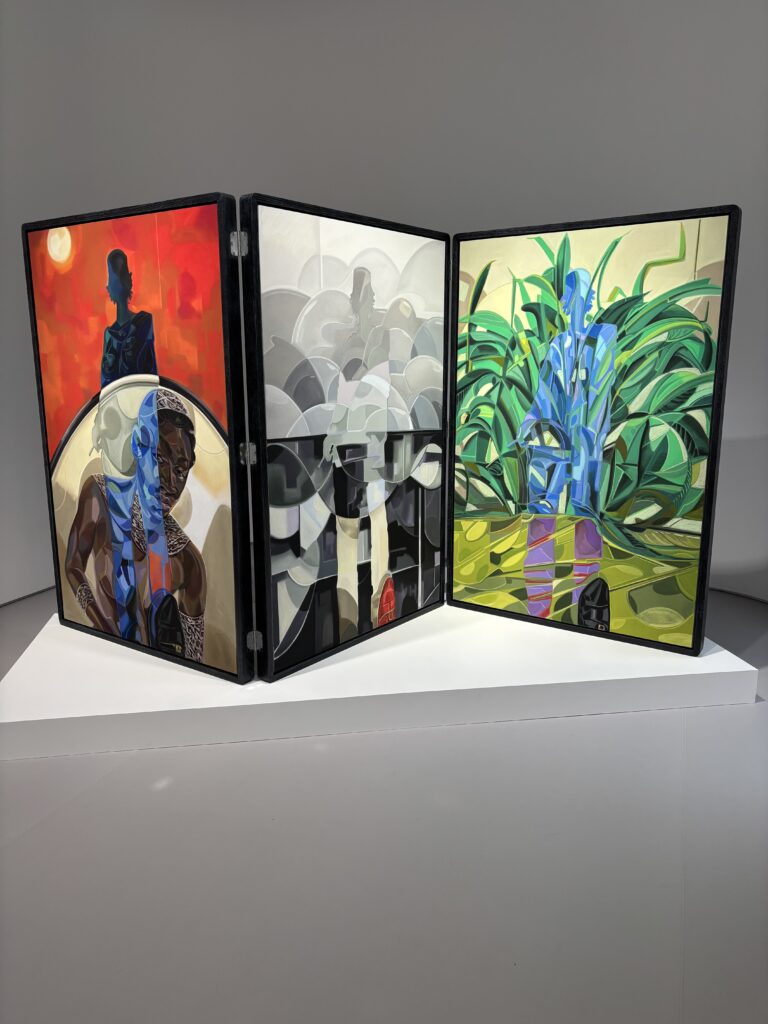
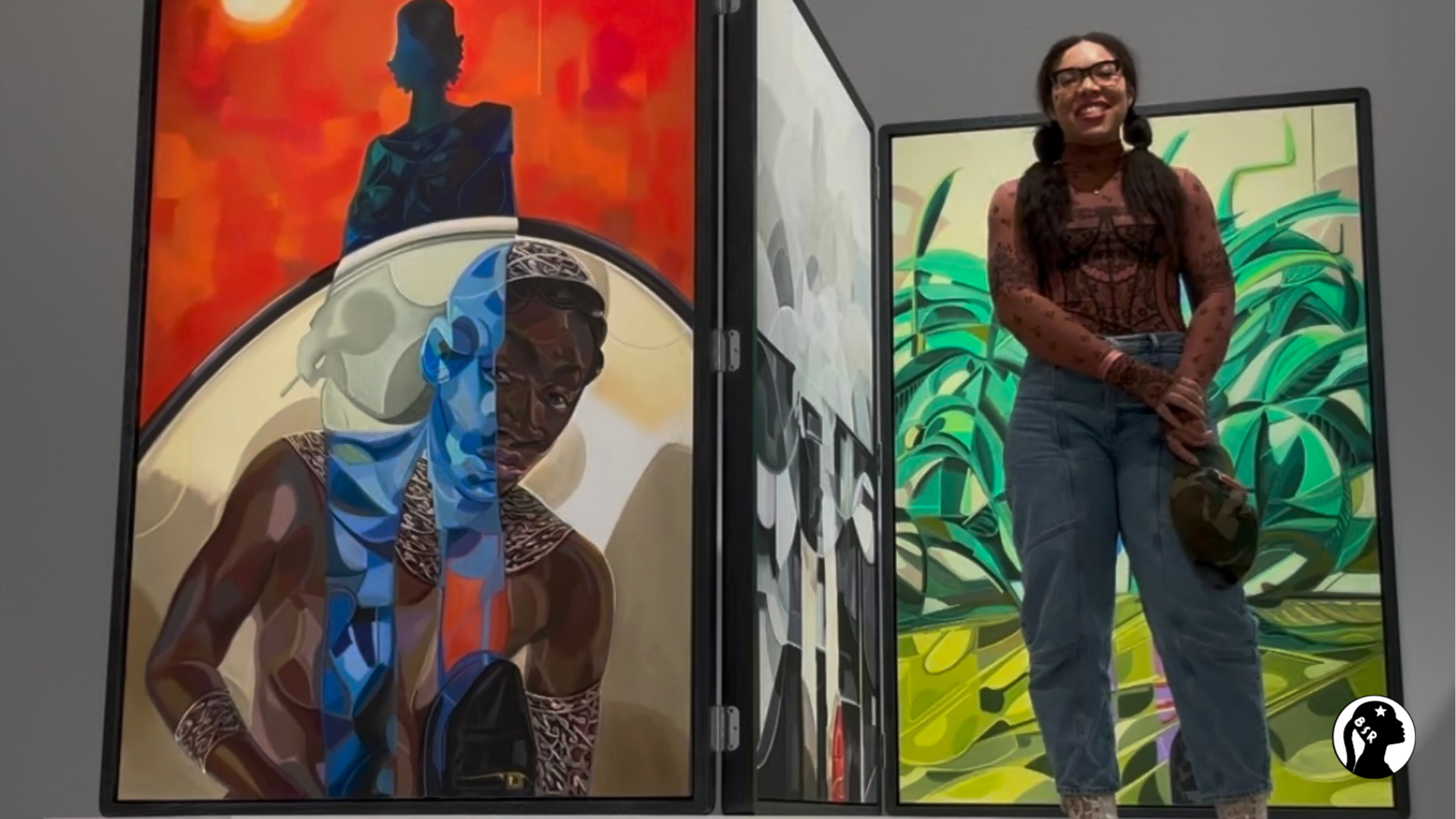
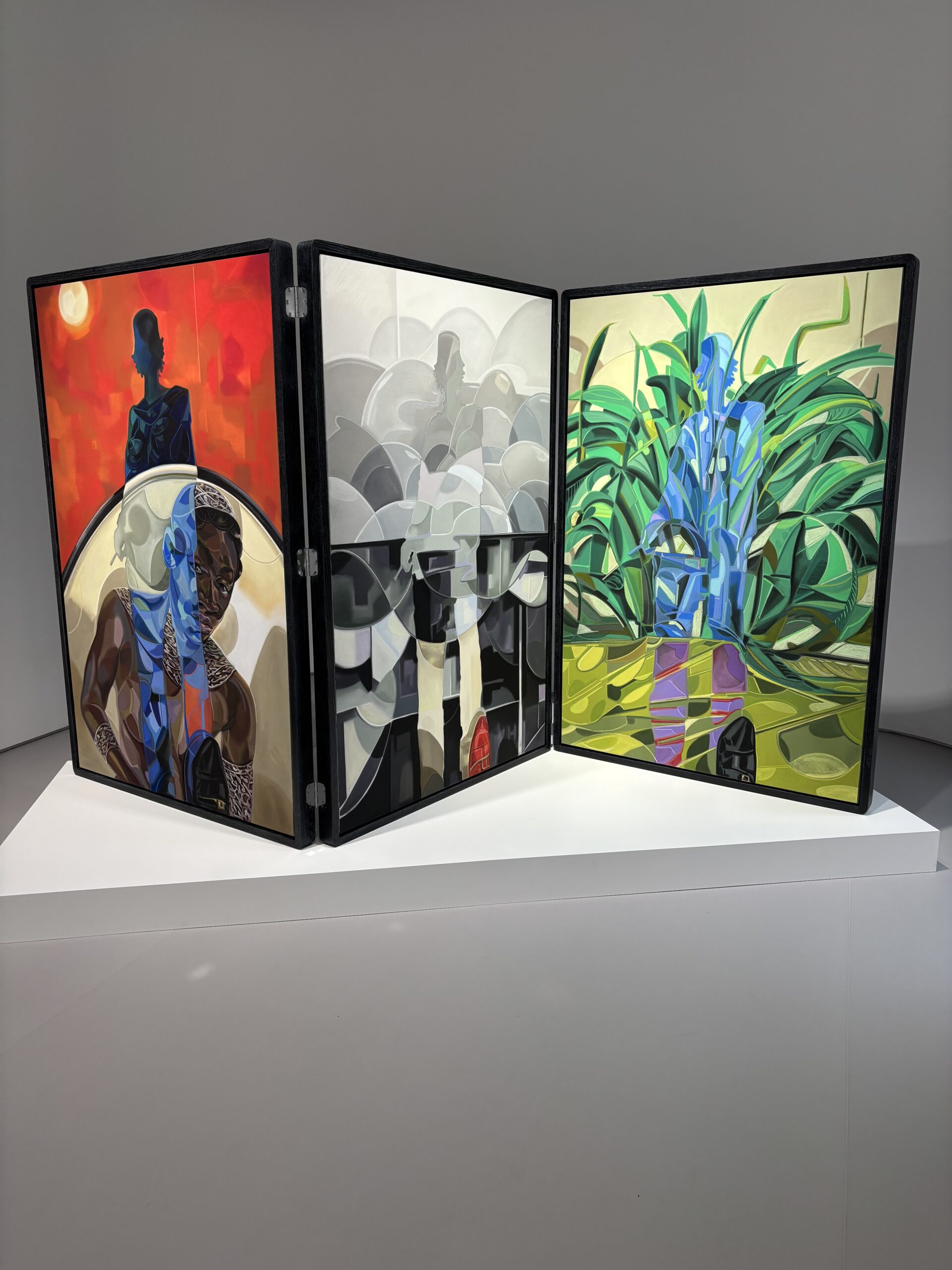
- [triptych] “Time, Energy, Resources” (2024-2025) by Toyin Ojih Odutola
-
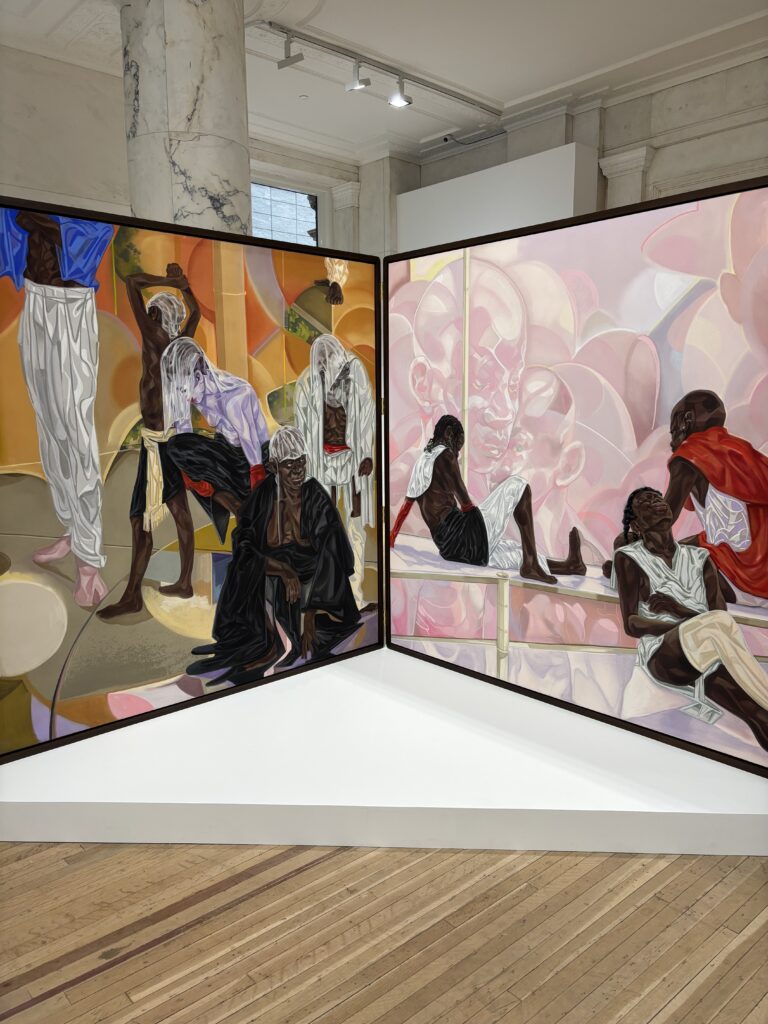
- [diptych] “Lẹhin Mgbede (Before + After the Evening’s Performance” (2023-2024) by Toyin Ojih Odutola
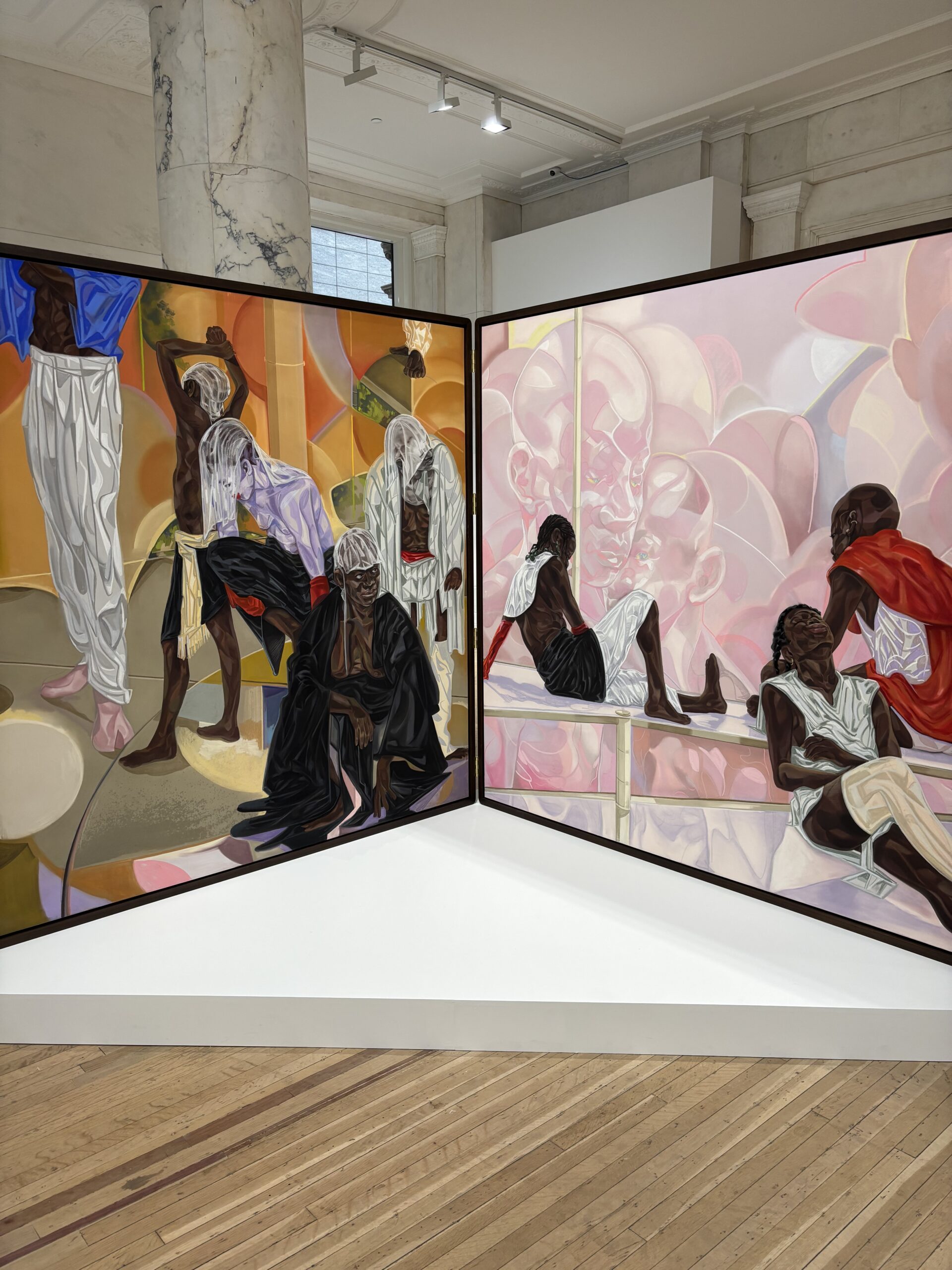
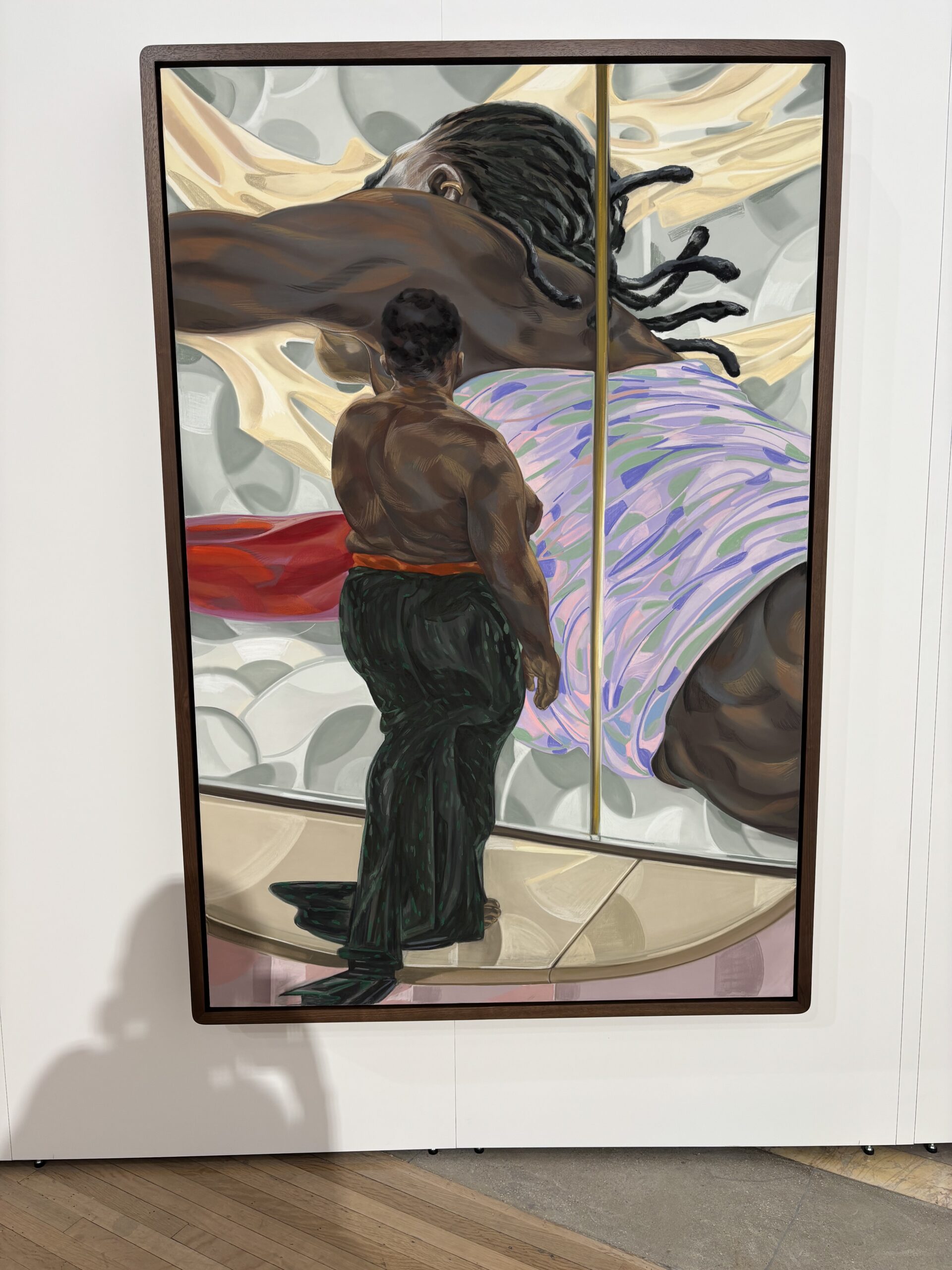
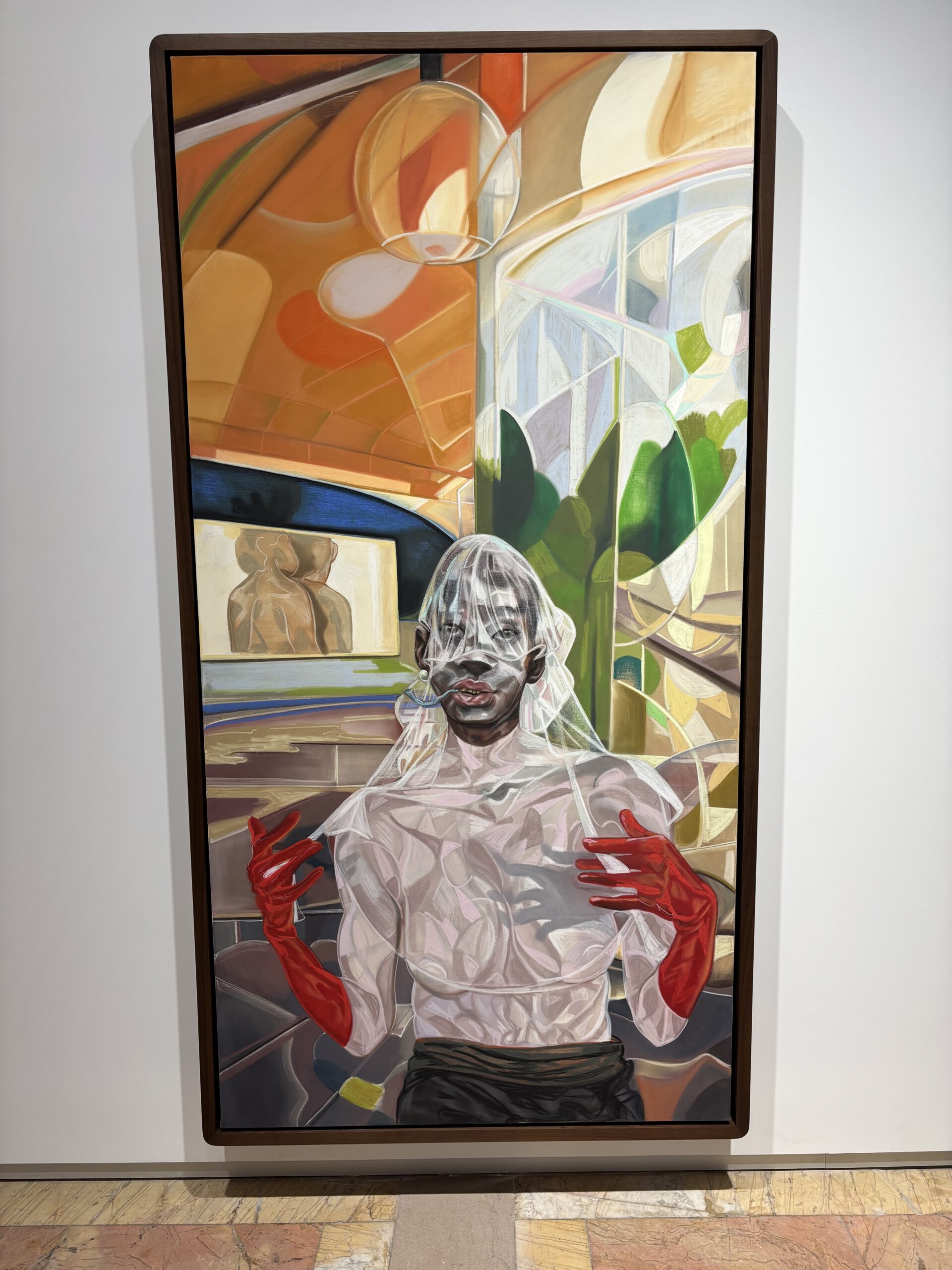
The veil is thin here and the perspective in many of the pieces makes it seems as if you’re looking in a many roomed mansion without the subjects’ knowledge. They’re shown in the shower or peering into mirrors or partially nude but at least one part of each image is obscured. In some works, the shrouding obstacle is a literal veil. In “Lẹhin Mgbede (Before + After the Evening’s Performance)” and “A Flexible Spirit (Awọn ọhụrụ)”, we see figures draped in a cloth that pours over their brown heads like a clear viscous gel. In some works, the veil is traded and the figures are placed behind translucent panes, like a shower door. In these, you can see the shapes but not the details and Ms. Odutola’s mastery of light, sheen, and glint are handy here.
-
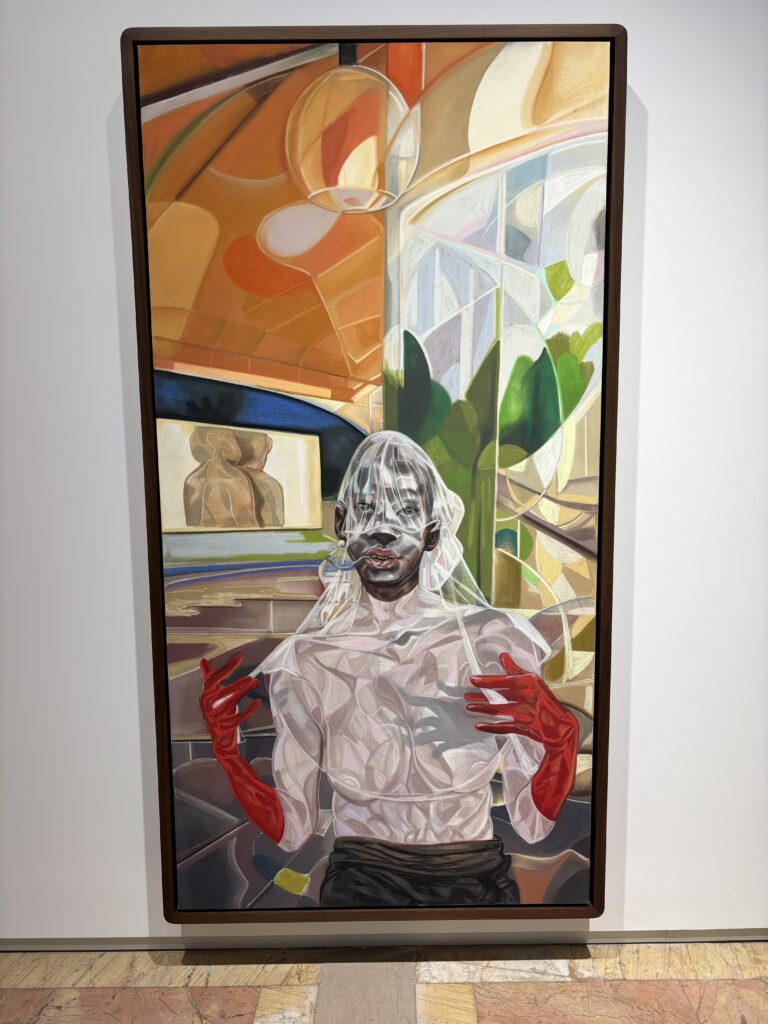
- “A Flexible Spirit (Awọn ọhụrụ)” (2023) by Toyin Ojih Odutola
-
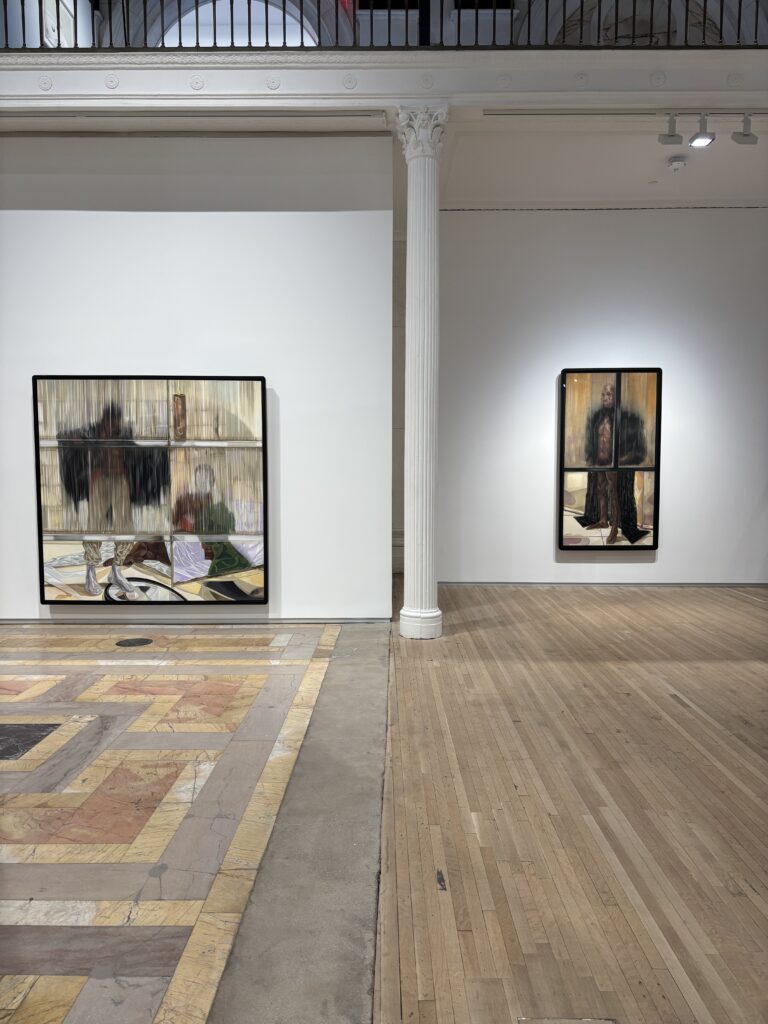
- Gallery wall with two works by Toyin Ojih Odutola that feature obscured figures
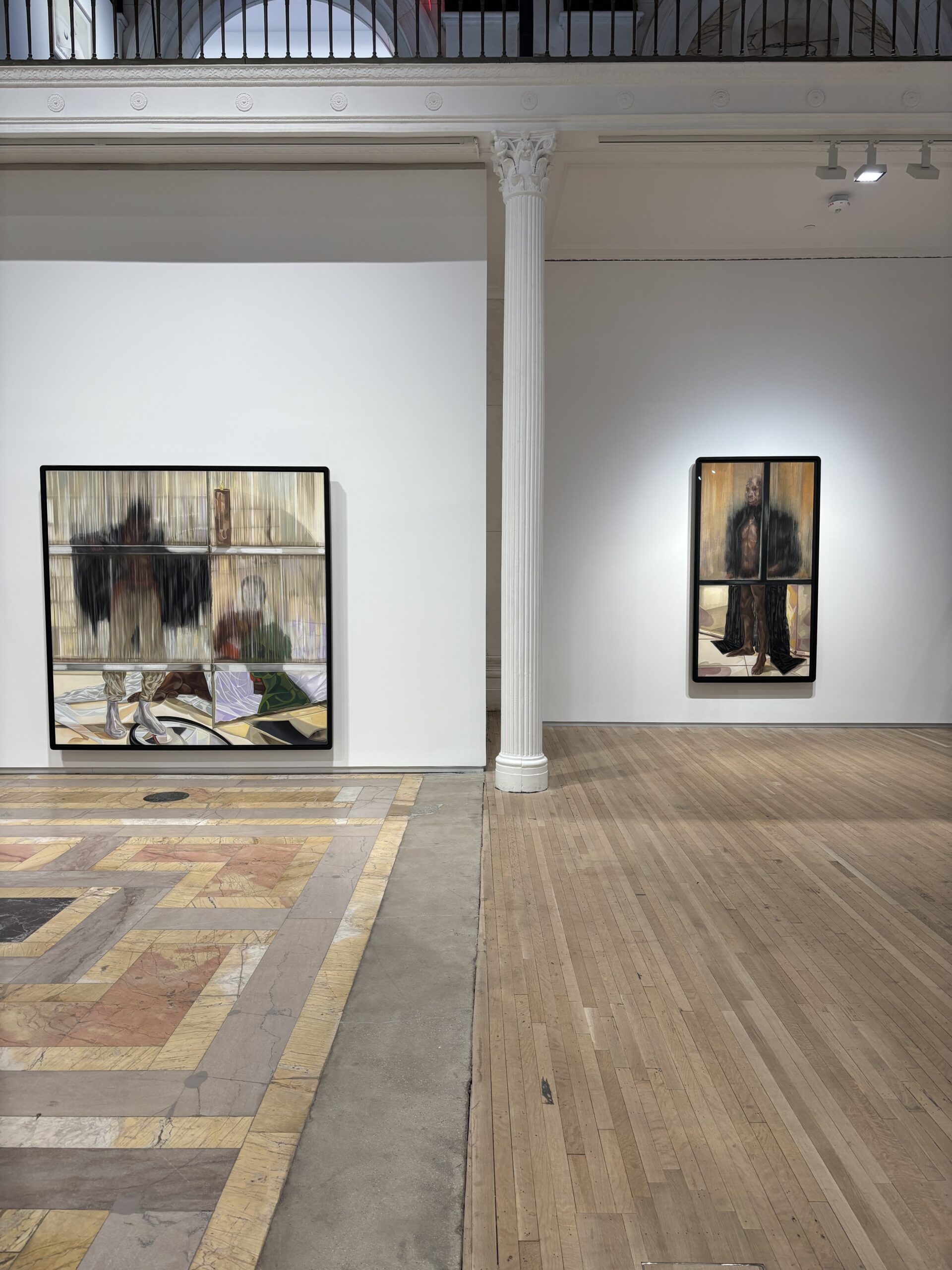
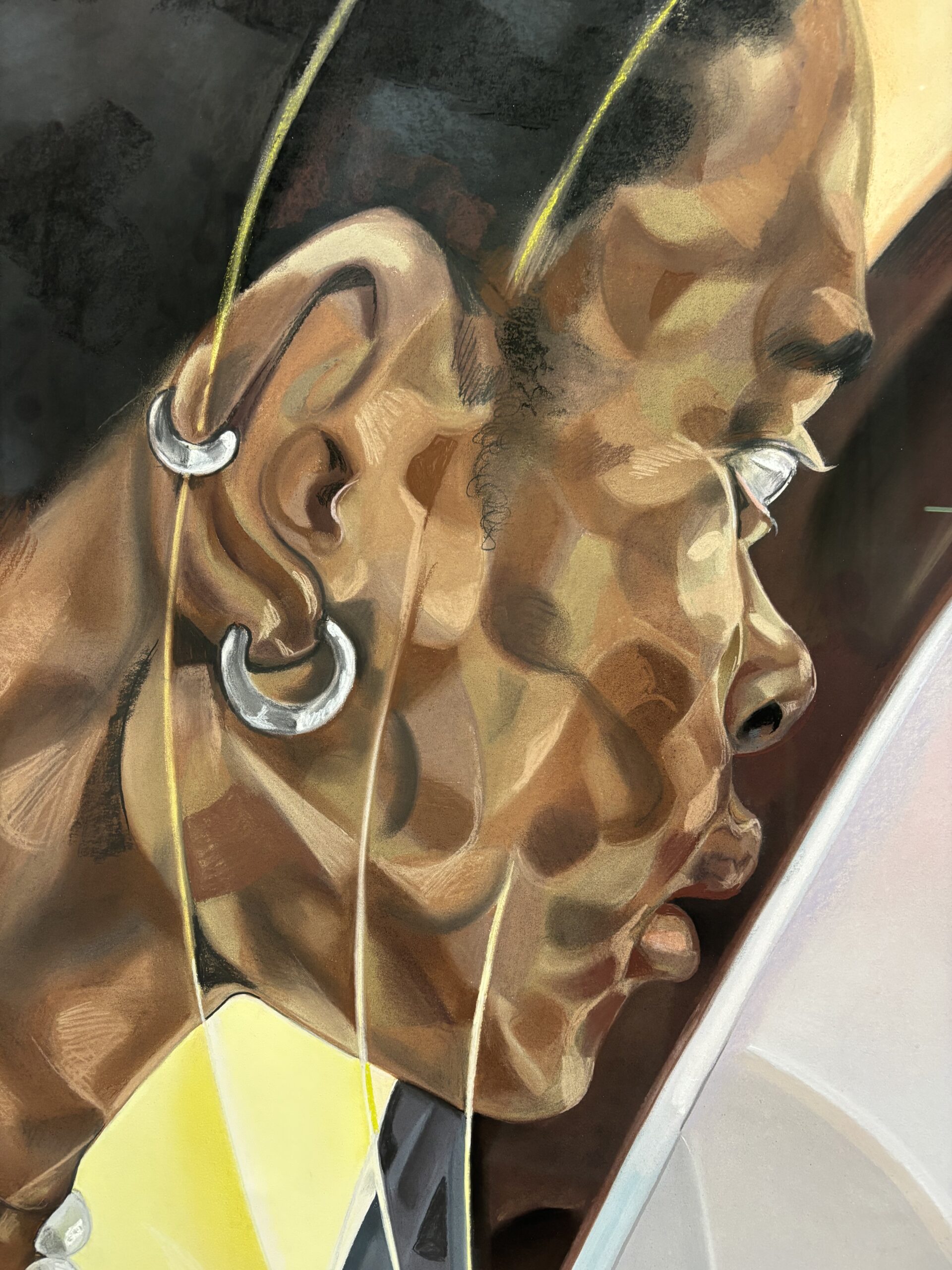
Nearly all of the works I’ve seen by Toyin Ojih Odutola up to this point — which is by no means comprehensive — have painted Black people as they appear, though with overemphasized highlights of shine. The works in this exhibition represent a new (to me) approach in her style in the way she’s used irregular geometric shapes in varying shades of brown to create dimension. The technique has a ghostly effect on the figures she’s painted white and I found myself circling the gallery and ending up back in front of the same two works each time.
-
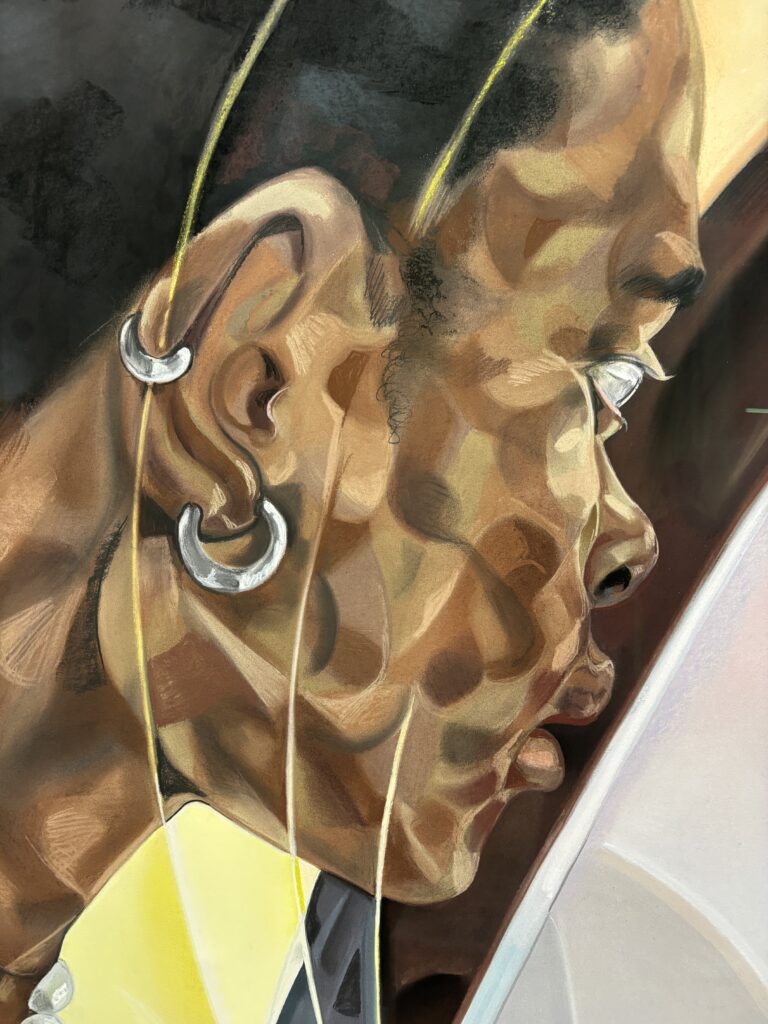
- [detail] “Don’t Be Afraid, Use What I Gave You” (2023) by Toyin Ojih Odutola
-
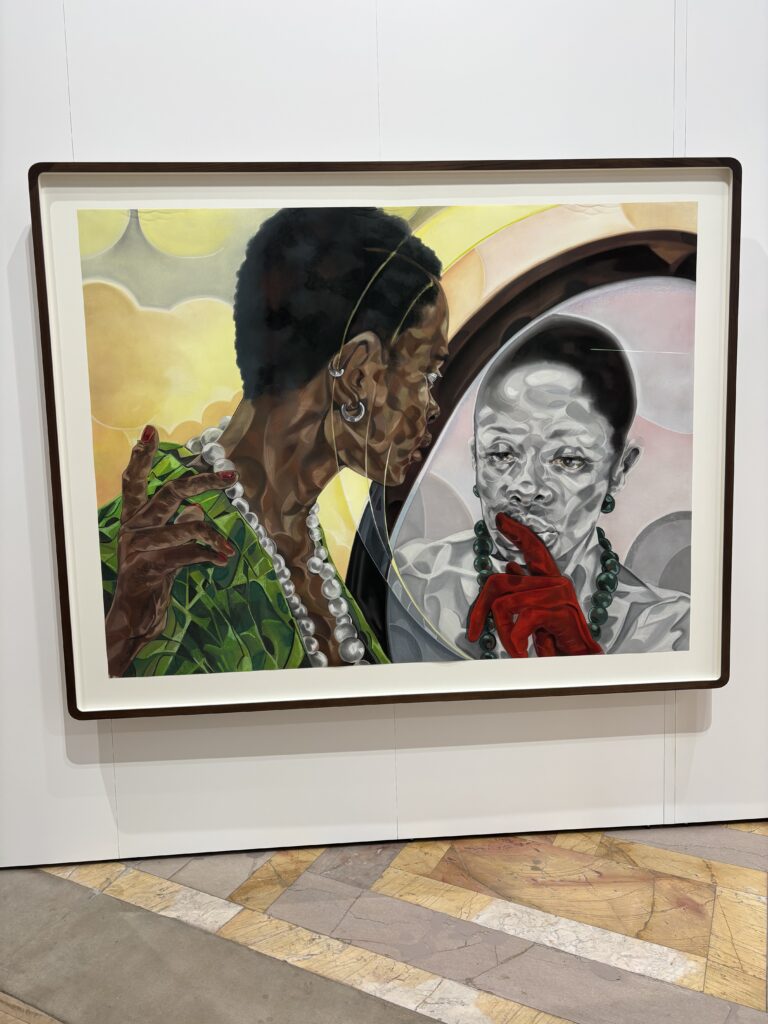
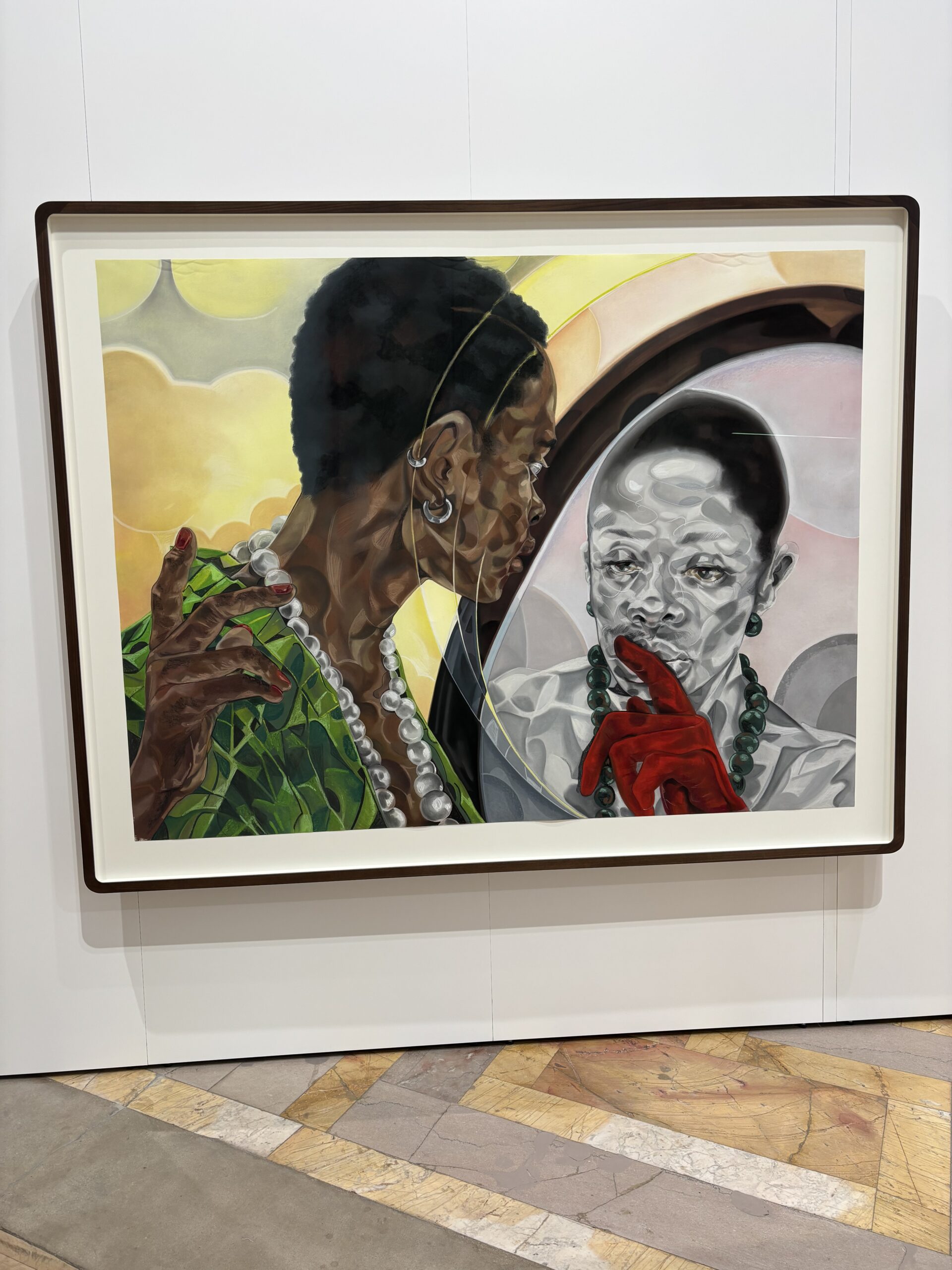
- “Don’t Be Afraid, Use What I Gave You” (2023) by Toyin Ojih Odutola
-
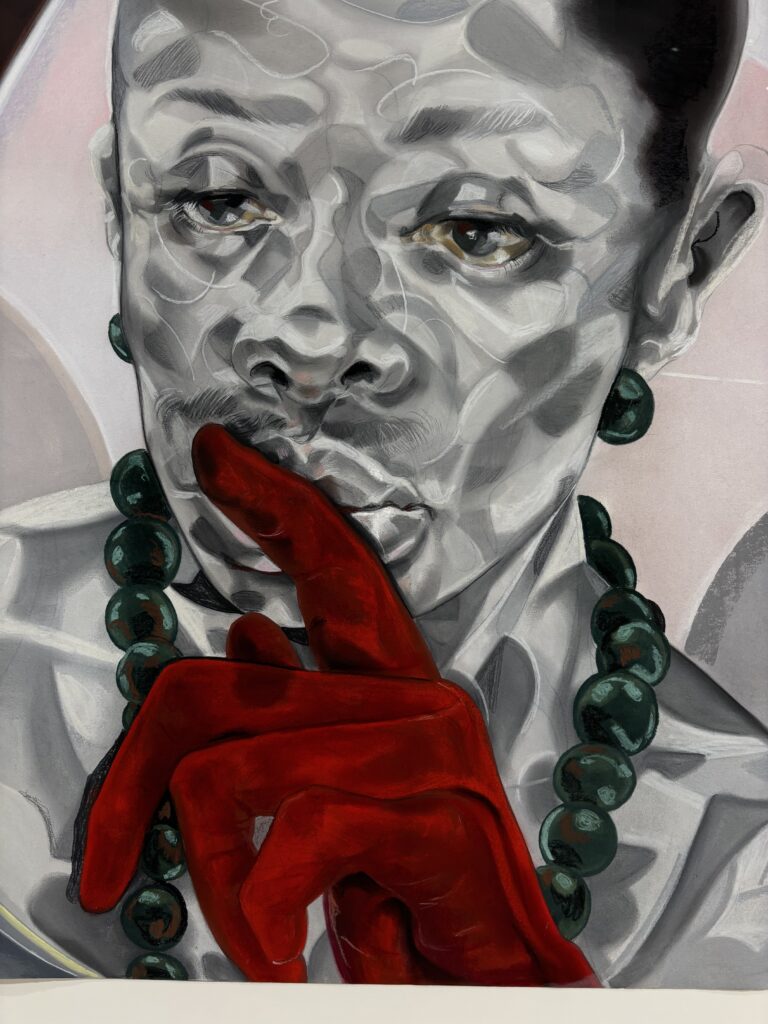
- [detail] “Don’t Be Afraid, Use What I Gave You” (2023) by Toyin Ojih Odutola
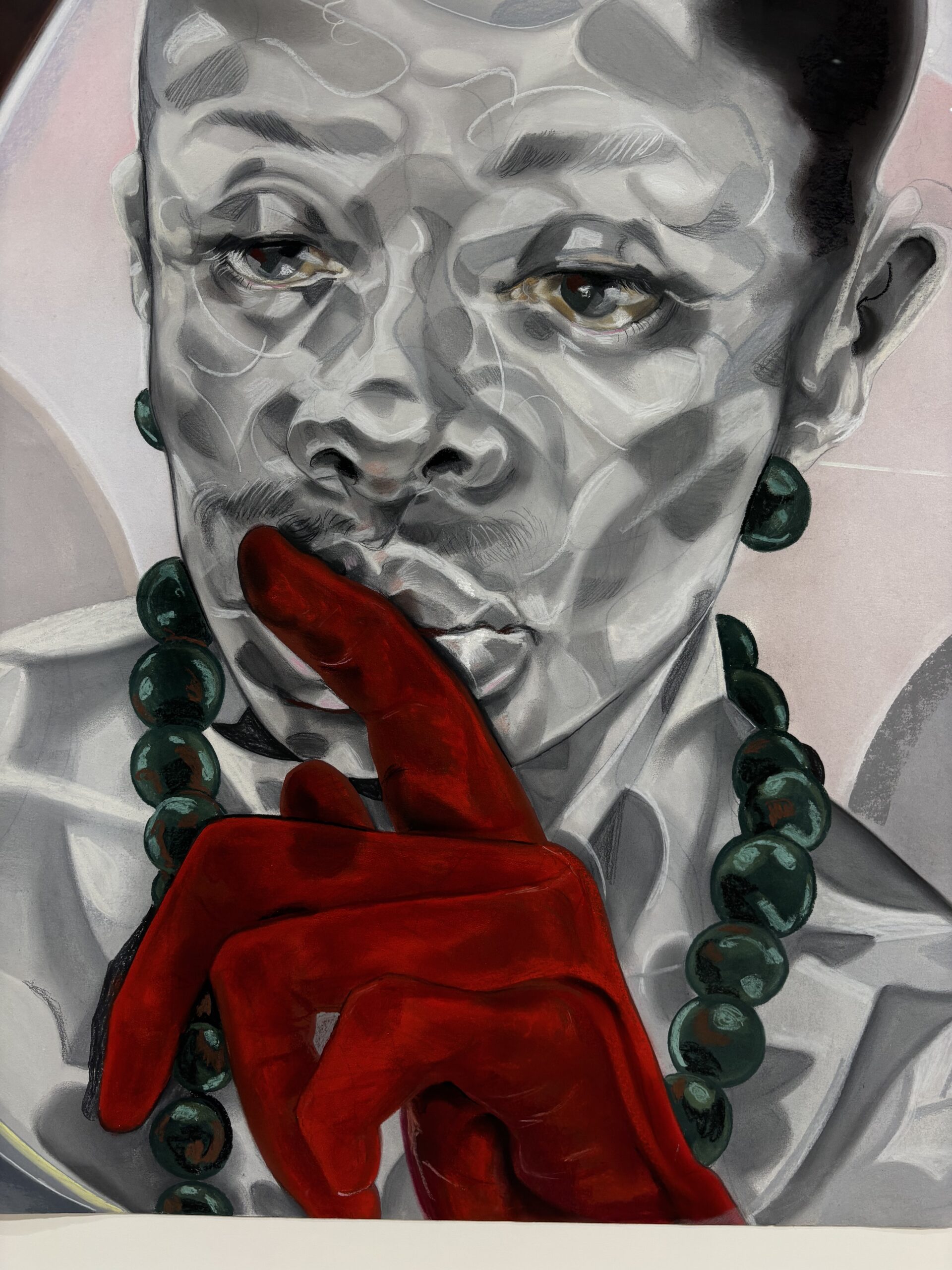
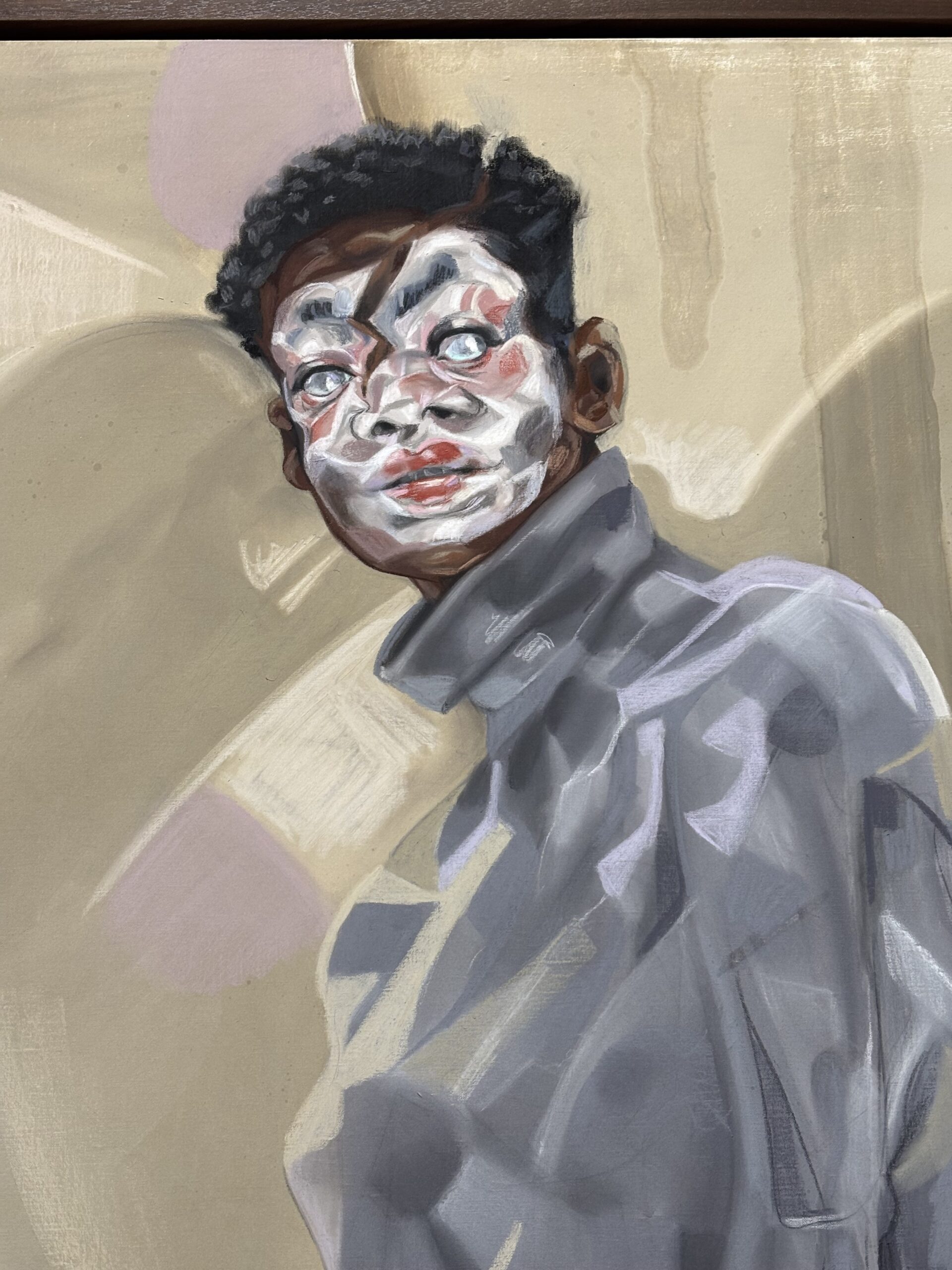
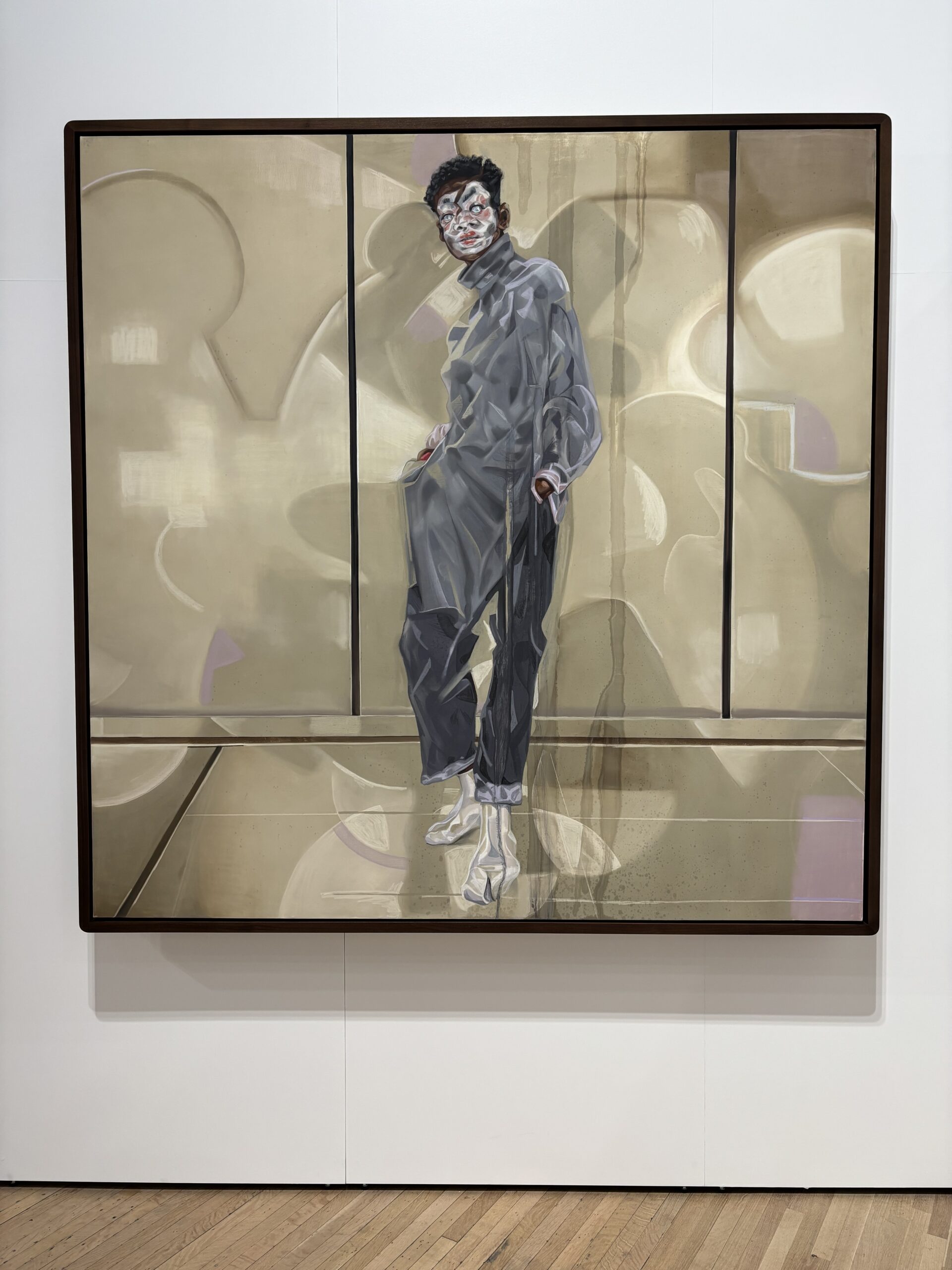
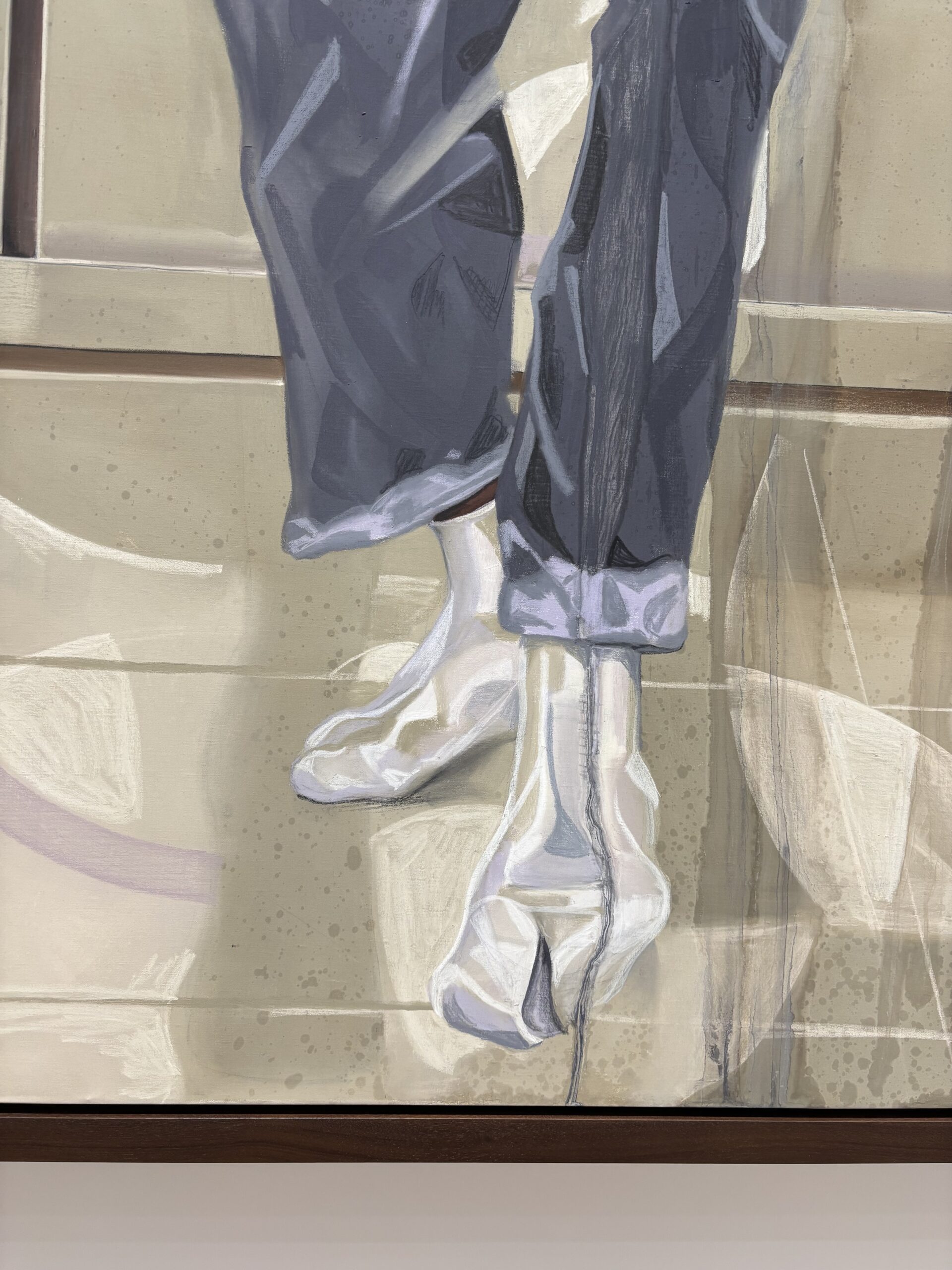
The first, “Showa Era Drag”, depicts an androgynous subject, draped in a gray cashmere turtleneck with charcoal trousers rolled up at the ankle and white Tabis (the current *it*-shoe for the fashionable). The subject’s brown face has been painted over in white so ghastly that the rouged cheeks and the under-filled red lip look bloody and painful. Like a broken mask, there’s a crack at the top of this white covering that’s adjacent to the side part in the figure’s coiled hair and echoes the shoe’s split between the big toe and the remaining toes. The painted face, split-toe, and title are all references to Japan. The Showa Era is the name of the record-setting reign of Emperor Hirohito in Japan from 1925 to 1989, the face paint evokes geisha makeup, and the split-toe sock (for which the Maison Margiela shoe is named) has been worn with thong-toed sandals for centuries. In “Don’t Be Afraid, Use What I Gave You” two figures face each other through a mirror. One, brown but dressed in green, and feminine, with her hand held back. The other, white and topless, mustached, with a red glove touched to the lip as if to silence. Wisdom and heartache are being exchanged across lifetimes.
-
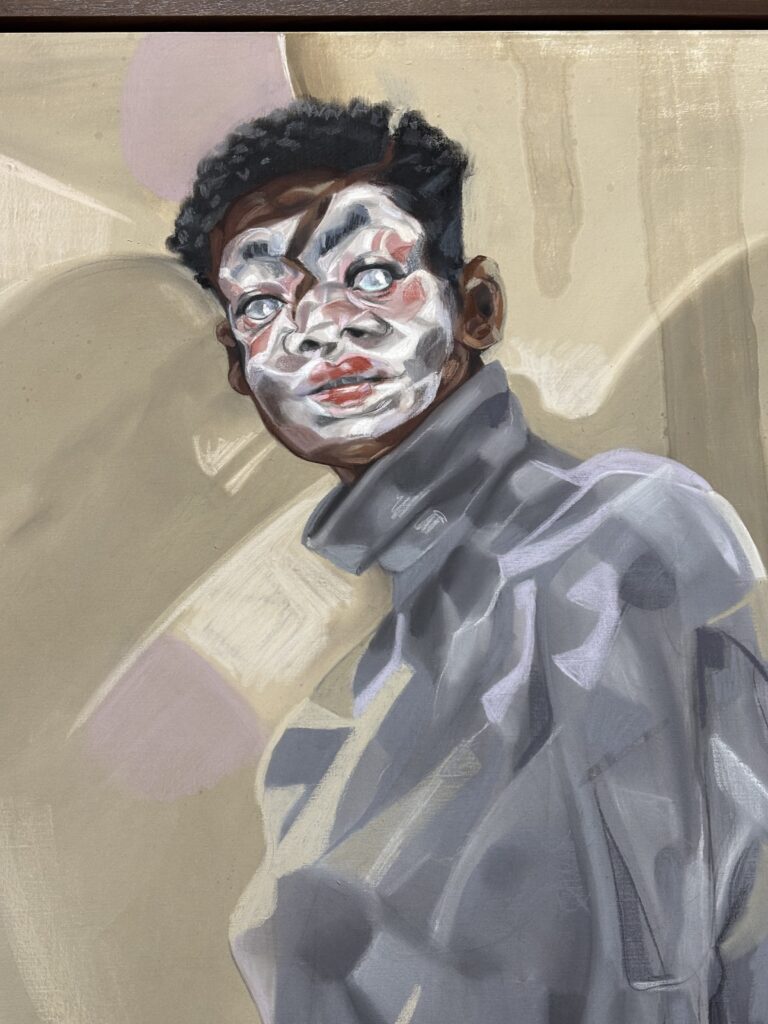
- [detail] “Showa Era Drag” (2023) by Toyin Ojih Odutola
-
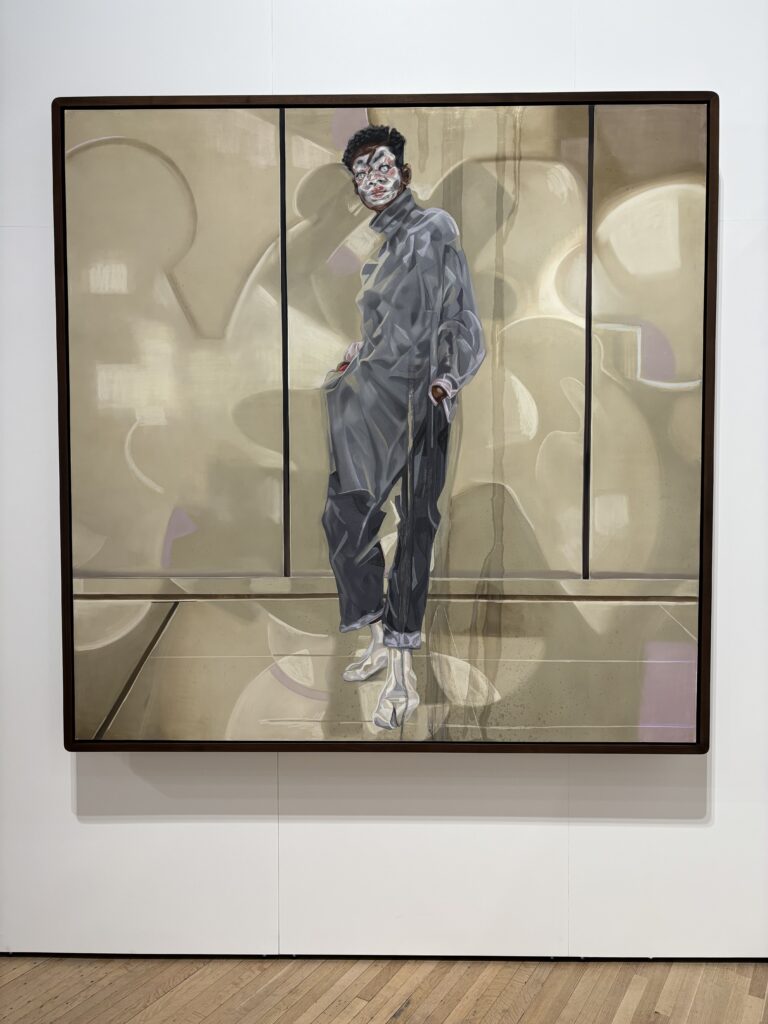
- “Showa Era Drag” (2023) by Toyin Ojih Odutola
-
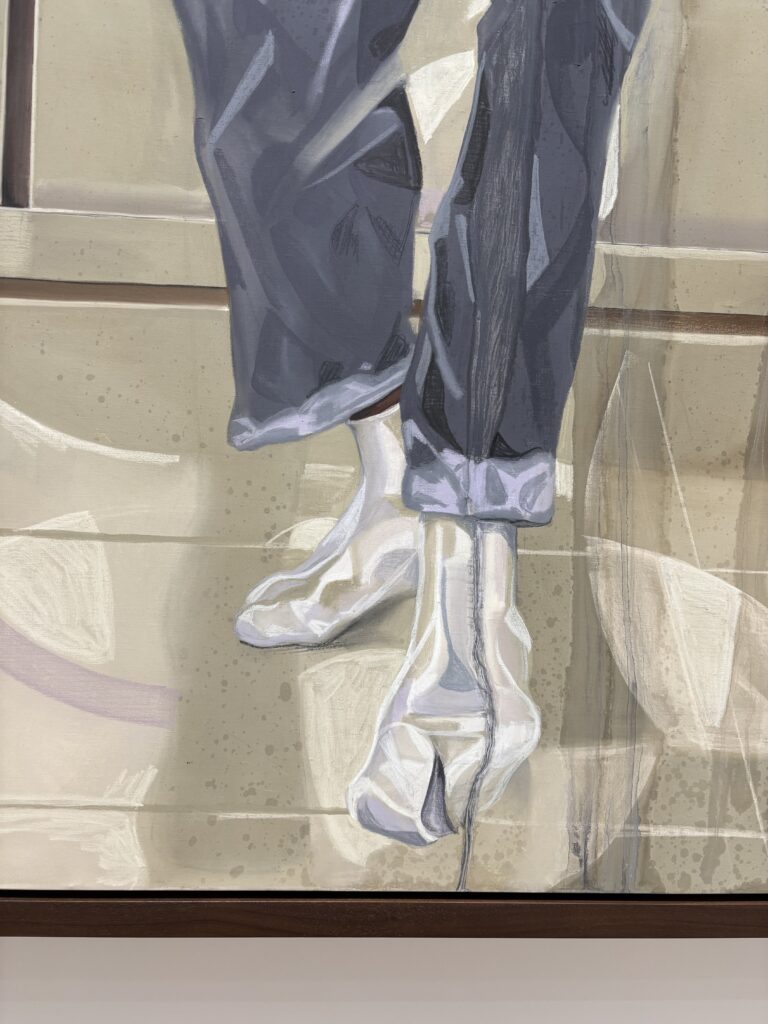
- [detail] “Showa Era Drag” (2023) by Toyin Ojih Odutola
In either piece, it’s not entirely clear what the spirit is offering and this makes the image all the more enticing. An implied conversation between flesh and canvas. A silence. It feels like a holy place. Shortly after my run-in with Mr. Beatz, I saw Ms. Odutola sitting in a corner experiencing a solitude I didn’t want to interrupt. I peeked around a marble column to congratulate her on the show and shuffled away to leave her to it after she responded with a soft smile.
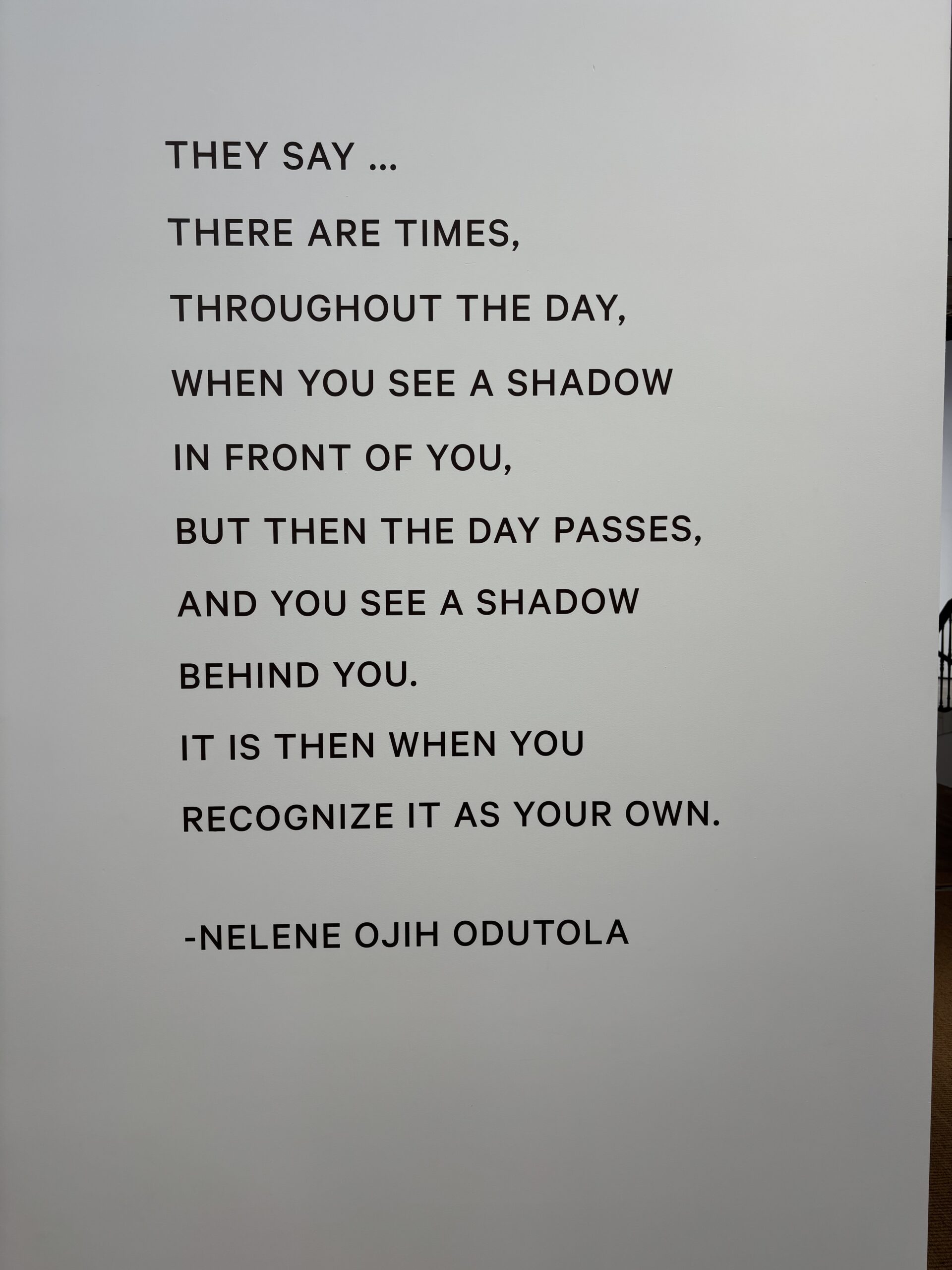
I think the quiet I felt here was intentional. It’s the kind of artwork I’d like to sit in front of for an afternoon, a week, even a lifetime because I imagine that meanings may shift as I’ve done a little more living. The emphasis on shifting through life feels intentional, too. A wall near the entrance holds a quote by the artist’s mother, Nelene Ojih Odutola, “They say…there are times throughout the day, when you see a shadow in front of you, but then the day passes, and you see a shadow behind you. It is then when you recognize it as your own.” The shadow is always you, you just can’t make the connection. In these moments and places when the veil is thin, or when it’s lifted altogether in a grand reveal, we can see what we’ve been waiting for — we can see from where we’ve come.
blacklove 🖤 and starlight 🌟
Ilé Oriaku is a solo exhibition of multimedia drawings and works on paper by Toyin Ojih Odutola at Jack Shainman Gallery at 46 Lafayette St in Tribeca. It is on view from May 6th to July 18th and the gallery is open from 10am to 6pm from Tuesday through Saturday. Entry to the gallery is free. Works are available for purchase, prices are available upon request.
-
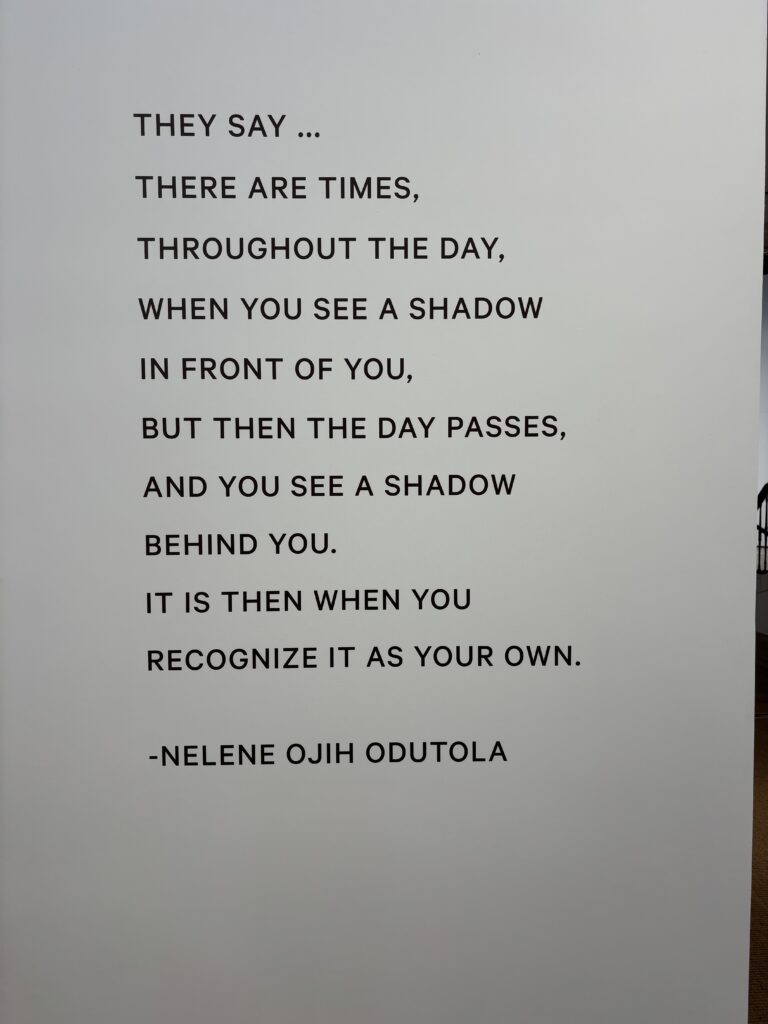
- Quote by the artist’s mother, Nelene Ojih Odutola
-
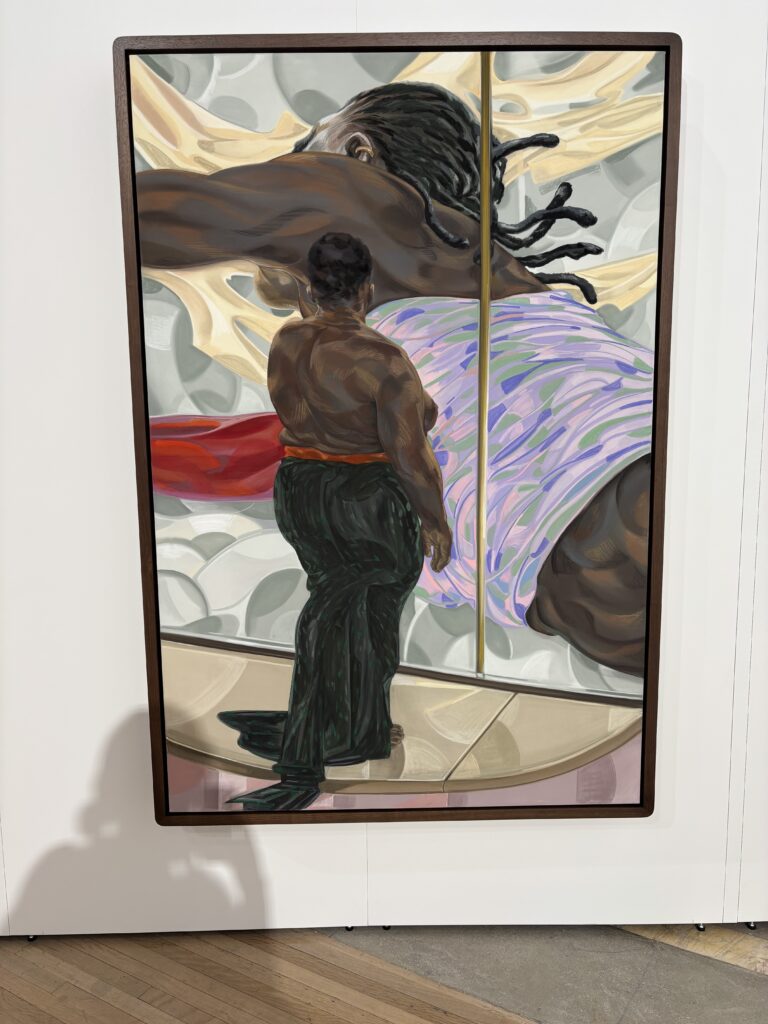
- “Nwanyeruwa (Aba Women’s Rebellion)” (2023-2024) by Toyin Ojih Odutola