
Black Fashion Talks: Robin Givhan on Virgil Abloh
A rule-bender and -breaker, Virgil Abloh’s splashy impact on the fashion industry is ratified in a new book by Pulitzer Prize-winning critic, Robin Givhan
It was far too hot to prioritize style over sanity. Yet and still, the man in the elevator with me had on a sweater. His dreadlocks shook as he laughed when I asked him a string of questions that started with “You not hot?” and ended with “I mean…as long as you’re comfortable, right?” He told me that another Black woman had asked him the same questions in the very same order while he was waiting outside in the line. I averted my eyes because he seemed to be missing the point. His choice of outfit was making us hot, which is probably not the situation for which Robin Givhan remarked that “fashion is a medium everyone uses whether they like it or not” but it still applies. This man’s medium, a cable knit sweater in a subtropical region, felt out of season.
The top floor of NeueHouse, a members-only club in Flatiron that was hosting three separate public events that evening, was filled with well-heeled Blacks. While I don’t believe that luxury can speak anymore ‘quietly’ than say, utility (imagine a ‘quiet utility’ capsule collection that includes understated cargo pants) I saw boots made for walking into rooms with authority, sleek hairstyles that emphasized thoughtfully-selected neck accessories, and handbags big enough to live inside of that will set you back 3 months’ worth of rent. Based on the line outside for the beer event and happy hour at the lobby bar, this was the best-dressed room in the house.
If my own sociological observations are correct, fashion people are like art people without the yearning. This is not to say they don’t yearn, they just keep it inside of their silk-lined double-breasted blazers. Gallery receptions are filled with people asking about finding work, explaining how they’ve lost work, fantasizing about how they wished they had more time to do the ‘real work’ (their visual art). Even exhibiting artists, who should be basking in the accomplishment of an opening are yearning: Do you know who’s buying? I haven’t sold in months. Fashion people won’t tell you they’ve lost work, they’ll explain in detail how much they’ve earned by consigning the pieces they’ve “outgrown” and you just have to read through the lines. They don’t want more time in the studio or to rewatch runway shows, they want esteemed and exclusive invitations to places where they can be noticed because they are the visual. Fashion parties are the perfect stage for putting on airs, and I quite enjoy participating.
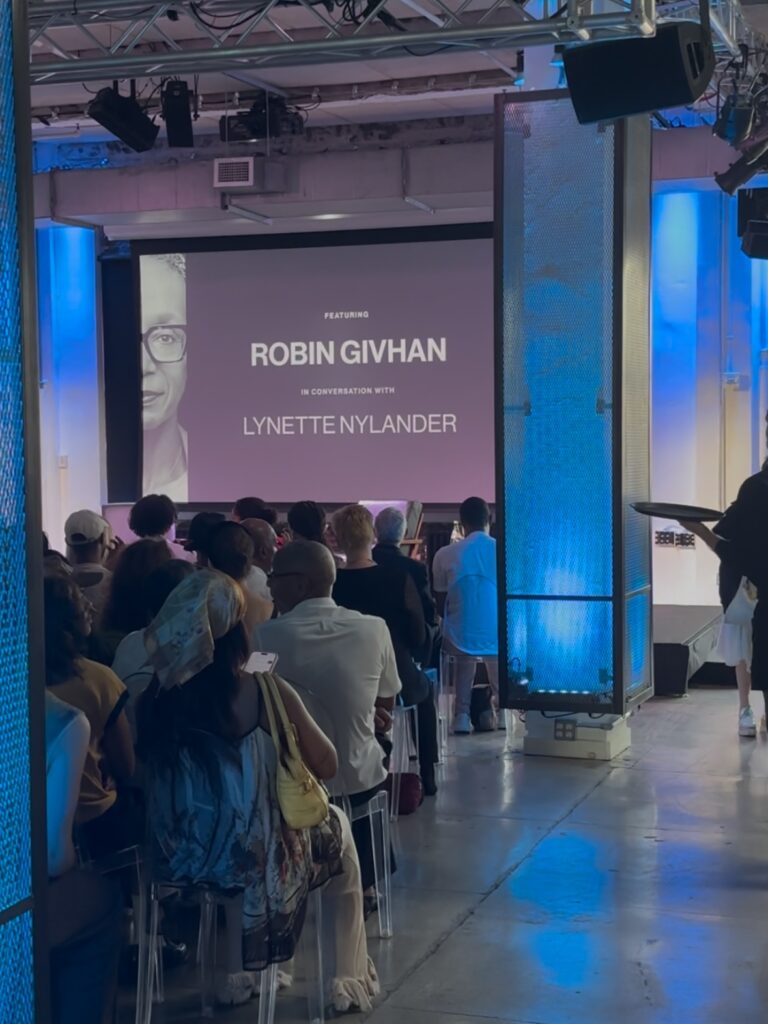
The event was hosted on the top floor of NeueHouse, a members-only club
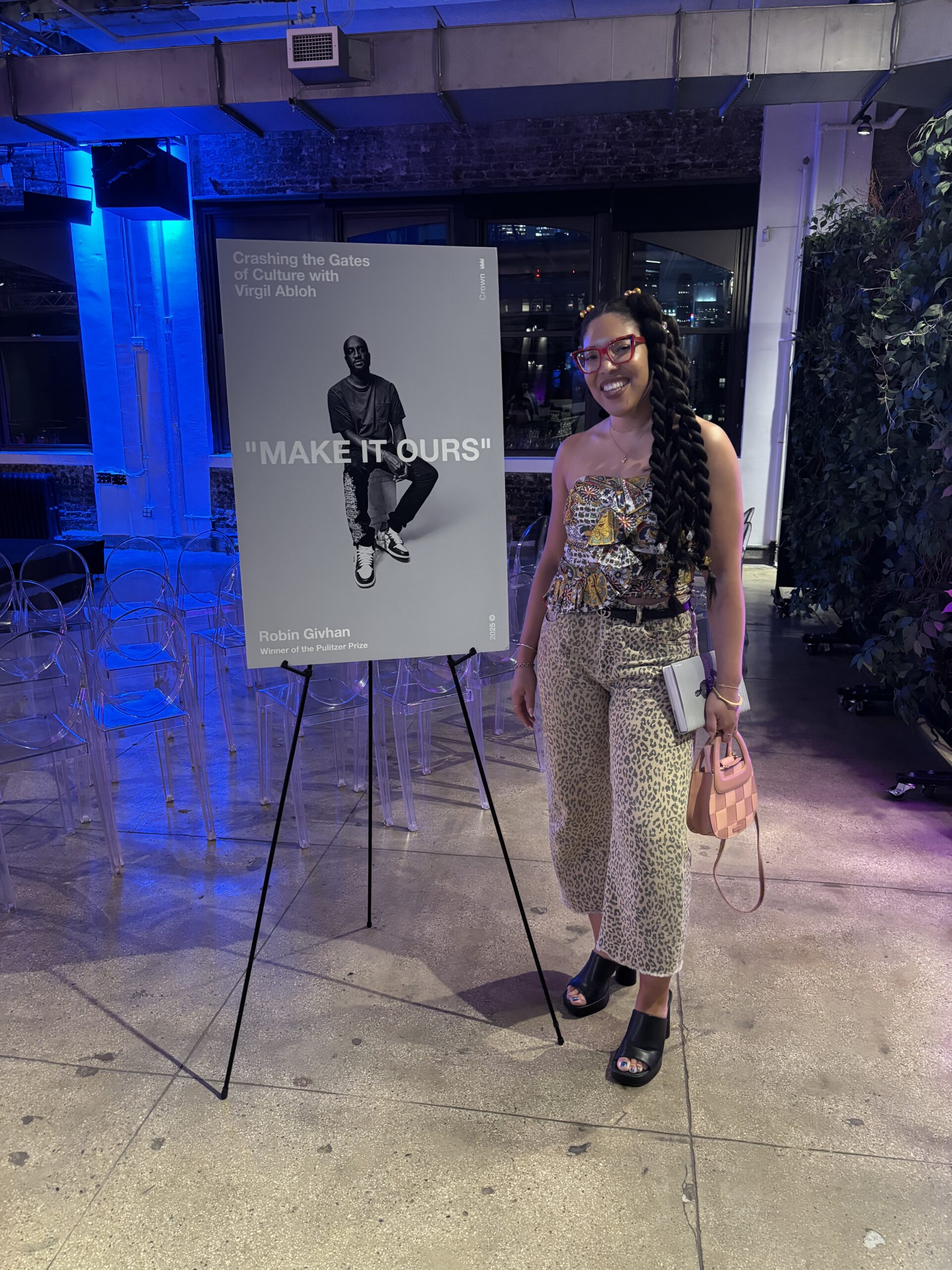
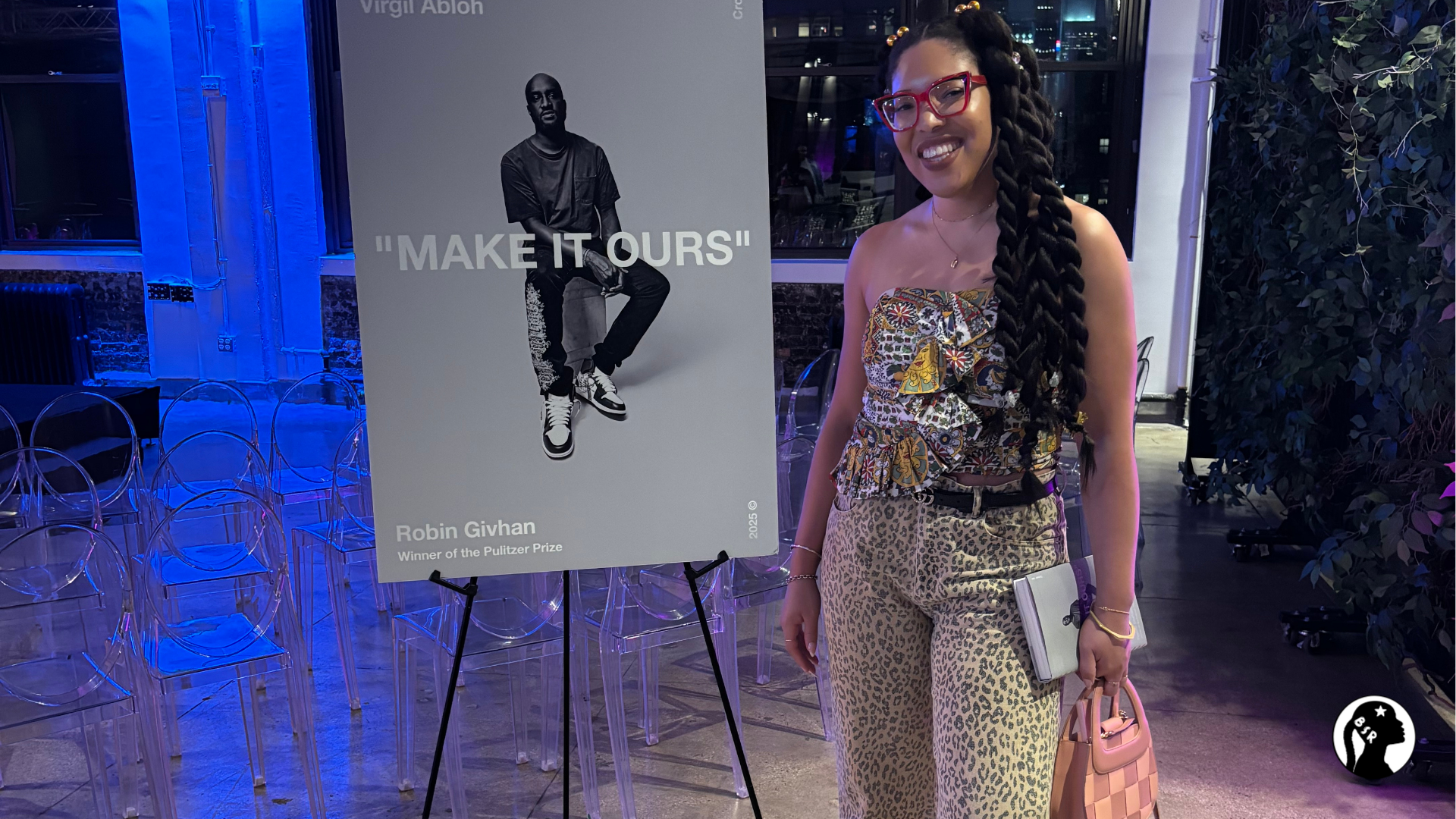
Once in a while, someone comes along who alters the pattern and flips the script. Instead of extending IYKYK invites via whisper campaign or on hand-pressed stationery, the late fashion designer Virgil Abloh posted the details of his runway shows on Instagram and verbally invited anyone he ran into during Paris Fashion Week. “I’m having a fashion show, turn up” is how Robin Givhan — who’s written the biography Make It Ours: Crashing the Gates of Culture with Virgil Abloh — explained it, adding “instead of fake it till you make it, he was asking a lot of questions.” My sociological observations were confirmed: fashion people want you to read between the hemlines. But as the use of ‘crashing’ implies in the book’s title, Virgil wasn’t like most fashion people.
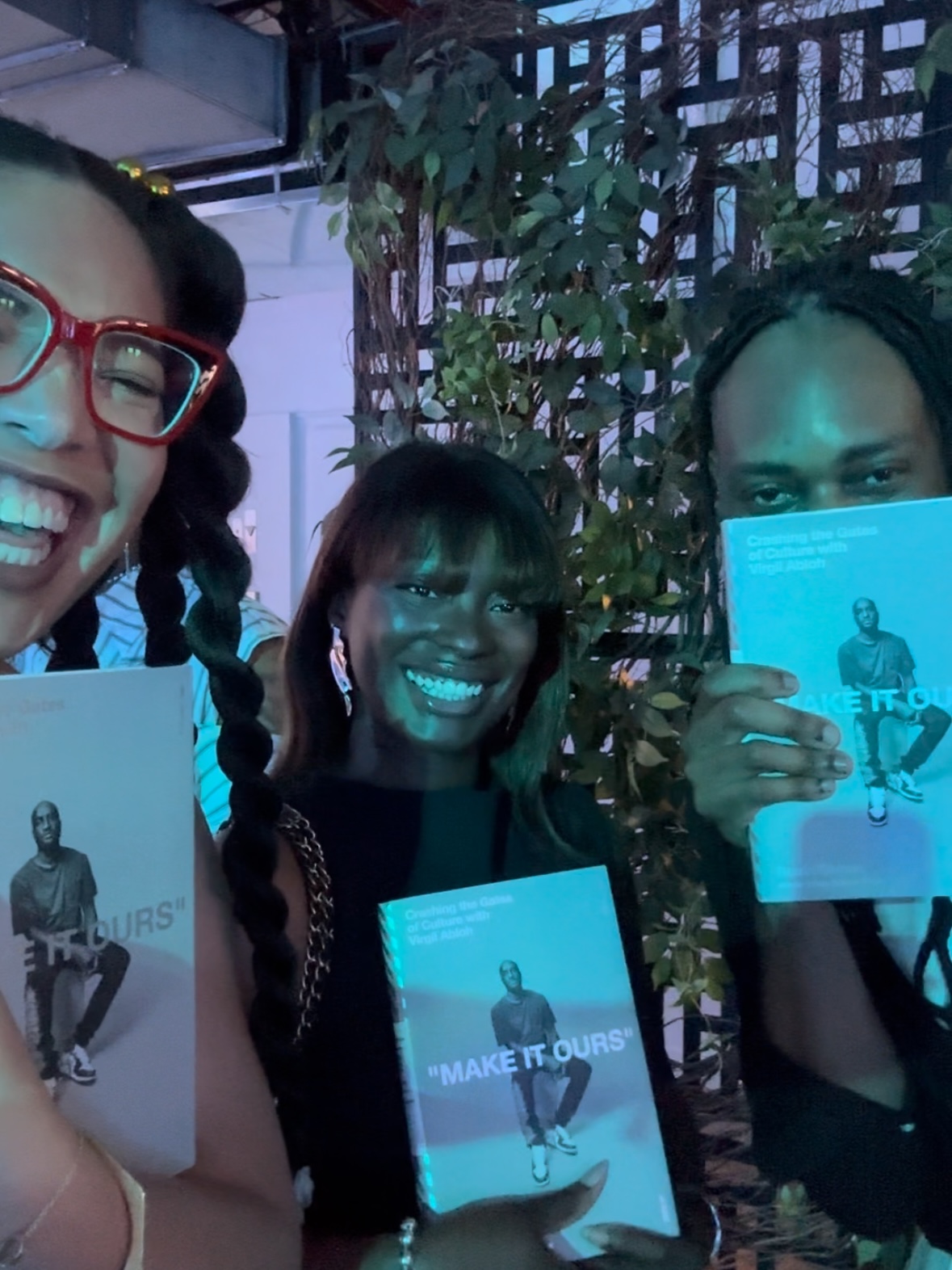
Ms. Givhan is a Pulitzer Prize winner for criticism and The Washington Post’s senior critic-at-large. (I have explained before that I don’t claim the mantle of critic and prefer ‘culture writer’, but I still see Ms. Givhan’s career trajectory as a best case scenario personal fantasy.) Attendees seemed stunned by the chance at proximity and followed her around the room to share long-burning personal anecdotes. My friend Reggie — who is a luxury retail manager, invited me to the event (and bought me a book!) — described her as “the best living fashion journalist, who just so happens to be a Black woman.” The back cover of the book jacket contains blurbs from Marc Jacobs and Tom Ford, and the former editor in chief of British Vogue.
To celebrate the release of Make It Ours, Black Fashion Talks hosted Ms. Givhan in conversation with Lynette Nylander, the Executive Digital Director of Harper’s Bazaar. Sitting in a low, leather lounge chair before a room of likely Abloh enthusiasts, Ms. Givhan shared the bold admission that she was “not a Virgil friend” while he was living.
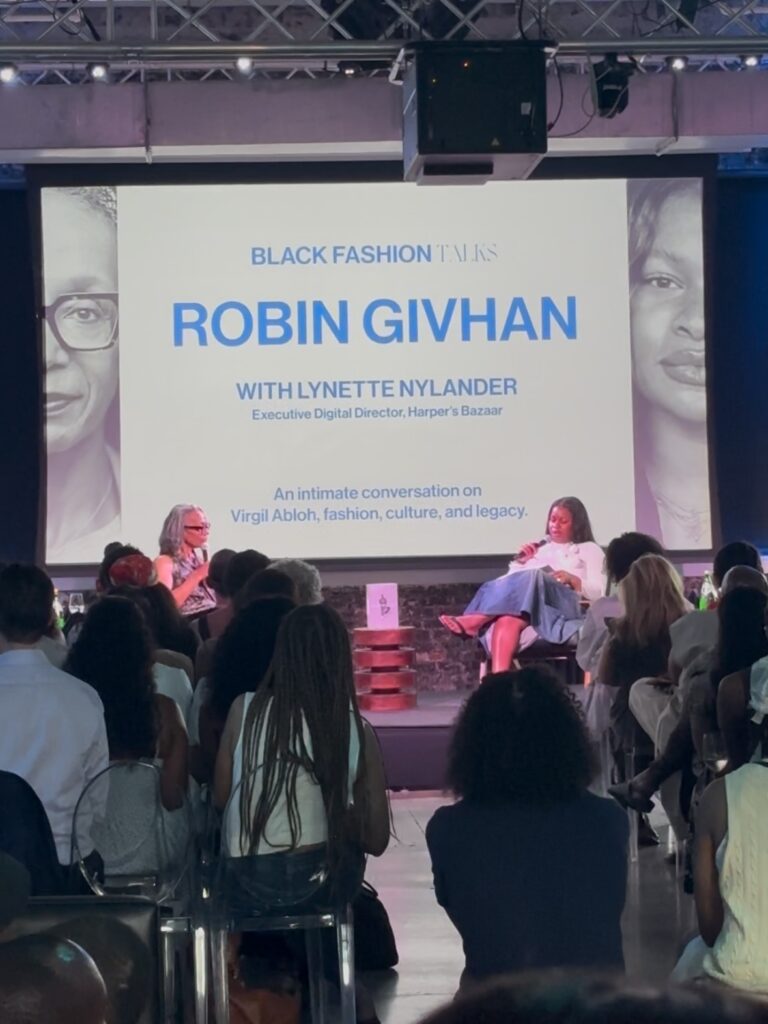
Robin Givhan (L) and Lynette Nylander (R)
When Abloh passed away at age 41 in 2021, supporters lamented that he was gone too soon not unlike the Black Panther actor Chadwick Boseman who died at 43 the previous year. Both men died of cancer and both men lived big lives in a short amount of time. I must also admit that I have not participated in the hype around his label Off-White, which from what I remember seeing at the time, sold small handbags with pockets labeled “POCKET” and Nike sneakers with laces that read “SHOELACES”. But his stamp (thankfully, not his blocky Helvetica labels) was all over The Met’s Superfine exhibit and his impact on the industry is indelible.
In the talk, Ms. Givhan situated Abloh in a Black fashion lineage after Edward Buchanan and before Ozwald Boateng. Buchanan, a Black man born in Ohio, became the first director to design clothes for Bottega Veneta, an Italian fashion house that had only ever sold handbags. Givhan relayed the story of Buchanan being detained when he landed at the airport in Italy. He had dreadlocks. He was accused of drug possession. Of his time in 1990’s Milan, Buchanan writes, “I was very conscious that I was one of very few Black designers working in the Italian industry at that time because there were so few Black people around then. Even though I found my people, my role and felt welcomed I was very aware of the otherness that I represented.”
Despite being a Black household name for the entirety of my lifetime, Louis Vuitton would not have a Black artistic director until 2018. When Abloh took on the role, he became the first Black person to direct any luxury French fashion house. Boateng, a London-born Ghanaian designer, would become the creative director of Givenchy the following year.
Virgil, who is also Ghanaian, was born in Chicago and Ms. Givhan pointed out journalists’ tendency to describe Virgil as African-American or just Ghanaian, a subtle and potentially unintentional nudge to separate Virgil from Blackness, specifically American Blackness. In the global fashion industry, African identity is acceptable in ways that Black American identity is not. We create and popularize trends that they initially criticize only to capitalize when they think we’re not looking.
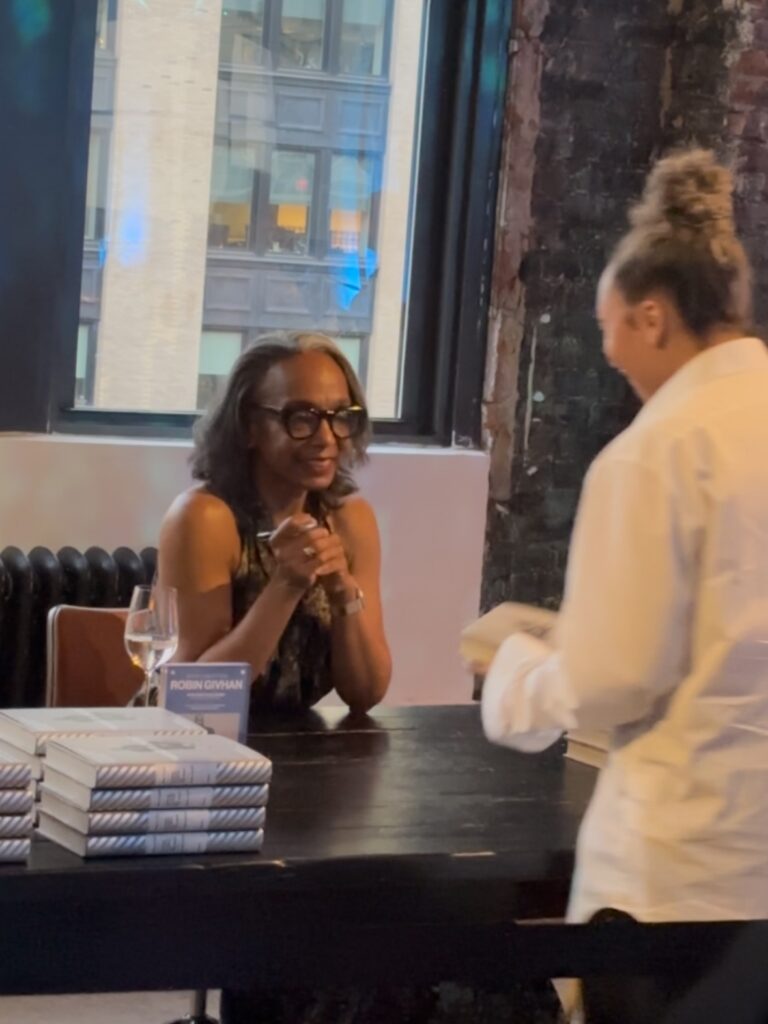
Ms. Givhan signed copies of her book after the talk
Ms. Nylander and Ms. Givhan discussed Abloh’s demeanor as optimistic without naïveté, how he “continued to see what was possible for [him] even in the face of erasure” and his fundamental belief in the goodness and strength of self. During the Q&A section, a former SoHo House waiter in a Savant Studios trucker hat reminisced about the time he served him dinner. Abloh took the time to make eye contact, say hello, and ask how he was doing while his dinner companions looked right through him.
Inevitably, the conversation ended with predictions about the future of Black directors in an industry that’s shown more effort toward extracting our influence than toward investing in our potential. Ms. Givhan sharply outlined an example in Louis Vuitton’s approach to selecting Virgil’s successor. In 2023, music producer and entrepreneur Pharrell Williams was appointed to the role Virgil left vacant after his death. “I think the way people responded to Virgil shows that they learned the wrong lessons. Pharrell is not the happy coda, it’s the expected coda.”
Pharrell has previous fashion experience having co-founded Billionaire Boys Club streetwear and Ice Cream footwear, which he advertised through the music he produced, but what he really brings to France is célébrité du monde. Instead of fashion houses stuffing celebrities into creative director roles in the hopes that their following is drawn to the brand, Givhan would like to see independent Black designers given a chance, “some people get to fail two, three, four times and some people don’t even get to try.” She highlights the vision demonstrated by executives like Michael Burke who was running Fendi in 2009 when Kanye West and then-unknown Virgil Abloh joined as interns. By contrast, when Louis Vuitton hired Abloh 9 years later, he had a social media following that guaranteed attention and was impossible to ignore.
She cites Willy Chavarria, a Mexican-American designer stylizing high-end cholo and vaquero ready-to-wear garments, and Sergio Hudson as overdue for creative director roles and urged that we make space for women like Grace Wales Bonner and Martine Rose in an industry that’s been dominated by men since its inception.
Mr. Hudson, a designer known for men’s and women’s suits, dressed 18 people for the 2025 Met Gala including himself. In a USA Today interview about his styling feat, I learned that Hudson would rather not be called a ‘Black’ designer. “Although I am a Black designer, it’s like ‘I’m just a designer.’ If we’re not walking around calling Brandon Maxwell a ‘white designer,’ I shouldn’t be called a ‘Black designer.’ That’s just my opinion.”
It’s a common sentiment from the people I write about in this Black publication. I write about them because they are Black, but they feel “pigeonholed” by the label in comparison to their peers. Even Ms. Givhan and Ms. Nylander, who conversed at length about the role Virgil’s race played in his career, didn’t bring up the impact of race on their careers in publishing. But whether we call ourselves Black writers (or just writers), Black designers (or just designers), and Black artists (or just artists) we can’t hang up our complexions in the closet. Race, like fashion, is a medium in which we all participate.
Later on in the same interview Hudson evokes Ms. Givhan’s titular allusion. “(Fashion) is very gatekept. And I mean, it’s not just that it’s gatekept, it’s like you get through one gate and then there are three more to go through,” Hudson says. Hudson and Givhan know that sometimes the powers that be won’t let you in through the front, no matter how much you paid for your ensemble. Virgil Abloh, known for tweaking things just 3%, and the legacy of his career offer an addendum: if they won’t let you in, you’ll have to crash the gates.
blacklove 🖤 and starlight 🌟
‘Black Fashion Talks: Robin Givhan with Lynette Nylander’ was co-produced by Black Fashion Fair and NeueHouse on June 23, 2025. Ms. Givhan’s book Make It Ours: Crashing the Gates of Culture with Virgil Abloh (Crown) is available wherever books are sold. Please consider borrowing the book from your local library or purchasing a copy from an independent bookstore. Signed copies are available for purchase from Black Fashion Fair.
-
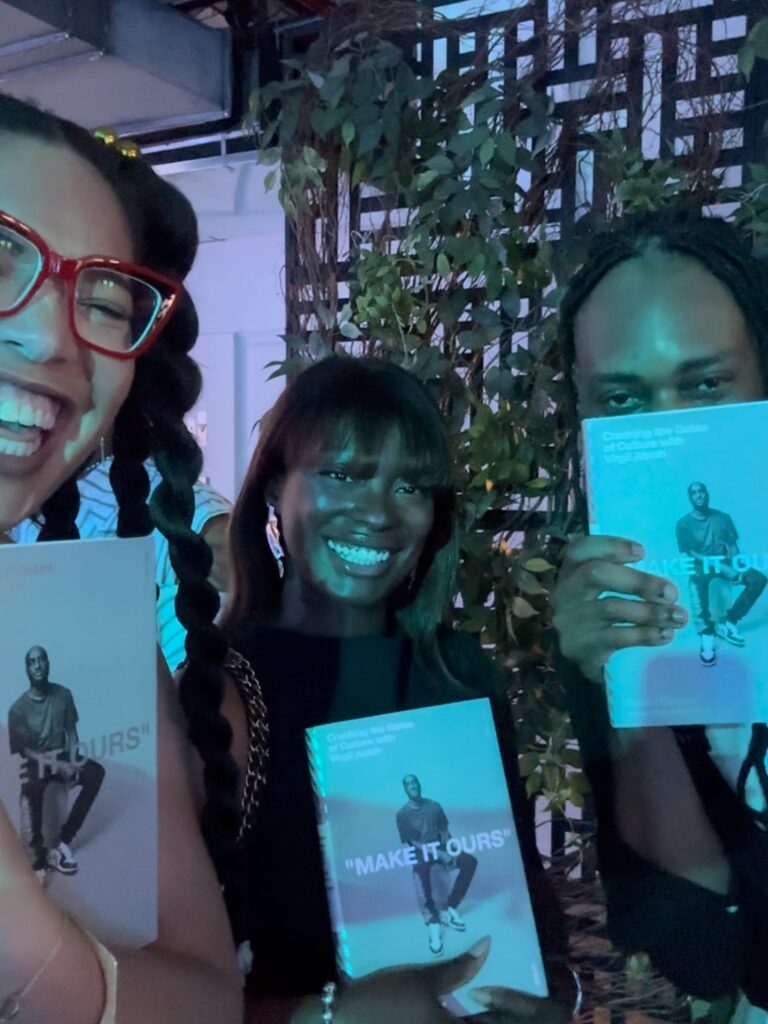
- In line to get my book signed with Christine of Concept Louis and Reggie