
Review: ‘The Gospel of Oz’ New York Premiere
An inventive new spin adds an inspired message to a classic tale (and a little tambourine) and takes us back to church
Last month, I made the mistake of wearing a mint green sweater to the Regal movie theater on 14th Street. My only goal was warmth but it was entirely misinterpreted by everyone else in line for concessions. I was offered a commemorative aluminum popcorn bucket and the chance to try limited edition ICEE flavors: Emerald Rebellion (green apple) and Pink Bubble (strawberry lemonade). Wicked Fever was in full effect.
The latest Wicked film is the second part of a 2-movie sequence based off a Broadway play of the same name, which is based off of the 1939 movie The Wizard of Oz, which is based off of a 1900 novel by L. Frank Baum that has had the American imagination in its grips for more than a century. It’s unclear how, if at all, these variations contribute to the Baum estate, but it’s a mark of honor that the novel provides such rich source material that the spinoffs won’t stop spinning.
Wicked asks, “What if the villain was a hero?”
The Wiz, Ken Harper’s visionary 1979 Broadway musical, asks, “What if this story (and the music) was Black?”
And now, a new kid on the block named The Gospel of Oz asks, “What if The Wizard of Oz was a church play?”
At the request of gospel music artist Richard Hartley, Dorothy J. Colon — a singer, songwriter, playwright, and Mississippi-native — set out to breathe life into this twist on a tried and true story.
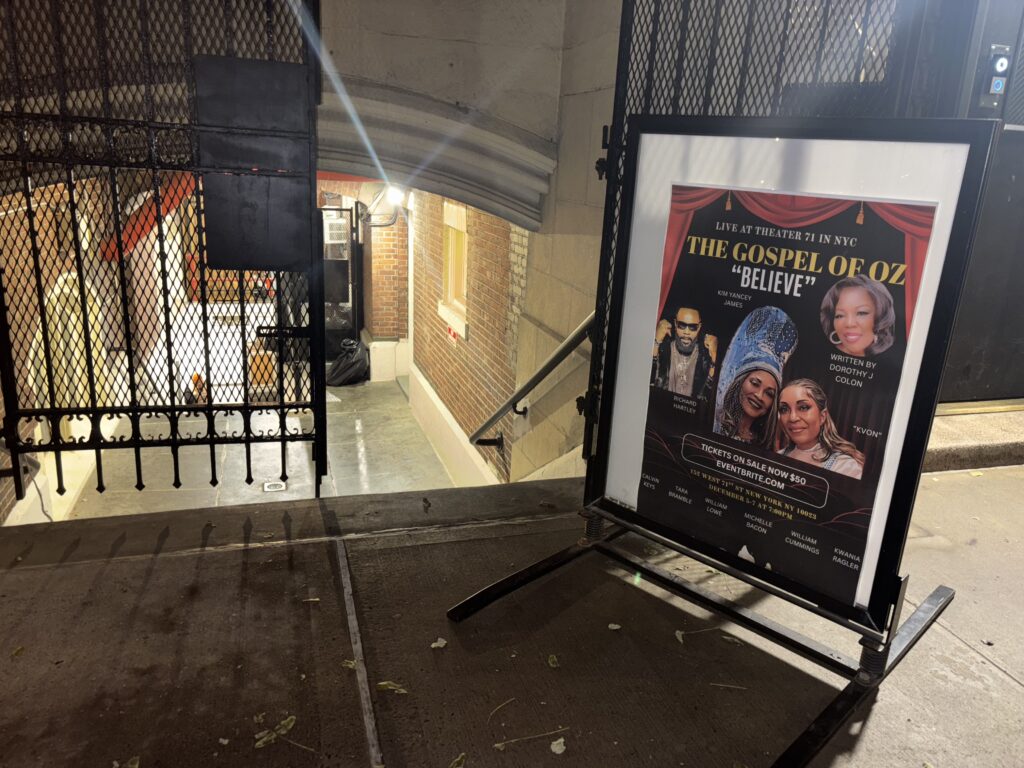
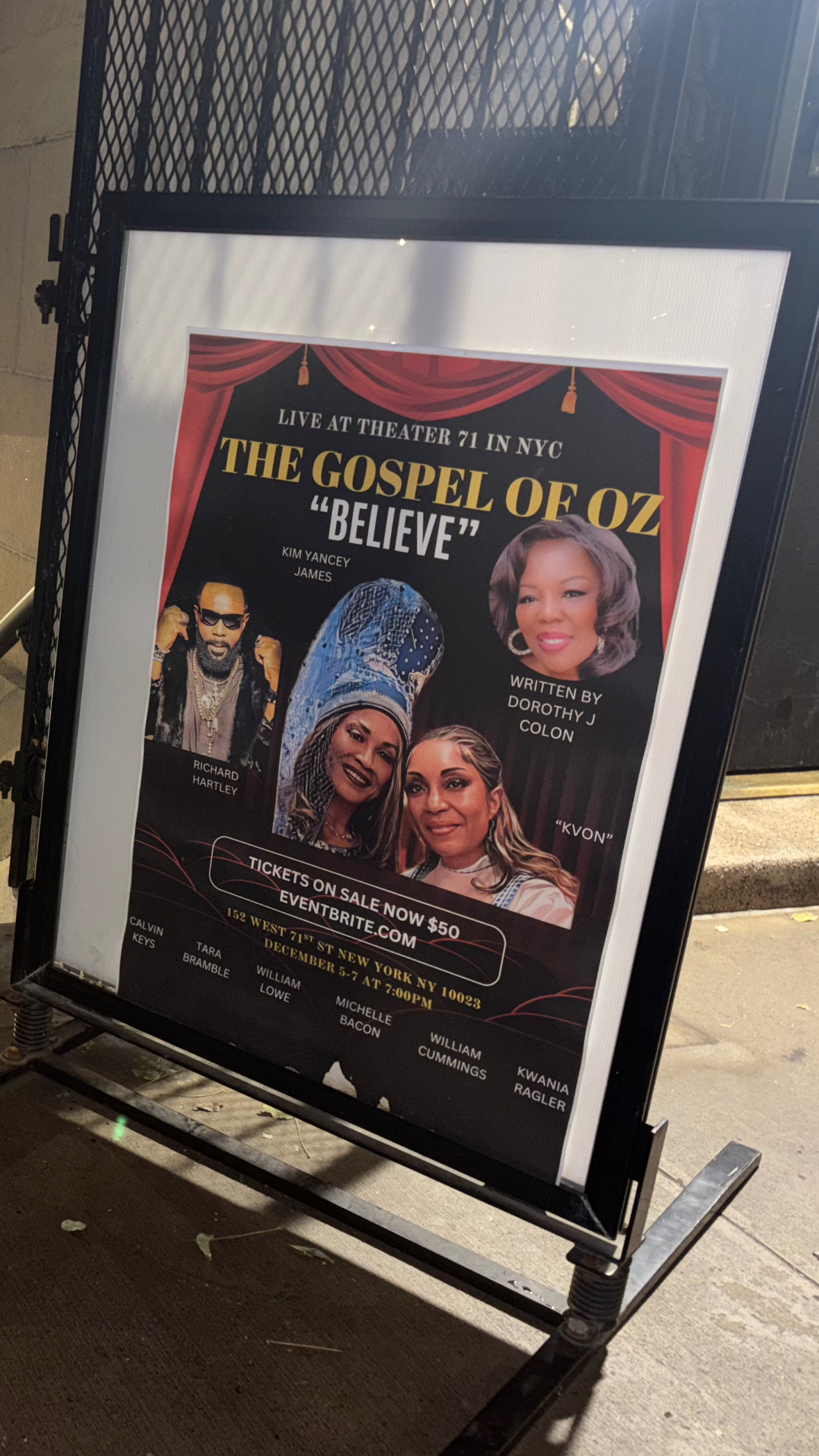
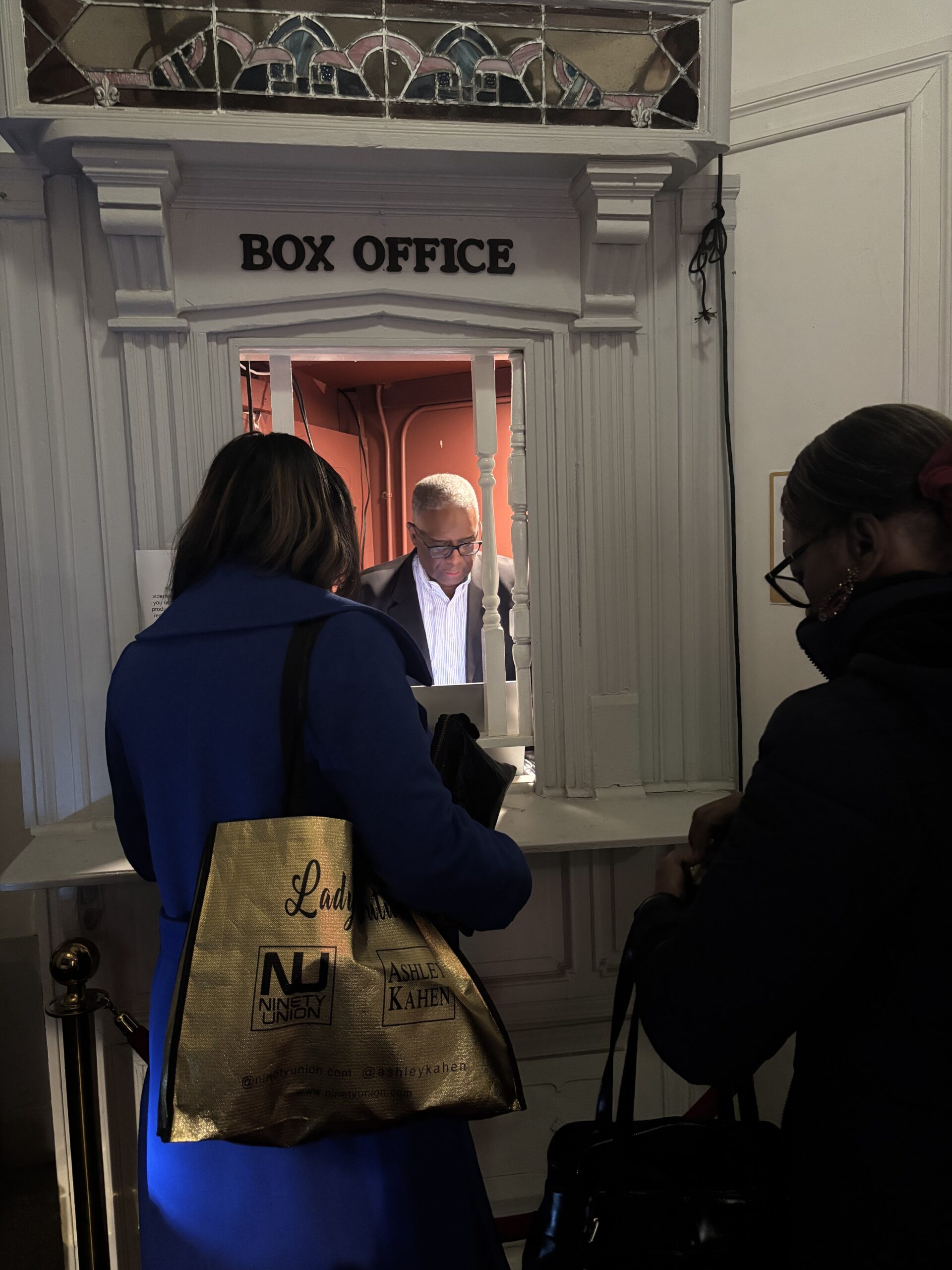
The entrance to Theater 71 on the Upper West Side
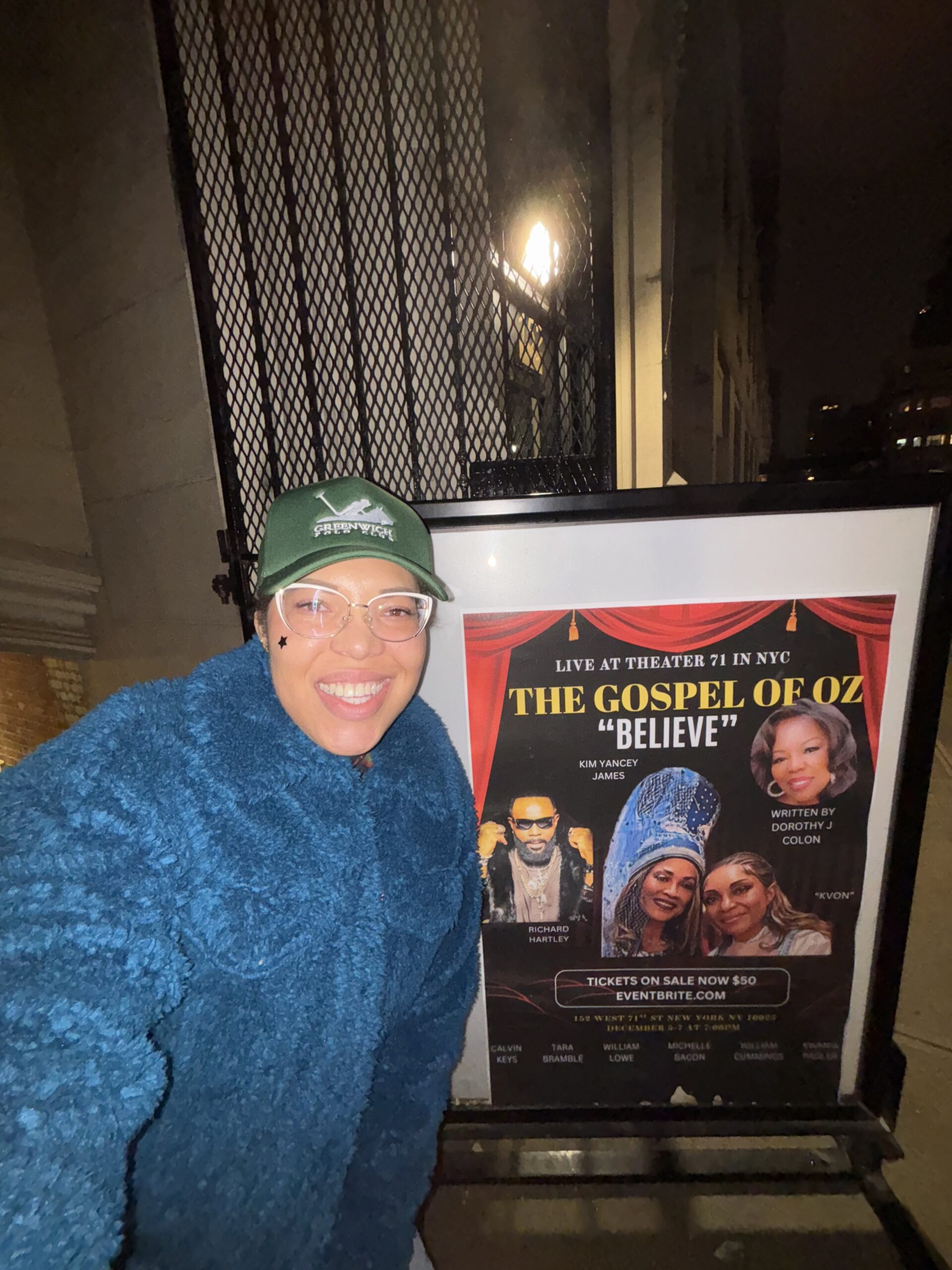
Theatergoers and church folk alike gathered in an underground theatre on the Upper West Side, just off Broadway to experience the musical’s New York premiere in early December. The stage lights came up on a pastor and resplendent first lady expressing concerns over their flock just before the morning service. Frustrated that parishioners return each week with the same prayer requests, the couple wonder if the congregants are truly building faith or just going through the motions — doubting God’s power to bless them ‘exceedingly and abundantly’ by praying for quick fixes to small problems instead of combining their faith with works.
When church begins, members rush, step over each other, and even circle back for seconds when the Pastor lays hands on them. Meanwhile, Dorothy (Kimberlyn KVON Crawford) sits despondent in the back row in a blue and white checkered dress, standing when it’s time to stand, singing when it’s time to sing, and unable to find joy in the House of the Lord.
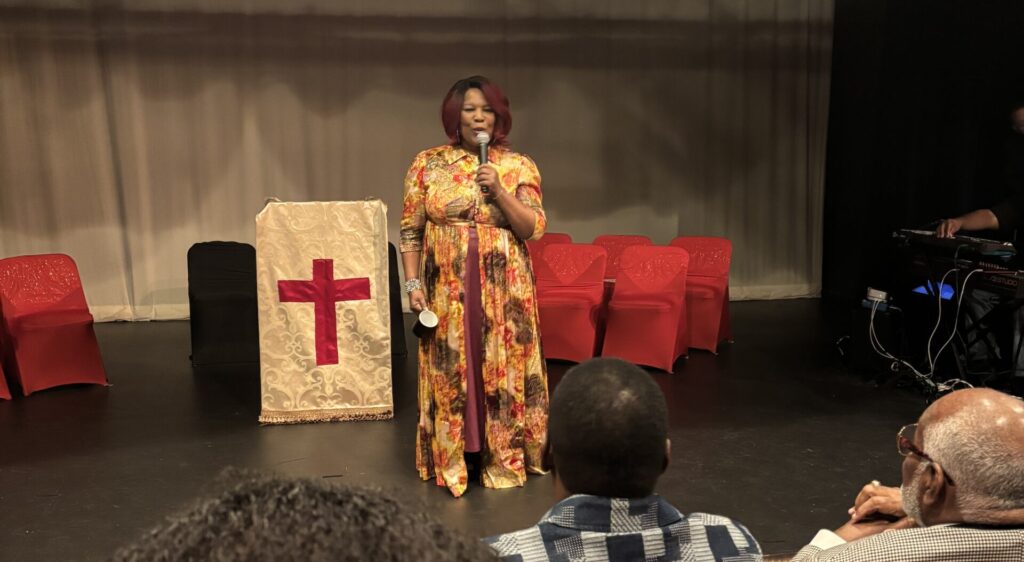
Playwright Dorothy J. Colon introduces the production
The orphaned Dorothy doesn’t feel at home with Auntie Emma (Kwania Ragler), the God-fearing woman who’s raising her. Emma hasn’t been able to interest Dorothy in marrying any of the church elders and prays that Dorothy be delivered from her love for “weaves, lashes and makeup”. (A unique prayer, if I’ve ever heard one.) Dorothy’s distaste for Auntie Emma’s homely ways and her deep grief test her faith, she can’t understand how her parents’ passing could be God working for her good.
And then, just like the film switches from black and white to color, the show really begins. Three praise dancers draped in black garments whisk Dorothy away over a score that’s more jazzy, quiet storm than frantic violins.
When Dorothy opens her eyes, she’s in ‘The World’, insider-speak for secular life. The First Lady reappears as Glenda the Godly (Kim Yancey James) with an ensemble even more impressive than before. She gifts Dorothy high-heeled red shoes, because you “cannot wear flat shoes in The World”. (True!) Dorothy is awash with admiration for Glenda’s godly splendor, the opposite of Aunt Em’s aggressively plain modesty. While Auntie Emma shows her faith with low-maintenance updos, a bare face and dowdy outfits, Glenda glistens with rhinestones and her lipstick is the same shade as the dress stretched flatteringly over her figure. Dorothy decides to listen to Glenda’s advice. She takes the shoes and begins to “order her steps” down the yellow brick road to find Reverend Richard R. Wizardo, who Glenda suggests can help her get out of The World and back home.
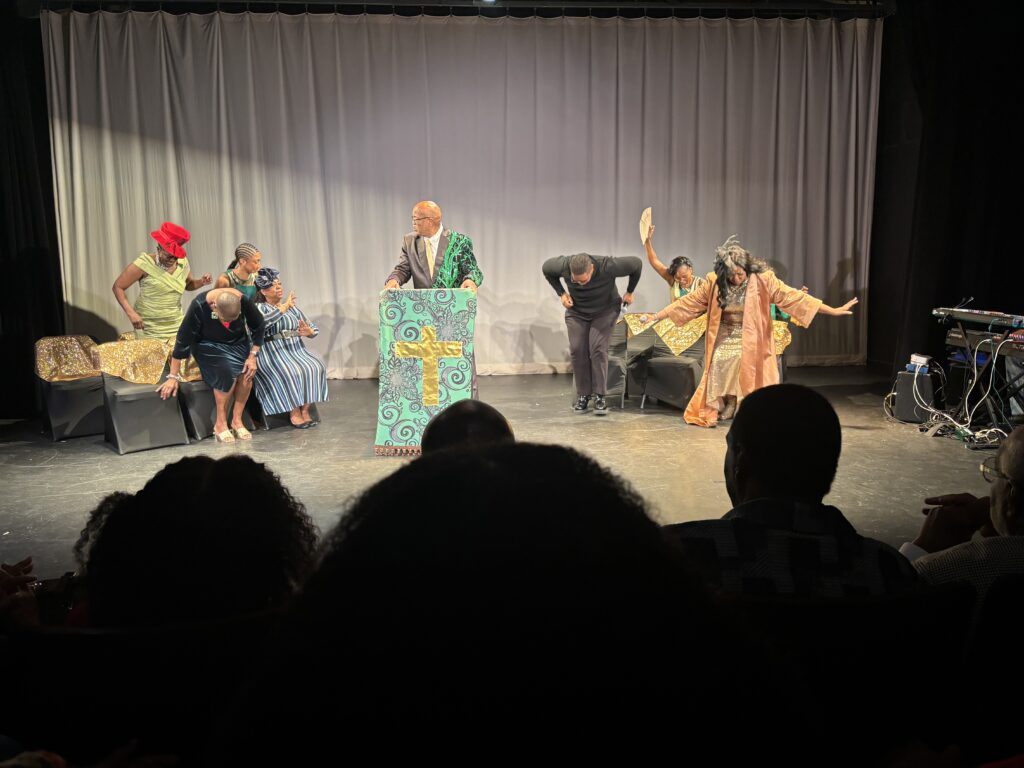
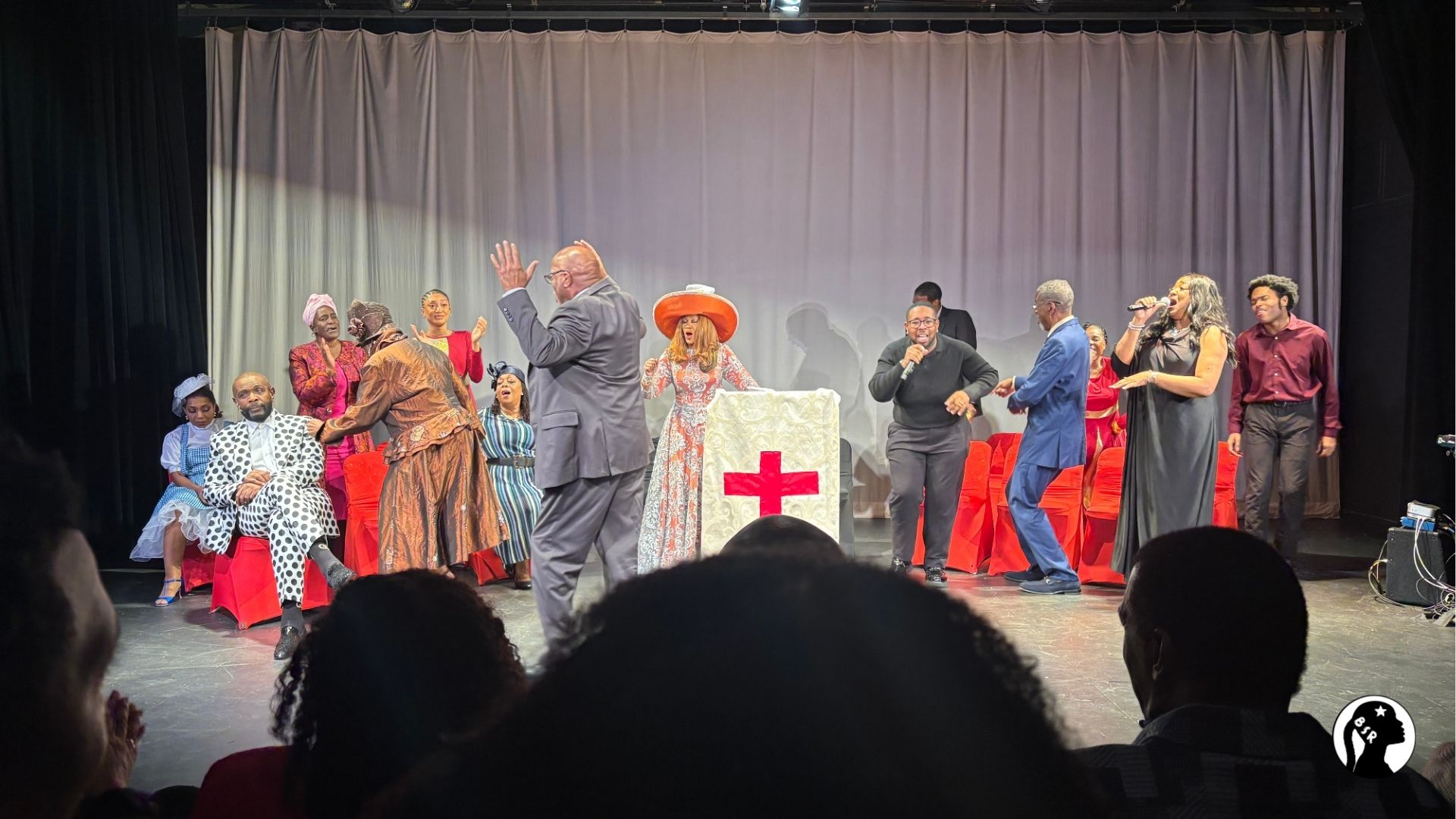
A scene from church in Oz, where Reverend Wizardo (Calvin Keys) presides
Since The Wizard of Oz is, itself, an allegory, Gospel’s ambitions have to work on two levels: first, to align with what the audience already knows of the narrative arc and second, to deliver its own clear theme, the gospel version of “there’s no place like home”. There are times when the double allegory feels clever and moments when it’s stretched too thin.
For example, Dorothy’s new friends have spiritual problems in place of, or in addition to, their canonical missing parts. The Scarecrow (William Cummings) feels stuck in his walk with Christ and has trouble keeping his “mind stayed on him” because he doesn’t have a mind. The Tin Man (Wil Lowe) is one of the Chosen Frozen (which actually makes more sense as the Frozen Chosen). He’s latched on to the idea of being still in order to hear the voice of the Lord, but he’s been in perfect peace for so long he doesn’t know how to move again. The Holy Ghost gets all over him when Dorothy anoints him with the Oil of Joy, and then he’s ready to dance like David. The trio meets their fourth and final member, Lion (W. Richard Hartley) who turns out to be a leopard in disguise. He’s hiding his spots inside of a lion persona because he doesn’t have the courage to be himself.
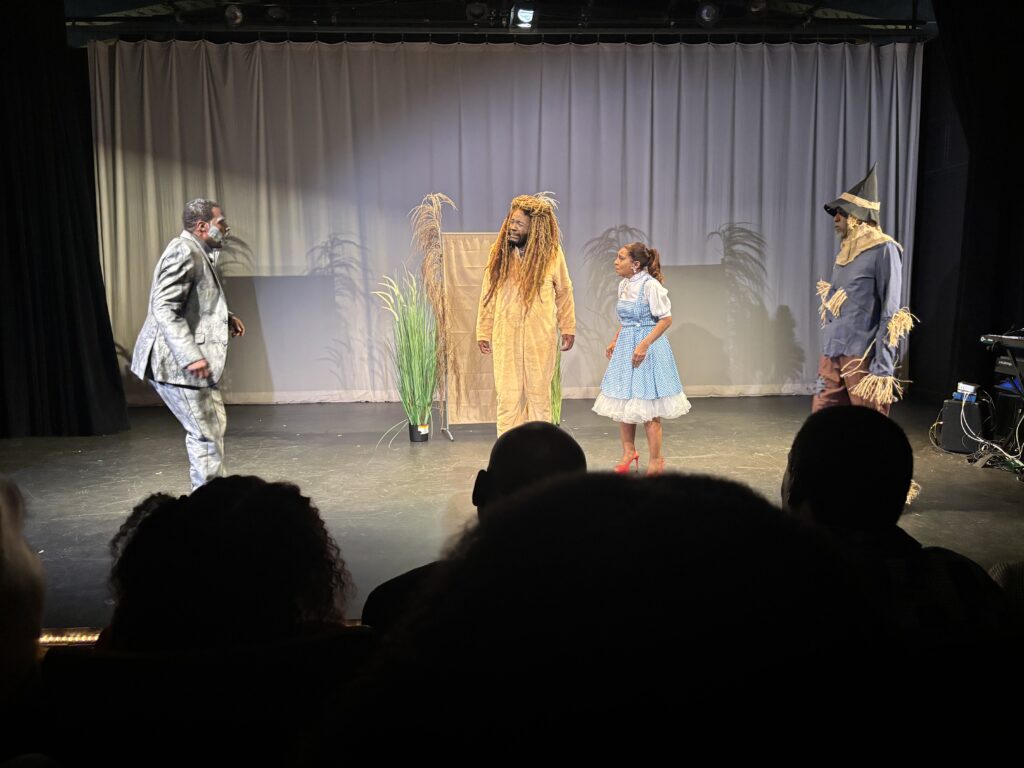
Dorothy (Kimberlyn KVON Crawford), Scarecrow (William Cummings), and Tin Man (Wil Lowe) meet Lion (Richard Hartley)
The first two are conceivable and familiar as people you might meet in a pew — new Christians who are self-conscious about their ability to learn The Word, and seasoned saints who’ve settled into a joyless routine — but the third is too abstract. There’s an opportunity here for the play to assert that all people are welcome in the Church, that God’s love means leopards don’t have to hide in lion suits and lying lifestyles. But because Gospel can’t (or won’t) go quite that far, we’re left with a muddled message about how some people don’t feel like they can be themselves in church. Tiptoeing, like the cowardly lion does in his own jungle, Gospel only hints at who those people might be.
The team’s encounter with Reverend Wizardo (Calvin Keys) lands the plane like a perfectly-timed trill on the organ. Outfitted with green vestments, he responds to their desires with a Christ-like dismissal. “You’ve come all this way believing in me when it’s God who is your help.” The scarecrow pulls out Bible verses from his stuffing for each of his new friends: II Samuel 22:34 for himself, Joshua 1:9 for the Lion, Psalms 139:14 for the Tin Man, and for Dorothy, a reminder that God always has a perfect plan. “And we know that in all things God works for the good of those who love him, who have been called according to his purpose (Romans 8:28).”
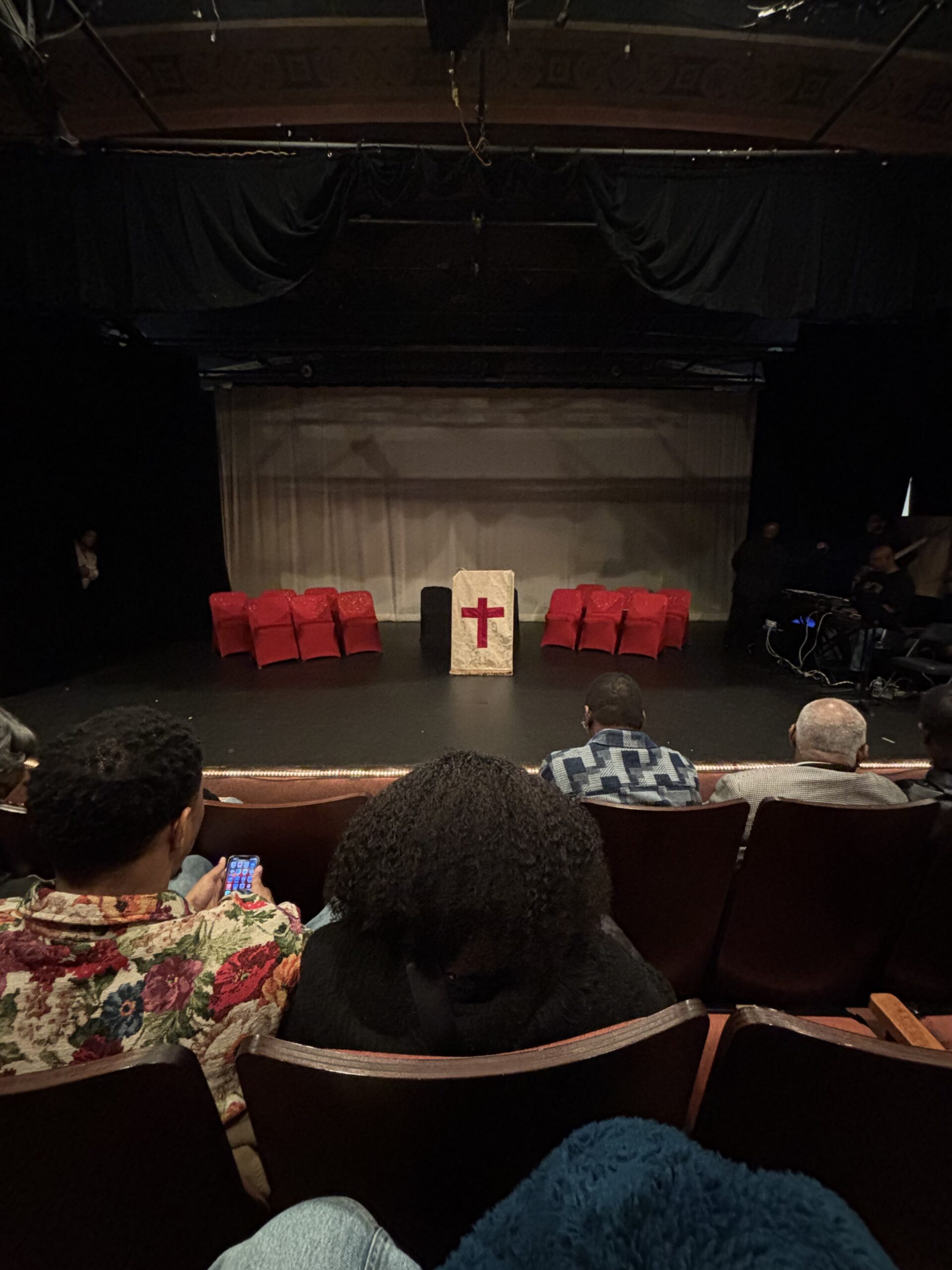
The show is uplifting, zealous, and thrives on the audience’s energy, just like any good sermon. It’s easy to imagine The Gospel of Oz onstage in sanctuaries nationwide, since much of the set design relies on things a church would already have on hand like a lectern for the pulpit and chairs arranged into pews. There are likely to be some musicians, vocalists, and capable sound technicians within arm’s reach as well. Unsurprisingly, Gospel’s greatest strength is in the music. “How”, “Crying In the Dark”, and other original songs written by Stephon Clay, Dorothy J. Colon, Richard Hartley, and Sandra Huff, hold their own alongside Gospel classics. Hymn “Walk With Me, Lord” takes the place of “Ease On Down the Road”. Donnie McClurkin’s “Stand” is used as an empowerment anthem for the wimpy Lion/Leopard and “I Don’t Feel Noways Tired” by the late Reverend James Cleveland brings the show to a close. The cast’s powerful voices are obviously church-grown and groomed, and the hallmarks of the genre — secondary dominants, call and response, and multi-part vocal harmonies — are a lush alternative to the high-strung vocals of other musicals this season. In other words, for a church kid like me, Gospel sounds like home.
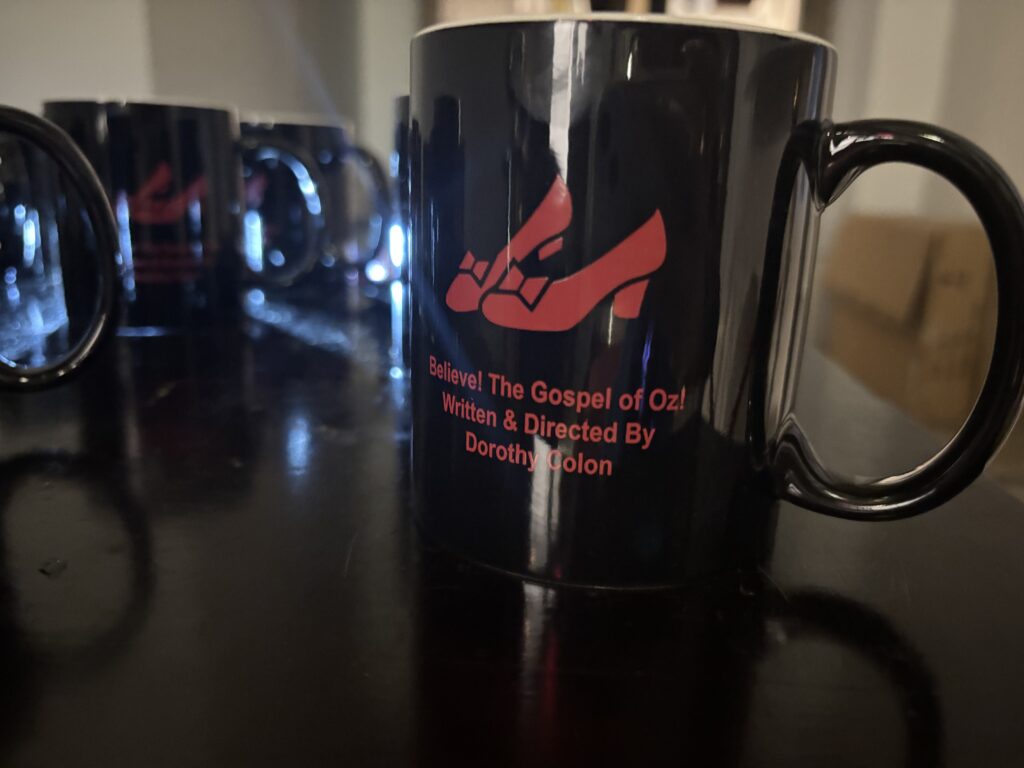
Commemorative mugs were available at the concession stand
As good as the show sounds, prioritizing musical talent stifles the production’s ability to fully deliver on narrative. Kimberlyn KVON Crawford has an anointed voice but the fact that she’s closer in age to me than she is to an unsophisticated co-ed is an unnecessary paradox. With Ms. Crawford in the role, it could be worthwhile to restructure the story around a woman who’s seen some things in life, especially since a crisis of faith can strike at any age. Richard Hartley is a consummate comedian and a star vocalist, but his homage to Ted Ross’s Lion in The Wiz is heavy-handed, just a few shades away from a line-for-line impersonation of the film. Both performers dazzle when the music starts and they’d likely deliver richer performances between the musical numbers if their characters had more depth.
As the world around The Wizard of Oz continues to expand over 125 years after its original publication, it’s a delight to see a twist that feels equal parts fresh and nostalgic. Using the story’s familiar structure is a clever approach to evangelism, and the mix of new and beloved songs strikes the right balance of novelty. It makes sense to bring this story to Church, the birthplace of Black Theater. For many, a childhood of Sundays spent in the sanctuary provides the first spectacle, the first stage, and the first audience. Dorothy J. Colon’s The Gospel of Oz builds on both L. Frank Baum’s beloved text and an inarguably Black tradition with its own message: believe.
blacklove 🖤 and starlight 🌟
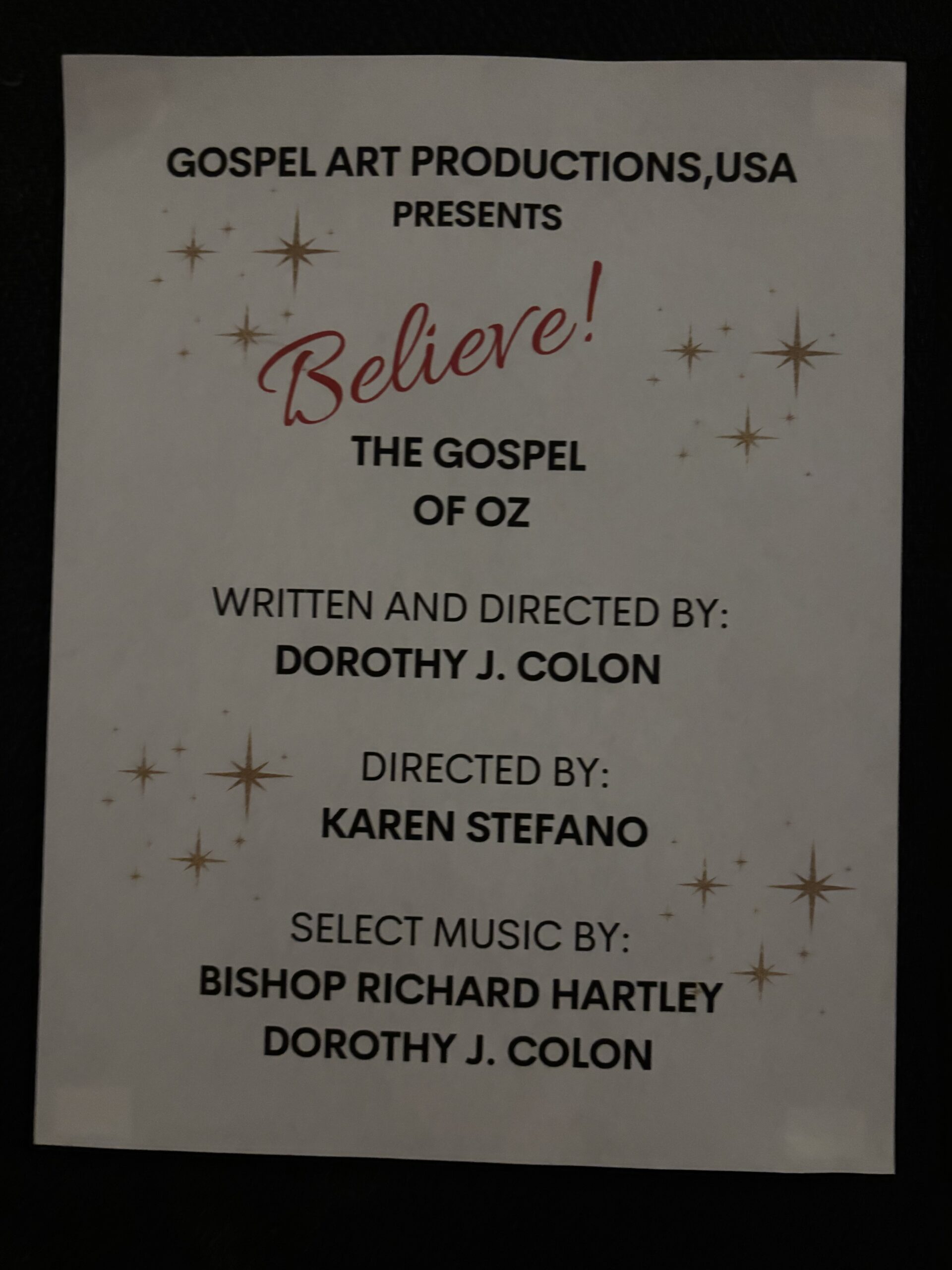
The Gospel of Oz ran at Theater 71 from December 5 – 7, 2025. The play was written by Dorothy J. Colon, directed by Karen Stefano, with musical direction by Stephon Clay. I received a press ticket for this performance and offer my thanks to Dorothy J. Colon and Wil Lowe.
-
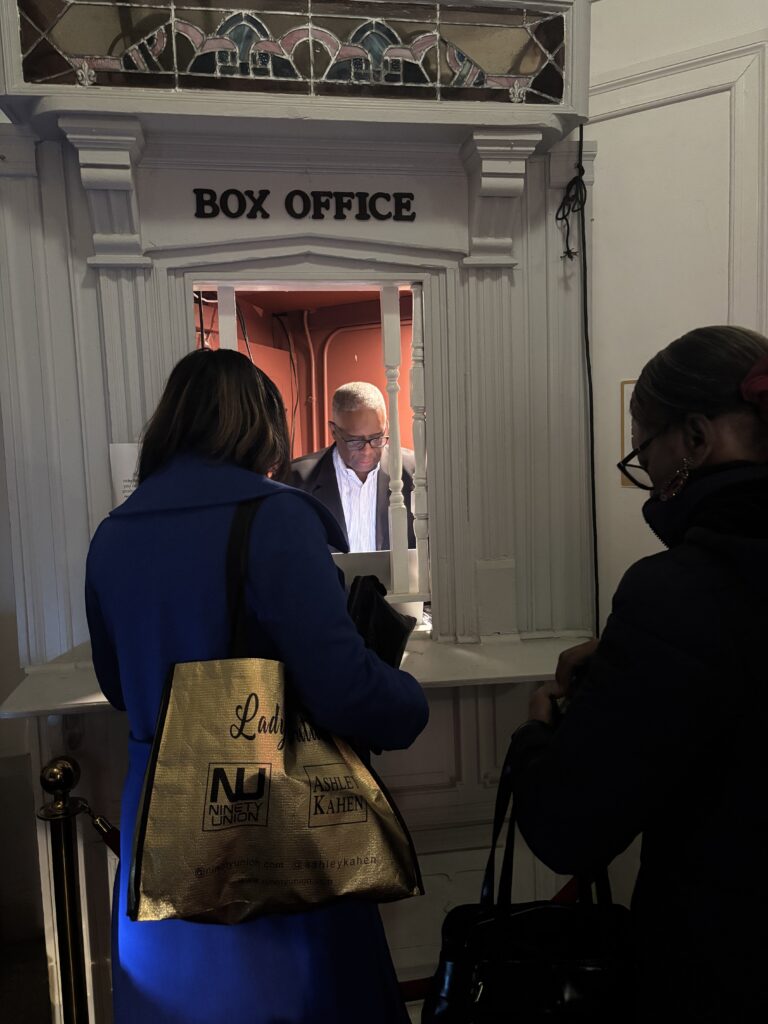
- Attendees wait to pick up their tickets
-
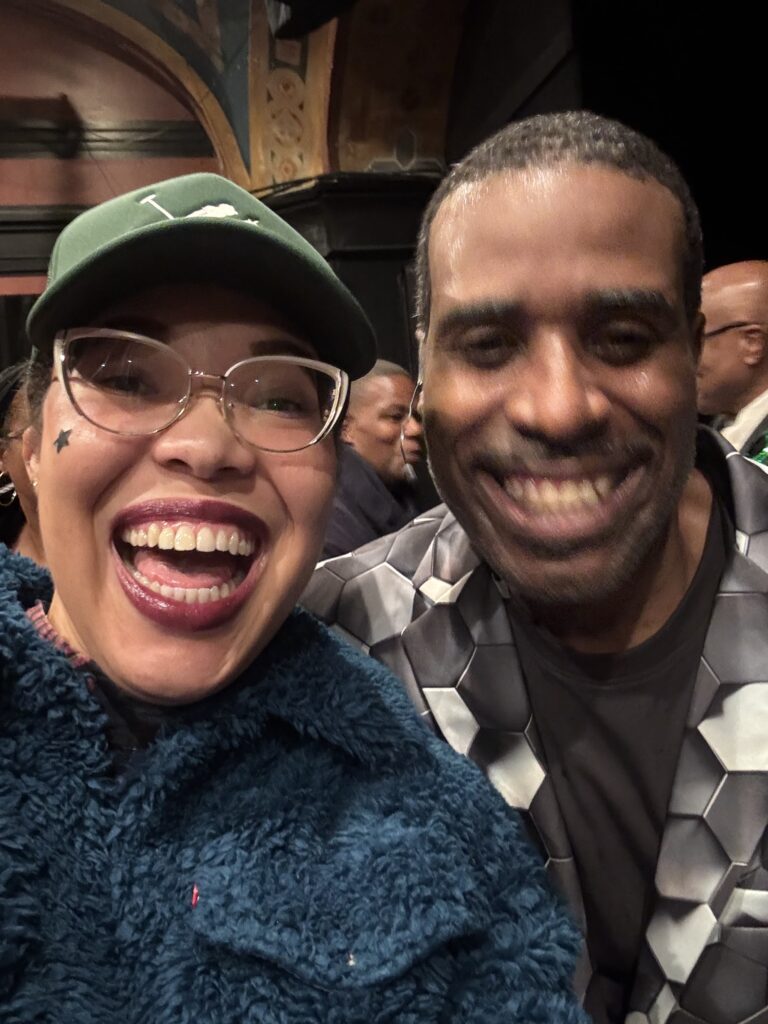
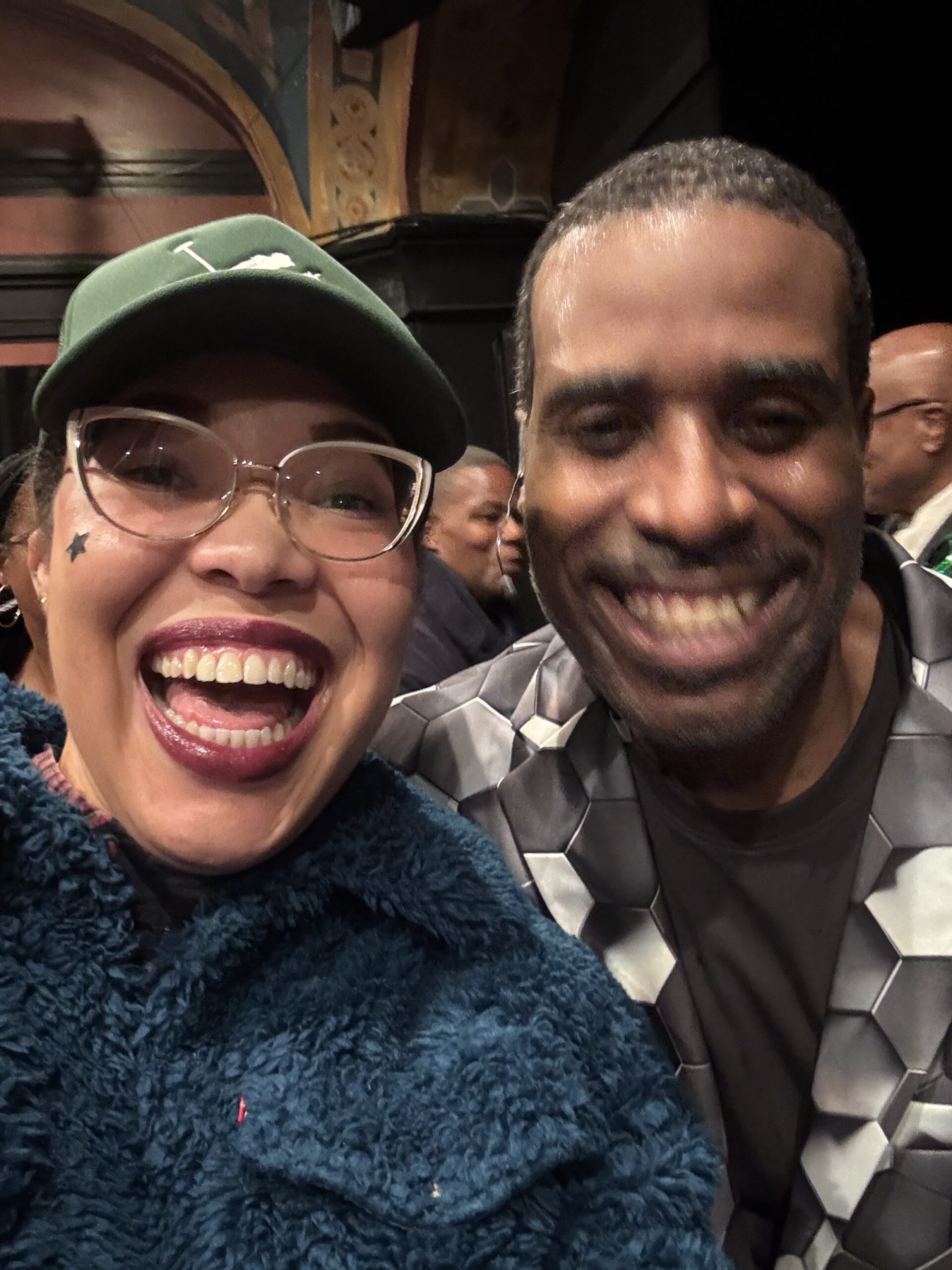
- With Wil Lowe, who played Tin Man, after the performance