
Derek Fordjour ‘Nightsong’ [Los Angeles]
Fordjour’s night-only exhibition at Kordansky teeters between immersion and over-saturation
Out of the 96 hours I spent in Los Angeles, at least 12 of them were consumed by Derek Fordjour. Maybe one hour of the dozen was spent viewing his most recent exhibition, while the other eleven ticked by on research, driving there (foreign to a New Yorker like me), or waiting in line (another thing I don’t do much of at home). It took me two tries to make it in. As much as I’d like to be able to say the time spent was worth it, I’m not sure I even saw the show as the artist had intended. When Gabby and I stood in the final room waiting for the live performance to start, we were shooed out by a security guard who muttered that it was time to leave because “everybody won’t get to see everything.” This would’ve been helpful to know when we were standing in line on La Brea, anytime before the sun began to set on our brunch outfits and a beachy chill rolled in.
I’ll spare you the full recap of our time in line, since that isn’t what you came for — it wasn’t what I came for either. I’d come to see the artwork.
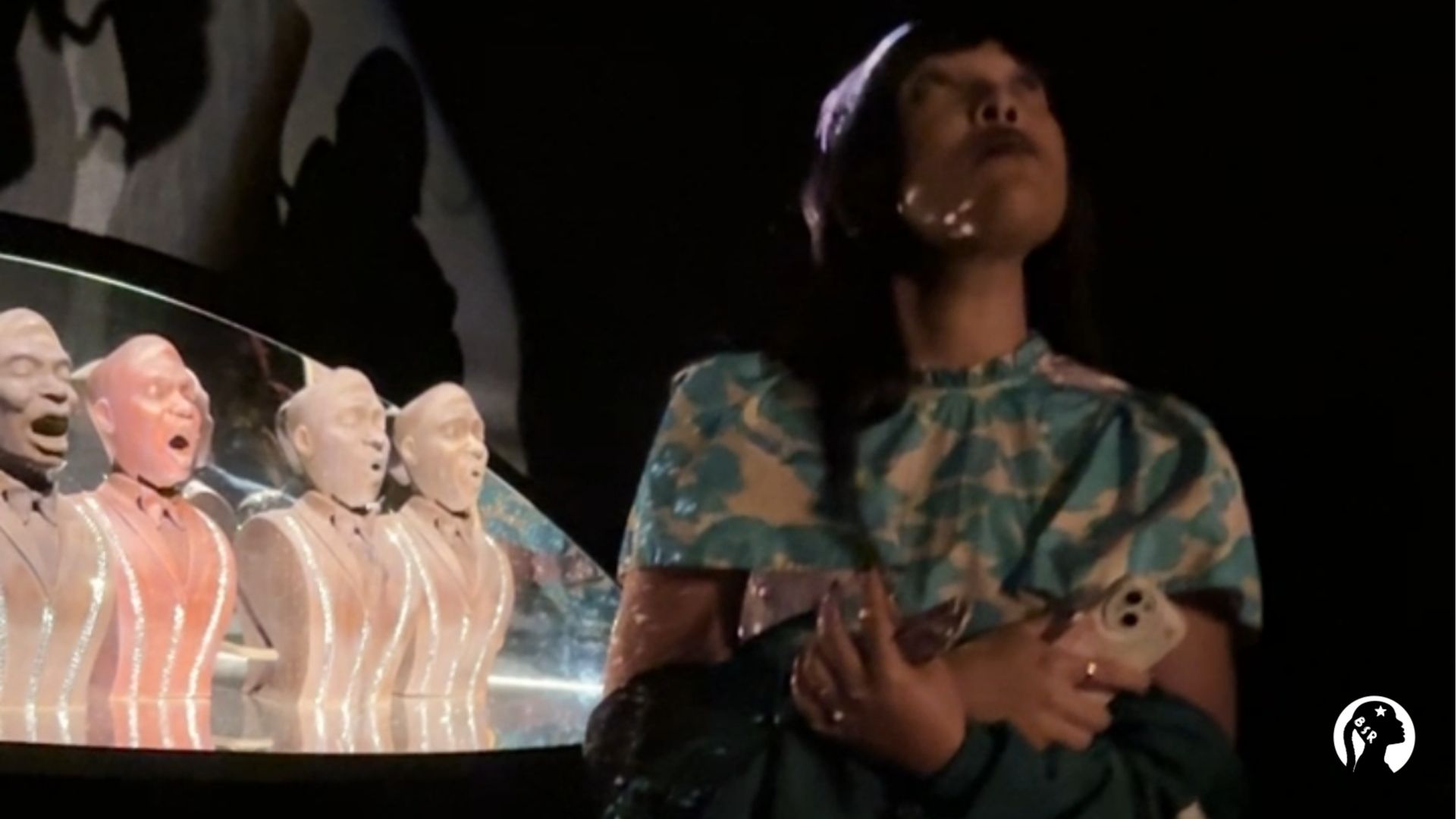
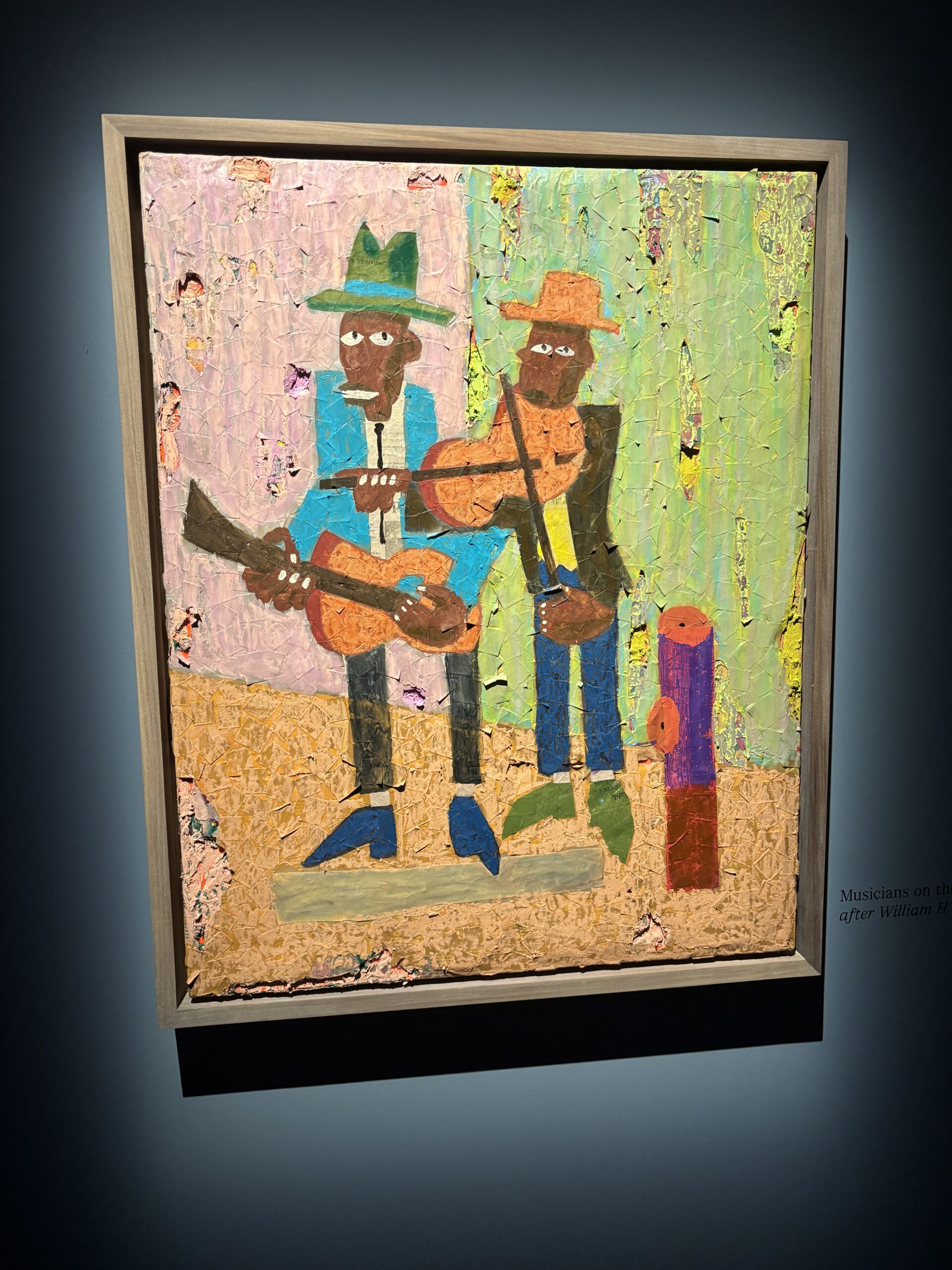
The first room resembled a museum chamber with well-lit frames on 3 walls displaying ‘Covers’, Fordjour’s remakes of other seminal Black works. He created nearly identical renderings of William H. Johnson’s “Musicians On The Street” and Henry Ossawa Tanner’s “Banjo Lesson in Minor Key” but with an original approach to texture. A close inspection of either piece shows flat shapes — squares in “Musicians” and circles on “Banjo Lesson” — that Fordjour used to cover the canvas before painting right over them. The resulting effect makes me want to peel the shapes off, especially the ones that had already begun to lift and cast shadows. There were two wholly original works, both three-dimensional. Whimsical oversize marbles were huddled onto a circular pedestal and topped with a dusty-looking pair of saddle shoes. Similar marbles appeared in another sculpture across the room; a bust of a man wore a tuxedo with his mouth open in song. His chest resembled a wrought-iron bingo cage, the marbles lay at the bottom of his insides.
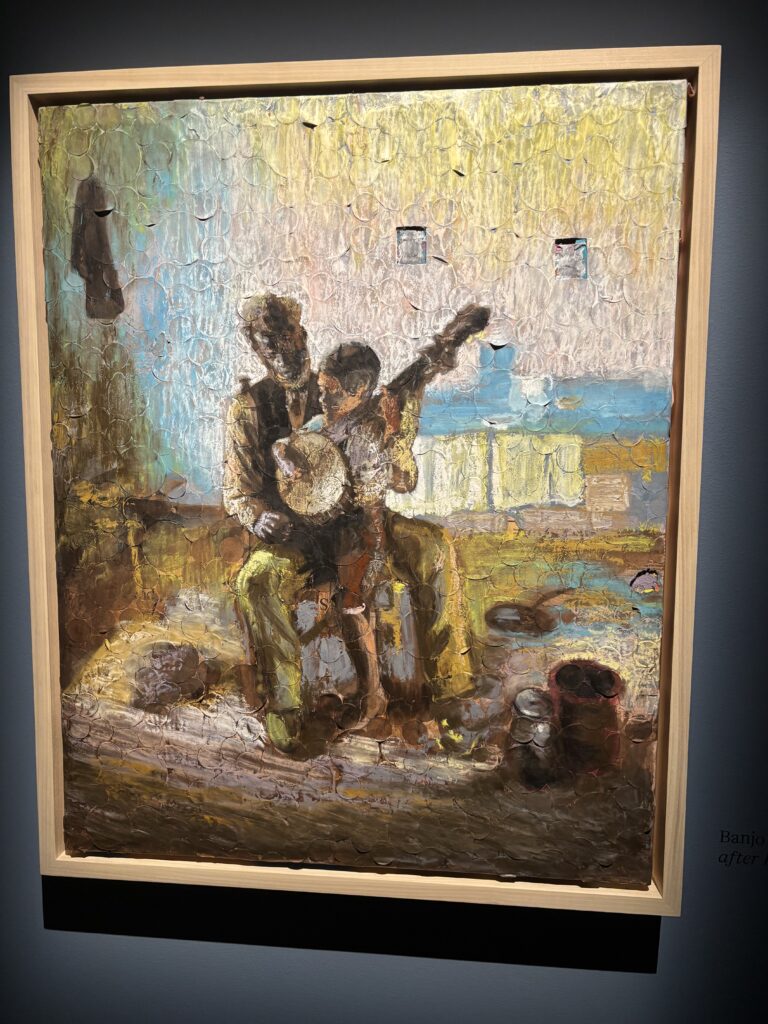
[photo] “Banjo Lesson in Minor Key (after Henry Ossawa Tanner)” (2025) by Derek Fordjour
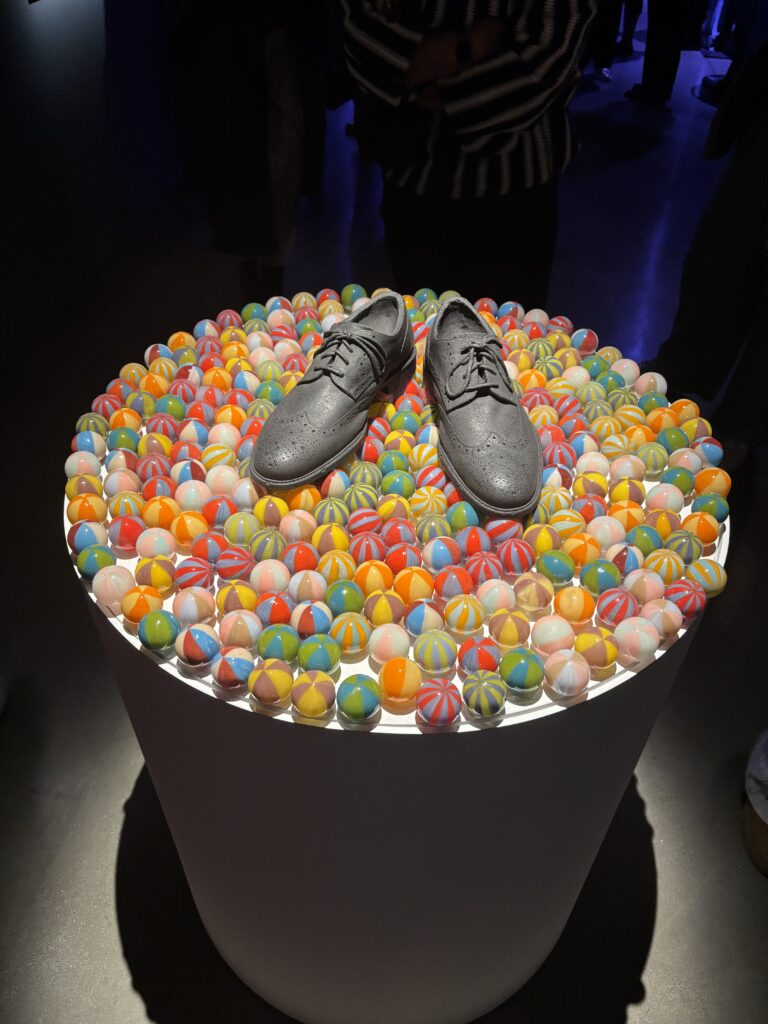
[photo] “Trepidation” (2025) by Derek Fordjour
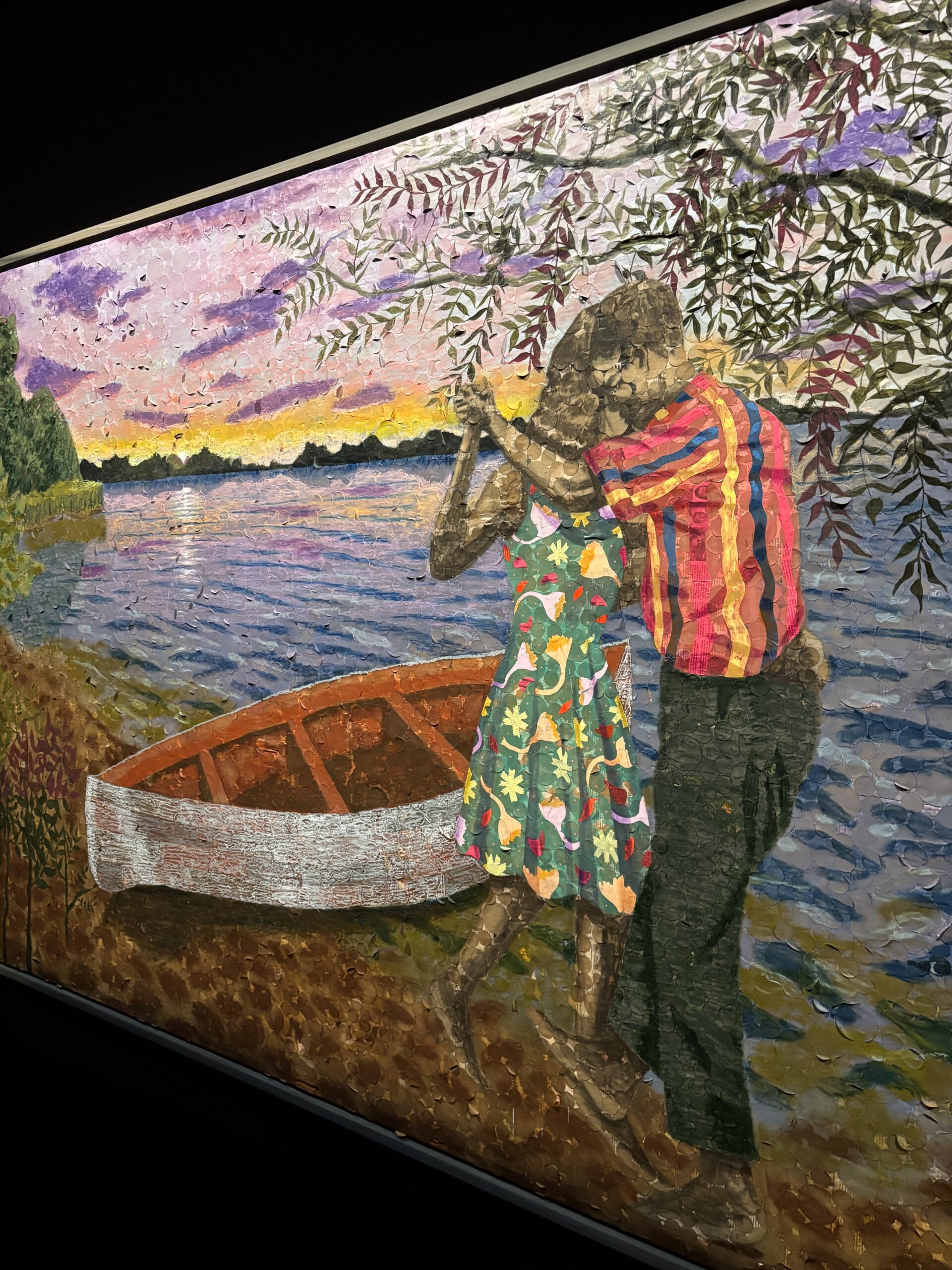
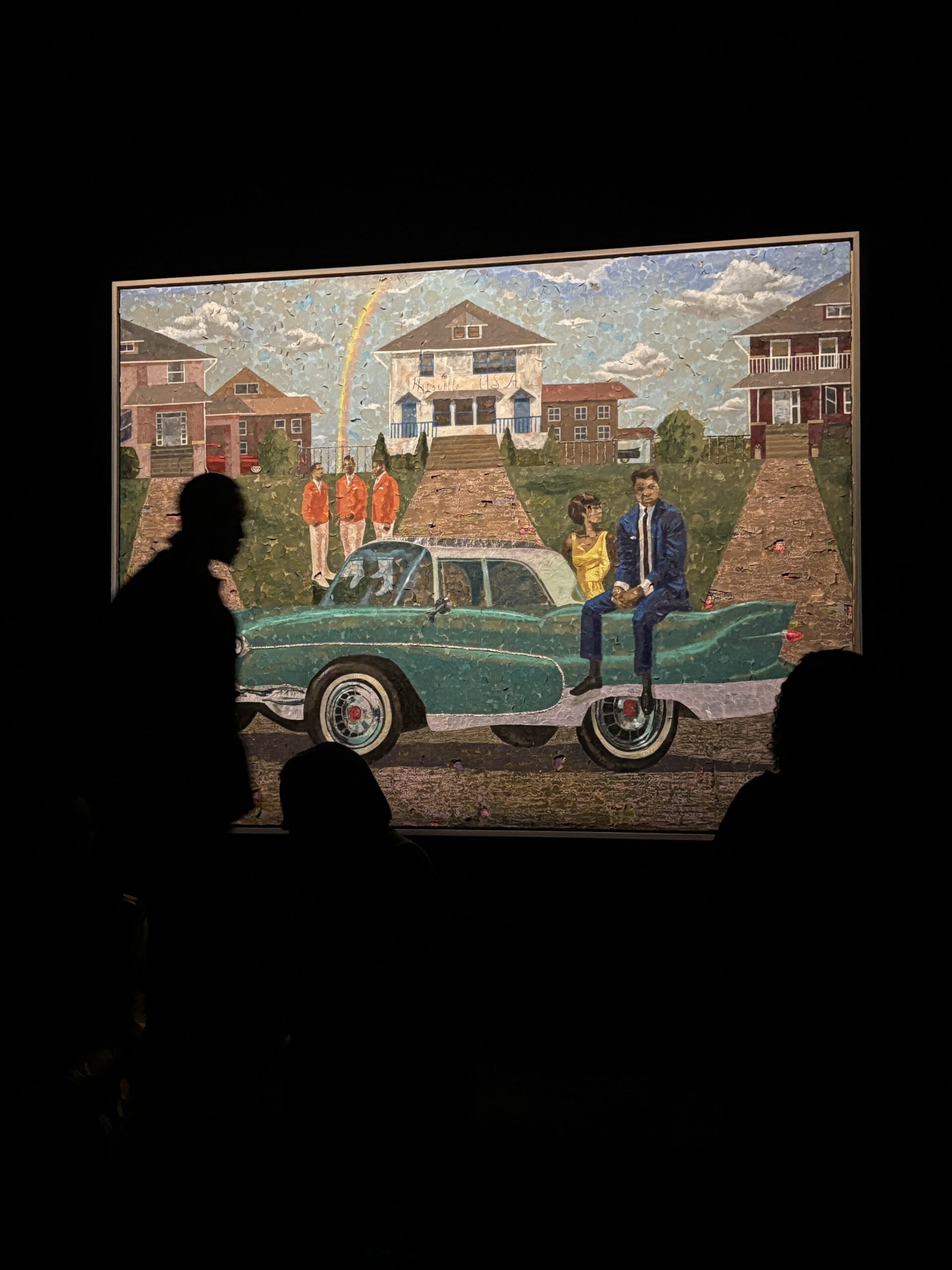
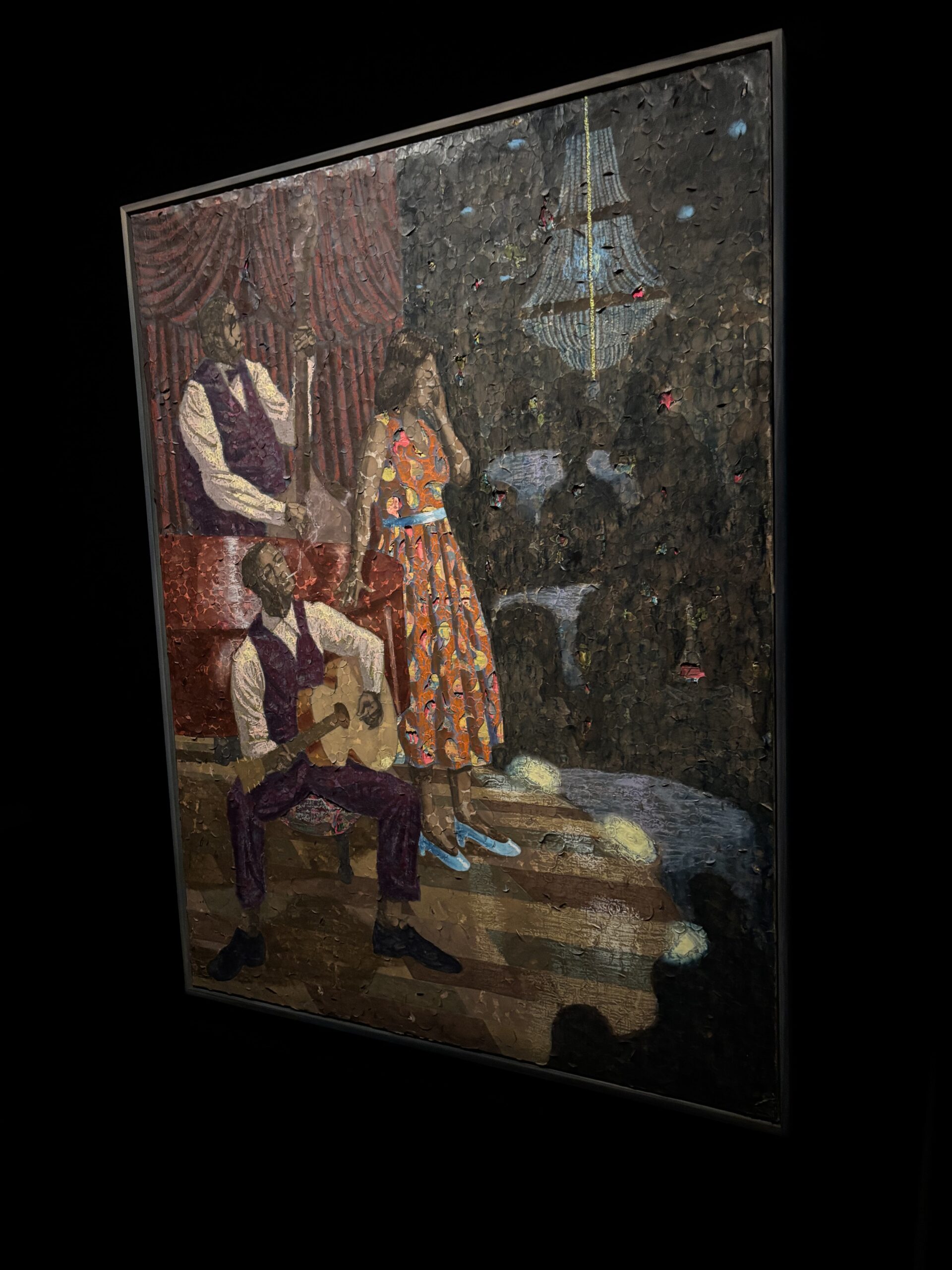
The next room was designed to feel less like an art gallery. An artificial tree arched over the walkway and the few pinches of light shone solely on the art. In the crowded darkness, viewers shuffled between wall-sized paintings with the same circle technique from the covers that depicted scenes from Black American life — a man sits on the trunk of a turquoise Cadillac out front of Hitsville, USA; a couple dances barefoot on a riverbed next to the rowboat they likely used to get there; a woman leans on a piano as she sings in a nightclub, her bow-tied bassist and guitarist look on. The scenes are pseudo-nostalgic, they aren’t my memories but they seem like they could belong to someone I know. The sculptures in this room, wood carvings that still show the marks of the knife and gouge, look like long-lost members of the band from the nightclub scene. While we were looking at a wooden trumpeter in a velvet patchwork jacket, a (human! living!) man dressed like a drum major marched silently through the dimly lit tree room and into the next one.
We followed him, squished with people who were eager to get in front of us but also trying to be polite. The next space was even darker than the last and the fake trees were combined to create a makeshift forest. We walked toward the sound of someone singing and expected to see a Bluetooth speaker, but there in a skinny clearing between the trees was another (human! living!) man. For all we knew it could’ve been the drum major, but it was too dark to see his clothes, face, or demeanor. He hummed a harrowing tune from the shadows.
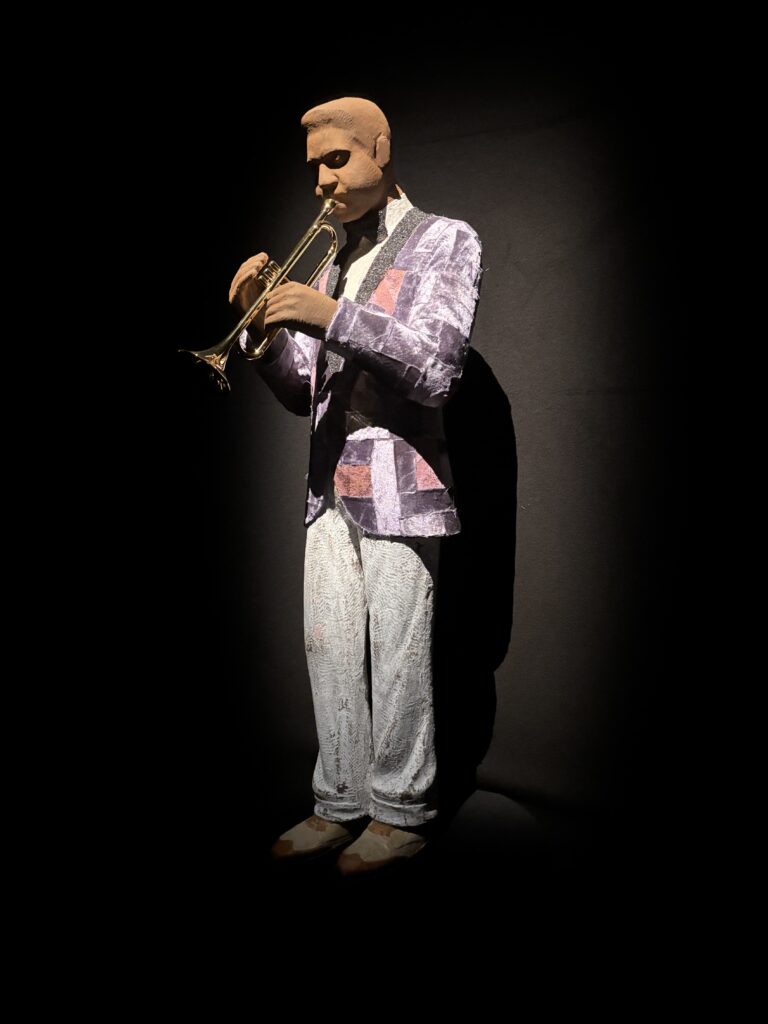
[photo] “Heralder” (2025) by Derek Fordjour
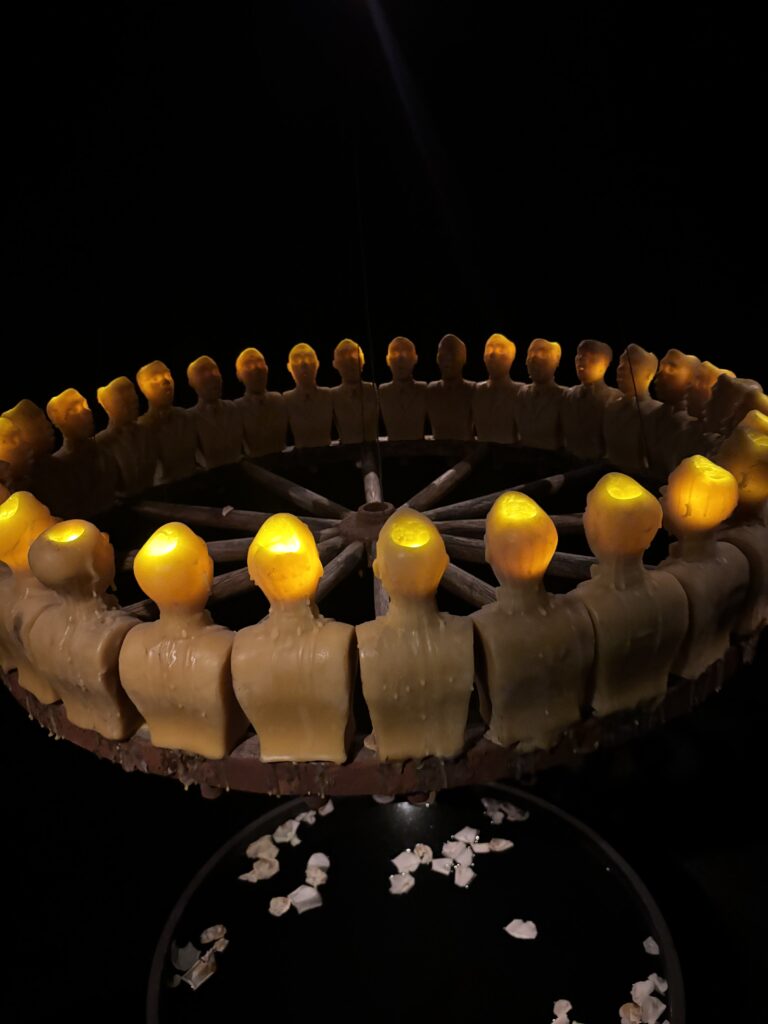
[photo] “Hymn” (2025) by Derek Fordjour
The forest led to the final room, which was also dark, but had a lively atmosphere. DeBarge’s “All This Love” played over the speakers where a crowd watched a compilation of home videos of Black people smiling, dancing, and laughing. There were smaller rooms inside of this room. One was accessed through a mud-walled hallway plastered with sepia-toned photos of Black entertainers. Inside the inner room was a chandelier of wax candles arranged on a wagon wheel, suspended above a pool of still water dotted with white rose petals. The candles were the same shape as the caged-marble singer from the entry. The flames flickered inside their heads causing their eyes to glow and their hair to drip down their backs. The wagon wheel spun idly as the candle choir sang their silent song. This is the piece that has stayed with me since my visit. How much longer can they burn until they are headless? Who are they trying to entertain?
After the security guard’s gruff salutation, we re-emerged on the concrete plaza outside the gallery. There was only one hour left before the gallery closed for the evening, but the line still snaked around the corner and down the block. Since it was the exhibition’s last day the stakes were high; it was unlikely that everyone would make it in before the show closed for good. People in the line asked if we thought it had been worth the wait and I could only answer with a weak smile. If it were my first experience at an art gallery, it would’ve probably been my last.
When I read the gallery’s press release, I realized how much of the show had simply gone over my head. It was difficult to note that I’d “cross[ed] into a gradual emulation of nighttime, a temporal state made spatial, in which music takes on material shape and live singers seem to have stepped, wholly animated, from Fordjour’s painted tableaux” or that the forest room represented “‘hush harbors,’ secret refuges in the woods where enslaved Africans would retreat to gather, sing, and plan escape” when I couldn’t so much as choose a direction without being in someone’s way. In policy school (one of my many past lives), I learned the phrase “the purpose of a system is what it does” which is credited to Anthony Stafford Beer, a British business theorist. What Nightsong did, better than anything else, during the four hours it was open each day was create buzz and garner a line around the corner. Limiting supply as a way to increase demand was also on the syllabus — an idea worth considering when designing public programs and for selling art.
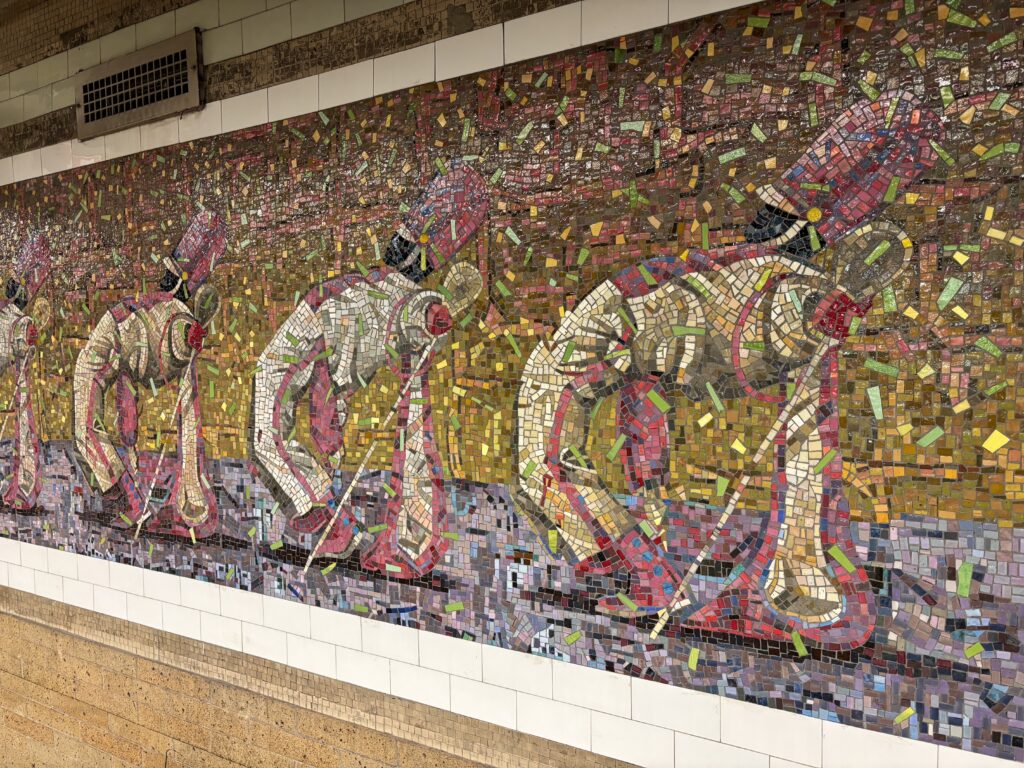
[photo] “Parade” (2018) by Derek Fordjour at the 145th Street 2/3 Train Station (drum major detail)
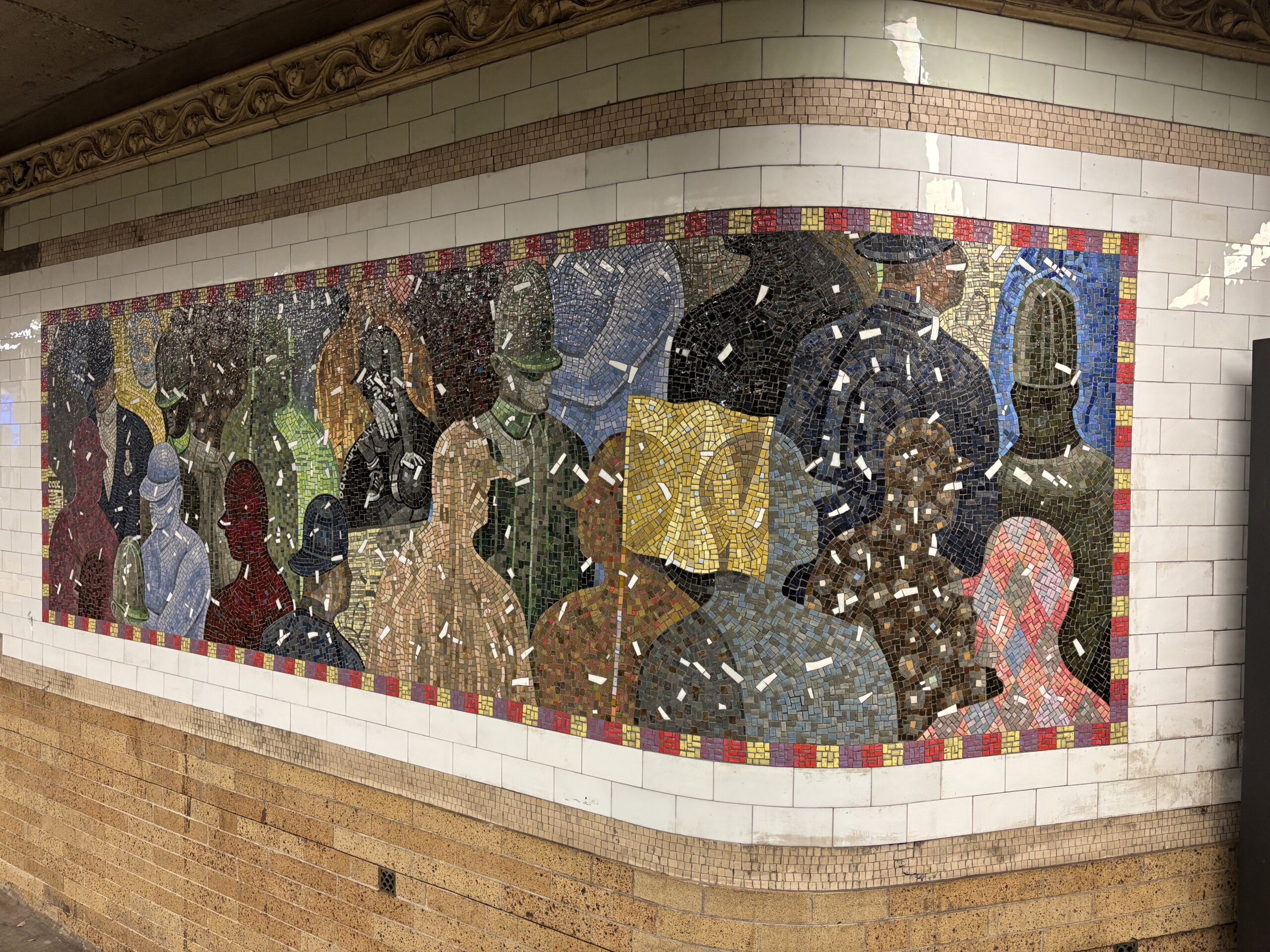
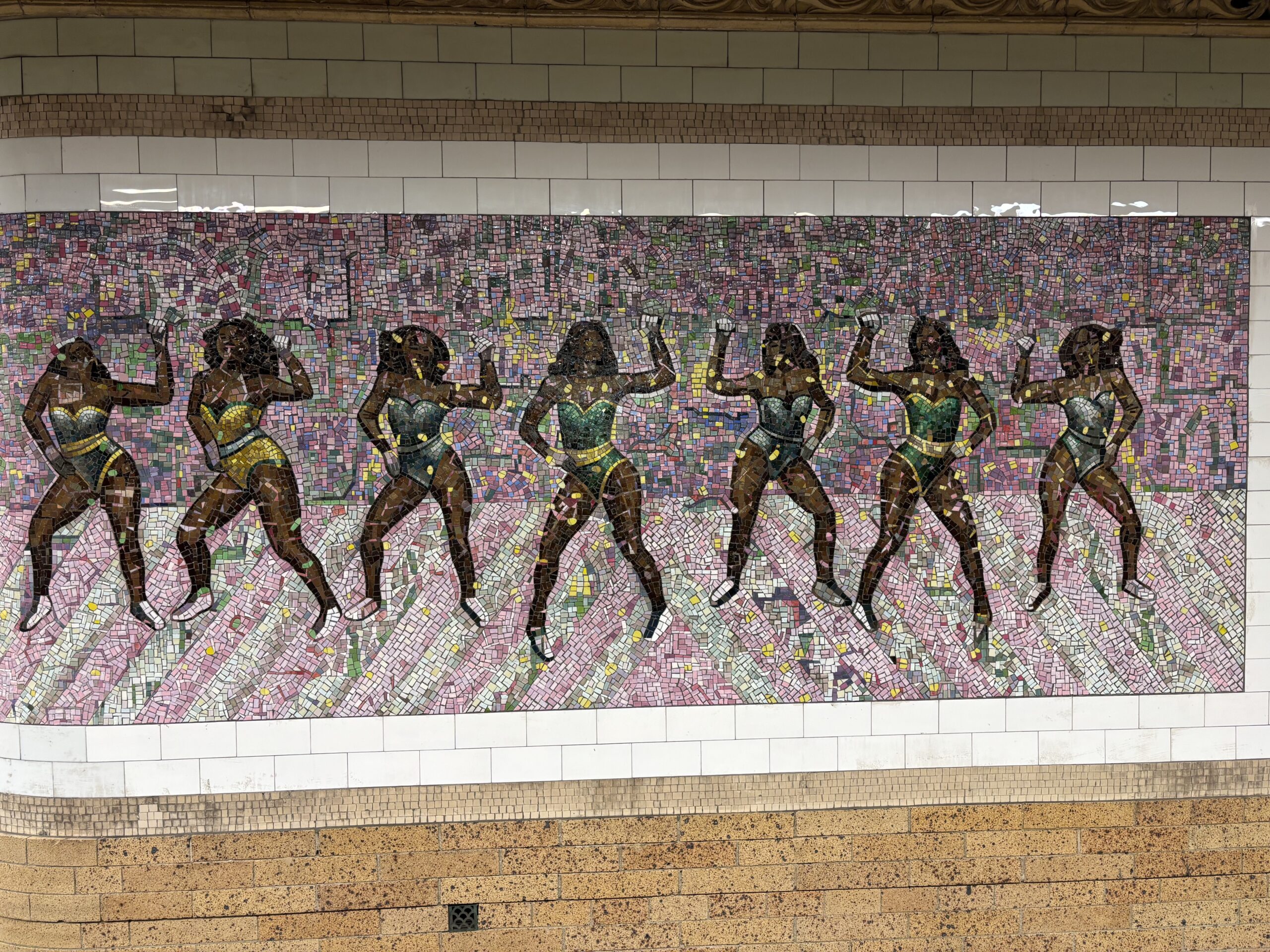
A week or two later, I’d returned to Harlem happy to be rid of riding around in cars. When I got off the train at 145th Street, I was surprised to see the drum major we had followed during the show frozen in place on the tile wall of the station. He was arched over in a backbend, hips high, hands low as confetti fell around him. Derek Fordjour’s “Parade” was commissioned by the MTA in 2018. The four-part mural also featured brown-skinned majorettes with press and curls and green and yellow uniforms, and two panels of faceless people with caps and flags in a crowd. I had the platform all to myself and photographed each panel like a tourist fresh off the plane. No rushing, no squishing, no “immersion”, just the beauty of the performers marching along. This was the kind of line to join.
blacklove 🖤 and starlight 🌟
Nightsong was a solo exhibition by Derek Fordjour and an “immersive, multifaceted experience combining painting, sculpture, live performance, and video” at David Kordansky Gallery in Los Angeles. It was on view from September 13 – October 11, 2025.
-
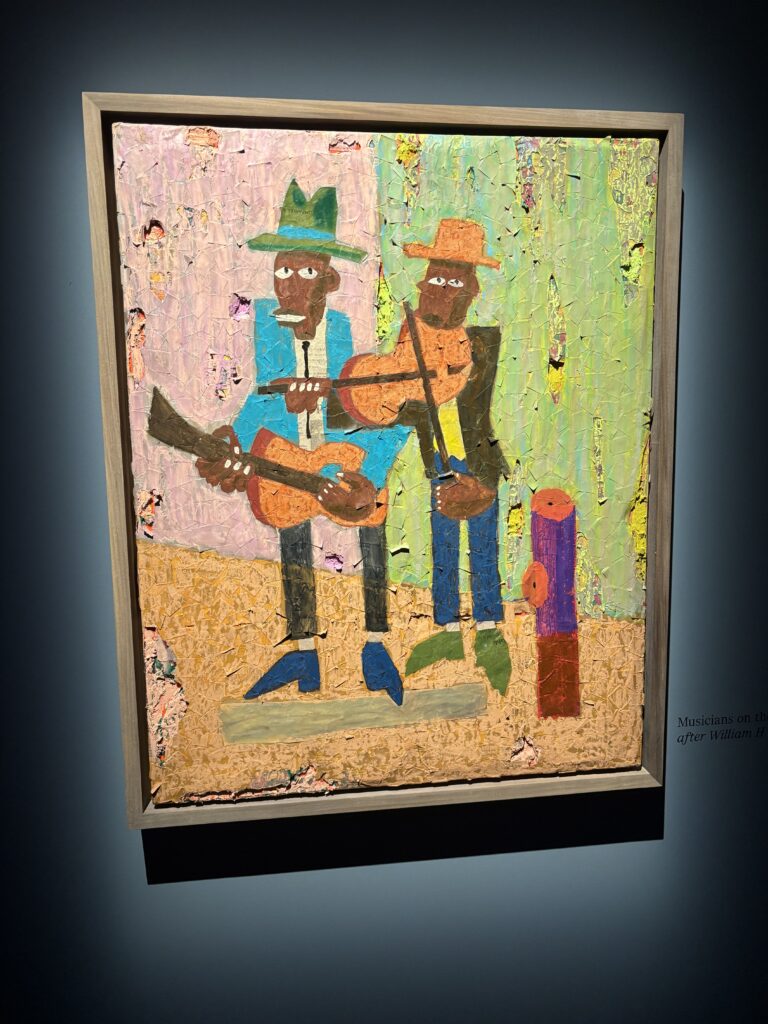
- [photo] “Musicians on the Street (after William H. Johnson” (2025) by Derek Fordjour
-
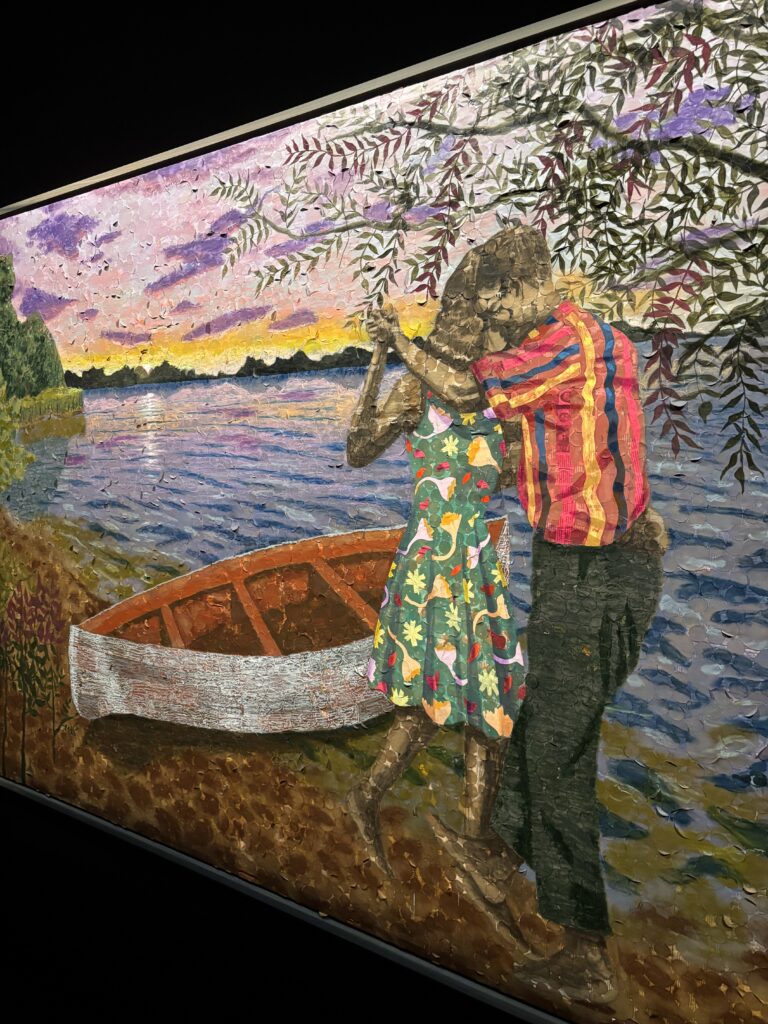
- [photo] “Love Song” (2025) by Derek Fordjour
-
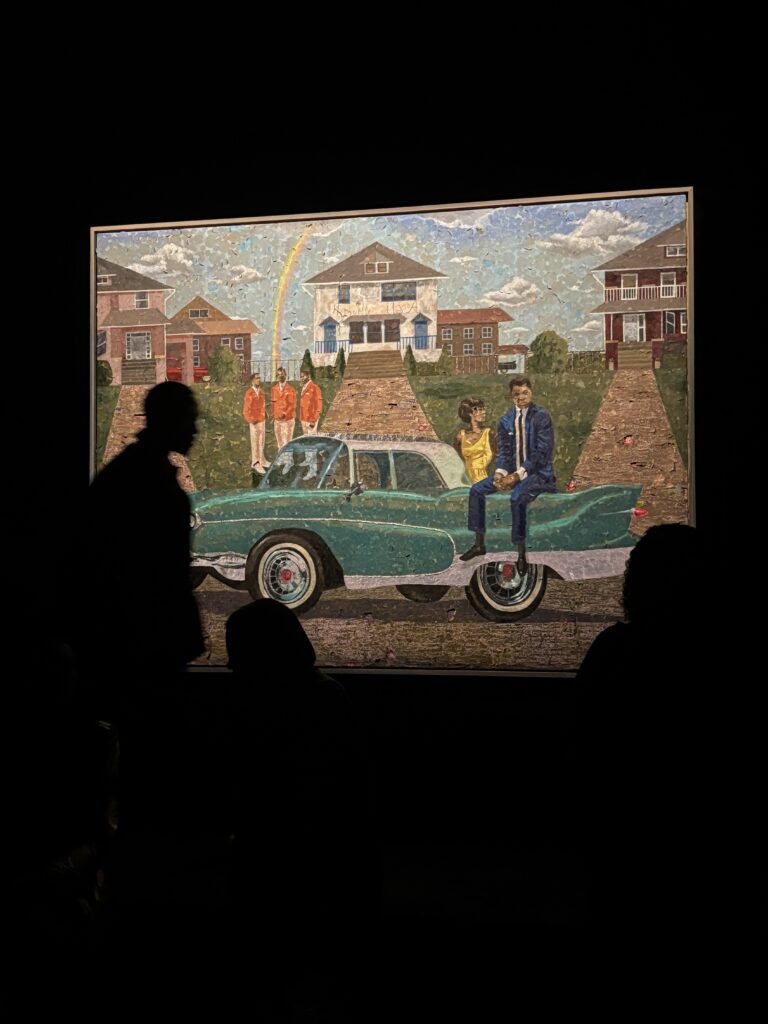
- [photo] “Motor Town Miracle” (2025) by Derek Fordjour
-
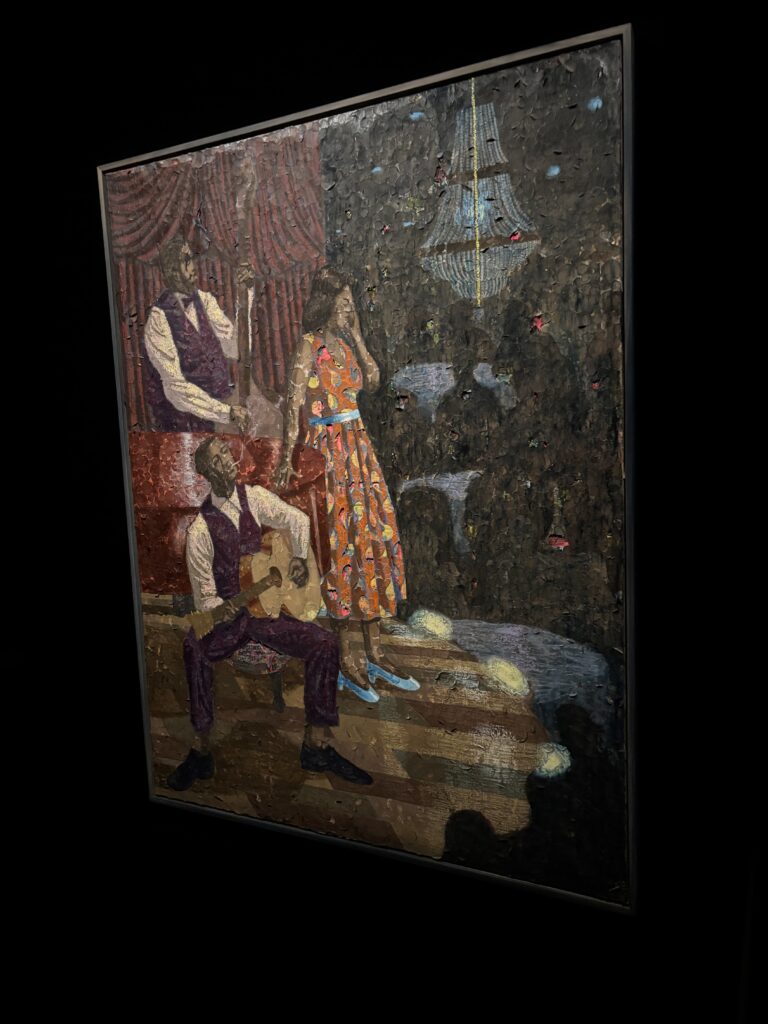
- [photo] “The Late Set” (2025) by Derek Fordjour
-
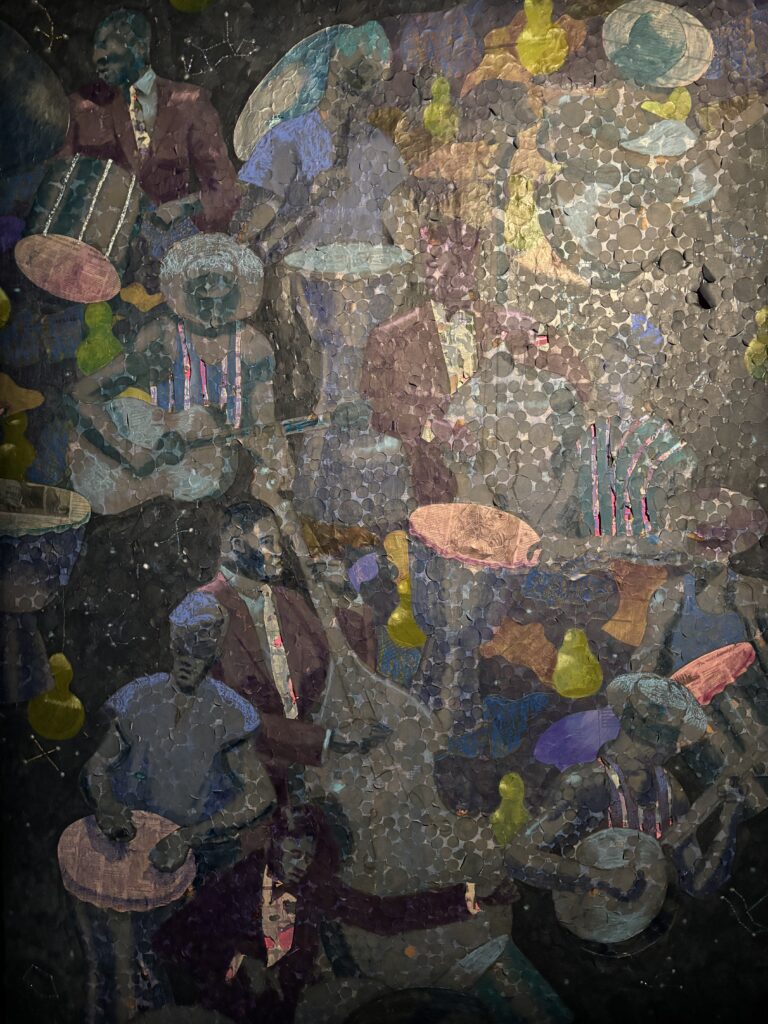
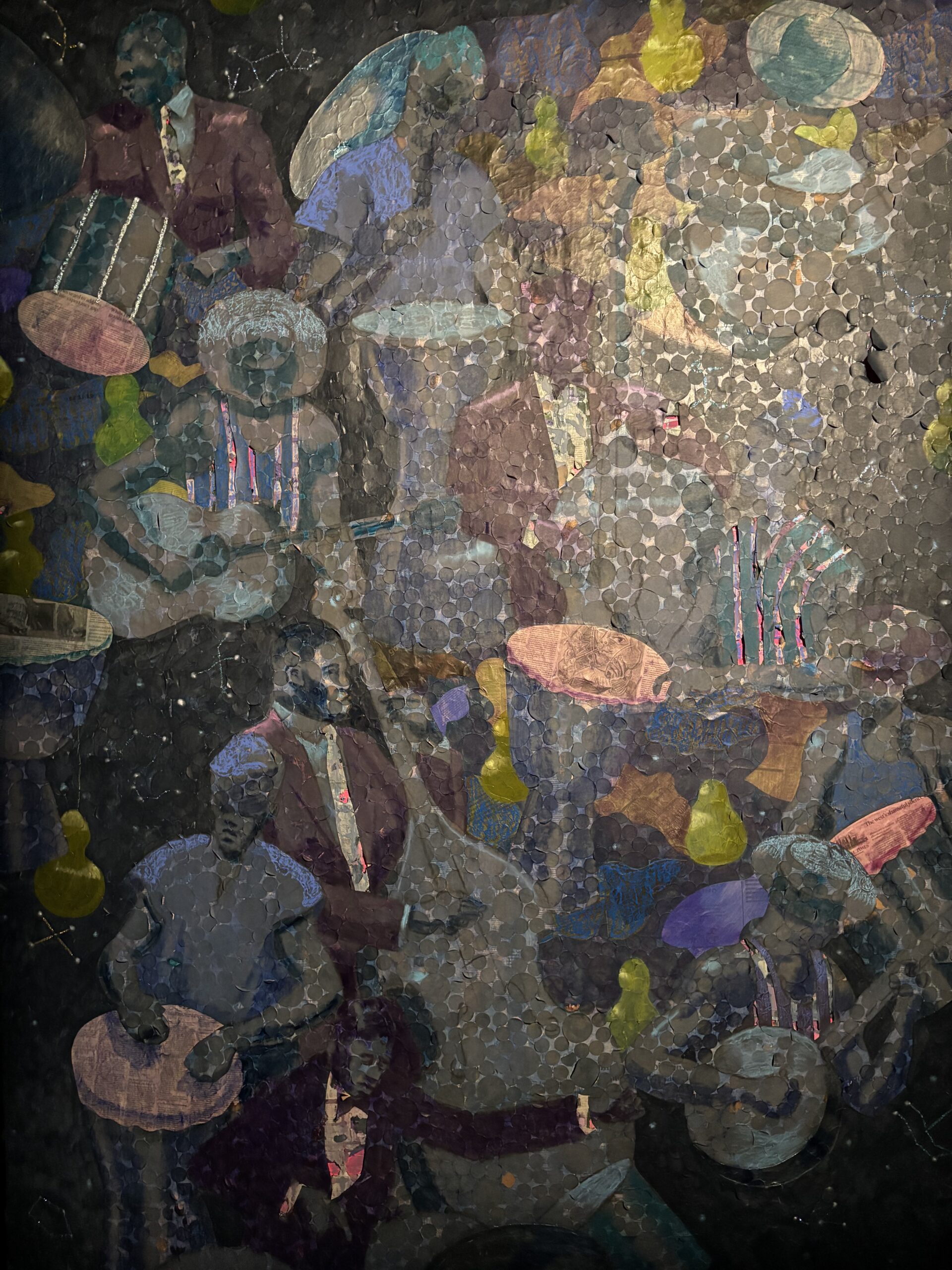
- [photo] “Gourd, String & Drum” (2025) by Derek Fordjour
-
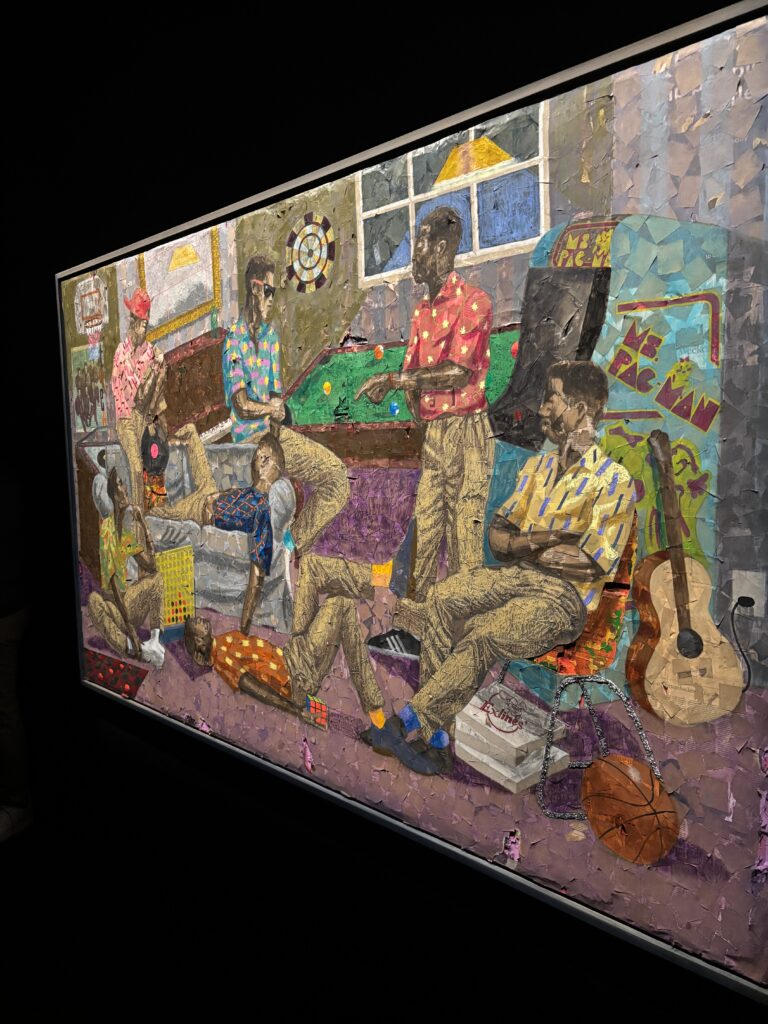
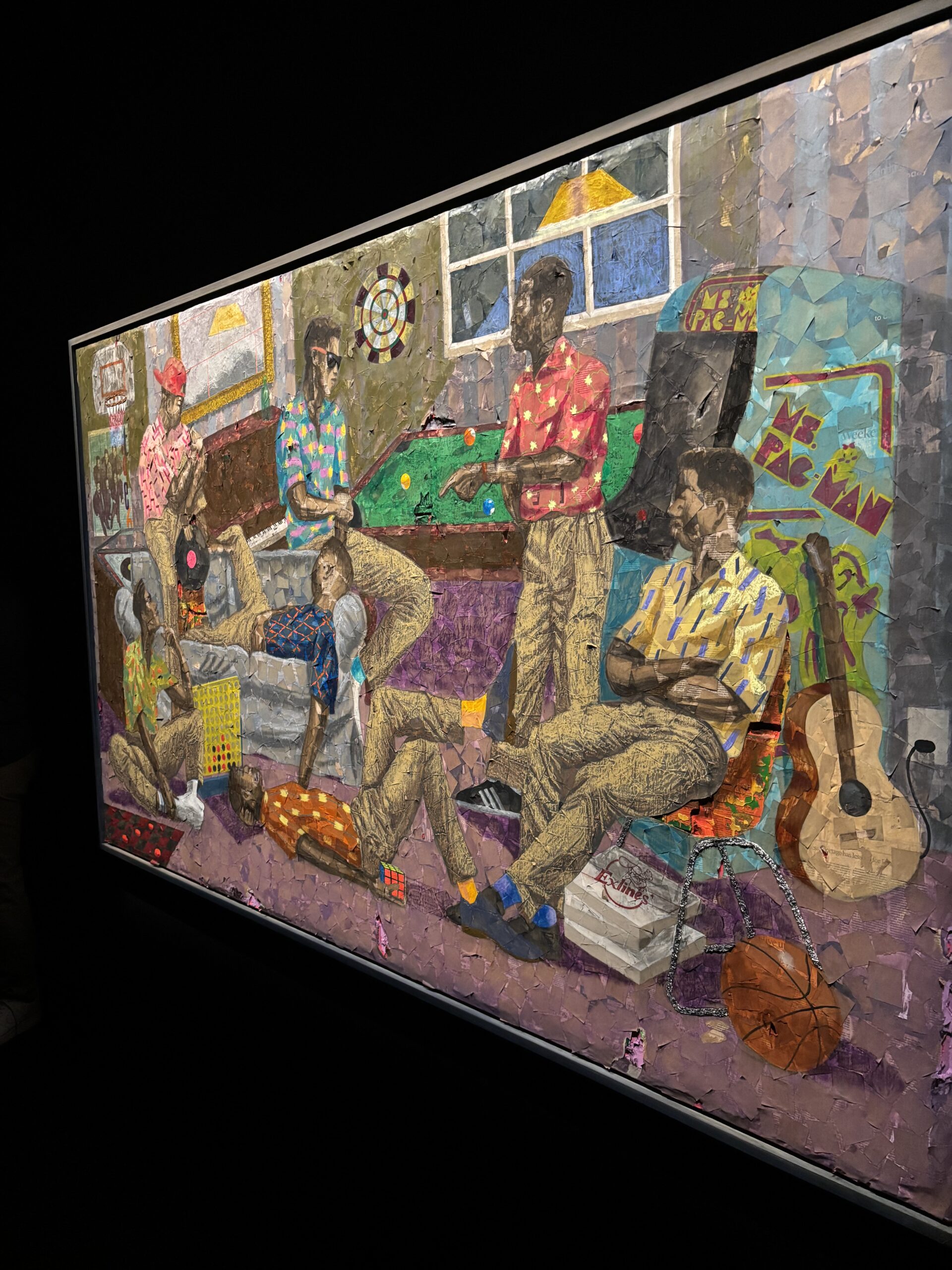
- [photo] “Boy Band Breakup: The Fall of Ascension” (2025) by Derek Fordjour
-
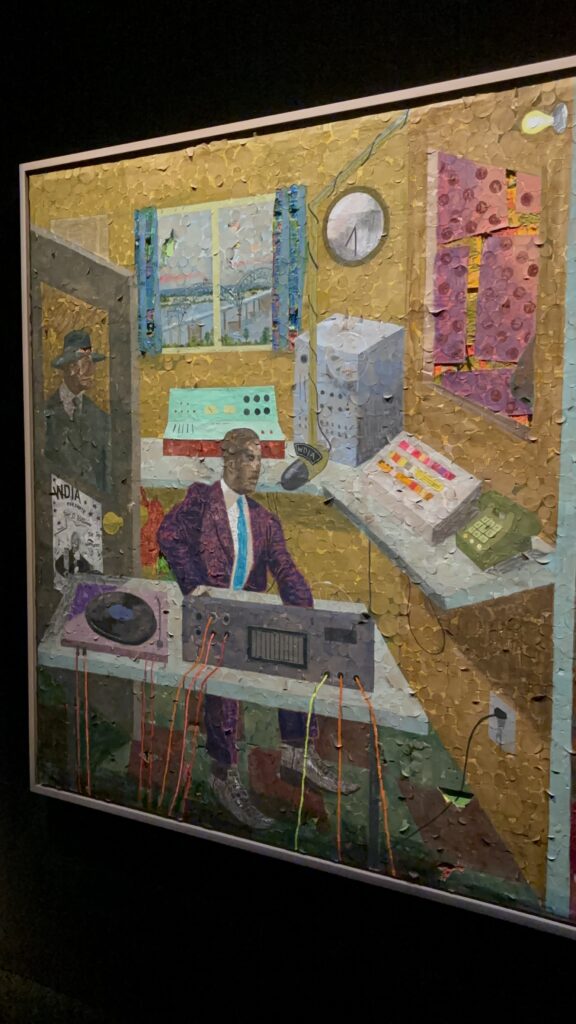
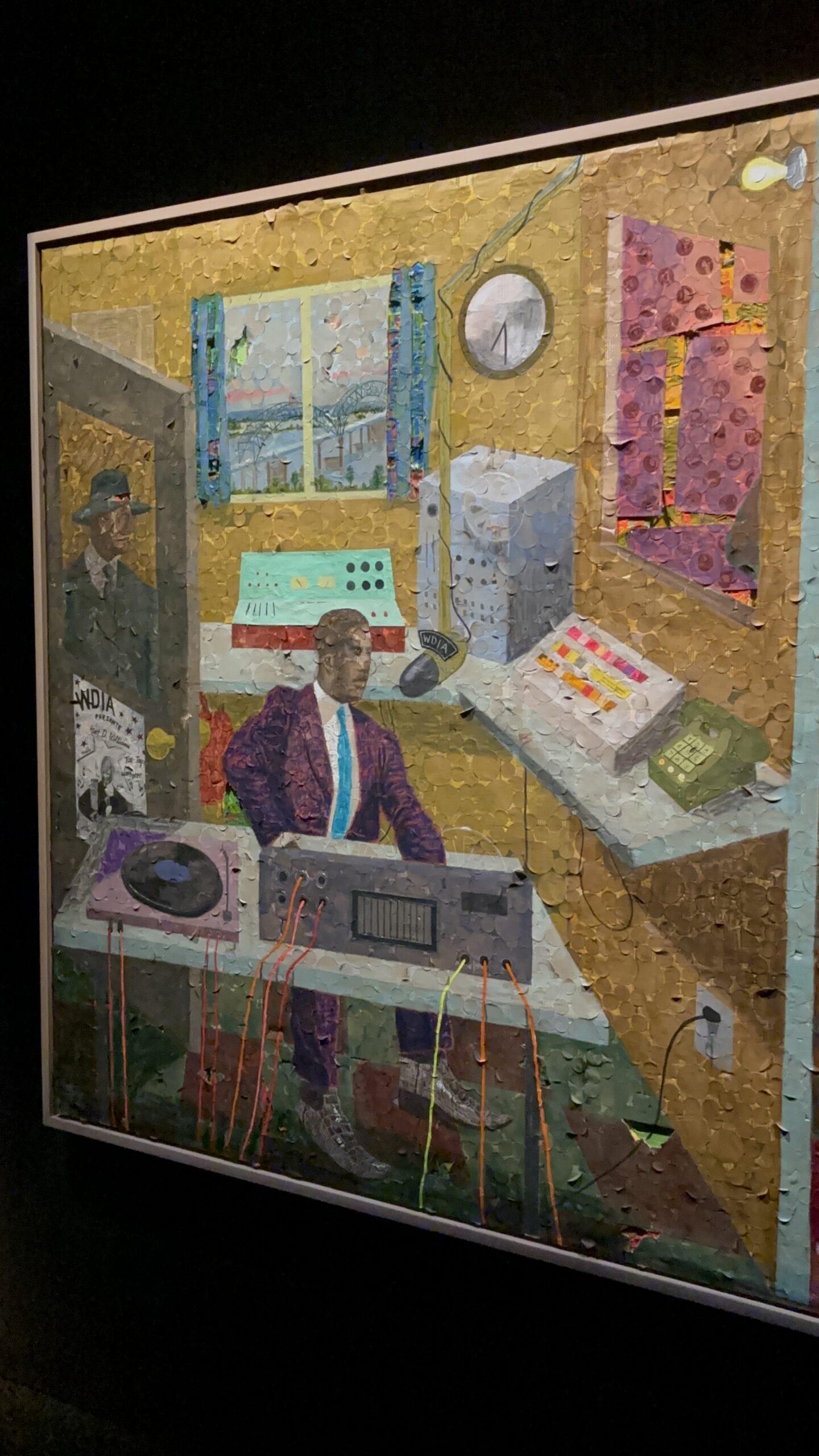
- [photo] “Black Radio” (2025) by Derek Fordjour
-
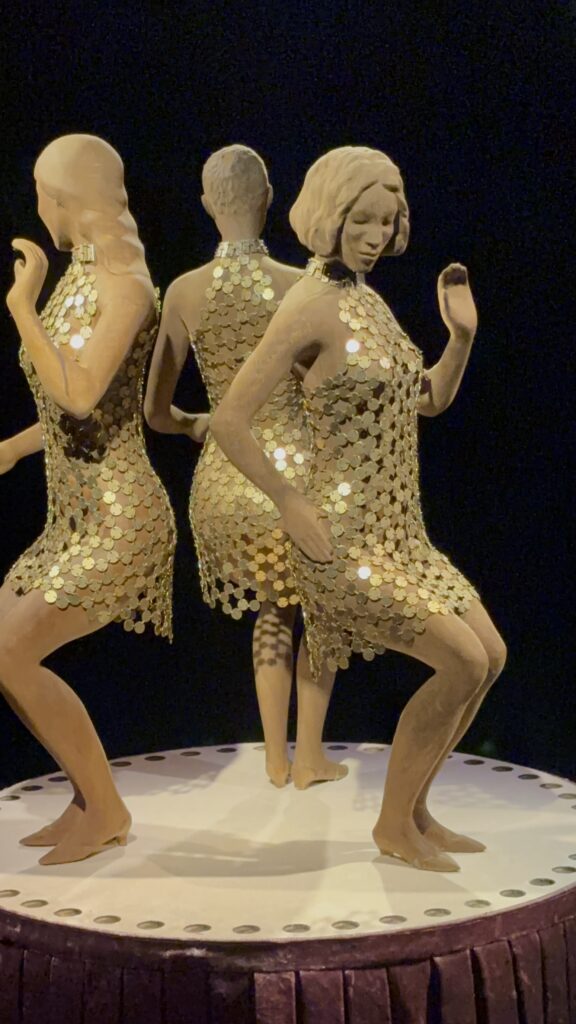
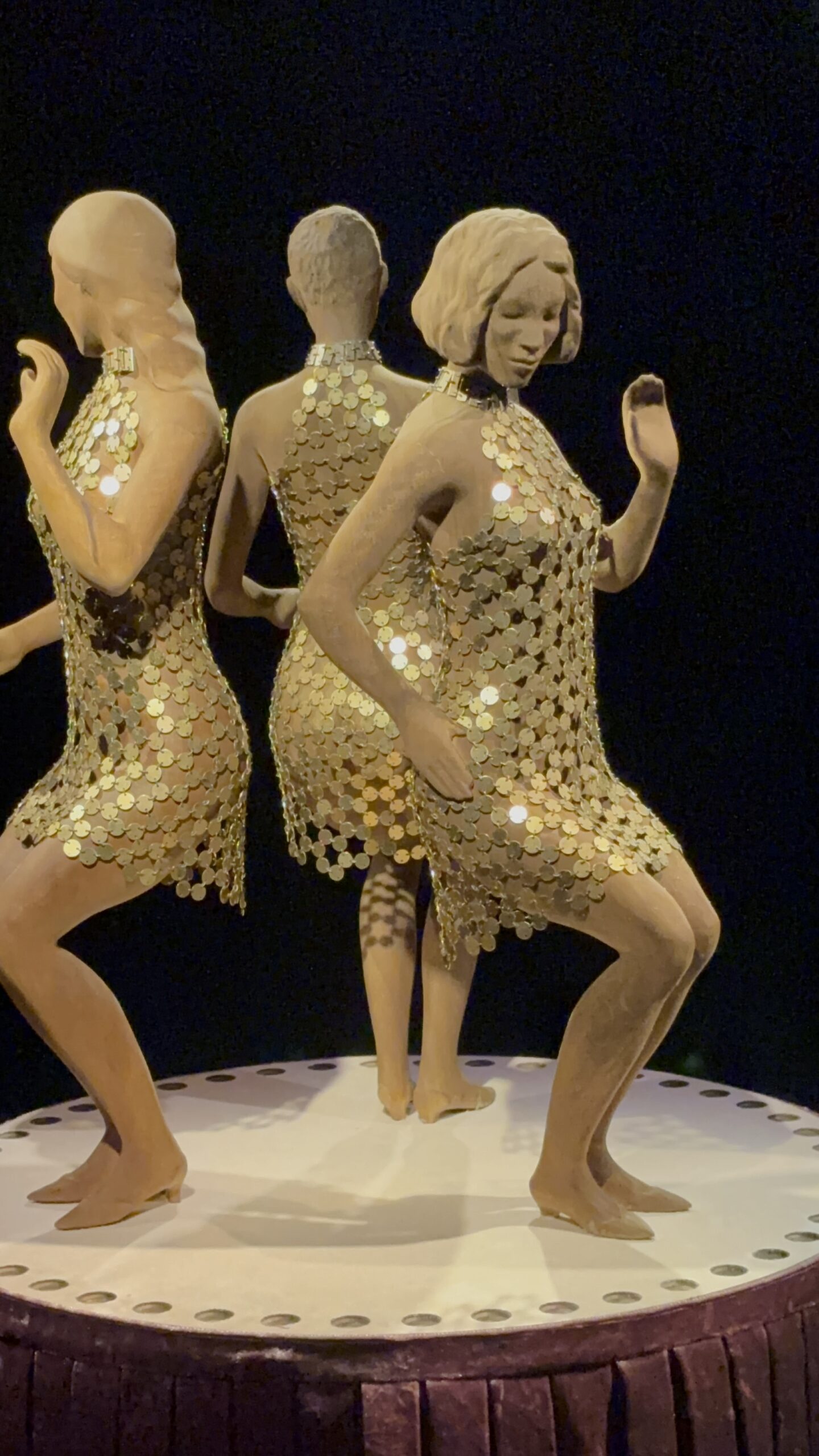
- [photo] “Oscillating Triad” (2025) by Derek Fordjour
-
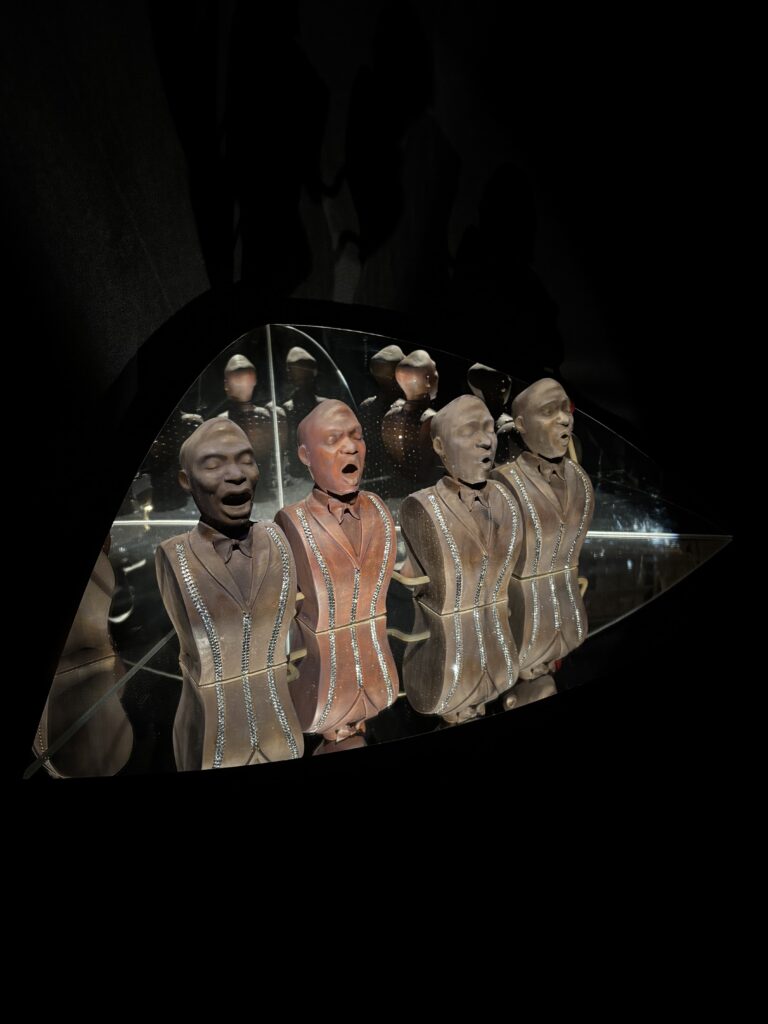
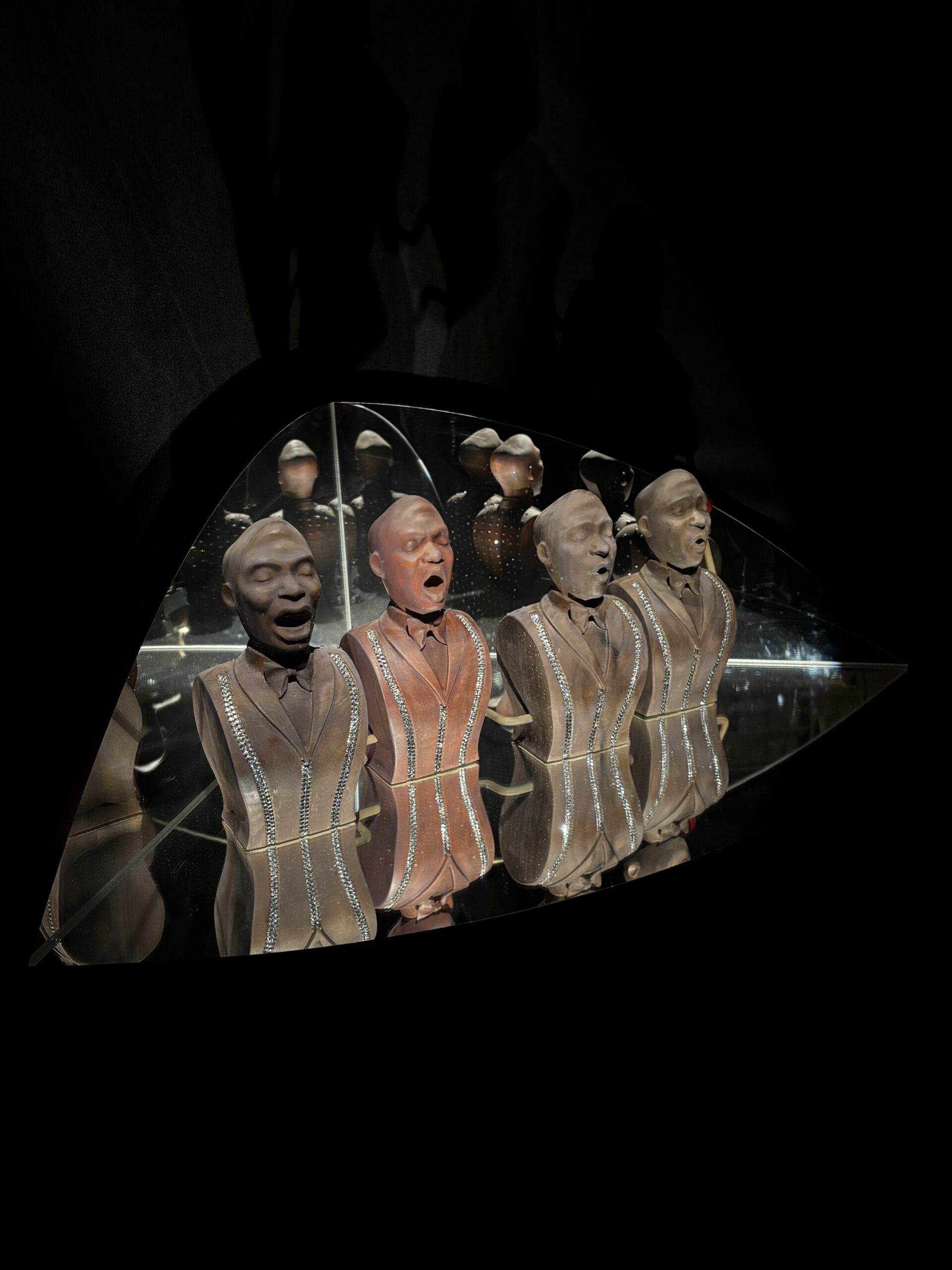
- [photo] “Transmission” (2025) by Derek Fordjour
-
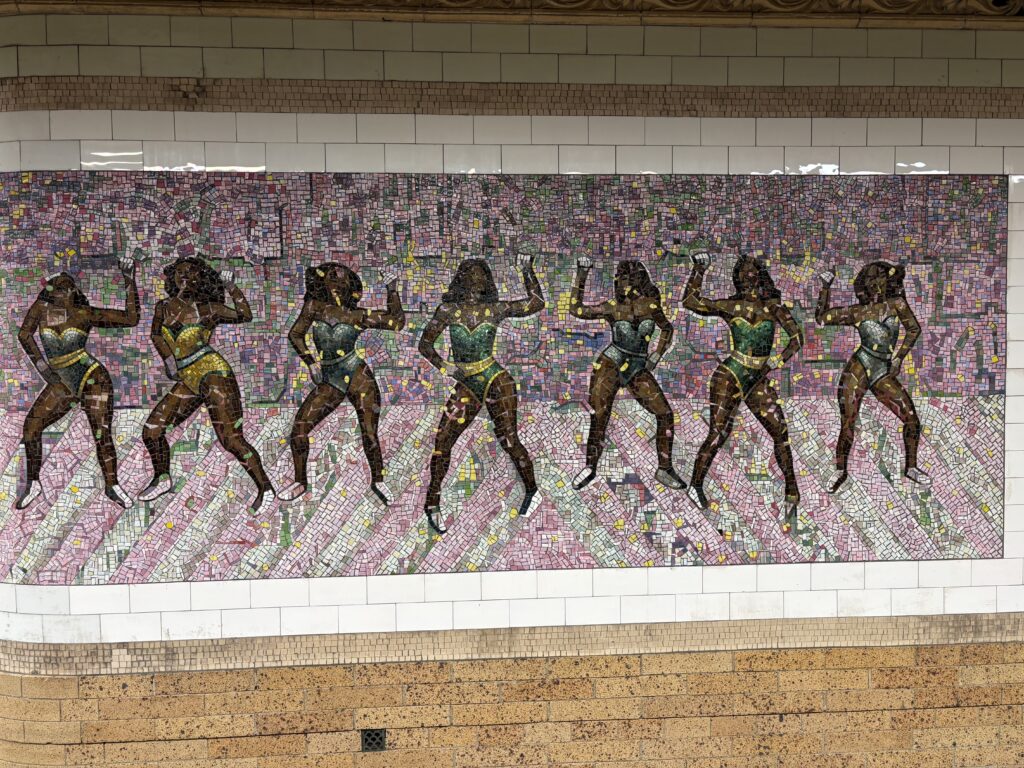
- [photo] “Parade” (2018) by Derek Fordjour at the 145th Street 2/3 Train Station (majorette detail)
-
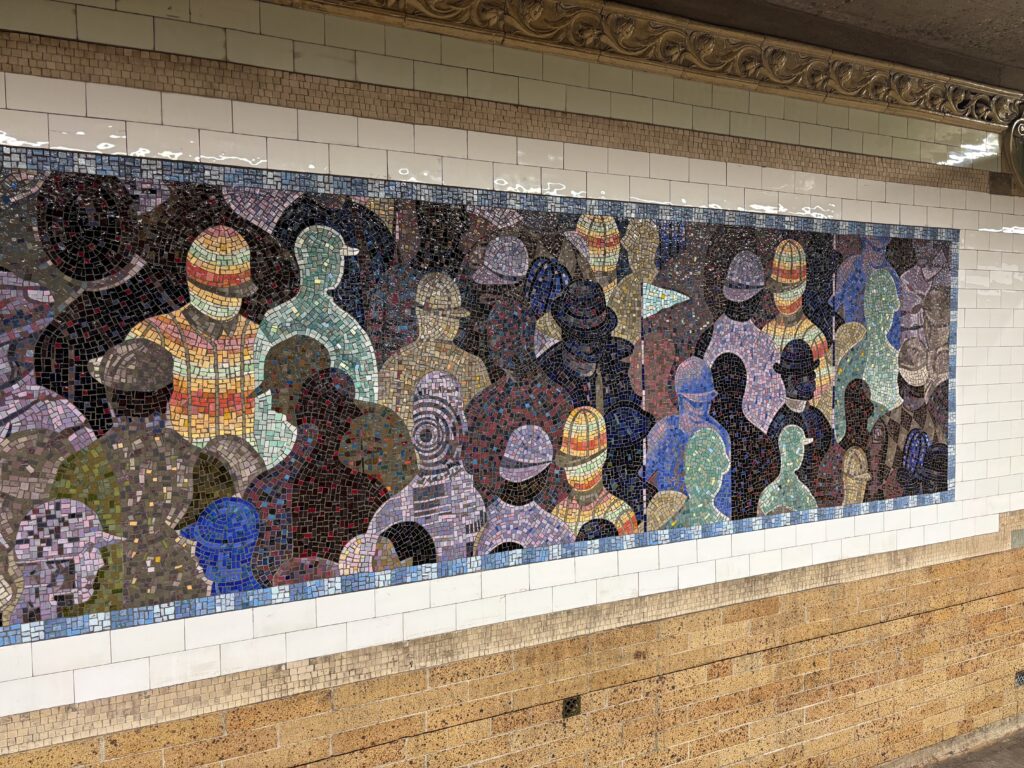
- [photo] “Parade” (2018) by Derek Fordjour at the 145th Street 2/3 Train Station (crowd detail A)
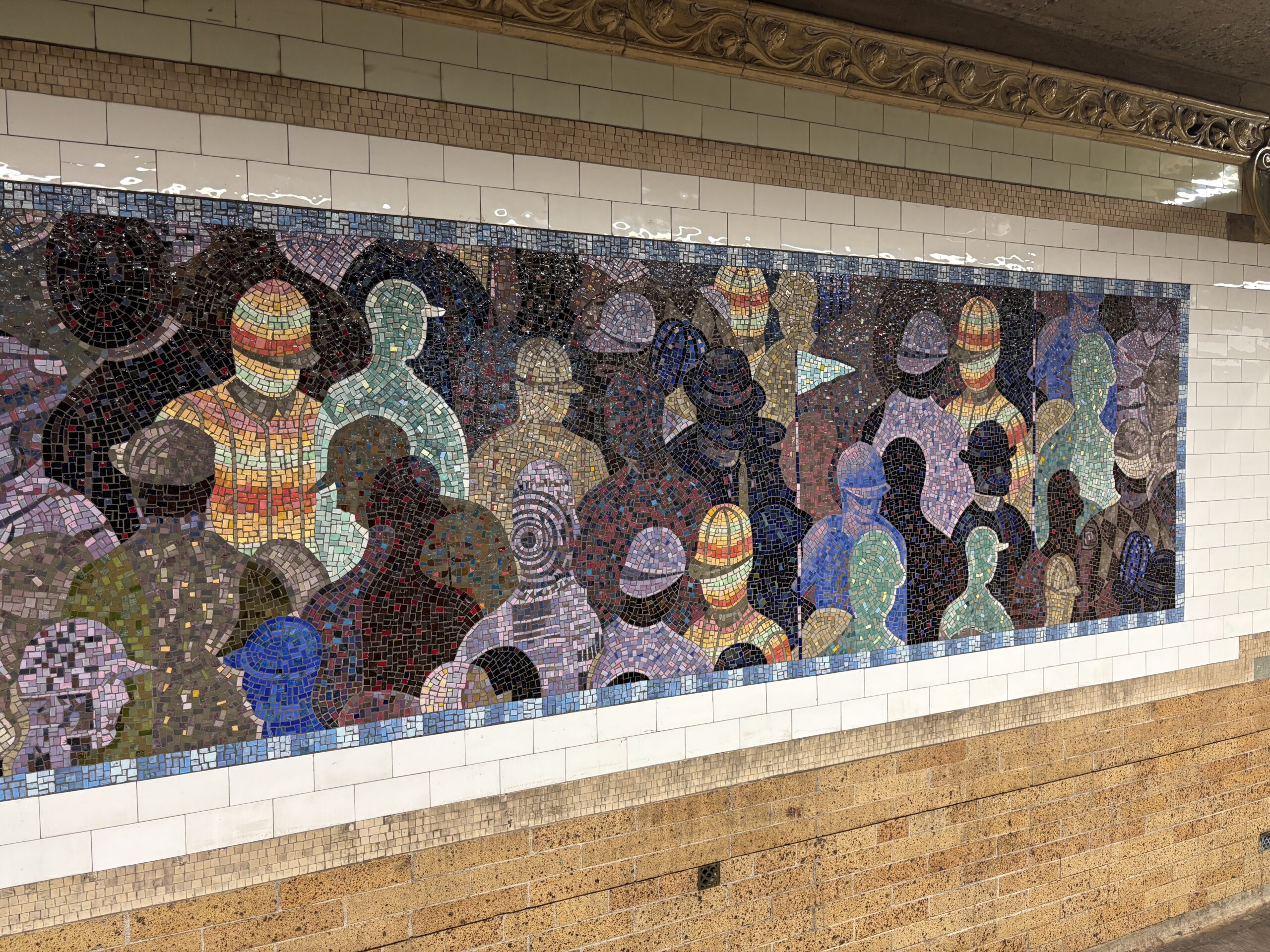
-
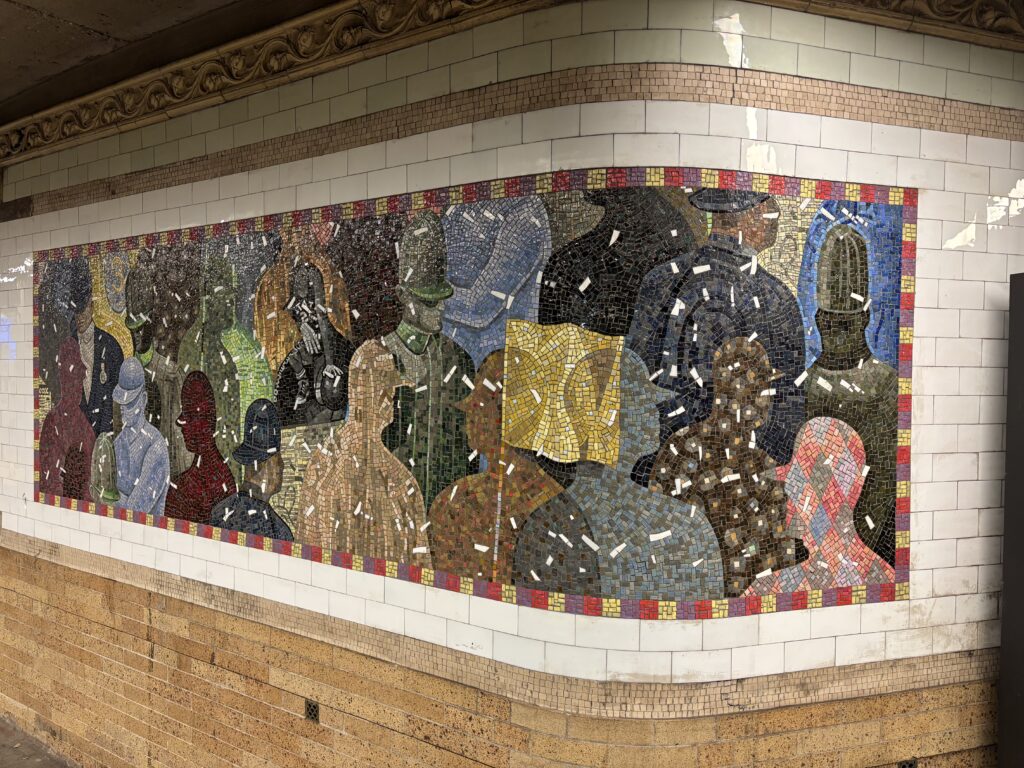
- [photo] “Parade” (2018) by Derek Fordjour at the 145th Street 2/3 Train Station (crowd detail B)