August Wilson’s ‘Ma Rainey’s Black Bottom’
August Wilson on Chicago, in Chicago, one hundred years later
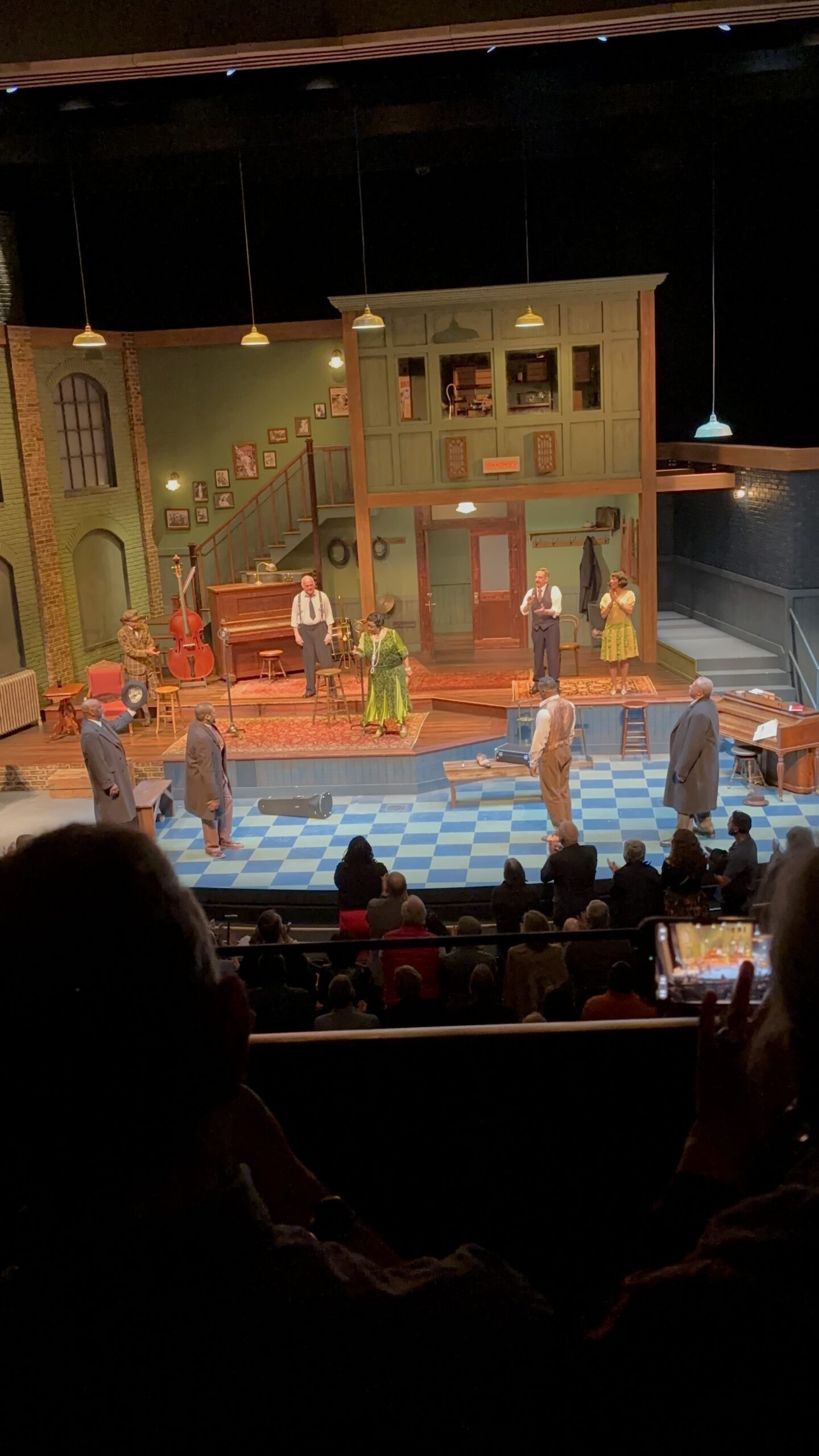
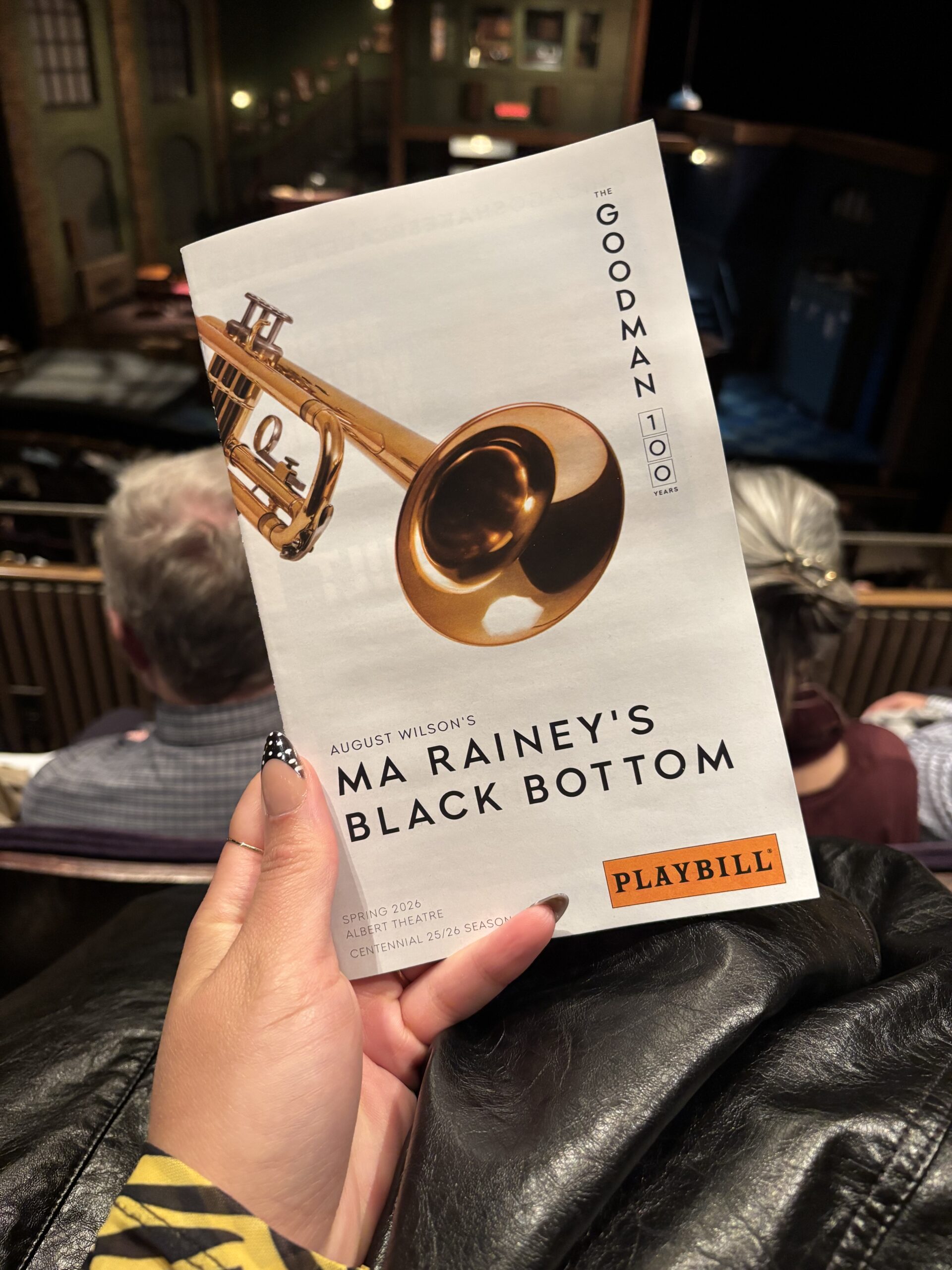
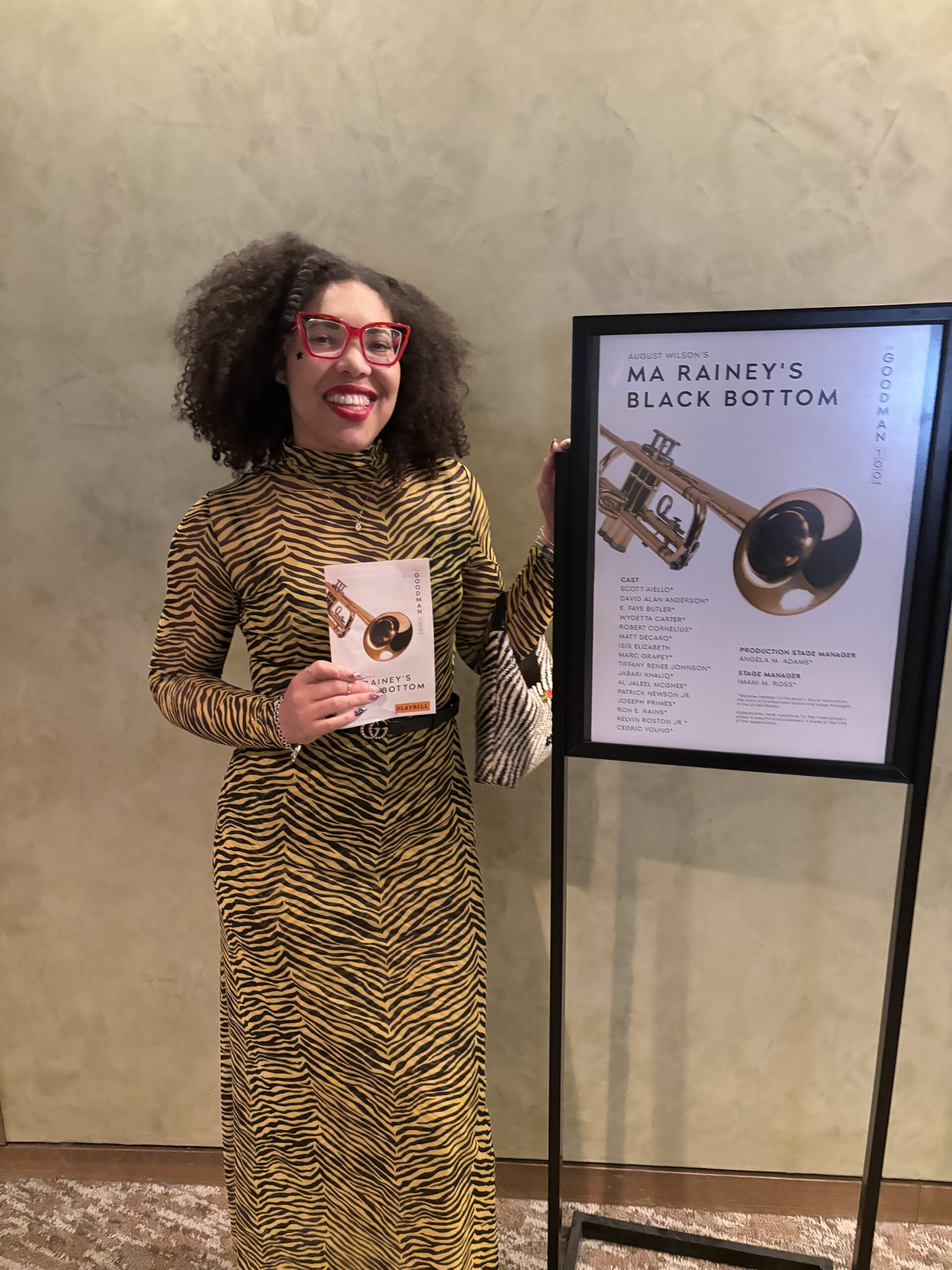
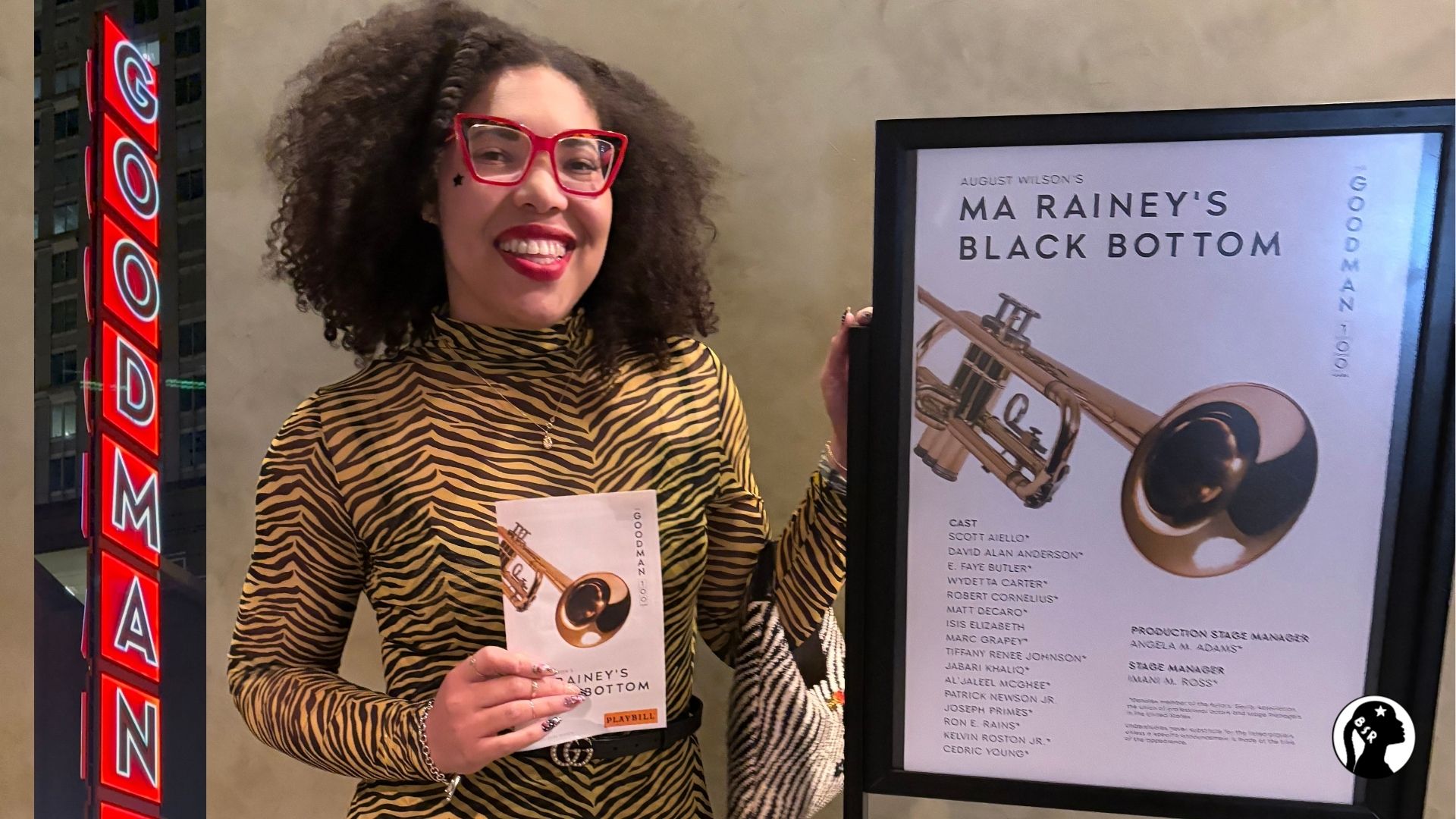
Of the 10 plays in August Wilson’s Century Cycle, nine are set in his hometown of Pittsburgh. The lone outlier, Ma Rainey’s Black Bottom, nestled between Joe Turner’s Come and Gone and The Piano Lesson is set in 1920s Chicago. It only made sense that I should see it there, in the place it describes, in a time 100 years into the future. A playbill note from the show’s dramaturg Neena Arndt mentions that Chicago’s Goodman was the first theatre to produce all ten. Arndt goes on to describe Wilson’s work as “remarkably prescient” for the present-past call and response of race relations, contagious illness, and the long shadow of slavery.
I’d argue there’s even more connecting centennial themes. The 1920s and 2020s dance to a shared beat, both are a time of new technology (recording equipment, computer-generated musicians) and increased mobility (rail and automobile, real-time video-conferencing). While the sounds of the 2020s still twitch and shake through four more years of self-definition, the influence of 1920s has the benefit of hindsight. Its impact is ubiquitous — Prohibition, the Charleston, the modern record label — all because blues records shaped the music industry into a new style of plantation.
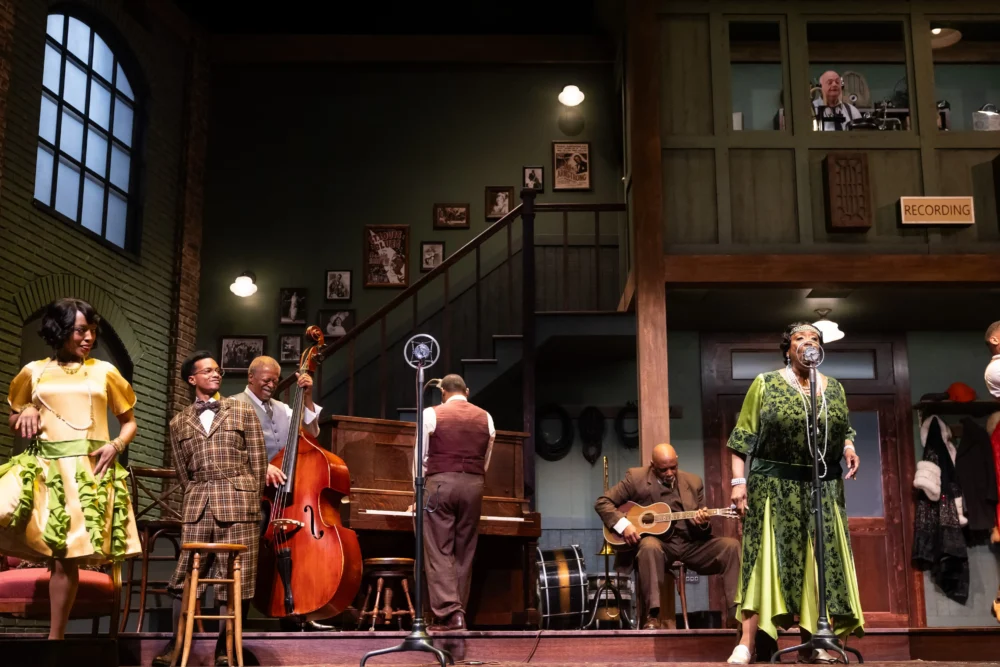
photo: (L-R) Tiffany Renee Johnson, Jabari Khaliq, Cedric Young, Kelvin Roston Jr., David Alan Anderson, E. Faye Butler, Matt DeCaro (above), Al’Jaleel McGhee. Photo by Justin Barbin. Courtesy Goodman Theatre.
Since we can use the same device to record, edit, loop, publish, and share recorded sounds, plus design an album cover, the once cutting-edge recording technology of the time feels quaint now. But plenty of blues and jazz musicians were hesitant to put their talent on wax. When Freddie Keppard refused the chance to record in 1916, the honor of making the first jazz record went to the Original Dixieland Jazz Band, an all-white group whose bandleader, Nick LaRocca, would go on to denounce that Black people had any pioneering influence in the creation of Jazz at all saying, “I’m not prejudiced against the Negro [but] I don’t believe in giving the Negro credit for something he didn’t do. The negro has never invented anything new. Take Louis Armstrong away from them and they’ll go back to Africa.” If it weren’t for fellow musicians and jazz historians, LaRocca might’ve been loud, wrong, and had the last word.
Some musicians, like Ma Rainey, clocked studios as newfangled threats to their livelihoods, but decided to record anyway. In Wilson’s telling, the mother of the blues compares the studio session to being a “whore”, they’ll be done with her after they’ve recorded her sound. Ma Rainey and the music she recorded are real, but her thoughts and feelings, as well as the members of her band and recording label are fictionalized, projected through Wilson’s worldbuilding. Ma Rainey’s Black Bottom is not a biopic like Ray or What’s Love Got To Do With It, it’s Wilson’s imagination of one day in her life and all those around her.
The band, made up of 3 older guys and one young hotshot, is stocked with archetypes chafing at each other’s edges. Cutler (David Alan Anderson), on trombone, is the leader and a traditionalist. Slow Drag (Cedric Young), on standing bass, is a simple guy who wants to get out on time. Toledo (Kelvin Roston, Jr.), on piano, is an intellect and the most literate bandmember. Levee (Al’Jaleel McGhee), a fast-talking coronet player, is interested in new shoes, pretty women, and money. Despite the clouds of machismo they kick up in the bandroom between sets, each of the musicians get ‘spooked up’ and hang their heads in the presence of white men. August Wilson is one of the only playwrights who will have me empathize with a man’s plight (I wish he’d put as much thought into the problematic ‘high-yellow’ bisexual floozy, Dussie Mae, played by Tiffany Renee Johnson). Each man has their reason for getting ’spooked up’ and it’s in these revealing monologues that the production, directed by Chuck Smith, sets itself apart.
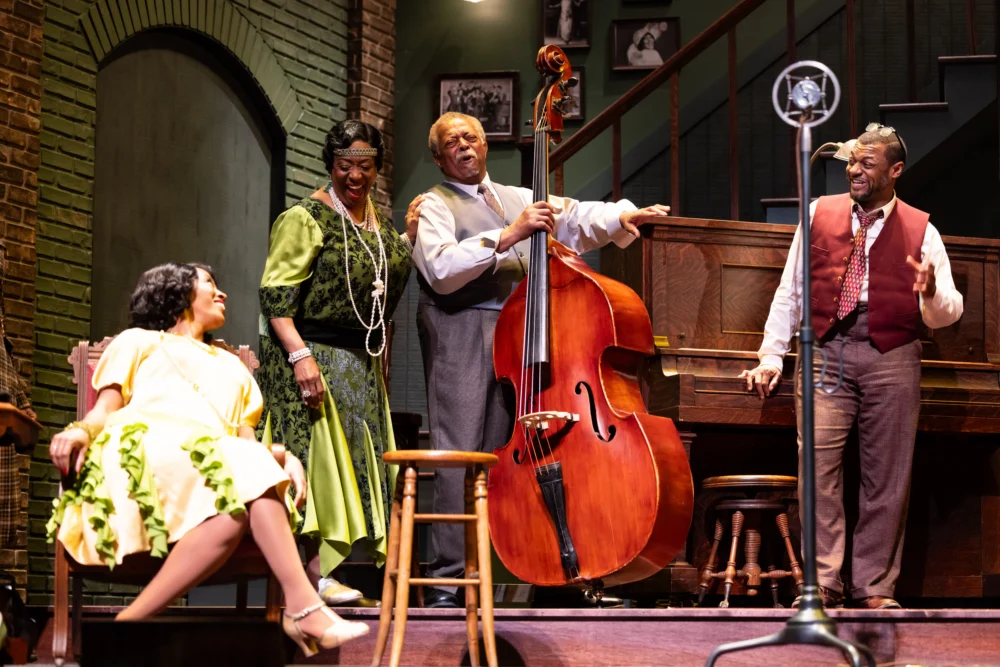
photo: (L-R) Tiffany Renee Johnson, E. Faye Butler, Cedric Young, Kelvin Roston Jr. Photo by Justin Barbin. Courtesy Goodman Theatre.
Anderson plays up Cutler’s paternal warmth and indefatigable faith as he tells the story of a pastor who was stalked and humiliated by a gang of white boys with guns at a train exchange. Al’Jaleel McGhee’s performance as Levee was one of the best I’ve seen, making more of an impression on me than the more widely viewed turn by Chadwick Boseman many have seen on Netflix. As Levee recounts seeing his mother attacked by white men, McGhee dials up decades of rage from a simmer to a boil. When he announces his willingness to sell his soul for fame, you half-expect the devil to materialize and take him up on it. McGhee’s conviction steals the spotlight from the moment of disclosure until the play’s tragic end. Like the allegories they are, they have polar views on religion. Cutler is counting on deliverance while Levy has learned that a white man’s God is nowhere to be found when you call on him. Smith’s feel for the natural rhythm of the dialogue, as well as the positioning of the actors on stage, lend their exchanges the same texture as a visit to a Black barbershop.
Not to be outdone, E. Faye Butler’s vocals as Ma Rainey sound like Shirley Caesar stepped out of the grave. Ma’s incessant requests for the items articulated in her contract, as well as extra favors due to run-ins with local law enforcement, are non-plussed and entitled. As sweet as it is to see a Black woman assert herself now, it must’ve been even sweeter during Ma’s lifetime. Watching her strut around the stage like a queen is enough of a reason to see this show in the proscenium. No shade to Netflix (the film adaptation is important for its own reasons) but there’s something about August Wilson’s work that belongs on the stage. With actors visible from every angle and no cameras, the actors have to radiate the emotion from their physical core as much as make sure it shows up on their face and in their voice. On stage, acting is a whole body sport.
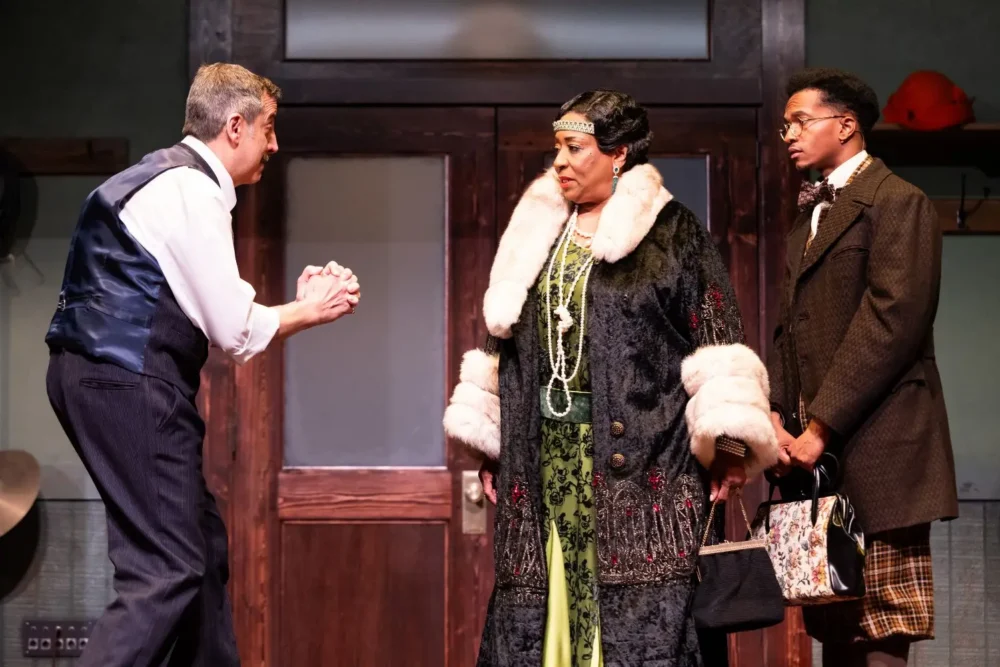
photo: (L-R) Marc Grapey, E. Faye Butler, Jabari Khaliq. Photo by Justin Barbin. Courtesy Goodman Theatre.
The physical demand makes me wonder about Matt DeCaro, who played his final performance as Sturdyvant, the white recording studio owner, the night I went to the show. He passed away between Friday night curtain call and Saturday morning call time; he was 70 years old.
The brothers in the band, Cutler, Slow Drag, Toledo, and Levee, scrimp and save to make ends meet. They gamble to rein in an occasional windfall. They urge Irvin to pay them in cash since they don’t have a place to cash checks. It’s not a glamorous life, but they figure it’s better work than hauling wood.
A WBEZ article on DeCaro’s passing contains a similar sentiment, retold by the theater’s artistic director, Susan Booth.
Lamenting their cockcrow schedule, she asked Mr. DeCaro how he was holding up. “Matt had a grin on his face and he looked quizzically at me, like ‘What an odd question?’ And he said, ‘I’m doing great. We get to do this,’” Booth recalled, noting that it was the last conversation she had with Mr. DeCaro. “And I’ve been thinking about that a lot: We get to do this.”
Reader, please do not ask my boss for a quote when I die. It may be true that working as a musician is better than hauling wood, it may also be true that Mr. DeCaro woke up each morning thrilled to return to the stage no matter what time he had set his alarm. But we’ll never know how he would’ve spent that Friday night if he had known it would be his last. The more I speak with actors and artists, the more it seems like quality of life improvements for the creative class haven’t seen much change since Ma Rainey was “in the booth”.
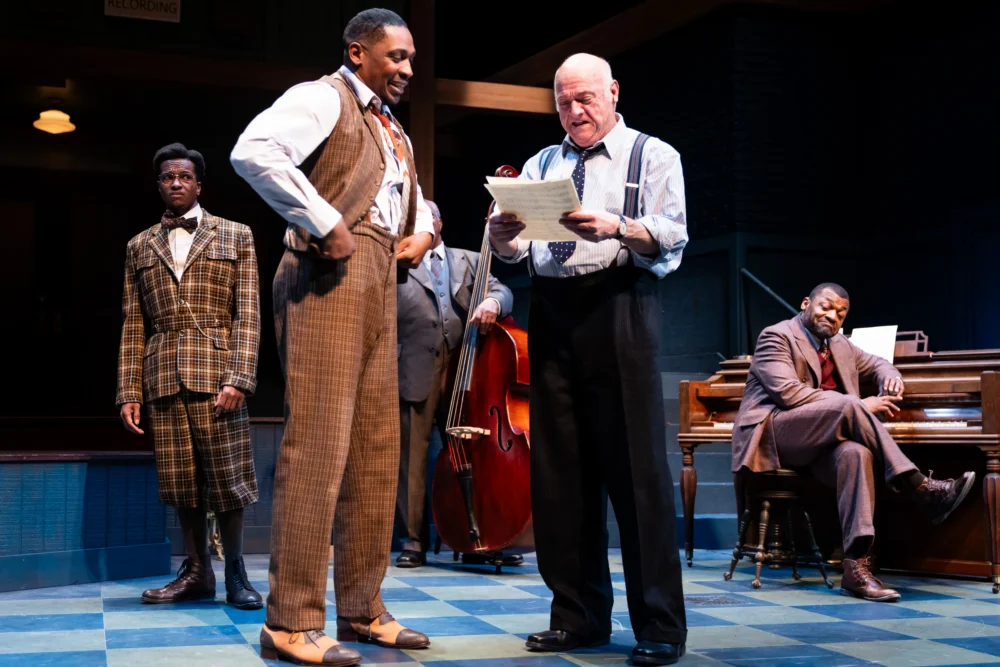
photo: (L-R) Jabari Khaliq, Al’Jaleel McGhee, Cedric Young, Matt DeCaro, Kelvin Roston Jr. Photo by Justin Barbin. Courtesy Goodman Theatre.
In the band’s case, racism accounts for a great deal of their career stress. Ma can call the shots because she’s the talent, but the men are relegated to splitting sandwiches and being called ‘boy’. Levee is sick of being a ‘nigger’, he hates the power that white people are allowed to hold over him. Toledo rebuts that they are all Africans, that knowledge of one’s own history is freedom from second-class citizenship. In the play’s tragic ending (spoiler alert!), Toledo stops Levee from losing his temper with a white man and Levee kills Toledo in a fit of rage. In Black Bottom, there is no room for the nigger and the African to coexist, the former refuses to acknowledge the latter’s sacrifice, the latter blinds himself to the unpolished resilience of the former. (This idea alone is warrants its own dissertation.)
One hundred years later, misplaced anger still foments this kind of violence. We harm ourselves and each other when we’re unable to throw hands in the direction we really should. We argue over which kinds of music advance the community and which hold us back as if choosing to stream a Black love song instead of the latest trap hit really makes a difference for Sony, Universal, or Warner’s bottom lines. To quote the Chicago native formerly known as Kanye West, and the white man get paid offa all of that. Artists earn fractions of pennies from streams. It’s the music groups that cash in by selling us ‘credible’ labels like Roc Nation or Def Jam while keeping a hand in every genre and a stable full of artists they see as interchangeable.
Recorded music and the rise of radio subjugated Black performers to commodity. Later, exploitative record deals and predatory album advances left major stars destitute as soon as they stepped off stage. The latest thing in music now bypasses the artists altogether, replacing songwriters, singers, and musicians with computer generated sounds and personas at the submission of a prompt. Ma Rainey’s prediction that recorded sound would change her relationship with the audience was right, the people trying to cut her out of the equation were most deserving of her ire. If we can stop swinging blades on each other in the bandroom and unify across high- and low-brow expressions of Blackness, we might reshape the next 100 years into some version of equity.
blacklove 🖤 and starlight 🌟
The 2026 revival of Ma Rainey’s Black Bottom opened on March 28, 2026 at the Goodman Theatre in Chicago. The production was directed by Chuck Smith with musical direction by Harry J. Lennix (Purpose). This play was written by August Wilson and premiered on Broadway in 1982. I purchased my own ticket for this performance and attended on Friday, April 24. The production closed on May 3rd.