

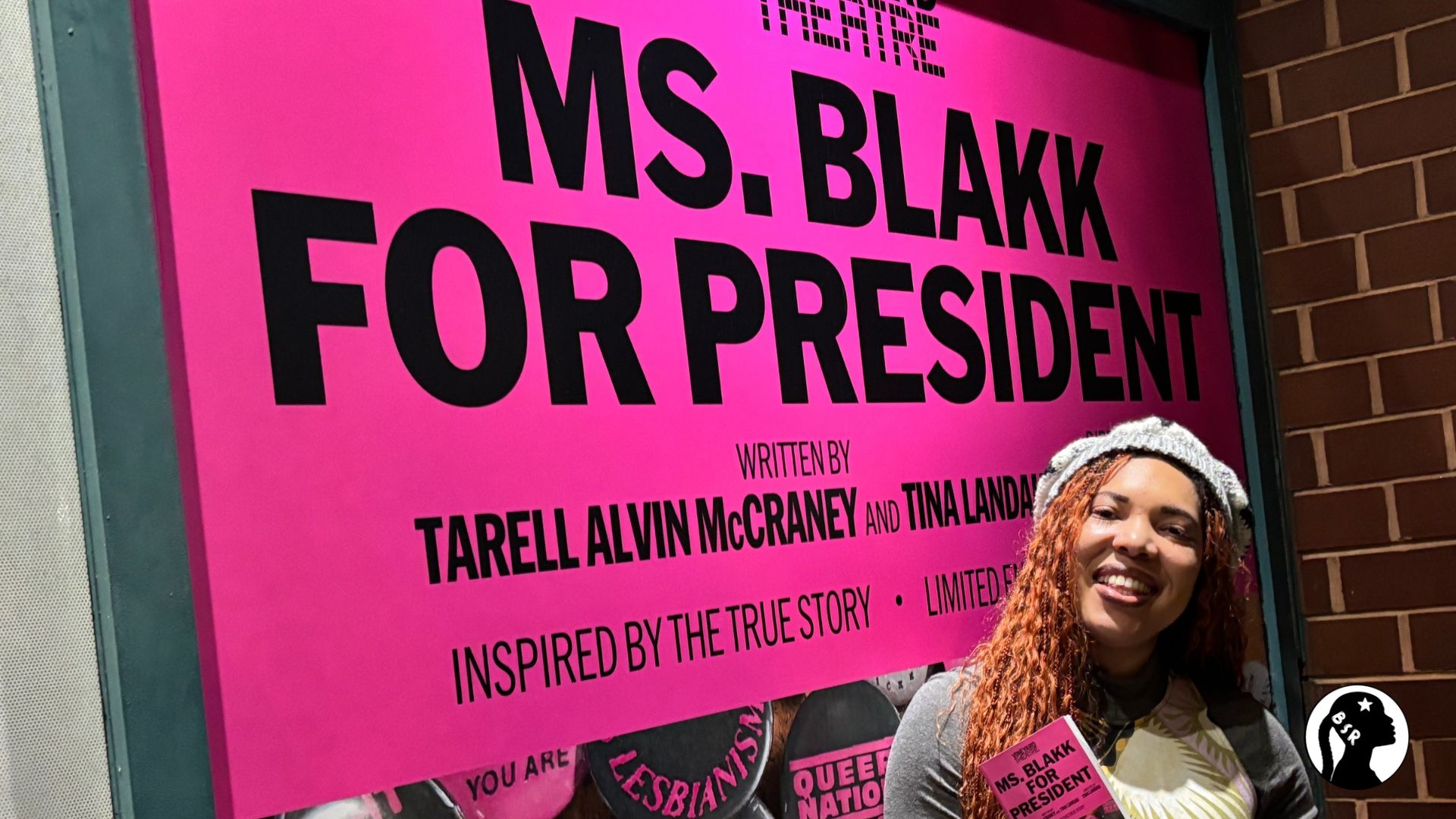
Review: ‘Ms. Blakk for President’
Terence Alan Smith’s historic run as Joan Jett Blakk gets a lip-glossed but mealy-mouthed stage treatment
I spent most of this year’s Election Day feeling frenzied. After I cast my ballot and reminded my friends to vote, there were only two things left to do: wait and try not to dwell on how crushed I felt after Harris v. Trump in 2024. That year’s election results delivered dread, anger, and rejection; I was determined to keep my expectations low and lower this time around.
As this year’s results rolled in on cable news, all sorts of unfamiliar Black faces flashed on my television screen. Marquita Bradshaw, a round-shouldered environmental activist with cat eye glasses and a cherry red mini-fro, came within 400,000 votes of winning a Senate seat in Tennessee. James Byrd, a state representative from Wyoming, didn’t run a close race for U.S. Senate but he certainly made an impression on me with his white horseshoe mustache (think handlebar, but longer) and his wide-brimmed cowboy hat. These were not the suited and coiffed political actors I’d grown up seeing in the 90s à la Colin Powell and Condoleezza Rice. Have we come so far that Terence Alan Smith — clad in Chanel, dangly earrings, and a blond stacked bob — might’ve contributed a ripple to this year’s “Blue Wave”?
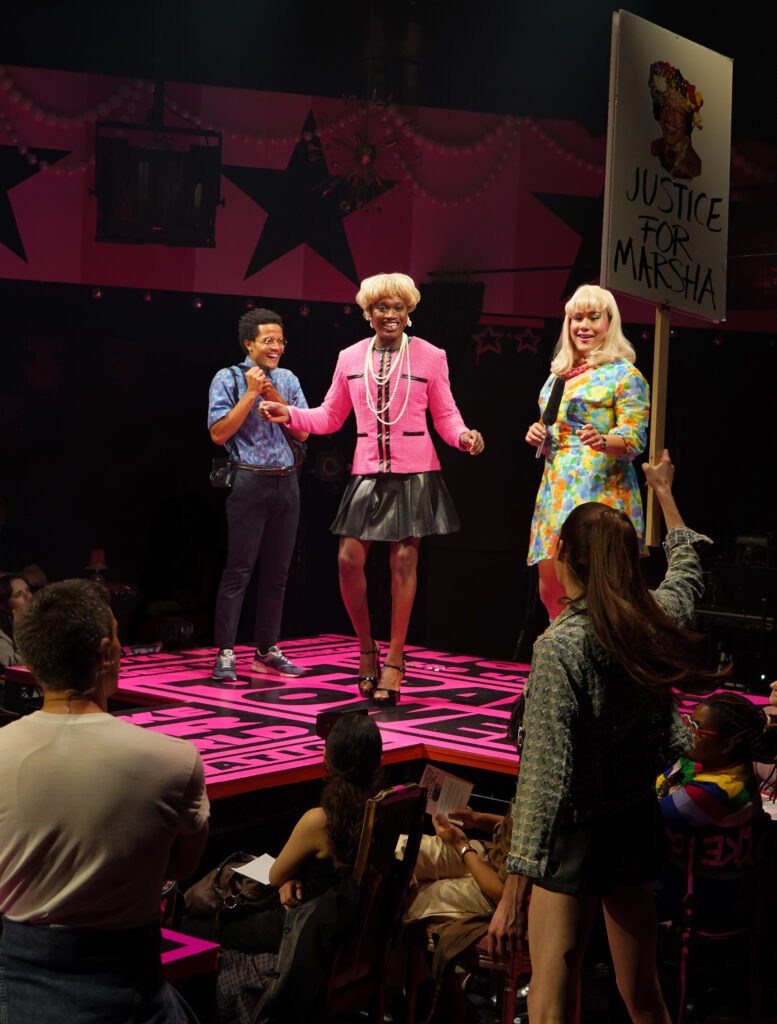
Nic Ashe, Ato Blankson-Wood, and Kelvin Moon Loh • Photo: Carol Rosegg
While it would’ve been interesting to reimagine Mr. Smith’s historic run as “the first (and only) drag queen candidate for the President of the United States” in the present day, co-writers Tarell Avin McCraney (Windfall, The Brothers Size) and Tina Landau (Landau also directs) keep Terence in the years and days leading up to the 1992 Democratic National Convention at New York’s Madison Square Garden where the party’s Presidential nominee, then-Governor Bill Clinton, used his acceptance speech to make 1 mention of AIDS. AIDS was the number one cause of death for U.S. men aged 25-44 years old that year; Clinton was 45.
The U.S. Government’s lack of acknowledgment, empathy, and action for men contracting HIV and dying of AIDS in the 90’s and the tandem homophobia was the driving factor behind Terence’s run. In the show, he’s convinced by Mark, a white man whose partner lay sick and dying, to join in on hospital visits and staged die-in protests. Mark sees something charming in the 30-something drag queen lip-syncing Janis Joplin’s “Piece of My Heart” through a tunnel-shaped chip in his two front teeth, but Mark never seems to see Terence as a strategic partner. The two co-conspire to create Terence’s political candidate persona Joan Jett Blakk, who’s instructed to razzle, dazzle, and then defer to Mark for platform and talking points, but Mark’s inability to get in or out of the way, as performed by Gideon Glick, was a broken record of exasperating microagressions. We’re told from the start not to pity the characters in their hardships — lost lovers, ineffective medications, police brutality — but the subject matter is gloomy and leaves the audience with few avenues for constructive emotion.
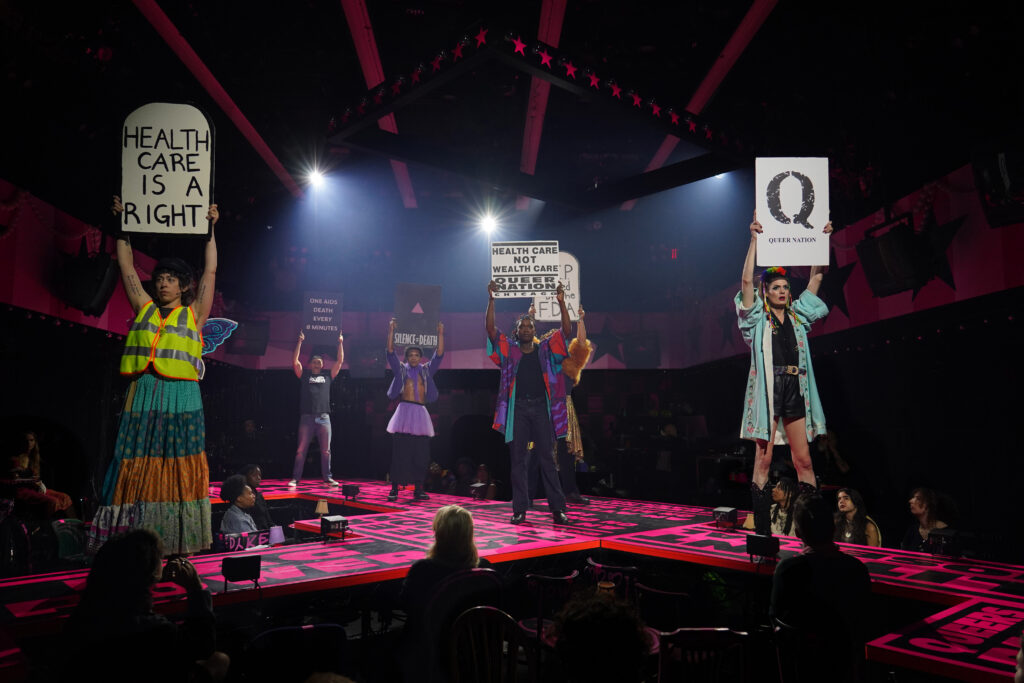
Adina Verson, Gideon Glick, Nic Ashe, Ato Blankson-Wood, and Sawyer Smith • Photo: Carol Rosegg
The Vineyard Theatre production tries and nearly manages to offset the unhappy ending and uphill battle with humor, upbeat drag performances, a live band, technicolor set design, and archival footage (if the 90s are archival). Ensemble performances like Nic Ashe’s (The Festival in Da Back) pre-show medley from The Wiz (arrive early so you don’t miss it!), Sawyer Smith’s turns as Marilyn Monroe, David Bowie and more, and Kelvin Moon Loh as real-life public access TV host Glennda Orgasm stun and thrill. Ato Blankson-Wood stepped into the lead role size 13s after Wayne Brady was placed on vocal rest and I regret that he’ll have to endure the comparison. In the show, Smith is written as a man who “melts hearts” and while Mr. Blankson-Wood is certainly handsome, I didn’t feel awash by charm during lip-synced musical numbers, a should-have-been heart-pounding transformation in the MSG bathroom, on-stage fantasies, or his closing monologue. So much of the show hinges on the audience’s connection to Terence’s struggles and aspirations, but there was more than one time I felt unsure of what Blankson-Wood’s Terence wanted. A video of the real Terence plays on a monitor in the lobby after the show, even as an older man sans drag he’s enthralling. His silences pull you in; when his chin quivered I inferred sentimentality, not uncertainty. Beside the monitor is a QR code for a GoFundMe entitled “Help LGBTQ Pioneer Joan Jett Blakk Heal”. It has raised just over $47,000 of its $60,000 goal to support Terence’s recovery from his stroke in 2024. Unlike many others, he survived the AIDS crisis and he is still here.
Ms. Blakk for President unfolds like a documentary with re-enactments, testimonials, and more plot points than it can fully pursue, like when it carves around issues of intersectionality that could’ve rounded out the narrative. Terence is a Black man, dressed as a fictional Black woman, running on behalf of a party that’s mostly white gay men. On their quest to get Joan Jett Blakk (political candidate) on the floor of the DNC (political event), Mark and Gay News host Lenny argue that Terence’s choice to drape his Black body in an American flag dress makes too much of a “political statement”. While we learn that Terence has long identified with white performers like David Bowie and Janis Joplin, there seems to be less attention paid to his admiration for Tina Turner and Jennifer Holliday. Even the name Joan Jett Blakk is a (clever) reference to a white woman rockstar. Emphasis on Terence’s conditional acceptance in white spaces and the resulting emotional toll could help fill out his story. The show seems to want little pieces of Terence, even as it disparages characters like Mark for wanting the same. Ms. Blakk makes Terence out to be a gay/queer icon, but not a Black trailblazer. He is both. We are always both.
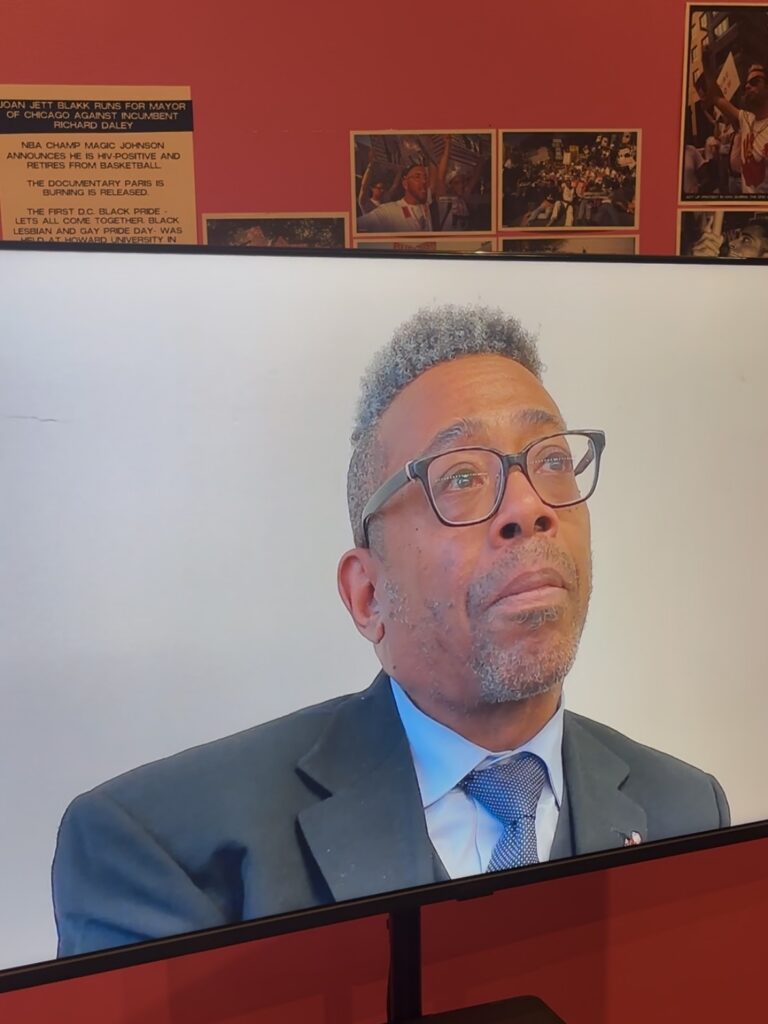
A recorded interview with Terence Alan Smith plays in the lobby after the show
When Bill Clinton left office in 2001, his fledgling Clinton Foundation focused on global HIV/AIDS prevention and climate change, a far cry from the single line in his ’92 DNC acceptance speech. Last Tuesday’s election results showed a strong shift left in a string of historic firsts: we’ll have 5 Black governors at the same time, one of which is the first ever Black woman, Texas is blue, Mississippi is purple. All of this change is the result of coalition building, of running just to move the needle even though you won’t win. It’s also the result of tireless Black labor, thought, and resilience from candidates and activists like Joan Jett Blakk and Marsha P. Johnson, and organizers and strategists like Stacey Abrams and Glynda C. Carr. I can’t imagine we’re much closer to Terence Alan Smith making it all the way to the DNC stage, but maybe for the first time in a long time, things are finally looking up.
blacklove 🖤 and starlight 🌟
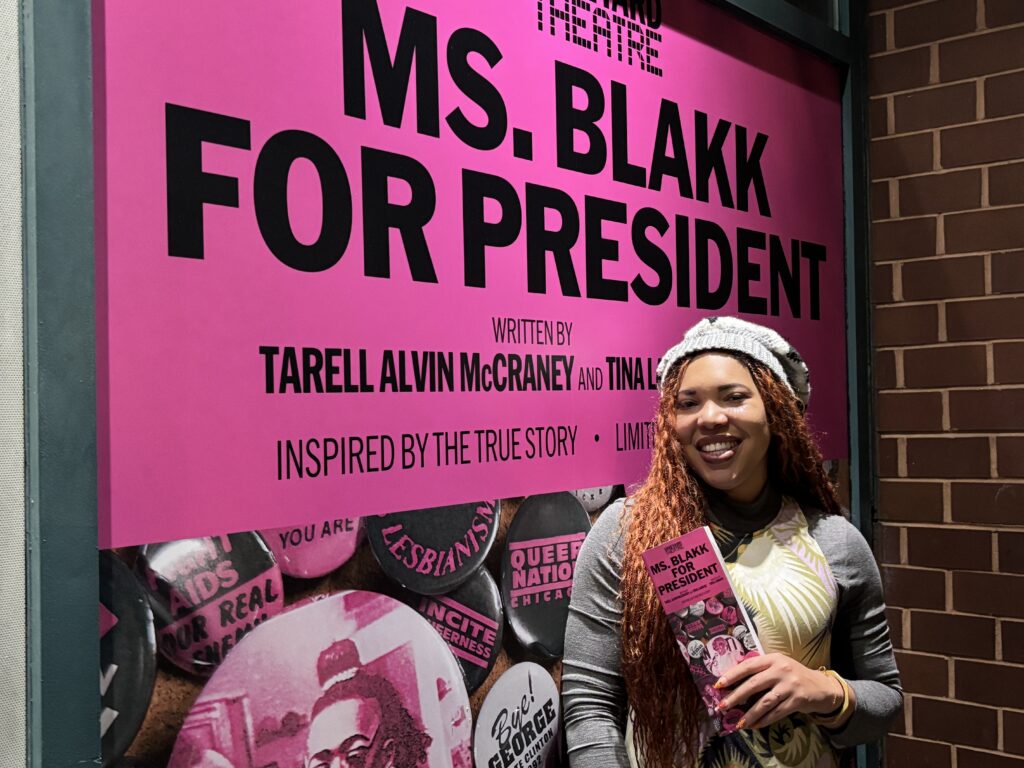
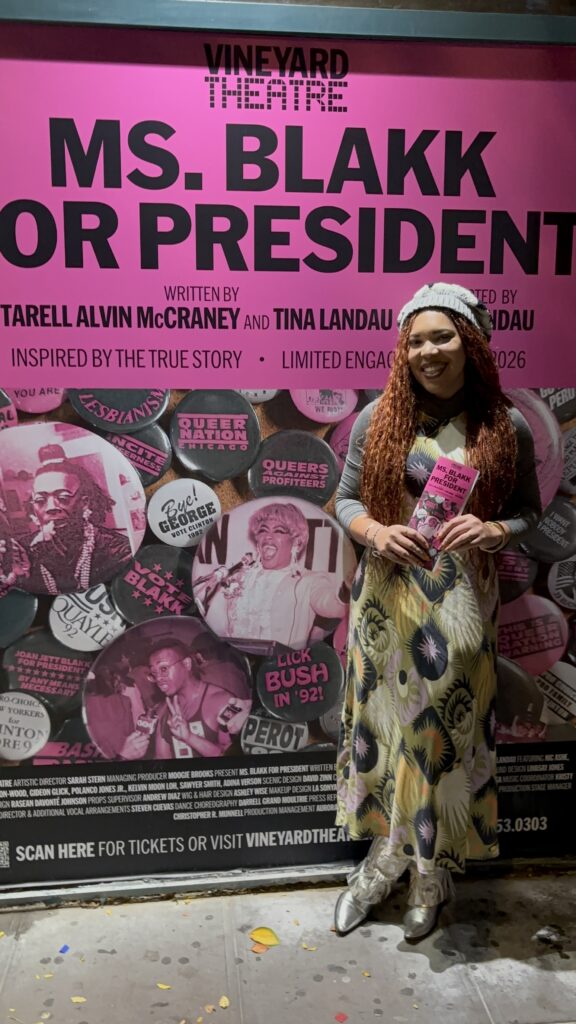
Ms. Blakk for President was written by Tarell Alvin McCraney and Tina Landau. The Vineyard Theatre production was directed by Tina Landau and featured Nic Ashe, Ato Blankson-Wood, Gideon Glick, Kelvin Moon Loh, Sawyer Smith, Adina Verson, and Polanco Jones Jr. After a recasting-related delay, the production opened on November 8, 2026 and will run through November 29. I attended the performance on November 5th and offer my thanks to The Press Room.
Tickets are on sale now; prices start at $72. Community-supported tickets are available for $37.50.
-
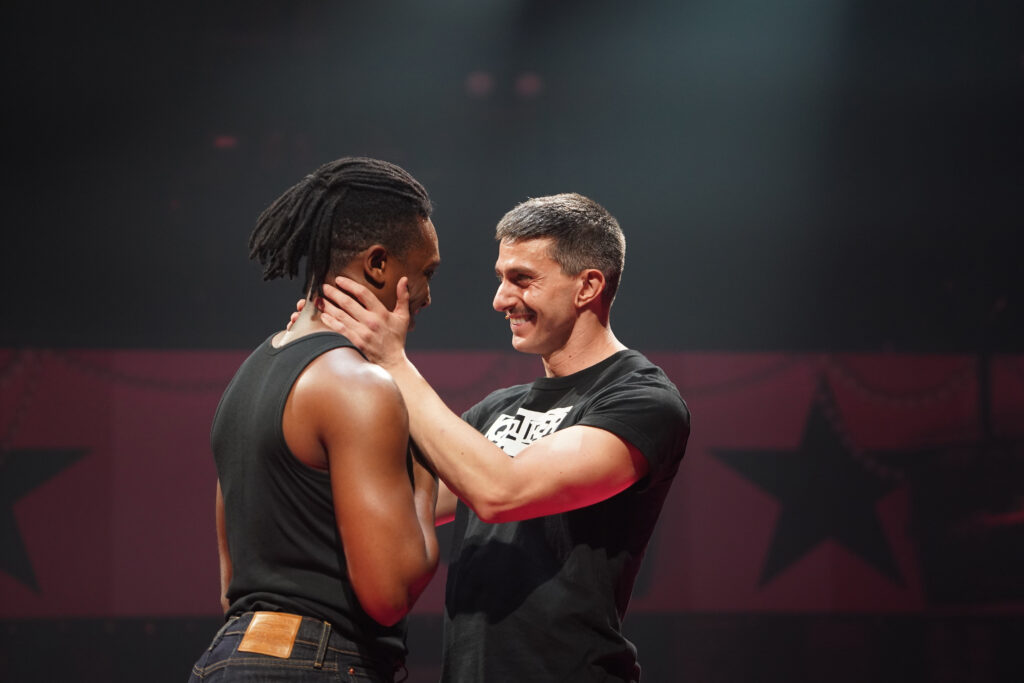
- Ato Blankson-Wood and Gideon Glick • Photo: Carol Rosegg
-
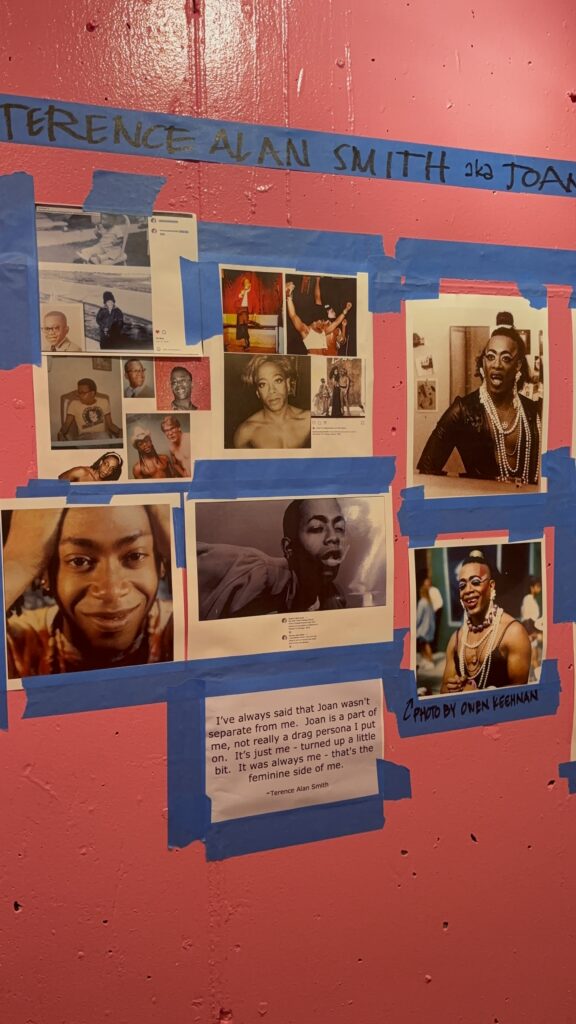
- The theater lobby has a timeline of photos, quotes, and artwork
-
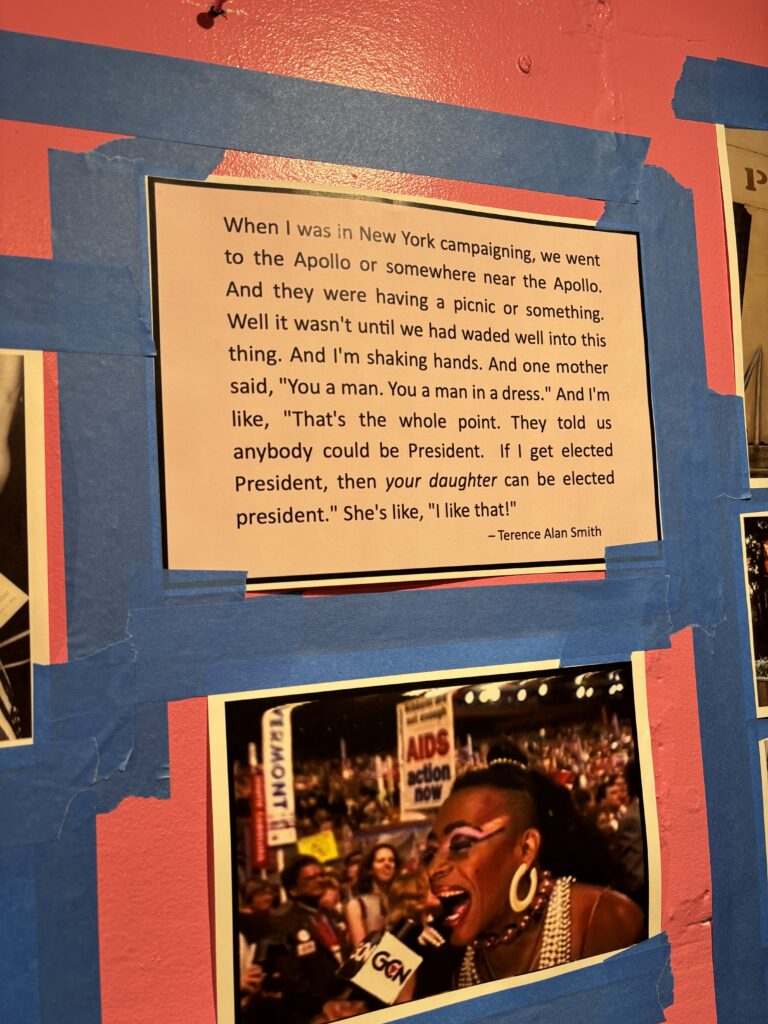
- A quote from Terence Alan Smith
